
An acoustic ceiling is any overhead treatment engineered to control sound — absorbing the echo that makes a room harsh, or working within an assembly that blocks the noise traveling between floors. Two things decide whether yours works and almost nothing else does: naming the problem correctly, and sizing the treatment to the room. Absorbing sound inside a room and stopping sound between rooms are different physics with different ratings — the first measured by NRC on a 0 to 1 scale, the second by CAC and STC. Buy for the wrong one and the ceiling solves a problem you didn't have. Get a free consultation and a written, itemized scope from a vetted installer who diagnoses the room and sizes the absorption before specifying a product — that document, not a panel you liked, is where an acoustic ceiling that actually works is decided.
An Acoustic Ceiling Is a Diagnosis Job First, a Product Job Second
The fabric or the panel finish everyone notices matters least to whether an acoustic ceiling fixes the sound. What separates a room that goes calm and intelligible from one that still rings is the diagnosis and sizing decided before any product is chosen.
Absorbing and Blocking Are Different Physics
An acoustic ceiling is a category defined by purpose, not a single material, so the sound problem dictates what is possible and the form only decides what it looks like inside that goal:
- Absorptive panels installed to stop footsteps from upstairs make the room less echoey but barely touch the impact noise through the floor.
- A few small panels in a large, hard, glassy room barely move the needle, because absorption has to be sized to the space.
- A treated ceiling in a room with hard floors and bare parallel walls still rings, because the reflections simply move elsewhere.
None of those are product defects — they are diagnosis and sizing failures, the most common reasons an acoustic ceiling disappoints, and every one is decided before the product is mounted.
The Order of Operations Never Changes
Diagnose, then size and place, then mount. That sequence holds whether the treatment is direct-mount panels, clouds, baffles, or acoustic tiles. The work before the product is always the same: understand the room and name whether it needs absorption or isolation, set the target amount of effective absorption and where it should go, choose the form for the mounting and the look, then mount it securely. The look — a fabric-wrapped feature wall of clouds or a row of baffles — happens inside those facts, not before them. Where the goal is isolation rather than absorption, the work is different in kind and belongs with full ceiling installation, and the order still holds: problem first, product second.
The Acoustic Ceiling Readiness Gate: Six Checks Before Any Panel Goes Up
Before a single panel is mounted, a competent installer runs the room through the same six-check gate. Each check has a defensible answer, each is a documented cause of a treatment that underperforms when skipped, and a room that fails any one is not ready for a product spec. Call it the Acoustic Ceiling Readiness Gate: pass all six and the treatment targets the real problem at the right scale; fail one and you are buying a panel that solves the wrong thing.
- 1. The problem, named correctly
- The actual goal is identified first, because absorption and isolation are completely different. Absorption soaks up sound within a room to kill echo; isolation blocks sound from passing through the ceiling to the room above or below. A homeowner who installs absorptive panels to stop upstairs footsteps will be disappointed. Naming echo versus transfer is the check every other decision depends on.
- 2. The right rating for that problem
- The rating is matched to the named problem. Echo inside the room is an NRC question; transfer through a shared cavity is a CAC question; genuine floor-to-floor isolation is an STC-and-assembly question. A single product rarely excels at more than one, so the rating is read against the goal rather than the product's headline number.
- 3. Absorption sized to the room
- The amount of effective absorptive area is matched to the room's volume and its hard surfaces, because treatment works in proportion to how much absorption is in the space relative to the reflective area. A few small panels in a large, hard room barely move the needle — the treatment is scaled to the severity of the problem, not bought as a token.
- 4. Placement against the source and reflections
- Where the treatment sits is set against the room's acoustics — clouds over the primary listening or speaking zone, panels positioned to interrupt the strongest reflection paths, baffles across a tall open volume. Placement determines how much a high-NRC product actually accomplishes, so a token amount scattered without thought underperforms badly.
- 5. The form matched to the mounting and look
- The form — direct-mount panel, cloud, baffle, or acoustic tile — is chosen for the ceiling situation and the desired look. Direct-mount panels keep the ceiling height and suit a finished ceiling; clouds treat a zone and add a feature; baffles suit tall volumes; acoustic tiles also conceal a cavity. The form follows the mounting reality, not the catalog photo.
- 6. The room treated as a system
- The ceiling is checked against the rest of the room, because it is one surface in an acoustic system. A room with hard floors, bare parallel walls, and lots of glass can still ring even with a treated ceiling if the reflections move elsewhere. The ceiling is usually the highest-impact single surface, but a serious result accounts for the floor and walls too.
Three of these six — naming the problem, sizing the absorption, and treating the room as a system — are the corners cut on a rushed acoustic job, because they cost analysis a fast quote skips, yet every one is answerable before a panel goes up. That is why the gate is non-negotiable.
Want the sound problem diagnosed before you buy panels?
We match you with a vetted installer who names whether your room needs absorption or isolation, sizes the treatment to the space, and places it against the real reflections — and puts it in a written scope before any product is ordered.
Acoustic Ceiling Specifications & the Ratings That Predict Performance
An acoustic ceiling lives or dies on matching ratings to the goal, and the specs that govern it are the acoustic numbers plus coverage. They run from the controlling distinction — absorption versus isolation — through the three ratings to the coverage and placement that turn a rating into a result.
The Acoustic Ratings: NRC, CAC, and STC
The acoustic ratings are the spec that decides whether the ceiling fixes the problem, because reading the right one for your goal is the whole game. Three numbers cover three different jobs, and confusing them is the most common reason an acoustic ceiling disappoints.
Absorption vs. Isolation
Absorption soaks up sound within a room to kill echo and is what NRC measures; isolation blocks sound from passing between spaces and is governed by mass, decoupling, and sealing, related to CAC for a plenum and STC for an assembly. They are not interchangeable, and no amount of soft surface absorbs its way to true soundproofing — which is why the goal is named before a rating is read.
NRC: The Absorption Rating
The Noise Reduction Coefficient runs from 0 to 1 — the fraction of sound a material absorbs rather than reflects. A product near 0.90 or above is a strong absorber that meaningfully kills echo; a hard surface sits near 0. This is the rating to read for taming reverberation inside a room, and it is the number that matters for the most common acoustic-ceiling goal.
CAC and STC: The Isolation Ratings
The Ceiling Attenuation Class rates how well a ceiling tile blocks sound through the plenum into an adjacent room, while the Sound Transmission Class rates how much a whole ceiling-and-floor assembly reduces airborne sound passing through it. Genuine isolation between floors is an STC question, achieved with mass, decoupling, and sealing in the build — which is why no surface-mounted absorber alone delivers soundproofing.
Coverage and Placement
Coverage and placement turn the ratings into results. The amount of effective absorptive area relative to the room's size and hard surfaces, and where it is positioned relative to the main sound source and the strongest reflections, determine how much a high-NRC product actually accomplishes. A great rating on too little, poorly placed material underdelivers — which is why coverage and placement are spec'd alongside the rating, not after it.
Acoustic Ceiling Specifications, by Form
The table below collects the factors a competent installer weighs across the common acoustic ceiling forms. These are representative relationships, not fixed numbers — the product's published NRC and the room always govern.
| Form | Relative absorption | Mounting | Lowers the ceiling? | Best-fit room | Also conceals a cavity? |
|---|---|---|---|---|---|
| Direct-mount panels | Strong | Fixed flat to the ceiling | No | Echoey room with a finished ceiling | No |
| Ceiling clouds | Strong (air gap boosts it) | Suspended below the ceiling | Slightly, in zones | A specific zone in an open or tall room | No |
| Baffles | High (more surface area) | Hung vertically in rows | Visually, from the structure | Tall, large, glassy volumes | No |
| Acoustic lay-in tiles | Varies (high available) | Suspended grid | Yes — grid drop | Want sound + concealment + access | Yes |
The lesson is that the absorptive performance comes from the material's NRC and how much of it is in the room — the form is chosen for the look, the mounting situation, and which zone needs the most help, while the rating and coverage decide whether it works. Compare what each route costs in our cost guides.
Acoustic Ceilings vs. Drop, Drywall, and Wall Treatment Compared
Several approaches touch on sound, and the choice is as consequential as the panel, because they are complementary as often as they compete. The decision turns on whether you want absorption built into the ceiling, a more designed look, or treatment elsewhere in the room.
The Sound-Treatment Comparison Matrix
The matrix below is the decision an installer walks you through — what it does for sound, design freedom, and where it belongs, side by side.
| Approach | What it does for sound | Design freedom | Needs a tear-out? | Best when |
|---|---|---|---|---|
| Dedicated acoustic ceiling | Most absorptive power | High — panels, clouds, baffles | No — added below existing | Killing echo is the goal |
| Drop ceiling (acoustic tile) | Absorbs by tile + hides MEP | Moderate | No — hung below | Sound plus concealment and access |
| Drywall | Hard — reflects; isolates if built for it | Seamless plane | Yes, to add mass/decoupling | Isolating between floors (different goal) |
| Wall treatment | Handles reflections the ceiling can't | High | No | A complete result, paired with the ceiling |
A dedicated acoustic ceiling — panels, clouds, or baffles — gives the most absorptive power and the most design freedom, and it can be added below an existing finished ceiling without tearing anything out. A drop ceiling can be acoustic by tile selection and also hides the building's mechanical, electrical, and plumbing runs while keeping the cavity accessible, so it is the better pick when concealment and access matter alongside sound; see drop ceilings. A plain drywall ceiling is acoustically hard — it reflects sound and is part of the problem in an echoey room, though a properly built drywall assembly with mass and decoupling is how you isolate sound between floors, a different goal. And wall treatment handles the reflections the ceiling can't reach.
Why They Often Work Together
The honest comparison: for killing echo, a dedicated acoustic ceiling is the highest-return move because the ceiling is the biggest untreated surface in most rooms. For blocking noise between floors, no absorptive ceiling substitutes for a mass-and-decoupling assembly. And for a complete result, the ceiling works with the walls and floor as a system — in many rooms the best outcome combines an acoustic ceiling with treated walls rather than relying on either alone. All of these sit within the broader field of home surfaces, and the ceilings hub shows where each fits.
Types of Acoustic Ceiling — Panels, Clouds, Baffles, and Tiles
There are several acoustic ceiling forms, and they differ in how they mount, how much they absorb, and how they look. The grades section links the related ceiling routes where each overlaps, so you can follow the form that fits your room.
Direct-Mount Acoustic Panels
Fabric-wrapped, mineral-wool, or rigid fiberglass panels fixed flat to an existing ceiling. They add strong absorption without lowering the ceiling and come in finishes that read as design elements, making them a clean retrofit for an echoey room with a finished ceiling already in place. This is the route when you want absorption without sacrificing height.
Ceiling Clouds
Panels suspended horizontally a short distance below the ceiling, often over a desk, table, or seating area. The air gap behind them boosts absorption, and they double as a visual feature — ideal for treating a specific zone in an open-plan or tall room without covering the whole ceiling. Clouds are the move when one zone needs the most help and the look should read intentional.
Baffles
Vertical panels hung in parallel rows below the ceiling. They expose more surface area to the sound field for high absorption, suit tall and large volumes, and create a strong linear architectural look — common in big open spaces and rooms with a lot of glass. Baffles are the form for a tall, hard volume where a flat treatment alone wouldn't expose enough absorptive area.
Acoustic Lay-in Tiles
High-NRC tiles in a suspended grid — the overlap with a drop ceiling. They absorb sound while also concealing the cavity and keeping it accessible, the right pick when sound, concealment, and access are all wanted at once. Across all forms, the absorptive performance comes from the material's NRC and how much of it is in the room — the form is chosen for the look, the mounting situation, and which zone of the room needs the most help, and a decorative tile can even fake the depth of a coffered ceiling while adding absorption.
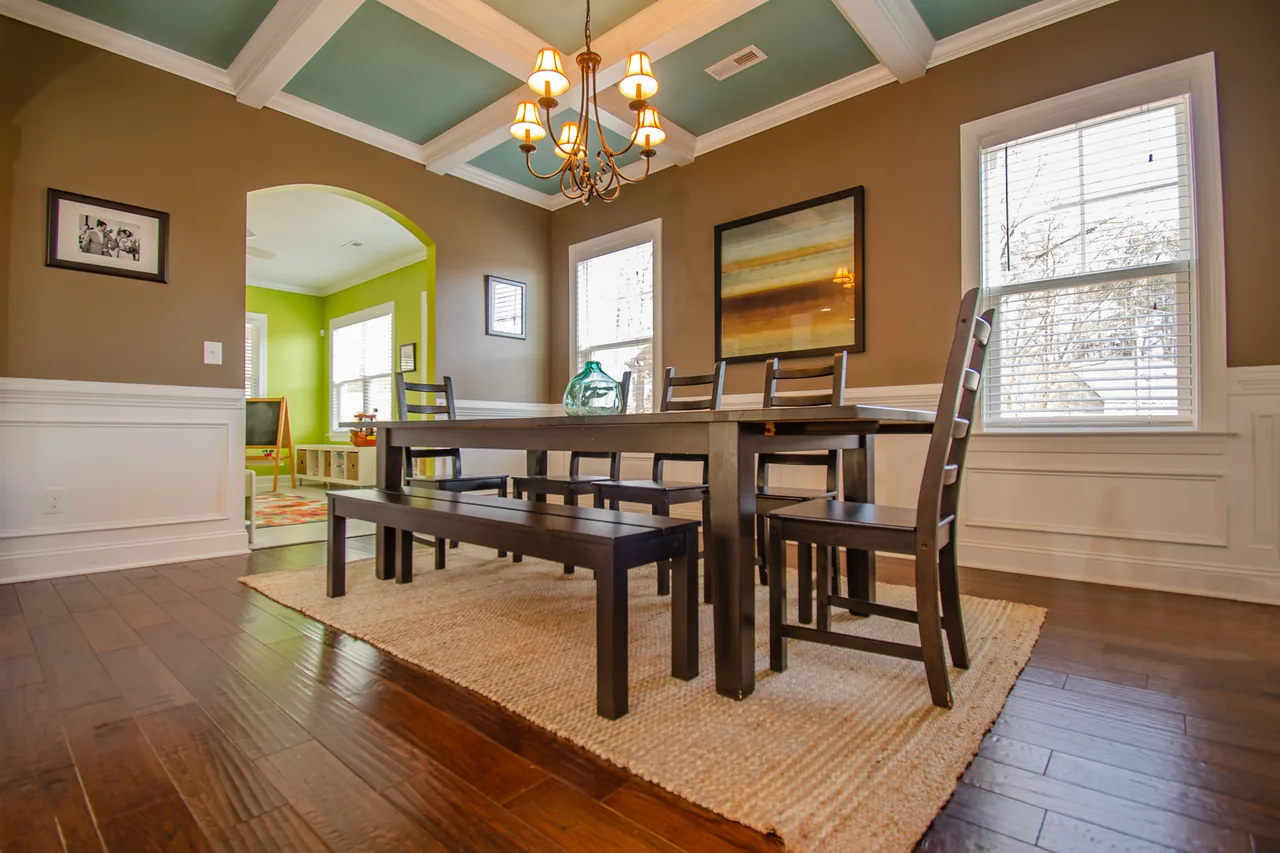
Why Acoustic Ceilings Underperform — and How the Right Approach Stops It
The failures of an acoustic ceiling are almost never the product — they are solving the wrong problem, at the wrong scale, in isolation. Each is preventable at the diagnosis stage, paired below with its mechanism, cause, and named prevention.
Wrong Goal: Absorption Where You Needed Isolation
The classic failure is buying absorption when the problem was isolation: absorptive panels make their own room less echoey but do little to block impact noise coming through the floor structure from upstairs. It is a diagnosis failure — absorption and isolation were treated as interchangeable when they are different physics. The prevention is naming the problem first: echo inside the room is absorption (NRC); transfer between floors is isolation, solved by mass, decoupling, and sealing in an assembly, not by soft panels.
Too Little Coverage: A Sizing Failure
A treatment that barely moves the needle is a sizing failure: acoustic treatment works in proportion to how much effective absorptive area is in the room, and a few small panels in a large, hard space do almost nothing. The prevention is sizing the absorption to the room's volume and its hard surfaces — scaling the treatment to the severity of the problem rather than buying a token amount and hoping.
Wrong Placement: A Positioning Failure
Treatment that disappoints despite a good rating is often a placement failure: absorption scattered without thought underperforms badly, while the same material placed against the source and the strongest reflections delivers. The prevention is positioning by analysis — clouds over the primary listening or speaking zone, panels to interrupt the strongest reflection paths, baffles across the tall volume — so the high-NRC material actually does its work.
Ignoring the Room: A Systems Failure
The fourth failure — a treated ceiling in a room that still rings — is a systems failure, caught at the Readiness Gate. A ceiling is one surface in an acoustic system, and a room with hard floors, bare parallel walls, and lots of glass can still ring even with a treated ceiling if the reflections move elsewhere. The prevention is treating the room as a whole: the ceiling is the highest-impact surface, but soft flooring, treated walls, and furnishings all contribute. If a treatment has already underperformed, the path is diagnosis-first — confirm the real problem and the coverage — rather than adding more of the wrong thing.
Common Acoustic Ceiling Mistakes, Consequences, and Prevention
Most acoustic ceiling disappointments are the same handful of shortcuts, each with a predictable consequence and a known prevention. Naming them is how you spot a corner being cut before the budget is spent on the wrong product.
| Mistake | What it causes | The prevention |
|---|---|---|
| Absorption used for isolation | Footstep noise from upstairs still comes through | Name echo vs. transfer; isolate with mass and decoupling |
| Too little material | A large, hard room that barely changes | Size absorption to the room's volume and hard surfaces |
| Panels scattered without analysis | A good rating that underdelivers | Place at the source and the strongest reflection paths |
| Buying on NRC headline alone | A high rating on too little, poorly placed material | Spec coverage and placement alongside the NRC |
| Treating the ceiling in isolation | Reflections move to the floor and walls; room still rings | Plan the ceiling with the floor and walls as a system |
| Absorptive product in a damp room | Sagging, staining, or mold in fibrous material | Keep products within their moisture rating |
| Expecting a studio from a glass room | A treated ceiling that still sounds harsh | Add soft flooring and treated walls to the plan |
Every row is a diagnosis or sizing decision made before the product is bought — which is why "we diagnose the problem, size the absorption, and place it by analysis" is the most valuable sentence in an acoustic ceiling quote.
Matching the Acoustic Ceiling to the Room — and the Form That Fits
The best acoustic ceiling is chosen by diagnosing the sound problem and sizing the treatment to the room, and the form — not a panel you liked — is matched to the mounting and the look. Which is why picking a product and hoping lands the wrong treatment in the room.
The Rooms That Need One
It earns its place wherever sound has become a problem people feel — open-plan homes with hard floors and tall ceilings that ring, home theaters and media rooms where clarity is the point, home offices and podcast or music rooms, great rooms, and any space where conversations are hard to follow over the echo. The harder and more parallel the surfaces — bare drywall, glass, tile, a tall flat or vaulted ceiling — the worse the reverberation and the more an acoustic ceiling helps. The honest constant is that acoustics are a system, and the ceiling is usually the largest available surface to treat, which is why overhead delivers the most return.
The Form and Coverage That Set the Result
The room's geometry and the mounting reality override preference. A finished ceiling that can't be lowered points to direct-mount panels; a single noisy zone in an open plan points to clouds; a tall glassy volume points to baffles; a need for sound plus cavity access points to acoustic tiles. But the form only carries the absorption — the coverage and placement decide whether it works, so the room is measured and the treatment sized before the form is finalized. To weigh forms and confirm the approach, the surface selector and the material comparison tool help line up the options.

What Actually Drives the Cost of an Acoustic Ceiling
An acoustic ceiling quote is not a flat per-square-foot rate; the headline number hides the items below, ranked by how much they move the total. None is a dollar figure here — the point is to read a quote critically, not to guess a price.
The Cost Drivers That Move the Total Most
- Amount of effective absorption. The biggest swing. Treating a large, hard room to a real result takes far more material than a token few panels — the coverage sized to the problem sets the baseline before anything else.
- Form and mounting complexity. Direct-mount panels are simpler than suspended clouds or rows of baffles that need anchored hanging systems, and a suspended acoustic-tile grid is a full ceiling system — each form carries its own labor.
- Product grade and finish. A plain mineral-wool panel is less than a designer fabric-wrapped panel or a high-NRC specialty product, and the finish you want for a visible feature drives the material cost.
- Diagnosis and design. A real result starts with assessing the room and sizing and placing the treatment by analysis — time a token install skips, and exactly what separates a ceiling that works from one that doesn't.
- Ceiling height and access. A tall or vaulted room means staging to mount panels or hang clouds and baffles safely overhead, raising the labor beyond a standard-height room.
- Anchoring and structure. Suspended clouds and baffles need suspension points anchored into the structure on a sound schedule, more involved than adhering a panel to a flat ceiling.
- Whole-room treatment. A complete acoustic result often pairs the ceiling with treated walls and soft flooring, so the honest scope may extend beyond the ceiling alone.
- Isolation vs. absorption. If the real goal is blocking sound between floors, that is a mass-and-decoupling assembly — a fundamentally larger build than surface-mounted absorption, and a different line of work entirely.
Because these drivers swing so widely, the only honest number comes from an on-site assessment that diagnoses the problem, sizes the treatment, and prices the form the room actually needs. Compare what moves the price across ceiling work in our cost guides, and read how acoustic treatment works in our guides so you can read a quote critically.
Get an itemized acoustic scope, not a headline rate.
A vetted installer prices the diagnosis, the sized absorption, the form, and any whole-room treatment as separate lines — so you see the whole job, free and with no obligation.
Is an Acoustic Ceiling Right for Your Space?
An acoustic ceiling is not a product you can simply pick — it is the output of a short chain of facts about your sound problem, the room's size and surfaces, and the mounting reality. Walk the decision in order; each branch eliminates the approaches that won't fix your problem, and what survives is the right call.
- Name the problem: echo or transfer. Does the room sound harsh and reverberant, or is noise passing between floors or rooms? Echo is absorption — read NRC. Transfer is isolation — an STC or CAC question solved by mass and decoupling, not absorptive panels. Getting this right is the difference between a ceiling that works and one that doesn't.
- Size the absorption to the room. How large and how hard is the space? The amount of effective absorptive area has to match the room's size and its hard surfaces. A few small panels barely touch a large, glassy room — the treatment is scaled to the severity of the problem, not bought as a token.
- Place it where the sound and reflections are. Clouds over the primary listening or speaking zone, panels positioned to interrupt the strongest reflections, baffles across a tall open volume. Placement determines how much a high-NRC product actually accomplishes, so it is decided by analysis.
- Choose the form for the mounting and the look. A finished ceiling that can't be lowered points to direct-mount panels; a specific zone points to clouds; a tall volume points to baffles; a need for sound plus cavity access points to acoustic tiles. Pick the form that fits your ceiling situation and the look you want.
- Treat the room as a system for the surviving approach. Whatever form remains, account for the hard floors, bare parallel walls, and glass that also drive reflections. For a serious result, plan the ceiling alongside the rest of the room rather than expecting it to fix everything alone.
Run honestly, this tree almost always returns a single defensible approach and form — and an installer who reaches for absorptive panels to solve a soundproofing problem is the red flag.
Talk through your project — free.
A free consultation and a written, itemized quote from a vetted installer. No pressure, no obligation.
How an Acoustic Ceiling Is Installed, Step by Step
A professional acoustic ceiling install runs the same disciplined sequence every time, and each step exists to prevent a specific failure. The six steps below are the full arc from diagnosis to secure mounting — because the right placement and amount are what make it work.
Diagnose the Room and the Problem
The installer assesses the room — its size, its hard reflective surfaces, where sound is generated and where people listen — and names the real problem: echo to absorb, or transfer to block. The approach is decided here against the Readiness Gate, because absorption and isolation are different physics that demand different work.
Size the Target Absorption
That assessment sets the target amount of effective absorption — scaled to the room's volume and hard surfaces, not a token few panels. The sizing is what separates a treatment that meaningfully quiets the room from one that barely moves the needle in a large, hard space.
Plan the Placement
The treatment is laid out to interrupt the strongest reflection paths and cover the zones that need the most help — clouds over the primary listening or speaking area, panels against the main reflections, baffles across a tall volume. Placement is decided by analysis, because where the absorption sits determines how much it accomplishes.
Choose and Prepare the Form
The form — direct-mount panel, cloud, baffle, or acoustic tile — is selected for the mounting situation and the look, and the substrate or suspension is prepared. For direct-mount, the existing ceiling is the substrate; for clouds and baffles, suspension points are located in the structure; for tiles, the grid is readied.
Mount Securely
Panels are fastened or adhered to stay put overhead; clouds are hung level at the planned height with the air gap set for the absorption it adds; baffles are hung in even, parallel rows from an anchored system; acoustic tiles drop into a grid hung and leveled like any suspended ceiling. Secure mounting is what keeps the treatment safe and effective.
Verify and Address the Whole Room
The result is checked against the goal, and where the room still rings, soft flooring, treated walls, or furnishings are recommended to complete the system. The installer confirms the treatment fixed the named problem rather than moving the reflections elsewhere.
Skip or rush any one of these six steps and the failure it was meant to prevent — the wrong fix, too little, poorly placed, or a room still ringing — shows up later, which is why a vetted installer treats the sequence as fixed, not optional.
Acoustic Ceiling Glossary
The terms below recur in every acoustic ceiling quote, assessment, and scope — each defined as its working meaning on an actual job site, so you can read a proposal and judge whether it is complete.
- Absorption
- The property of soaking up sound within a room to kill echo and reverberation — what NRC measures, and the goal of the most common acoustic ceiling.
- Isolation
- Blocking sound from passing between spaces, governed by mass, decoupling, and sealing — a different goal from absorption, and not achievable with soft panels alone.
- Reverberation
- The build-up of reflected sound that makes a hard room loud and echoey, blurring speech and smearing music — the problem absorption is meant to tame.
- NRC
- Noise Reduction Coefficient — the 0 to 1 fraction of sound a material absorbs rather than reflects. A product near 0.90 is a strong absorber; a hard surface sits near 0.
- CAC
- Ceiling Attenuation Class — how well a ceiling tile blocks sound from passing through the plenum into an adjacent room. The rating for room-to-room transfer through a shared cavity.
- STC
- Sound Transmission Class — how much a whole assembly reduces airborne sound through it. Genuine floor-to-floor isolation is an STC question, not a surface treatment one.
- Clouds
- Panels suspended horizontally a short distance below the ceiling; the air gap behind them boosts absorption, and they treat a specific zone while doubling as a visual feature.
- Baffles
- Vertical panels hung in parallel rows below the ceiling, exposing more surface area to the sound field for high absorption in tall, large volumes.
- Coverage
- The amount of effective absorptive area relative to the room's size and hard surfaces — the factor that turns a good rating into a real result.
- Placement
- Where the absorption sits relative to the sound source and the strongest reflection paths — what determines how much a high-NRC product actually accomplishes.
- Decoupling
- Separating the layers of an assembly so vibration can't pass straight through — a core technique of isolation, alongside mass and sealing, and irrelevant to absorption.
- Direct-mount panel
- An absorptive panel fixed flat to an existing ceiling, adding absorption without lowering the ceiling — the clean retrofit for an echoey room with a finished ceiling.
Standards, Product Care, and When the Goal Changes the Work
An acoustic product's performance is a published rating under defined conditions, and the result you get depends on matching it to the right goal and keeping it within its limits.
Conditions That Hinge on the Diagnosis
The conditions are specific and checkable: the problem named as absorption or isolation; the rating matched to that problem; the coverage sized to the room; the product kept within its moisture rating. An installer who sells absorptive panels to solve a soundproofing problem, or scatters a token amount across a large hard room, has built in the disappointment before you notice. Ask in writing that the treatment target the problem you actually have, sized to the room — that scope is what a result is judged against, and one more reason the cheapest quote is rarely the one that fixes the sound.
When the Goal Changes the Work Entirely
The biggest distinction is goal-driven: absorption is surface-mounted treatment, while genuine isolation between floors is a different kind of build — mass, decoupling, and sealing engineered into the assembly. The two are not interchangeable, and no amount of absorptive panel adds up to soundproofing. Where the goal is isolation, the work belongs with full ceiling installation and an assembly designed for it, not with hanging panels below a ceiling.
Caring for the Treatment
Acoustic products are low-maintenance, but the porous, absorptive surface that makes them work can degrade if it gets clogged or damp. Dust is the main concern — a layer of grime over time can begin to seal the porous face, so most panels and tiles are cleaned by gentle dry methods rather than wetting, and fabric-wrapped panels follow the maker's cleaning guidance to avoid marking the cloth. Keep absorptive products out of damp conditions unless rated for it, since moisture can sag, stain, or grow mold in fibrous materials. If a treatment is damaged or has begun to underperform, the path is diagnosis-first — confirm whether it is the product, the coverage, or the room — rather than blind replacement, and physical damage belongs with ceiling repair.
A Real Acoustic Ceiling Decision
One representative scenario shows why naming the problem decides everything: the room's real issue, not the homeowner's first assumption, drove every call below.
How to Vet an Acoustic Ceiling Installer
An acoustic ceiling is diagnosed and sized, not just bought, so the installer matters more than any panel. These questions separate a crew that fixes the real sound problem from one that sells you a product and hopes.
- They name your problem before recommending a product
- An installer who quotes panels without asking whether you have echo or transfer is guessing. Ask which problem you have — a real answer distinguishes absorption (NRC) from isolation (STC/CAC) and matches the work to it.
- They size the absorption to the room
- Ask how much material your room needs and why. A credible answer scales the absorption to the room's volume and hard surfaces, not a fixed package — a few panels in a large glassy room is a red flag.
- They place by analysis, not by eye
- Ask where the treatment goes and why. A professional places clouds over the listening zone and panels against the strongest reflections, rather than scattering a token amount and hoping the rating carries it.
- They choose the form for your ceiling and look
- The right installer explains why direct-mount panels, clouds, baffles, or acoustic tiles fit your ceiling situation and the look you want — and why the others don't. One form for every room is a warning sign.
- They treat the room as a system
- Ask whether the floor and walls matter too. A serious crew accounts for hard floors and bare parallel walls and tells you honestly when the ceiling alone won't deliver a studio result.
- They put the scope and the expected result in writing
- Ask for the diagnosis, the sized treatment, the placement plan, and what result to expect, in writing before work starts. A crew willing to name the goal and stand behind the outcome is accountable for the fix, not just the product.
Why Route Your Acoustic Ceiling Through Pro Work Home Surface
Pro Work Home Surface is not a contractor and does not install your ceiling — we are a national authority on home surfaces that matches homeowners with vetted local installers and holds them to a published bar.
- A free consultation and an itemized written scope
- Every connection starts with a no-obligation consult and a written quote that lines out the diagnosis, the sized absorption, the form, and any whole-room treatment separately — so you read the whole job, not a headline rate.
- A real vetting standard, applied before we connect you
- Installers are screened on what decides an acoustic ceiling: whether they name the problem as absorption or isolation, size the treatment to the room, place it by analysis, and treat the room as a system rather than selling a product and hoping.
- Diagnose before specifying, every time
- The room is assessed for whether it needs absorption (echo, read by NRC) or isolation (transfer, an STC/CAC and assembly question), and the treatment is sized and placed against the real sound source — so the ceiling fixes the problem you actually have.
- National coverage, local crews
- We match you with installers in your area nationwide, so the standard is consistent even though the crew is local — whether your project is one media room or an open-plan whole floor.
Ceilings are one of eight categories we cover across home surfaces. If your project also touches the walls for a complete acoustic result, an acoustic drop ceiling that also conceals a cavity, a tall vaulted ceiling that adds the volume you're now taming, or full ceiling installation for true isolation, the same standards apply — compare what moves the price in our cost guides, dig into how acoustic treatment works in our guides, weigh forms with our comparison tools, and start from the ceilings hub or the full range of home surfaces.
Brands & Material Authority
Quality and construction drive long-term performance more than the label. These are widely respected names in this category:
- Armstrong
- USG
- CertainTeed
- Genesis
- ACP