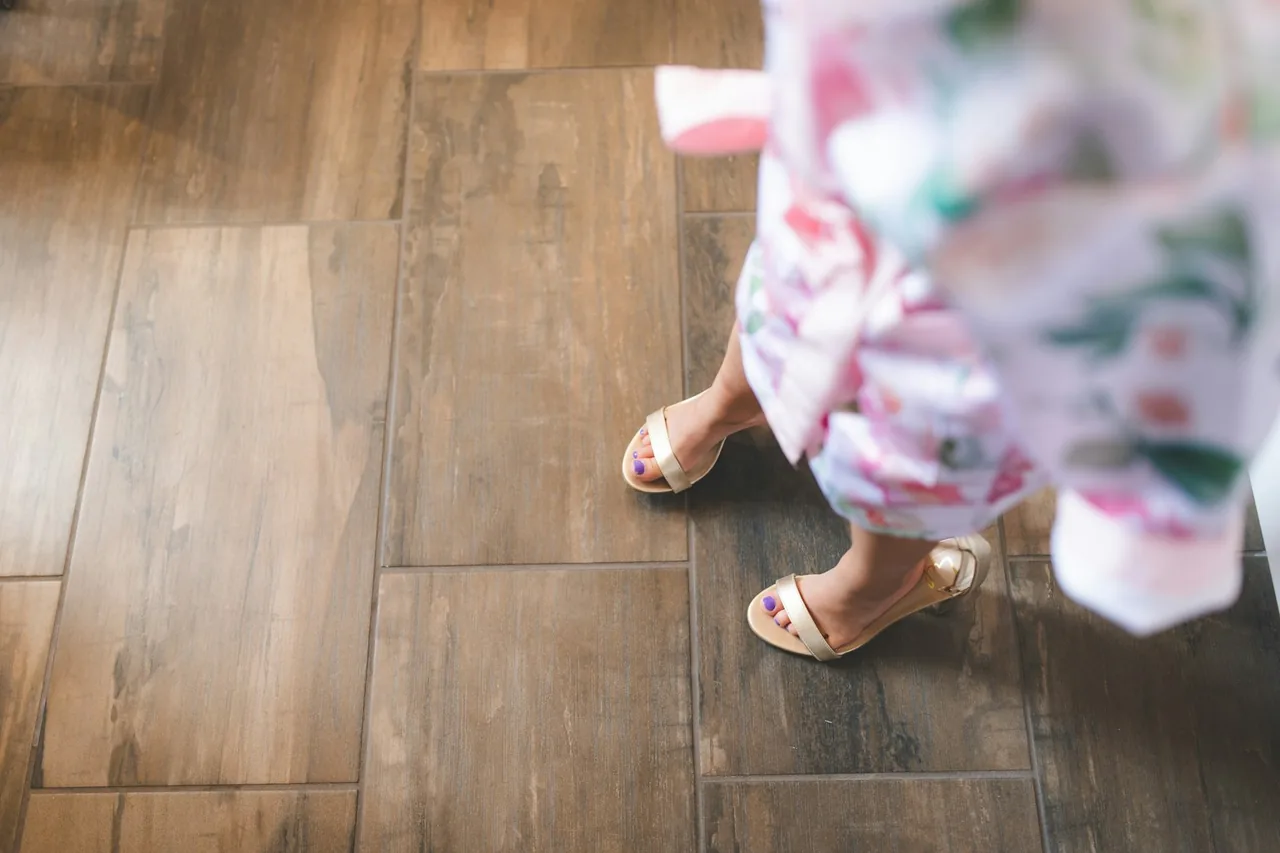
The best pet-friendly flooring is a hard, waterproof, scratch-resistant surface with enough traction that a running dog does not slip — which is why luxury vinyl plank, porcelain tile, high-AC laminate, and solution-dyed carpet win for homes with animals, and why soft solid hardwood loses. Three measurable properties decide it: scratch resistance (the wear layer or hardness rating), water resistance (whether an accident soaks in or wipes up), and traction (the DCOF rating that keeps claws from sliding out). A floor that scores well on all three survives claws, spills, and zoomies for its full service life; a floor that misses even one scratches, stains, or leaves your pet skating across it. Get a free consultation and a written scope from a vetted installer, and match the spec to your specific animal before you buy a single box.
What Actually Makes a Floor Pet-Proof
A pet-friendly floor is not a marketing category — it is a floor that measures well on three specific properties, each with a published number, and fails your animal if it misses any one. The showroom look tells you nothing about how a floor survives a Labrador; the ratings do.
The Three Properties That Decide a Pet Floor
Every floor that earns "pet-friendly" is scoring on the same three axes, and the right pick maxes all three for your animal rather than winning one and losing the others:
- Scratch resistance — whether claws leave permanent marks. On hardwood this is Janka hardness in pounds-force; on laminate it is the AC rating; on luxury vinyl it is the wear layer thickness in mils; on tile it is the PEI class. A soft surface shows every nail track within a season.
- Water resistance — whether an accident wipes up or soaks in. A waterproof core shrugs off urine, vomit, and knocked-over water bowls; a moisture-sensitive floor cups, stains, and starts to smell where liquid sits and wicks under the surface.
- Traction — whether a running animal keeps its footing. Measured by DCOF, a slick floor sends claws sliding, and over years of slipping that can stress a dog's hips and joints. A textured, matte, or embossed surface gives paws something to grip.
Miss scratch and the floor looks ruined; miss water and it stains and smells; miss traction and you have made your own pet less sure-footed in its own home — which is why the winning materials are the ones that clear all three, not the prettiest plank in the display.
Why Your Specific Animal Changes the Answer
"Pets" is not one specification. A 90 lb dog with untrimmed nails is a scratch-and-traction problem; a house of cats is a claw-and-accident problem; a senior dog that has trouble standing is a traction-first problem above all else. The floor that suits a single indoor cat is not automatically the floor that suits three large dogs, so a credible recommendation starts by naming the animal, its size, its claws, and its habits — then matches the spec to that reality. The general answer below holds, but the weighting shifts with your household.
How to Choose the Best Flooring for Your Pets, Step by Step
Choosing a pet floor is a short, ordered process — profile the animal, then rank the three properties for that animal, then match a material, then confirm the room and the install. Run the six steps below in order and a defensible pick almost always survives.
Profile Your Animal Honestly
Name the species, the size, the claw situation, and the habits. A large dog that runs indoors weights traction and scratch resistance; a cat weights claw resistance and accident cleanup; multiple animals compound everything. Write down the hardest thing your pet does to a floor — that is the property your material has to win.
Rank the Three Properties for That Pet
Put scratch, water, and traction in priority order for your specific animal. Most dog households lead with scratch resistance and traction; most cat and puppy households lead with waterproofing for accidents. The ranking decides which spec you refuse to compromise and which you can trade.
Match a Material to the Top Property
Take your number-one property to the options table below. Leading with waterproofing points to rigid-core waterproof vinyl or porcelain; leading with scratch resistance points to porcelain, high-AC laminate, or a very hard wood species; leading with comfort-plus-forgiveness points to stain-resistant carpet.
Confirm Traction and Finish
Check the surface texture and, on tile, the DCOF — a matte, embossed, or textured face grips paws far better than a high-gloss one. A glossy floor that scores well on scratch and water can still fail the traction test, so this check stands on its own before you commit.
Match the Choice to the Room
Layer the room over the material. A kitchen or laundry room demands waterproofing; a basement adds slab moisture; a bedroom where the dog sleeps can trade some hardness for comfort. The room can veto a material the pet spec allowed.
Get an Itemized Written Scope
Bring the shortlist to a vetted installer for an on-site assessment and a written, itemized quote — material, subfloor prep, transitions, and removal as separate lines. The installer confirms the subfloor can carry the choice and puts the manufacturer's scratch, water, and wear specs in writing before anything is ordered.
Run in this order, the process converts a vague "what floor is good with dogs" into one material, matched to your animal and your room — and an installer who skips straight to a product without profiling the pet is guessing.
Not sure which floor your pet won't destroy?
Tell us about your animals and your rooms, and we will match you with a vetted installer who recommends the right spec — scratch, water, and traction — in a written quote, free and with no obligation.
Pet-Friendly Flooring Options, Ranked
The materials below are ranked for a typical dog-and-cat household on the three properties that decide a pet floor. The order shifts with your animal — a comfort-first senior-pet home weights differently than a large-active-dog home — but for scratch, water, and traction together, this is the standing.
The Pet-Flooring Ranking Table
The table lines up each material on scratch resistance, water resistance, traction, and cleanup, so you can see why the top options win and the bottom ones lose.
| Rank | Material | Scratch resistance | Water resistance | Traction | Cleanup | Best for |
|---|---|---|---|---|---|---|
| 1 | rigid-core luxury vinyl | High — thick 20 mil wear layer | Waterproof (rigid core) | Good — embossed texture | Wipe or mop; accidents lift easily | Most pet households, any room |
| 2 | porcelain floor tile | Very high — PEI IV–V | Waterproof (<0.5% absorption) | High with matte/textured, DCOF ≥ 0.42 | Impervious; nothing soaks in | Big dogs, wet rooms, hot climates |
| 3 | High-AC laminate | High — AC5 abrasion class | Water-resistant only (swells if soaked) | Good — textured face | Wipe fast; do not let liquid sit | Dogs, budget, dry rooms |
| 4 | a solution-dyed carpet fiber | Moderate — fiber-dependent | Stain-releasing, not waterproof | Excellent — soft, no slipping | Blot and treat; pad matters | Bedrooms, seniors, comfort-first |
| 5 | Very hard hardwood (hickory) | High species (1820 lbf) — but finish still marks | Poor — moisture-sensitive | Good matte finish; slick when glossy | Wipe fast; refinish to renew | Look-first homes, small/light pets |
| Avoid | Soft solid hardwood (walnut, pine) | Low — 1010 lbf and under, dents and scratches | Poor — cups and stains from accidents | Often glossy and slick | Marks show; costly to refinish | Not recommended for active pets |
Why Luxury Vinyl Plank Ranks First for Most Pet Homes
luxury vinyl planks — LVP — wins for the broadest range of pet households because it is the only mainstream floor that clears all three properties at once: a thick wear layer resists claws, the rigid SPC or WPC core is fully waterproof so accidents never soak in, and the embossed surface gives paws traction. It is warmer and quieter underfoot than tile, forgiving of a slab, and simple to clean. For a home that wants one floor to handle dogs, cats, and every room, LVP is the default answer — specify a 12 mil wear layer for lighter use and 20 mil for large or multiple dogs.
Wear-Layer Mil: The Number That Predicts Claw Survival on Vinyl
On luxury vinyl the single spec that predicts how long it survives your pet is the wear-layer mil — the thickness of the clear top coat measured in mils, not the plank's overall thickness. A 6 mil layer suits light residential traffic; 12 mil handles a busy household; 20 mil and up is built for heavy traffic and big dogs. Two planks of identical total thickness can carry very different wear layers, so this is the number to confirm on the spec sheet before you buy — a thick plank with a thin wear layer scratches faster than a thinner plank with a heavy one.
Wear Layer vs. Total Plank Thickness
The one confusion worth clearing is that a plank's advertised thickness — say 8 mm — describes the whole board, including the rigid core, while the mil figure describes only the clear wear layer on top. Claw resistance rides entirely on the wear layer, so a marketing number that leads with overall thickness while burying the mil is a signal to read the spec more carefully. For a pet, ask for the wear-layer mil explicitly and treat the total thickness as a comfort-and-stability figure, not a scratch-resistance one.
Why Porcelain Tile Is the Most Indestructible Pet Floor
a porcelain floor is the hardest, most impervious option on the list — rated PEI IV–V for floor traffic, absorbing under 0.5% water per ASTM C373, and completely immune to claws and accidents. Nothing soaks in, nothing scratches through, and in a warm climate it stays cool for a panting dog. Its two trade-offs are that it is hard and cold underfoot (a rug fixes the resting spots) and that grout needs sealing to stay clean. For the largest, most destructive dogs and for wet rooms, porcelain is the floor that outlasts the pet — just specify a matte or textured face with a DCOF ≥ 0.42 so it grips wet paws.
Why Solution-Dyed Carpet Still Belongs in a Pet Home
Carpet seems like the wrong answer for animals until you separate the fiber types. Ordinary carpet stains and holds odor, but solution-dyed, stain-release carpet has color locked into the fiber — the pigment runs all the way through, so it resists bleaching, fading, and staining, and factory stain-release treatments let spills blot up instead of setting. It offers something no hard floor can: traction and cushioning that a senior or arthritic pet needs to move confidently, with no slipping. Keep it out of the litter-box room and off any below-grade slab, but in a bedroom floor where the dog sleeps, solution-dyed carpet with a moisture-barrier pad earns its place.
The Specs That Matter for a Pet Floor
Every pet-flooring claim traces back to a published rating on a scale you can check. Learning the four that matter turns a showroom pitch into a decision you can verify — because "great with pets" means nothing next to a wear-layer mil, an AC class, a Janka number, or a DCOF reading.
Scratch and Abrasion Ratings, by Material
Each material grades scratch resistance on its own scale, and the rating — not the finish sheen — predicts how it survives claws. Match the number to how hard your animal lives.
Janka Hardness for Hardwood
Janka hardness is the pounds-force needed to embed a steel ball halfway into a wood species — the dent-and-scratch resistance rating for hardwood. It matters for pets because a soft species records every nail track: American walnut sits near 1010 lbf and marks easily, red oak around 1290 lbf, maple near 1450 lbf, and hickory around 1820 lbf — the hardest common domestic species and the only wood most large-dog homes should consider. A harder species survives claws better, but even the hardest wood scratches at the finish, so wood is a look-first choice, not the pet-proof one.
AC Rating for Laminate
Laminate grades its wear surface on the AC rating — Abrasion Class, from AC1 for light residential up to AC5 for heavy commercial. For a pet home the floor should be AC4 at minimum and ideally AC5, because the aluminum-oxide wear layer that resists a busy storefront is exactly what resists a dog's nails. High-AC laminate scratches far less than any wood, but its fiberboard core is the catch below.
PEI Class for Tile
Floor tile grades surface hardness on the PEI scale — Porcelain Enamel Institute, I through V — where a busy pet floor wants at least PEI III–IV and porcelain commonly reaches PEI V. Because porcelain outranks every other material for scratch resistance and is set per TCNA and ANSI standards, it is the floor claws simply cannot mark.
Water Resistance: Waterproof vs. Water-Resistant
The distinction that matters most for accidents is the difference between waterproof and merely water-resistant, and the words are not interchangeable. A waterproof floor — rigid-core vinyl, porcelain tile — has a core that will not swell, so urine or a spilled bowl can sit and still wipe up. A water-resistant floor, including standard laminate, tolerates a quick wipe but swells if liquid sits or wicks into the seams. For a puppy in training or a senior pet, waterproof is not a luxury; it is the difference between a wipe-up and a replaced plank — which is why the waterproof flooring category exists as its own answer.
Traction: The DCOF Rating That Keeps Paws Under a Pet
The most overlooked pet spec is traction, measured by the DCOF — Dynamic Coefficient of Friction — where the recognized threshold for a floor expected to get wet is DCOF ≥ 0.42 per ANSI A137.1. It matters because a slick, glossy floor sends a running dog's claws skating, and years of slipping can stress a large dog's hips and joints. A matte, textured, or embossed surface raises traction; a high-gloss finish lowers it. On tile you can read the DCOF on the spec sheet; on vinyl and laminate you judge it by the embossing and matte finish. Traction is the property a beautiful glossy floor most often fails.
The Pet-Spec Reference Table
The table gathers the recognized ratings a pet floor is judged on, with the target for an active household. These are representative documented values — the product's own spec sheet always governs.
| Property | Rating / scale | Source / standard | Target for a pet home |
|---|---|---|---|
| Hardwood scratch resistance | Janka hardness (lbf) | Janka hardness scale | Prefer harder species; a hard hickory species 1820 lbf |
| Laminate abrasion | AC rating (AC1–AC5) | Manufacturer / EN 13329 | AC4–AC5 |
| Vinyl claw resistance | Wear layer (mil) | Manufacturer spec | 12–20 mil |
| Tile surface hardness | PEI class (I–V) | TCNA / ANSI | PEI IV–V |
| Wet-floor traction | DCOF | ANSI A137.1 | ≥ 0.42 |
| Water resistance | Waterproof vs. water-resistant | Manufacturer / core type | Waterproof core for accidents |
The lesson is that "pet-friendly" resolves into four checkable numbers, and a floor that hits the target on all of them earns the label — while one that leads with a look and hides a soft core or a glossy face does not. Compare any two materials side by side on these specs with the material comparison tool.
Which Pet Floor Is Right for Your Home?
The right pet floor is the output of a short chain of facts about your animal and your room, not a preference. Walk the decision in order; each branch removes the materials that do not fit, and what survives is the defensible pick.
- How big and how destructive is your animal? A large or multiple dogs, or any animal that runs indoors, points to the hardest options — porcelain tile flooring or LVP with a 20 mil wear layer. A single small or light-clawed pet opens the door to a very hard wood or a mid-tier vinyl.
- Are accidents likely — puppy, senior, or cat? If yes, waterproof is non-negotiable: rigid-core waterproof rigid-core vinyl or impervious porcelain, so urine and vomit wipe up instead of soaking in. If accidents are not a real risk, water-resistant laminate or wood re-enters the field.
- Does your pet slip, or is it aging? A senior, arthritic, or large-breed dog weights traction above all — favor an embossed vinyl, a matte textured tile at DCOF ≥ 0.42, or a stain-release carpet in its resting rooms. Rule out any high-gloss surface.
- Which room is it, and is it below grade? A kitchen floor, bathroom, or a laundry-room floor demands waterproofing; a below-grade basement adds a slab-moisture test that rules out solid wood entirely; the bedroom can trade hardness for comfort. The room can veto a material the pet spec allowed.
- Comfort or indestructibility first? If the floor must be softest and warmest for a resting pet, solution-dyed carpet with a moisture-barrier pad wins its rooms; if it must be the most bomb-proof surface in the house, porcelain wins; if you want the best all-around balance for the whole home, LVP is the single-material answer.
Run honestly, this tree usually returns one material — and if it returns two, the winner is whichever better serves the property you ranked first for your animal.
Get the pet spec matched to your actual home.
We connect you with a vetted installer who profiles your animals and rooms, names the right waterproof, scratch, and traction spec, and quotes it itemized — free, no obligation.
Common Pet-Flooring Mistakes, Consequences, and Prevention
Most disappointing pet floors come from the same handful of shortcuts, each with a predictable consequence and a known prevention. Naming them is how you avoid buying a floor your animal ruins in a season.
| Mistake | What it causes | The prevention |
|---|---|---|
| Buying soft hardwood for a big dog | Nail tracks and dents across the whole floor within a season | Choose a hard species (hickory flooring), a harder material, or accept wood is look-first |
| Choosing a glossy finish | Claws slide; a running or aging dog skates and can strain joints | Specify matte, textured, or embossed; on tile confirm DCOF ≥ 0.42 |
| Confusing water-resistant with waterproof | Standard laminate swells and delaminates where accidents sit | Use a waterproof rigid core where accidents are likely |
| Ignoring the wear-layer mil on vinyl | A thin top coat scratches through even on a thick-looking plank | Confirm 12–20 mil wear layer, not just total plank thickness |
| Ordinary carpet in a pet room | Set-in stains and trapped odor that never fully clean | Use solution-dyed, stain-release fiber with a moisture-barrier pad |
| Skipping the slab test in a basement | Wood cups and molds; even vinyl can trap moisture below grade | Test the slab first via subfloor prep; pick a rated assembly |
| Leaving nails untrimmed | Even a hard floor scratches faster under long, sharp claws | Keep nails trimmed and add rugs at high-traffic turns and landings |
Every row is a preventable disappointment — and the first two, soft wood and a glossy finish, are the ones a showroom most often steers a pet owner toward because they photograph well.
Matching the Pet Floor to the Room
The pet spec sets the material, but the room can override it — moisture, traffic, and where the animal actually spends its time all shift the right answer from space to space.
Kitchen, Laundry, and Wet Rooms
The rooms where food, water bowls, and accidents concentrate demand waterproofing first. A kitchen floor and a laundry room floor want rigid-core a waterproof vinyl core or a porcelain surface, both of which shrug off a knocked-over bowl and wipe clean. This is the zone where water resistance outranks every other property, so it is also the zone where soft wood and standard laminate are ruled out first.
Basements and Below-Grade Spaces
A the basement floor adds a constraint no other room has: the concrete slab carries ground moisture, so the assembly matters as much as the surface. Solid hardwood is out entirely; the safe picks are rigid-core waterproof vinyl or epoxy over a slab that has passed a moisture test during substrate preparation. A pet floor below grade is a moisture decision before it is a scratch decision.
Bedrooms and the Pet's Resting Rooms
Where the animal sleeps, comfort and traction can outweigh raw hardness. A bedroom flooring is the one room where solution-dyed fiber earns its place — warm, quiet, and sure-footed for a senior dog — provided it is a stain-release fiber over a moisture-barrier pad. If you prefer a hard floor here, a matte-finished engineered hardwood pairs well with a large washable rug at the pet's bed.
Living Rooms and High-Traffic Turns
The living room and the paths a dog runs — hallways, the turn at the back door, the landing at the stairs — take the most abrasion and the most slipping. These are the spots to lead with LVP or porcelain and to add washable runners at the turns, because traction and scratch resistance both peak where the animal accelerates and stops. For the dedicated animal answer across the home, start from the pet-friendly flooring hub.
What Drives the Cost of a Pet-Friendly Floor
A pet floor is priced like any floor — there is no "pet tax" line item — but a few choices that make a floor more pet-proof also move the number, and knowing them lets you read a quote critically.
The Choices That Move a Pet-Floor Budget
The cost drivers below are the ones a pet-focused spec touches most; each is a real line item, not a flat rate, which is why an on-site quote is the only honest number:
- Material and durability grade. A thicker 20 mil wear layer, a PEI V porcelain, or a harder wood species costs more than the entry grade — and for a destructive pet, that upgrade is the point.
- Waterproof core vs. standard. A rigid-core waterproof product typically costs more than a water-resistant one, but it is cheap insurance against a replaced plank after an accident.
- Subfloor prep and moisture control. Flatness correction and, below grade, a moisture system are real material and labor a sound, dry substrate avoids — and the item a low bid quietly omits.
- Traction detailing. A textured or matte tile, or added transition strips at turns, can carry a small premium over the glossy default.
- Removal and disposal. Tearing out a pet-damaged floor is labor plus a haul-away fee, and removal often exposes subfloor problems that change scope.
- Rugs, runners, and transitions. Washable runners at high-traffic turns are not part of the install but belong in the real budget for a pet home.
Because these swing widely, the only honest figure comes from an on-site assessment. Compare what moves the price by material in our cost guides — see vinyl flooring cost and tile flooring cost — and size your own room first with the flooring cost calculator so you can read a quote line by line.
Get a spec-matched recommendation
Tell us your surface, room, and goals — free, independent guidance and a vetted installer, nationwide.
The Pet-Floor Fit Framework: Six Checks Before You Buy
Before ordering any pet floor, run it through the same six-check framework a careful installer uses. Each check maps to a property that decides whether the floor survives your animal, and a floor that clears all six is a floor matched to your pet — not just to a showroom.
- 1. Animal profile matched
- The floor is chosen against the specific animal — species, size, claws, and habits — not "pets" in the abstract. A large active dog and a single indoor cat are different specifications, and the material reflects which one lives in the house.
- 2. Scratch rating verified
- The material's own scratch spec is confirmed on the sheet: AC4–AC5 for laminate, 12–20 mil wear layer for vinyl, PEI IV–V for tile, or a hard Janka species for wood — the number, not the showroom finish.
- 3. Water resistance right for the risk
- Where accidents are likely, the floor has a waterproof core, not merely a water-resistant surface — the difference between a wipe-up and a swollen, replaced plank for a puppy or senior pet.
- 4. Traction confirmed
- The surface grips paws: an embossed or matte finish, and on tile a DCOF of ≥ 0.42. Any high-gloss candidate is re-checked here, because gloss is where a good-looking floor fails a running dog.
- 5. Room and substrate cleared
- The room's demands are layered over the material — waterproofing for wet rooms, a passed slab-moisture test below grade, comfort where the pet rests — so the room does not veto the choice after purchase.
- 6. Cleanup and upkeep realistic
- The floor's real maintenance fits the household: how accidents clean up, whether grout needs sealing, whether a pad and stain-release fiber are specified for carpet — the day-to-day upkeep you will actually live with.
Clear all six and the floor is matched to the animal, the room, and the way you live; miss one and that is precisely the axis on which a pet floor tends to disappoint.
Pet-Flooring Glossary
The terms below recur in every pet-flooring spec sheet and showroom pitch — each defined as its working meaning for a home with animals, so you can read a label and judge whether a floor is genuinely pet-proof.
- Janka hardness
- The pounds-force needed to embed a steel ball halfway into a wood species — the dent-and-scratch rating that predicts how a hardwood survives claws. the hickory species near 1820 lbf is the hard end; walnut near 1010 lbf marks easily.
- AC rating
- Laminate's Abrasion Class, AC1–AC5, grading how the wear surface holds up to traffic and claws. A pet home wants AC4–AC5.
- Wear-layer mil
- The thickness of luxury vinyl's clear top coat, in mils — the spec that predicts how long it resists scratches, independent of total plank thickness. 12–20 mil for pets.
- PEI class
- The Porcelain Enamel Institute scale, I–V, rating floor-tile surface hardness. Pet floors want PEI IV–V, which porcelain commonly reaches.
- DCOF
- Dynamic Coefficient of Friction — the traction rating for a floor in motion, with ≥ 0.42 the recognized threshold for wet floors under ANSI A137.1. The spec that keeps a running dog's claws from sliding.
- Waterproof vs. water-resistant
- Waterproof means the core will not swell, so accidents can sit and still wipe up; water-resistant tolerates a quick wipe but swells if liquid sits — the distinction that decides whether an accident costs a wipe or a plank.
- Solution-dyed fiber
- Carpet fiber with pigment locked through the strand rather than dyed on the surface, so it resists bleaching, fading, and staining — the reason a carpet can belong in a pet room at all.
- Rigid core (SPC/WPC)
- The waterproof center of a luxury vinyl plank — SPC (stone-plastic) or WPC (wood-plastic) — that gives the floor its dimensional stability and immunity to accidents.
- Embossing
- The surface texture pressed into vinyl or laminate that adds traction for paws and, when registered to the print, mimics real wood grain. The texture is part of what makes a floor pet-sure-footed.
- Stain-release treatment
- A factory finish on carpet fiber that lets spills bead and blot up before they set — the treatment that turns ordinary carpet from a stain magnet into a pet-tolerable surface.
- Moisture-barrier pad
- A carpet cushion with a built-in impermeable layer that stops an accident from soaking through into the subfloor — essential for carpet in any home with animals.
- PEI
- Porcelain Enamel Institute — the body behind the tile-hardness class of the same name; its scale is the shorthand for how much floor traffic and abrasion a tile withstands.
Keeping a Pet Floor Looking New
A well-chosen pet floor still lasts longer with a little routine, and the upkeep differs by material — a few minutes of the right habit prevents the wear a pet otherwise leaves.
Trim, Sweep, and Place Rugs
The three habits that protect any pet floor are trimming nails so claws stay blunt, sweeping or dry-dusting grit before it acts like sandpaper underfoot, and placing washable rugs at the turns and landings where a dog accelerates. Grit is the quiet enemy — tracked-in sand scratches a floor faster than claws do — so frequent dry pickup matters more than deep cleaning.
Clean Accidents Immediately
On a waterproof floor an accident is a wipe-up, but it is still a fast one: standing urine can etch grout and, on any floor with seams, wick in if it sits. Blot, clean with a pet-safe enzymatic cleaner, and dry. On carpet, blot rather than rub and treat with an enzymatic product that breaks down odor at the source rather than masking it.
Refresh, Reseal, and Repair
When wear does show, the fix depends on the floor: a hardwood can be renewed by refinishing rather than replaced; tile grout is periodically resealed; a scratched vinyl or laminate plank can often be swapped individually. If damage is localized, flooring repair beats replacement; if a pet has ruined a floor wholesale, a full replacement in a properly pet-matched material is the reset. For the detailed hardwood routine, see our guide on how to clean hardwood floors.
A Real Pet-Floor Decision
One representative scenario shows how profiling the animal — not the showroom favorite — drives the pick.
How to Vet an Installer for a Pet-Floor Project
The right material still needs the right install, and for a pet home a few questions separate an installer who matches the floor to your animal from one who simply sells the plank on display. Use these to judge the crew before you commit.
- They ask about your animals before they recommend
- A credible installer wants to know the size, number, claws, and habits of your pets before naming a floor — because the spec follows the animal. One who leads with a product before asking about the dog is selling, not matching.
- They name the scratch and water spec, not just the look
- Ask what makes their recommendation pet-proof. A real answer cites the wear-layer mil, the AC class, the PEI rating, or the waterproof core — the numbers — rather than "it's really durable."
- They check traction and finish for a running pet
- The installer should raise the gloss-versus-matte question and, on tile, the DCOF, unprompted — because a slick floor is the failure a pet owner does not see coming.
- They test the substrate, especially below grade
- For a basement or slab, ask which moisture test they run and what limit the floor requires. A pet floor over an untested wet slab fails no matter how pet-proof the surface is.
- They handle removal, transitions, and trim cleanly
- Ask whether tear-out of the old (often pet-damaged) floor and disposal are included, and how transitions at doorways and stairs are finished — the edges are where rushed work and future scratches start.
- They put the scope and the manufacturer's spec in writing
- Ask for the full scope, the material's pet-relevant specs, and any workmanship warranty in writing before work starts. A crew that names the wear layer and the water rating in the quote is accountable for the floor you were promised.
Why Route Your Pet-Flooring Project Through Pro Work Home Surface
Pro Work Home Surface is not a contractor and does not install your floor — we are a national authority on home surfaces that matches homeowners with vetted local installers and holds them to a published bar, so a pet floor is matched to your animal, not to whatever is on the showroom floor.
- A free consultation and an itemized written scope
- Every connection starts with a no-obligation consult and a written quote that lines out the durable material, subfloor prep, transitions, and removal separately — so you see the whole pet-floor job, not a headline rate.
- A real vetting standard, applied before we connect you
- Installers are screened on whether they profile your animals, cite the scratch, water, and traction specs, and test the substrate — the things that decide whether a floor survives a pet.
- Spec matched to your animal, every time
- The recommendation is built from your specific pets and rooms and confirmed against the manufacturer's published ratings — wear-layer mil, AC class, PEI, and DCOF ≥ 0.42 — before any product is ordered.
- National coverage, local crews
- We match you with installers in your area nationwide, so the pet-floor standard is consistent even though the crew is local — whether it is one room or a whole home.
Flooring is one of eight categories we cover across home surfaces. If your pet project also touches fixing a scratched or stained section, renewing a worn finish, or a full tear-out and replacement, the same standards apply — compare the animal-ready materials from vinyl to tile to carpet, weigh a hardwood-versus-vinyl decision, size the job with our spec-comparison tools, and start from the pet-friendly use-case or the full range of home surfaces.