Metal stairs are a staircase whose structure — and often its treads and railing — is fabricated from steel or aluminum rather than cut from wood. One fact decides whether a metal stair is right for your home, and it lives in the shop, not the showroom: these stairs are welded and engineered to a drawing, so the quality is in the steel work and the coating, not in a finish you choose later. A stringer made of steel can span and cantilever in ways wood can't — but the flight still obeys the same code as any other: risers capped at 7-3/4", runs at 10" minimum, uniformity within 3/8", a guard at least 36" on any open side, and an open metal tread held to the same 4"-sphere rule as a floating stair. Get a free consultation and a written, engineered scope from a vetted fabricator-installer before steel is cut — once it's welded and coated, it can't be trimmed in the field.
Metal Stairs Are a Fabricated Frame, Built to a Drawing
A metal staircase replaces the wood structure of a traditional flight with a fabricated steel or aluminum frame. The defining truth — and the one that should shape who you hire — is that the stair is built in a shop to engineered drawings, then set in the home. Understanding what's fabricated and what's bolted on is how you judge a quote.
Mono-Stringer, Twin-Stringer, and What Carries the Load
The most common forms are a steel mono-stringer — a single central beam carrying the treads — and twin steel stringers that mimic a closed flight in a thinner, stronger profile. The treads bolted or welded to that frame can be steel plate, but just as often they are wood or stone, so a "metal stair" is frequently a steel structure wearing a warm tread. The railing, too, is usually metal: pickets, rod, or a frame holding glass or cable. Knowing which part is structural — the stringer and its welds — and which is finish tells you where the quality has to be.
The Quality Is in the Welds, Not the Paint
On a wood stair, a homeowner can judge a lot by looking. On a metal stair, the structural quality is hidden inside the steel: a clean, full-penetration weld looks much like a cold, weak one under a coat of paint. That is why a metal stair belongs with a real fabricator working to a drawing rather than a general crew improvising in the field — and why the specification names the steel grade, the member sizes, and the weld type, none of which are field decisions. The finish you see is the corrosion defense; the welds you don't see are the structure.
Where Metal Stairs Genuinely Win — Thinness, Range, and Span
Metal earns its place on three fronts no wood flight can match. Naming them is how you decide whether metal's premium buys you something for your space.
Strength-to-Thinness: A Clean Line Instead of a Bulky Sawtooth
Steel carries loads in a far slimmer section than wood, so a metal stringer reads as a clean line rather than a bulky sawtooth. That strength-to-thinness is exactly why floating and minimalist stairs almost always use a steel substructure underneath — the structure can nearly disappear. Where a wood stringer has to be deep to carry its load, a steel one can be slim and still stiff, which is the visual the modern look depends on.
Aesthetic Range: Raw Industrial to Crisp Modern
From raw industrial steel to a crisp powder-coated modern flight, metal sets a tone wood can't, and it suits lofts, contemporary homes, and any space going for an industrial or minimalist look. The same fabricated frame can be left exposed as the feature or finished in any color, so metal flexes from a deliberate industrial statement to a clean, near-invisible structure depending on how it's coated.
Span and Form: Cantilever, Curve, and Long Runs
Steel can cantilever, curve, and run long unsupported spans that would over-tax a wood stringer. If a design calls for a flight that floats off a wall, sweeps in a curve, or crosses a long run without intermediate support, steel is the material that makes it structurally possible. Because the structure is steel, a metal stair also pairs flexibly with other surfaces: wood treads on a steel frame can match a wood floor, stone treads can echo a tile or stone surface, and the same steel substructure is what makes a floating stair possible. Metal is the structural backbone that lets other materials do the showing.
Want a metal stair engineered and coated for your space?
We match you with a vetted fabricator-installer who builds to stamped drawings and matches the coating to your environment — and puts the steel grade, welds, and finish in a written scope.
Where Metal Stairs Fail — Corrosion, Noise, and Bad Welds
Metal's failures are about the metal — corrosion, sound transmission, and the quality of the fabrication. Each has a mechanism and a known prevention, and the third is the one that actually decides safety.
Corrosion: Rust Starts at the Welds and Connections
Bare or poorly finished steel rusts wherever moisture reaches it, and the danger spots are the welds and connections, where a protective coating is most likely to be thin or burned away. A steel stair in a humid entry, an unconditioned space, or anywhere near outdoor exposure needs a proper finish — galvanizing, primer, and powder coat, or a coating system matched to the environment — or it will streak rust at the joints and, over years, lose section where it matters most. Aluminum sidesteps rust but can suffer galvanic corrosion if it contacts dissimilar metals without isolation. The prevention is a coating matched to the environment, applied complete at the welds.
Noise: Steel Rings and Rattles Without Treatment
Metal transmits sound, so a metal stair can ring, clang, or echo underfoot in a way a wood stair never does — bare steel treads are the worst offenders, and a loose connection turns every footfall into a rattle. The prevention is in the design: wood or stone treads, rubber inserts, and tight, well-detailed connections all quiet a metal stair, but a flight designed without thinking about acoustics will be loud. Noise is a design decision, not an accident.
Fabrication Quality: A Cold Weld Is a Hidden Defect
The third failure, and the one that matters for safety, is fabrication quality. A metal stair is only as good as its welds and its engineering. A cold weld, an under-sized member, or a connection that wasn't designed for the load is a structural defect hiding under paint — invisible until it flexes or cracks. This is why metal stairs belong with a real fabricator working to a drawing, not a general crew improvising in the field. When a finish fails or a connection works loose, the fix lives in stair repair, and a tired powder coat can sometimes be refreshed through refinishing.
Metal Stairs vs Wood, Floating, and Glass
Metal overlaps with the other stair types more than it competes with them, because it is so often the structure underneath. The honest comparison is about tone, warmth, and where the strength is needed — the matrix below sets it out.
| Material | Profile / span | Warmth & quiet | Key maintenance | Engineering demand | Where it wins |
|---|---|---|---|---|---|
| Metal | Thin, can span & cantilever | Cool, can ring — treat with wood/stone treads | Protect the coating from rust | Engineered fabrication, welds | Industrial, minimalist, long spans |
| Wood | Bulkier sawtooth, ordinary spans | Warm, quiet underfoot | Refinish the wear line | Standard carpentry | Traditional, repairable stairs |
| Floating | Open risers — usually steel-framed | Tread-dependent | Check anchors and hardware | Stamped structural design | Airy, modern entries |
| Glass | Transparent — needs a metal frame | Cool, shows every mark | Constant cleaning | Specialized glazing | Maximum-light showpieces |
Wood Trades Warmth and Quiet for Metal's Thinness
A wood stair is warmer, quieter, cheaper for a standard closed flight, and refinishable in place — but it is bulkier in profile and can't match steel's span or cantilever. The direct trade is warmth and quiet versus thinness and strength; many homes get both by putting wood treads on a steel frame, keeping the slim structure while softening the walking surface.
Floating and Glass Both Lean on Metal as the Engine
Floating stairs are, structurally, usually metal stairs — a steel mono-stringer or hidden steel substructure is how the floating look is achieved, so choosing "floating" often means choosing metal as the engine. Glass stairs rely on metal too: glass treads and panels need a metal frame, standoffs, and hardware to hold them, so a glass stair is a metal stair showing glass instead of steel. For most homes the question is what aesthetic you want and where you need the strength — and if you want floating or glass, you are choosing metal as the structure regardless. Across all of them, the tread and nosing still govern footing and code.
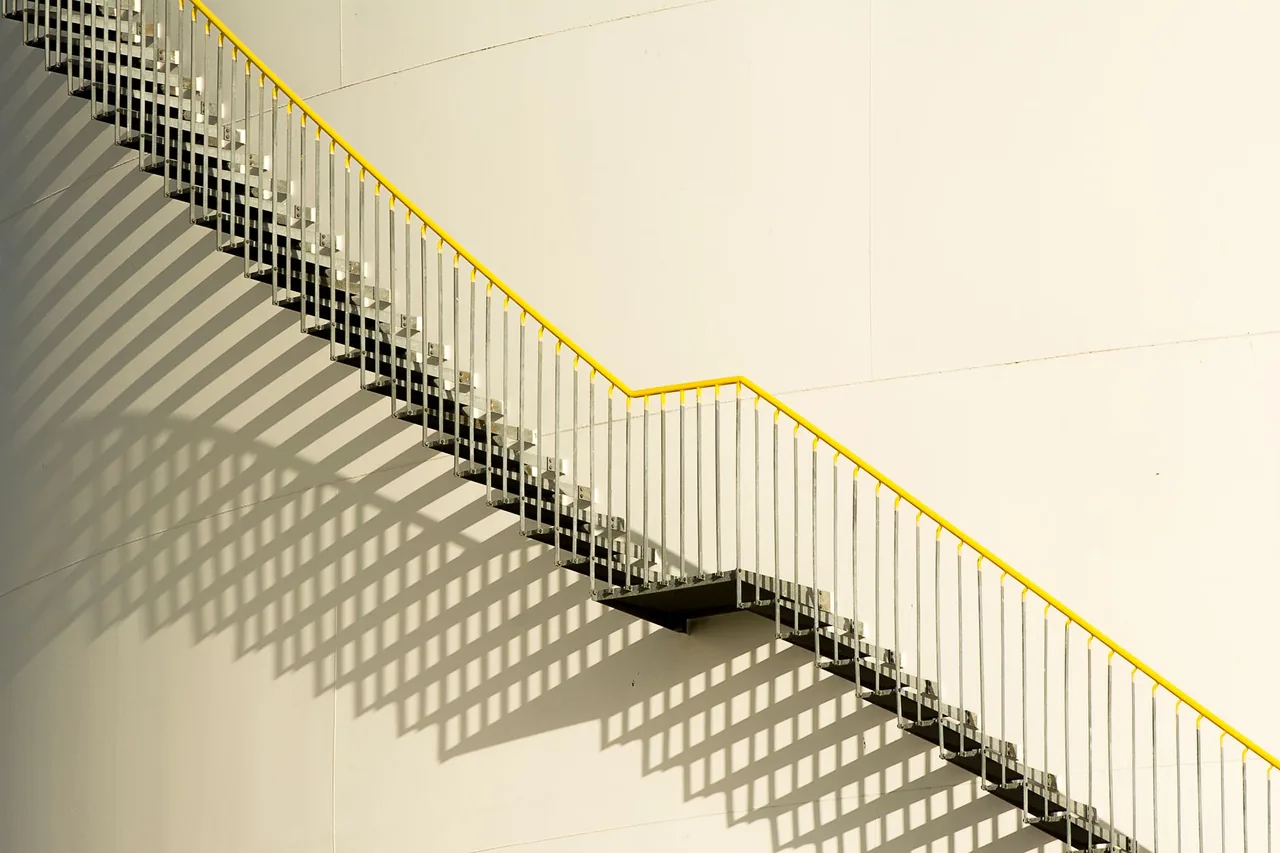
Metal Stair Specifications & Fabrication
A metal stair is specified in the shop, and three sets of numbers decide whether it is strong, lasting, and safe — the structural members, the coating, and the geometry.
Structural Members and Welds
Steel stringers, treads, and connections are sized by an engineer for the code loads — a concentrated load and a uniform live load — and steel's behavior is governed by its grade and section.
Steel Grade and Section
A common structural steel is ASTM A36, with tubular sections often to ASTM A500; the engineer picks the member size and wall thickness so deflection stays within limits and the stair doesn't flex. Grade and section together decide how slim the structure can be while staying stiff.
Why the Weld Spec Isn't a Field Decision
Weld type and size are part of the structural spec, not a field decision, because the welds carry the loads at every joint. A cold or undersized weld is a defect hidden under coating, which is precisely why a metal stair needs fabrication drawings and, frequently, a stamped design rather than a crew welding by eye.
What a Stamp Records on a Cantilevered Steel Flight
On a cantilevered or long-span steel stair, a stamped design is frequently required because the consequence of an undersized member is severe. The stamp is the record that an engineer sized the steel and the welds for the actual loads — your assurance the slim profile is also strong.
Coating: The Corrosion Defense You Buy
Corrosion resistance is bought, not assumed. For a clean, durable finish, the standard is a powder coat — an electrostatically applied, oven-cured finish far tougher than wet paint — usually over a primer or galvanized base for steel, which is why powder coat is the default for metal stairs. In damp or exposed conditions, hot-dip galvanizing under the coat adds a sacrificial zinc layer. Aluminum needs no rust protection but is often anodized or powder-coated for color and surface durability. The coating is matched to the environment, not just the color scheme, and it must be complete at the welds where rust starts.
Geometry and Railing That Don't Bend
The geometry and railing don't bend for the material. The IRC caps riser height at 7-3/4", requires a tread run of at least 10", and limits rise-and-run variation to 3/8" across the flight; the nosing projects 3/4" to 1-1/4" for footing. A handrail sits between 34" and 38" above the nosing line, and any open side more than 30" above the floor needs a guard at least 36" tall with infill that blocks a 4" sphere. Open metal treads also fall under the open-riser 4"-sphere rule, the same as floating stairs.
Metals, Finishes, and What to Specify
Within metal stairs the choices that matter are the metal itself, the finish, the tread material, and the railing — each changes durability, cost, and the look.
- Steel. The default for strength and value. It welds readily, spans far, and takes powder coat well — but it must be coated against rust, especially at welds and in damp spaces. Mild structural steel suits most flights.
- Aluminum. Lighter and corrosion-resistant without coating, which suits damp or near-outdoor locations, but it is softer and less stiff than steel, so members may need to be larger for the same load. Often anodized or powder-coated for color.
- Finish. Powder coat is the durable standard in any color; raw or clear-coated steel delivers a deliberate industrial look but needs the bare metal sealed against rust; galvanizing under the coat is the upgrade for moisture. The finish is the corrosion defense, so it's matched to the environment, not just the color scheme.
- Tread material. Steel plate or grating reads fully industrial; wood treads on a steel frame add warmth and quiet; stone treads echo a tile or stone surface. The tread is where grip, noise, and warmth are decided — see stair treads.
- Railing. Metal pickets, rod, or a frame holding glass or cable. The railing is usually part of the same fabrication, so it's specified with the stair to match the metal and finish.
Metals and Coatings, Side by Side
The metal-and-coating choice is really a corrosion-and-cost decision. The table rates the common options on the specs that decide where each belongs — stiffness, rust resistance, and the environment it suits.
| Option | Relative stiffness | Rust resistance (bare) | Typical finish | Best environment |
|---|---|---|---|---|
| Mild steel (ASTM A36/A500) | High — slim, strong sections | Low — rusts where moisture reaches | Primer + powder coat | Dry conditioned interiors |
| Steel + hot-dip galvanizing | High | High — sacrificial zinc layer | Galvanize under powder coat | Humid, unconditioned, near-outdoor |
| Aluminum | Lower — larger members per load | High — no rust, isolate dissimilar metals | Anodized or powder-coated | Damp or near-outdoor locations |
| Raw / clear-coated steel | High | Low — bare metal must be sealed | Clear sealer for industrial look | Dry interiors, deliberate patina only |
The thread through every choice is the same: pick the metal and coating for the environment first, then the tread and railing for the look — because the corrosion and noise problems are designed out at specification, not fixed later.
The Metal Stair Fit Test: Six Questions Before You Fabricate
Before steel is cut, a credible fabricator walks the same six questions — and on a metal stair they decide durability and safety, because the answers can't be changed once the frame is welded and coated. Call it the Metal Stair Fit Test: clear all six and the stair is built for the space it lives in.
- 1. Steel or aluminum for your conditions?
- Steel is stronger and cheaper but must be coated against rust; aluminum resists corrosion without coating and suits damp or near-outdoor spots, at the cost of stiffness. Match the metal to the environment first, then to the budget.
- 2. Exposed industrial, or crisp powder-coated modern?
- Raw or clear-coated steel reads industrial but needs the bare metal sealed; powder coat in any color gives a clean modern finish and the best corrosion defense. The finish sets both the look and the longevity, so decide it with the metal.
- 3. What tread keeps it warm and quiet enough?
- Bare steel treads are fully industrial but loud and slick; wood or stone treads on a steel frame add warmth, grip, and quiet. Decide how industrial you actually want the walking surface to feel — see stair treads.
- 4. Does it need to span or cantilever?
- If the design calls for a long unsupported run, a curve, or a floating look, steel's strength-to-thinness is the reason to choose metal. For an ordinary closed span, weigh whether metal's premium buys you anything wood doesn't.
- 5. How wet or exposed is the location?
- A humid entry, an unconditioned space, or near-outdoor exposure demands galvanizing under the coat or an aluminum frame; a dry interior can run a simpler powder coat. The environment, not the color, sets the coating system that keeps the welds from rusting.
- 6. Who is fabricating and engineering it?
- A metal stair is only as good as its welds and its engineering. Ask whether the stair is built to stamped drawings by a real fabricator, how the steel is coated, and at what welds. A general crew improvising in the field is the wrong fit.
Run honestly, the Fit Test settles the metal, the coating, and the fabricator before a single piece is cut — which is exactly why a vetted shop asks these before quoting a price.
Is a Metal Stair Right for Your Space?
Whether metal is the right call is the output of a short chain of facts about your aesthetic, your structural need, and your environment. Walk the decision in order; each branch points you toward metal or away from it.
- Start with the look and the span. If you want an industrial or minimalist aesthetic, a long unsupported run, a curve, or a floating flight, metal is the structural answer. If you want a warm, traditional stair on an ordinary span, a closed wood stair is simpler and cheaper — stop here.
- Decide where the warmth goes. If you love the slim steel structure but want a warm walking surface, the answer is wood or stone treads on a steel frame — you keep the thin profile and lose the clang. Pure steel treads only if the full industrial read is the goal.
- Check the environment. Is the stair in a dry interior, or somewhere humid, unconditioned, or near outdoor exposure? A wet location pushes you to galvanizing under the coat or an aluminum frame; a dry one runs a simpler powder coat. The environment sets the coating before the color does.
- Confirm the structural ambition. If the design cantilevers or spans long, confirm the fabricator engineers and stamps it. If it's an ordinary closed run, the engineering is simpler — but the welds still aren't a field decision either way.
- Match the fabricator to the job. Whatever survives, the build belongs with a real fabricator working to a drawing, not a general crew. If the only available installer welds by eye, that is the red flag — not the metal.
Run honestly, this tree returns a clear yes-or-no on metal and, if yes, the metal and coating the space needs — and a shop that quotes a metal stair without asking about the environment is the warning sign.
Match the steel and the coating to your space first.
Tell us about your staircase and we'll match a vetted fabricator-installer who picks steel or aluminum for your environment, sizes the welds to a drawing, and coats it in the shop — in writing.
How a Metal Stair Is Fabricated and Installed
A metal stair is built mostly before it reaches the home, and the sequence is what protects the structure and the finish. The six steps below run from field measurement to code sign-off.
Field Measurement and Shop Drawings
The exact floor-to-floor height, the run, and every connection are drawn so the flight lands code-compliant — because steel can't be trimmed on site the way a wood tread can. The drawings are where the geometry and the structure are locked, and where a stamp is added if the design demands it.
Cutting, Fitting, and Welding the Frame
The fabricator cuts, fits, and welds the stringers, tread supports, and railing in the shop to the drawing. This is where the structural quality is built and where good, full-penetration welds separate a sound stair from a defective one — the welds carry the load at every joint, sized to spec, not improvised.
Surface Prep and Galvanizing
Before any coating, the fabricated steel is cleaned to bare metal, and in damp or exposed conditions hot-dip galvanizing adds a sacrificial zinc layer under the finish. Prep is what makes the coating bond and last — a finish over mill scale or rust fails early, especially at the welds.
Powder Coating in a Controlled Shop
The steel is primed and powder-coated in a controlled shop environment so the coating — the corrosion defense — is complete and even, including at the welds. A stair finished in the field rarely gets the same protection, which is why finishing happens before installation, not after.
Setting and Anchoring the Flight
Installation sets and anchors the fabricated flight to the structure — bolting the stringers to the floor framing and the upper landing, and connecting any wall-side or mono-stringer support to a member that can carry the load. Heavier stairs may ship in sections to be bolted or welded together on site, with touch-up coating at any field weld.
Treads, Railing, and Code Verification
Treads, if not already welded, are fastened to spec, and the railing is set to the code heights and infill rule. The whole assembly is then checked against the IRC geometry — rise, run, uniformity, guard height, 4"-sphere infill — before sign-off, and any open treads confirmed against the open-riser rule.
Skip or rush any one of these six — most often the surface prep or the controlled-shop coating — and the failure it was meant to prevent shows up later as rust at the welds or a flexing member, which is why a metal stair is firmly the domain of a vetted fabricator-installer. See stair installation for how the trade handles it.
Talk through your project — free.
A free consultation and a written, itemized quote from a vetted installer. No pressure, no obligation.
Common Metal Stair Mistakes, Consequences, and Prevention
Most metal-stair failures are the same handful of shortcuts, each with a predictable consequence and a known prevention. Naming them is how you spot a corner being cut before it is welded and coated shut.
| Mistake | What it causes | The prevention |
|---|---|---|
| Coating that's thin at the welds | Rust streaks and section loss at the joints | Galvanize and powder-coat complete coverage, welds included |
| Bare steel in a damp location | Corrosion at connections; early structural loss | Match the coating to the environment, or use aluminum |
| Cold or undersized welds | A hidden structural defect under paint | Weld to the engineered spec; stamp where required |
| Bare steel treads, no acoustic plan | A stair that rings, clangs, and rattles | Use wood or stone treads, rubber inserts, tight joints |
| Aluminum touching dissimilar metal | Galvanic corrosion at the contact point | Isolate aluminum from dissimilar metals at connections |
| Finishing in the field, not the shop | Uneven, incomplete corrosion protection | Clean, prime, and powder-coat in a controlled shop |
| A general crew welding by eye | Field-guessed connections, unverified loads | Use a real fabricator building to stamped drawings |
Every row traces to one of two roots — a coating not matched to the environment, or a weld not built to spec — which is why "we engineer the steel, weld to the drawing, and coat for your conditions in the shop" is the most valuable sentence in a metal-stair quote.
Want an itemized metal-stair scope, not a headline rate?
A vetted fabricator-installer lines out the steel grade, the coating system, the treads, and the railing as separate items — so you read the whole fabrication, free and with no obligation.
Caring for a Metal Staircase
A metal stair is low-maintenance as long as the finish stays intact — the finish is the whole game. The routine splits into protecting the coating and watching the treads and connections.
Protecting the Coating
Keep the steel clean with a dry or barely-damp wipe; powder coat shrugs off everyday dirt and needs only routine cleaning, not waxing or sealing. The maintenance that matters is watching for any breach in the coating: a chip, scratch, or worn spot — especially at the high-wear nosing, at the connections, or on a tread edge — exposes bare metal, and on steel that is where rust starts. Touch up coating damage promptly rather than letting moisture reach the steel.
Treads, Connections, and Re-Coating
Treads and railing get their own attention. Bare steel treads can be slick, so an anti-slip insert or coating may be needed, and wood or stone treads on a steel frame care like the material they are. Connections should be checked periodically for any loosening that could introduce a rattle or, worse, movement — a metal stair that has started to clang at a joint is telling you a fastener has worked loose. When the powder coat finally dulls, fades, or chips widely, a metal stair can often be stripped and re-coated to look new again, the metal equivalent of refinishing wood; see stair refinishing. Surface rust or a loose connection past touch-up belongs with stair repair.
A Real Metal Stair Decision
One representative scenario shows why environment and fabrication decide everything: the conditions, not the aesthetic, set every call below.
How to Vet a Metal Stair Fabricator
A metal stair is only as good as its welds, its engineering, and its coating — so the fabricator matters more than the steel. These six questions separate a real shop building to a drawing from a crew welding by eye.
- They build to engineered, stamped drawings
- Ask whether the stringers, treads, and connections are sized by an engineer for the code loads and built to fabrication drawings, stamped where required. A real answer talks about steel grade, member size, and weld spec — not just the finish color.
- They match the coating to your environment
- Ask how the steel is protected and where. A credible answer names powder coat over a primer or galvanized base, with hot-dip galvanizing in damp conditions, and confirms the coating is complete at the welds — not a color sprayed over mill scale.
- They weld to spec, not by eye
- The welds carry the load at every joint, so ask about weld type and how they verify it. A cold or undersized weld is a hidden defect; a shop that treats welds as a structural spec rather than a field call is the one you want.
- They plan for noise with the tread choice
- Ask how they keep the stair from ringing. A thoughtful fabricator addresses acoustics in the design — wood or stone treads, rubber inserts, tight connections — rather than leaving you a flight that clangs underfoot.
- They finish in a controlled shop, not the field
- Ask where the stair is coated. Shop coating in a controlled environment is even and complete; field finishing rarely matches it. A fabricator who powder-coats before installation is protecting the corrosion defense properly.
- They put the scope and a warranty in writing
- Ask for the steel grade, the coating system, the welds, the full scope, and a workmanship warranty before work starts. A shop that stands behind its welds and its finish — and returns if rust or a rattle appears — is accountable for the fabrication, not just the install.
Standards, Coating Warranties, and When a Permit Applies
A metal stair lives under structural engineering standards for its frame and coating standards for its finish — and a gap in either shows up as a flex or a rust streak.
Coating and Fabrication Warranties Hinge on the Shop
Powder-coat and galvanizing systems carry performance expectations that depend on correct surface prep and complete coverage — a coating over mill scale, or thin at the welds, fails early no matter the product. Ask in writing for the coating system and that it be applied to the manufacturer's specification in a controlled shop; that record is what a corrosion claim is judged against, and one more reason the cheapest quote is rarely the cheapest stair. Where the steel carries a specific finish line, the brand coating warranty applies.
The Code That Governs the Flight
The IRC governs the geometry — rise, run, uniformity, nosing projection, handrail and guard heights — and the open-riser 4"-sphere rule applies to open metal treads exactly as to a floating stair. These are the figures in the specifications above, verified before sign-off and identical regardless of the metal.
When a Metal Stair Needs a Permit
A metal stair frequently touches structure — anchoring stringers to framing, setting a mono-stringer to a footing, or cantilevering off a wall — so it commonly requires a permit and inspection, more often than a like-for-like wood-tread swap. Requirements vary by jurisdiction, but a reputable fabricator-installer pulls the permit and welcomes the structural inspection rather than working around it, because the inspection confirms the welds and connections the stair stands on.
Why Route Your Metal Stair Through Pro Work Home Surface
Pro Work Home Surface is not a contractor and does not fabricate your stair — we are a national authority on home surfaces that matches homeowners with vetted local fabricator-installers and holds them to a published bar.
- A free consultation and an itemized written scope
- Every connection starts with a no-obligation consult and a written quote that lines out the steel grade, the coating system, the treads, and the railing separately — so you read the whole fabrication, not a headline rate.
- Engineered and welded to a drawing
- Stringers, treads, connections, and welds are sized by an engineer for the code loads and built to fabrication drawings — stamped where required — so the structural quality is in the steel, not hidden under paint.
- Coating matched to the environment
- Steel is powder-coated over a primer or galvanized base, with hot-dip galvanizing where moisture demands it, so the corrosion defense is complete at the welds and connections — not just a color on the surface.
- Code geometry and railing verified
- Rise, run, and uniformity are held to the IRC — risers under 7-3/4", runs at least 10", nothing varying more than 3/8" — with handrail at 34"–38", a 36" guard, and infill that blocks a 4" sphere.
Stairs are one of eight categories we cover across home surfaces. If your project also touches building the staircase, re-coating a tired finish, fixing rust or a loose connection, or specifying treads and nosing, the same standards apply — compare what moves the price in our cost guides, dig into the how-and-why in our guides, check finish options across brands, weigh materials with our spec-comparison tools, and start from the full range of home surfaces.
Brands & Material Authority
Quality and construction drive long-term performance more than the label. These are widely respected names in this category:
- Zamma
- StairSupplies
- L.J. Smith
- Bullnose
- Coterie