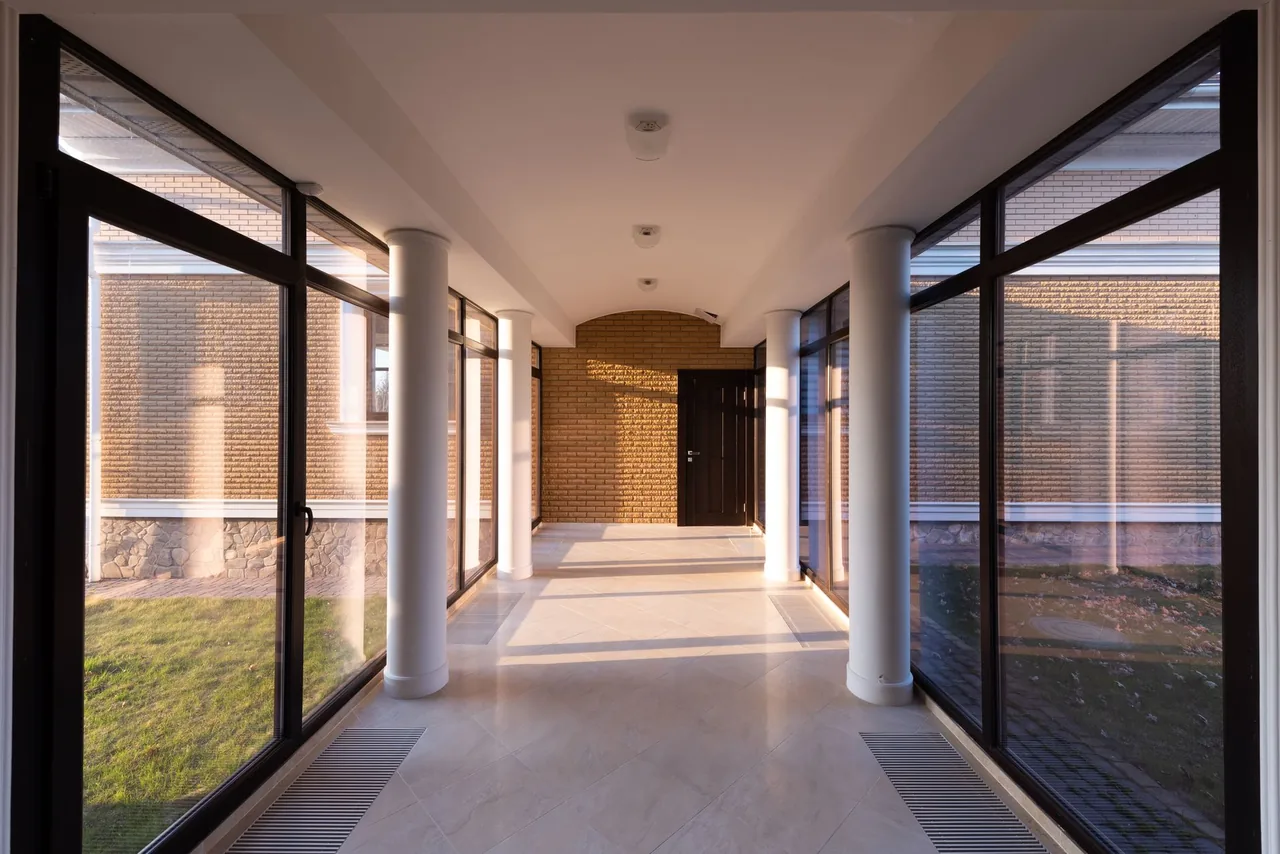
Polished concrete is the existing slab itself, mechanically refined — ground with progressively finer diamond abrasives, chemically densified to harden the surface, and polished to a chosen sheen. Two things decide whether it works and almost nothing else does: the condition of the slab you already have, because polishing reveals it rather than hiding it, and whether the surface is truly densified rather than merely burnished. Grind a sound, well-placed slab and densify it and you get a stunning, permanent floor that runs 10 to 20+ years with almost no maintenance; polish a poor slab, or skip the densifier, and you get a floor that shows every flaw or dusts like bare concrete. Get a free consultation and a written, itemized scope from a vetted commercial installer before grinding begins — that document, with the slab assessment, the densifier, and the sheen named in it, is where a lasting floor is decided.
Polished Concrete Is a Slab Job First, a Finish Second
The mirror sheen everyone pictures matters least to whether the floor works. What separates a stunning polished floor from a blotchy, disappointing one is the slab underneath and the densification that hardens it — both decided before the final polishing passes.
The Slab, Processed — Not a Coating Applied
Polished concrete is not a coating, a stain, or an overlay applied on top of the slab — it is the slab, processed. A machine fitted with progressively finer diamond-impregnated discs grinds the surface from coarse to fine, a chemical hardener reacts with the concrete to densify it, and the final passes burnish it to the specified gloss. The result is a floor physically part of the structure, with nothing layered on to delaminate, peel, or wear through. That single fact — there is no separate film — is the source of nearly every advantage polished concrete has, and the reason a credible installer assesses the slab before promising a finish:
- Polishing is subtractive, so it reveals cracks, control joints, color variation, and the aggregate beneath rather than covering them.
- A slab never meant to be a finished floor will show its history once it is ground.
- And a "polish" with no chemical densification is just a burnished slab that wears and dusts like bare concrete.
None of those are reasons to avoid polished concrete — they are the reasons the slab and the densifier decide the outcome, not the sheen.
Where the Processed Slab Genuinely Wins
Polished concrete wins where durability, light, and low maintenance matter more than softness underfoot. Big-box and retail floors choose it because it takes carts, pallet jacks, and constant traffic with no finish to grind off, and because a high polish reflects ambient light and can cut lighting load across a large space. Warehouses and manufacturing floors choose it for abrasion resistance and the fact that a densified slab dusts far less than bare concrete — a real issue where airborne concrete dust contaminates product. Showrooms, lobbies, and modern offices choose it for the clean, monolithic look and near-zero upkeep. Anywhere the slab is sound and the building can use a hard, reflective, essentially permanent surface, polished concrete is the lowest-lifecycle-cost answer across a commercial surface program — and the one surface that lasts as long as the building with only routine cleaning, because there is no recoat cycle, no wax program, and no wear layer counting down.
The Polished Concrete Fit Test: Six Checks Before You Grind
Before a sheen is promised, a competent installer runs the project through the same six-check fit test. Each check is a slab condition or process step that decides whether the finish is achievable and durable, and a project that fails any one is being set up to disappoint. Call it the Polished Concrete Fit Test: pass all six and the slab becomes a stunning floor; skip one and you are grinding toward a blotchy or dusting surface.
- 1. Slab soundness and assessment
- Polishing reveals everything and hides nothing, so the slab's hardness, flatness, existing coatings or contaminants, and crack pattern are evaluated — and grinding-tested where needed — before a finish is committed. A sound slab supports a high-aggregate polish; a poor one is better served by a forgiving cream finish or another surface entirely.
- 2. Densification
- A chemical densifier — typically a lithium, sodium, or potassium silicate — reacts with the concrete to harden and tighten the surface, which is what makes a true polish durable and dust-free. A polish with no densification is just a burnished slab that wears and dusts like bare concrete; the densifier, and the stage it goes on, is the difference.
- 3. Grit progression to the target sheen
- The floor is ground and polished through progressively finer diamonds — metal-bonded for the grind, resin-bonded for the polish — each pass removing the scratches of the last. Skipping grits leaves a hazy, uneven surface; the sheen is reached by working the progression, not by a shortcut.
- 4. Aggregate exposure decided up front
- How deep the slab is ground sets the look — a cream (cement) finish keeps a smooth uniform surface, salt-and-pepper reveals the fine sand, full aggregate grinds down to the stone. Because the grind is subtractive and permanent, the exposure is chosen before work begins; it cannot be undone.
- 5. Slip resistance where it gets wet
- A high-gloss polish can become slick when water, spills, or tracked-in rain sit on it, and gloss alone does not guarantee a safe wet floor. A level interior floor is held to DCOF ≥ 0.42 under ANSI A137.1; traction is restored with a penetrating slip-resistant treatment in wet-prone zones without dulling the whole floor.
- 6. Stain-resistant guard where spills are likely
- Densification greatly reduces porosity but is not chemically bulletproof — acidic spills can etch or stain the surface. A topical or penetrating guard reduces etching and staining for any floor that sees food, drink, or acidic cleaners; its presence and type are a line item, not an afterthought.
Two of these six — densification and the slab assessment — are where a "polished" floor that is really just a sealed or burnished slab gets passed off as the real thing, and the slip and guard are the corners cut on a looks-first job. That is why the fit test is non-negotiable.
Want the slab assessed before a sheen is promised?
We match you with a vetted commercial installer who grinding-tests the slab, names the densifier and the sheen, and adds slip and stain protection where the room needs it — all in a written scope before grinding begins.
Polished Concrete Specifications & Standards
Polished concrete is specified by how it is finished, not by a product you buy off a shelf, and these are the choices that define the result. They are also where a sealed or burnished slab gets passed off as a real polish.
The Process Specs That Define the Floor
The process specs are the ones that determine the look and the durability — densification, grit, sheen, and aggregate exposure — and a competent scope names each.
Densification and Grit Progression
Two process specs make a polish durable: what hardens the surface, and how finely it is worked.
The Densifier
A chemical densifier — a lithium, sodium, or potassium silicate — penetrates the concrete and reacts to harden and tighten the surface, which is what lets the finer polishing passes take and hold and what makes the floor dust-free. It is applied at the right stage of the process, mid-polish, not as an afterthought.
Why a Burnished-Only Slab Dusts Like Bare Concrete
A floor that is ground and buffed to a shine but never chemically densified is a burnished slab, not a polish. Without the densifier reacting into the surface, the concrete stays relatively soft and porous: it dusts, wears, and loses its sheen far faster, because nothing hardened the matrix that the polish sits on. This is exactly how a cut-rate "polished concrete" floor is passed off — it looks shiny on day one and dusts within months. Asking which densifier is used, and at what stage, is how you tell a true polish from a buffed slab.
Sheen and Aggregate Exposure
The finish is graded by sheen on a scale commonly running 1 to 4, from flat matte through satin and semi-gloss to a high, mirror-like polish, with higher sheen reached by grinding to a finer grit. Aggregate exposure sets the look by grind depth: cream keeps the cement paste, salt-and-pepper shows the sand, full aggregate shows the stone. Both are defined specs, not a vague "shiny," and both are locked in by a subtractive, permanent process.
Slip and Guard Specs
Two protective specs complete the floor. Slip resistance by DCOF is held to DCOF ≥ 0.42 under ANSI A137.1, restored in wet zones with a penetrating slip treatment because a high-gloss polish can fall short when wet. And a stain-resistant guard — topical or penetrating — reduces etching and staining from spills on any floor that sees food, drink, or acidic cleaners, since densified concrete is not chemically bulletproof.
Polished Concrete Specs at a Glance
The table below collects the recognized specs a competent installer names. These are representative figures — the slab's condition and the specifier's intent always govern, and where a room is wetter or more spill-prone, the protective specs become non-negotiable.
| Spec | What it controls | Recognized basis | Typical requirement |
|---|---|---|---|
| Slab assessment | Whether a finish is achievable | Grinding test / inspection | Sound, evaluated slab before a sheen is promised |
| Densifier | Surface hardness, dust resistance | Lithium / sodium / potassium silicate | Applied mid-process, never burnished-only |
| Sheen / gloss | Light reflection and look | Industry sheen scale | 1 to 4 (matte to mirror) |
| Aggregate exposure | The visual character | Grind depth | Cream, salt-and-pepper, or full aggregate |
| Slip resistance | Wet-floor safety | ANSI A137.1 (DCOF) | DCOF ≥ 0.42 with a slip treatment in wet zones |
| Stain guard | Etch and stain resistance | Topical / penetrating guard | Where food, drink, or acids reach the floor |
The lesson is that "shiny" tells you nothing about whether the floor will last — the densifier and the slab beneath it do. A burnished, undensified slab looks polished on day one and dusts within months, no matter the sheen, and a high-gloss floor with no slip treatment in a wet zone is a safety gap, not a finish. Compare lifecycle across surfaces in our material lifespan data first.
Polished Concrete vs. Epoxy, Vinyl, and Carpet Tile
How each commercial surface handles permanence, comfort, chemicals, and light is the decision — never which is cheapest. Polished concrete is one of four mainstream options, and comparing it to its siblings shows exactly where it belongs.
The Commercial Surface Comparison Matrix
The matrix below lines up the four surfaces on the factors that decide a commercial floor — permanence, comfort, chemical resistance, maintenance, and best fit.
| Surface | Permanence | Comfort underfoot | Chemical resistance | Ongoing maintenance | Light reflection | Best for |
|---|---|---|---|---|---|---|
| Polished concrete | The slab — never wears out | Hard, cold, loud | Low — stains and etches | Mop + occasional re-burnish | High | Retail, warehouse, lobby |
| Epoxy | Coating — recoats eventually | Hard | High — sealed, chemical-proof | Recoat the topcoat | Variable | Wet, chemical, industrial |
| Commercial vinyl | Wear layer replaced eventually | Soft, quiet, warm | Moderate | Clean; VCT needs wax | Low | Corridors, healthcare |
| Carpet tile | Tiles swapped as they wear | Soft, warm, quiet | Low | Vacuum + deep clean | Low | Offices, acoustics |
Versus Epoxy and Vinyl
Against epoxy, the trade is the slab versus a coating: polished concrete has nothing to delaminate and needs no recoat cycle, but offers no chemical barrier and can stain or etch, while epoxy adds a seamless, chemical-proof, sealed film that can blister over a wet slab and eventually needs recoating. Choose polished concrete when the slab is sound and you want a permanent, near-zero-maintenance surface; choose epoxy when you need stain and chemical protection or a sanitary slip-and-cove system. Against commercial vinyl, the trade is permanence versus comfort: polished concrete never wears out and never needs replacing, while vinyl is resilient, quieter, and warmer underfoot but carries a wear layer that eventually has to be replaced and a substrate it telegraphs.
Versus Carpet Tile, and Mixed-Surface Buildings
Against carpet tile the contrast is starkest — concrete is hard, reflective, and wet-cleanable, carpet tile is soft, sound-absorbing, and for dry workspaces — so the two rarely compete for the same room, but a building often pairs polished concrete in the public and traffic areas with carpet tile in the offices. The job is to put the permanent hard floor where its strengths pay off, not everywhere — and for the full set of trade-offs, start at the commercial surfaces hub.
Is Polished Concrete Right for Your Floor?
Polished concrete is the right surface for some rooms and the wrong tool for others, and which is the output of a short chain of facts about the slab, the room's comfort needs, and what lands on the floor. Walk the decision in order; each branch eliminates an option the conditions do not support.
- Assess the slab first. Polishing reveals everything, so the slab's hardness, flatness, cracks, and aggregate decide what finish is even possible. A sound slab supports a high-aggregate polish; a poor one points to a forgiving cream finish or another surface entirely — a grinding test settles it before any promise.
- Judge the room's comfort and acoustics. Concrete is hard, cold, and loud — excellent for retail, warehouse, and lobby traffic, poor for standing-heavy or sound-sensitive workspaces. If staff stand all day or the room must be quiet, a resilient surface fits better.
- Name what lands on the floor. Densified concrete resists staining but is not chemical-proof; a food, drink, or acidic-cleaner environment needs a stain guard, and a harsh-chemical zone may be better served by sealed epoxy.
- Confirm wet zones. A high-gloss polish can be slick when wet, so any entry or water-prone area needs a penetrating slip treatment to hold DCOF ≥ 0.42. If much of the floor gets wet, settle the slip strategy here.
- Decide the look you can commit to. The grind is subtractive and permanent, so the aggregate exposure and sheen are locked in at the start. Choose a finish the slab can actually deliver — confirmed by the grinding test, not by a catalog photo.
Run honestly, this tree returns a clear yes-or-no on polished concrete and the exact finish the slab can carry — and an installer who promises a high-aggregate mirror polish on any slab, sight unseen, is the red flag.
Not sure your slab can take a polish?
Tell us about your space and we'll match a vetted commercial installer who grinding-tests the slab, names the finish it can actually deliver, and explains where epoxy or vinyl would fit better — in writing.

Why Polished Concrete Goes Slick, Stains, and Disappoints — and How the Process Stops It
Polished concrete does not delaminate, because there is nothing to delaminate — so its failure modes are about the slab and the surface chemistry, not adhesion, and each is paired below with its cause and the step that prevents it.
Slip When Wet: The Safety Failure
Slip when wet matters most for safety: a high-gloss polished surface can become slick when water, spills, or tracked-in rain sit on it, and gloss alone does not guarantee a safe wet floor. The prevention is the slip spec — a penetrating slip-resistant treatment applied in wet-prone zones to hold DCOF ≥ 0.42, restoring traction without dulling the whole floor. A polished floor specified for looks alone, with no attention to wet traction at entries and water sources, is a liability.
Staining and Etching: A Chemistry Failure
Staining and etching is the second mode: polished concrete is densified, which greatly reduces porosity, but it is not chemically bulletproof, so acidic spills — many cleaners, citrus, some foods and chemicals — can etch or stain the surface if left, because the cement matrix reacts with acid. The prevention is a topical or penetrating stain guard where spills are likely, plus pH-neutral cleaning and prompt spill cleanup.
A Poor Slab: The Fundamental Failure
A poor slab is the third and most fundamental: polishing is subtractive, so it cannot hide what is there — it reveals cracks, control joints, color variation, surface defects, and the aggregate beneath, and a slab never meant to be a finished floor will show its history. The prevention is the upfront slab assessment and grinding test, which matches the achievable finish to the actual slab rather than promising a look it cannot deliver.
Comfort Limits and Post-Polish Cracks: Two More Realities
Concrete is hard, cold, and acoustically live, so it is a poor fit for spaces needing foot comfort, warmth, or quiet — a workplace full of standing staff or a sound-sensitive office is better served by a resilient surface. And cracks that form or move after polishing will read in the finished floor, because polishing refines the slab, it does not reinforce it. The preventions are matching the surface to the room's comfort needs and accepting that the slab's structural condition is a given the polish works within. If a floor has dulled or a finish disappointed, the fix is often a light re-polish or re-burnish through a maintenance program rather than a coating laid over the slab.
Common Polished Concrete Mistakes, Consequences, and Prevention
Most polished concrete disappointments are the same handful of shortcuts, each with a predictable consequence and a known prevention. Naming them is how you spot a corner being cut before the grind is permanent.
| Mistake | What it causes | The prevention |
|---|---|---|
| Promising a finish before assessing the slab | A blotchy, uneven floor on an unsuitable slab | Grinding-test and evaluate the slab first |
| Burnishing without densifying | A floor that dusts and wears like bare concrete | Apply a silicate densifier mid-process |
| Skipping grits in the progression | A hazy, uneven, low-clarity surface | Work the full coarse-to-fine diamond progression |
| High gloss with no wet-area slip treatment | A slick, hazardous floor at entries and sinks | Add a penetrating slip treatment to hold DCOF ≥ 0.42 |
| No stain guard in a spill-prone room | Etching and staining from food, drink, or acids | Specify a topical or penetrating stain guard |
| Acidic or harsh cleaners in maintenance | Etched cement matrix and a dulled polish | Clean only with a pH-neutral cleaner |
| Polished concrete in a standing-heavy room | An uncomfortable, cold, loud workspace | Use a resilient surface where comfort and quiet lead |
Every row is a permanent or hard-to-reverse outcome — which is why "the slab is assessed, the densifier is named, and slip and stain protection are specified, in writing" is the most valuable sentence in a polished concrete quote.
Types and Finishes — Cream, Salt-and-Pepper, and Full Aggregate
"Polished concrete" describes a process with several distinct outcomes, and the grind depth plus the sheen define which one you get. The mainstream finishes:
- Cream / cement finish — the lightest grind, polishing the top cement paste to a smooth, uniform surface with little to no aggregate showing. The most forgiving look on a variable slab and the most consistent in color.
- Salt-and-pepper finish — ground just deep enough to expose the fine sand particles, giving a subtle speckle that hides minor blemishes better than a cream finish while staying largely uniform.
- Full aggregate (exposed stone) finish — ground deep enough to reveal the coarse stone in the concrete, producing a terrazzo-like, decorative surface. The most striking look, but the most dependent on a quality slab with attractive, evenly distributed aggregate.
- Dyed / stained polish — a penetrating dye or acid stain applied during the process to add color, then polished and sealed. A way to get a designed color into a permanent floor without a coating sitting on top.
Each finish can be taken to any sheen, so the two choices combine: a satin cream finish for a quiet showroom; a high-gloss full-aggregate floor for a flagship retail look; a dyed salt-and-pepper at semi-gloss for a branded space. Because the grind is subtractive and permanent, the finish is locked in at the start. For how slab condition and finish move the budget, weigh lifecycle in our material lifespan data and the trade-offs in our guides, and see densifiers and guards from the makers in our brands directory.
What Actually Drives the Cost of a Polished Concrete Floor
A polished concrete quote is not a flat per-square-foot rate; the headline number a low bid leads with hides the items below, ranked by how much they move the total.
- Slab condition and prep. The biggest swing — removing existing coatings, adhesive, or sealer, and filling cracks and joints with a semi-rigid filler, is real labor a clean, sound slab avoids.
- Finish: aggregate exposure and sheen. A higher sheen and a deeper aggregate exposure mean more grinding passes through finer grits, which is more time and consumables than a low-sheen cream finish.
- Densifier and guards. The silicate densifier and any stain-resistant guard are material and labor matched to the room — and the densifier is not optional if the floor is to be a true polish.
- Slip treatment. A penetrating slip-resistant treatment in wet zones is a real line item for safety, priced by area.
- Dye or stain. A colored polish adds the dye or acid-stain step and its labor beyond a natural-gray finish.
- Area and access. Square footage drives the grind, but tight access, columns, and working around fixed equipment add labor an open floor does not.
- Phasing around operations. Polishing produces no cure-time downtime, but it is dusty, noisy work, so an occupied building may need it staged after-hours or zone-by-zone — a coordination cost.
- Joint and crack treatment. Filling control joints and cracks with the right semi-rigid filler is detailing priced beyond the field grind.
Because these drivers swing so widely, the only honest number comes from an on-site assessment. Compare lifecycle and durability in our material lifespan data and the trade-offs in our guides so you can read a quote critically.
Get an itemized scope, not a headline rate.
A vetted commercial installer prices the slab prep, the grind and densifier, and the slip and stain protection as separate lines — so you see the whole job, free and with no obligation.
How Polished Concrete Is Done, Step by Step
Polishing concrete is a multi-stage mechanical process, and the result is only as good as the slab assessment and the discipline of the grit progression. The six steps below are the full arc from assessment to slip treatment.
Assess the Slab
The installer evaluates the slab's hardness, flatness, existing coatings or contaminants, and crack pattern — grinding-testing where needed — because all of that determines what finish is achievable. The promise is matched to the slab here, not over the phone.
Remove Coatings and Treat Joints
Any existing coating, adhesive, or sealer is removed, and cracks and control joints are addressed with a semi-rigid filler appropriate to the floor — so the surface is sound and continuous before the grind.
Grind From Coarse to Fine
The floor is worked with metal-bonded diamonds from a coarse grit upward, each pass removing the scratches of the last and refining toward the target aggregate exposure — cream, salt-and-pepper, or full stone. The grind sets the look permanently.
Apply the Densifier
The chemical densifier is applied at the right stage to penetrate and react, hardening the surface so the finer polishing passes take and hold and the floor stays dust-free. This is the step that separates a true polish from a buffed slab.
Polish to the Specified Sheen
The polish continues with resin-bonded diamonds through progressively finer grits to reach the specified sheen, and a guard or stain-resistant treatment is applied where spills are likely. The clarity and gloss are built by the progression.
Add Slip Treatment in Wet Zones
A penetrating slip-resistant treatment is applied at entries and water-prone zones to hold DCOF ≥ 0.42 where the gloss would otherwise be slick wet. Because polishing is dry-cuttable with no cure-time downtime, a correct commercial installation still phases the dusty, noisy work around operations.
Skip or rush any one of these six steps and the failure it was meant to prevent shows up later — a hazy surface, a dusting floor, or a slick entry — which is why a vetted installer treats the assessment, the densifier, and the grit progression as fixed, not optional.
Talk through your project — free.
A free consultation and a written, itemized quote from a vetted installer. No pressure, no obligation.
Polished Concrete Glossary
The terms below recur in every polished concrete quote, spec sheet, and maintenance plan — each defined as its working meaning on an actual job site, so you can read a scope and judge whether it is complete.
- Densifier
- A lithium, sodium, or potassium silicate that reacts with the concrete to harden and tighten the surface, making a true polish durable and dust-free. The single spec that separates a real polish from a buffed slab.
- Densified
- The state of a slab whose surface has been chemically hardened by a densifier, so it holds a fine polish and dusts far less than bare concrete. An undensified "polish" wears and dusts like raw concrete.
- Sheen (gloss level)
- The graded shininess of the finish, commonly on a 1 to 4 scale from flat matte to mirror, reached by grinding to a finer grit. A defined spec, not a vague "shiny."
- Aggregate exposure
- How deep the slab is ground, setting the look — cream (cement paste), salt-and-pepper (fine sand), or full aggregate (coarse stone). Subtractive and permanent, so it is chosen up front.
- Cream (cement) finish
- The lightest grind, polishing the top cement paste to a smooth, uniform surface with little aggregate showing. The most forgiving finish on a variable slab.
- Salt-and-pepper finish
- A grind deep enough to expose the fine sand, giving a subtle speckle that hides minor blemishes better than cream while staying largely uniform.
- Full aggregate finish
- A deep grind that reveals the coarse stone for a terrazzo-like look — the most striking finish, and the most dependent on a quality slab with attractive, even aggregate.
- Grit progression
- The sequence of progressively finer diamond abrasives — metal-bonded for the grind, resin-bonded for the polish — each removing the scratches of the last. Skipping grits leaves a hazy, uneven surface.
- DCOF
- Dynamic Coefficient of Friction — the wet-slip safety measure held to ≥ 0.42 under ANSI A137.1 for a level interior floor. A high-gloss polish can fall short wet, so a slip treatment is added in wet zones.
- Slip treatment
- A penetrating product applied in entries and water-prone zones to restore wet traction without dulling the whole floor — the spec that keeps a high-gloss polish safe where it gets wet.
- Stain guard
- A topical or penetrating product that reduces etching and staining from spills on a floor that sees food, drink, or acidic cleaners, since densified concrete is not chemically bulletproof.
- Burnished slab
- A floor ground and buffed to a shine but never chemically densified — shiny on day one but dusting and wearing like bare concrete, and exactly what a cut-rate "polish" passes off as the real thing.
Standards, Warranty, and When a Permit Applies
Polished concrete does not carry a manufacturer's product warranty the way a coating does, but the work is governed by process standards and judged by the slab assessment, the densification, and the finish delivered.
What "Warranty" Means for Polished Concrete
Because the floor is the slab, processed, there is no separate product to warrant — what an installer stands behind is the workmanship: a properly assessed slab, a true densified polish to the agreed sheen and exposure, and the slip and stain protection the room needs. A floor that dusts because it was burnished rather than densified, or that disappointed because a high-aggregate finish was promised on an unsuitable slab, is a workmanship failure. Ask in writing for the slab assessment, the densifier and stage, the target sheen and exposure, and any slip and stain treatments — that scope is what a lasting floor is judged against, and one more reason the cheapest quote is rarely the best floor.
The Standards Bodies That Set the Bar
Standards govern the process and its measures. ANSI A137.1 defines the DCOF slip threshold; concrete-polishing industry guidance governs the grit progression, densification, and the sheen and aggregate-exposure scales; and ACI covers the underlying concrete. A floor processed to these, on a sound slab, lasts the life of the building.
When a Polished Concrete Permit or Approval Applies
Polishing an existing slab rarely needs a building permit, but the context can: dust-control and silica-exposure requirements govern the grinding work in occupied buildings, and work tied to a larger fit-out may fall under that project's permits and inspections. A reputable installer manages the dust and tells you which requirements apply rather than working around them — and where a polished floor has dulled or a finish disappointed, the honest path is a re-polish or re-burnish through a maintenance program rather than a coating laid over the slab.
A Real Polished Concrete Decision
One representative scenario shows why the slab decides everything: the existing concrete, not the finish, drove every call below.
How to Vet a Polished Concrete Installer
Most polished concrete disappointments are assessment-and-process failures, so the installer matters more than any product. These questions separate a crew that delivers a true polish from one that buffs a slab and calls it done.
- They assess the slab before promising a finish
- An installer who guarantees a high-gloss, high-aggregate look sight unseen is overpromising. Ask whether they grinding-test the slab first — a real answer evaluates hardness, flatness, cracks, and aggregate before committing to a sheen and exposure.
- They densify, not just burnish
- Ask which densifier they use and at what stage. A credible answer names a lithium, sodium, or potassium silicate applied mid-process — because a polish with no densification dusts and wears like bare concrete.
- They work the full grit progression
- Ask how they reach the sheen. A professional describes a coarse-to-fine diamond progression, metal-bonded then resin-bonded, not a shortcut — skipping grits leaves a hazy floor.
- They treat wet zones for slip
- Ask how a high-gloss floor stays safe at entries and water sources. A credible answer names a penetrating slip treatment to hold DCOF ≥ 0.42 in those zones — not gloss alone.
- They specify a stain guard where it is needed
- Ask how the floor resists spills in a food, drink, or acidic-cleaner environment. A professional names a topical or penetrating stain guard up front — because densified concrete is not chemical-proof.
- They put the scope and a workmanship warranty in writing
- Ask for the slab assessment, densifier, sheen and exposure, slip and stain treatments, timeline, and labor warranty in writing before grinding. A crew willing to name a workmanship guarantee — and to re-burnish if the finish disappoints — is accountable for the floor, not just the day-one shine.
Why Route Your Polished Concrete Project Through Pro Work Home Surface
Pro Work Home Surface is not a contractor and does not polish your floor — we are a national authority on home and commercial surfaces that matches operators with vetted commercial installers and holds them to a published bar.
- A free consultation and an itemized written scope
- Every connection starts with a no-obligation consult and a written quote that lines out slab prep, the grind and densifier, and slip and stain protection separately — so you read the whole job, not a headline rate.
- A real vetting standard, applied before we connect you
- Installers are screened on what decides a polished floor's life: whether they assess the slab before promising a finish, densify rather than burnish, work the full grit progression, and treat for slip and stain where the room needs it.
- Slab assessed, densified, and protected, every time
- The slab's hardness, flatness, contaminants, and aggregate are evaluated — grinding-tested where needed — before a sheen is committed; a chemical densifier is applied at the right stage; the floor is polished through the full progression; and wet zones get a slip treatment to hold DCOF ≥ 0.42 with a stain guard where spills are likely.
- National coverage, local crews
- We match you with commercial installers in your area nationwide, so the standard is consistent even though the crew is local — whether your project is a single showroom or a full warehouse.
Polished concrete is one surface within the commercial floors we cover. If your project also weighs epoxy for the chemical zones or an ongoing re-burnish maintenance program, the same standards apply — compare lifecycle in our material lifespan data, dig into the trade-offs in our guides, and start from the commercial surfaces hub. Commercial surfaces are one of eight categories we cover across home surfaces; the same slab-first discipline underpins every flooring project we connect.
Brands & Material Authority
Quality and construction drive long-term performance more than the label. These are widely respected names in this category:
- Shaw Contract
- Mannington Commercial
- Interface
- Armstrong Flooring
- Sherwin-Williams