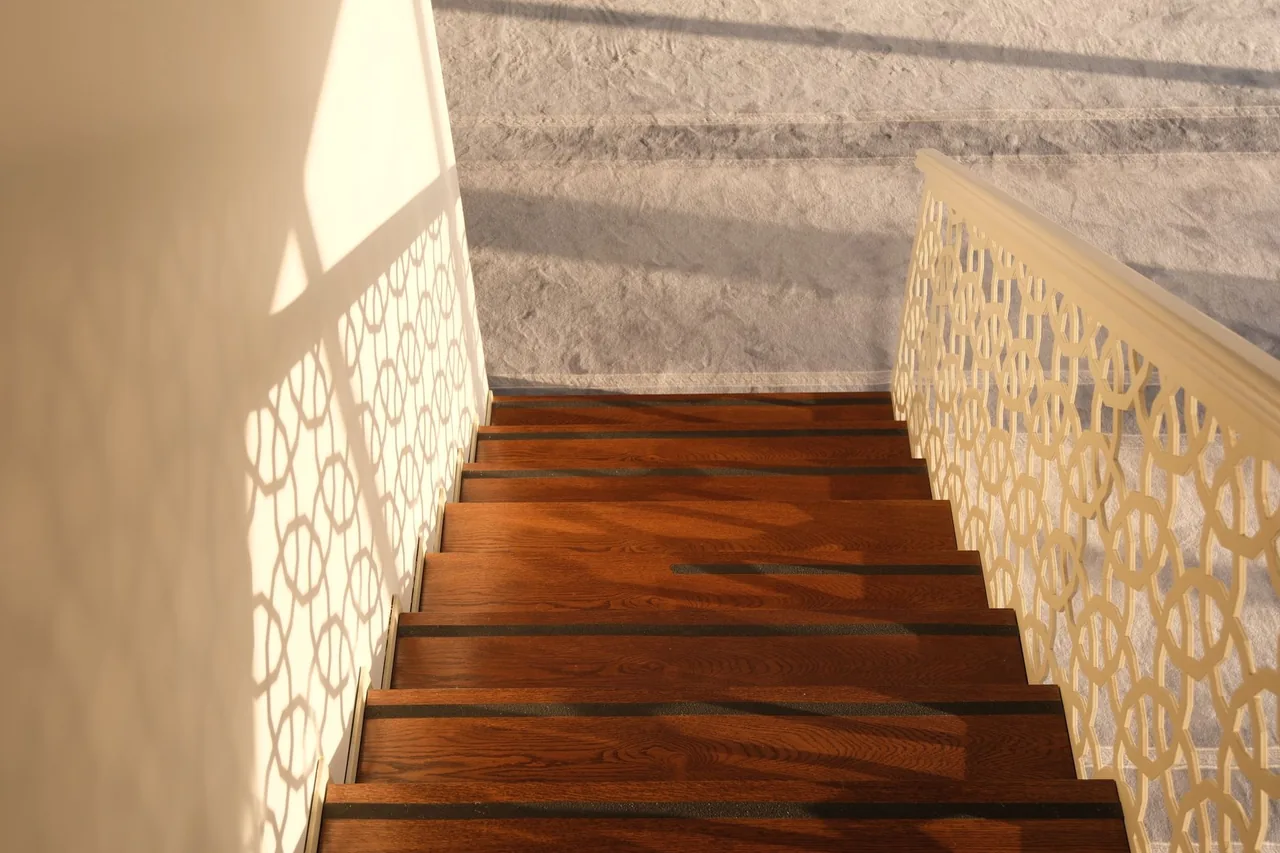
Stair treads are the horizontal boards you actually step on — the single most worked, most worn, and most safety-critical component of any staircase, regardless of what the stair is built from. A tread is not a whole stair; it is the walking surface that sits on the stringers, with the riser closing the gap below it. One fact decides whether a tread is right: the match of its run and its material to how the stair is used. Get the depth and the grip right and the stair is safe and comfortable; get them wrong and every step is a hazard. Code is blunt about the geometry — minimum run 10", maximum riser 7-3/4", and no two treads varying more than 3/8" across the flight — while the material decides grip, warmth, and noise. Get a free consultation and a written, itemized scope from a vetted installer before you buy treads, so the run and the grip are verified, not assumed.
A Stair Tread Is a Component — and It Carries the Whole Stair's Safety
Every staircase, whatever its structure, comes down to treads. A tread is the part your foot lands on, the part that wears first, and the part the building code regulates most precisely — because the geometry of the treads is what makes a stair safe to climb and descend. Treating the tread as a component, chosen somewhat independently of the structure, is the honest way to understand it, and it's what makes treads the most common reason people shop for a stair at all.
Why the Tread Is the Most Regulated Part
The tread depth (the run), the consistency of that depth from step to step, and the leading edge (the nosing) are the three things a fall investigation looks at first. A stair can be built of wood, metal, or glass; in every case the treads are where safety is won or lost. That is why the code gives the tread its own minimum run and its own uniformity tolerance — the structure can be sound and the stair still dangerous if the treads are wrong.
The Tread Is Chosen Somewhat Independently of the Structure
Because the tread is a component rather than a whole-stair type, the honest way to think about it is as the layer you choose somewhat independently of how the stair is supported. On a wood stair, the tread is hardwood on wood stringers. On a metal stair, a wood, stone, or steel tread sits on a steel frame. On a floating stair, the tread is a thick slab cantilevered in air. The tread material can therefore be chosen for grip, warmth, noise, and looks largely separately from the support — which is exactly why treads deserve their own consideration, and why this page treats them as a component, not a stand-alone stair.
Treads Are the Lever for Refreshing a Stair
This component independence is also what makes treads the lever for refreshing a stair. If a flight's structure is sound but the steps are worn, dated, or carpeted, replacing or capping just the treads transforms the stair without rebuilding it. The structure stays; the surface you touch and see changes. That is a far smaller project than a new stair, and it is the most common reason people shop for treads at all — the structure is fine, but the steps look tired.
Where Choosing the Tread Carefully Genuinely Pays Off
Because the tread is the part you touch and the part that fails first, getting it right delivers outsized returns. Naming exactly where careful tread choice pays off is how you decide where to spend.
Safety: Grip and Depth Decide Whether the Stair Is Safe
The run and the grip are the two specs that most directly decide whether a stair is safe to descend. A tread deep enough for a foot and grippy enough not to slip is the difference between a comfortable stair and a hazardous one — and both are properties of the tread, chosen at purchase. For a stair used by small children or older adults, choosing a grippy material and confirming the run is the single highest-value safety decision on the whole staircase.
Refresh Value: Change the Surface, Keep the Structure
Because the tread can be replaced or capped independently, a tired stair often needs only a new walking surface, not a rebuild. Swapping worn or carpeted treads for fresh ones — or capping sound treads with prefinished overlays — transforms how a stair looks and feels for a fraction of a full rebuild. That is the most efficient improvement available on a structurally sound flight, and it's why the tread is where most stair refreshes begin.
Match-to-Floor: The Tread Sets the Visual Continuity
The tread is the surface that reads against the floor it meets. A wood tread can match a wood floor in species and stain, and a stone tread can echo a tile or stone surface, so the stair flows out of the floor rather than meeting it at a jarring seam. Because that continuity lives entirely in the tread, choosing the tread material and finish to match the floor is what makes a stair read as part of the home rather than an afterthought dropped into it.
Want treads matched to your stair and your household?
We match you with a vetted installer who specs the tread material to how the stair lives, verifies the run and grip, and puts it in a written scope — before you buy.
Where Treads Fail — Wear, Wrong Run, and Squeaks
Treads fail in three distinct ways, and understanding each tells you whether you need a refresh, a repair, or a rebuild. Each has a mechanism and a different remedy.
Wear: The Nosing and the Strip Behind It Go First
The first failure is plain wear. The tread takes every footfall, and the heaviest wear concentrates at the nosing and the strip just behind it. On a wood tread, the finish burns through there first and bare wood greys; on carpet, the pile crushes and the edge frays; on any material, the leading edge takes the abuse. Surface wear is usually a refinishing or capping problem, not a structural one — the remedy is renewing or replacing the surface, not rebuilding the stair.
Wrong or Inconsistent Run: A Geometry Failure
The second, and the dangerous one, is a wrong or inconsistent run. If a tread's depth is shallower than the 10" minimum, there isn't enough room for a foot, and people catch their heels descending. Worse is inconsistency: the code limits variation between treads to 3/8" across the whole flight, because the brain calibrates to the first step and a single deeper or shallower tread becomes an invisible trip. A stair that was built wrong, or where one tread was replaced with the wrong dimension, is a geometry failure that capping alone can't fix — the run is baked into the structure.
Squeak and Loose Tread: A Connection Failure
The third is the squeak and the loose tread. A tread that has separated from the stringer or riser beneath it rubs under load and squeaks, or in the worst case flexes — a tread that moves underfoot is both a noise and a safety problem. On wood this traces to a nailed-only build loosening as the wood moves; on any stair it points to a connection that needs re-securing. A bouncy tread is a signal to act, because the movement that causes the squeak also works the joint looser over time. These failures live in stair repair, while a worn-but-sound surface points to refinishing or new caps.
Tread Materials Compared — Wood, Stone, Carpet, and Vinyl
Because a tread is a component, the real "versus" is between tread materials, not between treads and other stair parts. Each material trades grip, warmth, noise, durability, and upkeep differently, and the matrix below sets them side by side on what actually decides the choice.
| Material | Grip (with treatment) | Warmth & quiet | Durability | Refresh / repair | Best stair |
|---|---|---|---|---|---|
| Wood | Moderate — slick when polished | Warm, fairly quiet | High, refinishable | Refinish or cap | Main and formal flights |
| Stone / tile | Needs a slip-rated surface | Cold, loud | Highest, premium | Replace, not refinish | Stone/tile-floored stairs |
| Carpet | Highest — softest underfoot | Warmest, quietest | Wears and stains | Re-carpet | Child- and senior-used stairs |
| Vinyl / rubber | High — strong anti-slip options | Quiet, water-resistant | Very tough | Replace, low-cost | Utility and high-traffic stairs |
Wood and Stone Lean Premium; Carpet and Vinyl Lean Safe
Wood treads are the default — warm, refinishable, and able to match a wood floor in species and stain. They can be slick when polished, so a busy stair may want a runner or an anti-slip strip, but they repair and refresh better than any other material. Stone treads (and porcelain tile treads) are the most durable and the most premium-looking, ideal where the stair meets a stone or tile floor, but they are hard, cold, loud, and slippery when wet, so slip rating matters and a bullnose edge is essential.
Carpet and Resilient Treads Win on Grip and Quiet
Carpet treads — wall-to-wall on the stair or individual carpet tread pads — are the softest, quietest, and grippiest underfoot, the safest for small children and the elderly, but they wear and stain, crush at the nosing, and trap dust. Vinyl treads, including resilient stair treads and rubber treads, are tough, water-resistant, quiet, and grippy, with strong anti-slip options, which is why they dominate high-traffic and utility stairs even if they read less premium than wood or stone. For most homes the call is contextual — a grand main stair leans wood or stone for looks; a basement or utility stair leans vinyl or rubber for grip and durability; a stair used by kids or seniors leans carpet or a grippy resilient tread for safety. And any material can finish any structure — wood or stone treads sit happily on a metal frame, and a grippy tread can finish a glass-railed flight. Whatever the material, the nosing is the safety detail at the front of every tread.
Stair Tread Specifications & Code
A tread is specified by four numbers, and three of them are code. Getting them right is the entire difference between a safe stair and a hazardous one — the run, the uniformity, the thickness, and the grip.
Run and Riser Geometry
The run is the horizontal distance you step on, and it is the headline tread spec.
Reading the Run (Tread Depth)
The run (tread depth) is measured nosing to nosing, and the IRC sets the minimum at 10". Too shallow and a descending foot has nowhere to land, which is why a sub-10" tread is a documented heel-catch hazard. The riser height that pairs with it is capped at 7-3/4", and the two together set the climb.
The Uniformity Rule Most People Don't Know
The uniformity rule is the one most people don't know and the one that causes the most falls: across the entire flight, the largest and smallest tread run — and the largest and smallest riser — may not differ by more than 3/8". That tolerance exists because your gait calibrates to the first step, so an odd tread is a trip you never see coming.
Why a Single Replaced Tread Can Break Uniformity
Replacing one tread with the wrong dimension, or capping treads unevenly, can push a flight out of the 3/8" tolerance even when every other step is fine — which is why a competent installer checks the finished run across the whole flight after any tread work, not just on the step they touched.
Thickness and Nosing Projection
The thickness governs stiffness. A solid wood tread is typically 1" to 1-1/4" thick so it doesn't deflect between stringers; stone treads are sized for their span and bedding; resilient and carpet treads rely on the substrate beneath them for support. The nosing projection — the overhang of the tread past the riser below — must be 3/4" to 1-1/4" per code, both to give the foot a target and to keep that dimension consistent. See stair nosing for how the leading edge is formed.
Grip and DCOF
The fourth number is grip, which isn't always a single code figure for stairs but is always a real safety factor. On hard treads — stone, tile, polished wood, glass — slip resistance is what keeps the stair safe when wet or in socks, and it's measured by the surface's DCOF — DCOF, the dynamic coefficient of friction; a higher value means more traction. Anti-slip strips, textured surfaces, and grippy materials are how a slick tread is made safe, and on any wet-prone or high-traffic stair, grip is specified, not assumed.
Tread Types and What to Buy
Within treads the choices that matter are the material, whether you're buying full replacement treads or retro-fit caps, and the edge profile — each changes cost, the size of the project, and safety.
- Solid wood treads. Full hardwood treads for a new stair or a full replacement, refinishable many times. Specify species for hardness (oak and maple wear best), thickness for stiffness, and a clear or stained finish — see wood stairs for how species sets wear life.
- Retro-fit tread caps. Thin prefinished hardwood (or other material) overlays sized to cap an existing step, the go-to for refreshing a worn or carpeted flight without a rebuild. They keep the existing structure and geometry, so the run can't be changed — the existing stair must already meet code.
- Stone and tile treads. Durable and premium, with a required bullnose edge and a slip-rated surface; ideal where the stair meets a stone or tile floor. Heavy and unforgiving of an out-of-tolerance substrate.
- Carpet and resilient treads. Carpet for softness, warmth, and grip on a child- or senior-used stair; vinyl and rubber treads for water resistance, quiet, and strong anti-slip on utility and high-traffic stairs. Both lean on the substrate for support.
- Bullnose vs square edge. The leading edge can be a rounded bullnose, a softer profile, or square; it sets the look and works with the nosing for footing and code. The edge is where the tread meets the most wear and the most safety scrutiny — see stair nosing.
Tread Types, Side by Side
The tread-type choice is really a project-size decision crossed with the geometry constraint. The table rates the types on what they cost you, whether they can change the run, and the edge each needs.
| Tread type | Project size | Can change the run? | Typical edge | Best when |
|---|---|---|---|---|
| Solid wood treads | Full replacement / new build | Yes — set to any code run | Bullnose or eased | Building new or fixing geometry |
| Retro-fit caps | Smallest — overlay only | No — rides existing geometry | Prefinished bullnose | Sound, code-compliant flight |
| Stone / tile treads | Full set on a rigid base | Yes, with substrate work | Bullnose, slip-rated | Stone/tile-floored stairs |
| Carpet / resilient treads | Surface — stretch or bond | No — follows the structure | Wrapped or capped edge | Grip on kid/utility stairs |
The thread through every choice is the same: match the material to who uses the stair and how, decide whether you're refreshing or rebuilding, and the tread type, edge, and project size follow from those two answers.

The Stair Tread Fit Test: Six Questions Before You Buy
Before you buy treads, a credible installer walks the same six questions — because the tread is where safety lives, and the answers decide the material, the project size, and whether the stair stays code-compliant. Call it the Stair Tread Fit Test: answer all six and the material, edge, and method fall out of how the stair actually lives.
- 1. Who uses this stair, and how safely must it grip?
- A stair used by small children or seniors leans toward carpet or a grippy resilient tread for traction and softness; a low-traffic formal stair can take a harder, slicker material. Grip is a safety decision first, a looks decision second.
- 2. Refresh an existing flight, or build new?
- If the structure and geometry are sound, retro-fit tread caps refresh the stair without a rebuild — a far smaller project. If the run is wrong, the stair is unsound, or you're changing the structure, full treads on a new or rebuilt flight are needed, because capping can't change the geometry.
- 3. Should the treads match the floor they meet?
- Wood treads can match a wood floor and stone treads a stone or tile floor, making the transition read as one surface. Decide whether you want that continuity or a deliberate contrast before choosing the material.
- 4. How much noise and warmth do you want underfoot?
- Carpet and resilient treads are quiet and warm; stone and bare wood are harder, colder, and louder. On a stair near living space or bedrooms, the acoustic difference is real, so weigh it alongside looks.
- 5. How wet or high-traffic is the stair?
- A basement, utility, or wet-prone flight leans to vinyl or rubber treads for water resistance and grip; a dry, lightly used stair opens up softer or more premium materials. Match the material's toughness to the conditions.
- 6. Is the run and uniformity verified, however you finish the tread?
- Whatever material you choose, confirm the finished run stays at least 10" and the flight varies less than 3/8" tread to tread — caps in particular add height and can shift the geometry. Ask how the installer checks it before sign-off.
Run honestly, the Fit Test almost always returns one defensible tread — the material, edge, and project size that suit the stair and the household — which is exactly why a vetted installer asks these before quoting treads.
Which Stair Tread Is Right for Your Space?
The right tread is the output of a short chain of facts about who uses the stair, its structure, and its conditions. Walk the decision in order; each branch eliminates the materials and the project sizes that don't fit.
- Start with the users. If small children or older adults use the stair, prioritize grip and softness — carpet or a grippy resilient tread — and treat that as a safety floor on the decision. A low-traffic adult stair opens harder, slicker materials.
- Check the structure and run. Is the existing flight sound and already at code? If yes, retro-fit capping is on the table — the smallest project. If the run is wrong or the structure is compromised, you need full treads on a rebuilt flight, because capping can't change baked-in geometry.
- Match the conditions. A wet, utility, or high-traffic stair points to vinyl or rubber for water resistance and grip; a dry, formal stair opens wood or stone for looks. The conditions narrow the material before the aesthetic does.
- Decide the floor relationship. If the stair should flow out of a wood floor or a tile floor, choose a matching tread material and finish; if you want a deliberate contrast, choose that on purpose. The continuity lives in the tread.
- Verify the geometry for the surviving choice. Whatever material and project size remain, confirm the finished run clears 10" and the flight stays within 3/8" — especially if capping adds height. If it can't, the geometry has to be fixed first, regardless of the material you wanted.
Run honestly, this tree returns a single defensible tread and project size — and an installer who recommends the same tread for every stair regardless of users or conditions is the warning sign.
Refresh the surface, keep the structure — done right.
Tell us about your stair and we'll match a vetted installer who confirms whether you can cap or need full treads, specs the grip for your household, and verifies the run — in writing, before you buy.
How Treads Are Installed or Replaced
How treads go in depends entirely on whether you're building, fully replacing, or capping — and on the material. The six steps below cover the full arc, from assessment to the geometry check that closes every tread job.
Assess the Structure and the Run
The installer confirms whether the existing flight is sound and already at code, or whether the run is wrong and the structure needs work. This single assessment decides the whole job — a sound, compliant flight can be capped; a wrong-run or unsound one needs full treads on a rebuilt structure.
Set Full Replacement Treads to the Run
For a new stair or full tread replacement, each tread is set onto the stringers to the exact run that keeps the flight uniform within 3/8". The right method glues and screws (or properly fastens) every tread to the stringer and riser rather than nailing alone — a glued, screwed tread stays silent while a nailed one loosens and squeaks as the structure moves.
Bond a Retro-Fit Cap Over an Existing Step
A cap install is a smaller job: the existing tread is cleaned and prepped — carpet removed, old finish scuffed — and the prefinished cap is bonded and fastened over it, often with a matching riser board. Because capping rides on the existing geometry, it can only refresh a stair that already meets code, and it adds a little height.
Set Stone, Tile, Carpet, or Resilient Treads
For stone and tile, the tread is set in mortar or adhesive on a sound, flat, rigid substrate with a bullnose edge; carpet is stretched or the tread pads adhered; vinyl and rubber treads are bonded down. The substrate and method follow the material, but every one rides on a sound base.
Form the Nosing and the Edge
The leading edge is formed to the code projection of 3/4" to 1-1/4" and eased or bullnosed, with a slip-rated surface where the material is hard or slick. The nosing is the safety detail at the front of every tread, so it's set with the tread, not added as an afterthought.
Verify Run, Uniformity, and Grip
In every case the run, the uniformity, and the nosing are verified against the IRC before the stair is signed off — the surface changes, but the geometry rules never do. The installer checks the finished run across the whole flight, confirms variation under 3/8", and confirms the grip on any hard tread.
Skip or rush any one of these six — most often the geometry check after capping — and the failure it was meant to prevent shows up as a heel-catch or a trip, which is why a vetted installer treats the run-and-grip verification as the close of every tread job. See stair installation for how the trade approaches it.
Talk through your project — free.
A free consultation and a written, itemized quote from a vetted installer. No pressure, no obligation.
Common Stair Tread Mistakes, Consequences, and Prevention
Most tread failures are the same handful of shortcuts, each with a predictable consequence and a known prevention. Naming them is how you spot a corner being cut before it's under your feet.
| Mistake | What it causes | The prevention |
|---|---|---|
| Run shallower than code | Heels catch descending; no room for the foot | Hold the finished run to at least 10", nosing to nosing |
| Capping that shifts uniformity | One odd tread becomes an invisible trip | Recheck the whole flight stays within 3/8" after caps |
| Slick hard tread, no slip surface | A fall hazard when wet or in socks | Specify a slip-rated surface or strip, rated by DCOF |
| Nailed-only treads | Squeaks and loose, flexing steps over time | Glue and screw, or properly bond, every tread |
| Wrong tread for the users | A slick stair where a child or senior slips | Match grip and softness to who uses the stair |
| Stone/tile on an unsound substrate | Cracked treads, rocking steps | Set on a flat, rigid, sound base with a bullnose edge |
| Missing or wrong nosing projection | No target descending, or a toe-catch climbing | Form the nosing to project 3/4"–1-1/4", consistent |
Every row traces to one root — the run, the grip, or the connection treated as an afterthought — which is why "we verify the run and uniformity and specify the grip, on every tread" is the most valuable sentence in a tread quote.
Want an itemized tread scope, not a headline rate?
A vetted installer lines out the tread material, the edge, the prep, and the project size as separate items — and verifies the run and grip before sign-off, free and with no obligation.
Caring for Stair Treads
Tread care follows the material, with the nosing always the spot that wears first. The routine splits by material, and two things matter on a stair that don't on a floor.
Care by Material
Wood treads dust and damp-clean like a hardwood floor — dry-mop the grit that grinds into the finish, clean with a barely-moist cloth and a finish-appropriate cleaner, never a wet mop or steamer, and screen-and-recoat when the finish dulls before bare wood greys. Stone and tile treads sweep and damp-clean with a stone-safe cleaner; sealed stone wants its sealer maintained. Carpet treads vacuum often, because the nosing crushes and the pile traps dust, and spot-clean stains promptly. Vinyl and rubber treads are the easiest — sweep and damp-mop — which is part of their appeal.
Grip and the Leading Edge
Across all materials, two things matter on a stair that don't on a floor: grip and the leading edge. Keep the nosing clean so its anti-slip surface keeps working, and on a slick hard tread, confirm any anti-slip strip stays intact rather than worn smooth. Watch for a tread that has begun to squeak or flex — that is a loosening connection, a maintenance signal to re-secure before the movement worsens. A worn but sound surface points to refinishing or new caps; a loose, cracked, or moving tread belongs with stair repair.
A Real Stair Tread Decision
One representative scenario shows why use and structure decide the tread: safety and project size, not looks, set every call below.
How to Vet a Stair Tread Installer
Most tread failures are install failures — a wrong run, a missing grip, a nailed connection — so the installer matters as much as the material. These six questions separate a crew that finishes treads to last from one that drops boards on a stair.
- They verify the run before quoting the material
- Ask how they confirm the finished run clears 10" and the flight stays within 3/8". A real answer involves measuring the existing geometry first — especially before capping, which adds height — not assuming the old stair was right.
- They match the material to who uses the stair
- Ask which tread they recommend and why. A credible installer ties grip and softness to the household — carpet or resilient for kids and seniors, harder materials for low-traffic adult stairs — rather than defaulting to one material.
- They specify the grip on hard treads
- On stone, tile, or polished wood, ask how the tread is made non-slip. A professional names a slip-rated surface, strip, or DCOF figure — not "it'll be fine" — because grip on a hard tread is a safety spec.
- They glue and screw, not nail alone
- Ask how full replacement treads are fastened. Glued and screwed (or properly bonded) treads stay silent; nailed-only treads loosen and squeak as the structure moves. A crew that nails treads is building the squeak in.
- They set hard treads on a sound substrate
- For stone or tile, ask about the base. A credible answer requires a flat, rigid, sound substrate and a bullnose edge — a heavy tread on a flexing base cracks and rocks.
- They recheck the geometry and put it in writing
- Ask whether they verify the run and uniformity across the whole flight after the work, and for the scope and a workmanship warranty before it starts. A crew that closes the job with a geometry check — and returns if a tread squeaks or lifts — is accountable for the result.
Standards, Material Warranties, and When a Permit Applies
Treads live under the building code for their geometry and under their material's warranty for the surface — and most disappointment traces to the geometry being skipped or the material installed wrong.
Material Warranties Hinge on Correct Installation
Tread products — prefinished caps, resilient treads, stone — carry warranties with testable conditions: the right substrate, the correct adhesive or fastening, the specified prep. A crew that bonds a cap to an unprepped surface, or sets stone on a flexing base, can void the coverage. Ask in writing that treads be installed to the manufacturer's instructions — that record is what a claim is judged against. Where treads match a floor, the brand finish line from the flooring carries across.
The Code That Governs the Geometry
The IRC governs the run, the uniformity, the nosing projection, and the riser height — the figures in the specifications above — and they apply whatever material finishes the tread. A surface change never changes the geometry rules, which is why the run-and-uniformity check closes every tread job.
When Tread Work Needs a Permit
Refinishing or capping treads like-for-like on a sound, code-compliant flight usually does not require a permit. But changing the run, rebuilding the structure beneath the treads, or doing the work as part of a larger renovation often does — because at that point you're touching the geometry and the structure, not just the surface. A reputable installer tells you when a permit applies, and when the issue is only wear, refinishing or new caps typically avoid the permit question a rebuild raises.
Why Route Your Stair Tread Project Through Pro Work Home Surface
Pro Work Home Surface is not a contractor and does not install your treads — we are a national authority on home surfaces that matches homeowners with vetted local installers and holds them to a published bar.
- A free consultation and an itemized written scope
- Every connection starts with a no-obligation consult and a written quote that lines out the tread material, the edge, the prep, and the project size separately — so you read the whole job, not a headline rate.
- Run and uniformity verified, every material
- The finished tread run stays at or above the 10" IRC minimum and the flight varies no more than 3/8" tread to tread — checked after any cap or new surface, because added height can shift the geometry that keeps the stair safe.
- Grip matched to the stair and its users
- Slip resistance is specified for the material and the household — anti-slip surfaces or strips on hard, slick, or wet-prone treads, and a slip-rated nosing on every step — so the walking surface is safe, not just attractive.
- Fastened to stay silent and solid
- Treads are glued and screwed or properly bonded to the structure, not nailed alone, so they don't loosen, flex, or squeak as the stair moves — and the nosing projects 3/4"–1-1/4" for footing.
Treads are one component of the stairs category, one of eight we cover across home surfaces. If your project also touches building the staircase, renewing worn wood treads, fixing a loose or squeaking step, or the nosing at the front of each tread, the same standards apply — compare what moves the price in our cost guides, dig into the how-and-why in our guides, weigh materials with our spec-comparison tools, and start from the full range of home surfaces.
Brands & Material Authority
Quality and construction drive long-term performance more than the label. These are widely respected names in this category:
- Zamma
- StairSupplies
- L.J. Smith
- Bullnose
- Coterie