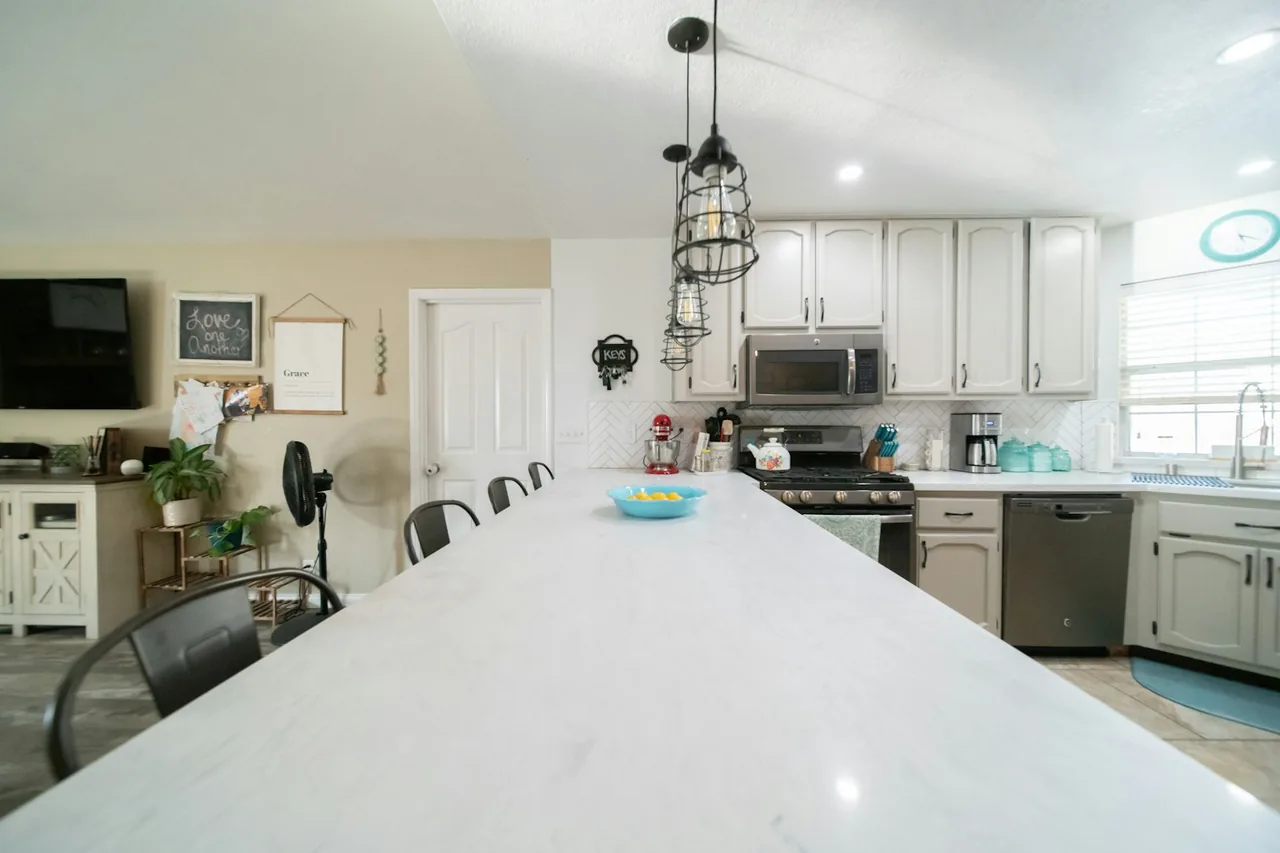
Granite is a natural igneous rock — quartz, feldspar, and mica crystallized from cooled magma — quarried in blocks and cut into slabs, so every piece is one of a kind. One property decides whether it's right for your space: sealing discipline. Granite is genuinely heat-tolerant and hard at Mohs 6–7, but it is porous, so it needs periodic sealing to stay stain-resistant. Get into a simple sealing habit and granite is one of the most durable counters a kitchen can have. Because every slab differs, you select your actual stone in person and a vetted fabricator templates, supports, and seals it — get a free consultation and a written, itemized scope before a slab is cut, because that document is where a granite counter that lasts is decided.
Granite Is a Quarried Slab, Not a Manufactured One
The single fact that explains granite's strengths and its one real demand is that it is dug, not built. Engineered quartz is pressed in a factory to be uniform and non-porous; granite forms over geologic time, which makes it heat-proof and one-of-a-kind but also porous.
How the Stone Forms
Granite forms as molten rock cools and crystallizes deep in the earth, which is why a granite slab is a mosaic of interlocking mineral grains — the quartz gives it hardness, the feldspar gives it color, and the mica gives it the flecks that catch light. Because it is quarried, no two slabs are identical, and even two pieces from the same block vary. That uniqueness is the whole appeal: a granite counter is a piece of natural stone that exists nowhere else.
Why Heat Tolerance Is the Headline Strength
Granite wins where heat and hard use are the daily reality. In a working kitchen countertop you can set a pot straight off the burner onto granite without thermal damage — the crystalline stone shrugs off temperatures that would scorch the resin in quartz. It is hard enough to resist everyday scratching, takes a high polish that looks rich for decades, and on a big island a dramatic slab becomes the centerpiece of the room. Sealed, it stands up to a bathroom vanity's water and cosmetics and to an outdoor cookout's spills and sun far better than most engineered stone.
The Two Trades You Accept
The trade is twofold. First, that one-of-a-kind character means you should select your actual slab in person, not order from a sample chip, because the piece you see is the piece you get. Second, the porosity that comes with natural stone means sealing is part of ownership. If you want zero maintenance and a perfectly uniform look across a big kitchen, that's an argument for engineered quartz; if you want real, heat-proof natural stone with personality, granite is built for it. The learning center walks the full decision.
Where Granite Fails — Porosity and the Stains It Lets In
Granite's real weakness is porosity, and the failure mechanism is simple: an unsealed or under-sealed slab has microscopic capillaries that let liquid soak in, so a spill that sits becomes a stain that doesn't wipe off.
Oil and Water Staining
The most common problem is staining. Cooking oil, grease, and even a wet glass left overnight can penetrate a thirsty area of granite and leave a dark mark that has to be drawn out with a poultice — an absorbent paste that pulls the stain back out of the stone — rather than wiped away. Porosity varies by stone: light-colored and large-crystal granites tend to be more absorbent than dense dark ones, so the right sealing frequency depends on your specific slab. The fix is straightforward — keep the seal current and wipe spills promptly.
The Water-Drop Test Tells You When to Reseal
A quick way to know whether your granite still needs sealing is the water-drop test: leave a few drops of water on the surface and watch. If the water beads, the seal is holding; if it soaks in and darkens the stone within a few minutes, it's time to reseal. See countertop sealing for how that's done.
Why Sealing Frequency Isn't One Number
There is no universal "seal every X months" rule, because absorption is a property of the specific stone and how hard the surface lives. A dense black granite on a lightly used perimeter may go a long time between seals; a light, coarse-grained slab on a heavy-use island may want it more often. The water-drop test replaces the calendar — you reseal when the stone tells you to, not on a fixed schedule someone guessed at.
Grain and Color as Absorption Clues
You can read a slab's likely thirst before the water test. Coarse, large-crystal stone has more grain boundaries for liquid to enter, and lighter granites generally absorb more than dense, dark ones — so a pale, big-flake slab on an island is the combination that wants the most attentive sealing, while a tight black granite is the most forgiving. None of this replaces the test, but it tells you what to expect from the stone you're choosing.
Chipping and Natural Fissures
Granite has two lesser limits. It can chip at an edge or corner under a hard impact — a dropped cast-iron pan on a square edge is the classic culprit — and because it's a natural stone with internal grain, an unsupported overhang or a poorly handled slab can crack. Some granites also contain natural fissures — tight, hairline mineral separations that are part of the stone, not defects — and a reputable fabricator points them out so you know your slab. Unlike marble, granite is not acid-sensitive in any meaningful way, so etching from lemon juice or vinegar is not the concern it is with calcite stone.
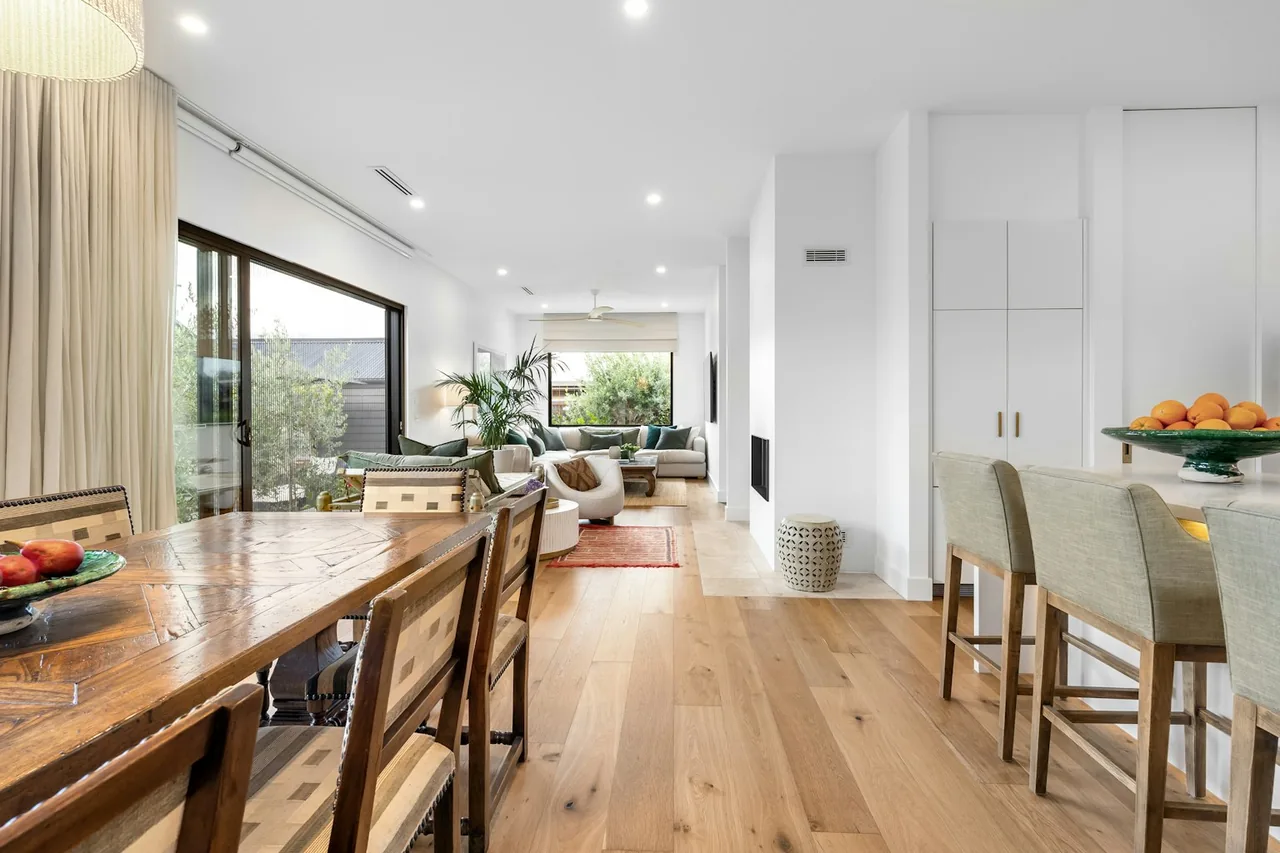
Granite vs Quartz, Marble, Quartzite, and Porcelain
Granite is the heat-tolerant natural-stone benchmark. The cleanest way to place it is against the four materials it's most often weighed against, rated on the specs that actually decide a kitchen.
The Countertop Material Comparison Matrix
The table below is the decision a buyer is really making — type, porosity, heat, hardness, and where each belongs, side by side. Granite's profile is the porous, periodically sealed, heat-tolerant natural-stone column.
| Material | Type | Porosity / sealing | Heat tolerance | Hardness | Best fit |
|---|---|---|---|---|---|
| Granite | Natural igneous | Porous, periodic seal | High — takes hot pans | Mohs 6–7 | Heavy cooking, natural character |
| Quartz | Engineered | Non-porous, never sealed | Low — resin scorches | Mohs 7 mineral | Hands-off, uniform indoor look |
| Marble | Natural metamorphic | Porous, frequent seal | Moderate, but etches | Mohs ~3 | Baths, baking, statement pieces |
| Quartzite | Natural metamorphic | Porous, periodic seal | High — natural stone | Mohs ~7 | Marble look with real durability |
| Porcelain | Engineered sintered | Non-porous, never sealed | Very high — heat-proof | Glass-hard, brittle edge | Outdoors, full sun, ultra-thin |
Granite vs Quartz and Marble
Granite vs quartz is heat versus maintenance. Granite takes a hot pan without harm but is porous and needs periodic sealing; quartz never needs sealing but scorches under heat. Choose granite for heat tolerance and natural, unrepeatable character; choose quartz for a hands-off, uniform surface. The full breakdown is in our quartz vs granite guide. Granite vs marble pits two natural stones that live very differently: marble is soft calcite that etches on contact with acids and scratches easily; granite is hard quartz-and-feldspar that resists both. For a hard-working kitchen, granite is far more forgiving — marble earns its place where the look matters more than durability.
Granite vs Quartzite and Porcelain
Granite vs quartzite is a comparison of close cousins, since both are hard, heat-tolerant natural stones that need sealing. Quartzite is typically as hard or harder at Mohs ~7 and more often carries white, marble-like veining; granite offers a broader speckled palette and is often more affordable. Granite vs porcelain sets natural stone against an engineered slab: porcelain is non-porous, thinner, and UV-proof for full-sun outdoors, while granite gives you genuine stone depth, a thicker substantial edge, and heat tolerance without any UV concern. Line them all up spec-for-spec with our material comparison tool.
The Specs and Ratings That Actually Matter for Granite
Granite isn't sold by a single grading scale, but a handful of real properties and stone-trade terms tell you how a given slab will perform. Each is a question a credible fabricator can answer about your actual stone.
Hardness and Heat Tolerance
Granite's quartz and feldspar put it around Mohs 6–7 on the Mohs hardness scale — the 1-to-10 scratch-resistance ranking — hard enough that knives and everyday grit don't readily scratch it. As a stone formed under heat and pressure, it also withstands hot cookware without thermal damage, a genuine advantage over any resin-bound surface and the reason granite is a default in serious cooking kitchens.
Porosity and Absorption
This is the spec that drives sealing. Granite is naturally porous, and absorption varies widely by stone — denser dark granites absorb little, while lighter, coarser-grained ones absorb more and need sealing more often. There's no single number; the slab's behavior in a water-drop test tells you. Absorption is also why two granites that look equally beautiful can have very different upkeep, which is part of selecting the actual slab rather than a sample.
Slab Grade and Thickness
The trade loosely sorts granite into commercial, standard, and premium grades based on appearance, rarity, color, veining, thickness, and the soundness of the slab — not a regulated scale, but a real driver of price and availability, with rarer colors and bolder movement commanding premium tiers. Slabs are commonly 2 cm or 3 cm thick: a 3 cm slab gives a solid single-thickness edge and more strength across spans, while 2 cm is lighter and usually needs a built-up edge and more support beneath.
The Granite Spec Sheet at a Glance
The table below collects the properties a credible fabricator can speak to, with the practical meaning of each. None is a marketing grade; every one predicts how the slab lives.
| Spec | Typical value | What it predicts |
|---|---|---|
| Hardness | Mohs 6–7 | Strong scratch resistance from knives and grit |
| Heat tolerance | High (crystalline stone) | Takes hot pans straight off the burner |
| Porosity / absorption | Varies by stone | Sets sealing frequency; lighter, coarser stones absorb more |
| Acid sensitivity | Low | Doesn't etch from citrus or vinegar like marble |
| Slab grade | Commercial / standard / premium | Drives price and rarity, not a regulated scale |
| Thickness | 2 cm or 3 cm | 3 cm = single-thickness edge and span strength; 2 cm = built-up edge |
Want help reading a slab's grade and absorption?
We match you with a vetted fabricator who walks the stone yard with you and recommends a slab for your kitchen — with a free, written quote.
Grades, Finishes, and Colors — What to Buy
Because granite is natural, "what to buy" is really about selecting the slab itself and the finish that suits how you'll use it. The finish changes both look and upkeep.
Finish and Its Effect on Upkeep
Polished is the classic high-gloss look — it deepens the color, resists staining best because the surface is tightest, and is the most common choice. Honed (matte) is softer and contemporary but, being more open, can show oils and may need sealing more often. Leathered (textured) hides fingerprints and water spots and adds a tactile, low-sheen surface that's popular on darker stones. The finish you pick changes daily wiping and sealing frequency as much as it changes the look.
Selecting Color, Movement, and Your Actual Slab
Granite ranges from near-uniform speckled fields to dramatic, swirling slabs with bold veins and crystals, and bolder, rarer movement sits in higher price tiers and demands careful slab layout so the pattern flows across seams. Because every slab differs, view the specific pieces your job will use — not a small sample — check color consistency across the slabs that will sit side by side, and have the fabricator mark any natural fissures or pitting so there are no surprises. For thickness, 3 cm gives a substantial single-thickness edge and maximum strength; 2 cm with a built-up edge works where weight or budget favors it.
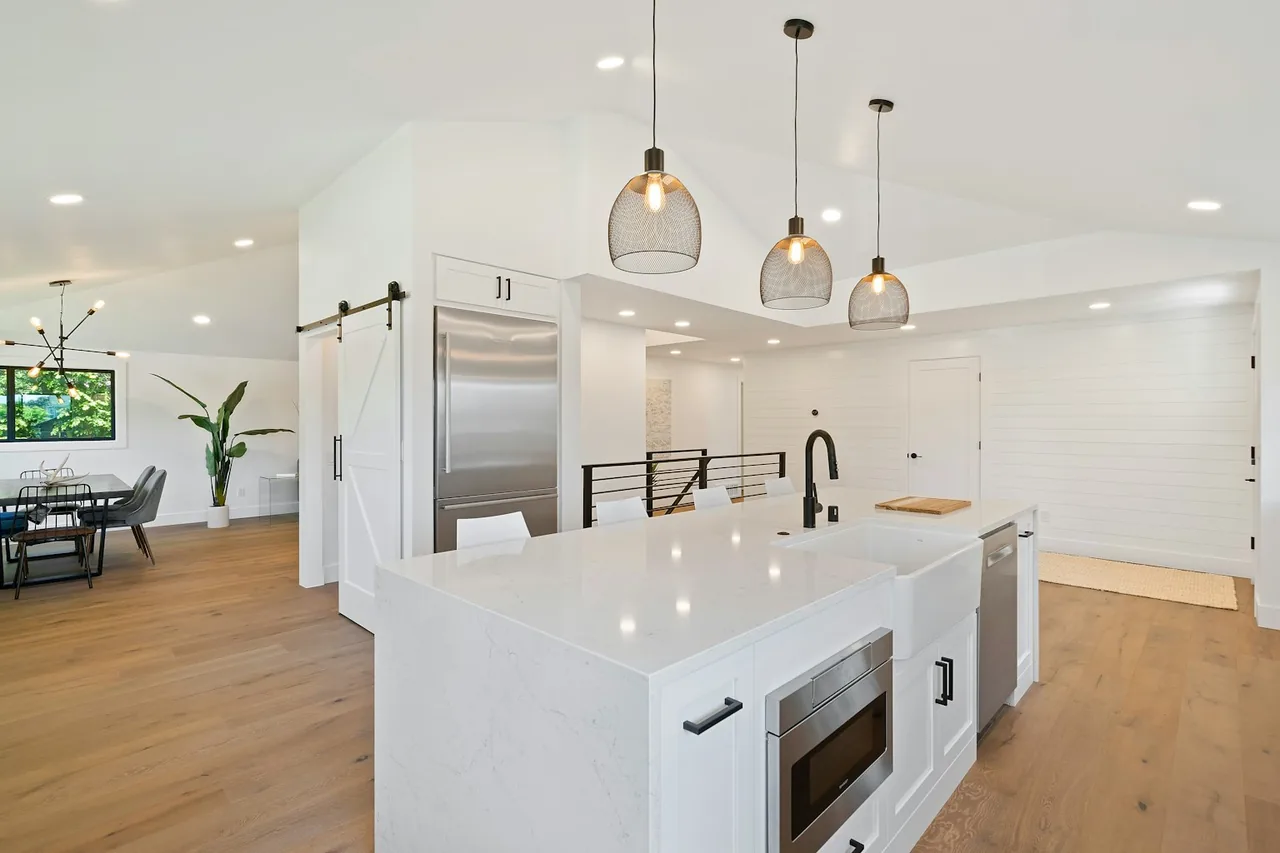
How Granite Is Fabricated and Installed
Granite is heavy natural stone, so fabrication and installation are precise, weight-aware work — and several realities are specific to a quarried slab. The six steps below are the full arc from measuring the cabinets to the sealed, finished counter.
Template After Cabinets Are Set
A precise template is taken from cabinets that are installed and level, after confirming the bases and floor can carry the load. Granite is far heavier than wood or laminate, so the structure underneath has to be ready before the slab is even cut.
Slab Selection and Layout
Because every slab is unique, the layout is planned across the specific stone you selected — placing seams in low-sightline runs, booking or matching movement across joints where the stone allows, and working around any natural fissure. This is where a dramatic slab is made to flow rather than fight itself.
Cutting and Radiused Cutouts
The slab is cut to exact size with diamond tooling, and sink and cooktop cutouts are made in the shop with radiused inside corners, never square. A sharp internal corner is a stress riser — exactly where a stone slab fractures under load — so radiusing it is structural, not cosmetic.
Edge Profiling and Polishing
Edge profiles — eased, beveled, bullnose, ogee, or a built-up mitered edge — are ground and polished into the stone. The more elaborate the profile, the more skilled hand-finishing it takes, so the profile is chosen before fabrication, not added after.
Setting, Seaming, and Overhang Support
The slab is set on level, load-ready cabinets — granite has little flex and will crack if it bridges a gap or a high spot — and seams are bonded with a tinted epoxy mixed to the slab's color so the line stays tight. Any overhang past roughly 10 inches for 3 cm material — less for 2 cm — gets steel rods, corbels, or brackets, or the cantilever cracks at the edge over time.
Sink Mounting, Sealing, and Walkthrough
Undermount sinks are carried on a bracket or rail system and the exposed cut reveal is polished. New granite is sealed as part of the install so it leaves protected on day one, and the fabricator walks the counter with you to confirm seams, edges, and the seal. The full sequence is in countertop installation.
Skip or rush any one of these six — templating off un-level cabinets, setting over a gap, leaving an overhang unsupported — and the failure it was meant to prevent shows up later, which is why a vetted fabricator treats the sequence as fixed.
Talk through your project — free.
A free consultation and a written, itemized quote from a vetted installer. No pressure, no obligation.
Is Granite Right for Your Space?
Whether granite fits is the output of a short chain of facts about how your kitchen lives and whether you'll keep a seal current. Walk the decision in order; each branch either confirms granite or points you to the surface that fits better.
- Do you set hot pans down without thinking? If yes, granite is a strong candidate — it takes a pan straight off the burner where quartz scorches. Heat tolerance is granite's headline advantage, so a heavy-cooking kitchen leans granite from the first question.
- Will you keep up a simple sealing habit? Granite is porous and needs periodic resealing, confirmed with a water-drop test. If even an occasional sealing task is more than you'll do, non-porous quartz may suit you better; if the light routine is fine, granite stays on the table.
- Do you want one-of-a-kind character or a matched look? Granite's unique slabs make every counter unrepeatable, which is the appeal — but a very large kitchen needing perfectly matched runs may favor engineered quartz. Decide which matters more before you shop slabs.
- Can the cabinets and floor carry the weight? Granite is heavy, especially in 3 cm. Confirm the bases, any island, and the floor can support it, and that overhangs past 10 inches are engineered before templating.
- Match the finish and slab to the room. Polished resists staining best; honed and leathered look softer but may want more sealing. Select the actual slab in person, then size the job with our countertop cost calculator.
Run honestly, this tree almost always returns a clear answer — and the most common reason granite disappoints is buying it without accepting the sealing habit or confirming the structure can carry the stone.
Common Granite Mistakes, Consequences, and Prevention
Most granite disappointments are the same handful of avoidable choices, each with a predictable consequence and a known prevention. Naming them is how you spot a corner being cut before it is buried under your counter.
| Mistake | What it causes | The prevention |
|---|---|---|
| Letting the seal lapse | Oil and water penetrate and leave dark stains that need a poultice | Run the water-drop test periodically; reseal when water stops beading |
| Buying from a sample chip | The delivered slab's color and movement don't match expectations | Select the actual slabs in person and check pieces that sit side by side |
| Acidic or harsh cleaners | Sealer degrades and the polish dulls over time | Clean with pH-neutral stone cleaner or mild dish soap; skip vinegar and bleach |
| Unsupported overhang past 10 inches | Cantilever cracks at the edge under load | Engineer steel rods or corbels before the slab is set |
| Square inside corners on cutouts | Stress risers fracture the slab at the sink or cooktop | Radius every inside cutout corner in the shop |
| Setting over un-level cabinets or a gap | The slab cracks because granite has little flex | Level and load-prep the bases; set on continuous support |
| Skipping the install seal | Stone is unprotected from day one | Seal new granite as part of the installation |
Every row is either a stain risk or a structural failure — which is why "sealed, selected in person, supported, and set on level cabinets" is the entire discipline of living well with granite.
Caring for Granite
Granite is low-maintenance, not no-maintenance, and the routine is built around one idea: keep the seal current so the porous stone stays protected.
The Daily Routine
Day to day, clean with warm water, a soft cloth, and either mild dish soap or a pH-neutral stone cleaner. Avoid acidic cleaners (vinegar, lemon) and harsh, abrasive, or high-pH products — not because granite etches like marble, but because they can degrade the sealer and dull the polish over time. Wipe spills, especially oils, promptly so they never get the chance to penetrate.
The Sealing Habit
The defining task is periodic sealing: most granite benefits from resealing on a schedule set by the stone's porosity and use, and the simple water-drop test tells you when it's due — if water beads, the seal holds; if it soaks in and darkens the stone within minutes, reseal. With a current seal and prompt cleanup, granite resists stains, takes hot pans, and holds its finish for the life of the kitchen — the maintenance is real but minimal, and far lighter than a soft stone like marble demands. See countertop sealing for the method.
What Actually Drives the Cost of a Granite Countertop
A granite quote is not a flat per-square-foot rate; the headline number hides the items below, ranked by how much they move the total. We don't publish dollar figures here — see the granite countertop cost guide for ranges and the cost guides hub to compare across materials.
- Slab grade, color, and rarity. The biggest swing. A common speckled standard-grade granite and a rare, dramatic premium slab are very different prices for the same square footage, and rarity drives availability as much as cost.
- Total square footage and slab count. More area means more slabs, and a layout that pushes past one slab adds material, a seam, and labor — sometimes a whole extra slab to keep color consistent.
- Edge profile. An eased or beveled edge is standard; an ogee or built-up mitered edge takes more skilled hand-finishing, raising labor.
- Seams, cutouts, and complexity. Each seam, sink or cooktop cutout, and faucet hole is shop labor, and an L-shaped or multi-run kitchen costs more to fabricate than a single straight counter.
- Overhang support. An island or breakfast bar past 10 inches needs steel rods or corbels — a real line item the lowest bid tends to omit.
- Thickness. A 3 cm slab costs more than 2 cm but skips the built-up edge and carries spans better; the choice trades material against edge labor.
- Removal and disposal. Tearing out and hauling away an old counter is labor and a fee, and it belongs in the written quote up front rather than as a surprise.
Because these drivers swing so widely, the only honest number comes from an on-site assessment. Size your own kitchen first with the countertop cost calculator so you can read a quote critically.
Want an itemized granite quote, not a headline rate?
We match you with a vetted fabricator who prices the slab, edge, seams, support, and the install seal as separate lines — free and with no obligation.
The Granite Fit Test: Six Checks Before You Buy
Before you commit to a slab, run your space through the same six-check test a good fabricator would. Each check matches the stone, finish, and your willingness to seal to how the room lives, and a granite that passes all six is a granite that lasts the life of the kitchen. Call it the Granite Fit Test.
- 1. Accept the sealing routine
- Granite is porous and needs periodic resealing to stay stain-resistant. If even an occasional sealing task is more than you'll do, non-porous quartz may suit you better; if you want heat-proof natural stone, the routine is light and worth it.
- 2. Select the actual slab in person
- Every slab is unique, so view the specific pieces your job will use — not a sample chip — and check color consistency across the slabs that will sit side by side, plus any natural fissures the fabricator flags.
- 3. Match the finish to upkeep
- Polished resists staining best and is easiest to keep clean; honed and leathered look softer and more modern but can show oils and may need sealing more often. Choose for daily reality, not just the showroom.
- 4. Confirm support for the slab's weight
- Granite is heavy. Make sure the cabinets, floor, and any island can carry it, and that overhangs past 10 inches are engineered with steel or corbels before templating.
- 5. Lean on granite's heat tolerance
- If setting hot pans down without thinking is how your kitchen works, granite is one of the few surfaces that takes it — a real advantage over heat-sensitive engineered stone, and a reason to favor it over quartz.
- 6. Compare the slab against the budget
- Grade, color, and rarity move the price most, so weigh the slab you love against the granite countertop cost guide and size the job with the cost calculator before you commit.
Pass all six and granite is almost certainly the right call; fail one or two and the test has just saved you from a stone that fights how you actually live.
Granite Countertop Glossary
The terms below recur in every granite quote, spec sheet, and warranty — each defined as its working meaning on an actual job, so you can read a scope and judge whether it is complete.
- Igneous rock
- Stone formed from cooled, crystallized magma. Granite is the countertop-grade igneous rock, a mosaic of quartz, feldspar, and mica grains — distinct from sedimentary or metamorphic stones like marble.
- Feldspar
- The mineral group that gives granite most of its color. Its proportion and type are part of what makes each slab's field and movement unique.
- Mohs hardness
- The 1-to-10 scratch-resistance scale; granite rates about Mohs 6–7, hard enough to resist knives and grit and far above marble's ~3.
- Porosity
- The microscopic capillary structure that lets liquid soak into unsealed granite. It varies by stone and is the property that makes periodic sealing necessary.
- Sealing
- Applying a penetrating sealer that fills the stone's pores so spills bead instead of soaking in. Granite is sealed at install and resealed periodically as the water-drop test indicates.
- Water-drop test
- Leaving a few drops of water on the surface to check the seal: beading means it holds, soaking in within minutes means it's time to reseal.
- Poultice
- An absorbent paste applied over a set-in stain to draw it back out of porous stone — the remedy for an oil or water mark that wiping won't remove.
- Fissure
- A tight, natural hairline mineral separation in the stone — part of the granite, not a defect or a crack. A reputable fabricator points them out before fabrication.
- Slab grade
- The trade's loose commercial / standard / premium sort by appearance, rarity, color, and soundness. Not a regulated scale, but a real driver of price.
- Stress riser
- A point — like a square inside corner on a cutout — where load concentrates and a crack can start. Radiusing the corner removes it.
- Overhang
- Counter that extends past the cabinet, as on an island. Past roughly 10 inches for 3 cm it needs engineered steel or corbel support or it cracks.
- Tinted epoxy
- Seam adhesive mixed to match the slab's color so the joint between two pieces stays tight and inconspicuous.
Sourcing, Sealing, and What a Warranty Covers
Granite has no single manufacturer's warranty the way an engineered slab does, so the protections that matter are honest sourcing, the install seal, and the fabricator's workmanship.
Honest Sourcing and Disclosure
Because every slab is natural and unique, the real assurance is that the stone delivered is the one you selected in person, with any natural fissures or pitting disclosed up front rather than discovered after install. A fabricator who lets you see and approve the actual slabs — and marks where seams and movement will fall — is one selling you a known quantity, not a surprise.
The Install Seal and Workmanship
New granite should be sealed as part of the installation so it leaves protected, and the fabricator's labor warranty covers the work the maker can't — seams that stay tight, an overhang that holds, a slab set flat on level cabinets. Ask in writing for the scope, the install seal, and a workmanship guarantee; with natural stone, the fabricator's standard is the warranty that counts.
A Real Granite Decision
The clearest way to see where granite fits is to follow one realistic kitchen choice where heat tolerance and a homeowner's habits, not the sample chip, decided the material.
How to Vet a Granite Fabricator
With natural stone, the fabricator decides whether your one-of-a-kind slab becomes a counter that lasts or one that stains, cracks, or telegraphs its seams. These questions separate a shop that builds granite tops to last from one that simply cuts and sets fast.
- They let you select and approve the actual slab
- Granite is unique, so a credible fabricator has you view and sign off on the specific slabs your job will use — not a sample. A shop that orders from a chip is hiding the variation that defines the stone.
- They template off installed, level cabinets and confirm the load
- Heavy stone needs a ready structure. Ask whether they template from finished, leveled cabinets and check that the bases and floor can carry the slab before cutting.
- They radius cutout corners and spec overhang support
- Confirm sink and cooktop cutouts get radiused inside corners and that any overhang past 10 inches is engineered with steel or corbels. Square corners and unsupported cantilevers are the two avoidable cracks.
- They seal the stone at install and explain the schedule
- New granite should leave sealed. A real answer covers the install seal and how to run the water-drop test to know when to reseal — not a vague "it never needs anything."
- They disclose fissures and match seams in color
- Ask how they handle natural fissures and seam color. A pro marks fissures up front and mixes tinted epoxy to the slab so the joint stays tight and inconspicuous.
- They put scope, schedule, and a labor guarantee in writing
- Ask for the full scope, the timeline, and a workmanship warranty before work starts. A shop willing to name a labor guarantee — and return if a seam lifts or an edge chips — stands behind the install itself.
Want a fabricator who answers all six of these?
Tell us about your kitchen and we'll match you with a vetted granite pro who selects the slab with you, supports the overhang, and seals at install — in a written scope, free.
Why Route Your Granite Countertop Through Pro Work Home Surface
Pro Work Home Surface is not a fabricator and does not cut or set your slab — we are a national authority on home surfaces that matches homeowners with vetted local countertop pros and holds them to a published bar.
- A free consultation and an itemized written scope
- Every connection starts with a no-obligation consult and a written quote that lines out the slab, edge, seams, overhang support, and the install seal separately — so you read the whole job, not a headline rate.
- Template, support, and cut for natural stone
- The template is taken from installed, leveled cabinets confirmed to carry the slab's weight, with sink and cooktop cutouts radiused at the corners to prevent the fractures a square corner invites.
- Seams matched and overhangs engineered
- Seams are placed in low-sightline runs, pattern-matched where the stone allows, and bonded with color-tinted epoxy; any overhang past 10 inches is supported with steel or corbels before the slab is set.
- Sealed at install, slab as selected
- The slab delivered is the one you chose in person, natural fissures disclosed up front, and the stone is sealed as part of the installation so it leaves protected on day one.
Countertops are one of eight categories we cover across home surfaces. Compare granite against the rest of the field at the countertops hub, weigh the budget in our granite countertop cost guide, dig into the trade-offs in our quartz vs granite comparison and the full learning center, and line materials up spec-for-spec with the material comparison tool. Explore the full range of home surfaces — and if new cabinets are part of the project, template both together so the heavy stone lands on level, load-ready bases.
Brands & Material Authority
Quality and construction drive long-term performance more than the label. These are widely respected names in this category:
- Cambria
- Caesarstone
- Silestone
- MSI
- Cosentino
- Corian
- Wilsonart