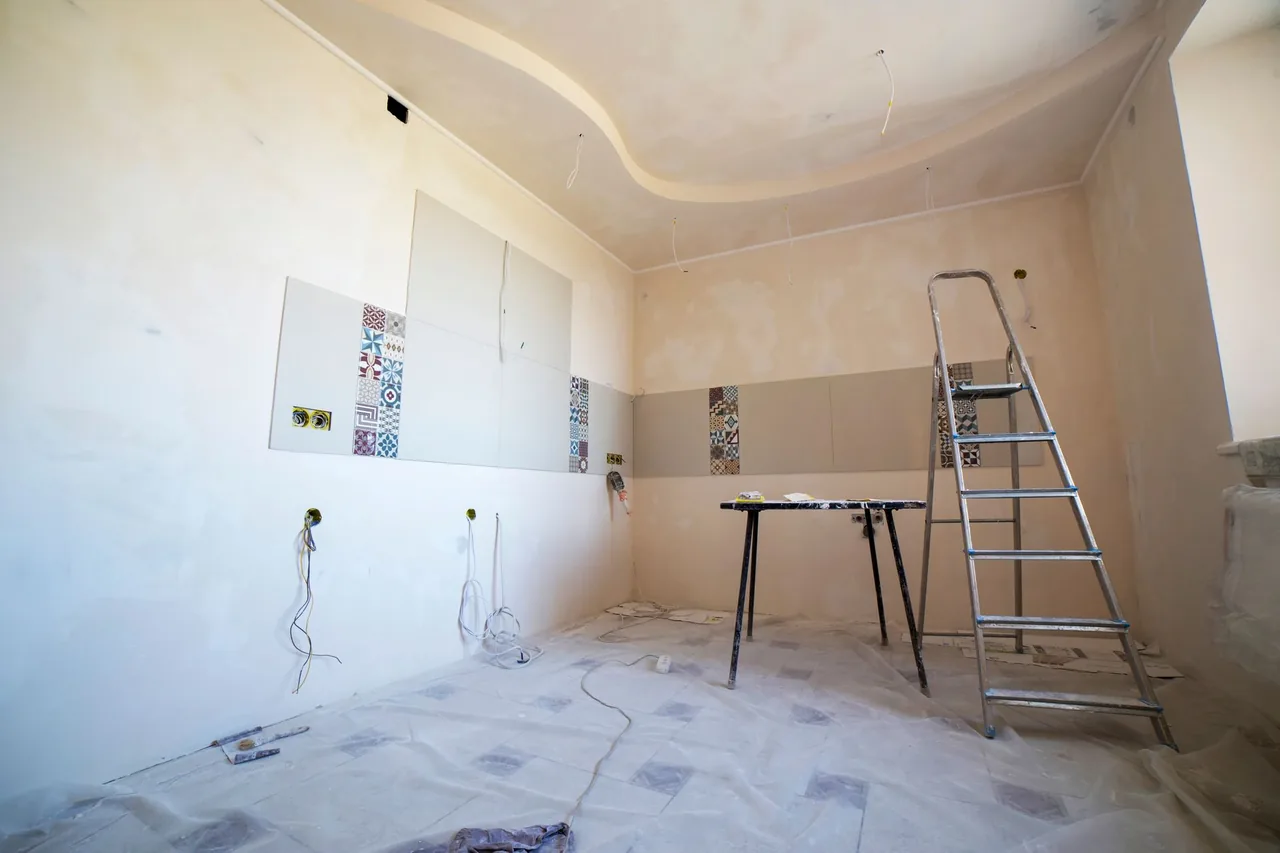
Drywall — gypsum board sheathed in paper — is the standard interior wall and ceiling surface in modern homes, the flat, paintable substrate nearly every other finish mounts to. Two things decide whether a drywall wall looks seamless and lasts, and the board itself is rarely either: the finish level, because the same board taped to Level 3 versus Level 5 is the difference between visible seams under a wall light and a flawless surface; and the right board for the location, because standard board in a wet zone or the wrong board where code demands fire rating is a failure no finish can fix. Standard board is 1/2" thick; fire-rated Type X board is 5/8" and required in specific assemblies by code. Get a free consultation and a written, itemized scope from a vetted drywall crew before work starts — that document, which names the board and the finish level, is where a smooth, lasting wall is decided.
Drywall Is a Board-and-Finish Decision First, a Sheet Second
The sheet of gypsum looks like a commodity, but what separates a smooth, durable wall from a wavy, cracking one is the board chosen for the location and the finish level chosen for the lighting — decisions made before the first screw and the first coat of mud.
The Substrate Everything Else Sits On
Drywall is a gypsum core faced with paper, manufactured in large sheets that hang fast and finish flat — the reason it replaced lath-and-plaster as the default interior surface. It is, in a sense, the most important wall material precisely because it's the one you usually don't see, and a credible crew treats it as the foundation for everything above it:
- It's the flat, sound, fire-resisting plane that paint goes on.
- It's the substrate that shiplap, wood panels, wainscoting, 3D panels, and tile all mount over.
- It's economical, fast, repairable, and the universal canvas of the modern interior.
Get the drywall right and every finish above it goes on true; get it wrong — wavy, poorly fastened, badly taped — and no finish on top can hide it.
The Right Board for Every Location
Drywall is the correct choice for essentially every interior wall and ceiling in a home, but the board changes by location: living spaces, bedrooms, hallways, and ceilings get standard board; garages, walls between living space and an attached garage, and certain ceilings get fire-rated Type X by code; and wet-adjacent areas get moisture- and mold-resistant board. The material itself rarely fails — what varies enormously is the board choice, the install, and the finish quality.
The Finish Level Sets How Smooth It Looks
The most overlooked decision is the finish level, and it's set by the lighting, not the board. The industry defines levels 0 through 5: Level 4 suits flat paint and light texture, while Level 5 — a skim coat over the entire surface — is what's needed for gloss paint and walls under critical raking light. Most "bad drywall" complaints are a Level 3 wall finished to a budget under Level 5 lighting, which is a finish-level mismatch, not a board defect.
Where Drywall Fails — Moisture, Cracks, and a Cheap Finish
Three failure modes recur, and each is about the right board, correct fastening, or the appropriate finish level — not the gypsum itself.
Water — the Great Weakness
The gypsum core and paper face wick and hold moisture, so standard drywall in the wrong wet location softens, sags, delaminates, and grows mold on the paper. Ordinary drywall behind a shower or in a chronically damp wall is a defining mistake — those locations need moisture-resistant or mold-resistant board, and a tiled wet wall needs cement board, not drywall at all. Hidden leaks and flooding produce the same result invisibly: a wall that looks fine while the board behind the finish is failing.
Cracking and Fastener Pops
Most cracking is install- or movement-related: seams taped without enough compound or over-sanded, fasteners driven wrong so they pop as framing dries and shifts, butt joints that weren't floated wide, or normal building movement at stress points like the corners of doors and windows. A screw driven through the paper has no holding power and pops — which is why the screw set just below the surface without breaking the paper is a non-negotiable of a sound wall.
A Finish Level Below the Lighting
The third "failure" is purely cosmetic and purely about finish level — seams, fastener marks, and texture telegraphing under raking light because the wall was finished to a lower level than the lighting demanded. It's the most common complaint and the most avoidable: matching the finish level to the room's actual lighting removes it. None of these are defects in the gypsum board; they're failures of the right board, correct fastening, and the appropriate finish level, which is why drywall is far more of a skill than a material.
Drywall vs. the Finishes That Mount Over It
Drywall isn't really in competition with the decorative wall finishes — it's the base most of them need. The matrix below frames when drywall alone is enough versus when something goes on top, rated on the specs that decide the call.
| Surface | Role | Wet-zone use? | Relationship to drywall | Best use |
|---|---|---|---|---|
| Drywall | Flat, paintable substrate | No (moisture board for damp; cement board for wet) | The base itself | Nearly every dry interior wall & ceiling |
| Wall tile | Wet-rated, sealed finish | Yes — over cement board + waterproofing | Replaces drywall in the wet zone | Showers, backsplashes |
| Shiplap / wood panels | Decorative texture | No | Mounts over drywall | Feature walls, warmth |
| 3D panels / wainscoting | Decorative relief / millwork | PVC/PVC-trim only | Mounts over drywall | Modern texture, lower-wall protection |
| Plaster | Hard monolithic finish | No | The slower, costlier alternative | Traditional or veneer-plaster walls |
The honest read: the decorative finishes — shiplap, wainscoting, wood panels, and 3D panels — are upgrades you add over drywall, not instead of it; tile replaces drywall only in the wet zone; and plaster is the slower, costlier alternative drywall displaced on speed, cost, and repairability. For when drywall alone is enough versus when to add a finish, the guides are the place to compare.
Want the right board and the finish level your lighting demands?
Tell us the rooms and we'll match a vetted drywall crew who specs the board by location and the finish by lighting — and puts both in a written scope before work starts.
The Specs and Standards That Matter for Drywall
Drywall is governed by published standards, and a few specs decide the board you need and the wall you get — from thickness and fire rating through the finish levels to the install standard and the moisture-rated boards.
Thickness and Fire Rating
The board's thickness and fire class are a code decision, not a preference.
Standard, Type X, and Type C Board
Standard board is 1/2"; fire-rated Type X is 5/8" and required by code in specific assemblies such as garage separations and certain ceilings. Type C is an enhanced fire-rated board for some rated assemblies. Using the wrong board where code calls for Type X is a code failure, not a style choice.
Where Type X Is Required
Code commonly mandates 5/8" Type X on the wall and ceiling separating living space from an attached garage, and in certain ceiling assemblies. The thicker, more fire-resistant core buys time in a fire, which is exactly why code specifies it there and an inspector checks for it.
Why the Garage Wall Is Not Optional
The attached-garage separation is one of the most common places a code-required Type X board gets skipped on a budget job. It isn't a finish question — it's a life-safety assembly, and getting it wrong fails inspection and removes a fire barrier the home is supposed to have.
Finish Levels 0–5
The industry defines finish levels 0 through 5 (per the Gypsum Association's GA-214). Level 4 suits flat paint and light texture; Level 5 — a skim coat over the entire surface — is what's needed for gloss paint and walls under critical raking light. The level, not the board, sets how smooth the finished wall looks, so it's matched to the room's lighting and paint sheen.
The Installation Standard
Drywall hanging and finishing follow ASTM C840 and the GA's GA-216 — fastener spacing, joint treatment, and board orientation are specified, not improvised. A wall hung and finished to those standards resists pops and cracks; one that ignores the screw schedule and joint treatment invites both.
Moisture- and Mold-Resistant Board
Water-resistant and mold-resistant gypsum, and fiberglass-faced board, belong in bathrooms and damp areas where standard paper-faced board would fail; cement board belongs behind wet-wall tile. The location dictates the board — and standard drywall in a wet zone is the defining mistake.
Types and What to Buy
Drywall comes in distinct types matched to the room and the assembly, and using the right one is a code and durability decision, not a style one. Drywall is bought by type rather than a sub-page per board.
The Four Board Types, Compared
The table below lays out the common board types, where each is required or preferred, and why — the comparison that keeps standard board out of a wet zone and puts Type X where code demands it.
| Board type | Thickness | Where it goes | Why |
|---|---|---|---|
| Standard gypsum board | 1/2" | Dry interior walls & ceilings | The economical default for conditioned living space |
| Fire-rated Type X | 5/8" | Garage separations, certain ceilings, rated assemblies | Thicker core resists fire longer — code-required |
| Moisture- & mold-resistant | 1/2" or 5/8" | Bathrooms, laundry, damp areas | Resists the moisture that fails paper-faced board |
| Specialty (abuse / sound) | Varies | High-traffic halls, sound-rated walls | Impact resistance or a damping layer for noise |
The brand matters far less than the right type for the location, the correct thickness for code, and the finish level the room's lighting demands. Cost factors — board type, square footage, ceilings vs. walls, the finish level, and any texture — are worth comparing in the cost guides, and the material comparison tool lines the finishes up spec-for-spec.
Type X where code requires it, moisture board where it's wet.
We match you with a vetted crew who specs the correct board for every room and hangs it to standard — in a written, itemized scope before work starts.
How Drywall Is Installed
Drywall is hung and then finished, and both stages have standards that separate a flat wall from a wavy, cracking one. The six steps below are the full arc from hanging the right board to the final texture and prime, each preventing a specific failure.
Hang the Right Board to GA-216
Sheets are hung with the right board for the location — Type X where code requires it, moisture-resistant in wet areas — typically with the long edge perpendicular to the framing on ceilings and joints staggered, per ASTM C840 and GA-216. The correct board and orientation are set before a single screw.
Fasten to the Screw Schedule Without Breaking the Paper
Sheets are fastened to studs on the specified screw schedule, with each screw set just below the surface without breaking the paper. A broken-paper screw has no holding power and pops, so the depth of every fastener matters.
Tape and Bed the Seams
The tapered seams are taped and bedded in joint compound, and butt joints are floated wide to disguise them. Enough compound and a wide float are what keep seams from telegraphing or cracking later.
Treat the Corners and Spot the Fasteners
Inside and outside corners are treated with paper or metal bead, and every fastener is spotted with compound. Corners and fastener spots are where a rushed finish shows first, so each is coated and feathered deliberately.
Coat, Feather, and Sand to the Finish Level
Each coat is feathered and sanded, and the number of coats rises with the target finish level. A Level 5 skim coat over the whole surface is its own added step for critically lit walls — the level is matched to the lighting, not the budget.
Texture if Specified, Then Prime
Any texture — knockdown, orange-peel, or skim — is applied last, and the wall is primed before paint. Primer evens the surface so the finish paint reads uniform, completing a wall that's ready for its finish coat or for a decorative surface over it.
Two professional non-negotiables: the right board for the location and code (Type X where required, moisture-resistant in wet areas), and finishing to the level the lighting demands rather than the level the budget prefers. Hanging and finishing are the core of wall installation; the taping and mudding stage is wall finishing; and any knockdown, orange-peel, or skim texture is wall texturing.
Common Drywall Mistakes, Consequences, and Prevention
Most drywall complaints are the same handful of shortcuts, each with a predictable consequence and a known prevention. Naming them is how you spot a corner being cut before it's painted over.
| Mistake | What it causes | The prevention |
|---|---|---|
| Standard board in a wet zone | Softening, sagging, mold on the paper | Use moisture-/mold-resistant board; cement board behind shower tile |
| No Type X at the garage wall | A missing fire barrier; failed inspection | Install 5/8" Type X where code requires it |
| Screw through the paper | No holding power; fastener pops | Set screws just below the surface without breaking paper |
| Butt joints not floated wide | Visible ridges and seam cracking | Float butt joints wide per GA-216 |
| Level 3 wall under raking light | Seams and fasteners telegraph under the light | Finish to Level 5 where lighting is critical |
| Too little compound, over-sanded | Weak seams that crack | Bed tape in enough compound; feather, don't over-sand |
| Not primed before paint | Uneven sheen; flashing over seams | Prime the whole wall before the finish coat |
Every wet-area and code row is a documented failure trigger — which is why "we hang the right board for the location and finish to the lighting, in writing" is the most valuable sentence in a drywall quote.
The Drywall Fit Test: Six Questions Before You Buy
Before board is ordered, run each room through the same six-question fit test a careful crew uses. Each question has a code or measurable answer, and a wall that fails one points to a different board or a higher finish level.
- 1. What does the location's code require?
- Standard 1/2" for dry living space; 5/8" Type X where code requires it (garage separations, certain ceilings); moisture- and mold-resistant board in baths; cement board behind shower tile. This is a code and durability call, not a preference.
- 2. How is the wall lit?
- Level 4 is fine for flat paint and normal light; Level 5 — a full skim coat — is what walls under raking light or gloss paint need. The lighting, not the budget, should decide the level, because under-finishing shows.
- 3. How wet does the room get?
- Damp rooms need moisture- and mold-resistant board; a shower wall needs cement board, never drywall. Standard paper-faced board in a wet zone is the defining mistake.
- 4. Will the fasteners hit framing on schedule?
- Confirm a code-correct screw schedule per GA-216 and screws set just below the surface without tearing the paper. A broken-paper screw has no grip and pops.
- 5. Does the wall need specialty board?
- Abuse-resistant board in high-traffic halls and sound-rated assemblies between rooms solve real problems standard board can't. Spend there when the room calls for it.
- 6. Is a finish going over the drywall?
- If shiplap, panels, or tile mount over it, the drywall is the base — and in a wet zone, tile needs cement board behind it, not drywall. Plan the substrate for what goes on top.
Run honestly, the fit test usually returns a single defensible board and finish level for each room — and a crew that quotes standard board and a Level 4 finish for every wall regardless of the answers is the red flag.
Which Drywall Is Right for Your Room?
The decision isn't a preference — it's the output of a short chain of facts about code, moisture, and lighting. Walk it in order; each branch points to the board and finish the room actually needs.
- Does code require Type X here? A garage separation, certain ceilings, and rated assemblies require 5/8" Type X — no exceptions. Everywhere else opens standard or moisture-rated board.
- Is the room wet or damp? A shower needs cement board, never drywall; a damp bath or laundry needs moisture- and mold-resistant board; a dry room takes standard board.
- How is the wall lit? A wall washed by raking light or finished in gloss needs Level 5; a normally lit, flat-painted wall is fine at Level 4. The lighting sets the level.
- Is it high-traffic or noise-sensitive? A busy hall may want abuse-resistant board; a wall between rooms that needs quiet may want a sound-rated assembly.
- Is a finish going over it? If tile, the wet zone needs cement board; if shiplap or panels, standard board is the base. Plan the substrate for what mounts on top.
Run end to end, this tree almost always returns one defensible board and finish level for each room — and the answer is rarely "standard board and Level 4 everywhere."
What Actually Drives the Cost of a Drywall Job
A drywall quote is not a flat per-square-foot rate; the headline number hides the items below, ranked by how much they move the total.
- Finish level. The biggest swing on the finishing side — a Level 5 skim coat over the whole surface is far more material and skilled labor than a Level 4 wall, and it's what critically lit rooms need.
- Board type and code requirements. Type X, moisture- and mold-resistant board, and specialty boards cost more than standard, and code dictates where the pricier board is mandatory.
- Ceilings vs. walls. Ceilings are slower and harder to hang and finish than walls, and they raise both labor and the finish-level cost.
- Square footage and room count. More board is more material and labor, and many small rooms with many corners cost more per foot than open walls.
- Texture. Knockdown, orange-peel, or a smooth skim are separate finishing steps priced beyond taping and mudding.
- Repairs and prep. Patching existing walls, cutting around fixtures, and prepping for a finish over the drywall add labor a clean new hang avoids.
- Access and height. Tall walls, stairwells, and tight spaces add staging and time beyond a standard-height room.
Because the finish level especially swings the total, the only honest number comes from seeing the rooms. Compare what moves the price across the category in our cost guides so you can read a quote critically.
Get an itemized scope that names the board and finish level — not a headline rate.
We match you with a vetted crew who prices the board, the hang, and the finish level as separate lines — so you see the whole job, free and with no obligation.
Caring for Drywall
Finished, painted drywall is low-maintenance, and care is mostly the paint plus protecting it from water. Clean painted walls with a barely damp cloth and mild soap; wash gently so you don't burnish the paint. The real enemy is moisture — address leaks, run bathroom and kitchen exhaust fans, and control humidity, because the fastest way to ruin drywall is to let it get and stay wet, which softens the core and grows mold on the paper. Drywall's best trait is how easily it's repaired: dings, nail holes, and cracks patch and repaint invisibly, and even a large damaged section can be cut out and replaced. Hairline cracks at door and window corners are common with seasonal movement and are a routine patch. For holes, cracks, water damage, or popped fasteners, see wall repair, which is one of the most common — and most fixable — wall jobs there is.
Talk through your project — free.
A free consultation and a written, itemized quote from a vetted installer. No pressure, no obligation.
Drywall Glossary
The terms below recur in every quote, spec sheet, and inspection — each defined as its working meaning on an actual job, so you can read a scope and judge whether it is complete.
- Gypsum board
- The technical name for drywall — a gypsum core faced with paper, manufactured in large sheets. The flat, paintable substrate nearly every other interior finish mounts to.
- Type X
- Fire-rated board, typically 5/8", with a core engineered to resist fire longer. Required by code at garage separations and certain ceilings — a life-safety assembly, not a preference.
- Type C
- An enhanced fire-rated board used in some rated assemblies where Type X alone isn't sufficient — chosen to meet a specific assembly's fire rating.
- Finish level
- The defined degree of taping and coating, levels 0–5, that sets how smooth the wall looks. Level 4 for flat paint; Level 5 for gloss and critical raking light.
- Level 5
- A skim coat of compound over the entire surface — the highest finish level, needed for gloss paint and walls washed by raking light, so seams and fasteners don't telegraph.
- ASTM C840
- The standard specification for the application and finishing of gypsum board — the recognized rulebook for hanging and finishing drywall.
- GA-216
- The Gypsum Association's application and finishing standard, specifying fastener spacing, joint treatment, and board orientation — followed, not improvised, on a sound job.
- Studs
- The vertical framing members the drywall fastens to. Screws hit the studs on a specified schedule and are set just below the surface without breaking the paper.
- Fastener pop
- A screw or nail head that pushes out through the finish as framing dries and moves — usually from a broken-paper screw or a missed schedule, and a routine repair.
- Butt joint
- The seam where two non-tapered board ends meet. Floated wide with compound to disguise the ridge, since unlike a tapered seam it has no recess to fill.
- Mud (joint compound)
- The plaster-like compound used to bed tape, fill seams, spot fasteners, and skim-coat. The number of coats rises with the target finish level.
- Moisture- / mold-resistant board
- Gypsum board engineered to resist the moisture that fails standard paper-faced board — for baths and damp areas, though never a substitute for cement board behind shower tile.
Standards, Code Conditions, and When Drywall Is the Wrong Call
A drywall wall's quality is a function of the right board, the install standard, and the finish level far more than the board's brand, which is exactly why the standards below are about code and practice, not a product promise.
The Conditions That Decide a Drywall Wall
The conditions are specific and inspectable: the right board for the location — Type X where code requires it, moisture-resistant in wet areas, cement board behind shower tile; hanging and fastening to ASTM C840 and GA-216 with screws set without breaking the paper; and a finish level matched to the room's lighting. A wall built to those is smooth, sound, and compliant; one that skips the code board or under-finishes for the lighting fails inspection or telegraphs every seam. Ask in writing that the work follow the recognized standards and name the finish level — that document is what a code inspection and a smooth-wall expectation are judged against.
When Drywall Is the Wrong Material
The clearest standard is knowing where drywall doesn't belong. A shower or constantly wet wall is tile over cement board, not drywall; and where a wall wants texture or character, that's a decorative finish — shiplap, wainscoting, wood panels, or 3D panels — mounted over the drywall, not instead of it. A reputable crew says so rather than putting standard board in the wrong place — and the taping, texture, and patching are wall finishing, texturing, and repair, the stages that turn hung board into a finished wall.
A Real Drywall Decision
One representative scenario shows why board and finish level drive everything: a single project needed four different drywall calls across rooms with very different demands.
How to Vet a Drywall Crew
Drywall is far more skill than material, so the crew decides whether the wall is smooth, sound, and compliant. These six questions separate a crew that builds to standard from one that hangs board and hopes paint hides the rest.
- They spec the board by location and code
- Ask which board goes where. A real answer names Type X at the garage, moisture board in the bath, and cement board behind shower tile — not "drywall is drywall."
- They match the finish level to the lighting
- Ask what finish level they'll deliver and why. A credible answer ties Level 5 to raking light and gloss, and Level 4 to normal flat-painted walls — not one level everywhere.
- They hang and fasten to GA-216 and ASTM C840
- Ask about the screw schedule and board orientation. A standards-based answer covers correct spacing, staggered joints, and screws set without breaking the paper.
- They float butt joints wide and treat corners properly
- Ask how they handle butt joints and corners. Floating butts wide and beading corners are the steps that keep seams from ridging and cracking.
- They prime before paint and texture last
- Ask about the finishing order. Texture last and a full prime before paint are what make the wall read uniform instead of flashing over seams.
- They put the board, finish level, and a workmanship guarantee in writing
- Ask for the board types, the finish level, and a labor warranty in writing before work starts. A crew willing to return for pops or cracks is accountable for the install.
Why Route Your Drywall Project Through Pro Work Home Surface
Pro Work Home Surface is not a contractor and does not hang your drywall — we are a national authority on home surfaces that matches homeowners with vetted local drywall crews and holds them to a published bar.
- A free consultation and an itemized written scope
- Every connection starts with a no-obligation consult and a written quote that lines out the board, the hang, the finish level, and any texture separately — so you read the whole job, not a headline rate.
- Right board for the location and code
- Type X where code requires it, moisture- and mold-resistant board in wet areas, cement board behind shower tile, and standard board everywhere else — so the wall is durable and compliant, not just cheap.
- Hung and fastened to standard
- Sheets are hung and screwed per ASTM C840 and GA-216 — correct orientation, staggered joints, and a screw schedule set just below the surface without breaking the paper, so fasteners don't pop and seams don't crack.
- Finished to the level the lighting demands
- The finish level is matched to the room's lighting and paint — Level 5 skim coat for critically lit and gloss walls — so seams and fasteners don't telegraph under the light they'll actually live in.
Drywall is the substrate beneath eight categories we cover across home surfaces. If your project also touches wall finishing, texturing, or repair, the same standards apply — compare when drywall alone is enough versus when to add a finish in our guides, see what moves the price in our cost guides, line the finishes up with our material comparison tool, explore related vertical surfaces like ceilings, and start from the walls hub or the full range of home surfaces.
Brands & Material Authority
Quality and construction drive long-term performance more than the label. These are widely respected names in this category:
- James Hardie
- Metrie
- USG
- Sherwin-Williams
- Armstrong
- DPI