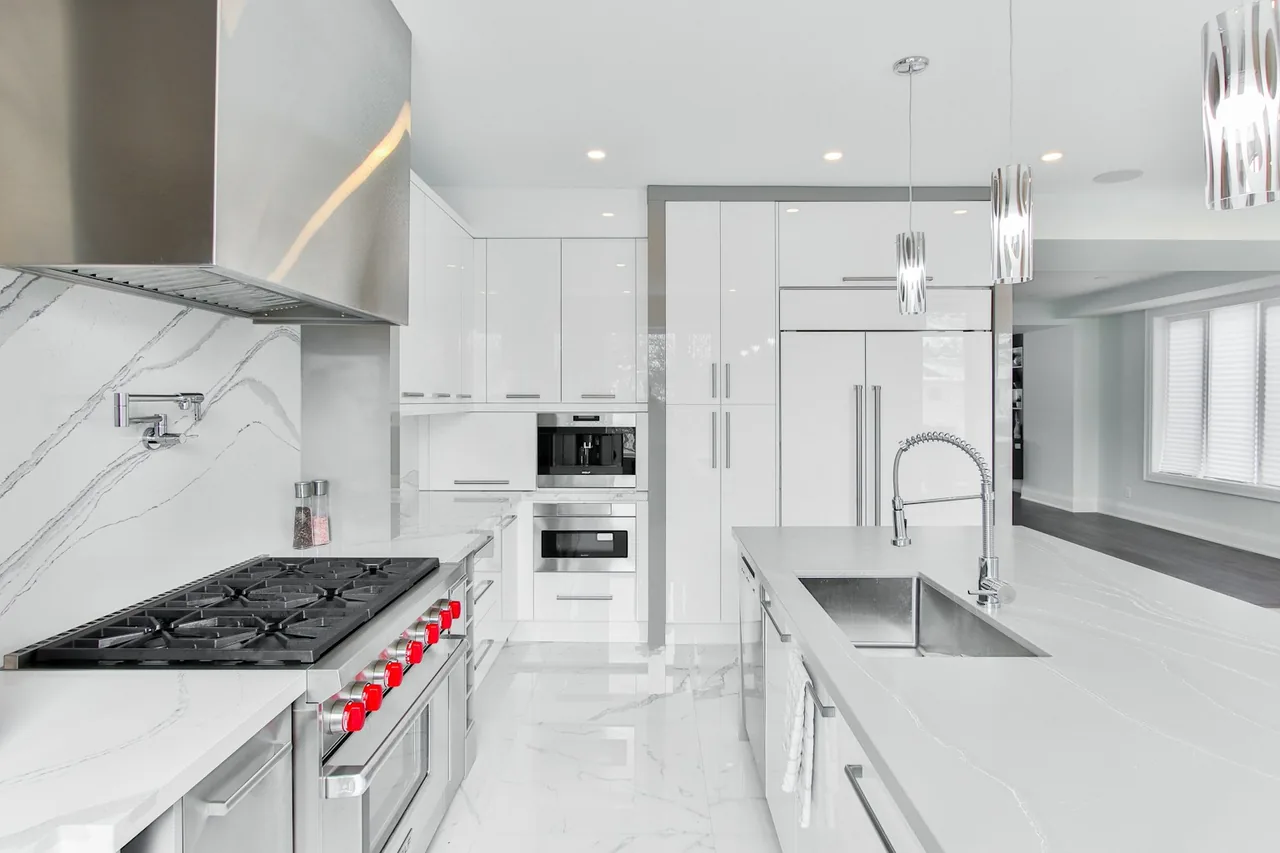
Quartzite is a natural metamorphic rock — sandstone recrystallized under intense heat and pressure into a dense, interlocking mass of quartz crystals — quarried in slabs that often look like marble but perform like nothing else. It is not engineered quartz; the shared syllable misleads almost everyone. One property decides whether it's right for your space: verification. Real quartzite is one of the hardest counters there is at Mohs ~7, heat-tolerant, and far more etch-resistant than marble — but the trade mislabels softer dolomitic marble as "quartzite" constantly, so the slab is only as good as the scratch-and-acid test that proves what it actually is. It is porous and needs periodic sealing. Get a free, itemized scope from a vetted fabricator who verifies the stone before it's cut.
Quartzite Is Recrystallized Sandstone, Not Engineered Quartz
The single fact that explains both quartzite's appeal and the confusion around it is that it is natural silica stone — transformed sandstone — while engineered quartz is a manufactured slab of crushed quartz in resin. They share a mineral name and almost nothing else.
How the Stone Forms and Why It's So Hard
Quartzite starts as quartz-rich sandstone and is transformed by geology: heat and pressure fuse the sand grains into a solid, crystalline stone made almost entirely of silica. That origin is everything — it gives quartzite the hardness of quartz, the natural uniqueness of a quarried slab, and frequently the flowing, marble-like veining that makes it so sought after. It is, in short, a natural stone that delivers a marble look with granite-or-better toughness.
Where Quartzite Genuinely Wins
Quartzite wins where homeowners want the white, veined elegance of marble but can't live with marble's fragility. In a hard-working kitchen countertop, true quartzite resists the scratching and most of the etching that would wreck marble, and it tolerates heat as a natural stone. On a statement island, a dramatic quartzite slab is a centerpiece that also survives daily life, and on a bathroom vanity it handles water and cosmetics with ease once sealed. For the buyer who walks in wanting marble and learns how marble actually lives, quartzite is the answer they didn't know existed.
The Two Trades You Accept
The trades are two. First, quartzite is porous and needs sealing — its hardness doesn't make it stain-proof the way non-porous engineered quartz is. Second, and more important, the "quartzite" label is unreliable: some slabs sold as quartzite are actually dolomitic marble or a quartzite-marble blend that's far softer and acid-sensitive, so you have to verify what you're really buying. If you want the look with zero sealing and guaranteed consistency, engineered quartz is the trade-off; if you want genuine, hard, natural stone that reads like marble, verified quartzite is built for it. The marble vs quartz guide frames the broader decision.
Where Quartzite Fails — Porosity and the Mislabeling Trap
Quartzite's weaknesses are different from what its hardness suggests, and the biggest one isn't about the stone at all — it's about the label.
Porosity: Hardness Resists Scratching, Not Soaking
The real-stone limit is porosity. Despite being extremely hard, quartzite has microscopic pores, so an unsealed or under-sealed slab can absorb oil, wine, and water and stain — hardness resists scratching, not soaking. The mechanism is the same as granite's: keep the seal current and wipe spills promptly, and staining is a non-issue; neglect it and a thirsty area discolors. Some quartzites are denser and less absorbent than others, so the right sealing frequency depends on your specific slab and a simple water-drop test — if water beads, the seal holds; if it soaks in and darkens the stone within minutes, reseal.
The Mislabeling Trap and How to Beat It
The bigger trap is mislabeling. Because true quartzite commands a premium and marble looks similar, slabs that are actually dolomitic marble — or a softer quartzite-marble blend — are routinely sold as "quartzite." A true-quartzite slab is hard and acid-resistant; a mislabeled soft slab will scratch and etch like the marble it really is, which is a brutal surprise after paying for quartzite. The defense is verification.
The Scratch Test
A fabricator can run a scratch test on your actual slab: true quartzite at Mohs ~7 won't be scratched by a steel knife or scored by a glass tile, while softer dolomitic stone will mark. It's a direct, visible check of the one property the whole purchase depends on — ask to see it demonstrated on the specific slab, not a generic sample.
The Acid Test
The companion check is an acid test: a drop of a mild acid etches dolomitic marble — proving it's not true quartzite — but leaves genuine quartzite untouched, because silica doesn't react with acid the way calcite does. Together, the scratch and acid tests confirm you're buying what you're paying for.
Why Both Tests Together, Not Either Alone
A slab can pass one test and fail the other if it's a blend, so the two checks are run together. A quartzite-marble blend might resist a light scratch yet still etch under the acid drop, revealing the calcite hiding in it. Insisting on both, on the actual slab, is the only way to be certain — one test alone leaves a door open for a mislabeled or blended stone to slip through.
The Lesser Limit: Hard but Brittle
Beyond porosity and labeling, true quartzite is hard but brittle — a hard impact can chip an edge, and an unsupported overhang can crack — the same physics that governs any dense natural stone. Hardness resists scratching; it does nothing against the leverage of an unsupported cantilever, which is why fabrication support still matters. This is a different limit set entirely from acid-sensitive marble or heat-sensitive quartz.
Quartzite vs Quartz, Marble, Granite, and Porcelain
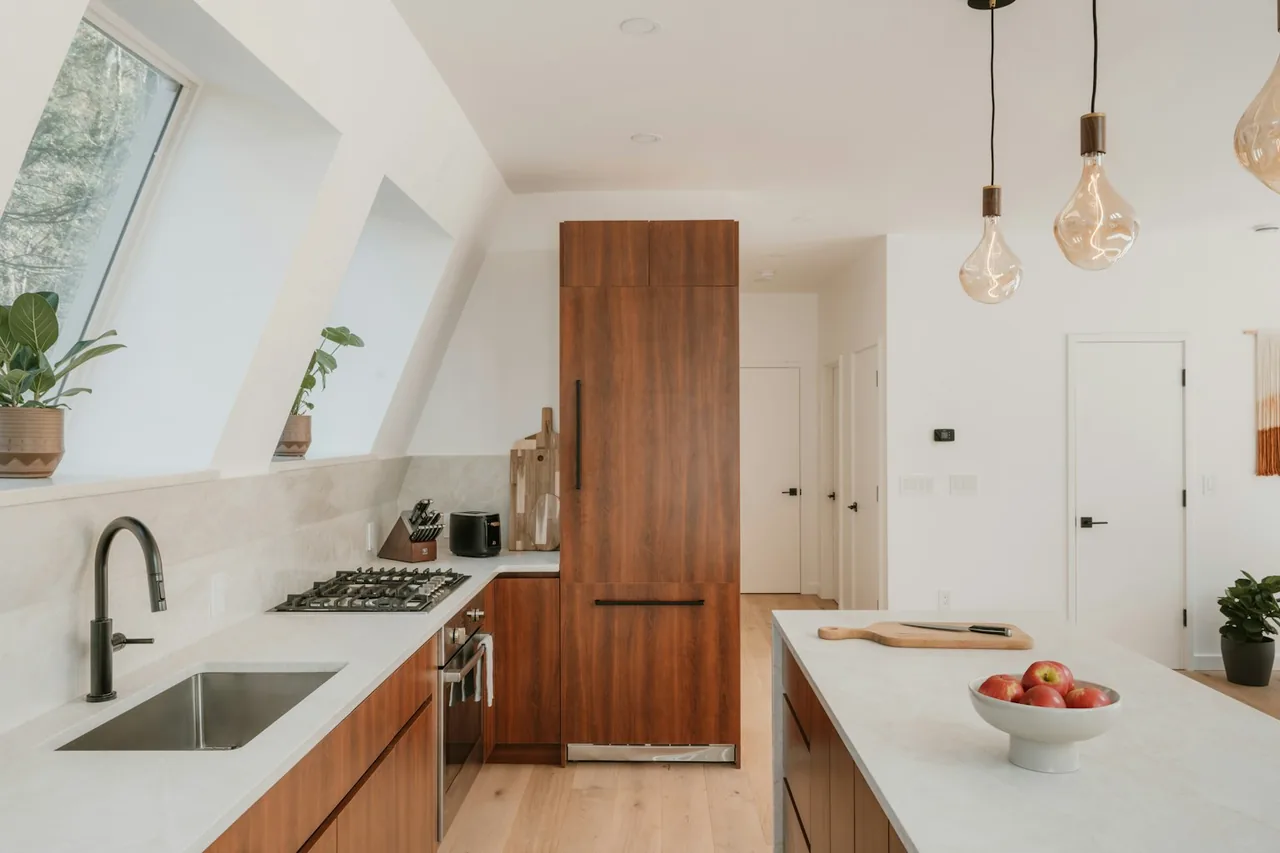
Quartzite occupies a unique seat: natural marble looks with elite hardness. The cleanest way to place it is against the four materials it's weighed against — including the one whose name causes endless confusion — rated on the specs that actually decide a kitchen.
The Countertop Material Comparison Matrix
The table below is the decision a buyer is really making — type, porosity, heat, hardness, and where each belongs, side by side. Quartzite's profile is the natural, porous, periodically sealed, hard-and-heat-tolerant column.
| Material | Type | Porosity / sealing | Heat tolerance | Hardness | Best fit |
|---|---|---|---|---|---|
| Quartzite | Natural metamorphic (silica) | Porous, periodic seal | High — natural stone | Mohs ~7 | Marble look with real durability |
| Quartz | Engineered | Non-porous, never sealed | Low — resin scorches | Mohs 7 mineral | Hands-off, uniform indoor look |
| Marble | Natural metamorphic (calcite) | Porous, frequent seal | Moderate, but etches | Mohs ~3 | Baths, baking, statement pieces |
| Granite | Natural igneous | Porous, periodic seal | High — takes hot pans | Mohs 6–7 | Heavy cooking, speckled palette |
| Porcelain | Engineered sintered | Non-porous, never sealed | Very high — heat-proof | Glass-hard, brittle edge | Outdoors, full sun, ultra-thin |
Quartzite vs Quartz and Marble
Quartzite vs quartz is the name-collision, and they're opposite products. Quartzite is natural stone — quarried, unique, porous, sealed, heat-tolerant. Quartz is engineered — manufactured, uniform, non-porous, never sealed, heat-sensitive. They share a mineral name and almost nothing else. Choose quartzite for natural character and heat tolerance; choose quartz for zero maintenance and a consistent pattern. Quartzite vs marble is the most important comparison, because quartzite exists in most kitchens as the marble alternative. Marble is soft calcite (Mohs ~3) that scratches and etches; true quartzite is hard silica (Mohs ~7) that resists both. If you love the marble aesthetic but want durability, verified quartzite delivers the look without the fragility — provided the slab is genuinely quartzite.
Quartzite vs Granite and Porcelain
Quartzite vs granite is a comparison of close cousins, since both are hard, heat-tolerant natural stones that need sealing. Granite offers a broader speckled palette and is often more affordable; quartzite is typically as hard or harder and more often carries the white, marble-like veining buyers want. Quartzite vs porcelain sets natural stone against a sintered slab: porcelain is engineered, non-porous, thinner, and UV-proof for outdoors, but it's a printed surface; quartzite gives you genuine stone depth and through-body veining, at the cost of sealing and weight. Line them all up spec-for-spec with our material comparison tool.
The Specs and Properties That Actually Matter for Quartzite
Quartzite isn't graded on a wear scale, so you judge it on the properties — and the verification tests — that tell you what the slab truly is and how it'll perform. Each is a question a credible fabricator can answer about your actual stone.
Hardness, Heat, and the Verification Tests
True quartzite rates about Mohs ~7 on the Mohs hardness scale, on par with or above granite and far above marble's ~3 — the headline spec and the reason quartzite resists scratching so well, but one that only applies to genuine quartzite. As a natural silica stone, it also withstands hot cookware without the scorching that affects resin-based surfaces, a genuine advantage over engineered quartz. The two verification checks are specs in their own right: the scratch test (a steel knife or glass tile won't mark true quartzite) and the acid test (a drop of acid etches dolomitic marble but not genuine quartzite) are how you confirm the stone before you buy.
Porosity and Absorption
Quartzite is porous and needs sealing; absorption varies by slab, with denser stones needing it less often. The water-drop test tells you when a seal is due, just as with granite. Porosity is independent of hardness — a slab can be extremely hard and still thirsty — which is exactly why the "it's so hard it doesn't need sealing" assumption is wrong, and why verification and sealing are two separate disciplines quartzite demands.
The Quartzite Spec Sheet at a Glance
The table below collects the properties a credible fabricator can speak to, with the practical meaning of each. None is a marketing grade; every one predicts how the slab lives — or proves what it is.
| Spec / test | Typical result for true quartzite | What it predicts or proves |
|---|---|---|
| Hardness | Mohs ~7 | Strong scratch resistance, well above marble |
| Scratch test | Unmarked by steel knife / glass tile | Proves it's true quartzite, not soft dolomitic marble |
| Acid test | No etch from an acid drop | Confirms silica, not acid-reactive calcite |
| Heat tolerance | High (natural stone) | Takes hot pans without scorching |
| Porosity / absorption | Porous, varies by slab | Sets sealing frequency; independent of hardness |
| Thickness | 2 cm or 3 cm | 3 cm = single-thickness edge and span strength |
Want the stone verified before you fall for it?
We match you with a vetted fabricator who scratch- and acid-tests your actual slab and recommends a finish — with a free, written quote.
Varieties, Finishes, and What to Buy
With quartzite, "what to buy" is about choosing a verified slab, the finish, and the variety whose movement you love — in that order, because verification outranks every other choice.
Verify First, Then Finish
Before anything else, confirm the slab is true quartzite via the scratch and acid tests. This single step separates a durable lifetime counter from a soft slab that will disappoint, and it matters more than color or finish. Finish comes next: polished brings out the depth and veining and is the tightest, most stain-resistant surface; honed (matte) gives a softer, contemporary look popular on white quartzites; leathered adds texture that hides fingerprints and water spots. The finish doesn't change quartzite's hardness, only its look and how it shows smudges.
Variety and Selecting the Actual Slab
Quartzite ranges from bright whites with gray or gold veining that rival the most coveted marbles, to warm taupes and dramatic, swirling stones — and whiter, marble-look varieties are the most popular and often the most premium. As with all natural stone, view the specific slabs your job will use so the veining flows the way you want and the pieces sitting side by side are consistent, and raise any bookmatch before templating so the fabricator can lay the slabs to mirror.
How Quartzite Is Fabricated and Installed
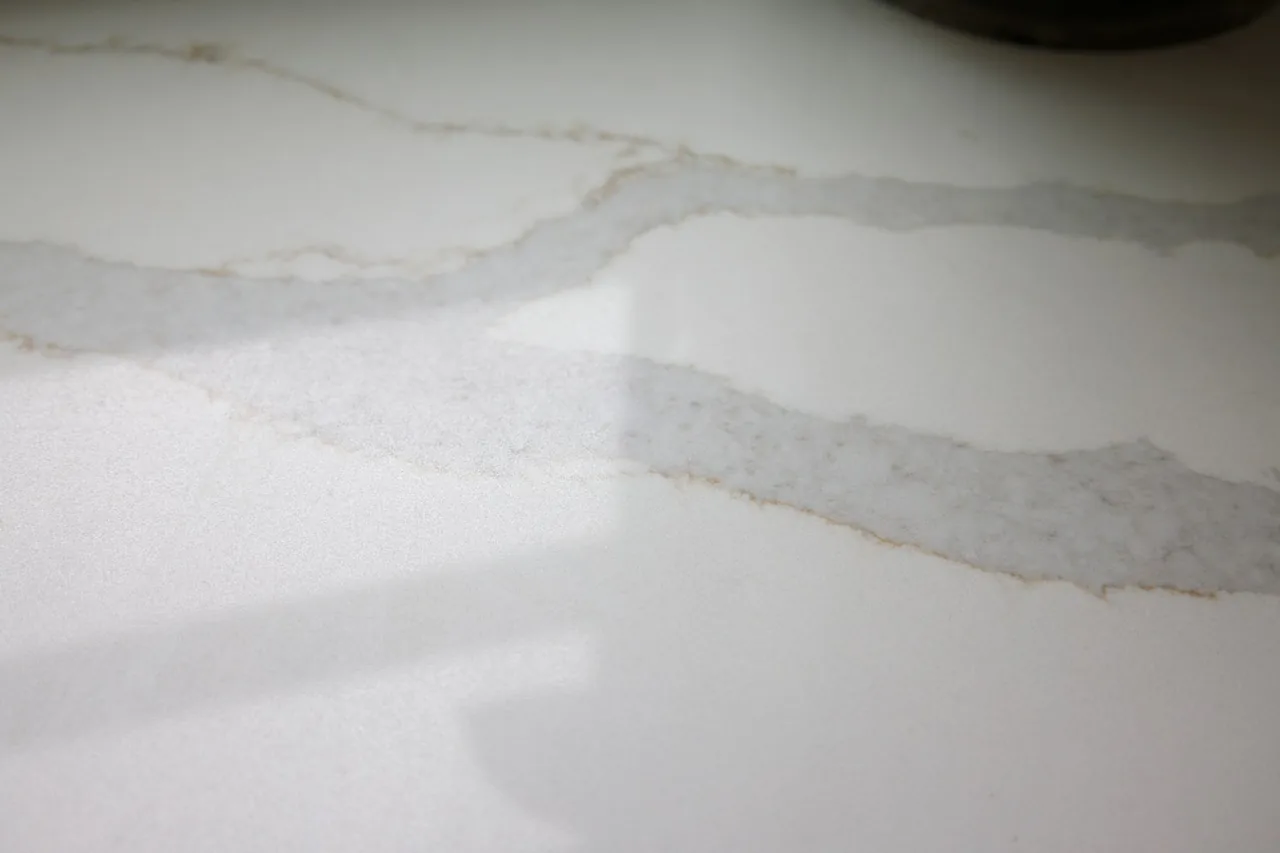
Quartzite is one of the hardest stones a fabricator handles, which shapes the work — and several realities are specific to such a dense slab. The six steps below are the full arc from verifying the stone to the sealed, finished counter.
Verify the Stone Before Anything Else
A vetted pro runs the scratch and acid tests on your actual slab before purchase, so a mislabeled dolomitic-marble slab is caught now rather than discovered after it's cut and scratching in your kitchen. Verification is the first fabrication step, not an afterthought.
Template After Cabinets Are Set
A precise template is taken from cabinets that are installed and level, with continuous support confirmed because even a hard, dense slab has little flex and cracks if it bridges a gap or high spot.
Diamond-Tool Cutting and Radiused Cutouts
Because quartzite is so hard, it's cut with diamond tooling and the work is slower and harder on equipment than softer stone — a reason skilled quartzite fabrication is specialized. Sink and cooktop cutouts get radiused inside corners, never square, since even a hard, brittle slab fractures at a sharp internal corner under stress.
Edge Profiling and Bookmatch Layout
Edge profiles — eased, beveled, ogee, mitered — are ground and polished into the hard stone, which takes more time than on softer material. Any bookmatch, mirroring veining across a seam or waterfall, is laid out from the selected slabs at this stage.
Setting, Seaming, and Overhang Support
The slab is set on level support and seams are color-matched carefully — on white, marble-look quartzite a visible line stands out against pale stone. Any overhang past roughly 10 inches for 3 cm material — less for 2 cm — gets steel rods or corbels, despite the stone's hardness, because hardness resists scratching, not the leverage of an unsupported cantilever.
Sink Mounting, Sealing, and Walkthrough
Undermount sinks ride on brackets and the polished cut edge is finished by hand. New quartzite is sealed at install against staining, and the fabricator walks the counter with you to confirm seams, edges, and the seal. The full sequence is in countertop installation.
Skip or rush any one of these six — above all the verification step — and the failure it was meant to prevent shows up later, which is why a vetted quartzite fabricator treats the sequence as fixed.
Talk through your project — free.
A free consultation and a written, itemized quote from a vetted installer. No pressure, no obligation.
Is Quartzite Right for Your Space?
Whether quartzite fits is the output of a short chain of facts about the look you want, your tolerance for sealing, and — uniquely — your willingness to verify the stone. Walk the decision in order; each branch either confirms quartzite or points you elsewhere.
- Do you want a marble look that survives hard use? If yes, quartzite is the natural-stone answer — the white, veined aesthetic with scratch and heat resistance marble can't match. If you don't need the marble look specifically, granite's speckled palette may serve at lower cost.
- Will you verify the slab with a scratch and acid test? This is non-negotiable. If the fabricator won't demonstrate both tests on your actual slab, walk — an unverified "quartzite" may be soft dolomitic marble that behaves like marble, not quartzite.
- Will you keep up a simple sealing habit? Quartzite is porous despite its hardness and needs periodic sealing, confirmed with a water-drop test. If you want the look with no sealing at all, engineered quartz is the trade-off; if the light routine is fine, quartzite stays on the table.
- Is your fabricator experienced with quartzite specifically? Its hardness demands diamond tooling and skill; a shop that mostly cuts softer stone may struggle. Confirm they regularly fabricate quartzite before committing.
- Plan the finish, veining, and budget. Choose the finish for daily reality, select the actual slab so the veining flows, and weigh the variety against our cost guides and the countertop cost calculator.
Run honestly, this tree returns a clear answer — and the single most common reason quartzite disappoints is skipping the verification step and ending up with mislabeled marble.
Common Quartzite Mistakes, Consequences, and Prevention
Most quartzite disappointments are the same handful of avoidable choices, each with a predictable consequence and a known prevention. Naming them is how you spot a problem before the slab is cut.
| Mistake | What it causes | The prevention |
|---|---|---|
| Skipping the scratch and acid tests | Buying mislabeled dolomitic marble that scratches and etches | Verify the actual slab with both tests before purchase |
| Assuming hardness means no sealing | Oil and wine penetrate the porous stone and stain it | Seal at install and reseal as the water-drop test indicates |
| Hiring a shop that mostly cuts soft stone | Cracked or poorly finished slabs from inadequate tooling | Choose a fabricator experienced with quartzite and diamond tooling |
| Unsupported overhang past 10 inches | The brittle cantilever cracks at the edge under load | Engineer steel rods or corbels before the slab is set |
| Square inside corners on cutouts | Stress risers fracture even hard, dense stone | Radius every inside cutout corner in the shop |
| Dark seam epoxy on white quartzite | A visible line stands out against the pale field | Color-match the epoxy and place seams discreetly |
| Setting over un-level cabinets or a gap | The slab cracks because even hard stone has little flex | Level the bases and set on continuous support |
Every row is either a verification failure, a stain risk, or a structural crack — which is why "verified, sealed, cut by a specialist, and properly supported" is the entire discipline of living well with quartzite.
Caring for Quartzite
Quartzite is low-maintenance for such an elegant stone, and the routine centers on keeping the seal current — because hardness handles scratching, but only sealing handles staining.
The Daily Routine and Sealing
Clean day to day with warm water, a soft cloth, and mild dish soap or a pH-neutral stone cleaner; skip acidic and abrasive products, which can dull the polish over time. The key task is periodic sealing: quartzite is porous, so reseal on a schedule set by the slab's absorbency and use, and confirm it with the water-drop test — if water beads, the seal holds; if it soaks in and darkens the stone within minutes, reseal. Wipe spills, especially oils and wine, promptly so they never penetrate. See countertop sealing for the method.
Why Verification Underwrites the Whole Routine
Because true quartzite is so hard, you won't see the scratching that plagues marble, and as a natural stone it takes hot pans — but all of that assumes the slab is genuine quartzite. A mislabeled dolomitic-marble slab will scratch and etch no matter how diligently you care for it, which is why verification at purchase underwrites everything that follows. With a current seal, verified quartzite is one of the most carefree natural stones, far lighter on upkeep than marble.
What Actually Drives the Cost of a Quartzite Countertop
A quartzite quote is not a flat per-square-foot rate; the headline number hides the items below, ranked by how much they move the total. We don't publish dollar figures here — compare across materials in our cost guides hub and weigh the look against alternatives in the learning center.
- Variety and rarity. The biggest swing. A common quartzite and a rare, dramatically veined marble-look slab are very different prices for the same square footage, and the most coveted whites sit at the top of the range.
- Fabrication difficulty. Quartzite's hardness means slower diamond-tool cutting and more wear on equipment, so skilled quartzite fabrication carries a labor premium over softer stone.
- Total square footage and slab count. More area means more slabs, and a layout past one slab adds material, a seam, and labor — sometimes an extra slab to keep a bookmatch or color flowing.
- Edge profile and bookmatching. Elaborate edges and mirrored veining take more skilled hours on hard stone than a straight run with a simple edge.
- Seams, cutouts, and complexity. Each seam, sink or cooktop cutout, and faucet hole is shop labor, and discreet seam placement on white stone adds care.
- Overhang support. An island past 10 inches needs steel rods or corbels — a real line item the lowest bid tends to omit.
- Removal and disposal. Tearing out and hauling away an old counter is labor and a fee, and it belongs in the written quote up front.
Because these drivers swing so widely, the only honest number comes from an on-site assessment. Size your own kitchen first with the countertop cost calculator so you can read a quote critically.
Want a fabricator who verifies the stone first?
We match you with a vetted quartzite pro who runs the scratch and acid tests on your actual slab, then prices the slab, edge, seams, and support as separate lines — free and with no obligation.
The Quartzite Fit Test: Six Checks Before You Buy
Before you commit to a slab, run your space through the same six-check test a good fabricator would. Each check matches the stone to the room and confirms it's genuinely quartzite, and a slab that passes all six is a lifetime counter. Call it the Quartzite Fit Test.
- 1. Verify it's true quartzite
- Insist on a scratch test and an acid test on your actual slab. True quartzite (Mohs ~7) won't scratch from a steel knife or etch from acid; if it does, it's mislabeled dolomitic marble and will behave like marble, not quartzite.
- 2. Accept the sealing routine
- Quartzite is porous despite its hardness, so it needs periodic sealing to resist stains. If you want the look with no sealing at all, engineered quartz is the trade-off; for genuine hard stone, the routine is light and worth it.
- 3. Use it where marble would fail
- If you love the white, veined marble aesthetic but cook hard, verified quartzite gives you that look with scratch and heat resistance marble can't match — the ideal fit for a busy kitchen or a heavily used island.
- 4. Choose a fabricator experienced with quartzite
- Quartzite's hardness demands diamond tooling and skill; a shop that mostly cuts softer stone may struggle. Ask whether they regularly fabricate quartzite and how they handle seams and edges on it.
- 5. Match the finish to your upkeep
- Polished resists staining best and shows the depth; honed and leathered look softer and hide smudges but can show oils. Pick the finish for daily reality, and plan veining and any bookmatch before templating.
- 6. Weigh the variety against the budget
- Rarity and fabrication difficulty move the price most, so weigh the slab you love against our cost guides and size the job with the cost calculator before you commit.
Pass all six and quartzite is almost certainly the right call; fail the first one especially and the test has just saved you from a mislabeled stone.
Quartzite Countertop Glossary
The terms below recur in every quartzite quote, spec sheet, and verification — each defined as its working meaning on an actual job, so you can read a scope and judge whether it is complete.
- Metamorphic rock
- Stone transformed by heat and pressure from a parent rock. Quartzite is metamorphosed sandstone — its quartz grains fused into a dense crystalline mass.
- Silica
- Quartz (silicon dioxide), the mineral quartzite is made almost entirely of. Being silica rather than calcite is why quartzite is hard and far more acid-resistant than marble.
- Dolomitic marble
- A softer, acid-reactive stone often mislabeled and sold as "quartzite." It scratches and etches like marble, which is why verification testing exists.
- Scratch test
- Running a steel knife or glass tile across the slab to confirm it's true quartzite — genuine quartzite won't mark, while softer dolomitic stone will.
- Acid test
- Applying a drop of mild acid: it etches dolomitic marble (proving it's not quartzite) but leaves genuine quartzite untouched. Run alongside the scratch test.
- Mohs hardness
- The 1-to-10 scratch-resistance scale; true quartzite rates about 7, on par with or above granite and far above marble's ~3.
- Porosity
- The microscopic pore structure that lets liquid soak into unsealed quartzite. Independent of hardness, which is why a very hard slab still needs sealing.
- Sealing
- Applying a penetrating sealer that fills pores so spills bead instead of soaking in. Quartzite is sealed at install and resealed as the water-drop test indicates.
- Water-drop test
- Leaving a few drops of water on the surface to check the seal: beading means it holds, soaking in within minutes means it's time to reseal.
- Bookmatching
- Splitting one block into mirror-image slabs so the veining reflects across a seam or waterfall — popular with dramatic quartzite and requiring careful layout.
- Stress riser
- A point — like a square inside corner on a cutout — where load concentrates and a crack can start, even in hard, dense stone. Radiusing the corner removes it.
- Overhang
- Counter that extends past the cabinet. Past roughly 10 inches it needs engineered support, because hardness resists scratching, not the leverage of a cantilever.
Verification, Sourcing, and the Install Seal
Quartzite has no single manufacturer's warranty the way an engineered slab does, so the protections that matter are verification, honest sourcing, and the install seal.
Verification as the First Assurance
With quartzite, the most important protection isn't a warranty card — it's proof of what the stone is. A vetted fabricator runs the scratch and acid tests on your actual slab and stands behind the result, so you're not relying on a supplier's label. This single assurance is what separates a true-quartzite lifetime counter from a soft slab sold at a premium, and it's the question to lead with on any quartzite project.
Honest Sourcing and the Install Seal
Because every slab is natural and unique, the stone delivered should be the one you selected and verified in person, with seams and any bookmatch laid out from the slabs you approved. New quartzite is sealed as part of the installation so it leaves protected against stains, and the fabricator's labor warranty covers the workmanship the maker can't — tight seams, a supported overhang, a slab set flat on level cabinets. Ask in writing for verification, the scope, the install seal, and a workmanship guarantee.
A Real Quartzite Decision
The clearest way to see where quartzite fits is to follow one realistic choice where verifying the stone, not just choosing the look, decided the outcome.
How to Vet a Quartzite Fabricator
With quartzite, the fabricator must do two things a softer-stone shop may not: verify the stone and cut a very hard slab cleanly. These questions separate a pro who delivers a true-quartzite lifetime counter from one who'll cut whatever the supplier labeled.
- They verify the stone with scratch and acid tests
- This is the non-negotiable first question. A credible fabricator demonstrates both tests on your actual slab and rejects a slab that scratches or etches. A shop that shrugs off verification is the fastest way to end up with mislabeled marble.
- They regularly fabricate quartzite with diamond tooling
- Quartzite's hardness is slow, equipment-wearing work. Ask directly how often they cut quartzite and how they handle its hardness — a general stone shop may crack the material or struggle with edges.
- They let you select and approve the actual slab
- Quartzite is unique and white slabs show seams, so a pro has you view and sign off on the specific slabs and any bookmatch layout — not a sample chip.
- They radius cutout corners and spec overhang support
- Confirm sink and cooktop cutouts get radiused inside corners and that any overhang past 10 inches is engineered with steel or corbels. Hard stone still cracks at square corners and unsupported spans.
- They seal at install and explain the schedule
- New quartzite should leave sealed against stains. A real answer covers the install seal and the water-drop test for when to reseal — not "it's so hard it never needs anything."
- They put scope, schedule, and a labor guarantee in writing
- Ask for the full scope, the timeline, and a workmanship warranty before work starts. A shop willing to name a labor guarantee — and return if a seam lifts or an edge chips — stands behind the install itself.
Want a quartzite specialist who answers all six?
Tell us about your kitchen and we'll match you with a vetted pro who verifies the slab, cuts with diamond tooling, supports the overhang, and seals at install — in a written scope, free.
Why Route Your Quartzite Countertop Through Pro Work Home Surface
Pro Work Home Surface is not a fabricator and does not cut or set your slab — we are a national authority on home surfaces that matches homeowners with vetted local countertop pros and holds them to a published bar.
- A free consultation and an itemized written scope
- Every connection starts with a no-obligation consult and a written quote that lines out the slab, edge, seams, and overhang support separately — so you read the whole job, not a headline rate.
- Verify the stone before it's cut
- A vetted pro confirms the slab is true quartzite with a scratch and acid test on your actual material, so a mislabeled dolomitic-marble slab is caught before purchase rather than discovered after it scratches.
- Fabricated and supported for a hard, dense stone
- Quartzite is cut with proper diamond tooling from installed, leveled cabinets, cutout corners are radiused to prevent fracture, and any overhang past 10 inches is engineered with steel or corbels before the slab is set.
- Sealed at install, slab as selected
- The slab delivered is the one you chose in person, seams placed discreetly and color-matched, and the porous stone is sealed as part of the installation so it leaves protected against stains on day one.
Countertops are one of eight categories we cover across home surfaces. Compare quartzite against the rest of the field at the countertops hub, see how it stacks up to soft stone in our marble vs quartz guide, explore the trade-offs across materials in the full learning center and cost guides, and line surfaces up spec-for-spec with the material comparison tool. Explore the full range of home surfaces — and if new cabinets are part of the project, template both together so the heavy stone lands on level, load-ready bases.
Brands & Material Authority
Quality and construction drive long-term performance more than the label. These are widely respected names in this category:
- Cambria
- Caesarstone
- Silestone
- MSI
- Cosentino
- Corian
- Wilsonart