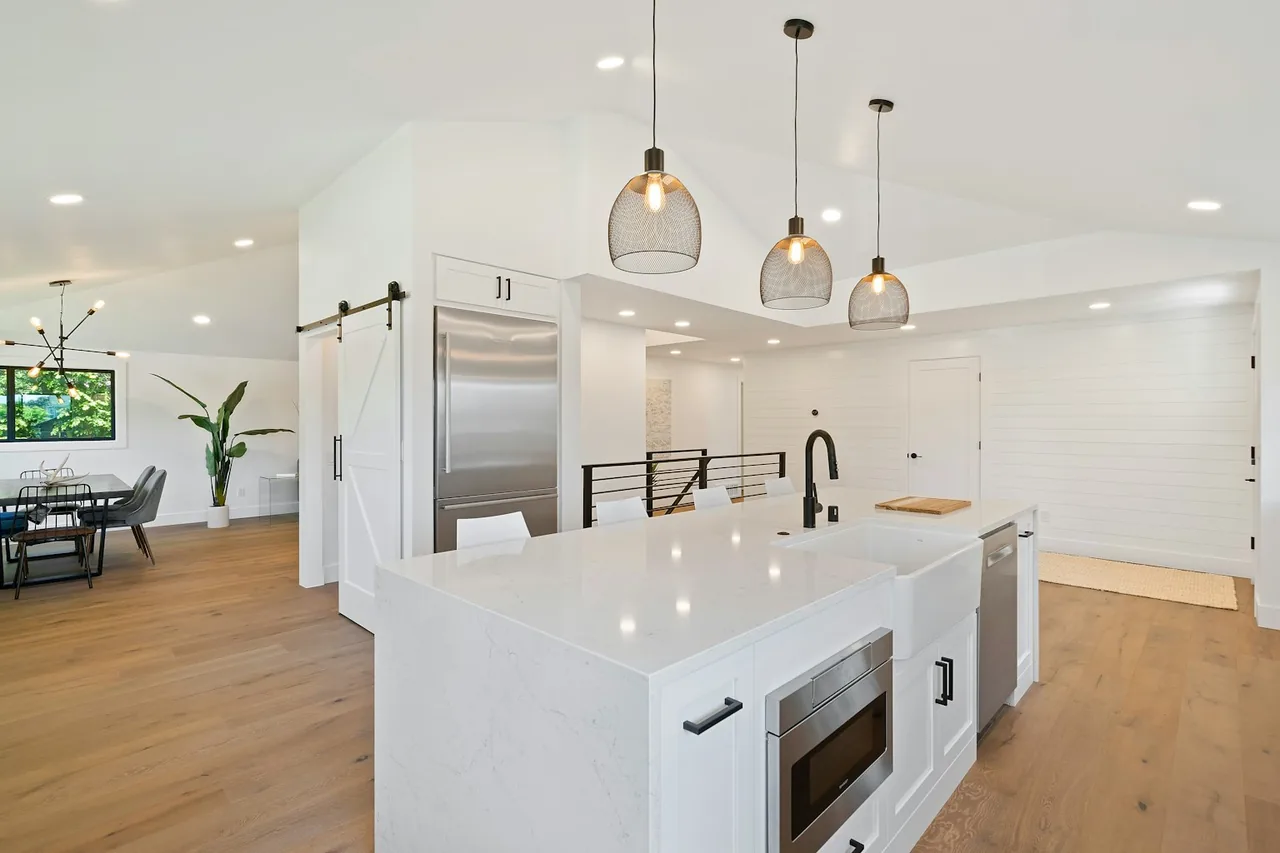
Quartz vs. granite countertops is a choice between two premium surfaces that trade places on exactly two axes: maintenance and heat. Choose quartz — engineered stone of roughly 90% ground quartz bound in resin — when you want a non-porous surface that never needs sealing, resists stains and bacteria, and comes in consistent, predictable patterns. Choose granite — natural igneous stone — when you want a one-of-a-kind slab with true heat tolerance that shrugs off a hot pan, and you accept periodic sealing as the price of a porous natural stone. Both rate hard and durable; the deciding facts are whether you would rather never seal a counter or never worry about setting down cookware, and whether you want a uniform engineered look or a unique natural one. Get a free consultation and a written scope from a vetted fabricator who templates your kitchen before you commit — because slab selection, edge, and seam placement decide as much as the material.
The Verdict First: Which Countertop Wins Your Kitchen
This decision is unusually clean because the two materials are close on durability and diverge on just a handful of properties. The short answer below holds for most kitchens and baths.
When Quartz Is the Right Call
Quartz wins for the homeowner who prioritizes low maintenance and a consistent look. Because it is non-porous, it never needs sealing, does not stain from wine or oil, and does not harbor bacteria — the practical choice for a busy kitchen or a bathroom vanity. Its engineered nature means the slab you pick looks like the slab you get, with uniform color and pattern across the run, and a huge range of designs including convincing marble look-alikes.
When Granite Is the Right Call
Granite wins for the homeowner who wants a genuine, unique natural stone and true heat tolerance. Every slab is one of a kind, and granite handles hot cookware set directly on it far better than quartz — a real advantage for serious cooks. The trade is that granite is porous and needs periodic sealing to resist stains, and its natural variation means you select the actual slab rather than a catalog swatch.
The Two Facts That Settle It Fastest
Ask two questions. First: would you rather never seal a counter (quartz) or never worry about a hot pan (granite)? Second: do you want a uniform engineered pattern (quartz) or a unique natural slab (granite)? Those two answers resolve the large majority of this decision, because on nearly every other axis — hardness, durability, longevity — the two are close enough that preference, not performance, decides. Size the job with the countertop cost calculator once the material is set.
Quartz vs. Granite: The Full Side-by-Side Spec Comparison
The table sets the two stones against each other on the specs that decide performance — composition, porosity, sealing, heat, hardness, and maintenance — with documented values tied to their scales, not showroom claims.
| Attribute | Quartz (engineered) | Granite (natural) |
|---|---|---|
| What it is | Engineered stone — ~90–93% ground quartz bound in resin | Natural igneous stone, quarried in slabs |
| Porosity | Non-porous — no sealing ever needed | Porous — needs periodic penetrating sealer |
| Sealing | Never | Typically resealed on a periodic schedule |
| Stain resistance | High — resists wine, oil, coffee without sealing | Good when sealed; can stain if the sealer lapses |
| Heat tolerance | Sensitive — resin can scorch or discolor; use trivets | High — tolerates hot cookware directly |
| Hardness | Mohs ~7 (from the quartz content) | Hard and scratch-resistant; varies by slab |
| Pattern / consistency | Uniform, predictable; wide engineered range | Unique per slab; natural variation |
| Look you select | A catalog design — the slab matches the sample | The actual slab — you pick the physical stone |
| Bacteria resistance | High — non-porous surface | Good when sealed |
| Outdoor use / UV | Limited — resin can fade in direct sun | Better UV stability outdoors |
| Relative cost | $$$–$$$$ by brand and grade | $$–$$$$ by rarity and slab |
| Lifespan | Decades — a permanent surface | Decades — a permanent surface |
Read across and the trade is precise: quartz wins maintenance, consistency, and bacteria resistance; granite wins heat tolerance, uniqueness, and outdoor UV stability. Both are hard, durable, decades-long surfaces — which is why the choice is a preference between two strengths, not a ranking. Compare their documented lifespans and where each sits in the material lifespan comparison.
Choose Quartz If…
Six conditions push the decision toward engineered stone. If most describe your kitchen and habits, quartz is the counter that will suit you longest — and each is a fact about how you use the space or what you want it to look like.
- You want zero sealing and low maintenance
- Because quartz is non-porous, it never needs sealing and cleans with soap and water. If a maintenance-free counter is the priority in a busy kitchen, quartz removes the recurring task granite requires — see countertop sealing for what you would be avoiding.
- Stain and bacteria resistance matter most
- A non-porous surface resists wine, oil, and coffee without a sealer and does not harbor bacteria, which suits kitchens with heavy food prep and homes that value hygiene. If spills and sanitation are your concern, quartz is the more forgiving surface day to day.
- You want a consistent, predictable pattern
- Engineered quartz looks like its sample across the whole run, with uniform color and no surprises between the showroom and the install. If you want to know exactly what your counter will look like, quartz's consistency is a real advantage over granite's slab-to-slab variation.
- You want a marble look without marble's fragility
- Many quartz lines convincingly mimic veined marble while staying non-porous and etch-resistant — the look of marble without the sealing and acid-sensitivity. If that aesthetic appeals but marble's upkeep scares you, quartz is the practical route — compared directly in the marble vs. quartz guide.
- You will use trivets and protect against heat
- Quartz's one weakness is heat — its resin binder can scorch or discolor under a hot pan. If you cook with trivets and hot pads as a habit, that limitation is easily managed; if you routinely set cookware straight down, it points you to granite instead.
- You value a controlled, uniform install
- Because the material is manufactured, color-matching seams and repeating the pattern is more predictable than with natural stone. If a seamless, uniform result matters and the kitchen is large enough to need seams, quartz is easier to control — model it in the quartz countertop cost guide.
Choose Granite If…
The mirror holds for granite. If these six describe your cooking and taste, granite is the counter that will satisfy you longest — and most are facts about how you cook or what look you want.
- You cook hard and want true heat tolerance
- Granite handles hot cookware set directly on it far better than quartz's resin-bound surface. If you regularly move pans from stove to counter and do not want to think about trivets, granite's heat resistance is the decisive advantage — see kitchen countertops.
- You want a genuine, one-of-a-kind natural stone
- Every granite slab is unique — no two kitchens share the same stone. If authenticity and a surface no one else has matter to you, only natural stone delivers it, and quartz's uniformity is exactly what you are trying to avoid.
- You want to select the actual slab
- With granite you choose the physical stone, matching movement and color to your kitchen rather than trusting a catalog sample. If being able to hand-pick the slab appeals, that is a granite-only experience — and one a good fabricator will walk you through.
- The surface will see sun or go outdoors
- Granite holds up to UV better than quartz, whose resin can fade in direct sunlight. For an outdoor kitchen or a counter under strong window light, granite is the more stable choice — quartz is generally kept indoors and out of direct sun.
- You accept periodic sealing
- Granite is porous and needs periodic sealing to resist stains. If a simple recurring maintenance task is an acceptable trade for a natural stone with true heat tolerance, granite fits; if you want to never seal a counter, that preference points to quartz — see countertop sealing.
- You want natural depth and movement
- Granite's crystalline structure gives a depth and movement engineered stone approximates but does not replicate. If you want the character of real geology in the kitchen, granite delivers it — weigh the slab and edge choices with a fabricator and price them in the granite countertop cost guide.
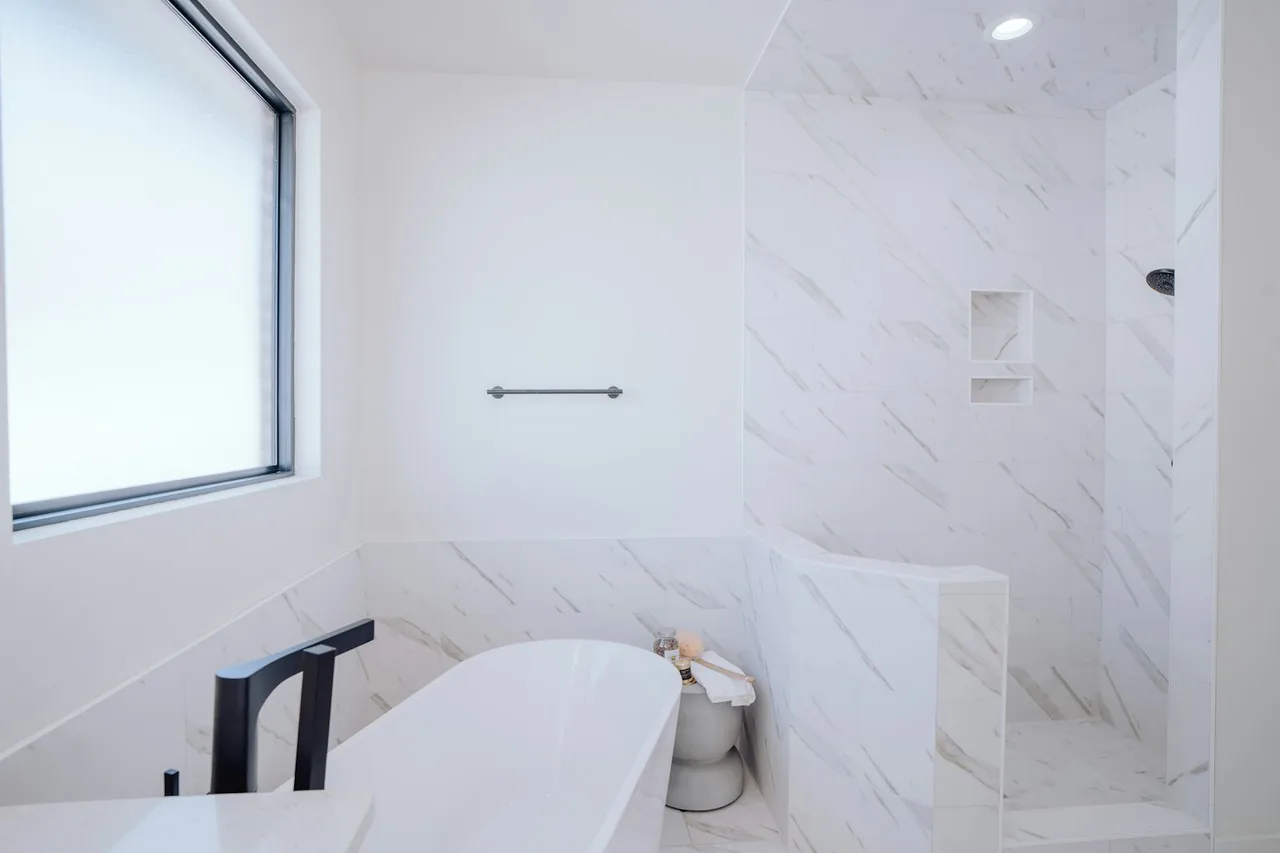
Cost, Lifespan, and Installation Differences Compared
Both are permanent, decades-long surfaces installed by a fabricator, so the meaningful differences are how each is priced, how the maintenance cost accrues over time, and how slab selection and seams play out — the factors that shape the real experience.
| Dimension | Quartz | Granite | What it means for you |
|---|---|---|---|
| Relative upfront cost | $$$–$$$$ (brand + grade) | $$–$$$$ (rarity + slab) | Granite spans a wider low-to-high range; premium slabs of either run high |
| Ongoing maintenance cost | Minimal — no sealing | Periodic sealing (materials + occasional pro) | Quartz has the lower lifetime upkeep |
| Expected lifespan | Decades — permanent | Decades — permanent | Both outlast most kitchens; neither is a wear item |
| Repairability | Chip/seam repair possible; resin color-matched | Chip repair and re-polishing possible | Both repairable by a pro — see countertop repair |
| Fabrication | Templated, cut, edged from a manufactured slab | Templated, cut, edged from a natural slab | Both need skilled fabrication |
| Slab selection | Catalog design; consistent | Hand-select the physical slab | Granite involves you in picking the actual stone |
| Seam predictability | Higher — uniform pattern repeats | Lower — matching movement across seams is harder | Quartz seams are easier to make disappear |
| Install weight / support | Heavy — needs sound cabinet support | Heavy — needs sound cabinet support | Both require solid, level cabinetry underneath |
The honest read is that pricing overlaps heavily — a common granite can undercut premium quartz, and an exotic granite can exceed it — so cost rarely decides between them alone. What tips the lifetime math is maintenance: quartz's no-seal surface has lower ongoing upkeep, while granite's heat tolerance and uniqueness are worth the periodic sealing to the right cook. No dollar figure here replaces a fabricator's quote; compare what moves each price in the cost guides and size your own kitchen with the countertop cost calculator.
Why Fabrication and Templating Decide the Result
Neither stone is a stock product — both are templated to your exact kitchen, cut, edge-profiled, and seamed by a fabricator, and that craftsmanship decides how the finished counter looks and lasts. A precise digital template means tight fits at walls and appliances; a thoughtful seam layout puts joints where they are least visible; and the edge profile — from a simple eased edge to a full bullnose — shapes the whole look. Granite adds the step of matching natural movement across seams, which is harder than repeating quartz's uniform pattern, so a skilled fabricator matters even more with natural stone. This is why the fabricator, not just the material, is what you are really choosing — see countertop installation.
The Support the Slab Needs Underneath
Both quartz and granite are heavy, and a stone counter is only as sound as the cabinetry carrying it. The cabinets must be level and structurally adequate, with proper support at overhangs and any unsupported span — an island seating overhang, for instance, may need corbels or a steel substrate. A fabricator confirms the cabinet run is ready before templating, because a slab set on marginal support risks cracking at a seam or an overhang. That readiness check is part of a professional install, not an afterthought, and it applies equally to either stone.
Which Countertop Fits Your Kitchen? A Decision Tree
The choice is the output of a short chain of facts about how you cook, what look you want, and where the counter lives. Walk it in order; each branch narrows the two to one defensible pick.
- Do you cook hard and set hot cookware directly on the counter? If yes and trivets are not a habit you want, lean granite for its true heat tolerance — quartz's resin can scorch. If you cook with trivets as second nature, both stay in play.
- Do you want to never seal the counter? If a maintenance-free, non-porous surface is the priority, choose quartz — it never needs sealing. If periodic sealing is an acceptable trade, granite remains a candidate.
- Do you want a unique natural slab or a uniform engineered pattern? If you want a one-of-a-kind stone you hand-select, that is granite. If you want a predictable, consistent look that matches its sample, that is quartz.
- Will the surface see direct sun or go outdoors? If it is an outdoor kitchen or a counter in strong sunlight, choose granite for UV stability — quartz can fade. If it is a typical indoor kitchen, this branch does not constrain you.
- What look and budget seal it? If you want a marble look without marble's upkeep, quartz mimics it while staying non-porous. If you want natural depth and movement and will hand-pick the slab, granite delivers it. Confirm the final call and edge options with a fabricator under the countertops hub, and if marble itself is tempting, see the marble vs. quartz guide.
Run honestly, this tree returns a clear pick for most kitchens — and where it does not, the two are close enough that either will serve, and the choice comes down to which strength you value more.
Not sure which stone fits how you actually cook?
Tell us about your kitchen and we will match you with a vetted fabricator who templates the space, walks you through slab and edge options, and puts the scope in writing — free and with no obligation.
Common Quartz-vs-Granite Mistakes, Consequences, and Prevention
Most regret over this choice traces to a handful of predictable errors — mismatching the material to how you cook, neglecting maintenance, or under-planning the slab and seams. Naming them is how you avoid a counter that disappoints for a reason you could have foreseen.
| Mistake | What it causes | The prevention |
|---|---|---|
| Setting a hot pan directly on quartz | Scorching or discoloration of the resin binder | Always use trivets on quartz; choose granite if you won't |
| Letting granite's sealer lapse | Stains from wine, oil, and coffee soaking into porous stone | Reseal on the recommended schedule; test with a water drop |
| Choosing quartz for a sunny or outdoor counter | Resin fades and discolors under UV over time | Use granite (or porcelain) where direct sun or outdoor exposure applies |
| Buying granite off a small sample | The installed slab's movement looks nothing like the swatch | Hand-select the actual slab at the yard before fabrication |
| Ignoring seam placement | A visible seam lands in the most-seen part of the counter | Review the seam layout with the fabricator before cutting |
| Skipping cabinet support at overhangs | Cracking at an unsupported island or seating overhang | Add corbels or a steel substrate where the span requires it |
| Using harsh or acidic cleaners | Dulled quartz resin or a degraded granite sealer | Use pH-neutral stone cleaner on both surfaces |
Every row is a decision or habit set around the install — which is why the most valuable conversation is the one where the fabricator matches the stone to how you cook and lays out the slab and seams before a cut is made.
How Hardness and Porosity Are Actually Measured
The two properties that most shape daily life with these stones — scratch resistance and stain resistance — come down to hardness and porosity, and understanding each clarifies why the two materials behave as they do.
Hardness on the Mohs Scale
Mohs hardness ranks a mineral's scratch resistance from 1 (talc) to 10 (diamond), and it predicts how a countertop resists scratching in daily use. It is the number behind quartz's reputation for toughness.
Where Quartz and Granite Land
Quartz the mineral rates about 7 on the Mohs scale, and because engineered quartz is roughly 90% that mineral, the finished surface is highly scratch-resistant. Granite is a natural aggregate of several minerals — feldspar, quartz, mica — so its hardness varies by slab, but it too is hard and scratch-resistant in practice. Neither should be cut on directly (a knife dulls before it scratches, and a cutting board protects the edge), but both resist the everyday abrasion that would mar a softer stone like marble at Mohs ~3.
What Mohs Does Not Predict
Mohs measures scratch resistance, not heat tolerance, stain resistance, or impact strength — a hard surface can still scorch (quartz under a hot pan) or chip at an edge from a dropped pot. It says nothing about porosity, which is the separate property that governs staining. Read Mohs as the scratch spec alone, and weigh heat and porosity independently, because that is where quartz and granite actually diverge.
The Three Numbers That Actually Decide the Pick
For a countertop choice, hardness is the least useful of the three properties that matter, because both stones pass it. The decisions are made by porosity (quartz non-porous, granite porous and sealed) and heat (granite tolerant, quartz resin-sensitive) — and where a slab's stain resistance is tested against an installer's claim, a fabricator will reference the surface's water absorption the way flooring references the ASTM tests. Read the three together and the winner is the stone whose two losing traits you can live with.
Porosity and the Sealing Question
Porosity is whether liquids can penetrate the surface, and it is the single property that most separates these two stones in daily use. It determines whether a counter needs sealing and how it handles a spill left to sit.
Non-Porous Quartz vs. Porous Granite
Quartz is non-porous because its resin binder fills the spaces between quartz particles, so liquids sit on top and wipe away — no sealer required, ever, and strong stain and bacteria resistance built in. Granite is porous: as a natural stone it has microscopic voids that absorb liquid, which is why it needs a periodic penetrating sealer to keep wine, oil, and coffee from staining. A simple test tells you when granite needs resealing — drop water on it, and if it darkens or soaks in rather than beading, it is time. That maintenance rhythm is the practical cost of granite's natural character, and its absence is quartz's practical advantage — see countertop sealing.
The Heat Divide: Where Granite Pulls Ahead
If porosity is where quartz leads, heat is where granite answers — and for a certain kind of cook, this single property outweighs everything else in the comparison.
Why Quartz Is Heat-Sensitive
Quartz's strength — its resin binder — is also its heat weakness. The polymer resin that makes the surface non-porous and consistent can scorch, yellow, or discolor when a hot pan is set directly on it, and that damage does not buff out. Manufacturers explicitly advise trivets and hot pads, and warranties often exclude heat damage. This is not a defect but a material fact: an engineered stone bound by resin cannot match the heat tolerance of solid natural rock. For a household that cooks with trivets as habit, it is a non-issue; for one that moves pans straight from burner to counter, it is a daily risk.
Why Granite Handles Heat
Granite is solid igneous rock formed under heat and pressure, with no resin to scorch, so it tolerates hot cookware set directly on it — a genuine convenience for serious cooks. This does not mean granite is indestructible to thermal shock in every scenario, and a fabricator will still suggest care, but in normal kitchen use granite's heat tolerance is a real, tangible advantage over quartz. If your cooking style involves constant hot-pan-to-counter moves, this is often the fact that decides the whole comparison in granite's favor — see kitchen countertops.
Quartz vs. Granite Glossary
The terms below recur across slab yards, fabrication quotes, and care instructions for both stones — each defined as its working meaning on a real countertop job, so you can read a bid and judge whether it fits your kitchen.
- Engineered stone
- A manufactured surface — quartz is ~90–93% ground natural quartz bound in resin — engineered for consistency and non-porosity, as opposed to a quarried natural slab.
- Non-porous
- A surface liquids cannot penetrate, so it never needs sealing and resists stains and bacteria. Quartz is non-porous; this is its central maintenance advantage.
- Porous
- A surface with microscopic voids that absorb liquid, requiring a penetrating sealer to resist stains. Granite and marble are porous natural stones.
- Mohs hardness
- A 1–10 scale of scratch resistance. Quartz rates about 7; granite is hard but varies by slab; marble is soft at ~3.
- Penetrating sealer
- A liquid that soaks into porous stone and repels water and oil, keeping granite stain-resistant. Reapplied periodically; tested with a water-bead check.
- Slab
- The large sheet of stone from which a countertop is cut. Granite slabs are hand-selected and unique; quartz slabs are manufactured and consistent.
- Templating
- Measuring the kitchen precisely — often digitally — to create the pattern a fabricator cuts the slab to, ensuring tight fits at walls and appliances.
- Seam
- The joint where two pieces of stone meet on a run too large for one slab. Quartz's uniform pattern makes seams easier to hide than granite's natural movement.
- Edge profile
- The shape milled into the counter's edge — eased, beveled, bullnose, ogee — that sets much of the counter's look and is chosen during fabrication.
- Fabrication
- Cutting, edging, and finishing a slab to the template — the skilled shop work that turns raw stone into a finished countertop.
- Overhang support
- The corbels or steel substrate that carry an unsupported counter span, like an island seating overhang, so the heavy slab does not crack.
- Igneous stone
- Rock formed from cooled magma — granite's origin — which gives it hardness, heat tolerance, and the natural crystalline movement quartz only mimics.
A Real Quartz-vs-Granite Decision
One representative scenario shows how cooking style and look, not a price tag, drive the call between two surfaces that both fit the budget.
How to Vet a Countertop Fabricator
With stone, the fabricator decides as much as the material — templating, seam layout, edge work, and support are all craft. These questions separate a shop that delivers a lasting, well-fit counter from one that simply cuts slabs.
- They template digitally and review the seam layout with you
- Ask how they measure and where seams will fall. A credible shop templates precisely — often with a laser or digital template — and shows you the seam plan before cutting, so a joint does not land in the most-seen spot.
- They let you hand-select the granite slab
- For natural stone, ask to see and approve the actual slab, not just a sample. A fabricator who lets you pick the physical stone at the yard is one who understands granite's variation is the point — not a problem to hide.
- They confirm cabinet support before templating
- Ask how they handle overhangs and unsupported spans. A professional checks that the cabinetry is level and adequate and specs corbels or a steel substrate where an island or seating overhang needs it — before the heavy slab goes on.
- They match the edge profile and finish to your kitchen
- Ask which edge profiles they offer and recommend. A shop that walks you through eased, beveled, and bullnose options and matches the finish to your design is treating the counter as a designed surface, not a commodity cut.
- They explain the care each stone needs
- Ask what maintenance your choice requires. A real answer names quartz's trivets-and-no-sealing and granite's periodic sealing and pH-neutral cleaning — and points out that a hot pan on quartz or a lapsed granite sealer is on you, not the stone.
- They put the scope, seams, and warranty in writing
- Ask for the full scope — slab, edge, seams, cutouts, support, and the labor warranty — in writing before work starts. A shop that stands behind its fabrication and install, and returns if a seam or edge fails, is accountable for the craft the manufacturer's material warranty never covers.
Get a spec-matched recommendation
Tell us your surface, room, and goals — free, independent guidance and a vetted installer, nationwide.
Beyond the Two: When Another Stone Fits Better
Quartz and granite are the default kitchen pair, but the honest comparison names the cases where a third material fits better rather than forcing the choice.
When Quartzite or Porcelain Wins
If you want a natural stone with granite's toughness and a marble-like look, quartzite rates Mohs ~7 — harder than granite — while reading like marble, though it too needs sealing as a natural stone. If you want a non-porous, heat- and UV-stable surface that works indoors or out, porcelain is a sintered slab that resists both heat and sun, sidestepping quartz's two weaknesses at once. Both belong in the conversation for a demanding kitchen — line them up in the material comparison tool.
When Marble or a Warm Material Fits Instead
If the look you truly want is genuine veined marble and you accept its softness and acid-sensitivity for a baking-friendly, timeless surface, neither quartz nor granite replaces it — weigh it against engineered stone in the marble vs. quartz guide. And for a warm, repairable prep surface on an island, butcher block offers a character stone cannot, often as a complement rather than a replacement. Start from the full range under the countertops hub.
Why Compare Your Countertops Through Pro Work Home Surface
Pro Work Home Surface is not a fabricator and does not sell you stone — we are a national authority on home surfaces that matches homeowners with vetted local fabricators and holds them to a published bar. On a quartz-versus-granite decision, that means an unbiased read on which stone fits how you actually cook and what you want the kitchen to look like, from someone with no slab to move.
- A free consultation and an itemized written scope
- Every connection starts with a no-obligation consult and a written quote that lines out the slab, edge, seams, cutouts, and support separately — so you compare the whole job, not a headline rate.
- A fabrication-first standard, applied before we connect you
- Fabricators are screened on templating, seam layout, edge work, and cabinet support — the craft that decides whether a stone counter fits tight and lasts, regardless of which material you pick.
- An unbiased material recommendation
- Because we sell no stone, the guidance is which surface fits your cooking and taste — including the honest cases where quartzite, porcelain, or marble beats both.
- National coverage, local fabricators
- We match you with fabricators in your area nationwide, so the standard is consistent even though the shop is local — whether the project is a single vanity or a full kitchen in quartz and granite.
Countertops are one of eight categories we cover across home surfaces. Dig into the how-and-why in our learning center, compare what moves each price in our cost guides, line the materials up spec-for-spec with the material comparison tool, check documented lifespans in our material data, and start from the countertops category hub or the full range of home surfaces.