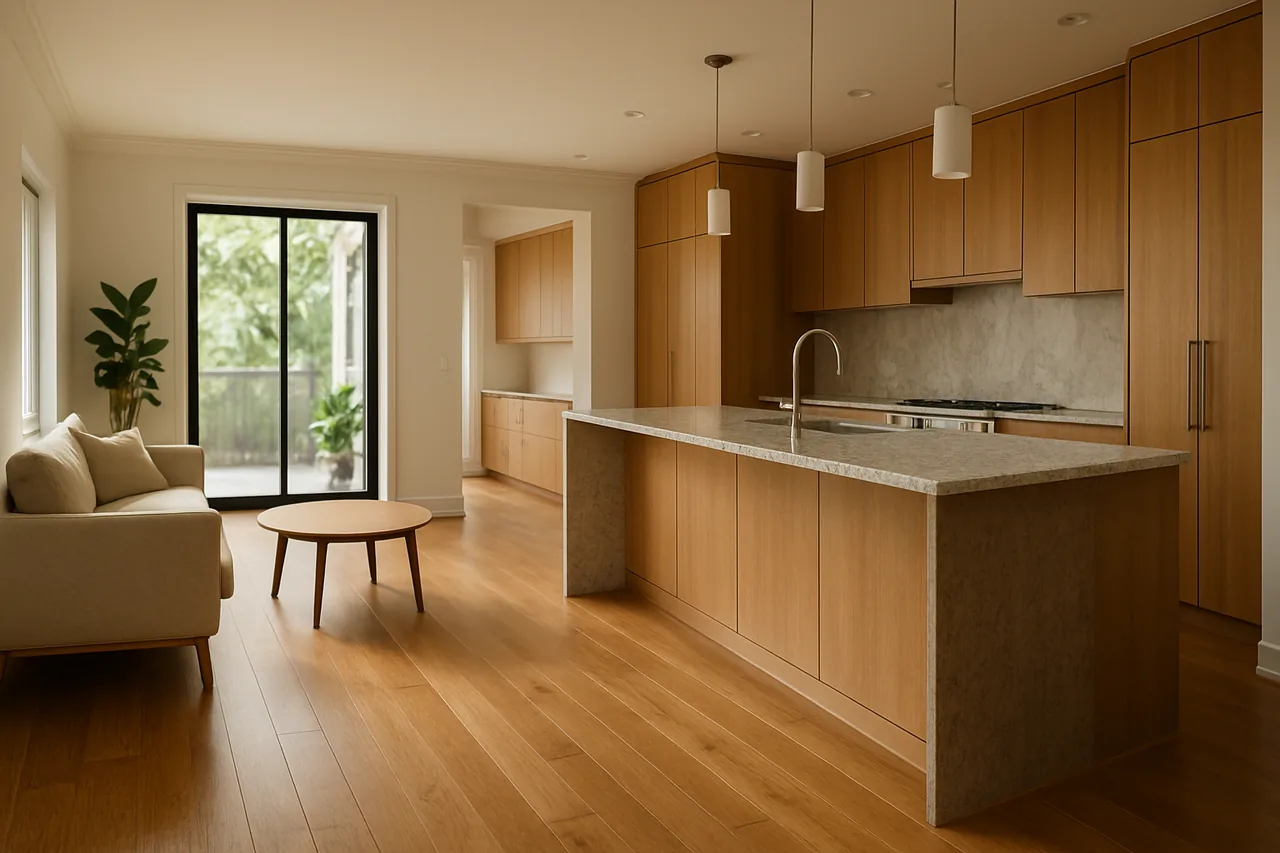
COREtec is a Shaw Industries brand widely credited with pioneering the original waterproof rigid-core — the WPC luxury vinyl plank that put a 100% waterproof core under a wood-look floor and largely created the rigid-core category the whole market now sells. COREtec specializes in waterproof luxury vinyl plank with an attached underlayment, aimed at real-life durability in wet and busy rooms. This is an independent, brand-neutral overview, so the honest positioning comes first: COREtec's claim to fame is that it started the category — but the category is now crowded with rigid-core lines from many makers, so the pioneer badge is history, not a spec. What decides your floor today is the wear-layer mil, the core type, and the specific collection, not who got there first. Buy the plank that fits your room, and get a free consultation and a written scope from a vetted installer who reads the spec sheet.
Who Is COREtec?
COREtec is a rigid-core vinyl brand, now part of Shaw Industries, that is widely documented as the line that introduced waterproof rigid-core plank to the flooring market. Understanding that origin — and why it no longer sets the brand apart on spec — is the first step to buying a COREtec floor on its numbers rather than its reputation.
The Brand That Pioneered Waterproof Rigid-Core
Before rigid-core existed, luxury vinyl was largely flexible plank that needed a near-perfect subfloor and offered limited stability. COREtec is credited with pioneering the WPC — wood-plastic composite — core: a dimensionally stable, 100% waterproof rigid plank that could float over minor subfloor imperfections and go into rooms flexible vinyl struggled in. That innovation effectively created the rigid-core segment that dominates vinyl flooring today. It is a genuine, widely-documented milestone — and it is why the brand name is so recognized.
A Shaw Brand, Sold Through Dealers
COREtec is a Shaw Industries brand, which places it inside one of the largest flooring companies in the world and gives it the wide dealer availability of the Shaw network. It reaches homeowners through independent flooring retailers rather than a proprietary store, so pricing and — critically — the installer vary by dealer. Being a Shaw brand means strong backing and availability; it does not mean every COREtec collection performs identically, because the line spans grades and core types like any modern rigid-core range.
COREtec at a Glance
The verifiable facts below are what to carry into a showroom; past them, the decision is a collection-by-collection spec question, not a brand question.
| Attribute | COREtec |
|---|---|
| Category | Rigid-core waterproof luxury vinyl plank (LVP) |
| Ownership | A Shaw Industries brand |
| Known for | Pioneering the original waterproof rigid-core (WPC) vinyl plank |
| Core signature | Rigid, 100% waterproof core with attached underlayment on many products |
| Sold through | Independent flooring retailers and dealers (Shaw network) |
| Category status | Started the segment; now competes with many rigid-core lines |
One row on that table reframes the whole decision: COREtec "started the segment" but "now competes with many rigid-core lines" — so being first is a story, and the wear-layer mil, core type, and collection are the spec that actually decides your floor.
What COREtec Makes: Rigid-Core Construction Explained
COREtec is a focused rigid-core brand, so its range is variations on one idea — a waterproof plank — differentiated by core type, wear layer, and format. The table maps the construction elements a COREtec collection is built from to the spec that rates each and where it matters.
| Construction element | What it is | The spec that rates it | Why it matters for your room |
|---|---|---|---|
| Wear layer | The clear top film over the printed pattern | Mil thickness — 6 to 20+ mil | Predicts how long the look survives traffic, pets, and grit |
| WPC core | Wood-plastic composite rigid core (the original) | Waterproof + slightly softer, warmer underfoot | Comfort and quiet in living spaces; fully waterproof |
| SPC core | Stone-plastic composite rigid core (denser) | Waterproof + harder, more dent-resistant, thinner | Dent resistance and stability in high-traffic rooms |
| Attached underlayment | Pad pre-bonded to the plank back | Sound and comfort without a separate pad | Quieter install and simpler over a flat subfloor |
| Print + emboss | Photographic wood/stone layer with texture | Realism — rises with resolution and embossing | How convincingly the plank reads as real wood or stone |
| Format | Plank and tile visuals, various sizes | Dimensions and bevel | Scale and seam look in the finished room |
Because COREtec is a rigid-core specialist, every collection is a different combination of these elements — and the wear-layer mil plus the core type decide performance far more than the collection's name. Compare its documented lifespan band against other floors in the material lifespan data.
Reading the Spec Behind a COREtec Collection
Two numbers decide a rigid-core floor, and reading them is how you compare COREtec collections that look identical on the showroom rack. The wear layer sets the surface's life; the core sets its feel and toughness.
The Durability Spec: Wear Layer in Mils
A COREtec collection's longevity lives in the wear layer — the clear top film measured in mil that protects the printed pattern. The thicker it is, the longer the look survives traffic, and it is the single spec that separates a collection that lasts from one that scuffs through.
Matching the Mil to the Traffic
A 6 mil wear layer suits light residential use; 12 mil a normal busy household; 20 mil heavy traffic, pets, and light commercial. Two COREtec collections can sit whole tiers apart on this number, so a collection's mil predicts its life in your room far better than its name — match it to the room's use in rigid-core luxury vinyl.
Reading Mil and Core Together
Mil and core are read as a pair: a 20 mil wear layer on a dense SPC core is built for a busy kitchen, while the same 20 mil on a WPC core trades a little dent resistance for warmth underfoot. Same wear layer, different core feel — which is why a COREtec collection is chosen on both numbers at once, not on the mil alone.

Where COREtec Fits — and Where It's the Category, Not the Brand, That Wins
Our guidance is brand-independent: we settle the material and spec for your room first, then a product line — from COREtec or any other reputable rigid-core maker — that meets it. COREtec fits precisely where rigid-core vinyl fits, which is a lot of rooms; the question is which collection, and whether a competing line matches it.
The Rooms Rigid-Core Vinyl Owns
Waterproof rigid-core is the default answer for any room water can reach or that sits below grade: a kitchen, bathroom, laundry room, mudroom, or basement. Its rigid, waterproof core will not swell when wet, and its stability lets it float over minor subfloor variation. COREtec is a strong option in every one of those rooms — but so is any well-made rigid-core line, which is exactly why the decision is a spec comparison, not a brand loyalty. See waterproof flooring and waterproof vinyl for the room logic.
Why the Pioneer Badge Doesn't Decide Your Floor
COREtec created the category, but a homeowner in 2026 is choosing among dozens of rigid-core lines that all offer a waterproof core. What separates them is the wear layer in mil, the choice between a WPC and SPC core, the realism of the print, and the price at the dealer — none of which is settled by who invented the segment. Buy the plank whose spec fits your room's traffic and comfort needs, and treat "pioneered rigid-core" as brand history. Settle the material against the alternatives in the laminate vs. vinyl guide and the tile vs. LVP guide.
How to Buy the Right COREtec Line: The Spec-First Framework
Whatever brand you land on, the spec for your room decides the floor and the pioneer story does not. Run every COREtec collection — or any rigid-core line — through the same six-step Spec-First Line Selection framework below. It puts the room's facts ahead of the badge, in order, so a recognized name never lands the wrong plank in your room.
- 1. Define the room before the brand
- Name the room's traffic, moisture, and subfloor first. Rigid-core suits nearly any room, but a heavy-traffic a kitchen floor and a quiet bedroom point to different core types and wear layers within COREtec's own range. The room, not the sample, sets the shortlist.
- 2. Choose the core type for the room's demands
- A denser SPC core resists dents and suits high-traffic and commercial-leaning rooms; a WPC core is slightly softer and warmer underfoot for living spaces. Both are 100% waterproof. Pick the core from the room, then look at COREtec collections built on it.
- 3. Match the wear-layer mil to the traffic
- The wear layer in mil is the spec that predicts longevity: 6 mil for light residential, 12 mil for a busy household, 20 mil for heavy traffic and pets. Two COREtec collections can sit tiers apart on mil — read the number, not the collection name.
- 4. Confirm the current warranty for that exact collection
- Warranty terms, waterproof coverage, and wear guarantees change over time and vary by collection and grade. Confirm the precise terms for the specific COREtec product with the manufacturer or an authorized dealer before buying — and note most warranties require a compliant install.
- 5. Compare on spec against the alternatives
- Put the COREtec collection's mil and core beside competing rigid-core lines at the same grade — the pioneer badge should never be the deciding factor. See the lifespan data and the relevant comparison guides, and line them up in the material comparison tool. If a rival matches the spec for less, buy on spec and price.
- 6. Verify installer experience with rigid-core
- Rigid-core floats and depends on a flat subfloor and a continuous perimeter expansion gap; a vetted installer who knows the product protects both the result and the warranty. The crew that lays the floor decides its life more than the brand that made it.
Run in order, this framework narrows COREtec's range to the collection that fits your room — and reveals when a competing rigid-core line meets the same mil and core for less. That is buying on spec, which is the point.

COREtec vs. the Alternatives: A Spec-First Comparison
The useful comparison is line-against-line on wear layer and core, because at a given spec the rigid-core segment COREtec started has largely converged. The table sets COREtec against the other makers whose vinyl you'll cross-shop, on the axes that decide a floor rather than on which brand is best known.
| Brand / line | Category focus | Positioning | How to compare it to COREtec |
|---|---|---|---|
| COREtec | Rigid-core waterproof LVP | Pioneered the rigid-core (WPC) category; a Shaw brand | The origin baseline — compare its wear-layer mil and core to any rival |
| Shaw-branded LVP | Full range incl. rigid-core vinyl | Same parent maker; broad line beyond COREtec | Compare COREtec's mil directly to Shaw's own vinyl collections |
| Mannington | Full range, LVP-strong | Family-owned; strong residential luxury-vinyl reputation | Compare wear-layer mil and core construction at the same grade |
| Mohawk | Full range incl. rigid-core vinyl | Scale giant (NYSE: MHK); world's largest flooring maker | Compare its rigid-core line's mil and core, not the brand size |
| Pergo | Laminate + rigid vinyl | Mohawk-owned laminate pioneer; also rigid vinyl | Compare rigid-vinyl mil; or weigh laminate if the room is dry |
| Armstrong | Resilient / vinyl / laminate | Long US resilient heritage; confirm current lines | Compare resilient spec and confirm the line is currently available |
Read down the last column and the lesson repeats: every comparison resolves to wear-layer mil and core type, not to which brand invented rigid-core. COREtec is a strong line, but a homeowner should still cross-shop its collection against a competitor at the same spec — the segment it created is now competitive, which is good for the buyer. Line them up in the material comparison tool.
Common COREtec-Buying Mistakes, Consequences, and Prevention
Most disappointment with a rigid-core floor — COREtec or any brand — traces to buying on the pioneer name instead of the collection's spec, or to skipping the subfloor and expansion-gap work every floating floor demands. Naming the errors is how you avoid paying for them.
| Mistake | What it causes | The prevention |
|---|---|---|
| Buying on the pioneer name, not the mil | A recognized brand in a thin-wear grade scuffs through early | Match the wear-layer mil to the room's traffic — 12–20 mil for busy spaces |
| Assuming every COREtec collection is the same | A budget collection bought expecting premium durability disappoints | Treat the brand as a range; compare collections on mil and core |
| Ignoring WPC vs. SPC for the room | A soft WPC dents in a heavy room; an SPC feels harder than wanted | Pick SPC for dents, WPC for comfort |
| Floating over a wavy or unswept subfloor | Hollow spots, clicking, and a bouncy feel underfoot | Correct flatness to 3/16" over 10 ft before install |
| Skipping the perimeter expansion gap | Peaking and lifted seams as the floor expands with heat | Leave a continuous perimeter gap; hidden under trim |
| Paying a brand premium the spec doesn't justify | Overspending when a rival rigid-core line meets the same mil | Compare the collection's spec against alternatives at the same grade |
| Trusting the brand to offset a rushed install | A quality plank fails from a skipped flatness or gap step | Vet the installer; require install to the manufacturer's spec, in writing |
Every row reduces to one rule: with rigid-core, the collection's mil and core and the installer's work decide the floor — the pioneer badge decides almost nothing. That is why "we install to the manufacturer's spec, in writing" is the most valuable sentence in a quote.
Is COREtec Right for Your Project? A Decision Tree
Whether COREtec fits is the output of a short chain of facts about your room, not a matter of brand recognition. Walk it in order; each branch either confirms rigid-core is right and points to a collection, or reframes the choice as a spec comparison any reputable maker could win.
- Does the room need a waterproof floor? If it can get wet or sits below grade — a kitchen, bath, laundry, mudroom, or basement — rigid-core vinyl is the right category and COREtec is a valid option. If the room is permanently dry and you want a harder surface or real wood, weigh laminate or hardwood instead and skip rigid-core.
- What does the room demand — dent resistance or comfort? A heavy-traffic room points to a denser SPC-core COREtec collection; a living space where warmth and quiet matter points to a WPC core. This branch selects the core type before any collection is picked.
- Does a COREtec collection hit the wear-layer mil your traffic needs? Check the number — 12 mil for a busy household, 20 mil for heavy traffic and pets. If a COREtec collection meets it, keep it on the shortlist; if none does at your budget, look to another rigid-core line at the same mil.
- Does a competing rigid-core line match the spec for less? Put the COREtec collection beside Shaw-branded LVP, Mannington, or Mohawk rigid-core at the same mil and core in the material comparison tool. If a rival matches the numbers cheaper, the pioneer premium isn't buying performance — buy on spec.
- Can you confirm the warranty and a rigid-core-experienced installer? Verify the exact collection's warranty with the maker or dealer, and confirm a vetted installer who preps a flat subfloor and sets the expansion gap. If both check out, the COREtec collection is a defensible pick; if either is uncertain, resolve it against the flooring hub before committing.
Run honestly, this tree rarely ends on "because COREtec invented it" — it ends on a collection, a mil, a core, a price, and a crew. That is how to buy rigid-core from any brand.
Considering a COREtec floor for your project?
Tell us the room and your goals and we will help you match the right rigid-core spec — then a vetted installer who reads the wear-layer mil, not just the badge. Free, independent, and no pressure.
COREtec and Rigid-Core Glossary
The terms below recur across rigid-core catalogs, spec sheets, and dealer quotes — each defined as its working meaning when you are shopping a brand like COREtec, so you can read a collection's spec and judge whether it fits your room.
- Rigid-core vinyl
- Waterproof luxury vinyl plank built on a rigid core — the category COREtec is credited with pioneering. Dimensionally stable, floats over minor subfloor variation, and rated for wet and below-grade rooms.
- WPC core
- WPC — the wood-plastic composite rigid core COREtec introduced. Slightly softer and warmer underfoot than SPC, and fully waterproof; suits living spaces where comfort matters.
- SPC core
- SPC — a denser stone-plastic composite rigid core. Harder and more dent-resistant than WPC, thinner, and equally waterproof; suits high-traffic rooms.
- Wear layer
- The clear protective top film over the printed pattern, measured in mil. The single spec that most predicts how long a rigid-core floor's look survives traffic.
- Mil
- One thousandth of an inch — the unit for a vinyl wear layer. Not millimeters; 12–20 mil is the band for heavy use.
- Attached underlayment
- A pad pre-bonded to the back of the plank, common on COREtec products, that cushions and quiets the floor without a separate underlayment roll.
- Waterproof vs. water-resistant
- Waterproof (rigid-core vinyl) survives standing water; water-resistant (like standard laminate) survives only wiped-up spills. The distinction is why rigid-core owns wet and below-grade rooms.
- Floating floor
- A floor that connects plank-to-plank and rests on the substrate rather than fastening to it. Rigid-core floats and depends on the expansion gap.
- Expansion gap
- The deliberate space left around a floating floor's perimeter so it can expand with heat and humidity without peaking; hidden under trim.
- Subfloor flatness
- The deviation the substrate is held to — commonly 3/16" over 10 ft. Rigid-core forgives more than flexible vinyl but still telegraphs a badly out-of-tolerance floor as hollow spots.
- Product collection
- A named line within a rigid-core brand. Collections under one brand vary by wear layer, core, and realism, so the collection — not the brand — carries the spec that decides your floor.
- Authorized dealer
- A retailer stocked and supported to sell and warranty a maker's collections. Because COREtec sells through independent dealers, the dealer and its installer are usually the variable that decides the outcome.
A Real COREtec-Buying Decision
One representative scenario shows why the collection's spec, not the pioneer badge, drove every call — and how "we want COREtec because it's the original" resolved into a specific plank only after the room and the alternatives were weighed.
How to Vet the Installer for a COREtec Floor
Rigid-core is a floating floor, so the product is rarely the failure point — the subfloor prep and the expansion gap are. These questions separate a crew that lays a COREtec collection to last from one that clicks planks over whatever is there, and they matter more than the brand on the box.
- They read the specific collection's spec
- An installer who knows which COREtec collection you chose — its wear-layer mil, core type, and install requirements — is protecting your result. One who treats every rigid-core plank the same is a red flag, because collections differ by tiers.
- They check and correct subfloor flatness
- Rigid-core forgives more than flexible vinyl but still telegraphs a badly out-of-tolerance floor. Ask how they hit 3/16" over 10 ft — grinding high spots and self-leveling low ones, not floating over the existing surface.
- They set a continuous perimeter expansion gap
- A floating floor that cannot expand will peak. Ask how they detail the gap at walls and obstructions and conceal it under trim — the step that keeps a rigid-core floor flat through seasonal movement.
- They confirm the moisture reading on glue-down over slab
- Most rigid-core floats, but if any product is glued over a slab, the adhesive needs a moisture reading. Ask whether they test and match the adhesive to the slab — the check that protects a bonded install.
- They price prep, removal, and transitions separately
- Ask whether old-floor removal, disposal, subfloor leveling, and transitions are itemized. A headline per-square-foot rate that hides those is where a low bid recovers margin — and where a COREtec floor gets a rushed foundation.
- They stand behind the labor in writing
- Ask for the workmanship warranty and whether they return if a seam lifts or the floor clicks hollow. The maker warrants the plank; a crew willing to name a labor guarantee is accountable for the install, where most floor failures live.
Get a spec-matched recommendation
Tell us your surface, room, and goals — free, independent guidance and a vetted installer, nationwide.
Beyond COREtec: When a Different Line or Material Fits Better
COREtec is a strong rigid-core choice, but an honest brand overview names the cases where another line or a different material is the better call rather than forcing the pioneer badge.
When Another Rigid-Core Line Wins on Spec or Price
Because COREtec created a category that is now competitive, a competing rigid-core line from Shaw, Mannington, or Mohawk can match its wear-layer mil and core at a different price or realism. The pioneer status is not a performance guarantee — at a given spec, cross-shop the collection against rivals in the material comparison tool and buy on numbers, not narrative.
When the Material Itself Should Change
If the room is permanently dry and you want the hardest, most scratch-resistant surface, a high-AC laminate may serve better and cost less — weighed in the laminate vs. vinyl guide. If it is a full wet room where you want a permanent hard surface, porcelain tile outperforms any LVP, compared in the tile vs. LVP guide. Settle the material before the brand.
Why Vet a COREtec Floor Through Pro Work Home Surface
Pro Work Home Surface is not a contractor and does not sell you flooring or represent COREtec or Shaw — we are a national authority on home surfaces that matches homeowners with vetted local installers and holds them to a published bar. On a rigid-core decision, that means an unbiased read on which collection — if any — fits your room, from people with no product to move and no maker to favor.
- A free consultation and an itemized written scope
- Every connection starts with a no-obligation consult and a written quote that lines out prep, removal, transitions, and material separately — so you compare the whole job, not a headline rate on a brand-name plank.
- A brand-neutral, spec-first recommendation
- Because we sell no flooring and represent no maker, the guidance is which rigid-core spec fits your room — and whether a COREtec collection, or a competing line, meets it best at your budget.
- An installer standard applied before we connect you
- Installers are screened on what decides a floating floor's life: whether they read the collection's spec, correct flatness, and set the expansion gap rather than clicking planks over what's there.
- National coverage, local crews
- We match you with installers in your area nationwide, so the standard is consistent even though the crew is local — whether the project is a single rigid-core room or a whole waterproof floor.
Flooring is one of eight categories we cover across home surfaces. Compare the makers side by side in our brand overviews, dig into the how-and-why in our learning center, see what moves each price in our vinyl flooring cost guide, line materials up spec-for-spec with the material comparison tool, check documented lifespans in our material data, and start from the vinyl category or the full range of home surfaces.
A Note on Accuracy
This is an independent overview compiled from widely-documented information about COREtec — its status as a Shaw Industries brand and its credited role in pioneering waterproof rigid-core (WPC) luxury vinyl plank. It is not affiliated with or endorsed by COREtec or Shaw. Product collections, wear-layer options, warranties, and specifications change over time and vary by product and region. Confirm current collections, warranty terms, and specifications with the manufacturer or an authorized dealer before purchase.