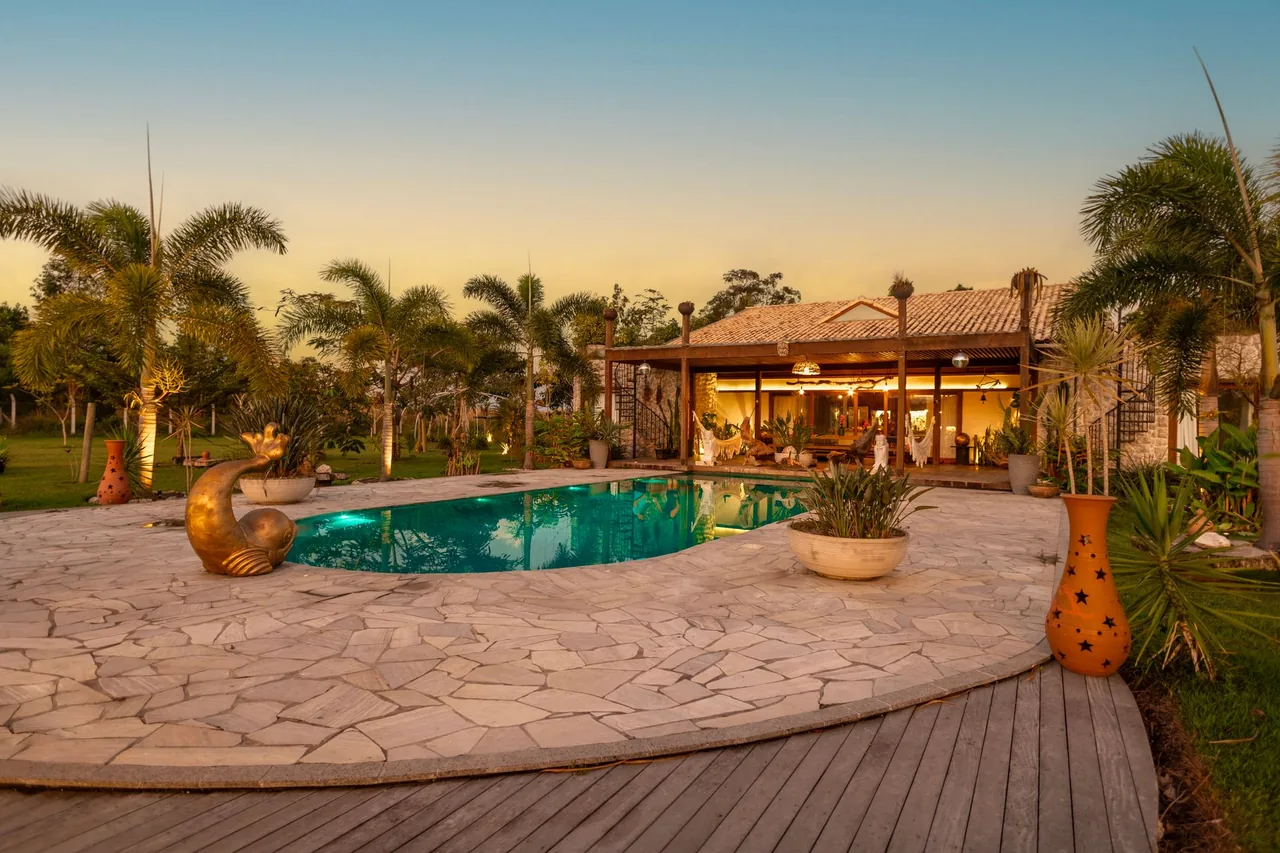
Pool deck installation is the engineered process of building the walking surface around a pool so it stays safe underfoot when wet, comfortable under bare feet in the sun, and intact against constant water, pool chemicals, and ground movement. Two specs decide whether a pool deck is right and almost nothing else does: how slip-resistant the surface is when wet, and how cool it stays in direct sun. Choose a textured, slip-rated surface and a light, cool-to-touch material — then drain water away from the pool and the house and isolate the deck from the pool shell with an expansion joint — and the deck performs and lasts; miss any of those and you get a slick, scorching, or cracking surface around the one place safety matters most. Get a free consultation and a written, itemized scope from a vetted installer before a single paver is set — that document is where a safe pool deck is decided.
A Pool Deck Is a Slip-and-Heat Job First, a Looks Job Second
The stone color or paver pattern everyone shops for matters least to whether the deck is safe and lasts. What separates a pool deck a child can run across wet at noon from one that is slick, scorching, or cracked in two seasons is the surface choice and the drainage-and-joint work done for the conditions a pool creates.
Slip Resistance and Surface Heat Decide What the Surface Can Be
The wet-slip rating and the surface temperature dictate what is acceptable; the look only decides the rest inside those constraints, so a credible installer leads with both:
- A polished or smooth surface around a pool turns dangerously slick the moment it is wet — the failure that causes the falls a pool deck exists to prevent.
- A dark, dense surface in full sun stores heat and burns bare feet at midday, driving everyone onto towels and off the deck.
- A deck pitched flat or toward the pool sends splash-out and rain back at the coping and the house instead of to a deck drain, pooling where people walk.
None of those are material defects — they are surface-selection and drainage failures, the most common reason a new pool deck disappoints or, worse, becomes a hazard.
The Order of Operations Never Changes Across Materials
Safe surface and drainage first, look second. That sequence holds across pavers, natural stone, and textured concrete. The work is always the same: choose a wet-slip-rated, cool, chemical-tolerant surface, build a compacted base, pitch the deck to drain away from the pool and the house, set the coping, and isolate the deck from the pool shell with an expansion joint so the two can move independently. The look is chosen inside those facts, not before them.
The Pool Deck Readiness Gate: Six Checks Before Any Surface Goes Down
Before a pool deck surface is set, a competent installer runs every project through the same six-check gate. Each check targets a condition a pool creates, each is a documented cause of pool-deck failure when skipped, and a deck that fails any one is not ready. Call it the Pool Deck Readiness Gate: pass all six and the deck is safe and lasts; fail one and you are buying a slip hazard or a crack.
- 1. Wet slip resistance
- The surface is chosen for traction when wet, measured by its DCOF — dynamic coefficient of friction — with wet-area floor tile commonly specified at ≥ 0.42 and textured pavers, flamed or tumbled stone, and broom- or salt-finished concrete used for the same reason. A smooth or polished surface around a pool fails this check no matter how it looks.
- 2. Surface temperature
- The material is chosen to stay cool under bare feet in direct sun — light colors and low-heat-absorbing surfaces like travertine, which stays notably cooler than dark, dense pavers or standard concrete. A dark surface in full sun becomes unwalkable at midday, defeating the deck's purpose.
- 3. Drainage away from the pool
- The deck is pitched at least 1% to 2% — about 1/8" to 1/4" per foot — away from both the pool and the house, with splash-out and rain carried to a perimeter deck drain or planned outlet. Water must never pool where people walk or run back into the pool or against the foundation.
- 4. Chemical and water tolerance
- The surface and any sealer are chosen to tolerate constant water and pool chemistry — chlorine or salt — without spalling, etching, or staining. Saltwater pools in particular punish surfaces and fasteners that were not selected to resist salt, so the assembly is matched to the pool type.
- 5. Coping and expansion joint at the shell
- The coping caps the pool edge and the deck is separated from the pool shell with a flexible expansion joint, so the deck and the structure can move independently. Bonding the deck rigidly to the shell is what cracks both when the ground or the deck moves.
- 6. Compacted base and freeze-thaw match
- The deck rests on a compacted aggregate base sized for the soil and climate, and in freeze regions a flexible paver or stone system over a free-draining base tolerates freeze-thaw movement better than a rigid slab. A base built to drain under a frost-tolerant surface is what makes the other five checks last.
Three of these six — slip resistance, surface heat, and the expansion joint — are the ones a cheap quote glosses over because they constrain the material and add a detail, yet every one is verifiable. That is why the gate is non-negotiable around a pool.
Want the slip, heat, and drainage solved before you buy a pool deck?
We match you with a vetted installer who specifies a wet-slip-rated, cool surface, pitches the deck away from the pool, and puts the drainage and joint detail in a written scope — before you commit to a material or a price.
Pool Deck Construction Specifications & Standards
The numbers that gate a pool deck are measurable and pool-specific — from the wet-slip rating and surface heat through the drainage slope to the coping and expansion-joint detail that protects the pool shell.
Slip Resistance and Surface Temperature
Slip resistance and surface heat are the specs that decide whether a pool deck is safe and usable, because around a pool the surface is wet and sunlit by definition. How each is met depends on the material and its finish.
Wet-Slip Rating by Finish
A pool deck surface is selected and finished for traction when wet, not dry, because that is the only condition that matters at the water's edge.
DCOF and Textured Finishes
The DCOF — dynamic coefficient of friction, the wet-traction measure used for floor tile — is commonly specified at ≥ 0.42 for wet areas, and the same goal is met on other materials by texture: flamed or tumbled stone, textured or shot-blast pavers, and broom- or rock-salt-finished concrete. It is the recognized way to choose a safe deck surface because a wet surface with too little friction is exactly where the slips a pool deck must prevent occur.
Cool-Deck Surfaces for Bare Feet
Surface temperature is the companion spec, set by color and material: light, low-absorption surfaces stay walkable at midday, while dark, dense ones store heat and burn bare feet. Travertine is the classic cool choice because it reflects heat and stays comparatively cool underfoot; light-colored pavers and cool-deck concrete coatings serve the same purpose. The surface that is safe to run across is also the one that does not scald.
Chemical and Saltwater Tolerance
The surface and sealer are chosen to tolerate constant exposure to water and pool chemistry. Chlorine and especially salt attack vulnerable surfaces, sealers, and fasteners over time, so a saltwater-tolerant assembly — salt-resistant materials, the right sealer, and corrosion-resistant fixings — is specified for a saltwater pool. Choosing a surface that cannot take the chemistry is what produces the spalling, etching, and staining seen on under-specified decks.
Drainage Slope and the Deck Drain
Slope is the spec every pool deck shares, complicated by the pool itself. The deck is pitched at least 1% to 2% — about 1/8" to 1/4" per foot — away from both the pool and the house, with a perimeter deck drain or channel catching splash-out and rain so it cannot pond underfoot or run back into the pool. A deck that drains toward the water carries dirt and chemicals into the pool; one that drains toward the house undermines the foundation.
Coping, the Expansion Joint, and the Pool Shell
A pool deck meets a rigid structure it must not fight. The coping caps the pool wall and finishes the edge, and a flexible expansion joint separates the deck from the pool shell all the way around so the two move independently with temperature and ground shifts. Control joints in a concrete deck direct shrinkage cracks into planned lines, and a poured deck slab is built to its own thickness over the base. Bond the deck rigidly to the shell and skip the joints, and movement cracks the deck, the coping, or the pool beam.
Pool Deck Slip, Heat, and Joint Specs, by Element
The table below collects the recognized targets a competent installer verifies. These are representative figures — local pool-barrier and building codes, the pool builder's details, and the material maker's instructions govern, and where they are stricter, the stricter number wins.
| Element | What's measured | Why it matters | Typical target |
|---|---|---|---|
| Wet slip resistance | Dynamic coefficient of friction | Traction when wet — fall prevention | DCOF ≥ 0.42 or textured finish |
| Surface temperature | Heat under bare feet in sun | Usable at midday without burning | Light, cool surfaces (e.g. travertine) |
| Chemical tolerance | Resistance to chlorine/salt | No spalling, etching, or staining | Saltwater-tolerant assembly + sealer |
| Finished surface slope | Fall away from pool and house | No ponding; clean water off the deck | 1%–2% (1/8"–1/4" per ft) to a drain |
| Expansion joint at shell | Flexible deck-to-pool separation | Deck and pool move independently | Continuous joint around the perimeter |
| Compacted aggregate base | Lift thickness during compaction | Support + frost drainage | Placed in 2"–4" lifts, each compacted |
The lesson is that around a pool the surface choice is a safety decision, not a style one — and the slip rating, surface heat, and expansion joint are exactly what a low bid glosses to hit a number. A smooth, dark, rigidly bonded deck is a hazard and a future crack; size the project honestly with the hardscape cost guides first.
Pool Deck Materials Compared
How a surface behaves wet, hot, and chemically exposed is as consequential as the look, because each material handles slip, heat, and pool chemistry differently. There are three mainstream pool-deck surfaces, and the right one is dictated by traction, surface temperature, and the pool type — never by which is cheapest per square foot.
The Pool Deck Material Comparison Matrix
The matrix below is the decision the installer is making — wet traction, surface heat, chemical tolerance, repairability, and cost driver, side by side.
| Material | Wet traction | Surface heat | Chemical tolerance | Repairability | Main cost driver |
|---|---|---|---|---|---|
| Travertine | Good — tumbled/honed texture | Stays cool — low absorption | Seal against pool chemistry | Moderate — match the stone | Stone cost + setting labor |
| Concrete pavers | Good — textured/shot-blast | Cooler in light colors | Salt-tolerant lines available | Easiest — replace a unit | Base depth + unit choice |
| Textured / cool-deck concrete | Good — broom/rock-salt finish | Cool-deck coating lowers heat | Sealer-dependent | Hardest — repairs show | Slab prep + finish/coating |
| Flamed / textured stone | High — flamed surface grips | Varies — favor light stone | Seal porous stone | Moderate — set in mortar/base | Stone cost + finishing |
| Porcelain pavers (textured) | Good — textured pool-rated | Cooler in light tones | Excellent — non-porous | Moderate — pedestal or set | Tile cost + substrate detail |
Cool, Textured Stone and Pavers
Travertine, tumbled or flamed stone, and textured pavers are the natural pool-deck surfaces because they combine wet traction with comparatively cool temperatures. Travertine in particular stays cool underfoot and grips when wet, which is why it migrates to pool surrounds nationwide; textured and light-colored pavers add the bonus that a stained or cracked unit lifts out and a new one drops in. Porous stones want a sealer matched to the pool chemistry, and in freeze regions the flexible set over a free-draining base tolerates movement.
Textured and Cool-Deck Concrete
A concrete pool deck earns its traction from a broom, rock-salt, or shot-blast finish rather than a smooth trowel, and its comfort from a light color or a cool-deck coating that lowers surface temperature. It gives a seamless surface and often a lower cost per square foot, but it is a rigid slab: it must be jointed to control cracking, isolated from the pool shell with an expansion joint, and resealed to hold its finish and resist pool chemistry. Over clay or in hard-freeze ground the rigid slab is the assembly most exposed to heave — so its base must drain even more reliably.
Which Pool Deck Material Is Right for Your Pool?
The material is not a preference — it is the output of a short chain of facts about traction, sun, your pool chemistry, and your climate. Walk the decision in order; each branch eliminates the options the conditions rule out, and what survives is the right call.
- Solve wet slip first. The surface must grip when wet — a DCOF at or above 0.42 for tile, or a textured finish on stone, pavers, or concrete. Any smooth or polished surface is eliminated here, before looks enter the conversation, because it is a fall hazard at the water's edge.
- Solve surface heat for bare feet. Is the deck in full sun? Light, low-absorption surfaces like travertine or light pavers stay walkable at midday, while dark, dense surfaces store heat and burn — so a sunny deck rules out the hottest materials regardless of how they look.
- Match the surface to the pool chemistry. Is it a saltwater or a chlorine pool? Salt punishes vulnerable surfaces, sealers, and fasteners, so a saltwater pool pushes toward a salt-tolerant assembly and corrosion-resistant fixings; a chlorine pool still needs a chemical-tolerant sealer.
- Read the climate for the base and material. In hard-freeze regions a flexible paver or stone set over a free-draining base tolerates frost movement better than a rigid slab — and the base is deepened so trapped water cannot freeze and heave the deck. Confirm the surface against the surround under the outdoor-surfaces hub.
- Confirm drainage, coping, and the expansion joint. Every surviving option still needs a 1% to 2% fall away from the pool and house to a drain, a coping detail, and a continuous expansion joint isolating the deck from the shell. If those aren't planned, the prep is grading and joint detailing — regardless of which surface you chose.
Run honestly, this tree almost always returns a single defensible surface — and an installer who proposes a smooth, dark surface around a pool, or bonds the deck to the shell, is the red flag.
Not sure which surface is safe for your pool?
Tell us about your pool and climate and we will match a vetted installer who solves slip and heat, matches the chemistry, and explains why the others don't fit — in writing.

Why Pool Decks Get Slick, Hot, and Crack — and How the Build Stops It
The most common pool-deck failures trace back to surface choice, drainage, and the joint at the shell, and all are preventable on installation day — each paired below with its mechanism, cause, and named prevention.
Slick When Wet: The Wrong Surface or Finish
A slick deck is a wet-traction failure: a smooth, polished, or sealed-too-glossy surface offers too little friction the moment it is wet, and around a pool it is always wet. It is the most dangerous failure because falls happen exactly where people run. The prevention is upstream: specify a wet-slip-rated surface — DCOF ≥ 0.42 for tile, or a textured stone, paver, or broom/salt-finished concrete — and a sealer that does not turn the surface glassy.
Too Hot to Walk: A Dark, Heat-Absorbing Surface
A scorching deck is a surface-temperature failure: a dark, dense material in full sun stores heat and burns bare feet at midday, driving everyone off the deck. The prevention is choosing a light, low-absorption surface — travertine, light pavers, or a cool-deck coating — so the deck stays walkable when the sun is highest.
Cracking at the Pool Edge: A Missing Expansion Joint
Cracking along the coping or across the deck is a movement failure: a deck bonded rigidly to the pool shell, or a slab with no control joints, has nowhere to absorb the independent movement of deck and pool, so something cracks. The prevention is a continuous expansion joint isolating the deck from the shell and control joints in a concrete deck, so movement lands in the joint, not the surface.
Ponding, Spalling, and Stains: A Drainage and Chemistry Problem
The fourth failure — water pooling underfoot, surfaces spalling, and chemical staining — is a drainage and material-chemistry problem, caught at the Readiness Gate. A verified 1% to 2% fall to a deck drain, away from pool and house, plus a saltwater-tolerant surface and the right sealer, removes it. If a deck has already failed, the path is diagnosis-first repair — and if the surface or base is the cause, a rebuild with the right material rather than a patch over concrete that was wrong from the start.
Common Pool Deck Installation Mistakes, Consequences, and Prevention
Most pool-deck failures are the same handful of shortcuts, each with a predictable consequence and a known prevention. Naming them is how you spot a corner being cut before it becomes a hazard at the water's edge.
| Mistake | What it causes | The prevention |
|---|---|---|
| Smooth or polished surface | A dangerously slick deck the moment it is wet | Specify DCOF ≥ 0.42 or a textured finish |
| Dark, heat-absorbing material | A deck too hot for bare feet at midday | Choose light, cool surfaces like travertine or cool-deck |
| No expansion joint at the shell | Cracked deck, coping, or pool beam from movement | Isolate the deck from the shell with a continuous joint |
| Slope toward the pool or house | Dirty water into the pool; ponding underfoot; foundation water | Pitch 1%–2% away to a perimeter deck drain |
| Wrong surface for a salt pool | Spalling, etching, and staining from salt and chemistry | Specify a saltwater-tolerant assembly and sealer |
| No control joints in a slab | Random shrinkage cracks across the deck | Saw or tool control joints to a planned grid |
| Shallow base in a freeze region | Frost heave that lifts and cracks the deck | Deepen the free-draining base for the local freeze depth |
Every row is a documented hazard or re-do trigger — which is why "we specify a wet-slip-rated, cool surface and isolate the deck from the pool, in writing" is the most valuable sentence in a pool-deck quote.
Choosing the Pool Deck Surface for the Conditions — and the Spec That Rates It
The best surface for a pool deck is matched to its traction, its heat, its chemistry, and its climate, and every option carries a property that predicts how it holds up at the water's edge — which is why buying on the showroom sample alone lands a beautiful deck that is slick or scorching.
Behavior at the Water's Edge by Material
Each material is judged on the properties that decide its poolside life — wet traction, surface heat, and chemical tolerance — so match those to your pool and sun.
- Travertine is the benchmark cool, slip-aware stone: it stays comparatively cool underfoot, grips when wet in a tumbled or honed finish, and wants a penetrating sealer matched to the pool chemistry. The default for sunny surrounds. See natural stone.
- Concrete pavers in textured, light-colored, salt-tolerant lines combine traction, lower heat, and a flexible, individually replaceable field — strong in freeze climates over a deep base. See pavers.
- Textured concrete is judged on its finish and color: a broom, rock-salt, or shot-blast texture for traction and a light tone or cool-deck coating for heat, with resealing to hold both and resist chemistry. See concrete.
- Flamed or textured stone — bluestone, granite — grips strongly when flamed; favor lighter stones for heat and seal porous ones against pool chemistry.
- Textured porcelain pavers are non-porous and excel on chemical tolerance, with pool-rated textured surfaces for traction and light tones for heat — a low-maintenance modern choice.
Matching the Spec to the Pool
Pool context overrides preference. A saltwater pool needs a salt-tolerant assembly; a full-sun deck needs a cool surface; a freeze-climate surround needs a flexible set over a deep base; a splash-heavy family deck needs the highest wet traction. Pick the spec for the pool and the conditions first. To weigh stone, paver, and porcelain makers before you commit, see our brand directory.
What Actually Drives the Cost of a Pool Deck Installation
A pool-deck quote is not a flat per-square-foot rate; the headline number a low bid leads with hides the items below, ranked by how much they move the total.
The Cost Drivers That Move the Total Most
- Surface material and finish. The single biggest style-and-safety swing — travertine, salt-tolerant textured pavers, flamed stone, or cool-deck concrete all cost differently, and the wet-slip finish and cool surface are not where to economize around a pool.
- Excavation and base depth. Building a compacted base to soil and climate depth around the pool is real machine time and stone that a thin, leveled-by-eye base skips — and the first thing a low bid trims under the surface.
- Coping and the expansion joint. Capping the pool edge with coping and isolating the deck from the shell with a continuous expansion joint is skilled, pool-specific work priced separately from the field.
- Drainage and deck drains. Establishing positive slope away from the pool and house and running a perimeter deck drain or channel to carry splash-out and rain is a real line item beyond simple surface pitch.
- Pool chemistry and sealing. A saltwater-tolerant assembly, corrosion-resistant fixings, and the right sealer cost more than a generic spec — cheap insurance against spalling and staining the lowest bid omits.
- Shape, layout, and cuts. A curved pool, raised bond beams, steps, and intricate borders add cutting, waste, and skilled hours over a simple rectangular deck.
- Barrier, fencing, and code. Pool-barrier and safety requirements — fencing, gate hardware, and any inspection — add cost a reputable installer prices in rather than ignores.
- Removal of the old deck. Tearing out a failing deck around a pool is careful labor plus haul-away — and removal often exposes base or drainage problems that change scope mid-job, which is why it belongs in the written quote up front.
Because these drivers swing so widely, the only honest number comes from an on-site assessment. Compare what moves the price across the category in our cost guides and hardscape cost ranges so you can read a quote critically.
Get an itemized scope, not a headline rate.
A vetted installer prices the surface, base, coping, drainage, and joint detail as separate lines — so you see the whole job, free and with no obligation.
The Pool Deck Installation Process, Step by Step
A professional pool-deck build runs the same disciplined sequence every time, and each step exists to prevent a specific failure. The six steps below are the full arc from surface selection and grading to the final walkthrough.
Surface Selection and Grading Plan
The installer specifies a wet-slip-rated, cool, chemistry-matched surface, marks the deck footprint, sets finished elevations, and plans the slope so water runs away from the pool and house to a drain. Safety and drainage are decided here against the Readiness Gate — not after the surface is down.
Excavation and Base in Compacted Lifts
Topsoil and soft organics are dug out to firm subgrade, separation fabric is laid over soft or clay soil, and angular crushed aggregate is placed and compacted in 2" to 4" lifts to a depth matched to the climate, building a free-draining foundation already pitched away from the pool.
Coping and the Pool-Shell Expansion Joint
The coping is set to cap the pool edge, and a continuous flexible expansion joint is formed between the deck and the pool shell around the entire perimeter, so the deck and the structure can move independently without cracking each other.
Setting the Surface and Control Joints
Pavers or stone are laid to the pattern with clean cuts around the pool and a perimeter edge restraint; a concrete deck is poured to its thickness, finished with a slip-resistant broom or salt texture, and control-jointed to a planned grid at this stage.
Drainage, Jointing, and Sealing
The deck drain or channel is set to carry splash-out and rain off the deck, joints are filled and locked with polymeric sand on paver fields, and porous stone or concrete is sealed with a chemistry-matched, non-slick sealer where specified.
Barrier Check, Cleanup, and Walkthrough
Any pool-barrier, fencing, and gate requirements are confirmed, the site is cleaned, and the installer walks the deck with you to verify drainage away from the pool, review the cure or set time before swimming and furniture, and explain sealing and care.
Skip or rush any one of these six steps and the failure it was meant to prevent shows up later — which is why a vetted installer treats the sequence as fixed, not optional, around a pool.
Talk through your project — free.
A free consultation and a written, itemized quote from a vetted installer. No pressure, no obligation.
Pool Deck Installation Glossary
The terms below recur in every pool-deck quote, spec sheet, and warranty — each defined as its working meaning on an actual job site, so you can read a scope and judge whether it is complete.
- DCOF
- Dynamic coefficient of friction — the wet-traction rating for floor tile, commonly specified at ≥ 0.42 for wet areas. The number that tells you a surface grips when wet, the only condition that matters at a pool edge.
- Cool-deck surface
- A light, low-heat-absorbing surface or coating that stays walkable under bare feet in direct sun, as opposed to a dark, dense material that stores heat and burns at midday.
- Travertine
- A porous limestone that stays comparatively cool underfoot and grips when wet in a tumbled or honed finish — the benchmark pool-deck stone, sealed against pool chemistry.
- Coping
- The cap that finishes the top edge of the pool wall where it meets the deck, both a finished detail and the transition the expansion joint isolates from the deck.
- Expansion joint
- The continuous flexible separation between the deck and the pool shell that lets the two move independently with temperature and ground shifts — the detail that stops movement from cracking deck, coping, or pool.
- Control joint
- A tooled or saw-cut groove in a concrete deck that directs the inevitable shrinkage crack into a planned line instead of letting it wander across the surface.
- Deck drain
- A perimeter channel or grated drain that catches splash-out and rain and carries it off the deck to a planned outlet, so water never ponds underfoot or runs back into the pool.
- Saltwater-tolerant assembly
- A surface, sealer, and set of fixings chosen to resist the corrosion and spalling that pool salt causes over time — specified for any saltwater pool.
- Positive drainage
- A finished surface pitched at least 1% to 2% away from both the pool and the house to a drain, so water sheds off the deck rather than ponding or running where it shouldn't.
- Compacted base
- The angular crushed-stone layer beneath the deck, built and compacted in lifts to carry the surface and drain water — its depth, not the surface, decides whether the deck stays flat.
- Freeze-thaw
- The cold-climate cycle of water freezing and expanding under the deck, then thawing — the force that heaves a poorly drained pool deck out of level over repeated winters.
- Pool barrier
- The fencing, gate, and hardware required by code to restrict access to the pool — a safety requirement a reputable installer confirms as part of the deck project.
Pool Barrier Codes, Warranty Conditions, and When a Permit Applies
A pool deck interacts with water, chemistry, ground movement, and safety law, and the conditions that protect it are as much about code and the pool shell as the surface — most disputes are not about the stone but about slip, drainage, and the joint at the pool.
Warranty and Workmanship Conditions That Hinge on the Build
The conditions are specific and verifiable: a wet-slip-rated surface; a cool material in sun; the deck pitched to drain away from the pool and house to a drain; a continuous expansion joint isolating the deck from the shell; a chemistry-matched sealer. An installer who sets a smooth surface, bonds the deck to the pool, or skips the drainage has built the hazard or crack in before you notice. Ask in writing that the work meet these conditions and name a workmanship guarantee — that document is what a claim is judged against, and one more reason the cheapest quote is rarely the cheapest pool deck.
Pool Barrier and Safety Requirements
Pools carry safety law that a deck project must respect. Local codes commonly require a pool barrier — fencing of a minimum height, self-closing and self-latching gates, and restricted access — around residential pools, and a deck rebuild can trigger a review of whether the barrier still complies. The slip-resistance of the deck itself is part of the safety picture too. A reputable installer confirms the barrier and slip requirements rather than treating them as optional, because the deck and its safety features are inspected together where code applies.
When a Pool Deck Permit Applies
Permits enter the picture more often than people expect, because pool work is closely regulated. Many jurisdictions require permits for pool decks, barriers, and any grading or drainage change around a pool, and impervious-coverage and setback rules can apply as they do for a patio. Work that changes the deck footprint, the barrier, or site drainage frequently needs review. A reputable installer tells you when a permit applies rather than working around it, because a pool deck that fails a barrier or drainage rule can become an expensive and even unsafe problem — and grade-change work that needs a retaining wall carries its own engineering and permit.
A Real Pool Deck Installation Decision
One representative scenario shows why slip and heat decide everything: the conditions a pool creates, not the look, drove every call below.
How to Vet a Pool Deck Installer
Most pool-deck failures are slip, heat, drainage, and joint failures, so the installer matters more than the stone brand. These questions separate a crew that builds safe, lasting pool decks from one that lays a pretty surface at the water's edge.
- They lead with wet slip resistance, not color
- An installer who proposes a surface without addressing wet traction is missing the point of a pool deck. Ask the wet-slip rating or finish — a real answer names a DCOF at or above 0.42 or a specific textured finish.
- They choose a cool surface for bare feet
- Ask how hot the surface gets in full sun. A credible answer favors light, low-absorption materials like travertine or a cool-deck coating, not "it'll be fine," for a deck people stand on barefoot.
- They isolate the deck from the pool shell
- Ask how the deck meets the pool. The right answer describes coping and a continuous expansion joint separating deck from shell — not a deck poured tight against the pool beam, which cracks both.
- They pitch the deck away from the pool and house
- Ask exactly how water leaves the deck. A credible answer states a pitch around 1% to 2% away from pool and house to a deck drain, not a vague "it drains off."
- They match the surface and sealer to your pool chemistry
- For a saltwater pool especially, ask whether the surface, sealer, and fixings are salt-tolerant. A pro names a saltwater-tolerant assembly rather than a generic spec that spalls and stains.
- They put the scope, barrier, and a workmanship guarantee in writing
- Ask for the full scope, any barrier and permit requirements, the cure or set time, and the labor warranty in writing before work starts. A crew willing to name a workmanship guarantee — and to return if a joint cracks or a surface spalls — is accountable for the build, not just the material the maker covers.
Why Route Your Pool Deck Installation Through Pro Work Home Surface
Pro Work Home Surface is not a contractor and does not build your pool deck — we are a national authority on home surfaces that matches homeowners with vetted local installers and holds them to a published bar.
- A free consultation and an itemized written scope
- Every connection starts with a no-obligation consult and a written quote that lines out the surface, base, coping, drainage, and joint detail separately — so you read the whole job, not a headline rate.
- A real vetting standard, applied before we connect you
- Installers are screened on what decides a pool deck's safety and life: whether they specify a wet-slip-rated, cool surface, isolate the deck from the pool shell, pitch the deck to drain, and match the chemistry — rather than laying a pretty, slick surface.
- Slip-rated, cool, well-drained, every time
- The surface is chosen for wet traction (DCOF ≥ 0.42 or a textured finish) and a cool temperature underfoot, set over a compacted base and pitched 1% to 2% away from the pool and house to a drain, with a continuous expansion joint at the shell.
- National coverage, local crews
- We match you with installers in your area nationwide, so the standard is consistent even though the crew is local — whether your project is a small spa surround or a full pool deck.
Pool decks are one project within outdoor surfaces, which is one of eight categories we cover across home surfaces. If your project also touches a patio, a walkway, a driveway, or a retaining wall to manage the grade, the same base-and-drainage standards apply — compare what moves the price in our cost guides, weigh stone and paver makers in our brand directory, and start from the outdoor-surfaces hub or the full range of home surfaces.
Brands & Material Authority
Quality and construction drive long-term performance more than the label. These are widely respected names in this category:
- Trex
- TimberTech
- Belgard
- Techo-Bloc
- Unilock
- Fiberon