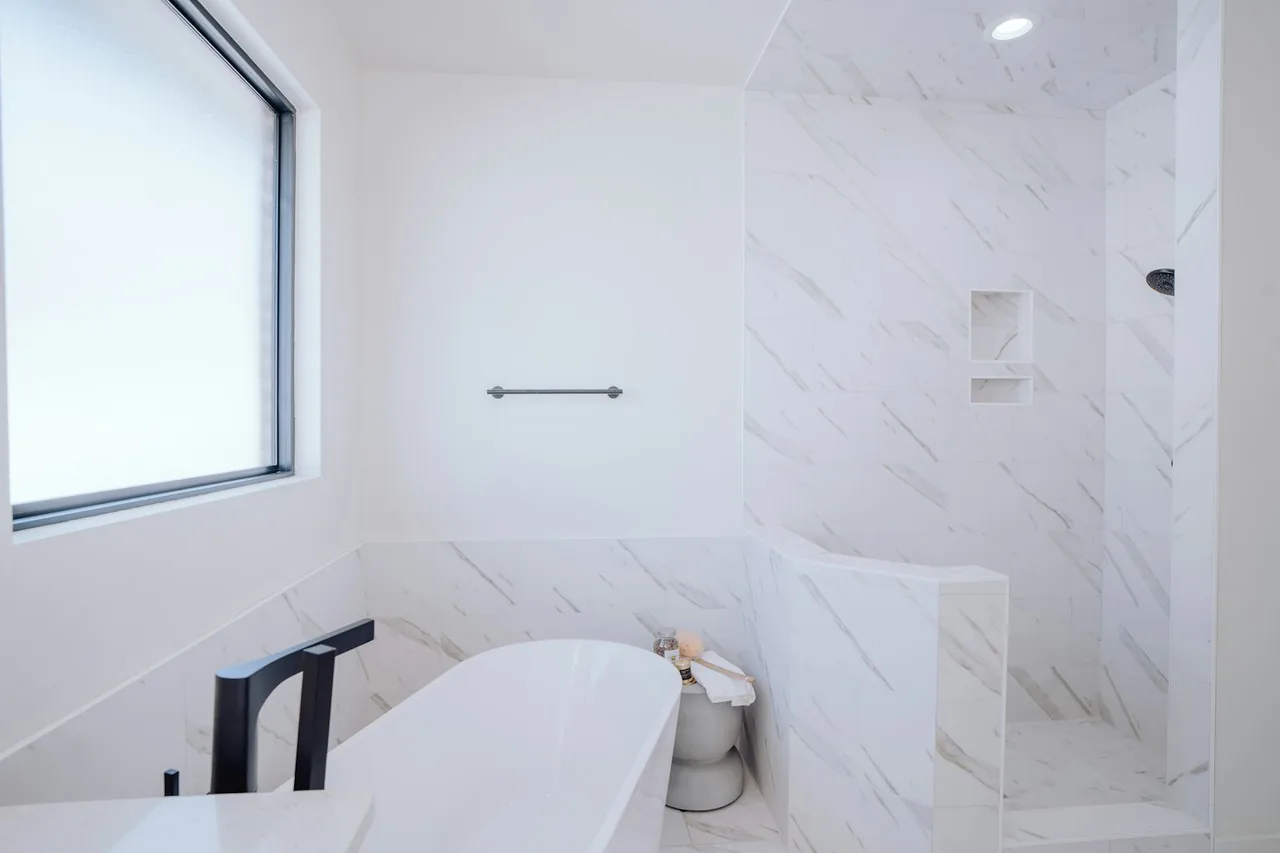
Marble is a natural metamorphic rock made mostly of recrystallized calcium carbonate — calcite — quarried in blocks and cut into the veined slabs prized for kitchens and baths. One property decides whether it's right for your space: acid. Because calcite reacts chemically with acids, marble etches wherever lemon, wine, vinegar, or tomato touch it, even when sealed — etching and staining are two different problems, and sealing only addresses the second. Marble is also soft at Mohs ~3, so it scratches where granite and quartz don't. It is the most beautiful counter you can buy and the least forgiving: choose it knowing it will patina, not stay pristine, and a vetted fabricator will set the finish, seal against stains, and tell you honestly how it lives. Get a free, itemized scope before a slab is cut.
Marble Is Recrystallized Calcite, and That Explains Everything
The single fact that explains marble's beauty and its fragility is its mineralogy: it is calcite, the same soft, acid-reactive mineral as limestone, recrystallized under heat and pressure. Granite is hard quartz and feldspar; marble is soft calcium carbonate, and every strength and weakness flows from that.
How the Stone Forms and Why It Glows
Marble forms when limestone is recrystallized under heat and pressure, turning its calcite into a dense, luminous stone that has been the material of sculpture and palaces for millennia. Its signature is veining — mineral impurities that streak gray, gold, green, or black across a white or cream field — and a slight translucency that gives polished marble a glow no engineered surface fully replicates. Every slab is unique, and the look is unmistakably high-end.
Where Marble Genuinely Wins
Marble wins where appearance leads and the surface won't be punished by heavy cooking. It is the classic choice for a bathroom vanity, where acids are rare and the look elevates the whole room, and for a baker's station — calcite stays naturally cool, which is genuinely useful for rolling pastry and working dough. On a statement island or a butler's pantry, a bookmatched marble slab is a centerpiece. Used where it's loved more than abused, marble is the most striking stone a home can have.
The Trade You Can't Avoid
The trade is unavoidable and worth saying plainly: marble is soft and acid-reactive, so in a hard-working kitchen it will etch and wear into a patina over time. Some homeowners adore that lived-in, aged look — the way marble in an old European kitchen tells its history. Others want their counters flawless, and for them marble is the wrong stone. If you love the veined look but need it to shrug off citrus and wine, the honest answer is marble-look quartz, which mimics the pattern and ignores the acid; if you want natural stone that's far harder, look at quartzite, which often reads like marble but performs like granite. The marble vs quartz guide walks the full decision.
Where Marble Fails — Etching, Scratching, and Staining
Marble has three distinct weaknesses, and the most important one is misunderstood by almost everyone: etching and staining are not the same problem, and sealing only addresses one of them.
Etching: A Chemical Reaction Sealing Can't Stop
Etching is a chemical reaction, not a stain. When an acid — lemon juice, wine, vinegar, tomato, even some cleaners — touches calcite, it dissolves a microscopic layer of the polished surface, leaving a dull, lighter spot or ring. It happens in seconds, and this is the single most important thing to understand about marble.
Why a Sealer Doesn't Prevent Etching
A sealer fills the stone's pores to resist liquid penetration; it does not make the calcite chemically inert. Acid still reaches and reacts with the calcium carbonate at the surface, so a perfectly sealed marble etches exactly as an unsealed one does. Anyone who tells you sealing stops etching misunderstands the chemistry — sealing is a stain defense, not an acid defense.
How a Honed Finish Hides Etch Marks
The practical mitigation is the finish. A honed (matte) finish masks etching far better than a polished one, because there is no high gloss for the dull etched spot to contrast against — the etch and the surrounding surface read at nearly the same sheen. This is why serious marble kitchens are almost always honed, and why finish is the most consequential decision you make about living with marble.
Why Polished Marble Belongs on Low-Use Surfaces
Polished marble shows every etch mark as a dull ring against the gloss, so it suits surfaces acids rarely reach — a powder-room vanity, a fireplace surround, a display shelf — far better than a cooking zone. Put polished marble on a working kitchen counter and the first lemon that rolls off a cutting board leaves a mark you'll see for years; put it where acid never lands and it stays luminous.
Scratching and Staining: The Other Two Limits
Scratching is the second limit. Marble is soft — about Mohs 3, far below granite or quartz at ~7 — so knives, grit, and dragged cookware leave marks the way they wouldn't on a hard stone. A cutting board isn't optional on marble. Staining is the third, and the one sealing does help: marble is porous, so oil, wine, and colored liquids can penetrate an unsealed or thirsty slab and discolor it. Sealing slows penetration and buys you time to wipe spills, but it is a separate defense from the etching problem. The honest summary: seal marble against stains, hone it to live with etching, use boards and trivets to limit scratching — and accept that it will develop character regardless.
Marble vs Quartz, Granite, Quartzite, and Porcelain
Marble is the beauty-first, durability-last choice in the countertop field. The cleanest way to place it is against the four materials people weigh against it — usually because they want the look without all the upkeep — rated on the specs that actually decide a kitchen.
The Countertop Material Comparison Matrix
The table below is the decision a buyer is really making — type, porosity, acid behavior, hardness, and where each belongs, side by side. Marble's profile is the soft, etch-prone, frequently sealed column.
| Material | Type | Porosity / sealing | Acid behavior | Hardness | Best fit |
|---|---|---|---|---|---|
| Marble | Natural metamorphic (calcite) | Porous, frequent seal | Etches — even sealed | Mohs ~3 | Baths, baking, statement pieces |
| Quartz | Engineered | Non-porous, never sealed | Acid-proof | Mohs 7 mineral | Hands-off kitchens, marble look |
| Granite | Natural igneous | Porous, periodic seal | Acid-resistant | Mohs 6–7 | Heavy cooking, natural character |
| Quartzite | Natural metamorphic (silica) | Porous, periodic seal | Etches far less | Mohs ~7 | Marble look with real durability |
| Porcelain | Engineered sintered | Non-porous, never sealed | Acid-proof | Glass-hard, brittle edge | Outdoors, full sun, ultra-thin |
Marble vs Quartz and Granite
Marble vs quartz is the most common cross-shop, because engineered quartz now imitates marble veining convincingly. The contrast is stark: marble is soft, porous, and etches on contact with acid; quartz is hard, non-porous, never sealed, and acid-proof. If you cook with citrus and wine and want the marble look to stay crisp, quartz is the practical answer — the full comparison is in our marble vs quartz guide. Marble vs granite pits two natural stones that live oppositely: granite is hard, heat-tolerant, and acid-resistant and just needs sealing for stains; marble is soft, acid-sensitive, and far more delicate. For a busy kitchen, granite is the forgiving stone; marble is for the room where looks win.
Marble vs Quartzite and Porcelain
Marble vs quartzite is the upgrade path for marble lovers. Quartzite frequently looks like marble — white fields, dramatic veining — but it's quartz-based and rates Mohs ~7, so it resists scratching and, being silica rather than calcite, etches far less than true marble. If you want the marble aesthetic with real durability, quartzite is the natural-stone answer. Marble vs porcelain sets calcite against a sintered slab: porcelain can print a marble look on a non-porous, heat- and UV-proof, scratch-resistant body — the engineered route to marble style for outdoor use or maximum toughness, at the cost of natural depth. Line them all up spec-for-spec with our material comparison tool.
The Specs and Properties That Actually Matter for Marble
Marble isn't graded on a wear scale, so you judge it on the properties that predict how it will behave and the trade terms that describe a given slab. Each is a question a credible fabricator can answer about your actual stone.
Hardness and Acid Reactivity
Marble rates about Mohs 3 on the Mohs hardness scale — soft enough that it scratches from everyday use and even a copper coin can mark it. This single number is why marble needs cutting boards and gentle handling that a Mohs-7 stone doesn't. The defining property, though, is acid reactivity: calcite reacts with acids, so marble etches, and there's no rating that fixes this — it's inherent chemistry. Choosing a honed finish and wiping acids fast are the only real mitigations.
Porosity and the Role of Finish
Marble is porous and benefits from regular sealing to slow staining; absorption varies by stone, but most marble is thirstier than dense granite, so its sealing interval is shorter. Finish isn't a number, but it's the most consequential spec for living with marble: honed hides etching and scratches, while polished shows them but gives the brightest, most reflective look. The finish you pick changes the daily experience more than the variety does.
The Marble Spec Sheet at a Glance
The table below collects the properties a credible fabricator can speak to, with the practical meaning of each. None is a marketing grade; every one predicts how the slab lives.
| Spec | Typical value | What it predicts |
|---|---|---|
| Hardness | Mohs ~3 | Soft — scratches easily; cutting boards mandatory |
| Acid reactivity | High (calcite) | Etches on contact with acid; sealing doesn't stop it |
| Porosity / absorption | High, varies by stone | Needs frequent sealing to slow staining |
| Heat tolerance | Moderate, stays cool | Tolerates warmth; ideal cool surface for pastry |
| Finish | Honed or polished | Honed hides etching; polished shows it but glows |
| Thickness | 2 cm or 3 cm | 3 cm = single-thickness edge; 2 cm = built-up edge |
Want honest guidance on which marble fits your room?
We match you with a vetted fabricator who recommends the right variety and finish for how the surface lives — with a free, written quote.
Varieties, Finishes, and What to Buy
With marble, "what to buy" means choosing the variety, the finish, and — most of all — going in with the right expectations about patina.
Finish First, Then Variety
Honed is the practical choice for kitchens: its matte surface masks the inevitable etching and minor scratches and keeps marble usable for years without looking damaged. Polished delivers the glossy, luminous look but reveals every etch mark, so it suits low-use surfaces far better than a cooking zone, and a leathered texture is another low-sheen, forgiving option. Variety comes next: marble is sold by named varieties spanning bright whites with crisp gray veining, warm creams, and dramatic gold- or green-veined stones — and whiter, more uniform varieties show etching less by contrast, while heavily veined ones hide minor marks within their movement.
Select the Slab and Set Expectations
As with all natural stone, view the specific slabs your job will use so the veining flows the way you want, especially if you plan a bookmatched seam where two slabs mirror each other. The most important purchase decision, though, is mental: buy marble for a kitchen only if you'll embrace the patina. If a single etch ring will bother you for years, choose marble-look quartz or quartzite instead — the look without the chemistry.
How Marble Is Fabricated and Installed
Marble is heavy, soft, and brittle compared with harder stones, so fabrication and installation demand extra care — and several realities are specific to calcite slabs. The six steps below are the full arc from measuring the cabinets to the sealed, finished counter.
Template After Cabinets Are Set
A precise template is taken from cabinets that are installed and level. Marble has little flex and is more prone to breakage than granite, so adequate, continuous, level support is confirmed before the slab is cut — a gap or high spot underneath is where a soft slab cracks.
Slab Selection and Bookmatch Layout
Because every slab is unique and white marble shows seams, the layout is planned across the specific stone — placing seams discreetly and laying out any bookmatch, where one block is split into mirror-image slabs so the veining reflects across a seam or a waterfall. This marble specialty is decided before cutting.
Gentle Cutting and Radiused Cutouts
The slab is cut to size and handled gently, because soft calcite chips and breaks more readily than hard stone. Sink and cooktop cutouts get radiused inside corners, never square — a sharp internal corner is a stress riser where a brittle slab fractures, and marble is less forgiving here than granite.
Edge Profiling and Polishing
Edge profiles — eased, beveled, ogee — are ground and polished into the stone, and softer edges resist chipping better than sharp ones. The finish you chose, honed or polished, is brought up at this stage, since it defines how the counter lives with etching.
Setting, Seaming, and Overhang Support
The slab is set on level support and seams are bonded with carefully color-matched epoxy — critical against pale stone, where a dark seam line stands out. Any overhang past roughly 10 inches for 3 cm material — less for 2 cm — gets steel rods or corbels, and because marble is softer, generous support is wise.
Sink Mounting, Sealing, and Walkthrough
Undermount sinks are carried on brackets and the polished cut edge is finished by hand. New marble is sealed at install against staining, the fabricator is clear that the seal doesn't stop etching, and the counter is walked with you. A fresh hone or polish can be restored later through countertop polishing; the full sequence is in countertop installation.
Skip or rush any one of these six — setting over a gap, leaving a seam mismatched on white stone, under-supporting an overhang — and the failure it was meant to prevent shows up later, which is why a vetted fabricator treats the sequence as fixed.
Talk through your project — free.
A free consultation and a written, itemized quote from a vetted installer. No pressure, no obligation.
Is Marble Right for Your Space?
Whether marble fits is less about taste than about honesty — with how the room is used and how you'll feel about a patina. Walk the decision in order; each branch either confirms marble or points you to the surface that fits better.
- Will the surface meet acids regularly? If it's a heavy-cooking kitchen with daily citrus, wine, and tomato, marble will etch — accept that and go honed, or choose acid-proof quartz or harder quartzite. If it's a bath, a vanity, or a baking station where acids are rare, marble is on strong ground.
- Will a developing patina delight you or nag at you? Marble earns etch marks and a softened sheen over time. If that lived-in character appeals, marble is wonderful; if a single dull ring will bother you for years, this is the honest moment to choose a look-alike instead.
- Honed or polished for this surface? A working surface wants honed, which masks etching; a low-use display surface can carry polished for the glow. Decide the finish by the surface's job, not just the showroom sparkle.
- Will you keep up frequent sealing and cutting-board use? Marble needs more frequent sealing than granite and constant cutting boards for its soft surface. If that routine is more than you'll do, the stone is wrong for that spot.
- Plan the veining and the budget. Select the actual slab so the veining flows, raise any bookmatch before templating, and weigh the variety against our cost guides and the countertop cost calculator.
Run honestly, this tree returns a clear answer — and the most common reason marble disappoints is buying it for a heavy kitchen, in polish, expecting it to stay pristine.
Common Marble Mistakes, Consequences, and Prevention
Most marble disappointments are the same handful of avoidable choices, each with a predictable consequence and a known prevention. Naming them is how you spot a mismatch before the stone is cut.
| Mistake | What it causes | The prevention |
|---|---|---|
| Expecting sealing to stop etching | Dull etch rings appear despite a fresh seal; owner feels misled | Understand sealing guards stains, not acid; hone the surface and wipe acids fast |
| Polished marble in a cooking kitchen | Every etch mark shows as a dull ring against the gloss | Choose honed for working surfaces; save polished for low-use spots |
| No cutting board on the soft stone | Knives and grit scratch the Mohs 3 surface | Always use a cutting board; never cut directly on marble |
| Acidic or abrasive cleaners | Instant etching and a degraded sealer | Clean only with pH-neutral stone cleaner or mild soap; never vinegar or lemon |
| Letting the seal lapse | Oil and colored liquids penetrate and stain the porous stone | Seal more often than granite; wipe spills promptly |
| Dark seam epoxy on white marble | A visible line stands out against the pale field | Color-match the epoxy carefully and place seams discreetly |
| Buying expecting it to stay pristine | Constant disappointment as the stone develops character | Embrace the patina up front, or choose a look-alike surface |
Every row is either a chemistry misunderstanding or a mismatch of stone to use — which is why "honed, sealed, cut on a board, and bought for the patina" is the entire discipline of living well with marble.
Caring for Marble
Marble asks for the most attentive care of the common counters, and the routine is built around its two separate vulnerabilities — acid etching and porosity.
Cleaning and Sealing
Clean only with warm water and a soft cloth or a pH-neutral stone cleaner — never vinegar, lemon, or any acidic or abrasive product, because those etch the surface on contact. Wipe acidic spills (citrus, wine, tomato, coffee) immediately; the faster they're gone, the smaller the etch. Seal regularly — marble is porous and needs sealing more often than dense granite — to slow staining, remembering that the seal guards against stains but not against etching. See countertop sealing for the method.
The Mindset That Makes Marble Work
Use cutting boards always, since the soft stone scratches, and trivets under anything hot or anything that might leave an acidic ring. Despite all this, expect a polished marble kitchen to develop etch marks and a softened sheen over time; a honed surface absorbs this gracefully, and a professional re-hone or re-polish can refresh the finish when you want. The mindset that makes marble work is acceptance: it's a living surface that earns a patina, not a sealed slab that stays new like quartz.
What Actually Drives the Cost of a Marble Countertop
A marble quote is not a flat per-square-foot rate; the headline number hides the items below, ranked by how much they move the total. We don't publish dollar figures here — weigh marble against engineered options in our marble vs quartz guide and compare across materials in the cost guides hub.
- Variety and rarity. The biggest swing. A common white marble and a rare, dramatically veined variety are very different prices for the same square footage, and the most coveted statement stones sit at the top of the range.
- Total square footage and slab count. More area means more slabs, and a layout past one slab adds material, a seam, and labor — sometimes a whole extra slab to keep a bookmatch flowing.
- Bookmatching and layout complexity. Mirroring veining across a seam or waterfall takes careful slab selection and exacting layout, adding cost beyond a straight run.
- Finish. Honed, polished, and leathered finishes each carry their own labor, and the finish choice is as much about cost as about how the stone lives.
- Seams, cutouts, and complexity. Each seam, sink or cooktop cutout, and faucet hole is shop labor, and on white marble discreet seam placement and color-matched epoxy add care.
- Overhang support. An island past 10 inches needs steel rods or corbels — and because marble is softer, generous support is wise and is a real line item.
- Removal and disposal. Tearing out and hauling away an old counter is labor and a fee, and it belongs in the written quote up front.
Because these drivers swing so widely, the only honest number comes from an on-site assessment. Size your own kitchen first with the countertop cost calculator so you can read a quote critically.
Want an itemized marble quote and honest guidance?
We match you with a vetted fabricator who prices the slab, finish, bookmatch, and support as separate lines — and tells you straight how marble will live in your space, free.
The Marble Fit Test: Six Checks Before You Buy
Before you commit to a slab, run your space through the same six-check test a good fabricator would. Each check matches the stone, finish, and your tolerance for patina to how the room lives, and a marble that passes all six is a marble you'll love for years. Call it the Marble Fit Test.
- 1. Decide if you'll embrace the patina
- Marble in a kitchen will etch and soften over time. If that lived-in character appeals to you, marble is wonderful; if a single dull ring will nag at you, choose marble-look quartz or harder quartzite instead.
- 2. Choose honed for kitchens, polished for low-use
- A honed (matte) finish masks etching and scratches and keeps marble usable in a cooking zone; save the glossy polished look for a powder room, vanity, or fireplace surround where acids and knives are rare.
- 3. Match the room to marble's strengths
- Marble shines in baths, on baking stations (it stays cool for pastry), and as a statement piece. It struggles as the primary surface in a heavy-cooking kitchen unless you're committed to the maintenance and the patina.
- 4. Commit to the care routine
- Marble needs pH-neutral cleaning, prompt acid wipe-ups, more frequent sealing than granite, and constant cutting-board use. If that's more than you'll keep up, it's the wrong stone for that spot.
- 5. Select the slab and plan the veining
- View the actual slabs so the veining flows the way you want, and if you're after a bookmatched seam or waterfall, raise it before templating so the fabricator can lay the slabs to mirror.
- 6. Weigh the variety against the budget
- Rarity and veining move the price most, so weigh the variety you love against our marble vs quartz comparison and size the job with the cost calculator before you commit.
Pass all six and marble is almost certainly the right call for that surface; fail one or two and the test has just saved you from a stone that fights how you actually live.
Marble Countertop Glossary
The terms below recur in every marble quote, spec sheet, and care guide — each defined as its working meaning on an actual job, so you can read a scope and judge whether it is complete.
- Metamorphic rock
- Stone transformed by heat and pressure from a parent rock. Marble is metamorphosed limestone — its calcite recrystallized into the dense, veined stone, distinct from igneous granite.
- Calcite
- Calcium carbonate, the soft, acid-reactive mineral that makes up most marble. It is the source of both marble's glow and its etching — the defining fact of the stone.
- Etching
- A dull spot or ring left where acid dissolves a microscopic layer of marble's surface. It is a chemical reaction, not a stain, and a sealer cannot prevent it.
- Staining
- Discoloration from a liquid soaking into the porous stone — a separate problem from etching. Sealing slows it, which is the one thing sealing actually defends against.
- Patina
- The softened sheen and accumulated etch marks marble develops with use. Embraced in many old kitchens as character; the mindset shift that makes marble livable.
- Honed
- A matte finish that masks etching and scratches because there's no gloss for a dull spot to contrast against. The practical choice for marble kitchens.
- Mohs hardness
- The 1-to-10 scratch-resistance scale; marble rates about 3, soft enough to scratch from everyday use — the reason cutting boards are mandatory.
- Bookmatching
- Splitting one block into mirror-image slabs so the veining reflects across a seam or waterfall. A marble specialty requiring careful selection and layout.
- Sealing
- Applying a penetrating sealer that fills pores to slow staining. On marble it guards against stains only — never against acid etching.
- Stress riser
- A point — like a square inside corner on a cutout — where load concentrates and a crack can start. Radiusing the corner removes it; critical on brittle marble.
- Variety
- A named marble by color and veining character (rather than a quality grade). Some varieties are denser or whiter, which affects both look and how visibly they etch.
- Overhang
- Counter that extends past the cabinet. Past roughly 10 inches it needs engineered support, and because marble is soft, generous backing is wise.
Sourcing, Finish, and Honest Expectations
Marble has no single manufacturer's warranty the way an engineered slab does, so the protections that matter are honest sourcing, the right finish, and a fabricator clear about how the stone lives.
Honest Sourcing and Finish Selection
Because every slab is natural and unique, the real assurance is that the stone delivered is the one you selected in person, with the finish — honed or polished — you chose, and any bookmatch laid out from the slabs you approved. A fabricator who shows you the actual stone and lets you sign off on the layout is selling you a known quantity, not a surprise.
The Etching Disclosure That Defines a Good Fabricator
The single most important assurance with marble is honesty about etching. A vetted pro tells you up front that sealing does not stop acid etching, recommends honed for working surfaces, and sets the expectation that the stone will patina — rather than overselling a seal that can't deliver. New marble is sealed at install against stains, and a re-hone or re-polish can refresh the finish later; the fabricator who explains all of this is the one who keeps you happy with marble years on.
A Real Marble Decision
The clearest way to see where marble fits is to follow one realistic choice where the homeowner's tolerance for patina, not just the look, decided the outcome.
How to Vet a Marble Fabricator
With marble, the fabricator's honesty matters as much as their craft — the right one steers you to the finish and expectations that make the stone livable. These questions separate a pro who sets you up to love marble from one who oversells it.
- They're honest that sealing won't stop etching
- A credible fabricator explains the chemistry up front — sealing guards stains, not acid — and recommends honed for working surfaces. A shop that promises a seal will keep marble pristine misunderstands the stone or is overselling it.
- They let you select and approve the actual slab
- Marble is unique and seams show on white stone, so a pro has you view and sign off on the specific slabs and the bookmatch layout — not a sample chip.
- They handle and cut soft stone gently
- Ask how they handle calcite. Soft marble chips and breaks more easily than granite, so a careful answer covers gentle handling, radiused cutout corners, and continuous level support.
- They color-match seams against pale stone
- On white marble a dark seam line stands out, so confirm they place seams discreetly and tint the epoxy to the slab. Seam work is where rushed marble fabrication shows first.
- They seal at install and explain re-honing
- New marble should leave sealed against stains. A real answer covers the install seal, frequent resealing, and the option to re-hone or re-polish later to refresh the finish.
- They put scope, schedule, and a labor guarantee in writing
- Ask for the full scope, the timeline, and a workmanship warranty before work starts. A shop willing to name a labor guarantee — and return if a seam lifts or an edge chips — stands behind the install itself.
Want a fabricator who's honest about how marble lives?
Tell us about your space and we'll match you with a vetted marble pro who recommends the right finish, supports the slab, and seals at install — in a written scope, free.
Why Route Your Marble Countertop Through Pro Work Home Surface
Pro Work Home Surface is not a fabricator and does not cut or set your slab — we are a national authority on home surfaces that matches homeowners with vetted local countertop pros and holds them to a published bar.
- A free consultation and an itemized written scope
- Every connection starts with a no-obligation consult and a written quote that lines out the slab, finish, bookmatch, seams, and overhang support separately — so you read the whole job, not a headline rate.
- Handled and cut for a soft, brittle stone
- The template comes from installed, leveled cabinets, the slab is handled gently as soft calcite requires, and all sink and cooktop cutout corners are radiused to prevent the cracking a sharp corner causes in marble.
- Seams placed and veining laid with care
- Seams are located discreetly and bonded with carefully color-matched epoxy — critical against pale stone — and any bookmatch or waterfall is laid out from selected slabs; overhangs past 10 inches are supported with steel or corbels.
- Finish set and sealed, expectations honest
- The finish you chose — honed or polished — is delivered, the stone is sealed at install against stains, and the vetted pro is clear that sealing does not stop acid etching so you buy marble knowing how it lives.
Countertops are one of eight categories we cover across home surfaces. Compare marble against the rest of the field at the countertops hub, weigh it against engineered options in our marble vs quartz guide, explore the trade-offs across materials in the full learning center, and line surfaces up spec-for-spec with the material comparison tool. Explore the full range of home surfaces — and if you're refacing or replacing cabinets too, template both together so the stone sits level and supported the first time.
Brands & Material Authority
Quality and construction drive long-term performance more than the label. These are widely respected names in this category:
- Cambria
- Caesarstone
- Silestone
- MSI
- Cosentino
- Corian
- Wilsonart