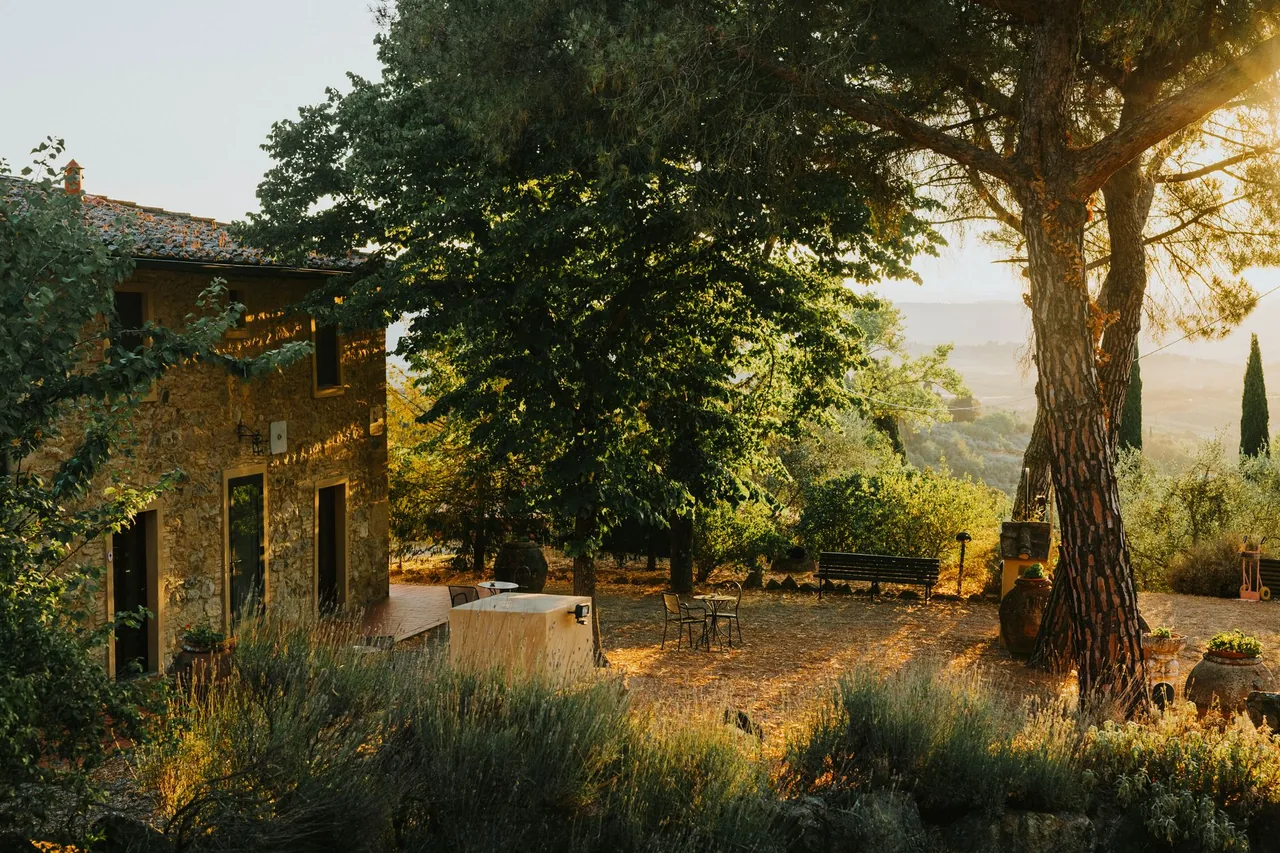
Natural stone for outdoor surfaces is quarried rock — flagstone, travertine, bluestone, or granite — cut or split into pavers and set on a compacted base or in mortar. Natural stone is the premium hardscape material, and one property decides whether a given stone is right for your space above all others: its porosity, how much water it drinks, because that single number governs sealing, staining, and freeze-thaw survival. Dense, low-absorption stone shrugs off weather with little protection; porous stone stains, spalls in frost, and needs sealing and care. "Natural stone" spans nearly impervious granite to thirsty, frost-sensitive sandstone, so the whole decision is matching the stone's properties to the use and climate — many stone units set on a compacted base like pavers, others mortared to a slab. Get a free consultation and a written, itemized scope from a vetted installer before you choose on looks, because the stone's behavior, not its photo, decides whether the surface lasts.
Natural Stone Is a Properties Decision First, a Looks Decision Second
The color and veining everyone shops for matter least to how long the surface lasts. What separates a stone surface still sound in a generation from one staining and spalling in three winters is whether the stone's porosity, hardness, and frost rating were matched to the use and climate before anything was set.
Genuine Rock, Not a Manufactured Imitation
Natural stone is exactly that: stone cut from the earth, not manufactured. Each piece carries the color, veining, and texture of its geology, so no two units are identical and the surface has a depth no poured or molded product reproduces. For outdoor use it comes as cut-dimension pavers, irregular split flagstone fitted like a puzzle, and tile-format pieces — used for the highest-end patios, walkways, and especially pool decks. But its authenticity comes with a catch a credible installer names up front:
- The same porosity that gives some stones their character also lets them absorb water and stains.
- The thickness variation of natural stone demands more skill to set flat than uniform manufactured units.
- And a stone that performs beautifully in a warm region can delaminate over a few hard winters elsewhere.
None of those are reasons to avoid stone — they are the reasons the stone has to be chosen by its properties, not its appearance.
Where Genuine Rock Wins
Stone wins on authenticity, longevity, and value perception. The color is the rock itself, so it never fades the way a surface dye can — a quality that sets it apart from stamped concrete, which imitates stone with pigment. A stone surface, properly built, lasts generations and reads as a premium feature of the home. And stone offers something specific around water: certain stones, notably travertine, stay markedly cooler underfoot in direct sun than concrete or dark pavers, which is why travertine dominates pool decks in hot regions. Stone also shares the repairability advantage of pavers when it is dry-laid: an individual unit can be lifted and reset. For where it sits among all exterior options, start at the outdoor surfaces hub.
The Natural Stone Fit Test: Six Checks Before You Choose a Stone
Before a stone is chosen on looks, a competent installer runs the project through the same six-check fit test. Each check is a property or detail that decides whether the stone survives its use and climate, and a stone that fails any one is the wrong stone for that place. Call it the Natural Stone Fit Test: pass all six and the surface outlasts everything around it; skip one and you are setting a beautiful failure.
- 1. Porosity (water absorption)
- The master variable. Low-absorption stones like most granite are nearly impervious, resist staining, and survive freeze-thaw with little protection; high-absorption stones like travertine and many sandstones drink water, stain readily, and need sealing and frost caution. ASTM C97 measures absorption for dimension stone, and it is the number that drives nearly every other decision.
- 2. Frost resistance
- Tied directly to absorption: a stone for a cold region must be low-absorption and frost-rated, or water absorbed into it freezes, expands, and spalls or fractures the surface over a few winters. This single requirement rules certain otherwise-beautiful stones out of northern installs entirely.
- 3. Density and hardness
- These govern wear and dent resistance. Granite is among the hardest and most durable outdoor stones; limestone and travertine are softer and wear faster under heavy traffic. Harder, denser stones suit driveways and high-traffic surfaces; softer stones suit patios and pool decks where their other qualities are worth the trade.
- 4. Surface finish and slip
- A chosen spec. The same stone can come honed (smooth, slick when wet), tumbled (worn, grippier), flamed or thermal (rough, high grip), or naturally cleft (textured split face). For wet areas, the textured finishes give the slip resistance a smooth finish lacks — a safety decision on a pool deck or rain-exposed walkway.
- 5. Solar heat behavior
- Real at pools and in sun, even though it is not a number on a data sheet. Light-colored, porous stones like travertine stay cooler underfoot; dark, dense stones like some granites and bluestone absorb solar heat and get hot. For a barefoot surface in strong sun, coolness is a genuine selection factor.
- 6. Setting method for the conditions
- Dry-laid (sand-set) on a compacted base flexes with the ground and lets a unit be reset; mortar-set (wet-laid) bonds the stone to a slab for a rigid, permanent surface — but a rigid stone surface is only as crack-free as the slab beneath it, so any crack or movement in that slab transfers straight into the stone. The method is matched to the base and climate, not to installer convenience.
Three of these six — porosity, frost rating, and the slip finish — are the ones a looks-first purchase ignores, and they are exactly the properties that decide whether the stone stains, spalls, or turns into a slip hazard. That is why the fit test is non-negotiable.
Want the stone chosen by its properties, not its photo?
We match you with a vetted installer who reads the porosity, frost rating, and finish for your use and climate, and names the right stone and setting method in a written scope before anything is set.
Natural Stone Specifications & Standards
Stone is judged by physical properties that predict how it handles water, weather, traffic, and bare feet — and the right stone depends entirely on the use and climate. The properties matter far more than the look when it comes to longevity.
The Properties That Predict Performance
The performance properties are the measurable ones — absorption, density, and frost behavior — set by the stone's geology and reported by ASTM test methods for dimension stone.
Water Absorption and Frost Resistance
Absorption and frost resistance are linked, and together they are the single most important pair of numbers for an outdoor stone.
Absorption by ASTM C97
ASTM C97 measures water absorption by weight for dimension stone, and the spread across stone types is enormous: dense granite absorbs a tiny fraction of a percent, while travertine and many sandstones absorb several percent or more. The lower the absorption, the more stain- and frost-resistant the stone, and the less sealing it needs — which is why absorption is the number that drives sealing schedule, stain vigilance, and cold-climate suitability all at once.
Why Low Absorption Survives Freeze-Thaw
Freeze-thaw spalling is absorption made visible. Water absorbed into a porous stone freezes, expands, and flakes or fractures the surface; a low-absorption stone simply takes in too little water for the freezing to do damage. That is why a stone that thrives in a warm climate can delaminate over hard winters elsewhere — its absorption was never the problem until the water in it started freezing. In any cold region the stone must be both low-absorption and frost-rated, which is the single requirement that rules out otherwise-beautiful porous stones up north.
Density, Hardness, and Wear
Density and hardness govern how the stone holds up to traffic and impact. Granite is among the hardest and most durable outdoor stones, suitable even for driveways; limestone and travertine are softer and wear faster, which is fine on a patio or pool deck where their coolness and look are worth the trade. The harder, denser stones go where traffic and load are highest; the softer stones go where their other qualities lead.
Finish and Heat Specs
Two more specs are chosen rather than inherent. The surface finish sets slip resistance: honed is smooth and slick when wet, while tumbled, flamed, and cleft finishes grip — the textured finishes are the wet-area spec. Solar heat behavior matters at pools: light, porous stones like travertine stay cooler underfoot, while dark, dense stones absorb heat and get hot, a real comfort spec for barefoot surfaces.
Stone Properties at a Glance
The table below collects the properties a competent installer weighs against the use and climate. These are representative tendencies — the specific stone's tested data always governs, and where a region is colder, the stricter frost requirement wins.
| Stone | Absorption / porosity | Frost resistance | Heat underfoot in sun | Typical best use |
|---|---|---|---|---|
| Travertine | High — porous, needs sealing | Frost-rated grade required for cold | Stays cool — light color | Pool decks in sun |
| Bluestone | Low–moderate — denser | Handles cold climates well | Runs hot — dark color | Patios, walkways |
| Flagstone (varies) | Varies widely by species | Depends on the specific stone | Color-dependent | Organic-look patios |
| Granite | Very low — nearly impervious | Excellent — frost-resistant | Dark colors get hot | Driveways, high-traffic |
| All stone — wet areas | — | — | — | Tumbled / flamed / cleft finish for grip |
| All stone — absorption test | ASTM C97 | — | — | The number that drives sealing & frost |
The lesson is that the stone you fall for in the yard tells you almost nothing about how it will behave on your surface. A porous, soft, beautiful stone on a cold-climate driveway, or a honed stone on a pool deck, is a failure chosen by appearance — which is why the properties come before the photo. Compare stones spec-for-spec with the material comparison tool first.
Natural Stone vs. Pavers and Stamped Concrete
Stone competes directly with manufactured hardscape, and the comparison is about authenticity and specific properties versus cost and consistency. Each has a clear lane.
The Outdoor Surface Comparison Matrix
The matrix below lines up the three families on the factors that decide the project — authenticity, movement tolerance, repairability, maintenance, and cost driver.
| Surface | Material | Color permanence | Movement tolerance | Repairability | Ongoing maintenance | Main cost driver |
|---|---|---|---|---|---|---|
| Natural stone | Genuine quarried rock | Never fades — color is the rock | High dry-laid / low mortar-set | Good dry-laid / hard mortar-set | Reseal by porosity | Stone + setting labor |
| Pavers | Manufactured concrete / clay | Concrete can fade; clay is colorfast | High — flexes across joints | Best — lift and reset a unit | Joint sand top-up | Excavation + base depth |
| Stamped concrete | Pigmented poured slab | Pigment can fade; needs reseal | Low — cracks relieve stress | Hard — patch rarely matches | Reseal every few years | Slab + reinforcement |
Versus Pavers
Concrete pavers are manufactured to uniform dimensions, come in consistent colors, install faster because every unit is the same thickness, and cost less. Natural stone gives genuine material depth and color that is the rock itself rather than a pigment, plus unique per-stone variation — at a higher price, more weight, and a more demanding install because of thickness variation. Both can be dry-laid on a compacted base and both let you reset an individual unit, so they share the flexible, repairable approach; the choice is authenticity and specific stone properties (like travertine's coolness) versus cost and dimensional consistency. There is genuine overlap, since dimensionally cut stone pavers install much like concrete units.
Versus Stamped Concrete
Stamped concrete exists to imitate stone at a lower cost, and from a distance it succeeds. But it is a monolithic slab — seamless yet prone to permanent cracking and hard to repair invisibly — and its color is pigment that can fade. Stone is the real material: unfading natural color, replaceable units when dry-laid, and properties like coolness and authenticity concrete cannot fake — at a meaningfully higher cost and with sealing needs concrete shares. The honest framing across the three: stamped concrete is the value imitation, concrete pavers are the consistent and repairable middle, and natural stone is the premium authentic surface. Pick by what you value most for the specific surface and how much you will invest.
Is Natural Stone Right for Your Space?
Natural stone is the right surface for some projects and overkill or a poor fit for others, and which is the output of a short chain of facts about your climate, your use, and your priorities. Walk the decision in order; each branch eliminates a stone or an approach the conditions do not support.
- Start with your climate. In a hard-freeze region the stone must be low-absorption and frost-rated, which rules out porous, frost-sensitive stones regardless of how they look. In a warm climate the field is wide open, including porous travertine.
- Name the use and its load. A driveway or high-traffic surface needs a hard, dense stone like granite; a patio or pool deck can use a softer stone whose coolness or look is worth the wear trade. Match hardness to how hard the surface lives.
- Decide how much sealing and stain-vigilance you will accept. Low-absorption stone needs little sealing and shrugs off spills; porous stone stains readily and needs regular sealing and prompt spill attention. Pick the porosity to match the upkeep you will actually do.
- For a wet, barefoot surface, weigh heat and slip together. A pool deck in strong sun wants a light, cooler-running stone with a textured, grippy finish — travertine tumbled, for instance — not a dark, dense, honed stone that gets hot and turns slick.
- Match the setting method to the base. A flexible compacted base and a desire to reset units point to dry-laid; a need for a rigid permanent surface, thin tiles, or pool coping points to mortar-set — but only over a sound, stable slab, because the stone is only as crack-free as what it is bonded to.
Run honestly, this tree returns a specific stone, finish, and setting method for your conditions — and an installer who recommends the same stone for every climate and every use, by its looks, is the red flag.
Not sure which stone suits your climate and use?
Tell us about your space and we'll match a vetted installer who reads the porosity, frost rating, and finish, names the right stone and setting method, and explains the trade-offs — in writing.
Why Stone Stains, Spalls, and Turns Slick — and How the Choice Stops It
Stone failures come from picking the wrong stone for the job or skipping its protection — rarely from the stone being inherently bad. Four mechanisms cover almost all of them, each paired below with its cause and the choice that prevents it.
Staining and Absorption: A Porosity Failure
Staining hits porous stones hardest. Travertine, many sandstones, and some limestones drink liquids — wine, oil, leaf tannins, fertilizer — and hold the stain unless sealed and maintained. Porosity is the root variable: the more water a stone absorbs, the more vulnerable it is, which is why a penetrating sealer is standard on porous outdoor stone and why dense granite barely needs one. The prevention is choosing the porosity to match the use and keeping porous stone on its sealing schedule with prompt spill cleanup.
Freeze-Thaw Spalling: A Cold-Climate Failure
Freeze-thaw spalling is the cold-climate killer: water absorbed into a porous stone freezes, expands, and flakes or fractures the surface. A stone that performs beautifully in a warm region can delaminate over a few hard winters elsewhere. The prevention is a frost-resistant, low-absorption stone in any cold climate — the one requirement that overrides looks up north.
Slip When Wet: A Finish Failure
Slip is the wet-surface risk: a smooth, honed, or polished stone turns slick when wet, dangerous on a pool deck or rain-exposed walkway. The prevention is a textured surface finish — tumbled, flamed, brushed, or naturally cleft — chosen for grip on any surface that gets wet.
Heat and Slab-Crack Transfer: Two More Failures
Heat is the opposite problem on the same surfaces: dark, dense stone like some granites and bluestone absorbs solar heat and gets hot underfoot — the very issue travertine's lighter, cooler nature solves. And there is a setting-related failure: stone mortared to a slab can crack or pop loose if the slab beneath cracks or moves, since the rigid bond transfers that movement straight into the stone. The preventions are a cooler, lighter stone for barefoot sun surfaces, and either a sound, stable slab for mortar-set or a flexible dry-laid base — and a sunken dry-laid unit can be lifted and reset, the repairability mortar-set trades away. If a surface has already failed, the path is diagnosis-first re-setting over a corrected base rather than re-laying over the same problem.
Common Natural Stone Mistakes, Consequences, and Prevention
Most stone failures are the same handful of wrong choices, each with a predictable consequence and a known prevention. Naming them is how you avoid buying a beautiful stone for the wrong place.
| Mistake | What it causes | The prevention |
|---|---|---|
| Porous stone in a cold climate | Freeze-thaw spalling and fracturing over winters | Choose a low-absorption, frost-rated stone |
| Honed stone on a wet surface | A slick, hazardous pool deck or walkway | Specify a tumbled, flamed, or cleft textured finish |
| Porous stone left unsealed | Stains from oil, wine, leaves, and fertilizer | Seal to the stone's porosity and keep it on schedule |
| Dark dense stone on a barefoot deck in sun | A surface too hot to cross at midday | Use a light, cooler-running stone like travertine |
| Mortar-set over an unsound slab | Slab cracks transfer straight into the stone | Mortar-set only on a sound, stable slab — or dry-lay |
| Soft stone on a driveway | Wear and damage under vehicle loads | Use a hard, dense stone like granite for high traffic |
| Acidic cleaner on calcareous stone | Etching of travertine, limestone, and marble | Clean with a pH-neutral cleaner only |
Every row is a stone-to-place mismatch chosen by appearance — which is why "the stone is chosen for its porosity, frost rating, and finish, named in the scope" is the most valuable sentence in a natural stone quote.
Stone Types and What to Choose
The outdoor stone palette spans several stones with sharply different properties, and the right one is a match of stone to use and climate. Choosing by appearance alone ignores the porosity and frost behavior that decide longevity.
- Travertine is a porous limestone, prized outdoors for staying cool underfoot in sun — the go-to pool-deck stone in hot regions. It is typically tumbled for grip and warmth of look, needs sealing because it is absorbent, and in cold climates requires a frost-resistant grade and careful use. Its filled or unfilled surface (natural pits filled or left open) affects both look and maintenance.
- Bluestone is a dense sandstone with a distinctive blue-gray and earth-tone color, popular for patios and walkways. It is harder and less absorbent than travertine, available thermal (flamed, grippy) or natural cleft, and handles cold climates well — but its dark color absorbs heat, so it runs hot underfoot in full sun.
- Flagstone is a category (often sandstone or quartzite) of flat, irregular split stone fitted in random patterns for a natural, organic look. Properties vary widely by the specific stone — some are dense and frost-hardy, others porous and soft — so the species matters as much as the format.
- Granite is the hardest, densest, lowest-absorption common outdoor stone: extremely durable, stain- and frost-resistant, suitable even for driveways, and minimal in sealing needs. It costs accordingly and, in dark colors, gets hot in sun. It is the choice when durability and weather resistance lead.
Across all of them, confirm the finish for slip, the frost rating for your climate, and the absorption that drives sealing. For how stone selection and setting method move the budget, compare factors in our cost guides and the adjacent outdoor project cost references, and see supplier and brand options in our brands directory.

What Actually Drives the Cost of a Natural Stone Project
A natural stone quote is not a flat per-square-foot rate; the headline number a low bid leads with hides the items below, ranked by how much they move the total.
- The stone itself. The biggest material swing — travertine, bluestone, flagstone, and granite span a wide price range, and premium or imported stone, thicker units, and select grades cost more than basic ones.
- Setting method and labor. Mortar-set on a slab is more labor and material than dry-laid, and either way natural stone's thickness variation means more skilled shimming and bedding than uniform pavers — the labor is a real driver.
- Base or slab preparation. Dry-laid needs an excavated, compacted aggregate base in lifts; mortar-set needs a sound concrete slab — pouring or repairing that slab is a separate, significant cost.
- Site conditions and drainage. Soft soil, slope, poor drainage, and grading add excavation and detailing a flat, firm, well-drained site avoids.
- Sealing and finish. A penetrating sealer matched to the stone's porosity, plus the reseal cycle for porous stone, is an ongoing cost — and a textured finish for slip may carry a premium over honed.
- Layout and pattern. Irregular flagstone fitted by hand, intricate patterns, borders, and tight cuts add skilled hours beyond a simple cut-dimension field.
- Pool detailing. Coping, the wet-edge transition, and slip and drainage detailing around a pool are specialty work priced beyond the field stone.
- Demolition and access. Removing an old surface, hauling it away, and tight or long-carry site access add labor a clear, drive-up site does not.
Because these drivers swing so widely, the only honest number comes from an on-site assessment. Compare what moves the price across the category in our cost guides, and size your own project with the material comparison tool so you can read a quote critically.
Get an itemized scope, not a headline rate.
A vetted installer prices the stone, base or slab, setting, and sealing as separate lines — so you see the whole job, free and with no obligation.
How Natural Stone Is Installed, Step by Step
Outdoor stone is installed one of two ways, and the right method depends on the stone, the base, and the climate — but both demand more skill than uniform pavers because natural stone varies in thickness. The six steps below trace the full arc for the common dry-laid approach, with the mortar-set difference noted.
Choose the Setting Method
The installer matches the method to the conditions: dry-laid (sand-set) over a compacted base for flexibility and reset-ability, or mortar-set (wet-laid) onto a sound, stable slab for a rigid permanent surface or thin tiles. The method is chosen for the base and climate, not for speed.
Excavate and Build the Base
For dry-laid, the crew excavates, builds and compacts an aggregate base in lifts, and screeds a bedding layer — the same disciplined base as pavers, sloped to shed water. For mortar-set, the existing slab is confirmed sound and stable, because cracks below transfer into the stone.
Set and Shim Each Stone Flat
The stone is set into the bedding or mortar, and because natural stone varies in thickness, the installer shims and beds each piece to a flat plane — the craft that separates a level stone surface from a rocking one. Irregular flagstone is fitted piece by piece.
Detail the Joints
Joints are detailed for the method — filled with sand or polymeric sand for dry-laid, grouted for mortar-set — and the field is restrained at the edges where dry-laid. Consistent joints are what make the surface read finished.
Slope, Drainage, and Pool Edges
The surface is confirmed sloped to shed water away from the house, and around a pool the coping and the wet-edge transition are detailed for both slip and drainage — its own specialty. A correct outdoor surface installation gets the water moving away before the stone is sealed.
Seal to the Stone's Porosity
Most outdoor stone is sealed after install with a penetrating sealer matched to the stone's porosity — more attentive for porous travertine, far less for dense granite — to keep water and stains out and, in cold climates, support freeze resistance. The sealer is chosen for the stone, not a one-size product.
Skip or rush any one of these six steps and the failure it was meant to prevent shows up later — dry-laying over an unstable area, or mortaring onto a cracking slab, is how a premium stone surface fails early, which is why a vetted installer chooses the method for the conditions rather than for convenience.
Talk through your project — free.
A free consultation and a written, itemized quote from a vetted installer. No pressure, no obligation.
Natural Stone Glossary
The terms below recur in every stone quote, spec sheet, and care guide — each defined as its working meaning on an actual job site, so you can read a scope and judge whether it is complete.
- Porosity (absorption)
- How much water a stone drinks, the master variable behind staining, sealing, and frost survival. Low-absorption stone resists stains and freeze-thaw; porous stone needs sealing and frost caution. Measured by ASTM C97.
- Freeze-thaw spalling
- The flaking or fracturing of a porous stone when absorbed water freezes and expands. The cold-climate failure that makes a frost-rated, low-absorption stone non-negotiable in northern installs.
- Dry-laid (sand-set)
- Stone set on a compacted aggregate base over screeded bedding, with sanded joints and restrained edges. Flexible, tolerant of ground movement, and reset-able — the paver-style approach, common for flagstone.
- Mortar-set (wet-laid)
- Stone bonded with mortar onto a concrete slab for a rigid, permanent surface. Only as crack-free as the slab beneath it, since slab movement transfers straight into the stone.
- Honed finish
- A smooth, matte surface ground flat — handsome but slick when wet, so it is the wrong finish for a pool deck or rain-exposed walkway.
- Tumbled finish
- A worn, rounded, textured surface that grips better when wet and gives an aged look — a common slip-friendly choice for travertine pool decks.
- Flamed (thermal) finish
- A rough surface created by heating the stone so the surface flakes, giving high slip resistance on dense stones like granite and bluestone — a wet-area finish.
- Cleft finish
- The natural, textured split face of stones like flagstone and slate, formed by splitting along the stone's bedding plane — naturally grippy and organic in look.
- Coping
- The capping stone at the edge of a pool that finishes the wet edge and the transition to the deck. Detailed for slip and drainage, often mortar-set even where the deck field is dry-laid.
- Calcareous stone
- Calcium-based stone — travertine, limestone, marble — that etches when exposed to acid. Cleaned only with pH-neutral cleaners, since acidic cleaners and spills dull and mark the surface.
- Penetrating sealer
- A sealer that soaks into the stone to repel water and stains without forming a surface film. Matched to the stone's porosity and reapplied on a schedule set by how absorbent the stone is.
- Filled vs. unfilled
- Whether travertine's natural surface pits are filled smooth or left open. Filled is smoother and lower-maintenance; unfilled keeps a more textured, natural look but collects debris in the pits.
Standards, Warranty, and When a Permit Applies
Natural stone does not carry a manufacturer's warranty the way an engineered product does, but the install and the stone selection are governed by standards and judged by how well the stone was matched to its conditions.
What "Warranty" Means for Natural Stone
Stone is a geological product, so its variation, veining, and per-piece differences are features, not defects — there is no warranty against a stone looking like stone. What an installer can stand behind is the workmanship: a level, properly bedded surface, sound joints, a correct setting method, and sealing matched to the stone. A surface that spalled because a porous stone was used in a cold climate, or that turned slick because a honed finish went on a pool deck, is a selection failure no warranty covers — which is why choosing the stone by its properties is the real protection. Ask in writing for the stone's frost rating and absorption, the setting method, the finish, and the sealing plan — that scope is what a lasting surface is judged against.
The Standards Bodies That Set the Bar
Standards govern the stone and its setting. ASTM C97 and related dimension-stone methods define absorption, density, and strength; TCNA and ANSI guidance govern mortar-set stone and movement joints; industry hardscape practice governs dry-laid base and edge construction. A surface built to these, with a stone matched to its conditions, outlasts everything around it.
When a Stone Permit Is Required
Permits enter when the work goes beyond a flat surface. A patio or walkway usually does not need one, but a driveway tying into a public road, work that alters drainage or grade, or stone tied to a retaining wall often does. A reputable installer tells you when a permit applies rather than working around it — and grading or drainage questions belong with the retaining-wall scope first. When a stone surface has failed for the wrong stone or an unstable base, the honest path is re-setting the right stone over a corrected base rather than re-laying over the same problem.
A Real Natural Stone Decision
One representative scenario shows why porosity and finish drive a stone choice: the use and climate, not the appearance, decided the stone below.
How to Vet a Natural Stone Installer
Most stone failures are selection-and-setting failures, so the installer's judgment matters more than the stone's looks. These questions separate a crew that matches stone to conditions from one that sets whatever sample you liked.
- They choose the stone by porosity and frost rating
- An installer who recommends a stone without discussing its absorption and frost resistance for your climate is selling looks. Ask which stone they recommend and why — a real answer ties the porosity and frost rating to your region and use.
- They match the finish to how wet the surface gets
- Ask how they keep a pool deck or walkway from being slick. A credible answer names a tumbled, flamed, or cleft textured finish for wet areas — not a honed or polished surface that turns slick.
- They pick the setting method for the base, not for speed
- Ask whether they will dry-lay or mortar-set, and why. A professional ties the method to the base and climate — dry-laid over a compacted base, mortar-set only on a sound slab — and explains the reset-ability trade-off.
- They build the base or confirm the slab
- Ask how the base is built for dry-laid, or how they confirm the slab for mortar-set. A credible answer describes a compacted aggregate base in lifts, or a soundness check on the slab — because both decide whether the stone stays put.
- They seal to the stone and detail the drainage
- Ask what sealer they use and how the surface drains. A professional names a penetrating sealer matched to the stone's porosity and a deliberate slope away from the house — the two that keep porous stone protected and dry.
- They put the scope and a workmanship warranty in writing
- Ask for the stone, its frost rating, the finish, the setting method, the sealing plan, the timeline, and a labor warranty in writing before work starts. A crew willing to name a workmanship guarantee — and to reset a sunken dry-laid unit — is accountable for the setting, not just the stone.
Why Route Your Natural Stone Project Through Pro Work Home Surface
Pro Work Home Surface is not a contractor and does not set your stone — we are a national authority on home surfaces that matches homeowners with vetted local installers and holds them to a published bar.
- A free consultation and an itemized written scope
- Every connection starts with a no-obligation consult and a written quote that lines out the stone, base or slab, setting, and sealing separately — so you read the whole job, not a headline rate.
- A real vetting standard, applied before we connect you
- Installers are screened on what decides a stone surface's life: whether they choose the stone by porosity and frost rating, match the finish to wet areas, set on a sound base or slab, and seal to the stone rather than choosing by looks.
- Stone chosen by properties, set on a sound base, every time
- The stone is matched to the use and climate by its porosity, hardness, frost rating, and finish; dry-laid stone goes over a compacted base in lifts with restrained edges, mortar-set stone only onto a sound, stable slab; and porous stone is sealed to its absorption on a reseal schedule.
- National coverage, local crews
- We match you with installers in your area nationwide, so the standard is consistent even though the crew is local — whether your project is a single walkway or a full pool deck.
Natural stone is one material within the outdoor surfaces we cover. Whether you are weighing stone against pavers or stamped concrete for a patio, a walkway, or a pool deck, the same properties-first standards apply — compare what moves the price in our cost guides, dig into the how-and-why in our guides, size the job with our spec-comparison tools, and start from the outdoor surfaces hub or the full range of home surfaces.
Brands & Material Authority
Quality and construction drive long-term performance more than the label. These are widely respected names in this category:
- Trex
- TimberTech
- Belgard
- Techo-Bloc
- Unilock
- Fiberon