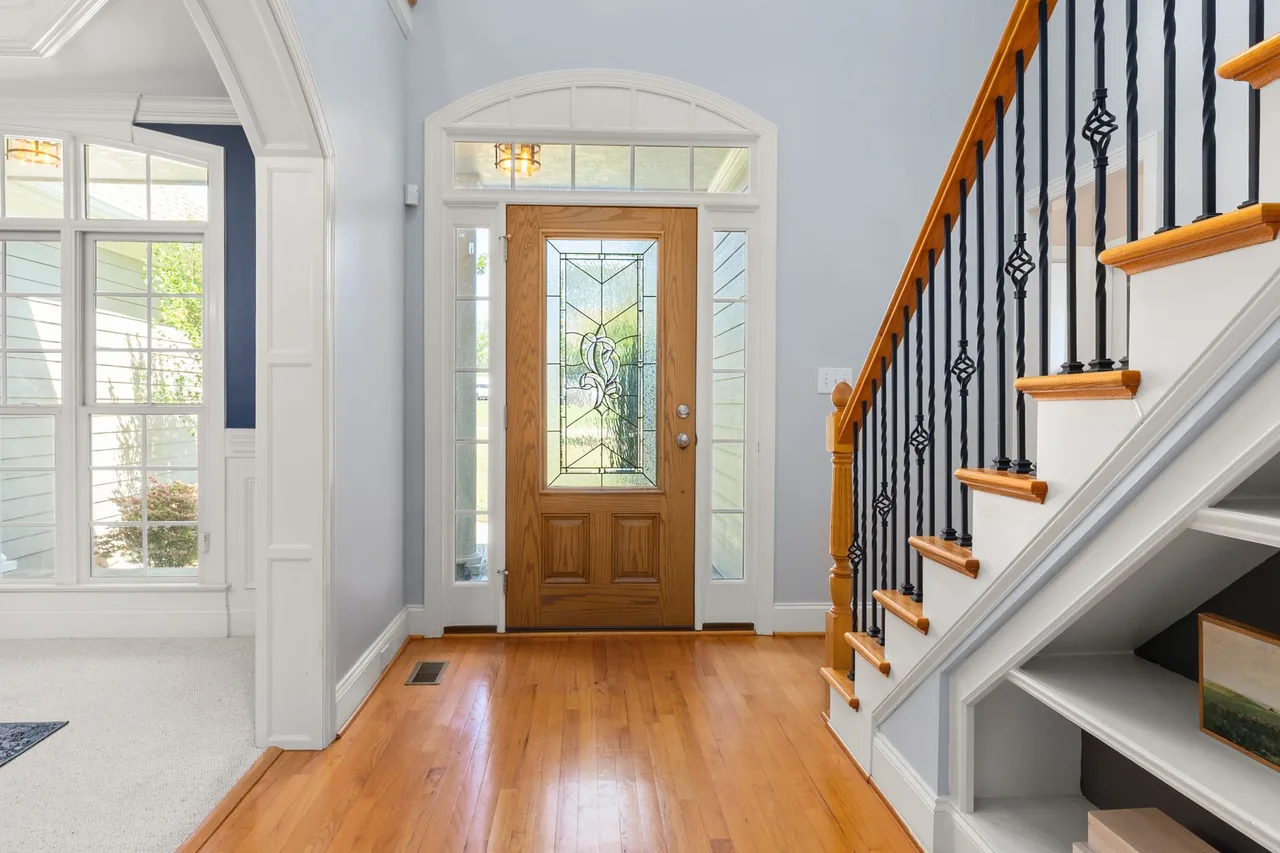
Stair repair is the diagnostic trade of finding why a specific part of a staircase squeaks, moves, or has cracked — and fixing that defect at its source rather than masking the symptom. One fact decides whether a repair holds: correctly identifying the cause, because nearly every stair problem is movement — a part that should be locked solid shifting against its neighbor. A squeak is movement you can hear, a loose tread is movement you can feel, a wobbly baluster is movement at the rail. Fix the movement and the symptom disappears; treat the symptom with a shim here or a face-nail there and it returns within a season. A repair restores what was built — it does not change the stair's safety geometry, which stays as it was at installation, though any handrail or guard touched must still meet code. Get a free consultation and a written, itemized diagnosis from a vetted repair pro before any fastener is driven, because a stair problem patched without finding the cause is the repair you pay for twice.
Stair Repair Is a Diagnosis Job First, a Fixing Job Second
The quiet, solid step everyone wants is the easy goal; what separates a repair that holds from one that returns is the diagnosis done before the first fastener — reading the movement and finding exactly where, and why, a part is shifting.
Almost Every Stair Problem Is Movement
The symptom you notice is movement somewhere it should not be; the fix only holds if it locks that specific movement, so a credible pro locates it before quoting:
- A squeak is two parts rubbing — a tread on a riser, a tread on a stringer, a fastener that has worked loose — flexing as weight crosses them.
- A loose or springy tread is a tread no longer tight to its supports, deflecting under each step.
- A wobbly baluster or newel is a railing connection that has loosened, so the guard moves when leaned on — a safety problem, not just an annoyance.
None of those are fixed by covering the symptom — they are fixed by finding the loose joint and locking it, the step a rushed repair skips and a returning squeak proves was needed.
The Order of Operations Never Changes Across Stair Defects
Locate, lock, then finish. That sequence holds across a squeak, a loose tread, a wobbly baluster, a cracked tread, and a separating stringer. The diagnostic work is always the same: find the exact joint that is moving, determine why it loosened, lock it solid — ideally from below where the structure is reachable, with glue and a mechanical fix — confirm the movement is gone, and restore the surface. The fix happens inside that diagnosis, not before it — and a wood staircase that keeps developing the same problem is usually one where the cause was never actually located.
The Stair Repair Diagnosis Gate: Six Questions Before Any Fix
Before a staircase is repaired, a competent pro runs the problem through the same six-question gate. Each question isolates a different cause of movement or damage, each has a documented consequence when skipped, and a stair fixed before all six are answered is a repair waiting to fail. Call it the Stair Diagnosis Gate: answer all six and the fix locks the cause; skip one and you are covering a symptom.
- 1. Where exactly is the movement?
- The precise joint is located — which tread, and whether it moves at the front (the nosing against the riser), at the back, or at a stringer — by walking the stair and watching, listening, and feeling for deflection. A squeak fixed at the wrong end of the tread does nothing; pinpointing the moving joint is the whole repair, and it is done before any fastener is chosen.
- 2. Can the fix be made from below?
- Access decides the method. Where the underside of the stair is open or reachable, the strongest, most invisible fix is made from below — glue blocks, wedges, and screws that lock the tread to the riser and stringer without any visible fastener on the walking surface. Where the underside is closed, the repair is made from above and must be detailed to disappear; the access question is answered before the approach is chosen.
- 3. Why did the joint loosen?
- The cause behind the movement is read — original construction without glue, seasonal wood shrinkage that opened a joint, a failed wedge or block, or simple wear over decades of traffic. The fix matches the cause: re-gluing and re-wedging an opened joint, not just driving a screw through a gap that will reopen. A screw into a moving joint that was never re-glued loosens again.
- 4. Is anything cracked, split, or structural?
- A cracked or split tread, a separating stringer, or a tread pulling away from its housing is read for whether it is cosmetic or structural. A hairline in a finish is one thing; a split through a load-bearing tread or a stringer pulling off its support is a structural repair that locks or replaces the member, not a glued cosmetic patch. The structural question is answered before the surface one.
- 5. Does the repair touch a handrail or guard?
- A wobbly baluster, a loose newel, or a moving handrail is both a movement problem and a safety one, and any railing or guard the repair touches must still meet code when finished — a handrail solid and graspable, a guard that rejects a 4" sphere. Re-securing a loose newel to its anchor, not just tightening a visible screw, is what restores the guard's integrity.
- 6. Will the repair match the surrounding finish?
- The fix's visibility is read against the surrounding treads and railing so it disappears rather than advertising itself. A fresh plug, a re-glued joint, or a replaced tread is detailed and finished to match the aged wood around it. A structurally sound repair that shows as a mismatched patch is only half done; matching the finish is the final part of the fix.
Three of these six — pinpointing the movement, finding why it loosened, and reading whether it is structural — are the questions a fast, cheap repair skips, because each turns a quick face-nail into real diagnosis. That is why the gate is non-negotiable: the skipped question is the one the squeak returns through.
Want the cause of the squeak found before anyone fixes it?
We match you with a vetted repair pro who locates the exact moving joint, locks it at the source, and puts the diagnosis in writing — before a fastener is driven.
Stair Repair Specifications & Standards
The methods that gate a lasting repair are specific to the defect being fixed — from where the squeak is locked, through the structural repairs that replace rather than patch, to the code a repaired handrail or guard must still satisfy.
The Squeak: Locating and Locking the Movement
A squeak is the most common and most misunderstood stair repair, because the fix depends entirely on finding the exact moving joint and reaching it the right way — and the wrong fix from the wrong side does nothing.
Why a Stair Squeaks at All
A squeak is the sound of two wooden parts rubbing as weight flexes them — a tread moving against the riser below it, a tread shifting on a stringer, or wood sliding against a fastener that has lost its grip. The movement is tiny but the friction is audible, and it appears where a joint was never tight or has loosened over time. Identifying which of those joints is moving — and where along the tread — is the entire repair; everything after is just executing the lock.
Fixing the Squeak From Below
When the underside of the stair is open or accessible, the squeak is fixed from below, which is both the strongest and the most invisible approach. The loose joint is re-glued and locked with glue blocks — wood blocks glued and screwed into the inside corner where tread meets riser — and with wedges re-driven into the housed joints of the stringer, plus screws drawing the parts tight. Nothing shows on the walking surface, and the joint is locked solid rather than merely quieted. This is the gold-standard squeak repair, available whenever the underside can be reached.
Fixing the Squeak From Above When the Underside Is Closed
Where the underside is finished and unreachable, the repair is made from above and must be detailed to disappear. The tread is drawn down tight to the framing with screws driven into the riser or stringer below — countersunk and plugged with a matching wood plug, or set and filled to match the finish — or, on carpeted stairs, with specialized fasteners hidden in the pile. The principle is the same as from below: lock the moving joint to solid wood. The difference is purely the care needed to make the fix invisible on a surface you walk on and see, which is why a from-above squeak repair is as much finish work as structural work.
Structural Repairs: Cracks, Splits, and Stringers
Some stair problems are damage, not just loosened joints, and they are repaired by locking or replacing the member rather than patching the surface. A cracked or split tread that still carries load can sometimes be glued and clamped or reinforced from below; a tread split through is replaced. A stringer separating from its support or cracked at a notch is a structural repair — re-anchored, sistered with reinforcement, or replaced — because the stringer carries the whole flight and a failing one is a safety problem, not a squeak. The test is always load: a member that no longer carries its share is repaired structurally or replaced, never cosmetically filled.
Railing and Guard Repairs to Code
A wobbly baluster, a loose newel post, or a moving handrail is a safety repair, and anything touched must still meet the code it was built to. A loose baluster is re-secured at top and bottom so the guard infill stays put and continues to reject a 4" sphere; a loose newel — the post that anchors the railing — is re-fastened to its structural anchor, because a newel that moves makes the whole handrail unsafe. A repaired handrail must remain graspable and solid at its code height. These are not cosmetic tweaks: the railing is what catches a fall, so its repair restores its strength, not just its stillness.
Stair Repair Diagnostics at a Glance
The table below maps the common defects to their cause and the fix that actually holds. These are representative diagnostics — the on-site reading of your stair always governs, and a structural finding always escalates to a closer look.
| Symptom | Underlying cause | What it is not | The fix that holds |
|---|---|---|---|
| Squeak underfoot | Tread moving on riser or stringer | Not cured by face-nailing alone | Re-glue and lock the joint, ideally from below |
| Loose, springy tread | Tread no longer tight to supports | Not a surface problem | Re-secure to riser and stringer with glue + screws |
| Wobbly baluster | Loosened top or bottom connection | Not just a cosmetic rattle | Re-secure both ends; restore the 4"-sphere guard |
| Loose newel post | Failed anchor to the structure | Not a tighten-the-screw fix | Re-anchor the newel to its structural connection |
| Cracked or split tread | Overload, defect, or age | Not always a glued patch | Reinforce if sound; replace if split through |
| Separating stringer | Pulling off support or cracked notch | Not a cosmetic filler job | Structural re-anchor, sister, or replace |
| Gap at tread or riser | Seasonal shrinkage or movement | Not just a caulk line | Re-lock the joint; then fill to match |
The lesson is that the same symptom can have different causes — a squeak from a loose tread and a squeak from a failed stringer wedge look identical underfoot but need different fixes. Reading the movement to its joint before driving a fastener is the difference between a repair that lasts and one that returns. When damage is widespread or the structure is failing, the better path is a fuller stair rebuild rather than chasing defects; compare what either costs in our cost guides.
Stair Repair Types Compared
What a repair involves depends entirely on the defect, because a squeak, a loose railing, a cracked tread, and a failing stringer are different jobs that share only the staircase. There are four mainstream repair types, and the right one is dictated by the diagnosis — never by what is fastest to bill.
The Stair Repair Type Matrix
The matrix below is the decision the repair pro is making — the defect it fixes, where the work happens, the structural and safety weight, and the cost driver, side by side.
| Repair type | Defect it fixes | Best access | Structural / safety weight | Visibility of fix | Main cost driver |
|---|---|---|---|---|---|
| Squeak / loose-tread repair | Movement at a joint | From below if reachable | Low–moderate | Invisible from below | Access + number of joints |
| Railing / guard repair | Wobbly baluster or newel | At the connection | High — it catches falls | At the railing | Re-anchoring + matching |
| Tread crack / replacement | Cracked or split tread | From above and below | Moderate–high | At the tread surface | Reinforce vs. replace + finish |
| Stringer / structural repair | Separating or cracked stringer | From below / open framing | Highest — carries the flight | Mostly hidden | Structural method + scope |
Movement Repairs: Squeaks and Loose Treads
The most common repairs lock a moving joint. A squeak or a loose tread is fixed by re-gluing and mechanically securing the tread to its riser and stringer — from below with glue blocks, wedges, and screws where the underside is open, or from above with plugged or filled fasteners where it is not. These are the repairs where the diagnosis (which joint, which end, what access) is most of the job and the fix itself is quick once the movement is pinpointed. Done right, the joint is locked for years; done as a face-nail over an un-glued joint, the squeak is back by the next season.
Safety Repairs: Railings, Balusters, and Newels
The repairs that matter most for safety lock the railing. A wobbly baluster, a loose newel, or a moving handrail compromises the guard that is supposed to stop a fall, so the repair re-secures the connection to solid structure and restores the assembly to code — the guard rejecting a 4" sphere, the handrail graspable and solid. These are never "just cosmetic," and a pro who tightens a visible screw without re-anchoring the newel to its structural connection has not actually fixed the safety problem.
Structural Repairs: Cracked Treads and Failing Stringers
The heaviest repairs address damage to load-bearing parts. A cracked tread is reinforced if it is still sound or replaced if it is split through; a stringer separating from its support or cracked at a notch is re-anchored, sistered, or replaced because it carries the entire flight. These repairs are judged on load, not looks — and a stringer or tread that can no longer carry its share is a structural fix or a replacement, never a glued cosmetic patch. This is the type where misreading a structural failure as cosmetic is genuinely dangerous.
Which Stair Repair Does Your Problem Actually Need?
The repair is not a guess from a description — it is the output of a short chain of questions about the defect. Walk the decision in order; each branch isolates a cause and rules out the wrong fix, and what survives is the repair that holds.
- Is it a noise/movement, or is something cracked? A squeak, a springy tread, or a wobble points to a loosened joint to lock. A visible crack, split, or separation points to a structural assessment first, because a load-bearing part that is damaged is a different (and more urgent) repair than a joint that is merely loose.
- If it moves, can you reach the underside? For a squeak or loose tread, open or accessible framing below allows the strongest, invisible fix — glue blocks, wedges, and screws from below. A closed underside routes the repair to an above-the-tread fix, plugged or filled to match, which is sound but more finish-sensitive.
- If it is the railing, is it a safety issue? A wobbly baluster or loose newel is always treated as a safety repair: re-anchor the connection to structure and restore the guard to reject a 4" sphere and the handrail to code. This branch never gets a cosmetic-only fix, because the railing catches falls.
- If it is cracked, is the part still carrying load? A cosmetic crack in a finish or a sound tread can be reinforced and refinished; a tread split through, or a stringer pulling off its support, is replaced or structurally repaired. The test is whether the member still carries its share — looks do not decide it, load does.
- Once the cause is locked, match the finish. The repair is detailed and finished to disappear into the surrounding treads and railing. Confirm the wood and finish against the wood stairs guide, and where damage is widespread, weigh a planned rebuild against repeated repairs.
Run honestly, this tree returns the repair the defect actually calls for — and a pro who offers to "fix the squeak" by face-nailing without finding the joint, or who calls a split stringer cosmetic, is the red flag.
Not sure if your stair needs a quick fix or a structural repair?
Tell us what it is doing and we will match a vetted repair pro who diagnoses the cause on site, names the right repair, and explains why a shortcut would fail — in writing.

Why Stair Repairs Come Back — and How a Real Diagnosis Stops It
A stair repair that returns almost always skipped or misread the cause, and each recurring failure has a specific reason the fix could not hold — paired below with its mechanism and the diagnosis that prevents it.
The Squeak That Returns: Face-Nailed, Not Locked
A squeak that comes back was treated as a surface problem instead of a movement one. The classic failed fix is a nail or screw driven through the tread into a joint that was never re-glued — it quiets the rub for a while, but the joint is still loose, the wood keeps moving against the fastener, and the squeak returns, often right next to the old fastener. The prevention is locking the joint: re-glue and mechanically secure the tread to solid wood, from below where possible, so there is no movement left to make noise. A fastener into a moving joint delays the squeak; it does not end it.
The Loose Tread That Loosens Again: The Cause Was Never Read
A tread re-secured once that loosens again had a cause that was never addressed — most often a joint that opened from seasonal shrinkage or a failed wedge, screwed tight over the gap rather than re-glued and re-wedged. The screw holds briefly, then the underlying looseness reasserts. The prevention is matching the fix to the cause: re-glue and re-wedge the opened joint so it is solid wood-to-wood again, not relying on a fastener to bridge a gap that will keep moving.
The Railing That Stays Wobbly: The Newel Was Never Re-Anchored
A handrail that still moves after a "repair" usually had its visible hardware tightened while the real problem — a newel post loose at its structural anchor — went untouched. The newel anchors the whole railing, so if it moves, the rail moves no matter how tight the balusters are. The prevention is fixing the anchor, not the symptom: re-secure the newel to its structural connection so the post is solid, which is what makes the handrail safe again. A loose railing is a fall risk, so this is the repair where covering the symptom is most dangerous.
The Crack That Spreads: A Structural Problem Filled Cosmetically
A crack that returns or grows after being filled was structural and got a cosmetic patch. Filler bridges a static cosmetic crack, but it cannot hold a tread that is splitting under load or a stringer cracking at a notch — the part keeps moving and the patch fails. The prevention is reading the crack for load: a sound member is reinforced, a failing one is replaced, and neither is simply filled. If the structure itself is the problem across the flight, the honest answer is a fuller rebuild rather than chasing spreading cracks.
Common Stair Repair Mistakes, Consequences, and Prevention
Most failed repairs are the same handful of shortcuts, each with a predictable consequence and a known prevention. Naming them is how you spot a fix that will return before it is even finished.
| Mistake | What it causes | The prevention |
|---|---|---|
| Face-nailing a squeak without glue | The squeak returns next to the new fastener | Re-glue and lock the joint, ideally from below |
| Screwing over an opened joint | The tread loosens again as the gap keeps moving | Re-glue and re-wedge the joint solid before fastening |
| Tightening a railing's visible screw only | The handrail stays wobbly — a fall risk | Re-anchor the newel to its structural connection |
| Filling a structural crack | The crack spreads as the part keeps failing | Reinforce a sound member; replace a failing one |
| Ignoring a wide baluster gap after repair | Guard no longer rejects a 4" sphere | Restore code spacing when re-securing balusters |
| Fixing the wrong end of the tread | The squeak persists — wrong joint addressed | Pinpoint the moving joint before driving a fastener |
| A visible plug or patch that doesn't match | A sound repair that advertises itself | Detail and finish the fix to match surrounding wood |
Every row is a documented callback or safety issue — which is why "we find the moving joint and lock it at the source, in writing" is the most valuable sentence in a stair repair quote.
Matching the Repair to the Cause — and the Sign That Names It
The right repair is matched to the cause behind the defect, and each cause leaves a sign that names it — which is why repairing on the symptom alone sends the wrong fix to the wrong joint.
Reading the Cause Behind Each Defect
Each defect carries a tell — the sign, not the surface, names the cause, so read the movement before choosing the fix.
- A squeak is named by where it sounds underfoot — front or back of the tread, at the wall stringer or the open one — and traces to a tread rubbing a riser or stringer. The fix locks that specific joint, from below if reachable. See how the joints are built at installation.
- A springy tread is named by the deflection you feel and traces to a tread no longer tight to its supports. The fix re-secures it to the riser and stringer with glue and screws, not a surface fastener alone.
- A wobbly baluster or newel is named by the railing moving when leaned on and traces to a loosened connection. The fix re-anchors the connection and restores the guard to reject a 4" sphere — a safety repair.
- A cracked or split tread is named by a visible break and traces to overload, a wood defect, or age. The fix reinforces a sound tread or replaces a split-through one — judged on load, not looks.
- A gap at a tread or riser is named by an opening joint and traces to seasonal shrinkage or movement. The fix re-locks the joint first, then fills to match — caulking the gap without locking the joint only hides the movement.
Matching the Repair to the Stair and the Finish
The stair's construction shapes the repair as much as the cause. A repair on a stair that continues a hardwood floor takes care to match the wood and finish so the fix disappears; a repair that exposes worn finish across the flight may be the moment to combine it with refinishing; a railing repair must restore both stillness and code. Read the cause first, then the stair. To weigh repeated repairs against a fuller redo by cost, the cost guides line them up, and the material comparison tool helps if the answer points to replacement.

What Actually Drives the Cost of a Stair Repair
A repair quote is not a flat per-squeak fee; the headline number a fast bid leads with hides the items below, ranked by how much they move the total — and the biggest driver is usually access and diagnosis, not the fix itself.
The Cost Drivers That Move the Total Most
- Diagnosis and access. The biggest swing on most repairs — locating the exact moving joint and reaching it. An open underside makes a strong, quick fix; a closed underside that must be opened, or a fix that has to be made from above and hidden, adds real labor before any joint is locked.
- Structural versus cosmetic. Locking a loose tread is light; re-anchoring a separating stringer, sistering a cracked one, or replacing a load-bearing member is a far larger scope — and the diagnosis decides which one the stair needs.
- Number of defects. One squeak is quick; a whole flight of loose treads, multiple wobbly balusters, and a cracked tread together is a much larger job, priced by the count of joints and parts addressed.
- Railing and guard re-anchoring. Re-securing a newel to its structural anchor or rebuilding a loose guard connection is more involved than tightening hardware, and restoring code spacing adds work — a safety line worth paying for.
- Tread replacement and matching. Replacing a split tread means sourcing matching wood, fitting it, and finishing it to blend with the aged treads around it — and matching an old finish is skilled time beyond the swap itself.
- Finish and concealment. Making an above-the-tread fix invisible — countersinking, plugging, filling, and finishing to match — is finish work that a hidden from-below fix avoids, and a high-visibility staircase raises it.
- Hidden damage found in diagnosis. Opening up a squeak or a loose tread sometimes reveals a failing stringer, rot, or a deeper structural issue than the symptom showed, which is why a thorough pro inspects before quoting rather than after starting.
Because the cause and access drive the cost, the only honest number comes from an on-site diagnosis, not a description. Compare what moves the price across repair and replacement in our cost guides, and read any quote critically against whether it prices the cause or only the symptom.
Get a diagnosis and an itemized repair scope, not a per-squeak fee.
A vetted repair pro prices the diagnosis, the structural work, and the finish as separate lines — so you see the whole job, free and with no obligation.
The Stair Repair Process, Step by Step
A professional stair repair runs the same disciplined sequence every time, and each step exists to keep the defect from returning. The six steps below are the full arc from on-site diagnosis to final blend.
On-Site Diagnosis of the Movement
The repair pro walks the stair to pinpoint the exact moving joint — which tread, which end, which connection — and reads whether the problem is a loosened joint, a railing safety issue, or a structural crack. The cause is named here against the Diagnosis Gate, not guessed from a description, before any scope is quoted.
Confirm Access and Choose the Method
The underside is checked for access, because it decides the approach — a strong, invisible fix from below with glue blocks and wedges where the framing is reachable, or a detailed, concealed fix from above where it is not. The method is matched to the joint and the access before any fastener is selected.
Lock the Joint at the Source
The moving joint is re-glued and mechanically secured to solid wood — glue blocks, wedges, and screws drawing the tread tight to the riser and stringer from below, or countersunk and plugged fasteners from above. The cause of the movement is addressed, not just the symptom, so the joint is locked for the long term.
Repair Structure and Railing to Code
Cracked or split treads are reinforced or replaced, separating stringers re-anchored or sistered, and any loose baluster or newel re-secured to its structural connection so the guard rejects a 4" sphere and the handrail is graspable and solid. Safety and structural parts are restored to the code they were built to.
Conceal and Match the Finish
Plugs, fills, replaced treads, and re-glued joints are detailed and finished to match the surrounding aged wood and sheen, so the repair disappears rather than advertising itself. On a carpeted stair, fasteners are hidden in the pile. This is the step that makes a sound repair invisible.
Test, Load, and Walkthrough
Every repaired step and connection is loaded and tested — walked, leaned on, weighted — to confirm the movement is gone and the railing is solid before the job is called done. The pro walks the stair with you to confirm it is quiet, tight, and safe, and explains what was fixed and why it will hold.
Skip or rush any one of these six steps — especially the diagnosis and the source-lock — and the defect it was meant to stop comes back, which is why a vetted repair pro treats the sequence as fixed, not optional.
Talk through your project — free.
A free consultation and a written, itemized quote from a vetted installer. No pressure, no obligation.
Stair Repair Glossary
The terms below recur in every diagnosis, quote, and walkthrough — each defined as its working meaning on an actual repair, so you can read a scope and judge whether it fixes the cause or covers a symptom.
- Movement
- The shifting of a part that should be locked solid — the root of nearly every stair defect. A squeak, a loose tread, and a wobbly rail are all movement; locking it is what ends the symptom.
- Squeak
- The audible friction of two wooden parts rubbing as weight flexes them — a tread on a riser or stringer, or wood on a loosened fastener. Cured by locking the moving joint, not covering the noise.
- Tread
- The horizontal walking surface of a step. A loose or springy tread is one no longer tight to its riser and stringer, and re-securing it to solid wood is the fix.
- Riser
- The vertical face between treads. A tread rubbing against the riser below it is one of the most common sources of a squeak, fixed by re-gluing and locking that joint.
- Stringer
- The inclined structural member carrying the treads and risers. A stringer separating from its support or cracked at a notch is a structural repair, because it carries the whole flight.
- Glue blocks
- Wood blocks glued and screwed into the inside corner where a tread meets a riser, from below, to lock the joint solid and silence movement — the core of a strong from-below squeak repair.
- Wedges
- The tapered shims driven into the housed joints of a routed stringer that lock the treads and risers tight. A failed or loose wedge is a frequent squeak cause, fixed by re-driving and re-gluing.
- Baluster
- The vertical infill members of a guard or railing (also called spindles). A wobbly baluster loosened at top or bottom is re-secured so the guard still rejects a 4" sphere.
- Newel
- The main post that anchors a handrail and railing at the ends and turns. A loose newel makes the whole handrail unsafe and is fixed by re-anchoring it to its structural connection, not tightening a visible screw.
- Handrail
- The graspable rail along a flight. A repaired handrail must remain solid and graspable at its code height, because it is what a hand catches in a fall.
- Plugging
- Concealing a screw driven from above by countersinking it and capping the hole with a matching wood plug, then finishing flush — how a from-above repair is made invisible on the walking surface.
- Sistering
- Reinforcing a cracked or weakened structural member, such as a stringer, by fastening a sound matching member alongside it to carry the load — a structural repair, not a cosmetic patch.
Standards, Safety, and When a Repair Becomes a Rebuild
A repair is lighter than building, but the safety-critical parts of a stair are governed by the same code — and there is an honest line where patching stops and rebuilding starts.
Repaired Railings and Guards Must Still Meet Code
The most important standard in stair repair applies to the railing and guard, because they are what stop a fall. Any handrail or guard a repair touches must still satisfy the code it was built to — a graspable handrail solid at its height, a guard whose infill rejects a 4" sphere, a newel anchored so the rail does not move. Re-securing a loose baluster so the spacing reverts to a wide gap, or steadying a handrail without restoring its strength, leaves a safety defect behind. A repair pro who restores the railing to code, not just to stillness, is the one who actually fixed the hazard.
Diagnosing Structure Before Calling It a Repair
Some "repairs" are really structural questions in disguise. A cracked stringer, a tread split under load, or a flight that has begun to flex across multiple steps points to the structure, and a competent pro assesses that before patching — because a cosmetic fix over a failing structural member is dangerous, not thrifty. The geometry itself stays as built (a repair does not change riser height or run), but a structural defect is repaired structurally — re-anchored, sistered, or replaced — or escalated to a closer look. Reading the structure first is what separates a safe repair from a hidden hazard.
When a Repair Becomes a Rebuild
Repair has a limit. A flight with widespread failing joints, multiple cracked treads, a compromised stringer, or damage chased through repeated repairs reaches a point where a fuller stair rebuild is the honest, safer, and often more economical answer than another round of patches. A repair pro who tells you the stair is past piecemeal repair — rather than selling a fix that will not hold — is the trustworthy one. A straight repair typically needs no permit because it does not alter structure or geometry, but the moment the work crosses into replacing structural parts or rebuilding the flight, the rules of installation and its permits apply. When the wood is sound but only worn, refinishing rather than repair may be the real need.
A Real Stair Repair Decision
One representative scenario shows why diagnosis decides everything: the cause of the movement, not the squeak itself, drove every call below.
How to Vet a Stair Repair Pro
Most failed repairs are diagnosis failures, so the pro's reading of the movement matters more than the speed of the fix. These questions separate a crew that locks the cause from one that covers the symptom.
- They pinpoint the moving joint before quoting
- A pro who offers to "fix the squeak" without walking the stair to find which joint is moving is guessing. Ask how they locate it — a real answer is testing for the exact tread and end that deflects, not face-nailing the noisy area.
- They prefer to fix from below when they can
- Ask whether the underside is accessible and how they would use it. A credible answer is a from-below lock — glue blocks, wedges, and screws — as the strongest, invisible fix, with a concealed from-above method only where the underside is closed.
- They re-glue and lock joints, not just face-nail
- Ask how they stop a squeak for good. A real answer involves re-gluing and mechanically locking the joint to solid wood, not driving a fastener through a tread into a joint that will keep moving.
- They treat a loose railing as a safety repair to code
- Ask how they fix a wobbly baluster or newel. A credible pro re-anchors the connection to structure and restores the guard to reject a 4" sphere and the handrail to code — not a tightened visible screw.
- They read cracks for load before patching
- Ask what they would do with a cracked tread or stringer. A real answer judges whether the part still carries load — reinforce or replace a structural member, never fill a failing one cosmetically.
- They put the diagnosis and warranty in writing and stand behind it
- Ask for the named cause, the fix, and the labor warranty in writing before work starts. A crew willing to guarantee the repair — and to return if the squeak comes back or the rail loosens — is accountable for the diagnosis, not just the fix.
Why Route Your Stair Repair Through Pro Work Home Surface
Pro Work Home Surface is not a contractor and does not repair your staircase — we are a national authority on home surfaces that matches homeowners with vetted local repair pros and holds them to a published bar.
- A free consultation and a written diagnosis, not a guess
- Every connection starts with a no-obligation visit and a written diagnosis that names the moving joint or damaged part and lines out the fix, any structural work, and the finish separately — so you read the whole job, not a per-squeak fee.
- A real vetting standard, applied before we connect you
- Repair pros are screened on what decides whether a repair holds: whether they pinpoint the movement, fix from below when they can, lock joints rather than face-nail, and treat a loose railing as a safety repair to code.
- Find and lock the cause before you cover it, every time
- The movement is traced to its exact joint and locked at the source — re-glued and mechanically secured to solid wood — before any surface is finished, so the squeak or wobble does not return through the new fix.
- National coverage, local crews
- We match you with repair pros in your area nationwide, so the standard is consistent even though the crew is local — whether it is a single squeak or a flight of loose treads and a wobbly rail.
Stairs are one of eight categories we cover across home surfaces. If your repair points toward more than a fix — refinishing a worn but sound flight, new treads where the wood is past saving, restored nosing, or a full staircase rebuild when repairs no longer hold — the same standards apply, and where the stair meets a finished floor or matches hardwood, the trades connect. Compare repair against replacement in our cost guides, learn how the defects start in our learning center, weigh materials with our comparison tool, and start from the stairs category hub or the full range of home surfaces.
Brands & Material Authority
Quality and construction drive long-term performance more than the label. These are widely respected names in this category:
- Zamma
- StairSupplies
- L.J. Smith
- Bullnose
- Coterie