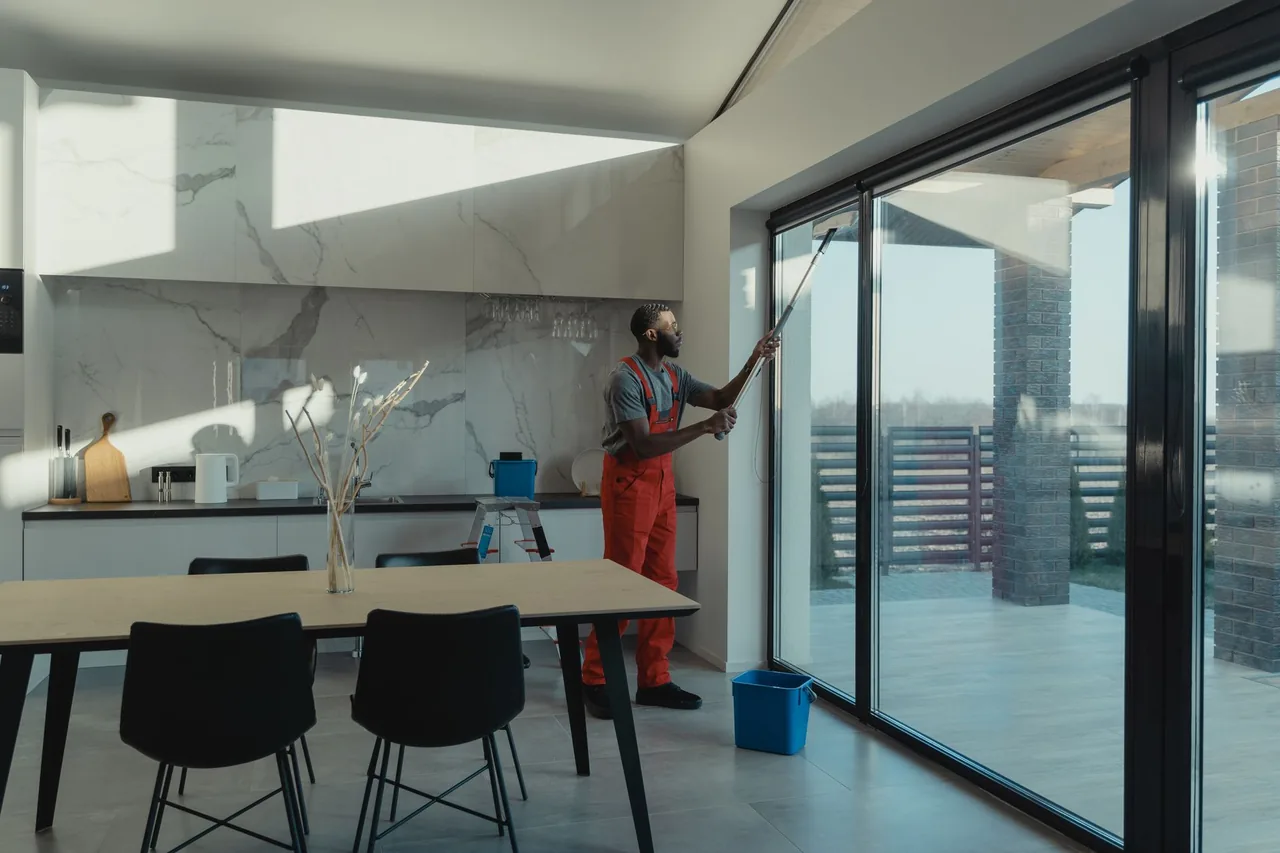
Commercial surface maintenance is the scheduled program of cleaning, recoating, burnishing, and resealing that keeps a high-traffic floor safe, sanitary, and intact across its full service life instead of grinding it down to an early replacement. Two things decide whether a commercial floor reaches twenty years or fails in five, and the install is only one of them: whether the finish is protected on a defined cycle before wear reaches the substrate, and whether the surface is kept above the DCOF slip threshold its space requires. Run scrub-and-recoat, burnish, and re-seal on their intervals, hold entry matting at the door, and verify the wet dynamic coefficient of friction stays at 0.42 or higher, and the floor keeps its safety and its warranty; let intervals slip and the floor turns slick, dull, and eventually has to be torn out. Get a free consultation and a written maintenance program from a vetted commercial provider before the finish wears past the point a recoat can save — that schedule is where a floor's second decade is decided.
Commercial Maintenance Is a Scheduled Program, Not a Reactive Cleanup
How often a floor is cleaned matters far less than whether it is maintained on a cycle. What separates a floor still bright and bonded after a decade from one stripped to bare substrate in three is the scheduled protection done before the wear shows — not the emergency scrub after it does.
Reactive Cleaning Lets Wear Reach the Substrate
A commercial floor cleaned only when it looks dirty is a floor already losing finish, because the damage is cumulative and invisible until it is expensive:
- Grit tracked in from outside acts like sandpaper underfoot, abrading the finish layer carts and traffic grind into the surface long before anyone sees dullness.
- A missed recoat interval lets traffic wear through the sacrificial finish into the floor itself, turning a cheap recoat into a costly strip-and-refinish or replacement.
- The wrong cleaning chemical can strip a coating, etch polished concrete, or leave a slick residue that drops the floor below its slip threshold without any visible warning.
None of those show up in a quick mop, which is why a commercial surface needs a program with intervals and the right chemistry — reactive cleaning is how a maintainable floor becomes a replacement.
The Maintenance Hierarchy Never Changes Across Systems
Daily, periodic, then restorative. That hierarchy holds across commercial epoxy, polished concrete, commercial vinyl, and carpet tile. The work is always tiered the same way: daily dust-mop and damp-clean with a neutral-pH cleaner to remove abrasive grit, periodic deep scrub and recoat or burnish to renew the finish, and restorative re-seal or re-polish on a longer interval to rebuild what traffic took. The system only changes which products and intervals fill each tier, not the order of the tiers.
The Commercial Maintenance Program Gate: Six Checks Behind a Floor That Lasts
Before a maintenance program is agreed, a competent provider sets every floor against the same six-check gate. Each check has a measurable target, each is a documented cause of early floor failure when skipped, and a program that fails any one is leaving life on the table. Call it the Maintenance Program Gate: meet all six and the floor reaches its full service life; miss one and you are funding an early refinish or replacement.
- 1. Slip resistance held over time
- The finished surface must stay above its slip threshold for its whole life, not just on day one. Interior floors walked on wet are held to a wet DCOF of 0.42 under ANSI A326.3, and a program protects it by removing slick residue, using the right finish, and re-broadcasting grit where a coating's texture wears smooth. A floor that drifts below the threshold is a liability no shine hides.
- 2. Correct cleaning chemistry
- Daily cleaning uses a neutral-pH cleaner (roughly pH 7) for most finished floors — the wrong product is a documented cause of failure. High-alkaline strippers degrade a urethane topcoat, acidic cleaners etch polished concrete and stone, and a residue-leaving cleaner builds film that dulls the floor and drops its slip rating. The chemistry is matched to the system, never assumed.
- 3. Entry matting and grit control
- The cheapest, highest-return step: walk-off matting at every entrance captures the tracked-in grit and water that abrade a finish faster than anything indoors. Industry practice points to a matting run long enough for several footfalls per foot — commonly 15 ft or more of matting at primary entries — because most of the soil that wears a floor walks in through the door.
- 4. Recoat before wear-through
- Finished floors carry a sacrificial top layer meant to be renewed; the program recoats or re-polishes on an interval set by traffic, before wear reaches the floor beneath. A scrub-and-recoat on a resilient or coated floor, or a re-burnish and re-densify on polished concrete, costs a fraction of the strip-and-refinish that a missed interval forces.
- 5. Correct equipment and pad/brush selection
- An autoscrubber with the right brush or pad, the correct burnisher speed, and the right pad color for the task do the work without damaging the finish. The wrong pad — too aggressive for a recoat, too fine for a deep scrub — either fails to clean or burns the finish, and burnishing a floor not rated for it hazes the surface.
- 6. Documented schedule and logs
- The program is written down — daily, periodic, and restorative tasks with intervals, products, and the slip-verification record — so the work is auditable and the warranty defensible. A maintenance log is also what a manufacturer asks for when a coating warranty claim is made; an undocumented floor is one the maker can decline to cover.
Three of these six — chemistry, matting, and the recoat interval — are the corners cut on the cheapest janitorial contract, because they take product knowledge and discipline a low bid skips, yet every one is measurable. That is why the gate is non-negotiable on a floor a business depends on.
Want a written maintenance program, not a generic mop contract?
We match you with a vetted commercial provider who sets the chemistry, intervals, and slip checks for your floor and your space — and documents them, so the warranty holds.
Commercial Surface Maintenance Specifications & Standards
The numbers that govern a maintenance program are published, testable, and specific to the system being maintained — from the controlling spec, slip resistance over time, through cleaning chemistry to the recoat and re-seal intervals every finished floor depends on.
Maintaining Slip Resistance Over the Floor's Life
Slip resistance is the spec a program exists to protect, because a coating's texture wears smooth with traffic and a residue can drop a floor below the line without any visible sign. How it is held depends on the surface, but the controlling number is the same family the floor was installed to.
The DCOF Threshold a Program Must Hold
The recognized measure for hard commercial floors is the dynamic coefficient of friction, the wet-surface resistance to a moving foot. A program keeps it above the line, where day-one compliance means nothing if it drifts.
ANSI A326.3 and the 0.42 Wet Minimum
ANSI A326.3 (which superseded the slip-resistance portion of ANSI A137.1) is the method that measures wet DCOF with a BOT-3000E tribometer. The recognized minimum for interior floors walked on wet is 0.42, and a program protects it by stripping slick film, choosing finishes that hold traction, and re-broadcasting grit where a coating wears smooth.
Where Slip Drops Fastest, by Space
Slip resistance erodes fastest where wet meets traffic. A commercial-kitchen line, a restroom, and an entry that takes tracked-in rain lose traction first as grease, residue, and polish build, while a dry sales floor holds longer. The program audits the wet zones most often, because the space's exposure — not its square footage — sets where DCOF has to be checked and restored.
Cleaning Chemistry and pH
Cleaning chemistry is the spec a program gets wrong most. Daily cleaning of most finished floors uses a neutral-pH product (around pH 7); high-alkaline cleaners and strippers are reserved for scheduled deep scrubs and matched to a coating that tolerates them, and acidic cleaners are kept off polished concrete and natural stone, which they etch. The wrong pH does not just fail to clean — it degrades the finish and the slip rating at once, which is why the chemistry is specified per system, not bought on price.
Recoat, Burnish, and Re-Seal Intervals
Intervals are the spec that decides whether wear ever reaches the floor. A finished floor's sacrificial layer is renewed on a traffic-driven cycle: a scrub-and-recoat on resilient and coated floors, a high-speed burnish to restore gloss between recoats, and a re-seal or re-densify on polished concrete. The interval is set by traffic volume and measured by appearance and slip, not by the calendar alone — a high-traffic entry recoats far more often than a back office.
Maintenance Specs and Intervals, by Commercial System
The table below collects the recognized maintenance targets a competent provider sets per system. These are representative figures — the finish manufacturer's instructions and the floor's actual traffic always govern, and a busy space tightens every interval.
| System | Daily chemistry | Periodic renewal | Restorative interval | Slip target |
|---|---|---|---|---|
| Commercial epoxy | Neutral-pH, no harsh acids | Deep scrub; recoat topcoat by traffic | Recoat / re-broadcast grit as worn | Wet DCOF ≥0.42 |
| Polished concrete | Neutral-pH; never acidic | Burnish to restore sheen | Re-densify / re-polish on a long cycle | Wet DCOF ≥0.42, grit if wet |
| Commercial vinyl (LVT/sheet) | Neutral-pH cleaner | Scrub-and-recoat finish; weld-seam check | Strip-and-refinish when finish is spent | Wet DCOF ≥0.42 |
| Carpet tile | Vacuum + spot-treat | Interim encapsulation clean | Restorative hot-water extraction | n/a — replace worn tiles |
The lesson is that a floor which still looks acceptable can be one missed interval from wear-through, and a clean-looking floor can already be below its slip threshold from residue — the reasons intervals and DCOF checks exist. Letting the sacrificial finish wear into the floor turns a routine recoat into a strip-and-refinish or a full reinstall at once. Compare what these systems share with the residential discipline under flooring and the full range of home surfaces, and weigh lifespans across systems in our material lifespan comparison.
Commercial Maintenance Programs Compared
How a floor is maintained is as consequential as how it was installed, because each system rewards a different program and punishes the wrong one. There are four mainstream commercial systems, and the right program is dictated by the floor's chemistry, traffic, and sanitation needs — never by whichever janitorial routine is already in place.
The Maintenance Program Comparison Matrix
The matrix below is the decision the provider is making — daily method, the renewal step that restores it, what slip and sanitation demand, and the cost driver, side by side.
| System | Daily routine | Renewal step | Slip / sanitation focus | Main cost driver |
|---|---|---|---|---|
| Commercial epoxy | Dust-mop + neutral damp-clean | Deep scrub then recoat topcoat | Re-grit worn texture; degrease wet zones | Recoat frequency + grit detailing |
| Polished concrete | Dust-mop + neutral auto-scrub | High-speed burnish for sheen | Grit conditioner where wet | Burnish cadence + re-densify |
| Commercial vinyl | Neutral-pH auto-scrub | Scrub-and-recoat, then strip cycle | Verify welded seams stay sealed | Recoat vs. strip-and-refinish cycle |
| Carpet tile | Vacuum + immediate spot-treat | Encapsulation / extraction clean | Swap stained or worn tiles | Cleaning cadence + tile attic stock |
Resinous Floor Care: Scrub, Recoat, Re-Grit
A resinous floor is maintained by keeping grit off it and renewing the sacrificial topcoat before traffic wears into the body coat. Daily care is a dust-mop and a neutral-pH damp clean; periodically the floor is deep-scrubbed with an autoscrubber and a fresh topcoat is applied, and in wet or greasy zones the anti-slip aggregate is re-broadcast where it has worn smooth. The failure mode is letting the topcoat wear through to the colored body coat — at that point a simple recoat is no longer enough and the system needs a full re-prep and rebuild, which is why the recoat interval is the spec that protects the investment.
Polished Concrete Care: Burnish and Re-Densify
Polished concrete is maintained without any coating to strip — daily dust-mopping and neutral-pH auto-scrubbing keep grit and residue off, and a high-speed burnish restores the sheen between deeper services. On a longer cycle the surface is re-densified and re-polished to rebuild the hardened, reflective layer traffic dulls. Acidic cleaners are kept off it entirely because they etch the densified surface, and where the floor is exposed to water a grit conditioner maintains the slip rating. Its low cost-to-maintain is real, but only when the chemistry stays neutral and the burnish cadence holds.
Resilient and Modular Care: Recoat, Strip, and Tile Swap
Commercial vinyl is maintained on a recoat-then-strip cycle: a neutral-pH daily clean, a periodic scrub-and-recoat of the floor finish, and on a longer interval a full strip-and-refinish when the finish is spent — with welded seams checked to confirm they stay sealed and sanitary. Carpet tile is maintained by frequent vacuuming, immediate spot-treatment, interim encapsulation cleaning, and restorative hot-water extraction, with the modular advantage that a stained or worn tile is swapped from attic stock instead of recleaning a whole area. Both reward a cadence; both degrade fast under the wrong chemical or a skipped cleaning.
Which Maintenance Program Does Your Commercial Floor Need?
The program is not a generic mop schedule — it is the output of a short chain of facts about your floor's system, its traffic, and its sanitation requirement. Walk the decision in order; each branch eliminates the routines the floor cannot tolerate, and what survives is the right program.
- Identify the system you are maintaining. Is it a resinous coating, polished concrete, resilient vinyl, or carpet tile? This single fact removes whole routines immediately — polished concrete eliminates any coating strip or acidic cleaner before anything else is considered.
- Set the daily chemistry to the system. Most finished floors take a neutral-pH cleaner; polished concrete and stone forbid acids; a coating tolerant of periodic alkaline scrub still takes neutral daily. Getting the daily chemical right is the step that prevents the slow, invisible damage no recoat undoes.
- Match the renewal step to the finish. A coated or resilient floor is renewed by scrub-and-recoat; polished concrete by burnish and re-densify; carpet tile by encapsulation and extraction. The renewal step, not the daily clean, is what rebuilds the wear layer traffic removes.
- Tie intervals to traffic and slip, not the calendar. A high-traffic entry or a wet kitchen line recoats and gets slip-checked far more often than a back office. Set the interval by measured wear and a wet DCOF of 0.42, and tighten it in the zones that lose traction first.
- Document the program and verify it. Whatever the surviving routine, it is written down with intervals, products, and slip records, and audited against the floor's actual condition. An undocumented program is one a manufacturer can decline to honor and a manager cannot defend.
Run honestly, this tree returns a program built for the specific floor and space — and a provider who runs the same generic mop routine across epoxy, concrete, and carpet alike is the red flag.
Not sure your floor is getting the right program?
Tell us your system, traffic, and sanitation needs, and we will match a vetted provider who sets the chemistry, renewal step, and slip checks for your floor — and writes it down.

Why Commercial Floors Wear Out Early, Turn Slick, and Lose Warranty — and How a Program Stops It
The most common reasons a commercial floor fails before its time trace back to grit, chemistry, missed intervals, and documentation, and all are preventable with a program — each paired below with its mechanism, cause, and named prevention.
Premature Wear-Through: A Grit and Recoat Failure
Wear-through is the sacrificial finish ground away into the floor itself, almost always because tracked-in grit was never controlled and the recoat interval was missed. The prevention is two-part and cheap relative to the cure: walk-off matting at every entrance to capture grit before it abrades, and a scrub-and-recoat on a traffic-driven interval that renews the finish before traffic reaches the floor beneath.
Loss of Slip Resistance: A Chemistry and Texture Failure
A floor turning slick is usually residue or worn texture, not the original install — a film-leaving cleaner built up, or a coating's anti-slip aggregate wore smooth. That is a maintenance failure, and it is dangerous because it is invisible. The prevention is a neutral-pH chemistry that leaves no film, periodic verification of a wet DCOF of 0.42 under ANSI A326.3, and re-broadcasting grit where a coating's texture has worn down.
Finish Damage From the Wrong Chemical: A pH Failure
Coatings that haze, stone and polished concrete that etch, and finishes that strip unevenly point to a pH failure — an acidic cleaner on concrete, or a high-alkaline stripper used as a daily cleaner. The prevention is specifying the chemistry per system: neutral-pH for daily care, alkaline scrubs only where the coating tolerates them, and no acids on densified or stone surfaces, ever.
Denied Warranty Claims: A Documentation Failure
The fourth failure is a warranty claim the manufacturer declines because the floor's care cannot be proven — caught at the Program Gate. Keeping a documented log of daily, periodic, and restorative tasks with products and slip records removes it. If a floor has already worn past recoating, the path is a diagnosis-first refinish, and if the substrate is compromised, a full reinstall under a fresh installation rather than another patch.
Common Commercial Maintenance Mistakes, Consequences, and Prevention
Most early floor failures are the same handful of maintenance shortcuts, each with a predictable consequence and a known prevention. Naming them is how you spot a program cutting a corner before it costs a refinish.
| Mistake | What it causes | The prevention |
|---|---|---|
| Wrong-pH or residue-leaving cleaner | Hazed coating, etched concrete, slick film, lost slip | Use a neutral-pH daily cleaner matched to the system |
| No or short entry matting | Tracked-in grit abrades the finish fast | Run 15 ft+ of walk-off matting at primary entries |
| Missed recoat interval | Finish wears through into the floor; recoat no longer saves it | Scrub-and-recoat on a traffic-driven interval, before wear-through |
| Acidic cleaner on polished concrete | Etched, dulled, permanently damaged densified surface | Neutral-pH only; never acids on concrete or stone |
| Wrong pad or burnisher speed | Burned, hazed finish or a deep scrub that fails to clean | Match pad color and machine speed to the task and finish |
| Slip never re-verified after install | Floor drifts below threshold and turns into a fall liability | Periodically test wet DCOF ≥0.42 in wet zones |
| No maintenance log kept | Manufacturer declines a warranty claim with no proof of care | Document daily, periodic, and restorative tasks and intervals |
Every row is a documented warranty-denial trigger or liability — which is why "we maintain to the manufacturer's spec, on a written schedule" is the most valuable sentence in a maintenance contract.
Matching the Maintenance Program to the Space — and the Spec That Rates It
The best program for a floor is matched to its traffic, its moisture and sanitation exposure, and the system it protects, and every space has a target that predicts how the program must run — which is why a one-size janitorial routine lands the wrong care on a demanding floor.
Maintenance Demand by Commercial Space
Each space drives its own program — the demand, not the floor's appearance, sets the cadence, so match the routine to how hard the space lives.
- Restaurant floors face grease and constant wet traffic, so the program leans on degreasing, frequent slip verification, and re-gritting the line area — the highest-touch maintenance of any space because slip and sanitation both ride on it.
- Healthcare floors demand a sanitary, disinfectable surface, so the program protects welded seams and integral cove base, uses the correct disinfectant chemistry, and never lets a cleaning step compromise the seamless finish.
- Retail floors take heavy foot traffic and must stay on-brand, so the program centers on grit control, frequent burnishing or recoating for appearance, and entrance matting against tracked-in weather.
- Office floors are lower-moisture and acoustic-sensitive, so carpet tile gets a vacuum-and-encapsulation cadence with tile swaps, and resilient areas a lighter recoat cycle than a wet space.
Matching the Cadence to the Floor
Space context overrides a default schedule. A wet kitchen line is audited and re-gritted far more often than a dry sales floor; a clinical corridor is cleaned to a disinfection protocol a back office never needs; a high-traffic entry recoats on a fraction of the interval a private office does. Set the cadence to the space and the system first, and size the cost of keeping each floor against replacing it in our cost guides.
What Actually Drives the Cost of a Commercial Maintenance Program
A maintenance program's cost is not a flat per-square-foot rate; the headline number a cheap janitorial bid leads with hides the items below, ranked by how much they move the lifetime total — and how much they protect the floor.
The Cost Drivers That Move the Total Most
- Cleaning frequency and traffic level. The biggest swing on most programs. A high-traffic, wet space needs far more frequent daily cleaning and slip checks than a low-traffic office, and frequency drives labor more than any single task.
- Renewal cadence — recoat, burnish, re-seal. How often the finish is renewed sets the program's recurring cost, and it is the spend that prevents the far larger strip-and-refinish or replacement a skipped interval forces.
- System and chemistry. A resinous floor needing periodic re-grit, polished concrete needing re-densify, and carpet tile needing extraction all carry different products, equipment, and skilled time.
- Restorative work — strip-and-refinish or re-polish. The longer-interval rebuild of the wear layer is a major periodic line item; deferring it past wear-through converts it into full replacement.
- Slip verification and re-gritting. Periodic DCOF testing and re-broadcasting aggregate in wet zones add a recurring, specialized cost that a bare janitorial contract omits — and that a fall claim makes look cheap.
- Entry matting and grit control. Matting service and replacement is a small line that returns more finish life than almost any other, by keeping the abrasive soil that wears floors out of the building.
- Equipment and pads. Autoscrubbers, burnishers, the right pads and brushes, and their consumables are real program costs — and using the wrong, cheaper pad damages the finish it was meant to maintain.
- After-hours and phased scheduling. Cleaning and renewing around an operating business — nights, weekends, area-by-area — adds labor beyond a routine run in an empty space.
Because these drivers swing so widely, the only honest number comes from an on-site program assessment. Weigh the cost of keeping a floor against replacing it in our cost guides, compare system lifespans in our lifespan data, and use our calculators to size the floor a program protects.
Get a written program with intervals — not a flat per-foot rate.
A vetted provider prices the daily, periodic, and restorative work, slip verification, and matting as separate lines — so you fund the floor's full life, free and with no obligation.
The Commercial Maintenance Program, Step by Step
A professional maintenance program runs the same disciplined cycle every time, and each step exists to protect the floor against a specific failure. The six steps below are the full arc from baseline assessment to documented verification.
Baseline Assessment and System ID
The provider identifies the floor system, reads its current finish and wear, sets a baseline wet DCOF against the 0.42 ANSI A326.3 minimum, and notes the space's traffic and sanitation demands. The program's chemistry, cadence, and intervals are set here against the Program Gate, not from a generic template.
Daily Cleaning to the Right Chemistry
Each day the floor is dust-mopped to lift abrasive grit and damp-cleaned with a pH-neutral cleaner matched to the system — never an acid on polished concrete or a stripper as a daily product. Spills and the wet, greasy zones that lose slip first are addressed immediately, before residue can build.
Entry Matting and Grit Control
Walk-off matting is maintained at every entrance — commonly 15 ft or more at primary doors — and serviced or swapped so it keeps capturing tracked-in grit and water. This is the cheapest step and the one that buys the most finish life, because most floor-wearing soil walks in through the door.
Periodic Deep Scrub and Renewal
On a traffic-driven interval the floor is deep-scrubbed with an autoscrubber and the right pad, then renewed by its system's method — recoat a resilient or coated floor's topcoat, high-speed burnish polished concrete, or encapsulation-clean carpet tile — before wear reaches the floor beneath.
Restorative Service and Slip Re-Verification
On a longer cycle the wear layer is rebuilt — strip-and-refinish resilient, re-densify and re-polish concrete, re-broadcast grit in worn wet zones, or hot-water-extract carpet — and the wet DCOF is re-tested to confirm the floor still meets 0.42 in the areas that lose traction first.
Documentation and Program Review
Every task is logged with date, product, and slip record, and the program is reviewed against the floor's actual condition to tighten or relax intervals. The log keeps the manufacturer's warranty defensible and gives the facility an auditable record of the floor's care.
Skip or stretch any one of these six steps and the failure it was meant to prevent — premature wear, a slick floor, finish damage, or a denied warranty claim — shows up later, which is why a vetted provider treats the cycle as fixed, not optional.
Talk through your project — free.
A free consultation and a written, itemized quote from a vetted installer. No pressure, no obligation.
Commercial Surface Maintenance Glossary
The terms below recur in every maintenance contract, spec sheet, and warranty — each defined as its working meaning on an actual commercial floor, so you can read a program and judge whether it is complete.
- DCOF
- Dynamic coefficient of friction — the wet-surface slip resistance measured under ANSI A326.3 with a BOT-3000E tribometer. A program keeps it at or above 0.42 for floors walked on wet, higher in greasy areas.
- Neutral-pH cleaner
- A cleaning product around pH 7 that lifts soil without degrading a finish, etching concrete or stone, or leaving a slip-killing film — the correct daily chemistry for most finished commercial floors.
- Scrub-and-recoat
- A periodic service that deep-scrubs a coated or resilient floor and applies a fresh topcoat, renewing the sacrificial finish before traffic wears into the floor itself — far cheaper than a strip-and-refinish.
- Strip-and-refinish
- The restorative removal of all old floor finish down to the substrate, followed by new finish coats — the longer-interval rebuild needed once a recoat can no longer save the wear layer.
- Burnishing
- High-speed buffing that restores gloss and hardens the surface between recoats on a floor finish, and the way polished concrete's sheen is renewed without any coating.
- Re-densify
- Reapplying a lithium or sodium-silicate hardener to polished concrete to rebuild the hardened, dust-proof, reflective layer that traffic gradually dulls.
- Encapsulation cleaning
- An interim carpet-tile method that crystallizes soil into brittle residue a vacuum removes, keeping modular carpet clean between restorative hot-water extractions.
- Walk-off matting
- Entrance matting long enough to capture tracked-in grit and water over several footfalls — commonly 15 ft+ at primary doors — the highest-return step in protecting a finish.
- Autoscrubber
- A walk-behind or ride-on machine that scrubs and recovers cleaning solution in one pass, the workhorse of periodic deep cleaning when fitted with the pad or brush matched to the floor.
- Re-broadcast aggregate
- Adding fresh anti-slip media into a resinous floor's renewed coat where traffic has worn the original texture smooth, restoring the wet DCOF in slip-critical zones.
- ANSI A326.3
- The recognized test method for measuring wet DCOF on hard surfaces, which superseded the slip portion of ANSI A137.1 and sets the 0.42 wet floor threshold a program protects.
- Sacrificial finish
- The renewable top layer — a floor finish or topcoat — designed to take wear and be recoated, so traffic never reaches the floor system beneath it.
Standards, Warranty Conditions, and When Maintenance Is a Compliance Issue
A commercial system's warranty is a contract with conditions, and a surprising share of denials are not about the install — they are about whether the floor was maintained to spec and whether anyone documented it.
Warranty Conditions That Hinge on Maintenance
The conditions are specific and testable: only approved cleaners and finishes used; the recommended cleaning frequency met; recoat and re-seal intervals honored; the slip finish maintained. A manager who lets a contractor use an acidic cleaner on polished concrete, skips the recoat interval, or cannot produce a maintenance log has weakened or voided the coverage. Ask in writing that the program follow the manufacturer's published maintenance instructions and that the work be logged — that record is what a warranty claim is judged against, and one more reason the cheapest janitorial contract is rarely the cheapest floor.
The Standards Bodies That Set the Bar
Standards bodies govern the rest. ANSI A326.3 sets the DCOF slip method and the 0.42 wet threshold a program must hold; finish and coating manufacturers publish the cleaning chemistry, frequency, and recoat intervals their warranties depend on; and the original ASTM moisture and bond standards from the install still bound what a restorative service can rebuild. A floor maintained to these keeps its warranty, its slip rating, and its service life.
When Maintenance Becomes a Compliance Requirement
Maintenance crosses into compliance when the space is regulated. A health-department food-service floor must stay coved, cleanable, and slip-rated to pass inspection, and a healthcare floor must hold a sanitary, disinfectable surface — so the cleaning protocol and slip verification are not just upkeep, they are how the space stays in compliance. A reputable provider documents the program to the standard the inspection expects rather than cleaning to appearance alone, and flags when a floor's condition has drifted out of compliance and needs restorative work or a fresh installation.
A Real Commercial Maintenance Decision
One representative scenario shows why a program decides everything: the chemistry and the intervals, not the original install, drove every call below.
How to Vet a Commercial Maintenance Provider
Most early floor failures are maintenance failures, so the provider matters more than the price per square foot. These questions separate a crew that keeps floors alive from one that simply mops fast.
- They identify your system and set the chemistry to it
- A provider who quotes a routine without naming your floor system and its required cleaner is guessing. Ask what pH they use daily and why — a real answer names neutral-pH for most finishes and forbids acids on polished concrete and stone.
- They verify slip resistance, not just appearance
- Ask how they confirm the floor stays safe. A credible answer names ANSI A326.3, the 0.42 wet minimum, and re-gritting worn wet zones — not "we keep it shiny," which says nothing about traction.
- They set recoat and renewal intervals by traffic
- The right provider ties scrub-and-recoat, burnish, and re-seal to measured wear and slip, tightening intervals in high-traffic and wet areas. A flat, calendar-only schedule that ignores how hard each zone lives is a red flag.
- They maintain to the manufacturer's instructions, in writing
- Approved cleaners and finishes, cleaning frequency, and recoat intervals protect your warranty — a professional commits to the maker's published maintenance spec in the contract, not to whatever products are cheapest on the truck.
- They run entrance matting and grit control
- Ask how they keep tracked-in grit off the floor. A serious program services walk-off matting at every entrance, because the cheapest step returns the most finish life — and skipping it is where wear-through starts.
- They document the program and stand behind the results
- Ask for a written program with intervals and a maintenance log, and what they do if a floor drifts below slip or the finish fails early. A provider willing to keep records and re-service is accountable for the floor's life, not just the visit.
Why Route Your Commercial Surface Maintenance Through Pro Work Home Surface
Pro Work Home Surface is not a contractor and does not maintain your floor — we are a national authority on home and commercial surfaces that matches property owners and facility managers with vetted local providers and holds them to a published bar.
- A free consultation and an itemized written program
- Every connection starts with a no-obligation assessment and a written program that lines out daily, periodic, and restorative work, slip verification, and matting separately — so you fund the floor's full life, not a flat per-foot rate.
- A real vetting standard, applied before we connect you
- Providers are screened on what decides a commercial floor's life: whether they set chemistry to the system, verify slip, tie intervals to traffic, and document the program rather than cleaning to appearance alone.
- Protect the finish and the slip rating, on a schedule
- The floor is kept above its published slip threshold and recoated before wear-through, against the manufacturer's maintenance spec — daily chemistry matched to the system, wet DCOF verified against the ANSI A326.3 0.42 minimum.
- National coverage, local crews
- We match you with maintenance providers in your area nationwide, so the standard is consistent even though the crew is local — whether you run one location or a multi-site portfolio.
Commercial surfaces are one of eight categories we cover across home surfaces. If your floor is past the point a program can save and needs a rebuild, our commercial installation service starts the cycle fresh, and the same standards apply across epoxy, polished concrete, commercial vinyl, and carpet tile — tuned for retail, office, restaurant, and healthcare spaces. Compare the cost of keeping versus replacing in our cost guides, dig into the how-and-why in our learning center, size the floor with our the cost estimator, and start from the commercial surfaces hub or the full range of home surfaces.
Brands & Material Authority
Quality and construction drive long-term performance more than the label. These are widely respected names in this category:
- Shaw Contract
- Mannington Commercial
- Interface
- Armstrong Flooring
- Sherwin-Williams