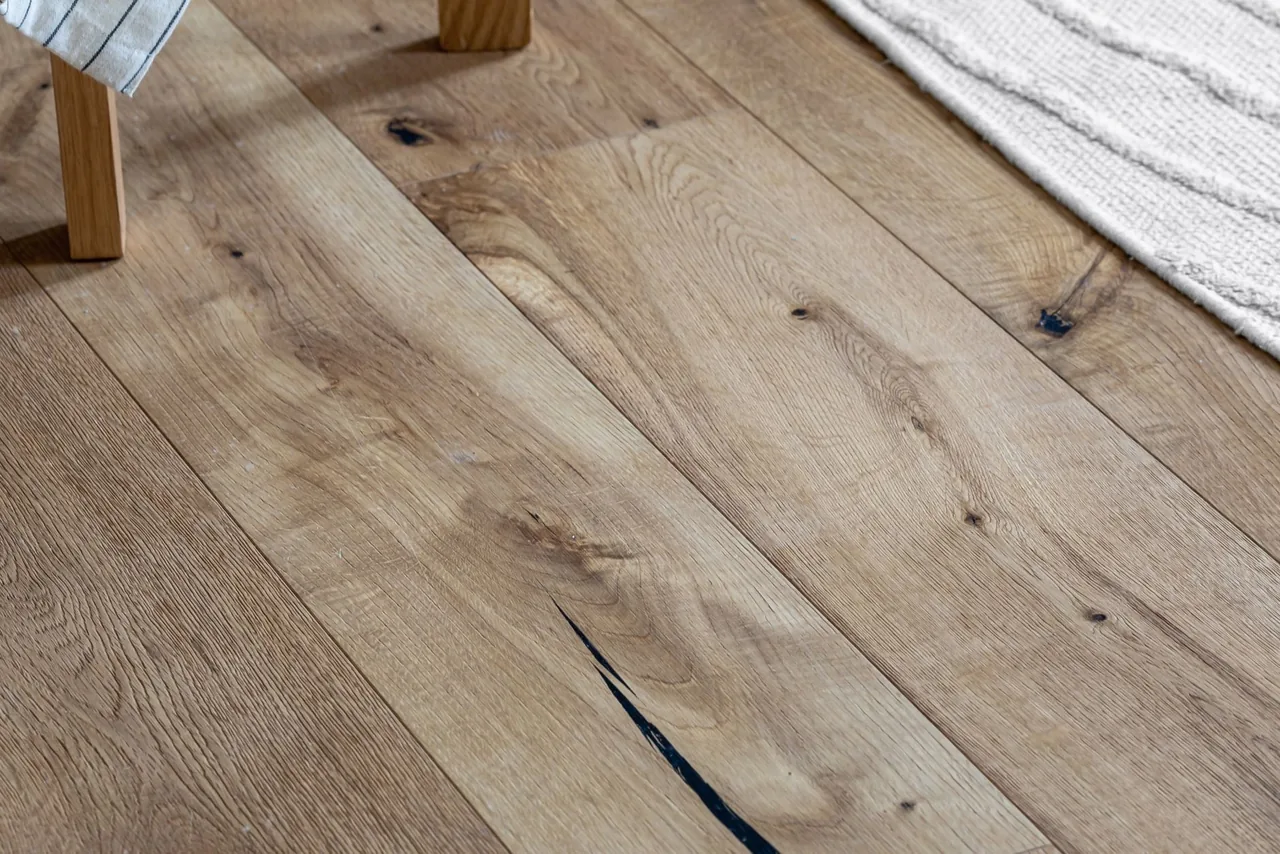
Commercial vinyl flooring is a family of resilient synthetic floors — luxury vinyl tile and plank, homogeneous and heterogeneous sheet, and traditional vinyl composition tile — engineered for heavy traffic and fast turnaround. Two specs decide how long it lasts and almost nothing else does: the wear layer, the clear top film measured in mil that takes all the abrasion before the pattern does, and the flatness of the substrate beneath it, because resilient vinyl telegraphs everything under it. Commercial wear layers run 20 to 40 mil, several times a residential floor; below that a busy building grinds the pattern off in a few years, and over a ridged slab even the right vinyl shows every defect. Get a free consultation and a written, itemized scope from a vetted commercial installer before any vinyl is ordered — that document, with the wear-layer mil and the substrate prep named in it, is where a lasting floor is decided.
Commercial Vinyl Is a Spec-and-Substrate Job First, a Look Second
The wood-look or stone-look pattern everyone shops for matters least to how long the floor lasts. What separates a vinyl floor still crisp in fifteen years from one with gray traffic paths in three is the wear-layer spec and the substrate prep decided before the goods arrive.
A Manufactured Resilient Product, Not a Coating
Commercial vinyl is the resilient category: a floor with give underfoot that returns to shape, made of PVC layers calibrated for the abuse a public building delivers. Unlike a coating poured on site, it arrives as a manufactured product — tiles, planks, or rolls — with the wear layer, the design, and the backing engineered into the goods before they reach the floor. That manufactured nature is why it installs fast and cures nothing, but it also means a credible installer reads two things the showroom never shows:
- The wear-layer mil, because a residential-weight layer in a commercial corridor grays out in a few years.
- The substrate flatness, because thin resilient vinyl telegraphs every crack, ridge, and crumb beneath it.
- The seam method, because in a sanitary space a seam that is not heat-welded becomes the crevice the floor was meant to eliminate.
None of those are visible in a sample chip — and all three decide whether the floor performs.
Where Resilient Vinyl Genuinely Wins
Vinyl wins where a floor has to take constant foot traffic, stay comfortable to stand on, and go back into service on a tight schedule. Corridors, classrooms, and back-of-house areas run on heterogeneous sheet or LVT because they take traffic without the cure-time downtime a resin floor demands. Where the requirement is sanitary rather than just durable — clinics, exam rooms, pharmacies, labs — the answer is sheet vinyl with heat-welded seams, where a welding rod is melted into the seam to fuse adjacent sheets into one continuous, impervious surface no liquid can penetrate, often coved up the wall to eliminate the floor-to-wall joint entirely. That seamless, cleanable assembly is exactly why sheet vinyl dominates a healthcare floor. And LVT and tile install unit-by-unit, so a gouged or stained piece is lifted and replaced without redoing the field — a real advantage in any space that cannot afford a shutdown. Across a commercial surface program, vinyl is the resilient default: durable enough for traffic, soft enough to stand on, and the fastest mainstream surface to install and repair.
The Commercial Vinyl Fit Test: Six Checks Before You Spec
Before a pattern is chosen on looks, a competent installer runs the project through the same six-check fit test. Each check has a published metric or a documented failure it prevents, and a project that fails any one is being set up to gray out, telegraph, or lift. Call it the Commercial Vinyl Fit Test: pass all six and the floor performs to its spec; skip one and you are buying an early failure.
- 1. Wear layer for the traffic
- The single most important spec — the clear top film, in mil, that abrades before the pattern. Light commercial may use 12 mil; a busy corridor wants 20 mil and up; the heaviest traffic specifies 28 to 40 mil. Under-spec it and the pattern grays into traffic paths no cleaning brings back. It is a separate number from overall thickness, so compare it directly.
- 2. Substrate flatness
- Resilient vinyl is thin and conforms to whatever is under it, so every crack, ridge, fastener bump, and trowel mark eventually reads through as a line or shadow — telegraphing. A perfectly flat, smooth, prepped substrate is non-negotiable, because vinyl hides nothing.
- 3. Slab moisture
- Concrete is tested by ASTM F2170 in-situ relative humidity or ASTM F1869 calcium chloride against the flooring and adhesive limits, because excess slab moisture emulsifies many flooring adhesives and breaks the bond from underneath.
- 4. Adhesive matched to product and substrate
- The correct adhesive is troweled to the specified notch, or a loose-lay or pressure-sensitive system set per its own method. The wrong adhesive — or the right one over a wet or dusty slab — lets edges and seams lift, tiles shift, and sheet bubble.
- 5. Seam method for the sanitation need
- In a clinic, lab, or any space that must be impervious, heat-welded homogeneous sheet is the spec; a butted or chemically sealed seam becomes the exact crevice the floor was meant to eliminate, harboring moisture and bacteria. The seam detail is part of the spec, not installer discretion.
- 6. Slip resistance
- A level interior commercial floor is held to DCOF ≥ 0.42 under ANSI A137.1, with wet areas and entries often specifying higher. Vinyl meets it through its surface texture and finish, so the rating is confirmed for the actual environment.
Three of these six — the wear layer, the substrate prep, and the weld — are the corners cut on cheap quotes, because a residential-weight wear layer, a sweep-and-go slab, and a butted seam all cost less, yet every one is verifiable. That is why the fit test is non-negotiable.
Want the wear-layer mil and substrate prep named before you buy?
We match you with a vetted commercial installer who specs the wear layer to your traffic, tests and flattens the slab, and welds the seams the sanitation calls for — all named in a written scope before any vinyl is ordered.
Commercial Vinyl Specifications & Standards
Commercial vinyl is specified by layer and by rating, and the numbers below predict the floor's life far better than the look does. They are also exactly where a residential-grade substitution hides in a commercial bid.
The Layer Specs That Decide Lifespan
The layer specs are the ones that determine how long the floor holds its look — the wear layer above all — and they are published on every commercial product's data sheet.
Wear Layer and Total Gauge
Two thickness numbers describe a vinyl floor, and confusing them is how a thin floor gets sold as a heavy-duty one.
Wear Layer, in Mil
The wear layer is the clear top film that abrades before the printed pattern, and it is the single most important spec. Light commercial may use 12 mil; a busy commercial corridor wants 20 mil and up; the heaviest traffic specifies 28 to 40 mil. It is measured separately from total thickness, so it is compared directly product to product.
Why a Thick Plank With a Thin Wear Layer Still Fails
Total gauge — the overall thickness of the tile, plank, or sheet — affects dent resistance and how well the floor spans minor substrate texture, but it is not the wear layer. A thick, substantial-feeling plank with a thin clear film on top still grays out fast, because it is the wear layer, not the bulk beneath it, that takes the abrasion. Reading the gauge and assuming durability is exactly the mistake a residential-grade substitution counts on. Both numbers belong in the spec, read independently.
Construction Type
Construction divides into two families. Homogeneous sheet carries its color and pattern through the full thickness, so wear does not change its look — the choice for the most demanding healthcare floors. Heterogeneous sheet and LVT layer a printed design under the wear layer for richer visuals at a different durability profile. The construction sets both look and how the floor ages.
Slip and Seam Specs
Two more specs govern performance. Slip resistance by DCOF is held to DCOF ≥ 0.42 under ANSI A137.1 for a level interior floor, higher in wet zones, met through the surface texture. And the seam method — heat-welded for a truly impervious floor, versus butted or chemically welded for less demanding spaces — is the spec that defines a sanitary install. In a clinic or lab, the weld is the spec.
Vinyl Specs at a Glance
The table below collects the recognized specs a competent installer verifies. These are representative figures — the product's published data sheet always governs, and where it is stricter, the stricter number wins.
| Spec | What it controls | Recognized basis | Typical requirement |
|---|---|---|---|
| Wear layer (mil) | How soon the pattern grays out | Product data sheet | 20 mil+ busy; 28–40 mil heaviest |
| Total gauge | Dent resistance, spanning texture | Product data sheet | Read separately from wear layer |
| Construction type | How the floor ages and cleans | Homogeneous vs. heterogeneous | Homogeneous for the most demanding sanitary floors |
| Slab moisture | Whether the adhesive holds | ASTM F2170 / F1869 | Below the flooring & adhesive limit |
| Seam method | Whether the floor is impervious | Manufacturer spec | Heat-welded in sanitary spaces |
| Slip resistance | Wet-floor safety | ANSI A137.1 (DCOF) | DCOF ≥ 0.42, higher in wet zones |
The lesson is that the look you choose tells you nothing about how long the floor lasts — the wear-layer mil and the substrate under it do. A residential-weight wear layer over a ridged slab is the fastest way to gray-out and telegraphing, no matter how convincing the wood-look pattern. Compare durability across surfaces in our material lifespan data first.
Vinyl vs. Epoxy, Polished Concrete, and Carpet Tile
How each commercial surface handles traffic, comfort, moisture, and replaceability is the decision — never which is cheapest. Vinyl is one of four mainstream options, and comparing it against its siblings shows where it is the right call and where another surface wins.
The Commercial Surface Comparison Matrix
The matrix below lines up the four surfaces on the factors that decide a commercial floor — comfort, moisture tolerance, install downtime, repairability, and best fit.
| Surface | Comfort underfoot | Wet-cleanable | Install downtime | Repair / replace | Wears out? | Best for |
|---|---|---|---|---|---|---|
| Commercial vinyl | Soft, quiet, resilient | Yes | None — reopens fast | Swap a tile / re-sheet | Wear layer eventually | Corridors, healthcare, traffic |
| Epoxy | Hard | Yes — chemical-proof | Days — cures | Strip-and-recoat | Topcoat wears | Wet, chemical, industrial |
| Polished concrete | Hard, cold, loud | Yes | Low | Re-burnish | No — it's the slab | Retail, warehouse |
| Carpet tile | Soft, warm, quiet | No | None — zone by zone | Swap a tile | Pile mats / wears | Offices, acoustics |
Versus Epoxy and Polished Concrete
Against epoxy, the trade is resilience and speed versus hardness and chemical resistance: epoxy is harder, more chemical-proof, and seamless across the field, while vinyl is softer to stand on, installs with no cure time so the room reopens fast, and lets a damaged tile be swapped. A processing plant with harsh chemicals wants epoxy; a clinic corridor that has to be open tomorrow morning, or a space where standing comfort matters, often wants vinyl. Against polished concrete, the trade is comfort and warmth versus permanence and zero maintenance: polished concrete is the slab itself, with nothing to wear out, but it is hard, cold, and loud, while vinyl is resilient, quieter, and softer, at the cost of a wear layer that eventually has to be replaced.
Versus Carpet Tile, and Mixed-Surface Buildings
Against carpet tile the line is moisture and cleanability versus acoustics and comfort: both are modular and replaceable, but vinyl wins anywhere that must be wet-cleaned or sanitized, while carpet tile wins in a dry office for sound absorption and warmth. The two pair naturally — resilient vinyl in wet and high-traffic zones, carpet tile in workspaces. In a busy retail floor, vinyl competes directly with both for the main sales-floor surface. The point is to match the surface to the room, not to crown one winner — and for the full set of trade-offs, start at the commercial surfaces hub.
Is Commercial Vinyl Right for Your Floor?
Vinyl is the right surface for some rooms and the wrong tool for others, and which is the output of a short chain of facts about the traffic, the sanitation need, the substrate, and the upkeep you can sustain. Walk the decision in order; each branch eliminates an option the conditions do not support.
- Name the traffic. Light commercial can live on a 12 mil wear layer; a busy corridor needs 20 mil or more, and the heaviest lanes 28 to 40 mil. The traffic sets the wear-layer floor before anything else.
- Name the sanitation need. A space that must be impervious — clinic, lab, exam room — points to heat-welded homogeneous sheet, often coved up the wall. A dry corridor or office does not need the weld, which widens the field to LVT and other formats.
- Judge the substrate. Resilient vinyl telegraphs every ridge and releases over a wet slab, so a cracked, ridged, or moisture-wicking slab means real prep — and if that prep is impractical, a more forgiving surface may fit better.
- Match the type to the maintenance you can sustain. VCT is cheap to buy but commits you to an ongoing strip-and-wax program; LVT and modern sheet cost more upfront but need no waxing. Pick the product whose upkeep your facility can actually keep up with.
- Weigh replaceability where downtime is costly. In a space that cannot close for repairs, LVT and tile let a damaged unit be swapped without redoing the field — a real reason to choose modular vinyl over a sheet or poured floor.
Run honestly, this tree returns a clear yes-or-no on vinyl and the exact type and wear layer — and an installer who quotes the same residential-grade plank for every room, regardless of traffic and sanitation, is the red flag.
Not sure vinyl suits your traffic and substrate?
Tell us about your space and we'll match a vetted commercial installer who specs the wear layer and type, tests the slab, and explains where epoxy or carpet tile would fit better — in writing.
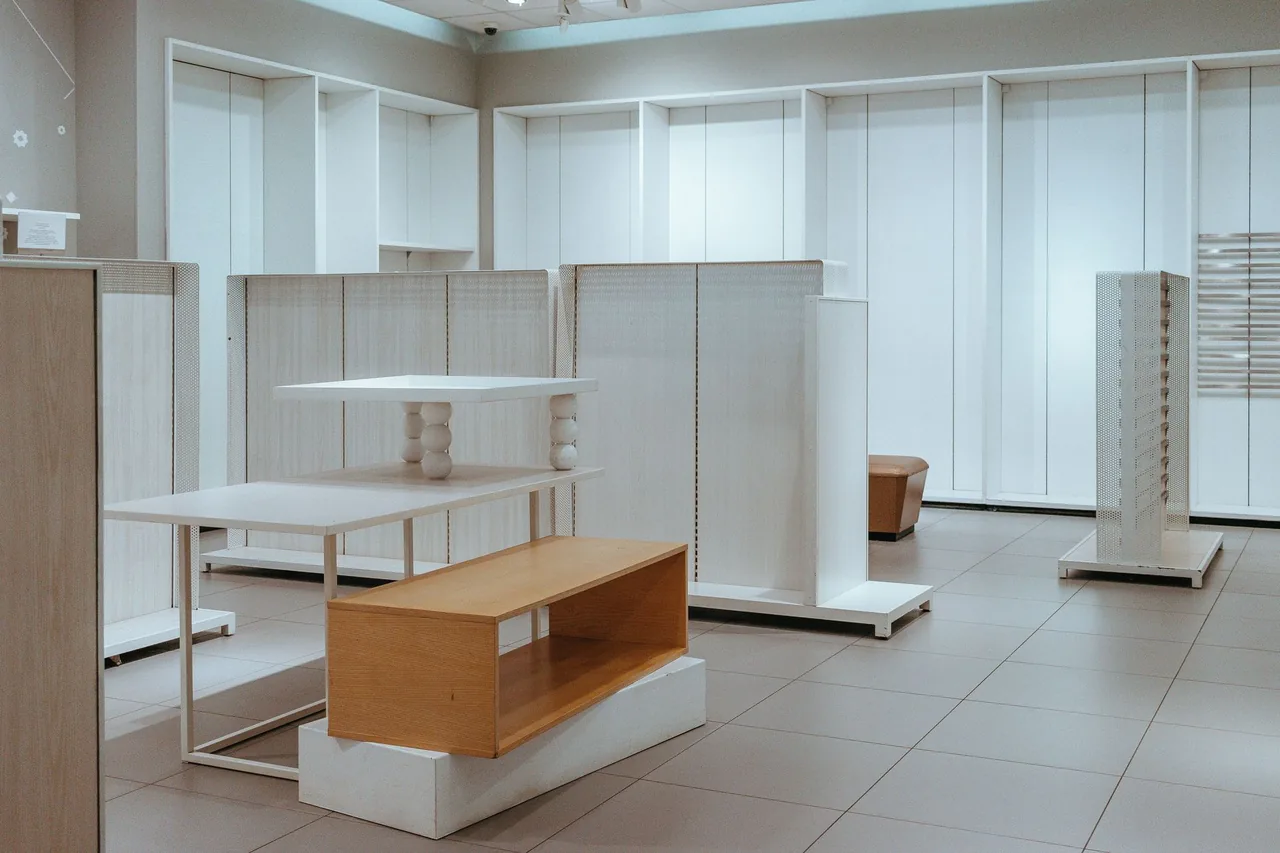
Why Vinyl Grays Out, Telegraphs, and Lifts — and How the Spec Stops It
Vinyl does not fail the way a brittle floor fails; it fails by wearing out, showing the slab beneath it, or lifting — each paired below with its mechanism and the spec that prevents it.
Wear-Through: The Most Misunderstood Failure
Wear-through is the most common and the most misunderstood. The wear layer is sacrificial — meant to abrade slowly so the pattern survives — but a residential-weight layer in a commercial corridor reaches the pattern in a few years, leaving dull, gray traffic paths no cleaning brings back. That is not a defect; it is the wrong wear layer for the duty. The prevention is matching the wear-layer mil to the real traffic, with 20 mil or more for busy floors.
Telegraphing: A Substrate Failure
Telegraphing is the second: resilient vinyl is thin and conforms to whatever is under it, so every crack, ridge, fastener bump, and trowel mark in the slab eventually reads through as a line or shadow. The prevention is a perfectly flat, smooth, properly prepped substrate — high spots ground, low spots and cracks filled, the surface cleaned to sound material — because vinyl hides nothing.
Adhesive Release: A Moisture and Bond Failure
Adhesive release — edges and seams that lift, tiles that shift, sheet that bubbles — traces to moisture, dust, or the wrong adhesive, with excess slab moisture in particular emulsifying many flooring adhesives and breaking the bond from underneath. The prevention is testing the slab by ASTM F2170 or F1869, cleaning it to sound material, and using the correct adhesive to the specified notch.
Failed Seam and Scuffing: Two More Failures
In the sheet category there is a sanitation failure unique to it: a seam that should have been heat-welded but was only butted or chemically sealed becomes the exact crevice the floor was specified to eliminate, harboring moisture and bacteria. And like all resilient floors, vinyl can scuff and gouge from dragged equipment. The preventions are treating the seam method as part of the spec, and protective matting and chair-leg care to reduce scuffing — with a damaged tile simply swapped where the floor is modular. If a floor has already grayed out or lifted, the path is matched replacement through a commercial installation rather than a patch over the same thin spec or wet slab.
Common Commercial Vinyl Mistakes, Consequences, and Prevention
Most vinyl failures are the same handful of shortcuts, each with a predictable consequence and a known prevention. Naming them is how you spot a corner being cut before it is rolled down.
| Mistake | What it causes | The prevention |
|---|---|---|
| Residential wear layer in a commercial floor | Gray traffic paths within a few years | Spec 20 mil+ to the real traffic; read it separately from gauge |
| Sweep-and-go over a ridged slab | Cracks and ridges telegraph through the surface | Grind, fill, and flatten the substrate to sound material |
| No moisture test on a slab on grade | Excess moisture emulsifies the adhesive; the floor lifts | Test by ASTM F2170 / F1869 against the adhesive limit |
| Wrong adhesive or trowel notch | Edges lift, tiles shift, sheet bubbles | Use the specified adhesive and notch for the product |
| Butted seam in a sanitary space | The crevice harbors moisture and bacteria | Heat-weld homogeneous sheet into one impervious surface |
| Wrong cleaning chemistry | Damaged finish, faded color, or harmed seams | Match the cleaner to the product (no harsh stripper on no-wax LVT) |
| No entrance matting | Tracked grit abrades the wear layer prematurely | Install entrance matting to stop grit at the door |
Every row is a documented cause of an early, avoidable failure — which is why "the wear-layer mil, the substrate prep, and the seam method are named in the scope, in writing" is the most valuable sentence in a commercial vinyl quote.
Types and Grades — VCT, LVT, Sheet, and Homogeneous
"Commercial vinyl" spans several distinct products, each with its own duty and install logic. Matching the type to the room is how the floor earns its keep:
- Vinyl composition tile (VCT) — the traditional, economical 12" tile found in schools and back-of-house. Durable and cheap but porous, so it depends on a regular strip-and-wax finish program to stay sealed and presentable — a real ongoing maintenance commitment.
- Luxury vinyl tile and plank (LVT/LVP) — printed-design tiles and planks with a defined wear layer and a factory finish that needs no waxing. The modern default for retail, hospitality, and offices wanting a wood or stone look with commercial durability and tile-by-tile replaceability.
- Heterogeneous sheet — rolled goods with a printed design under a wear layer, installed in wide sheets with fewer seams; common in corridors and education for durable, low-seam coverage.
- Homogeneous sheet — single-composition rolled vinyl with color through the full thickness, heat-welded into a seamless, impervious surface. The specification for the most demanding sanitary environments — operating rooms, labs, clean spaces.
The choice cascades from the room's demands: a school back hallway may run VCT on a wax program, a retail sales floor LVT for looks and replaceability, a hospital corridor homogeneous welded sheet for sanitation. There is no single commercial vinyl — there is the right type for the duty. For how product choice and substrate prep move the budget, weigh factors in our vinyl flooring cost guide, compare lifecycle in our material lifespan data, and see product lines from the makers in our brands directory.
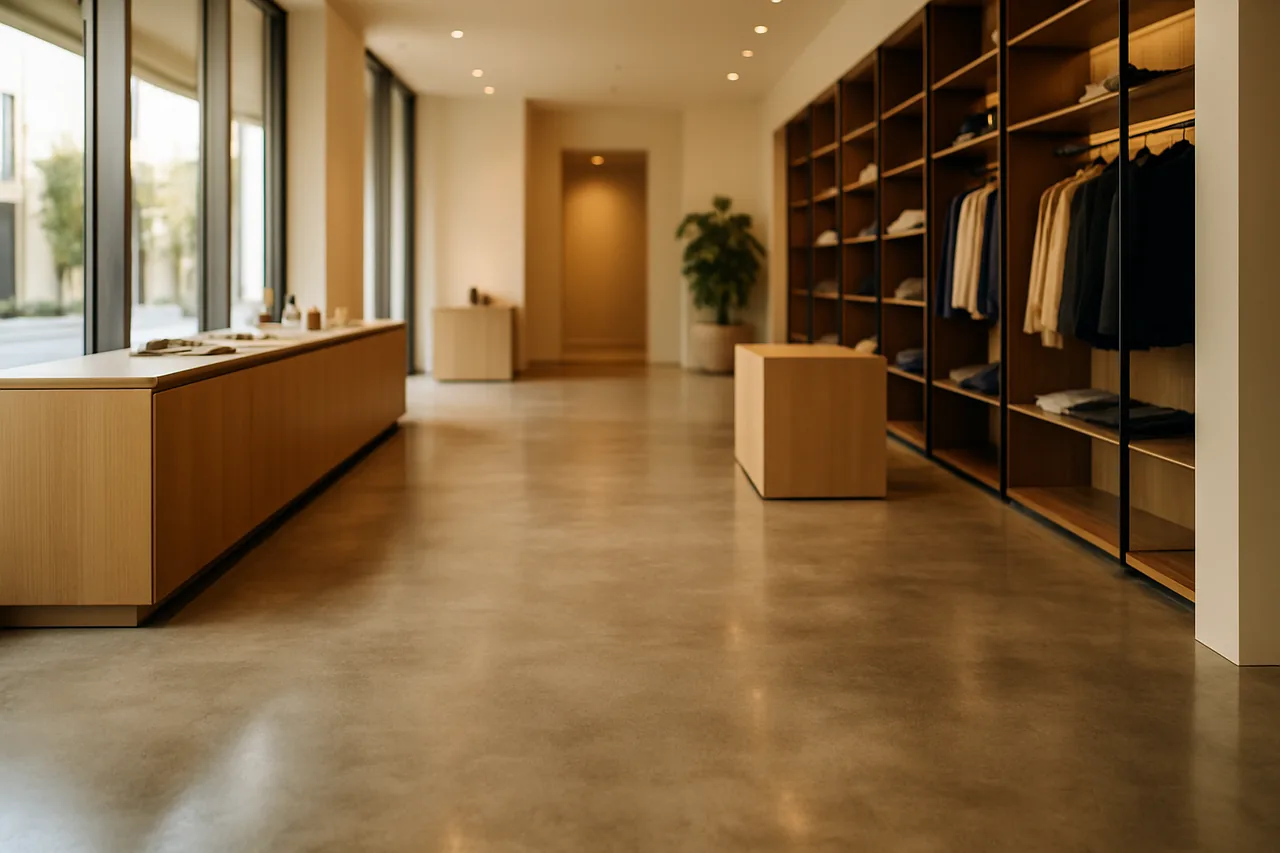
What Actually Drives the Cost of a Commercial Vinyl Floor
A vinyl quote is not a flat per-square-foot rate; the headline number a low bid leads with hides the items below, ranked by how much they move the total.
- Product type and wear layer. The goods set the baseline — VCT, LVT, heterogeneous sheet, or homogeneous welded sheet span a wide range, and within a type the wear-layer mil moves the price (and the lifespan) directly.
- Substrate prep. The biggest swing on most jobs. Grinding high spots, filling cracks and low spots, and bringing a slab dead flat is real labor a sound, flat substrate avoids — and exactly where a low bid cuts.
- Moisture remediation. A slab that reads high needs remediation before the adhesive will hold — a real line item the lowest bid tends to omit, and cheap insurance against a lifting floor.
- Seam welding and detailing. Heat-welding sheet seams and coving the floor up the wall in a sanitary space is skilled work priced beyond a butt-seamed install.
- Old-floor removal and disposal. Tearing out old flooring and adhesive residue and hauling it away is labor and a fee — and removal often exposes substrate problems that change scope, which is why it belongs in the written quote up front.
- Adhesive and installation method. A full-spread adhesive, a pressure-sensitive system, or a loose-lay method differ in material and labor, matched to the product and the room.
- Phasing and after-hours work. Vinyl reopens fast, but in an operating building the work may still need to be staged after-hours or zone-by-zone, which is a real coordination cost.
- Transitions and trim. Thresholds, reducers, base, and tie-ins to adjoining floors add up across a whole building.
Because these drivers swing so widely, the only honest number comes from an on-site assessment. Weigh resilient-flooring cost factors in our vinyl flooring cost guide and compare durability in our material lifespan data so you can read a quote critically.
Get an itemized scope, not a headline rate.
A vetted commercial installer prices the substrate prep, the goods, the welding, and removal as separate lines — so you see the whole job, free and with no obligation.
How Commercial Vinyl Is Installed, Step by Step
Installing vinyl is fast, but only because the substrate work was done right first; the speed is earned, not free. The six steps below are the full arc from moisture test to welded seams.
Moisture Test the Slab
Concrete is tested by ASTM F2170 in-situ RH or ASTM F1869 calcium chloride against the flooring and adhesive limits, because excess moisture emulsifies the bond from underneath. A failing reading stops the install until it is remediated.
Flatten and Clean the Substrate
High spots are ground, low spots and cracks filled with a cementitious patch or self-leveling underlayment, fasteners set, and the surface cleaned to bare, sound material — because any ridge or crumb will eventually telegraph through the thin resilient floor.
Lay Out the Field
The installer plans tile, plank, or sheet layout, starting lines, and seam placement so the room reads square and seams fall where they show and stress least. The layout is set before any adhesive goes down.
Set in the Specified Adhesive
The correct adhesive is troweled to the specified notch — or a loose-lay or pressure-sensitive system set per its own method — and the vinyl placed into it. The adhesive is matched to the product and the substrate.
Roll to Seat the Floor
The floor is rolled to seat it fully into the adhesive with no trapped air, so the bond is continuous and the surface lies flat. This is what turns a placed floor into a bonded one.
Route and Heat-Weld the Seams
In a sanitary install, the defining final step: seams are routed and heat-welded with a matching rod, then trimmed flush, fusing the sheets into one impervious surface, often coved up the wall. A correct commercial installation reopens fast, but the substrate prep and the weld are where a rushed job shows up later.
Skip or rush any one of these six steps and the failure it was meant to prevent shows up later — a telegraphing surface, a lifting edge, or a non-impervious seam — which is why a vetted installer treats the prep and the weld as fixed, not optional.
Talk through your project — free.
A free consultation and a written, itemized quote from a vetted installer. No pressure, no obligation.
Commercial Vinyl Glossary
The terms below recur in every vinyl quote, spec sheet, and warranty — each defined as its working meaning on an actual job site, so you can read a scope and judge whether it is complete.
- Wear layer
- The clear top film, measured in mil, that abrades before the printed pattern. The single most important spec — a residential-weight wear layer in a commercial corridor grays out in a few years.
- Mil
- The unit the wear layer is measured in (a thousandth of an inch). Commercial floors run 20 to 40 mil; the number, read separately from total thickness, predicts how long the pattern survives.
- Gauge
- The overall thickness of the tile, plank, or sheet. Affects dent resistance and spanning minor texture, but is not the wear layer — a thick plank with a thin wear layer still grays out fast.
- Homogeneous sheet
- Single-composition rolled vinyl with color through the full thickness, so wear does not change its look. Heat-welded into a seamless surface — the spec for the most demanding sanitary floors.
- Heterogeneous sheet
- Rolled vinyl that layers a printed design under a wear layer for richer visuals, installed in wide sheets with fewer seams — common in corridors and education.
- VCT
- Vinyl composition tile — the traditional economical 12" tile that is porous and depends on a regular strip-and-wax program to stay sealed. Cheap to buy, with a real ongoing maintenance cost.
- LVT / LVP
- Luxury vinyl tile and plank — printed-design units with a defined wear layer and a factory finish that needs no waxing, replaceable tile by tile. The modern default for retail, hospitality, and offices.
- Heat-welded seam
- A seam fused by melting a welding rod into it, joining adjacent sheets into one continuous, impervious surface. The detail that makes a sheet floor truly sanitary; a butted seam is not the same thing.
- Telegraphing
- The reading-through of cracks, ridges, and crumbs in the substrate as lines or shadows in the finished floor, because resilient vinyl is thin and conforms to what is under it. Prevented only by a flat, clean substrate.
- DCOF
- Dynamic Coefficient of Friction — the wet-slip safety measure held to ≥ 0.42 under ANSI A137.1 for a level interior floor, higher in wet zones, met through the vinyl's surface texture.
- ASTM F2170
- The in-situ relative-humidity test that reads slab moisture from probes sealed at 40% of slab depth — run before vinyl goes down because excess moisture emulsifies the adhesive.
- Strip-and-wax
- The recurring maintenance cycle VCT depends on — stripping old finish and recoating with floor wax to keep the porous tile sealed and glossy. A commitment LVT and modern sheet do not require.
Standards, Warranty, and When a Permit Applies
A commercial vinyl warranty is a contract with conditions, and most denials are not about the goods — they are about the substrate prep, the adhesive, and the seam method the floor was installed with.
Warranty Conditions That Hinge on the Install
Commercial wear-layer warranties are real, but they are conditioned on the install: the substrate tested for moisture and brought flat, the specified adhesive used, the floor rolled and seated, and — in sanitary spaces — the seams welded. A floor that lifted over a wet slab, or grayed out because a thinner wear layer was substituted, is an install or spec failure the warranty does not cover. Ask in writing for the wear-layer mil, the moisture readings, the adhesive, the seam method, and the cleaning regime the warranty requires — that document is what a claim is judged against, and one more reason the cheapest quote is rarely the cheapest floor.
The Standards Bodies That Set the Bar
Standards govern the floor. ASTM defines the moisture tests F2170 and F1869 and the resilient-flooring product standards; ANSI A137.1 defines the DCOF slip threshold; and manufacturer specifications govern wear layer, adhesive, and the heat-weld detail. A floor installed to these holds its bond, its look, and its warranty.
When a Vinyl Permit or Approval Applies
Flooring itself rarely needs a building permit, but the context can: healthcare and food-service floors are subject to health-department and sanitation requirements that the welded, coved sheet system is chosen to meet, and work tied to a larger build-out may fall under that project's permits. A reputable installer tells you which sanitation standards and approvals apply rather than working around them — and where a floor has worn out or lifted, the honest path is matched replacement through a maintenance program over a prepped substrate rather than a patch over the old problem.
A Real Commercial Vinyl Decision
One representative scenario shows why the spec decides everything: the wear layer and the seam, not the look, drove every call below.
How to Vet a Commercial Vinyl Installer
Most vinyl failures are spec-and-prep failures, so the installer matters more than the product brand. These questions separate a crew that installs floors to last from one that rolls goods over whatever is there.
- They spec the wear layer to your traffic
- An installer who quotes a product without naming the wear-layer mil is hiding the spec that predicts the floor's life. Ask what wear layer they propose and why — a real answer ties 20 mil or more to your traffic and reads it separately from total gauge.
- They moisture-test and flatten the substrate
- Ask how they prepare the slab. A credible answer names an ASTM F2170 or F1869 moisture test and grinding-and-filling to a flat, smooth surface — not sweeping and rolling over the existing slab.
- They weld the seams sanitation calls for
- Ask how seams are handled in a sanitary space. A professional names heat-welded homogeneous sheet, coved up the wall where needed — not a butted or chemically sealed seam that becomes a crevice.
- They match the type to the maintenance you can sustain
- Ask whether the product needs waxing. A credible answer matches VCT's strip-and-wax program or LVT's no-wax finish to what your facility can actually keep up with — not a product that commits you to upkeep you cannot do.
- They use the right adhesive and roll the floor
- Ask about the adhesive and how the floor is seated. A professional names the specified adhesive and notch and rolls the floor to seat it fully — the details that stop lifting edges and bubbles.
- They put the scope and a workmanship warranty in writing
- Ask for the wear layer, moisture readings, adhesive, seam method, timeline, and labor warranty in writing before work starts. A crew willing to name a workmanship guarantee — and to return if a seam lifts — is accountable for the install, not just the goods the maker covers.
Why Route Your Commercial Vinyl Project Through Pro Work Home Surface
Pro Work Home Surface is not a contractor and does not lay your floor — we are a national authority on home and commercial surfaces that matches operators with vetted commercial installers and holds them to a published bar.
- A free consultation and an itemized written scope
- Every connection starts with a no-obligation consult and a written quote that lines out substrate prep, the goods, welding, and removal separately — so you read the whole job, not a headline rate.
- A real vetting standard, applied before we connect you
- Installers are screened on what decides a vinyl floor's life: whether they spec the wear layer to the traffic, moisture-test and flatten the substrate, weld the seams sanitation requires, and match the type to the upkeep the facility can sustain.
- Wear layer and substrate named, seams welded, every time
- The wear-layer mil, construction type, and product are matched to the real traffic and sanitation need; the slab is moisture-tested by ASTM F2170 or F1869 and brought dead flat; and homogeneous welded sheet is specified where the surface must be impervious — before any vinyl goes down.
- National coverage, local crews
- We match you with commercial installers in your area nationwide, so the standard is consistent even though the crew is local — whether your project is a single exam room or a full corridor.
Commercial vinyl is one surface within the commercial floors we cover. If your project also touches carpet tile in the workspaces or an ongoing maintenance program for the VCT, the same standards apply — weigh resilient flooring cost factors in our vinyl flooring cost guide, compare durability in our material lifespan data, and start from the commercial surfaces hub. Commercial surfaces are one of eight categories we cover across home surfaces; the same resilient-floor discipline runs through every flooring project we connect.
Brands & Material Authority
Quality and construction drive long-term performance more than the label. These are widely respected names in this category:
- Shaw Contract
- Mannington Commercial
- Interface
- Armstrong Flooring
- Sherwin-Williams