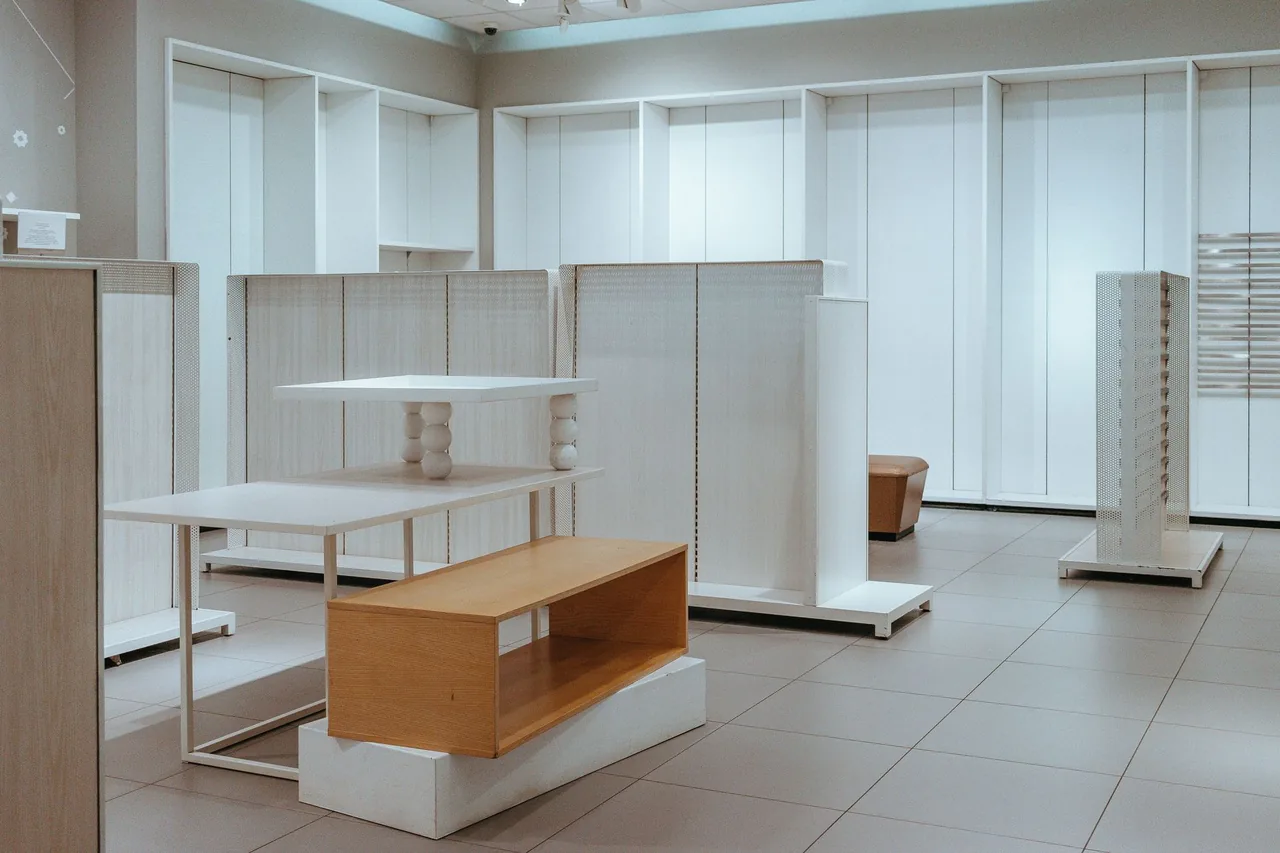
The right retail flooring survives thousands of footsteps a day while still photographing well in your brand's lighting, and one spec decides it before any sample ships: the traffic class the surface is rated to carry, not the look. A sales floor lives under shopping carts, hard heels, and rolling stock from open to close, so the deciding number is PEI IV–V for tile or a 20–40 mil commercial wear layer for resilient — the rating that predicts whether a floor still reads new at year five or wears a grey lane down its spine by year two. Match the surface to the load each zone actually carries and the store stops refitting early. Get a free consultation and a written, itemized scope from a vetted commercial installer that names the material's traffic rating, its DCOF slip number, and how the slab will be tested before a single box is ordered.
A Retail Floor Fails at the Entry, Not the Display
The material a customer notices at the feature wall matters least to whether the store's floor lasts. What separates a floor still reading new at year five from one worn grey at the door in eighteen months is whether the surface at the entry was rated for the footfall the entry actually takes — because retail concentrates a decade of home-floor traffic into a few feet of walkway every week.
A Store Is Not One Floor — It Is a Traffic Map
Zoning is the single concept that separates a thought-through retail floor from a guessed one, and it comes before any material choice. A store is several environments wearing one address, and they do not share a demand:
- The entry and main traffic spine take the heaviest abrasion in the building — every cart wheel, hard heel, and dragged-in grit particle is a wear event, concentrated where the whole store funnels through.
- The display and feature zones carry lighter traffic and longer dwell time, so they can afford a warmer, more brand-forward surface that would abrade at the door.
- The fitting rooms, café corners, and back-of-house each have their own water, comfort, and cleanability profile that neither the spine nor the displays share.
Running one material everywhere either over-builds the displays or, far worse, under-rates the entry — and the under-rated entry is the most common and most expensive mistake in retail flooring.
Read the Store in Failure Order, Not Sample-First
Most fit-outs shop a retail floor backward — brand look first, traffic rating last — and land a beautiful surface in the wrong zone. Read the store in its real order of failure and the shortlist shortens fast: the traffic class the entry needs, then the slip number where floors get wet, then the maintenance program the surface demands, then the look. The aesthetic you want has to fit inside the wear rating, not the other way around. Everything below builds that order into a specification an installer can price.
The Retail Floor Deciders: Four Specs Before Any Sample Wins
A retail floor is bought on numbers, not just looks, and four published specs predict how a sample will actually live under store load. Each has a documented failure attached to ignoring it, and a floor that fails any one is the wrong floor no matter how it photographs. Call it the Retail Floor Fit Test: pass all six checks and the store stops refitting early; miss one and you are buying a premature tear-out mid-lease.
- 1. Traffic / wear rating
- The single deciding spec. For tile, the PEI scale (Porcelain Enamel Institute) grades abrasion resistance I–V; a retail floor wants PEI IV–V. For commercial resilient, the wear layer in mil — commonly 20 mil to 40 mil — plus the product's stated commercial traffic class predicts longevity. Under-rate the entry and the surface abrades far faster than its showroom sample ever suggested.
- 2. Slip resistance (DCOF)
- A store entry catches rain, and a café or food corner catches spills, so wet traction is a liability spec, not a nicety. Traction is graded by DCOF — DCOF, dynamic coefficient of friction — measured per ANSI A326.3, and a level interior floor that may get wet is specified at DCOF ≥ 0.42. The number, honored not assumed, is what stands between a store and a slip-and-fall claim.
- 3. Slab moisture (before resilient or adhesive)
- A retail box on a slab on grade passes vapor upward year-round. On concrete, moisture is measured, never guessed — an in-situ relative-humidity test per ASTM F2170 reads the slab at depth — and where it passes, a moisture-mitigation system to ASTM F3010 goes down before any vinyl or adhesive. Skipping the test to save a day is retail's costliest shortcut, because the bubbling and seam release show up after the store is merchandised and open.
- 4. Light reflectance and gloss
- Retail track and spot lighting rakes across the floor at a low angle and shows every swirl and dull patch flat lighting would hide. Polished concrete sheen level (commonly 1–4) and a surface's light reflectance decide how bright the sales floor reads and how much artificial light the store must add — a higher-reflectance floor can cut lighting load and lift the whole space.
- 5. Fire and smoke classification
- Commercial flooring carries flammability and smoke-development ratings the fit-out must meet for code and insurance. The product's class has to fit the occupancy before it is specified — a spec-sheet check, but one a residential-grade product often fails outright.
- 6. Maintainability and repairability
- A floor a store must strip and refinish constantly bleeds labor and closes aisles. Modular formats — LVT tiles and carpet tile squares — let a worn or stained unit lift out and a fresh one drop in, so a damaged spot is a swap, not a shutdown. The lifecycle-maintenance profile is a spec, because the cheapest floor to buy can be the most expensive to keep.
Three of these six — the traffic rating, the slip number, and the slab test — are exactly the corners a low bid rounds off, because a higher wear class, a slip-rated tile, and a moisture-mitigation pour all cost more up front. That is why the fit test is non-negotiable: every check is on the spec sheet, and every one predicts a specific way the store can win or lose.
Want the traffic rating and slip spec confirmed before you buy?
We match you with a vetted commercial installer who names the surface's wear class, DCOF, and slab-test plan in a written scope — before you commit to a look or a price.
Retail Flooring Specifications That Decide the Sales Floor
The specs that gate a retail floor are published, testable, and specific to the surface going down — from the traffic rating that separates a five-year floor from an eighteen-month one, through the slip number that governs liability, to the slab test that decides whether a resilient floor even bonds.
The Traffic Rating Is Retail's Controlling Spec
Abrasion at the entry is the failure that dates a store floor, so the traffic rating governs everything else. How it is expressed depends on whether the surface is tile, resilient, or a densified slab.
Tile: The PEI Abrasion Scale
Tile hardness is rated on the PEI scale I through V, and the number, not the glaze's showroom shine, predicts how the surface survives grit under foot traffic. A retail sales floor wants PEI IV–V; anything lower wears a dull path at the door within a season, set per TCNA and ANSI standards.
Why an Under-Rated Tile Dulls at the Door
Glaze wear is abrasive, not chemical: dragged grit micro-scratches the surface until it reads dull grey exactly where the store funnels through. A PEI III tile that photographs identically to a PEI V tile in the showroom fails at the entry because the two are graded for different loads — the rating is the difference, invisible until year two.
The Grout Line as the Tile Floor's Weak Point
On a tile retail floor the tile itself is nearly permanent, so maintenance shifts entirely to the grout: dirty, un-sealed grout is what dates a tile floor long before the tile wears. A vetted install specifies a sealed or inherently stain-resistant grout and a rigid substrate that will not flex and crack the joint — the joint, not the field, is where a tile sales floor shows its age.
Resilient: Wear-Layer Mil and Commercial Traffic Class
On a resilient retail floor the wear layer in mil is the spec that predicts how many years the pattern survives dragged grit. Commercial grades run 20 mil to 40 mil, well above the 6 mil to 12 mil of residential product, and the thicker the clear layer, the longer the floor resists the scuffing and gloss loss a sales floor dishes out. The commercial traffic class printed on the spec sheet — not the picture under the wear layer — is what a store is really buying.
The Specs That Matter in a Store, and What to Look For
Before the material-by-material verdict, it helps to see each retail-deciding spec on its own — what it measures, why it matters in a store specifically, and the number or feature to demand on a spec sheet.
| Spec / standard | Why it matters in a store | What to look for |
|---|---|---|
| Traffic rating (PEI / wear-layer mil) | The entry concentrates a decade of home traffic into a few feet each week | PEI IV–V tile or a 20–40 mil commercial wear layer at the spine |
| Slip resistance (DCOF) | Entries catch rain and café corners catch spills — slip-and-fall is a real cost | DCOF ≥ 0.42 per ANSI A326.3, honored not assumed |
| Slab moisture (ASTM F2170) | A slab-on-grade box pushes vapor up and bubbles an un-tested resilient floor | In-situ RH below the maker's cap; mitigate to ASTM F3010 if not |
| Light reflectance / sheen | Raking retail lighting shows dullness and drives the lighting budget | Polished-concrete sheen level 1–4 to brand; higher reflectance cuts light load |
| Fire / smoke classification | Code and insurance require a rated floor for the occupancy | A commercial flammability and smoke-development class fit to the space |
| Repairability / lifecycle cost | A floor stripped and refinished constantly closes aisles and bleeds labor | Modular LVT or carpet-tile squares that swap without a shutdown |
Retail Material Fit, Rated Spec-by-Spec
The table below is the store's ranking made explicit: each candidate surface against the retail deciders and a verdict for the sales floor. These are recognized figures — the printed spec for your product always governs, and where it is stricter, the stricter number wins.
| Surface | Traffic behavior | Slip & look | Maintenance | Verdict for a store |
|---|---|---|---|---|
| Polished concrete | The slab is the floor — nothing to wear off | Slip via texture; sheen 1–4 to brand | Lowest — dust-mop and burnish, no coats | Default for big-box, grocery, industrial-chic |
| Commercial LVT / sheet vinyl | Wear layer 20–40 mil carries heavy traffic | Textured for slip; warm wood & stone visuals | Modular — lift and replace a worn tile | Most versatile — the brand-forward workhorse |
| Porcelain tile | PEI IV–V; essentially permanent | Matte for DCOF 0.42+; refined look | Neutral-pH clean; seal the grout line | Premium hard surface for apparel & boutique |
| Commercial carpet tile | Solution-dyed fiber for lighter-traffic zones | Warm, quiet; not for the entry spine | Vacuum, extract; swap a soiled square | Feature & fitting zones — never the door |
| Residential-grade flooring | Abrades in the entry within one season | Built for a fraction of retail footfall | Fails, then a full-run replacement | Avoid — wear rating disqualifies it |
| Broadloom (roll) carpet | Mats and soils into a visible worn lane | Warm but shows every traffic path | Whole-run replacement, not a swap | Avoid in traffic lanes — carpet tile instead |
The pattern across the top tier is consistent: a store rewards a surface rated for the footfall of its zone and penalizes anything run below its load. Pick the brand look you love inside the traffic constraint, never outside it — and to weigh how these surfaces age, see our material lifespan data, then browse the full set from the commercial surfaces hub.
The Best Retail Flooring, Ranked by Zone — and Why
No single material wins every zone of a store, but a short list covers nearly every retail format when matched to the right zone and traffic. The ranking follows the store's priority order: rate the spine hardest, then warm the displays, then keep every zone maintainable.
Polished Concrete: The Default for High-Traffic Retail
Polished concrete is the default for big-box, grocery, hardware, and industrial-chic retail because the slab is the floor — there is nothing to wear off. Mechanically ground and densified, it carries cart and pallet traffic indefinitely, reflects light to brighten the sales floor, and asks for little more than dust-mopping and periodic burnishing. Its gloss is graded by sheen level so a store can dial matte-industrial or high-shine to match its brand. The trade-off is hardness underfoot and a look that is right for some concepts and wrong for others — which is why it pairs with a warmer surface in the dwell zones. The same densified slab serves as a residential finish under concrete flooring.
Commercial LVT and Sheet Vinyl: The Brand-Forward Workhorse
Commercial LVT and sheet vinyl are the most versatile retail surface: they deliver realistic wood and stone visuals for a warm, brand-forward look while carrying heavy traffic on a thick wear layer, commonly 20 mil to 40 mil in commercial grades. LVT installs in zones and tiles lift and replace individually if one wears or stains, which keeps a store open during repair. It is softer and warmer than tile or concrete, easy to keep clean, and fast to install in an after-hours refit — the surface that carries the main aisle and displays in most formats. For the tile-format equivalent, see residential luxury vinyl tile.
Porcelain Tile: The Premium Hard Surface
Porcelain tile is the premium hard surface for apparel, boutique, and food-adjacent retail that wants a refined floor to shrug off spills and rolling loads. Specified at PEI IV–V with a slip-rated finish reading DCOF 0.42+, it is essentially permanent and immune to moisture, though it is hard underfoot and shows grout maintenance over time. It earns the entry and café corner where longevity and water immunity outrank comfort. The same tile serves residential wet rooms as porcelain floor tile.
Commercial Carpet Tile: Warmth in the Right Zone
Commercial carpet tile earns its place in feature zones, fitting-room blocks, and slower-traffic departments where warmth, quiet, and a softer underfoot feel sell the product. Modular squares mean a soiled tile gets swapped, not the whole floor, and solution-dyed fiber resists wear and bleach cleaners. It belongs in the lighter-traffic zones of the plan, never the entry spine — the pattern across this ranking holds: rate the surface to the zone, and the store gets both the wear it needs at the door and the warmth it wants at the displays. Where a store includes a working café or food-prep back-of-house, that zone shifts to a seamless, sanitary surface — a commercial epoxy floor — for the same slip and cleanability reasons a restaurant kitchen demands.
What to Avoid on a Retail Sales Floor
Some choices look fine in a showroom and fail in a store, and they are predictable enough to rule out up front. Residential-grade flooring of any kind on the sales floor is the most common mistake — a residential laminate, a thin builder-grade vinyl, or a residential-traffic tile abrades in the entry within a single season because it was engineered for a fraction of the footfall; the wear rating, not the look, disqualifies it. Broadloom (roll) carpet in main traffic lanes mats, soils, and shows a worn path no cleaning recovers, and when it fails you replace the whole run rather than a tile — carpet tile in the right zone is the maintainable version of the same warmth. Any resilient floor over an un-tested slab is retail's most expensive shortcut, because the bubbling and seam release show up after the store is merchandised, when fixing it means closing aisles. And high-gloss surfaces with poor slip ratings in entries and wet zones are a liability claim waiting to happen. The rule that covers all of these: if it is rated below its zone's traffic, or slick when wet, it does not belong on a retail floor.
How a Retail Floor Is Installed in an Operating Store
The hardest part of a retail floor is rarely the floor — it is installing it without losing sales days, so the schedule is part of the spec. The six steps below are the full arc, each aimed at the store's real constraints: an un-tested slab, a floor that must open on time, and transitions between zones that have to sit flush and safe.
Map the Zones and Assess the Substrate
The installer measures the store, marks the entry and traffic spine, the display and fitting zones, and any café or back-of-house area, and checks the substrate for flatness and deflection. Each zone's surface and traffic rating are decided here against the Fit Test — not from a single favorite material — before any product is ordered.
Test the Slab and Mitigate Moisture
On a slab on grade, concrete is read by ASTM F2170 in-situ probes against the resilient maker's cap; where it reads too wet, a moisture-mitigation system to ASTM F3010 goes down before any vinyl or adhesive. This step cannot be rushed — the vapor that bubbles a floor is invisible at install and obvious six months later.
Grind the Slab Flat and Detail Transitions
High spots are ground and low spots self-leveled to tolerance so a resilient floor does not telegraph the slab as lumps, and the thresholds where concrete meets carpet tile or tile meets LVT are planned now to sit flush and slip-safe — improvised transitions on the last night are where rushed retail work shows.
Set the Hard-Surface Zones First
Polished concrete on an existing slab is ground and densified during a closure for its noise and dust; porcelain is thinset-set over a rigid, deflection-free substrate at the entry and café corner. The hard, slip-managed surfaces that carry the heaviest traffic go in where the store funnels through.
Install the Resilient and Carpet-Tile Zones
Commercial LVT clicks or glues down the main aisle and displays over the prepared, moisture-controlled slab, and carpet tile lays into the feature and fitting zones — both modular so a future worn unit is swapped, not re-floored. Fast-install, fast-cure materials are favored precisely because they shrink the window the floor is out of service.
Phase, Cure, and Walk the Store
Work is sequenced zone by zone, overnight, or in staged sections so the store trades every day, cure time is respected before traffic returns, and the installer walks the floor with the operator to confirm the transitions, review the maintenance program, and set the walk-off matting plan at every entrance.
Skip or rush any one of these six and the failure it was meant to prevent shows up later — a bubbled aisle, a worn-through entry, a lip at a threshold that catches a cart — which is why a vetted commercial installer treats the sequence as fixed, not optional. For how the phasing runs end to end, see commercial installation.
Common Retail Flooring Mistakes, Consequences, and Prevention
Most retail-floor failures are the same handful of shortcuts, each with a predictable consequence and a known prevention. Naming them is how you spot a corner being cut before it is buried under a merchandised store.
| Mistake | What it causes | The prevention |
|---|---|---|
| Under-rating the entry | The spine abrades to a dull grey lane within a season | Spec PEI IV–V or a 20–40 mil wear layer to the real footfall |
| One material everywhere | Displays over-built or the entry under-rated; wasted spend or early wear | Zone the floor — hard at the spine, warm at the displays |
| Resilient over an un-tested slab | Bubbling and seam release six months after the store opens | Test by ASTM F2170 and mitigate to ASTM F3010 first |
| High-gloss, low-DCOF floor at the entry | A slick floor when rain tracks in — a slip-and-fall exposure | Hold DCOF ≥ 0.42 where floors get wet, textured or matte |
| Broadloom carpet in traffic lanes | A matted, soiled path that no cleaning recovers | Use modular carpet tile so a worn square swaps out |
| No walk-off matting at the door | Grit and moisture abrade the whole floor from the entry inward | A proper walk-off system at every entrance to capture grit and water |
| Maintenance program picked after the floor | A polished slab gets a film coat, or vinyl is stripped too hard, and dulls | Choose the material-correct program with the surface, not later |
Every row is a documented way a retail floor dates early — which is why "we rate each zone to its traffic and detail the transitions, in writing" is the most valuable sentence in a retail flooring quote.
Which Surface Is Right for Your Store?
The right retail floor is the output of a short chain of honest answers about your format, your traffic, and your brand. Walk it in order; each branch eliminates surfaces the zone rules out, and what survives is your defensible choice.
- Have you mapped the zones yet? If not, start there — identify the entry and traffic spine, the display and feature zones, and any food, fitting-room, or back-of-house areas. The heavy-traffic spine and the warm display zones rarely want the same surface, and every branch below depends on knowing which zone you are speccing.
- How hard does this zone actually get walked? For the entry and main aisle, you are choosing a hard, high-rated surface — polished concrete, PEI IV–V porcelain, or a heavy-wear commercial LVT. For a slower display or fitting zone, a lighter commercial grade or carpet tile re-enters. Rate to the real footfall, not the showroom sample.
- Does the zone get wet? An entry that catches rain, a café corner, or any food-adjacent area must hold DCOF ≥ 0.42 — steering to a textured or matte finish. A dry interior display zone has more freedom on slip and can favor look and comfort.
- What does the brand need this zone to say? Inside the traffic and slip constraint, let the concept drive the look — polished concrete for industrial-modern, warm LVT for approachable, refined porcelain for premium, carpet tile for a soft feature moment. The floor sets the tone the instant a customer walks in.
- Can you keep the program this surface demands? Confirm whether your team or a service can sustain the daily and periodic maintenance each candidate needs. A floor that requires a routine you cannot run looks tired fast — match the surface to a program you can actually keep, and favor modular formats where a worn unit swaps out.
Run honestly, this tree returns a zoned floor — hard and slip-managed at the door, warm and maintainable in the displays — and an installer who recommends one material for the whole store regardless of the answers is the red flag.
Not sure which surface each zone of your store needs?
Tell us how your store trades and we will match a vetted commercial installer who zones the floor, rates each area to its traffic, and puts it in writing.
Lifecycle Maintenance and Longevity on a Retail Floor
A retail floor's lifespan is decided as much by its cleaning program as by its material, because retail soil load is relentless and the wrong routine wears a floor faster than traffic does. Two maintenance realities govern how long a store keeps its floor.
Matching the Program to Each Surface
Each surface has a rhythm that keeps it refit-fresh, and matching the program to the material is the whole game. Polished concrete is the lowest-effort surface — daily dust-mopping or auto-scrubbing with a neutral cleaner and periodic burnishing to restore the sheen, with no stripping, waxing, or film-forming coats that would only dull and peel. Commercial LVT and sheet vinyl want daily dust control and damp mopping or auto-scrubbing, with finish maintenance per the manufacturer rather than aggressive stripping that thins the wear layer. Porcelain asks for neutral-pH cleaning and grout-line attention, since dirty grout dates a tile floor long before the tile wears. Carpet tile wants frequent vacuuming, prompt spot treatment, and periodic extraction — with the modular advantage that a permanently soiled tile is replaced rather than tolerated.
Walk-Off Matting: The Highest-Return Investment
The constant across every surface is walk-off matting at every entrance. A proper walk-off system at the door captures grit and moisture before it reaches the sales floor, and it is the single highest-return maintenance investment in retail — it protects the entry surface, cuts the abrasive load on the whole floor, and reduces slip risk on wet-weather days. Pairing the right surface with a scheduled, material-correct program and good entry matting is what keeps a retail floor selling for its full service life; the structure of those programs is detailed in commercial maintenance.
What Actually Drives the Cost of a Retail Floor
A retail quote is not a flat per-square-foot rate; the headline number a low bid leads with hides the items below, ranked by how much they move the total in a store specifically.
- Material grade and traffic class. The surface and its rating set the baseline — a PEI V porcelain, a 40 mil commercial LVT, or a densified polished slab all price differently, and speccing up the wear class for the entry's footfall is money well spent.
- Slab moisture testing and mitigation. A slab-on-grade box that reads too wet needs a mitigation system to ASTM F3010 before any resilient floor — a real line item the lowest bid tends to omit, and cheap insurance against a bubbled aisle.
- Substrate prep and grinding. The biggest swing on many stores — grinding high spots and self-leveling to tolerance so a resilient floor lies flat, or profiling a slab for polished concrete, is dusty, sequenced work a sound, flat substrate avoids.
- Phasing and after-hours work. Sequencing the install zone by zone, overnight, or in staged sections so the store keeps trading adds labor an empty, closed space does not — and it is what keeps the store earning through the refit.
- Old-floor removal and disposal. Tear-out is labor and haul-away is a fee, and removal often exposes an out-of-tolerance slab or moisture problem that changes scope mid-job — which is why it belongs in the written quote up front.
- Zone transitions and thresholds. Flush, slip-safe details where concrete meets carpet tile or tile meets LVT are exacting work priced beyond the field floor, and skimping on them is where trip hazards and rushed edges appear.
- Fixture and display moves. Working around or moving racks, gondolas, and fixtures — and staging merchandise clear of the work — adds labor an empty room does not.
- Maintenance program setup. Specifying and, often, supplying the material-correct cleaning program and entry matting is a small line the lowest bid skips — and the one that protects the floor's full service life.
Because these drivers swing so widely, the only honest number comes from an on-site assessment. Compare what moves the price across the category in our cost guides, and weigh the options in our buying guides so you can read a quote critically.
Retail Flooring Glossary
The terms below recur in every retail-floor quote, spec sheet, and warranty — each defined as its working meaning on an actual store fit-out, so you can read a scope and judge whether it is complete.
- Traffic class
- The commercial rating that states how much foot and rolling traffic a floor is built to carry — the spine spec of a retail floor. Under-rating it at the entry is the category's most expensive mistake.
- PEI rating
- The Porcelain Enamel Institute abrasion class (I–V) grading how a tile's surface survives traffic and grit. A retail sales floor wants PEI IV–V.
- Wear-layer mil
- The thickness of a resilient floor's clear top layer in mils (thousandths of an inch) — the spec that predicts how long the pattern survives grit. Commercial retail runs 20–40 mil.
- DCOF
- Dynamic coefficient of friction — the wet-slip rating measured per ANSI A326.3. A retail floor that gets wet is specified at 0.42 or higher.
- Zoning
- Designing the floor area by area — a hard, high-rated surface at the entry and spine, a warmer material in displays and fitting zones — rather than running one surface everywhere.
- Sheen level
- The gloss grade of polished concrete (commonly 1–4), dialing the finish from matte-industrial to high-shine to match a store's brand and its lighting.
- Light reflectance
- How much light a floor bounces back into the sales floor — a higher-reflectance surface brightens the space and can cut the store's lighting load.
- LVT
- Luxury vinyl tile — a modular, tile-format resilient floor with a printed wear layer, favored in retail because a worn or stained tile lifts out and a fresh one drops in.
- Solution-dyed fiber
- Carpet fiber colored all the way through so it resists bleaching and fading and stands up to commercial cleaning — the reason commercial carpet tile survives a store's soil load.
- ASTM F2170
- The in-situ relative-humidity test that reads concrete-slab moisture from probes sealed at 40% of slab depth — the way to know a slab-on-grade store's floor is dry enough to bond.
- ASTM F3010
- The standard practice for a moisture-mitigation system applied to a slab that reads too wet, before a resilient floor or its adhesive goes down.
- Walk-off matting
- The entry matting system that captures grit and moisture before it reaches the sales floor — the highest-return maintenance investment for protecting a retail floor's whole surface.
Standards, Warranty Conditions, and What a Retail Floor Must Meet
A manufacturer's warranty on a commercial floor is a contract with conditions, and in a store most denials are not about the product — they are about how it was rated, tested, and installed.
Warranty Conditions That Hinge on the Retail Install
The conditions are specific and testable: the product installed within its stated traffic class, the slab moisture below the maker's limit with a mitigation system where required, only approved adhesives used, and the surface maintained on the manufacturer's program rather than stripped or coated against spec. An installer who runs a light-traffic product at the entry or skips the slab test has weakened your coverage before you notice. Ask in writing that the install follow the manufacturer's published instructions, because that document is what a commercial flooring claim is judged against — and one more reason the cheapest quote is rarely the cheapest floor.
The Standards Bodies Behind a Retail Floor
Standards govern the rest. The TCNA and ANSI set tile installation, movement joints, and the A326.3 DCOF slip standard; ASTM F2170 defines the slab-moisture test and F3010 the mitigation practice; commercial flammability and smoke-development classifications govern code and insurance for the occupancy. A retail floor built to these holds its warranty and its shape — and when a section wears rather than fails, the modular formats mean a scheduled maintenance swap, not a full re-floor.
A Real Retail Flooring Decision
The clearest way to see zoning in action is to walk through one representative store fit-out where the traffic map, not a single favorite material, drove every call.
Talk through your project — free.
A free consultation and a written, itemized quote from a vetted installer. No pressure, no obligation.
How to Vet an Installer for a Retail Floor
Most retail-floor failures are specification and install failures, so the installer matters more than the brand on the box. These questions separate a crew that builds a store floor to last from one that lays product fast.
- They zone the floor before they name a material
- Ask how they would map the store. A real answer identifies the entry spine, the display zones, and the wet and back-of-house areas, and rates each separately — not one product quoted for the whole floor.
- They rate each zone to its real traffic
- Ask what wear class they will spec at the entry versus the displays. A credible answer names PEI IV–V or a 20–40 mil wear layer at the spine and cites the footfall it is built for — not a vague "it's commercial grade."
- They test and mitigate the slab before resilient goes down
- On a slab on grade, ask which moisture test they run and what limit the floor requires. A real answer names ASTM F2170 and mitigation to ASTM F3010, not "the slab looks fine."
- They hold the slip number where floors get wet
- Ask what DCOF they will use at the entry and café corner. A busy, rain-catching entry wants DCOF 0.42+ — an installer who cannot cite the number is guessing at the store's liability.
- They phase the work around your trading hours
- Ask whether the store closes a zone at a time, works overnight, or stages sections, and how transitions are detailed. The schedule and the flush thresholds are where rushed retail work shows.
- They put the scope, program, and workmanship warranty in writing
- Ask for the full zoned scope, the material-correct maintenance program, and a labor warranty before work starts. A crew willing to name a workmanship guarantee — and return if a seam lifts or an entry wears early — is accountable for the install, not just the product.
Why Route Your Retail Floor Through Pro Work Home Surface
Pro Work Home Surface is not a contractor and does not install your floor — we are a national authority on home and commercial surfaces that matches operators with vetted local installers and holds them to a published bar.
- Rate the floor to the zone, not the showroom
- Every zone is specified to its real traffic — PEI IV–V or a heavy commercial wear layer at the entry and main aisle, slip resistance held to DCOF ≥ 0.42 where floors get wet — so the surface carries the load it actually sees.
- Test and mitigate the slab before any resilient floor
- On slab-on-grade stores, moisture is measured by ASTM F2170 and mitigated to ASTM F3010 standards before vinyl or adhesive goes down, so the floor doesn't bubble or release after the store opens.
- Phase the install around your hours
- Work is scheduled zone by zone, overnight, or in staged sections so the store keeps trading, with transitions detailed in advance and a material-correct maintenance program matched to the surface before handover.
- National coverage, local crews
- We match you with commercial installers in your area nationwide, so the standard is consistent even though the crew is local — whether the project is a single storefront or a rollout across locations.
Retail is one of the environments we cover across commercial surfaces. Compare the demands of an office, a restaurant, or a healthcare space, see how the surfaces compare on durability in our material lifespan data, and dig into the trade-offs in our guides. Commercial surfaces are one of eight categories we cover across home surfaces; the same principles apply to the residential floors in our flooring hub, and you can size a project first with our cost guides.
Brands & Material Authority
Quality and construction drive long-term performance more than the label. These are widely respected names in this category:
- Shaw Contract
- Mannington Commercial
- Interface
- Armstrong Flooring
- Sherwin-Williams