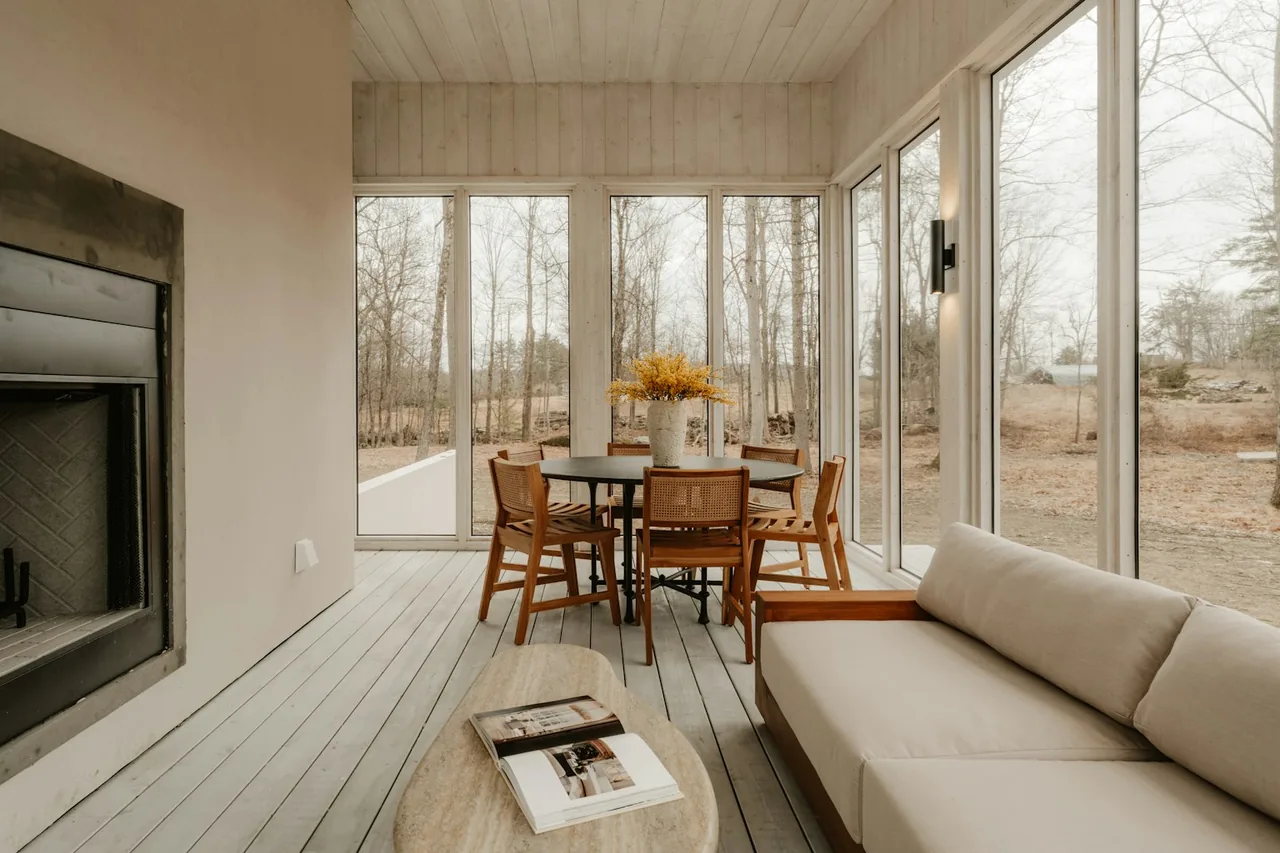
Bamboo flooring is a wood-look floor milled from a fast-growing grass, not a tree — which is why it is the sustainable answer when you want hardwood's look from a rapidly renewable source. Choose it over its specialty siblings when you want real, hard, wood-like planks rather than concrete, cork, or rubber, and over mainstream hardwood when sustainability and high hardness both matter. The catch is that construction is everything: strand-woven bamboo can exceed 3000 lbf on the Janka scale — harder than most hardwoods — while flat-grain and vertical bamboo sit near 1300–1400 lbf, so the same material spans soft to brutally hard. Get a free consultation and a written, itemized scope from a vetted installer before you buy, because with bamboo the construction, the certification, and the acclimation are what decide the floor — not the word on the box.
Bamboo Is a Grass, and That One Fact Shapes the Whole Floor
Every wood floor begins as a tree that took decades to mature. Bamboo begins as a giant grass that reaches harvest size in roughly five to seven years and regrows from the same root system without replanting. That biological difference is the reason bamboo exists as a flooring choice at all — it delivers a dense, wood-like, real-plank floor from a crop that renews many times faster than any hardwood — and it shapes everything about how the floor is made and how it behaves.
A Hollow Stem Can't Be Sawn — So It Is Built Three Ways
Because bamboo is a hollow-stemmed grass, it cannot simply be sawn into planks the way a log is. It is processed into flooring three distinct ways, and the method, not the species, decides almost every property that matters.
Horizontal, Vertical, and Strand-Woven Construction
The three constructions look and perform differently enough that "bamboo" alone tells you almost nothing:
- Horizontal-grain (flat-grain) bamboo is made by gluing flattened strips face-up, showing the characteristic nodes or "knuckles" of the stalk — the classic bamboo look, and the softer of the solid types.
- Vertical-grain bamboo glues the strips on edge for a narrower, more uniform striped appearance and slightly different hardness.
- Strand-woven bamboo is the game-changer: the fibers are shredded, saturated with resin, and compressed under enormous heat and pressure into an extremely dense board — the construction that produces the very high Janka numbers and looks least like traditional bamboo.
This is why bamboo cannot be read as one material, and why specifying the construction is the first and most consequential decision — the same reason it sits on the specialty shelf rather than under hardwood proper.
Why Bamboo Sits on the Specialty Shelf, Not Under Hardwood
Bamboo installs and behaves much like wood, but it is a different organism with its own quality range, its own sustainability story, and its own humidity sensitivity — so it belongs alongside its natural-material cousins here rather than filed as a wood species. It is best understood as the wood-adjacent natural product it is: choose by construction first, treat it like wood on site, and judge it by its own facts rather than assuming it behaves like cork, the other plant-based floor on this shelf.
Engineered Bamboo — the Slab-Friendly Build
A fourth form bridges bamboo and the slab: engineered bamboo bonds a bamboo wear layer to a plywood or composite core for better dimensional stability over concrete and in changeable humidity, much like engineered hardwood. Where solid bamboo wants a wood subfloor and a stable room, engineered bamboo is the build that lets bamboo's look reach a tested slab or a basement it otherwise could not.
Bamboo vs. Its Specialty Siblings — Read by Janka, Not the Word "Bamboo"
Among the specialty floors, bamboo is the one closest to mainstream wood, which makes its siblings useful contrasts — and the honest way to place it is against each on the one spec that sibling is judged by. The table below does exactly that: bamboo versus the floors it shares a shelf with, each on its own deciding metric.
| Specialty floor | Deciding spec it's judged by | How it compares to bamboo | Choose the sibling instead when |
|---|---|---|---|
| Bamboo (this page) | Janka hardness (lbf), set by construction | A hard, renewable, wood-look plank — soft or brutally hard depending on the build | — |
| Cork | Comfort, resilience, sealing | The other plant-based floor, but soft where bamboo is hard — cushioning vs. hardness | Standing comfort, warmth, and quiet lead over hardness |
| Concrete | Compressive strength + sheen | Hard, cold, industrial — the opposite of bamboo's warm natural plank | Maximum permanence and a modern slab look lead |
| Epoxy | Adhesion + chemical resistance | A washable utility coating — no overlap with a living-space plank | Chemical resistance in a garage or shop leads |
| Terrazzo | Longevity + matrix type | A hard, generational, decorative surface — look-driven, not renewable-plank | A seamless, ornamental, life-of-building floor leads |
| Rubber | Resilience + thickness (impact) | Soft, tough, utilitarian — performance-driven, not a wood look | Impact absorption and traction lead in a hard-use space |
The more important comparison, though, is bamboo against actual hardwood, because that is what most buyers are really weighing. Strand-woven bamboo can out-harden red oak and many other domestic species on the Janka scale, and it does so from a five-to-seven-year crop instead of a multi-decade tree — that is its core argument. Where hardwood still leads is the depth of refinishing it tolerates and the centuries of established grading behind it. The honest framing: choose bamboo over hardwood when sustainability and high hardness both matter and you accept a slightly different look and a product range you must vet; choose hardwood for the deepest refinishing life and the most standardized product. Compare them spec-for-spec with the material comparison tool or the hardwood calculator.
The Specs That Matter for Bamboo — Janka, Construction, and VOCs
Bamboo is read by its Janka hardness, which is governed by construction, and increasingly by the formaldehyde emissions of the adhesive holding it together. The species is almost beside the point; the build is the spec, and the table below lines up the constructions against what each delivers.
Janka Hardness Varies Enormously by Construction
This is the number that matters most and the one most misunderstood. Strand-woven bamboo, with its resin-compressed fibers, routinely tests above 3000 lbf and some products considerably higher — placing it among the hardest residential floors made, well above red oak's roughly 1290 lbf. Solid horizontal- and vertical-grain bamboo, by contrast, sits much lower, commonly in the neighborhood of 1300 lbf to 1400 lbf — comparable to or a touch above oak, not the headline-grabbing strand-woven figure. Buying "bamboo" without specifying the construction is how a buyer expecting an ultra-hard floor ends up with a mid-hardness one. Match the construction to how hard the room lives.
Construction Also Governs Stability and Finish
Strand-woven is the densest and hardest; horizontal-grain shows the classic knuckled look; engineered bamboo bonds a bamboo wear layer to a plywood or composite core for better dimensional stability over concrete and in changeable humidity, much like engineered hardwood.
The Factory Finish Determines Surface Wear
The factory finish — typically a tough aluminum-oxide UV-cured coating, the same family used on prefinished wood — determines surface scratch and wear resistance, independent of the Janka hardness of the board beneath it. A very hard strand-woven board with a thin or poor finish can still scuff at the surface, which is why the wear finish is a spec in its own right, not an afterthought to the hardness number.
Indoor Air Quality Is a Real Spec for Bamboo
Because every type is bound with adhesive, formaldehyde emissions matter, and quality bamboo is certified to a low-emission standard — look for CARB Phase 2 or TSCA Title VI compliance, and FloorScore certification for indoor air quality. This is a genuine point of differentiation between cheap and reputable bamboo and worth confirming, especially for bedrooms and homes with sensitive occupants.
| Construction | Typical Janka (lbf) | Look | Best-fit use |
|---|---|---|---|
| Horizontal (flat-grain) solid | ~1300–1400 | Classic knuckled nodes | Traditional bamboo look, moderate traffic |
| Vertical-grain solid | ~1350–1400 | Narrow, uniform stripes | Clean, contemporary bamboo look |
| Strand-woven | 3000+ | Dense, wood-like, least "bamboo" | High traffic, pets, kids — hardness leads |
| Engineered (bamboo over core) | Wear-layer dependent | Matches its wear-layer type | Over concrete / changeable humidity |
Read together, the lesson is that "bamboo" is a family, not a spec — the construction sets the hardness, the finish sets the surface wear, and the certification sets the air quality, and all three belong in a written scope.
Want the right bamboo construction matched to your room?
We match you with a vetted installer who names the construction — strand-woven, solid-grain, or engineered — for your traffic and substrate, confirms the certification, and puts it in writing before you buy.
Where Bamboo Works Best — and Where Humidity Defeats It
Bamboo thrives in the same rooms hardwood does and fails in the same ones, with humidity its defining limit.
Where a Renewable Hard Plank Excels
It is excellent in living rooms, dining rooms, bedrooms, hallways, and home offices — the conditioned, moderate-humidity spaces where a warm, hard, natural plank floor belongs — and strand-woven bamboo's hardness makes it a strong, sustainable answer for pet-friendly and kid-friendly spaces where claws and toys punish softer floors. Its sustainability story makes it especially appealing to environmentally minded buyers who want the look of wood without the multi-decade harvest.
Where Moisture and Humidity Swings Defeat It
Where bamboo is defeated is moisture and humidity swings, exactly as with hardwood. Like wood, bamboo absorbs and releases moisture from the air, expanding and contracting with the seasons: it can gap in a dry winter and cup or buckle in a humid summer if it was not acclimated and installed correctly, and standing water will stain and warp it. That rules out bathrooms, full waterproof situations, and most below-grade basements for solid bamboo, where the moisture math favors a waterproof material or, if bamboo's look is required, an engineered bamboo over a tested slab with the right moisture barrier. Homes with wide seasonal humidity swings or no climate control are also poor candidates for solid bamboo. The fix where bamboo's look is wanted in a tougher spot is engineered construction and disciplined humidity control — not solid bamboo forced into a wet room. When bamboo has gapped, cupped, or buckled, see flooring repair.
How Bamboo Flooring Is Installed
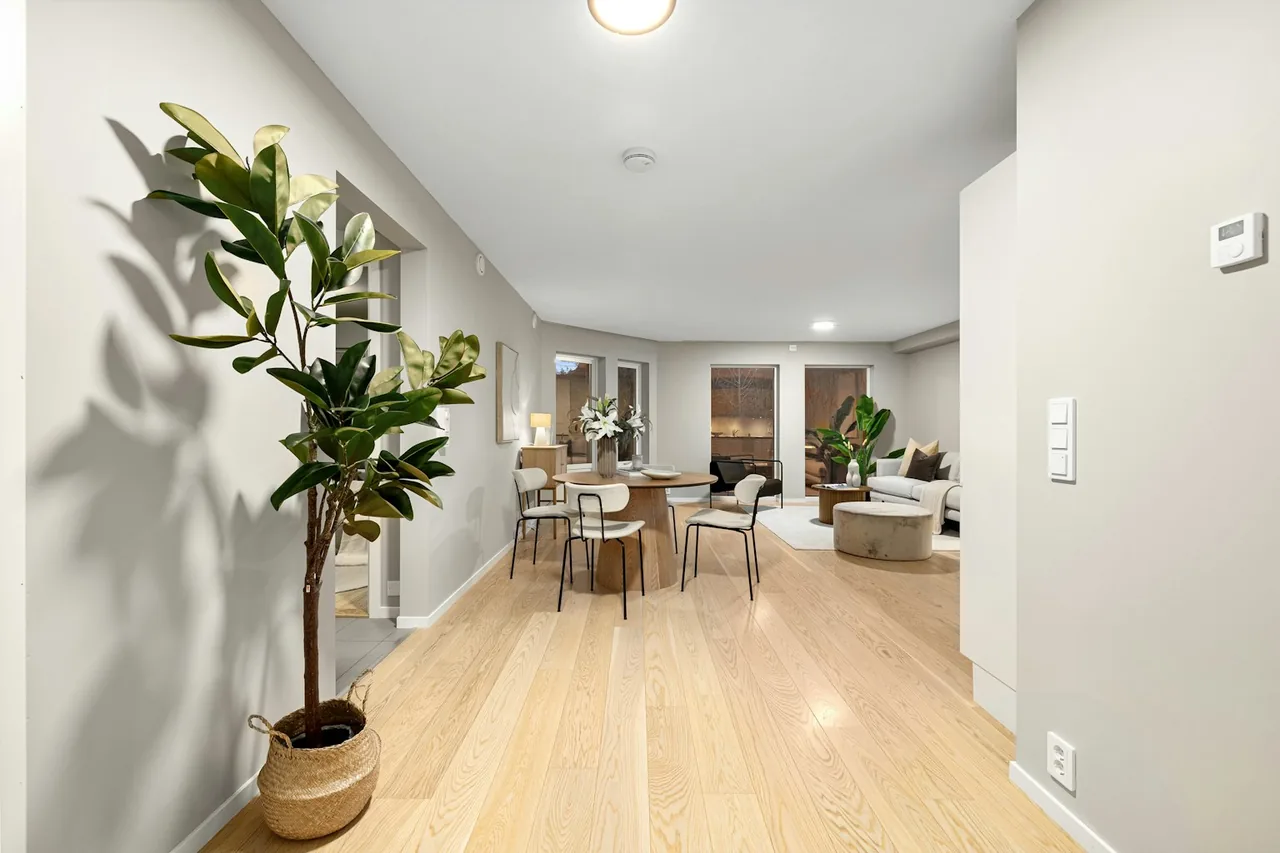
Bamboo installs by the same methods and disciplines as hardwood, and the single step that decides success is the one buyers most want to skip — acclimation. The six-step sequence below treats bamboo as the wood-adjacent product it is.
Confirm the Construction and Certification First
Before anything is ordered, the construction is fixed to the room — strand-woven for hardness, solid-grain for the classic look, engineered for a slab — and low-emission certification (CARB Phase 2 / TSCA Title VI, FloorScore) is confirmed. Getting this wrong here is how a buyer expecting an ultra-hard floor ends up with a mid-hardness one.
Test the Substrate and Read Its Moisture
A wood subfloor is checked for soundness and moisture content; a concrete slab is tested by ASTM F2170 in-situ relative humidity, because solid bamboo nailed over concrete is not an option and vapor from an untested slab reaches the floor from below. The reading decides solid vs. engineered and whether a vapor barrier is needed.
Acclimate the Bamboo to the Home
Like wood, bamboo must sit inside the conditioned space until its moisture content reaches equilibrium with the home's real humidity — typically several days, per the manufacturer — before a single plank goes down. This is the leading cause of bamboo failure when skipped, and it is entirely preventable.
Choose the Method for the Construction
Solid bamboo is usually nailed or stapled over a wood subfloor, or glued down; engineered and many strand-woven products can be glued or floated. Over a slab, a glue-down or floating engineered approach with the right vapor control is used — the method follows the build and the substrate, not preference.
Set the Expansion Gap for Floated Installs
Floating bamboo, like any floating floor, requires a continuous perimeter expansion gap so it can move with humidity without buckling. Nailed and glued installs still respect the manufacturer's clearances at walls and obstructions, hidden under trim, so seasonal movement has somewhere to go.
Rely on the Factory Finish, Refinish Only if Rated
The great majority of bamboo is prefinished with a durable aluminum-oxide UV-cured coating, so it arrives ready to walk on with no on-site sanding. Some products can be refinished later, but how many times depends on the construction and wear-layer thickness the maker specifies — the same install discipline shared with flooring installation and subfloor prep.
Two of these six — reading the substrate's moisture and acclimating the bamboo — are where nearly every bamboo failure is born, and both are the corners a rushed install skips. Install bamboo too wet and it gaps over the first heating season; too dry and it buckles in summer. That is why a vetted installer treats acclimation and the moisture-matched method as fixed, not optional.
Talk through your project — free.
A free consultation and a written, itemized quote from a vetted installer. No pressure, no obligation.
Is Bamboo Flooring Right for Your Space?
Whether bamboo is the right specialty floor is the output of a short chain that starts with the room's stability and your priorities. Walk it in order; each branch either eliminates bamboo or narrows the construction.
- Do you want a wood look from a renewable source? If a natural, wood-like plank with a sustainability story is the goal, bamboo is on the table. If you want cushioning and warmth instead, its plant-based sibling cork is the softer answer; if a slab look leads, that is a different floor.
- Is the room conditioned and stable in humidity? Bamboo, like hardwood, wants moderate, controlled humidity. A bathroom, a damp basement, or an un-climate-controlled space rules out solid bamboo — continue only if the room stays stable or you accept engineered construction.
- How hard does the room live? High traffic, pets, and kids call for strand-woven at 3000+ lbf; a quieter room can use solid horizontal- or vertical-grain near 1300–1400 lbf for the classic look. Specify the construction — never buy "bamboo" without it.
- What is the substrate? A sound wood subfloor opens solid bamboo (nailed or glued); a concrete slab points to engineered bamboo over a tested, moisture-controlled base — substrate preparation settles this. Solid bamboo over bare concrete is not an option.
- Does indoor air quality matter here? For bedrooms and homes with sensitive occupants, require CARB Phase 2 / TSCA Title VI and FloorScore certification. Confirm the final choice against the room under the flooring hub.
Run honestly, this tree either sends you to a waterproof or softer floor or names a specific bamboo construction — and an installer who quotes "bamboo" without naming the build or the certification is the red flag.
Caring for a Bamboo Floor — Dry, Gentle, and Humidity-Controlled
Bamboo is cared for almost exactly like hardwood, which means keeping it dry, keeping grit off it, and keeping the home's humidity stable. The cardinal rule is never wet-mop bamboo: standing water and excess moisture are its enemies, and a soaked floor will swell, stain, and cup. Clean it by sweeping or dust-mopping to remove the grit that scratches the finish, and damp-wipe only — a barely moist microfiber mop with a cleaner formulated for wood or bamboo floors, never a steam mop and never a wax or oil soap that the prefinished coating does not want.
Protecting the finish and managing humidity do the rest. Felt pads under furniture, rugs at entries to catch grit, and trimmed pet claws all extend the surface, and prompt cleanup of spills prevents staining and warping. The defining maintenance task for bamboo, beyond cleaning, is holding the home's relative humidity within the manufacturer's recommended range across the seasons — a humidifier in dry winters and dehumidification or air conditioning in humid summers — because bamboo's seasonal movement is what cracks finishes and opens gaps. Where a bamboo floor has dulled, scratched through, or worn its finish and the product is refinishable, it can be sanded and recoated like wood; that work lives under refinishing and, for deeper damage, restoration.
What Actually Drives the Cost of a Bamboo Floor
A bamboo quote is not a flat per-square-foot rate; the construction you choose and the substrate you install over move the total more than the square footage, ranked below by how much they swing it.
- Construction and quality tier. The biggest material swing. Strand-woven and engineered bamboo cost more than solid horizontal- or vertical-grain, and certified low-emission product costs more than cheap imports — the tier sets the baseline.
- Substrate condition and prep. A sound, flat wood subfloor installs cleanly; a slab needs moisture testing and a vapor barrier, and any unflat substrate needs leveling before bamboo goes down — real labor a good subfloor avoids.
- Install method. Nail-down over wood, glue-down over a prepared slab, and floating each carry different labor; glue-down over concrete with vapor control costs more than a straightforward nailed run.
- Acclimation and site conditions. The days of on-site acclimation and the need for a conditioned space during install are part of a real job — a corner cut on cheap quotes that shows up later as gapping.
- Old-floor removal. Tearing out and disposing of an existing floor, and any subfloor repair it exposes, add labor up front.
- Layout and transitions. Thresholds, T-moldings, reducers, and stair-nosing at doorways and material changes, plus any diagonal or pattern layout, add cutting, waste, and skilled hours.
Because the construction and the substrate swing the total so widely, the only honest number comes from an on-site assessment. Compare what moves the price across the category in our cost guides — including how wood-floor pricing works as a close reference — and size the job with the flooring cost calculator so you can read a quote critically.
Get an itemized scope, not a headline rate.
A vetted installer prices the construction, substrate prep, acclimation, method, and transitions as separate lines — so you see the whole job, free and with no obligation.
How to Choose Bamboo Flooring — the Bamboo Construction Test
Bamboo is the right call when you want a sustainable, wood-like, hard floor for a conditioned space — but construction, certification, and humidity control decide whether you get the floor you imagined. These six checks are the Bamboo Construction Test: pass all six and bamboo is the right floor, built the right way; fail one and you are buying the wrong hardness, the wrong build for your slab, or a floor that gaps.
- 1. Choose strand-woven for hardness, solid-grain for the classic look
- For high traffic, pets, and kids, strand-woven bamboo's hardness exceeding 3000 lbf is the durable pick; for the traditional knuckled appearance at oak-like hardness near 1300 lbf, horizontal- or vertical-grain solid bamboo is the choice. Specify the construction — never buy "bamboo" without it.
- 2. Confirm low-emission certification before you buy
- Because every bamboo type is bound with adhesive, ask for CARB Phase 2 or TSCA Title VI compliance and FloorScore certification. This separates reputable bamboo from cheap imports and matters most in bedrooms and homes with sensitive occupants.
- 3. Match construction to the substrate and the room's humidity
- Solid bamboo wants a conditioned, stable-humidity room and a wood subfloor or a moisture-controlled glue-down; engineered bamboo is the more stable choice over concrete and in changeable humidity. A slab gets moisture-tested first, and no wet rooms for solid bamboo.
- 4. Insist on full acclimation and a moisture-matched install
- Acclimation is the step that decides whether bamboo gaps or buckles. Ask how many days the planks will acclimate on site and how the installer matches the method to your subfloor — a real answer names acclimation, moisture testing, and an expansion gap for floated installs.
- 5. Read the wear finish, not just the Janka number
- A very hard board with a thin finish can still scuff at the surface. Confirm the factory finish is a tough aluminum-oxide UV-cured coating, and ask whether the product can be refinished and how many times — the wear layer is a spec of its own.
- 6. Plan humidity control as part of owning the floor
- Bamboo's seasonal movement is what cracks finishes and opens gaps, so a home with wide humidity swings needs a humidifier in winter and dehumidification in summer. Commit to holding the maker's humidity range before you buy, not after the first gap appears.
Settle the construction and the substrate first and the rest follows — which is exactly the order a credible installer walks with you.
Common Bamboo Flooring Mistakes, Consequences, and Prevention
Most bamboo failures come from treating it as one product and installing it like a floor that doesn't move, each with a predictable consequence and a known prevention. Naming them is how you spot a corner being cut before your floor gaps.
| Mistake | What it causes | The prevention |
|---|---|---|
| Buying "bamboo" without the construction | A mid-hardness floor where an ultra-hard one was expected | Specify strand-woven (3000+) or solid-grain (~1300) to the room |
| Skipping acclimation | Gapping in winter, buckling in summer — like wet wood | Acclimate several days on site to the home's humidity first |
| Solid bamboo nailed over concrete | A floor with no valid fastening and vapor reaching it from below | Use engineered bamboo, glue-down, and vapor control over a tested slab |
| No moisture test on a slab | Vapor cups and warps the floor from underneath | Test by ASTM F2170 and add a barrier where needed |
| No expansion gap on a floated install | Buckling as the floor grows with humidity | Leave a continuous perimeter expansion gap hidden under trim |
| Ignoring emission certification | A high-formaldehyde import in a bedroom | Require CARB Phase 2 / TSCA Title VI and FloorScore |
| Wet-mopping or steam-cleaning | Swelling, staining, and a warped floor | Damp-wipe only; never wet-mop or steam bamboo |
Every row is a wrong-construction or moisture-and-movement shortcut — which is why "we spec the construction, acclimate it, and match the method to your slab, in writing" is the most valuable sentence in a bamboo quote.
Not sure which bamboo your slab and traffic call for?
Tell us about your space and we'll match a vetted installer who tests the substrate, names the construction, and acclimates the floor — in a written scope, free and with no obligation.
Bamboo Flooring Glossary
The terms below recur across bamboo-flooring quotes, spec sheets, and warranties — each defined as its working meaning on an actual job site, so you can read a scope and judge whether it is complete.
- Strand-woven bamboo
- Bamboo shredded and compressed under resin and heat into a very hard, dense plank — routinely above 3000 lbf on the Janka scale, far above red oak, from a rapidly renewable grass.
- Horizontal (flat-grain) bamboo
- Solid bamboo made by gluing flattened strips face-up, showing the characteristic node "knuckles" — the classic bamboo look and the softer of the solid types, near 1300–1400 lbf.
- Vertical-grain bamboo
- Solid bamboo with the strips glued on edge for a narrow, uniform striped appearance — a cleaner, more contemporary look at similar hardness to horizontal-grain.
- Engineered bamboo
- A bamboo wear layer bonded to a plywood or composite core for dimensional stability over concrete and in changeable humidity — the build that lets bamboo reach a slab.
- Janka hardness
- The pounds-force needed to embed a steel ball halfway into a material — the dent-resistance rating bamboo is read by, the same scale as hardwood, and entirely construction-dependent for bamboo.
- Acclimation
- Letting bamboo sit in the conditioned space until its moisture content reaches equilibrium with the home, so it stops moving after it is down — the step whose omission causes most bamboo failures.
- CARB Phase 2
- The California Air Resources Board formaldehyde-emission limit for composite wood — with TSCA Title VI, the certification that separates reputable low-emission bamboo from cheap imports.
- FloorScore
- An indoor-air-quality certification for hard flooring, confirming low volatile-organic-compound emissions — worth requiring for bedrooms and homes with sensitive occupants.
- Aluminum-oxide finish
- The tough, UV-cured factory topcoat on most prefinished bamboo that determines surface scratch and wear resistance, independent of the board's Janka hardness.
- Expansion gap
- The deliberate perimeter clearance a floating (and, per spec, any) bamboo floor needs so it can expand with humidity without buckling — hidden under trim.
- Rapidly renewable
- A material harvested on a short cycle — bamboo reaches size in roughly five to seven years and regrows from the same root system without replanting, unlike a multi-decade hardwood.
- ASTM F2170
- The in-situ relative-humidity test that reads concrete-slab moisture from probes sealed at 40% of slab depth — run before bamboo goes over any slab so vapor does not reach it from below.
Standards, Warranty Conditions, and When a Permit Applies
A bamboo warranty is a contract with conditions, and most denials are not about the product — they are about how it was acclimated, installed, and kept.
Warranty Conditions That Hinge on the Install
The conditions are specific and testable: the product acclimated for the stated period; substrate moisture below the stated limit (slab by ASTM F2170); the method, underlayment, and expansion gap matched to the construction; and the home's humidity held within the maker's range. Bamboo laid without acclimation, or over an untested slab, voids coverage before the floor is used — and a home that swings far outside the humidity range can void it even on a correctly installed floor. Ask in writing that the install follow the manufacturer's published instructions for acclimation, moisture, and method.
The Standards and Certifications That Set the Bar
Formaldehyde emissions are governed by CARB Phase 2 and TSCA Title VI, with FloorScore certifying indoor air quality; the moisture test is ASTM F2170; and because bamboo installs like wood, NWFA subfloor and acclimation practice is a useful reference for how it should go down. A floor built and certified to these holds its warranty and its air quality.
When a Bamboo-Flooring Permit Applies
Replacing a floor like-for-like usually does not require a permit, but structural subfloor repair or work tied to a larger renovation often does. A reputable installer tells you when one applies rather than working around it, and structural or moisture questions about the deck belong with the subfloor team first. When a bamboo floor is worn rather than damaged and the product is refinishable, the path may be refinishing or, for deeper damage, full replacement.
A Real Bamboo Flooring Decision
The clearest way to see why construction and humidity decide everything with bamboo is to walk through one representative scenario where the wrong assumption nearly bought the wrong floor.
How to Vet a Bamboo Flooring Installer
Bamboo floors are won or lost on the construction spec and the acclimation, so the installer's judgment matters as much as their hands. These questions separate a crew that treats bamboo as the wood-adjacent product it is from one that lays it straight off the truck.
- They name the construction, not just "bamboo"
- Ask which build they're quoting and why. A real answer names strand-woven, solid-grain, or engineered and ties it to your room's hardness and substrate — a generic "bamboo" quote is guessing at the hardness you'll get.
- They confirm low-emission certification
- Ask for CARB Phase 2 / TSCA Title VI and FloorScore. A crew that can't speak to the certification is a crew that may be sourcing cheap, high-emission imports.
- They acclimate bamboo on site
- Ask how many days the planks will acclimate. A crew installing straight off the truck is skipping the single step that prevents gapping and cupping.
- They test the slab and match the method
- For a slab, ask how they test moisture and why solid vs. engineered. A credible answer names ASTM F2170, a vapor barrier, and an engineered glue-down — not solid bamboo nailed over concrete.
- They set an expansion gap and respect the finish
- Ask how they handle floated installs and transitions. A real answer names a continuous perimeter expansion gap and clean transitions, and respects the factory finish rather than sanding a prefinished board.
- They put the scope, humidity guidance, and labor warranty in writing
- Ask for the full scope — construction, substrate, acclimation, method — the humidity range to hold, and the workmanship warranty before work starts. A crew willing to name a labor guarantee, and to return if a board gaps or cups, is accountable for the install.
Two honest answers — which construction they're quoting and how long they'll acclimate it — tell you more about a bamboo crew than any photo; the rest confirms it.
Why Route Your Bamboo Flooring Project Through Pro Work Home Surface
Pro Work Home Surface is not a contractor and does not lay your floor — we are a national authority on home surfaces that matches homeowners with vetted local installers and holds them to a published bar. These are the standards we expect on every bamboo flooring project we connect.
- Construction and certification specified to the room, in writing
- The bamboo type — strand-woven for hardness, solid-grain for the classic look, engineered for slab stability — is matched to the room and its Janka demand, and low-emission certification (CARB Phase 2 / TSCA Title VI, FloorScore) is confirmed before purchase, not assumed.
- Acclimated and moisture-matched before a single plank goes down
- The bamboo acclimates inside the conditioned space to the home's humidity for the manufacturer's stated period, slabs are tested by ASTM F2170, and the install method and expansion gap match the substrate — the acclimation step bamboo's signature gapping-and-buckling failure depends on is never skipped.
- Installed and finished to the manufacturer's instructions
- Nail, glue, or float as the construction requires; perimeter expansion gap for floated installs; vapor control over concrete; and the factory finish respected — so the work meets the conditions your warranty depends on.
- National coverage, local crews
- We match you with installers in your area nationwide, so the standard is consistent even though the crew is local — whether your project is a single room or a whole main floor.
Every connection starts the same way: a free consultation and a written, itemized quote from a vetted installer, with no obligation. If your project also involves refinishing a refinishable bamboo floor or full replacement of an old floor, the same standards apply — and you can weigh bamboo against its siblings under specialty flooring, compare cost factors in our cost guides, or dig into the how-and-why in our guides. Bamboo is one option on a shelf we cover in full; start from the flooring hub, or zoom out to all home surfaces.
Brands & Material Authority
Quality and construction drive long-term performance more than the label. These are widely respected names in this category:
- Shaw
- Mohawk
- COREtec
- Armstrong
- Pergo
- Mannington
- Bruce
- Karndean