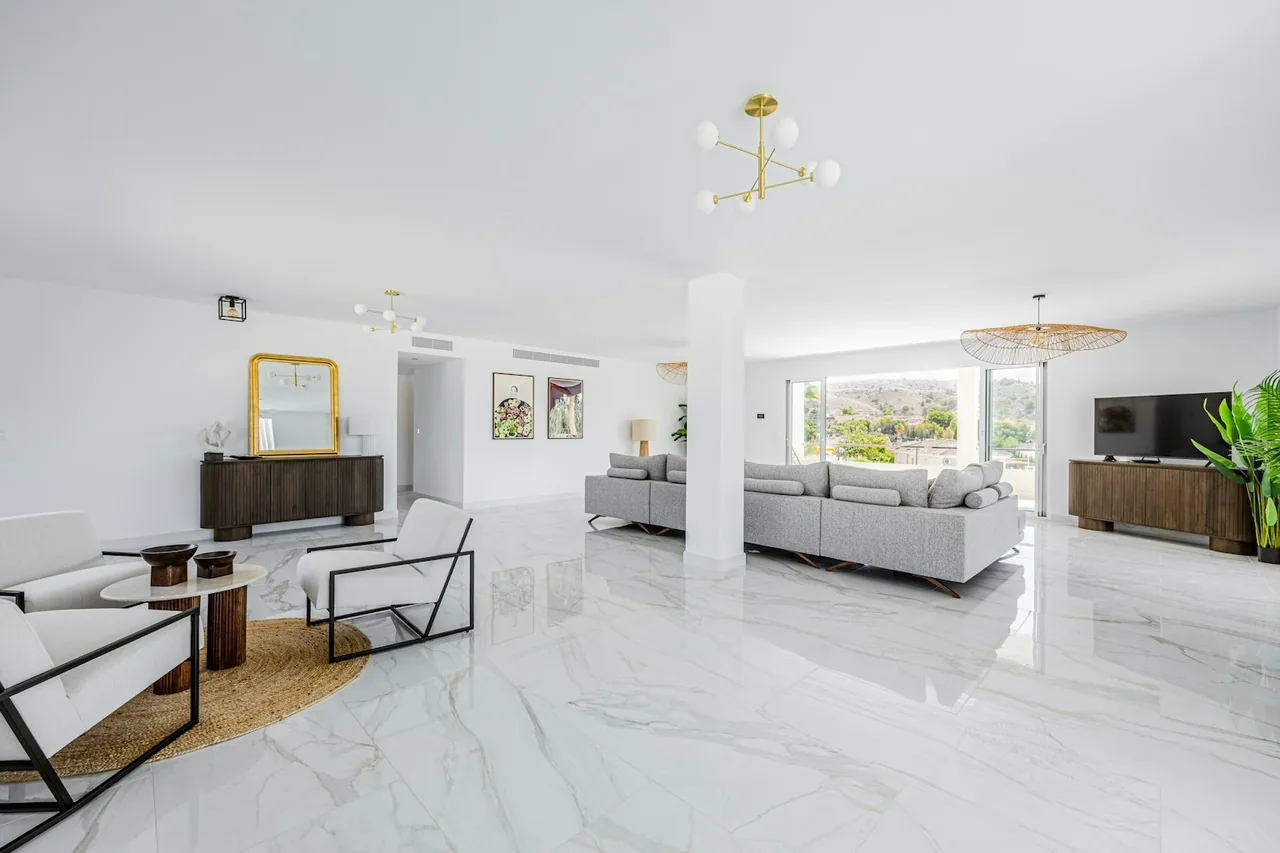
Cork flooring is a resilient floor made from cork-oak bark — harvested without felling the tree — that is soft, warm, and quiet underfoot. Choose it over its specialty siblings when comfort, acoustics, and sustainability matter more than hardness; it is the exact inverse of concrete or terrazzo on the same shelf, and softer than its plant-based cousin bamboo. Its resilience comes from millions of air-filled cells that cushion and warm — the floor even recovers from shallow dents as the crushed cells slowly spring back — but those same cells dent permanently under heavy point loads and need periodic resealing to resist moisture and wear. Get a free consultation and a written, itemized scope from a vetted installer before you buy, because with cork the room's comfort demand, its point loads, and its water exposure decide the floor — not the sample alone.
Cork's Whole Identity Is Resilience — Not Hardness
Most flooring is chosen, at least partly, for how hard and wear-resistant it is. Cork is chosen for the opposite quality, and understanding that inverts how you judge it. Cork is a resilient floor — meaning it compresses underfoot and springs back — because it is roughly half air by volume, a honeycomb of millions of sealed, air-filled cells in the bark of the cork oak. That cellular structure is the source of every property that makes cork worth choosing, and every limit that rules it out of the wrong rooms.
What the Air Cells Give You — Comfort, Warmth, and Quiet
What the air cells give you is comfort and warmth. Cork cushions footfalls, which makes it noticeably easier on legs, backs, and feet for anyone who stands for long stretches — in a kitchen, a studio, a workshop bench area, a laundry room — and far gentler on dropped dishes and on children at play than any hard floor. The same trapped air makes cork a natural thermal insulator, so it reads warm to bare feet rather than cold like tile, concrete, or stone. And it absorbs sound, both underfoot and between floors, which is why cork is a favorite for quiet bedrooms, home offices, music rooms, and condos over occupied space below.
Dents That Recover — the Resilience Advantage
Because cork's cells compress and re-inflate, the floor has a genuine advantage no hard floor shares: shallow impressions from foot traffic and light furniture often recover on their own as the crushed cells slowly spring back, especially in higher-density cork. This is the upside of the same softness that makes cork dent — light, temporary loads leave marks that fade, where a hard floor would simply scratch. The limit is that heavy, sustained point loads crush the cells past recovery, which is a different problem addressed later.
Naturally Antimicrobial and Genuinely Sustainable
Cork is also naturally antimicrobial: cork bark contains suberin, a waxy substance that makes it resistant to mold, mildew, and pests and that does not off-gas, which adds an indoor-air-quality and hygiene argument on top of comfort. And it is genuinely sustainable — the bark is stripped from a living tree every nine years or so and regrows, so harvesting cork does not kill the tree.
Judge Cork as a Comfort Floor, Not a Hardness Contest
The throughline is that everything good about cork and everything limiting about it flows from one fact: it is soft and full of air by design. Judge it as a comfort floor, not a hardness contest — the wrong lens (asking cork to be hard) is exactly how it ends up disappointing in the wrong room, when the right lens (asking it to be comfortable and quiet) is where it has no equal on the shelf.
Cork vs. Its Specialty Siblings — Read by Comfort, Not a Hardness Card
On the specialty shelf, cork is the comfort and acoustics specialist, and the honest way to place it is against each sibling on the one spec that sibling is judged by. The table below does exactly that: cork versus the floors it shares a shelf with, each on its own deciding metric — and cork's role reads clearest against its opposites.
| Specialty floor | Deciding spec it's judged by | How it compares to cork | Choose the sibling instead when |
|---|---|---|---|
| Cork (this page) | Comfort, resilience, sealing | Soft, warm, quiet, antimicrobial — the comfort specialist | — |
| Rubber | Resilience + thickness (impact) | The other resilient floor, but utilitarian and water-resistant where cork is refined and dry-only | Toughness, traction, and water resistance lead in a hard-use space |
| Bamboo | Janka hardness (lbf) | The other plant-based floor, but hard where cork is soft — hardness vs. cushioning | A hard, renewable wood-look plank leads over comfort |
| Concrete | Compressive strength + sheen | Cork's exact inverse — hard, cold, permanent | Maximum permanence and a modern slab look lead |
| Terrazzo | Longevity + matrix type | Hard, cold, generational — the opposite of cork's warm wear surface | A seamless, decorative, life-of-building floor leads |
| Epoxy | Adhesion + chemical resistance | A washable utility coating — no overlap with a comfort floor | Chemical resistance and washability lead in a garage or shop |
Two relationships matter most. Against bamboo, the other plant-based sustainable floor, cork and bamboo answer opposite demands from the same impulse — choose between them by whether the room wants hardness or cushioning. Against rubber, the other resilient floor, cork and rubber share softness and quiet but split on refinement and water: rubber is the utilitarian, water-resistant choice for gyms and utility rooms, cork the warm, residential comfort floor for living spaces. Compare them spec-for-spec with the material comparison tool, or step back to the whole shelf under specialty flooring.
The Specs That Matter for Cork — Wear Layer, Sealing, and Density
Cork is read by its construction and surface protection rather than a hardness number, because hardness is not what you are buying. The specs that predict how long a cork floor lasts are its wear layer, its sealing, and its density, and the table below lines them up against what each governs.
Construction and Wear Layer
Cork comes two main ways: solid cork tiles, typically glued down, and engineered cork planks with a cork wear layer over an HDF core that click together and float, much like laminate. The decisive durability spec is the surface finish protecting the cork — most cork arrives factory-finished with a tough UV-cured coating or is sealed on site, and that finish, not the cork itself, takes the daily abrasion. A thicker, better wear finish lasts longer before it needs renewal.
Sealing Is a Recurring Spec, Not a One-Time One
This is cork's defining maintenance requirement. Because cork is porous, its protective finish must be kept intact and periodically renewed — reapplying a compatible sealer or finish on a schedule the manufacturer specifies — to keep moisture, stains, and wear from reaching the cork. A sealed cork floor resists everyday spills; a cork floor whose seal has worn through becomes vulnerable exactly where it was protected. Treat periodic resealing as part of owning the floor.
Density and Recovery
Higher-density cork resists denting and recovers better from compression than cheap, low-density cork, and it wears longer.
Why Dent Recovery Is a Real Quality Differentiator
Because cork's softness is the whole point, dent recovery — how well the floor springs back after a load is removed — is a genuine quality differentiator, not a marketing line. High-density cork re-inflates its crushed cells more completely, so shallow impressions fade where low-density cork keeps them. Cork also fades: the natural color lightens under sustained UV, so direct sun is a real spec consideration, addressed with UV-stable finishes and window treatments.
| Spec | What it is | What to look for | What it governs |
|---|---|---|---|
| Construction | Glue-down tile vs. floating plank | Solid tile (glued) or cork-over-HDF (floating) | Install method and repairability |
| Wear finish | UV-cured or site-applied topcoat | Thicker, tougher factory finish | Daily abrasion and wear resistance |
| Sealing cadence | Recurring finish renewal | A stated resealing interval | Moisture and stain protection over time |
| Density | Cork mass per volume | Higher density | Dent resistance and recovery |
| UV stability | Fade resistance of the finish | UV-stable topcoat | Color hold under sunlight |
Read together, the message is that cork's longevity is bought with density and a maintained finish, not hardness — which is why the sealing interval belongs in the written scope alongside the product.
Want cork matched to a room it will actually last in?
We match you with a vetted installer who spec's the density and finish, flattens and moisture-tests the base, and states the resealing interval — in writing, before you commit to cork or a price.
Where Cork Works Best — and Where Point Loads and Water Defeat It
Cork shines in the rooms where comfort, warmth, and quiet lead and struggles where heavy loads or standing water rule.
Where a Comfort Floor Excels
It is excellent in kitchens — where its cushioning eases long stretches at the counter and warmth is welcome underfoot — and in laundry rooms and craft or hobby spaces where standing comfort matters, provided water is managed. It is a natural for bedrooms, home offices, music rooms, nurseries, and reading rooms, where its sound absorption and softness are exactly the point, and a strong, gentle choice for kid-friendly spaces where falls and dropped toys are constant. Its antimicrobial nature and warmth add to the case anywhere air quality and comfort are priorities.
Where Point Loads and Water Defeat It
Where cork is defeated is its two structural weaknesses: point loads and water. Because it is soft and air-filled, cork dents under concentrated heavy loads — the legs of a heavy appliance, a piano, a loaded bookshelf, or stiletto heels can leave permanent impressions past the point the cells recover, and high-density cork and wide furniture coasters only mitigate this, not eliminate it. And while a well-sealed cork floor handles everyday spills, cork is not for genuinely wet rooms: standing water and a worn seal let moisture into the porous material, where it swells and degrades, so full bathrooms, and most below-grade basements without rigorous moisture control, are poor fits. Direct, sustained sun fades it. The honest summary: cork is a comfort floor for dry-ish, normal-traffic living spaces, not a workhorse for wet or heavy-load rooms, where rubber or a slab-based floor serves better. When cork has dented, worn through its seal, or taken water damage, see flooring repair.

How Cork Flooring Is Installed
Cork installs by straightforward methods, but it is unforgiving of two things — a substrate that is not flat, and a finish that is not maintained. The six-step sequence below is where a cork floor succeeds or fails.
Confirm the Room Suits Cork
Before ordering, the room is checked against cork's limits: comfort and quiet as the demand, no genuinely wet exposure, and a plan for any heavy point loads. This is where cork is matched to a dry, comfort-driven space rather than forced into a wet or heavy-load room its softness cannot carry.
Flatten and Moisture-Test the Base
The substrate is made clean, dry, and flat, because cork is thin enough to telegraph an uneven base. Over concrete, the slab is moisture-tested by ASTM F2170 first — cork's vulnerability to moisture means a damp slab will reach and damage it from below — and a vapor barrier is added where needed.
Acclimate the Cork to the Room
Cork responds to humidity, so it acclimates to the room's conditions before install, exactly like a wood-based floor. Skipping this lets the floor move after it is down, opening gaps in a floated install or stressing a glued one.
Glue Tiles or Float Planks
Solid cork tiles are glued to the flat, dry substrate with the manufacturer's adhesive — the bond and the flatness matter. Engineered cork planks click together and float over a thin underlayment, and like any floating floor they need a continuous perimeter expansion gap so the floor can move with humidity without buckling.
Seal the Surface Before Use
Factory-finished cork arrives sealed and ready; site-finished cork is sealed after install with several coats of a compatible finish before any traffic. The seal is what stands between everyday spills and the porous cork beneath, so it is applied fully, not rushed.
Set the Resealing Schedule
A credible installer states the resealing interval up front, because the finish must be inspected and renewed over the floor's life. Keeping the seal intact is the ongoing step that makes cork last — the broader prep discipline is shared with flooring installation and subfloor prep.
Two of these six — a flat, moisture-tested base and a maintained seal — are where nearly every cork failure is born. An uneven base telegraphs through a thin floor; a worn seal lets water reach the porous cork. That is why a vetted installer treats the flat base and the sealing schedule as fixed, not optional.
Talk through your project — free.
A free consultation and a written, itemized quote from a vetted installer. No pressure, no obligation.
Is Cork Flooring Right for Your Space?
Whether cork is the right specialty floor is the output of a short chain that starts with the room's comfort demand and its two weaknesses. Walk it in order; each branch either eliminates cork or confirms it.
- Is comfort, warmth, or quiet the room's real demand? If standing comfort, warm bare feet, or sound absorption leads — a kitchen, a bedroom, a studio, a music room — cork is on the table. If hardness or water resistance leads instead, another floor on the shelf fits better.
- Will the room stay dry? Cork handles everyday spills when sealed but not standing water. A full bathroom or a damp basement without rigorous moisture control rules cork out; its water-resistant sibling rubber is the better fit for a genuinely wet space.
- Are there heavy point loads? A piano, a heavy commercial range, or loaded shelving will dent cork past recovery. If those are unavoidable, plan high-density cork plus wide coasters to mitigate — or reconsider cork for that zone.
- What is the substrate, and is it flat? Cork telegraphs an uneven base, so a flat, clean substrate is required; over concrete, the slab is moisture-tested by ASTM F2170 first. Leveling and moisture control are settled under substrate preparation.
- Does sustained sun reach the floor? Cork fades under prolonged UV, so plan UV-stable finishes and window treatments where direct sun lands. Confirm the final choice against the room under the flooring hub.
Run honestly, this tree either sends you to a water-resistant or harder floor or confirms cork for a dry, comfort-driven room — and an installer who pushes cork into a wet mudroom or under a piano is the red flag.
Caring for a Cork Floor — Gentle Cleaning and a Kept Seal
Cork is cared for gently, and its single non-negotiable is keeping the protective finish intact. Day to day, sweep or vacuum (with a hard-floor setting, no beater bar) to remove grit that abrades the finish, and damp-mop with a barely moist mop and a pH-neutral cleaner made for sealed cork or wood floors — never a soaking wet mop, never a steam mop, and never harsh or abrasive products that strip the seal. Wipe spills promptly so liquid never sits long enough to find a weak spot in the finish.
Protecting the floor from its two weaknesses does the rest. Felt pads under all furniture, wide coasters under heavy pieces, and area rugs in front of work zones distribute point loads and reduce denting; rugs at entries catch grit; and window treatments or UV-stable finishes slow the natural fading that sustained sun causes. The defining maintenance task, beyond cleaning, is periodic resealing on the manufacturer's schedule — reapplying the finish before it wears through, which keeps the porous cork protected against moisture and wear. When the finish has worn, a glued cork floor can often be lightly sanded and refinished; deeper denting, water damage, or worn-through tiles run into repair or replacement, work that lives under refinishing and restoration.
What Actually Drives the Cost of a Cork Floor
A cork quote is not a flat per-square-foot rate; the product tier and the substrate work move the total more than the square footage, ranked below by how much they swing it.
- Density and product tier. The biggest material swing. Higher-density cork with a tougher wear finish costs more than thin, low-density product — and it is exactly the tier that dents less and lasts longer, so the tier sets both the price and the performance.
- Substrate flatness and prep. Because cork telegraphs an uneven base, leveling a wavy substrate is real labor a flat floor avoids — and over concrete, moisture testing and a vapor barrier add to it.
- Construction and method. Glue-down solid tile and floating engineered plank carry different labor; a glued tile install over a prepared substrate is more hands-on than a floated click floor.
- Sealing on install and after. Site-finished cork needs several coats before use, and every cork floor carries a recurring resealing cost — a maintenance line the low-care floors avoid.
- Acclimation and site conditions. The days cork acclimates and the conditioned space it needs during install are part of a real job.
- Old-floor removal and transitions. Tear-out and disposal, plus thresholds and trim at doorways and material changes, add labor up front.
Because the tier and the substrate swing the total so widely, the only honest number comes from an on-site assessment. Compare what moves the price across the category in our cost guides, dig into the how-and-why in our guides, and size the job with the flooring cost calculator so you can read a quote critically.
Get an itemized scope, not a headline rate.
A vetted installer prices the cork tier, substrate prep, install method, and sealing — with the resealing interval stated — as separate lines, so you see the whole job, free and with no obligation.
How to Choose Cork Flooring — the Cork Comfort Fit Test
Cork is the right call when comfort, warmth, and quiet lead and the room stays dry-ish and free of heavy point loads — but density, sealing, and the room's demands decide whether it delights or disappoints. These six checks are the Cork Comfort Fit Test: pass all six and cork is the right floor for the room; fail one and you are buying comfort where the room needs toughness, or a floor its water or loads will defeat.
- 1. Standing comfort, warmth, and quiet are the priority
- Kitchens, studios, bedrooms, offices, nurseries, and music rooms reward cork's cushioning, warmth, and sound absorption like no hard floor can. If the deciding factor is hardness or water resistance instead, another floor on the shelf serves better.
- 2. The room stays dry enough
- Cork handles everyday spills when sealed but not standing water or a persistently damp slab. Keep it out of full bathrooms and un-controlled damp basements — where water leads, rubber or a slab floor is the honest choice, not cork.
- 3. Heavy point loads are planned for or avoided
- Pianos, heavy appliances, loaded shelving, and stiletto heels dent cork past recovery. Plan high-density cork and wide coasters where those exist, or reconsider cork for that zone — this is a built-in limit, not a defect.
- 4. The cork is higher-density with a tough wear finish
- Density drives dent resistance and recovery, and the surface finish — not the cork — takes the daily wear. A denser cork with a robust UV-cured finish lasts longer and dents less, which is exactly where cheap cork disappoints.
- 5. The base is flat and moisture-tested
- Cork telegraphs an uneven substrate and is damaged by a damp slab from below. Confirm the base will be flattened and, over concrete, moisture-tested by ASTM F2170 with a vapor barrier where needed — the prep cork's failures depend on.
- 6. The resealing schedule is committed to before you buy
- Cork's longevity depends on a maintained finish. Ask the installer for the resealing interval and the compatible product, and treat periodic resealing as part of owning the floor — skip it and the porous cork loses the protection that keeps everyday spills harmless.
Settle the room's demand and its two weaknesses first and the product almost names itself — which is exactly the order a credible installer walks with you.
Common Cork Flooring Mistakes, Consequences, and Prevention
Most cork failures come from asking a comfort floor to be hard or waterproof, or from skipping the base and the seal, each with a predictable consequence and a known prevention. Naming them is how you spot a corner being cut before your floor dents or swells.
| Mistake | What it causes | The prevention |
|---|---|---|
| Cork in a full bathroom or damp basement | Moisture reaches the porous core — swelling and degradation | Keep cork dry-only; use rubber or a slab floor where water leads |
| Heavy point loads without protection | Permanent dents past the cells' recovery | Use high-density cork and wide coasters, or avoid cork under a piano |
| Laying cork over an uneven base | The thin floor telegraphs every dip and high spot | Flatten and clean the substrate before install |
| No moisture test on a slab | A damp slab reaches and damages the cork from below | Test by ASTM F2170 and add a vapor barrier where needed |
| Letting the seal wear through | Everyday spills reach the porous cork where it was protected | Reseal on the maker's schedule — treat periodic resealing as ownership |
| Buying cheap low-density cork | Dents easily, recovers poorly, wears through fast | Spec higher-density cork with a tough UV-cured finish |
| Wet-mopping or steam-cleaning | Water finds a weak spot and strips the seal | Damp-mop barely moist with a pH-neutral cleaner; never steam |
Every row is a wrong-room or skipped-prep shortcut — which is why "we match cork to a dry room, flatten and test the base, and state the resealing interval, in writing" is the most valuable sentence in a cork quote.
Not sure cork suits your room's water and loads?
Tell us about your space and we'll match a vetted installer who matches cork to a dry, comfort-driven room — or steers you to a better floor for the wet or heavy-load spots — free and with no obligation.
Cork Flooring Glossary
The terms below recur across cork-flooring quotes, spec sheets, and warranties — each defined as its working meaning on an actual job site, so you can read a scope and judge whether it is complete.
- Cork resilience
- Cork's natural give underfoot from its cellular structure — what makes it soft, warm, and quiet, and what lets shallow dents recover as the crushed cells re-inflate, while heavy point loads dent it past recovery.
- Suberin
- The waxy substance in cork-oak bark that makes cork naturally antimicrobial and resistant to mold, mildew, and pests, and that does not off-gas — the source of cork's air-quality argument.
- Cork oak
- The evergreen oak (Quercus suber) whose bark is harvested for cork; the bark is stripped from the living tree roughly every nine years and regrows, so harvesting does not fell the tree.
- Solid cork tile
- A tile of pressed cork, typically glued down to a flat, dry substrate — the construction that can often be lightly sanded and refinished when the surface wears.
- Engineered cork plank
- A cork wear layer bonded over an HDF core that clicks together and floats over an underlayment, much like laminate — installed with a perimeter expansion gap.
- Wear layer / finish
- The tough, usually UV-cured topcoat protecting the cork — it, not the cork itself, takes the daily abrasion, and a thicker finish lasts longer before renewal.
- Periodic resealing
- The recurring renewal of cork's protective finish on the manufacturer's schedule — the defining maintenance task that keeps moisture and wear from reaching the porous cork.
- Density
- The mass of cork per volume — higher-density cork resists denting, recovers better from compression, and wears longer than cheap, low-density product.
- Dent recovery
- How completely a cork floor springs back after a load is removed — a real quality differentiator, since higher-density cork re-inflates its crushed cells more fully than low-density cork.
- Expansion gap
- The deliberate perimeter clearance a floating cork floor needs so it can move with humidity without buckling — hidden under trim.
- Acclimation
- Letting cork sit in the room until it reaches equilibrium with the home's humidity before install, so it stops moving after it is down.
- ASTM F2170
- The in-situ relative-humidity test that reads concrete-slab moisture from probes sealed at 40% of slab depth — run before cork goes over any slab, because moisture reaches cork from below.
Standards, Warranty Conditions, and When a Permit Applies
A cork warranty is a contract with conditions, and most denials are not about the product — they are about the base it was laid on, the seal that was kept, or the room it was put in.
Warranty Conditions That Hinge on the Install and Care
The conditions are specific and testable: a flat, clean substrate; slab moisture below the stated limit (by ASTM F2170) with a vapor barrier where needed; the cork acclimated; a continuous expansion gap on floated installs; and the finish maintained on the stated resealing schedule. Cork laid over an unflat or damp base, or left unsealed past its interval, voids coverage before the floor fails — and putting cork in a genuinely wet room can void it regardless of install quality. Ask in writing that the install follow the manufacturer's published instructions and that the resealing interval be stated.
The Standards and Certifications That Set the Bar
Because cork installs like a wood-based floor, its substrate flatness and moisture practice track the same discipline the NWFA defines for wood, and the moisture test is ASTM F2170; FloorScore certification confirms indoor air quality, complementing cork's naturally low-emitting suberin. A floor built and sealed to these holds its warranty and its comfort.
When a Cork-Flooring Permit Applies
Replacing a floor like-for-like usually does not require a permit, but structural subfloor repair or work tied to a larger renovation often does. A reputable installer tells you when one applies rather than working around it, and structural or moisture questions about the deck belong with the subfloor team first. When a cork floor is worn rather than damaged, the path may be refinishing a glued cork surface or full replacement of a dented or water-damaged floor.
A Real Cork Flooring Decision
The clearest way to see why cork is judged on comfort and its limits rather than hardness is to walk through one representative scenario where the room's demands fit cork in some spaces and ruled it out in others.
How to Vet a Cork Flooring Installer
Cork floors are won or lost on a flat base and a maintained seal, so the installer's prep and honesty about cork's limits matter as much as their hands. These questions separate a crew that respects cork's requirements from one that lays it like any plank.
- They match cork to a dry, comfort-driven room
- Ask why they recommend cork for your space. A real answer ties it to comfort, warmth, or quiet and steers it away from wet rooms and heavy-load zones — a crew that would lay cork in a full bathroom is a red flag.
- They flatten and moisture-test the base
- Ask how they prepare the substrate. A credible answer names flattening the base and, over concrete, an ASTM F2170 moisture test with a vapor barrier — cork telegraphs an uneven base and is damaged by a damp slab.
- They spec density and the wear finish
- Ask about the cork's density and finish. A professional names higher-density cork and a tough UV-cured finish, and can explain why that dents less and lasts longer than cheap cork.
- They acclimate cork and set an expansion gap
- Ask how they handle acclimation and floated installs. A real answer names acclimating cork to the room and a continuous perimeter expansion gap so the floor can move without buckling.
- They state the resealing interval up front
- Ask how often the floor must be resealed and with what product. A crew that can name the interval and the compatible finish understands cork's defining maintenance need.
- They put the scope, resealing schedule, and labor warranty in writing
- Ask for the full scope — product, substrate prep, method, sealing — the resealing schedule, and the workmanship warranty before work starts. A crew willing to name a labor guarantee, and to return if a seam lifts or the finish fails early, is accountable for the install.
Two honest answers — how they prep the base and what resealing interval they'll state — tell you more about a cork crew than any photo; the rest confirms it.
Why Route Your Cork Flooring Project Through Pro Work Home Surface
Pro Work Home Surface is not a contractor and does not lay your floor — we are a national authority on home surfaces that matches homeowners with vetted local installers and holds them to a published bar. These are the standards we expect on every cork flooring project we connect.
- Material matched to a dry, comfort-driven room, in writing
- Cork is chosen because comfort, warmth, and quiet are the room's real demand — and kept out of wet rooms and heavy point-load situations its softness can't carry, with the reasoning explained before you buy rather than discovered after a dent or water damage.
- Flat, moisture-tested base and proper acclimation
- The substrate is flat and clean, slabs are tested by ASTM F2170 with a moisture barrier where needed, the cork acclimates to the room, and floated installs get a continuous expansion gap — the prep cork's denting and moisture failures depend on is never skipped.
- Sealed and finished to the manufacturer's instructions, with the resealing interval stated
- Site-finished cork gets its full coats before use, factory-finished cork's coating is respected, and the periodic resealing schedule that keeps the porous material protected is given to you up front — so the finish, and the floor, last.
- National coverage, local crews
- We match you with installers in your area nationwide, so the standard is consistent even though the crew is local — whether your project is a single studio or a whole main floor.
Every connection starts the same way: a free consultation and a written, itemized quote from a vetted installer, with no obligation. If your project also involves refinishing a tired cork finish or full replacement of a dented or water-damaged floor, the same standards apply — and you can weigh cork against its siblings under specialty flooring, compare cost factors in our cost guides, or dig into the how-and-why in our guides. Cork is one option on a shelf we cover in full; start from the flooring hub, or zoom out to all home surfaces.
Brands & Material Authority
Quality and construction drive long-term performance more than the label. These are widely respected names in this category:
- Shaw
- Mohawk
- COREtec
- Armstrong
- Pergo
- Mannington
- Bruce
- Karndean