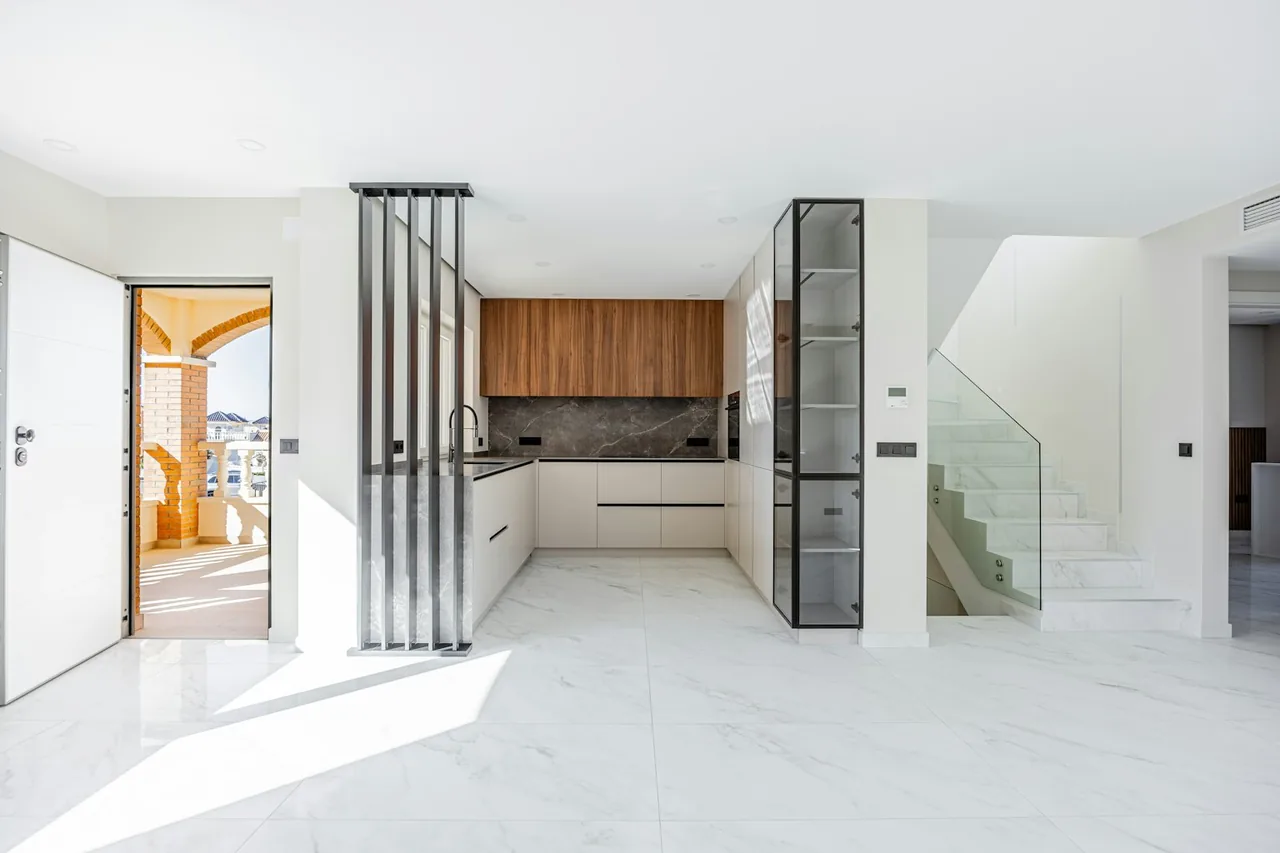
The best pet-friendly flooring is chosen for three things a dog or cat does to a floor every day: claw abrasion, accidents, and the traction an animal needs to walk without slipping. That combination — scratch resistance and a sealed surface that keeps urine off the subfloor and grip for aging joints — decides the room, which is why a hard, waterproof, matte surface beats a soft wood almost every time. The best answers are scratch-resistant rigid-core vinyl, porcelain tile, and stain-resistant carpet, each strong on a different demand, with high-AC laminate a conditional option and soft hardwood cautioned. The quiet third spec is traction: a glossy floor an old dog's legs slide out on is the wrong floor, however pretty. Get a free consultation and a written, itemized scope from a vetted installer that names the material's scratch rating, its wear-layer mil or AC class, and how accidents are sealed out at the seams before a single box is ordered.
A Pet Floor Fails at the Claw and the Seam, Not the Showroom
The plank or tile that photographs well matters least to whether a floor survives animals. What separates a floor still clean and unscratched in ten years from one covered in claw marks and odor in two is whether it was matched to the three things pets actually do — because a home with animals delivers all three, daily and unforgiving of the wrong material.
Four Demands Stack on a Pet Floor at Once
A home with a dog or cat asks more of its floor than a home without, and the demands are specific and simultaneous. A floor that answers only one of them disappoints fast:
- Claw abrasion — dog nails and the scrabble of a cat are constant, concentrated point-scratches that fall hardest on running paths, doorways, and the pivot spot by the door; a soft surface shows every mark.
- Accidents and moisture — house-training mishaps, a knocked water bowl, wet paws after a rainy walk; liquid that soaks into a seam or a porous surface stains, breeds odor, and reaches the subfloor.
- Traction — an animal needs grip to walk, run, and brake, and a slick floor is genuinely hard on a pet: puppies slide and aging or large-breed dogs struggle to stand, stressing their joints over time.
- Hair, dander, and cleanability — a pet floor has to sweep and mop easily and forgive how often you will do it, without trapping fur in a texture that fights the vacuum.
Those four — scratch, moisture, traction, and cleanability — are the real brief. The best-looking floor that fails any one of them is the wrong floor for a home with animals, which is why the room rewards a fixed priority: scratch and moisture resistance first, because those are the failures that ruin a floor rather than merely wearing it, then traction, then cleanability.
Read the Animal, Not the Sample
Most people shop a pet floor backward — color first, scratch rating last — and land a beautiful floor a dog wrecks in a season. Read the household in its real order of failure and the shortlist gets short quickly. The look you love has to fit inside a genuine scratch rating, a waterproof core, and a matte, grippy finish sized to the size, age, and number of your animals — not the other way around. Everything below builds that order into a decision you can hand an installer.
The Pet Floor Deciders: Four Specs Before Any Sample Wins
A pet floor is bought on how it handles claws, accidents, and grip, and four published specs predict how a sample will actually live with animals. Each has a documented failure attached to ignoring it, and a floor that fails any one is the wrong floor no matter how it photographs. Call it the Pet Floor Fit Test: pass all six checks and the household stops wrecking floors; miss one and you are buying a future refinish, a permanent stain, or a dog that can't stand up.
- 1. Scratch resistance (wear layer / AC class / Janka)
- The claw spec, expressed differently by material. Vinyl's wear layer in mil resists claw scratches — 12 mil for most homes, 20 mil for large dogs. Laminate is graded by its AC rating (Abrasion Class), where a pet home wants AC4 or AC5. Hardwood is graded by Janka hardness in pounds-force — a pet home leans to a hard species, never a soft one.
- 2. 100% waterproof core (for accidents)
- The accident spec. A genuinely waterproof rigid SPC or WPC core will not swell when urine or a knocked bowl sits on it, so an accident wipes up before it reaches the subfloor. Water-resistant is not enough where a puppy or an aging pet has accidents; a laundry-grade waterproof warranty is the standard.
- 3. Traction / slip resistance (DCOF)
- The underrated pet spec. An animal needs grip, and a slick floor stresses a dog's joints and leaves puppies sliding. Tile rates traction by DCOF — DCOF, dynamic coefficient of friction — and a value of 0.42 or higher per ANSI A137.1 means a floor a dog can grip, steering you to a textured or matte finish over a polished one.
- 4. Stain release and odor resistance
- For a porous surface, the spec is whether it releases an accident or locks it in. On carpet, solution-dyed fiber (color through the strand) plus a factory stain-release finish sheds urine rather than absorbing it; on tile, sealed grout keeps the joint from staining; on a non-waterproof floor, an accident that reaches the core leaves permanent odor.
- 5. Water absorption (for tile)
- Porcelain absorbs under 0.5% water by ASTM C373, which makes the tile body impervious to an accident — the water defense on a tile floor shifts entirely to the grout. Ceramic absorbs more (0.5% to 3%+), a half-step down for a busy pet floor.
- 6. Cleanability and texture
- A pet floor is swept and mopped constantly, so the surface must clean completely and not trap hair or dander in a deep texture. A smooth-but-matte finish threads the needle — grippy enough for paws, easy enough to keep — where a heavily embossed surface fights the vacuum.
Three of these six — the scratch rating, the waterproof core, and the traction finish — are exactly the corners a low bid rounds off, because a thicker wear layer, a true waterproof core, and a slip-rated tile cost more per square foot. That is why the fit test is non-negotiable: every check predicts a specific way a pet home can win or lose.
Want the scratch rating and traction confirmed before you buy?
We match you with a vetted installer who names the material's scratch rating, waterproof core, and DCOF in a written scope — sized to your animals, before you commit to a color or a price.
Pet-Friendly Flooring Specifications That Decide the Room
The specs that gate a pet floor are published, testable, and map directly onto scratch, moisture, and traction — from the scratch rating that separates a survivor from a scratched floor, through the waterproof core that stops an accident, to the traction spec that keeps a dog on its feet.
The Scratch Rating Is the Pet Floor's Controlling Spec
Claw abrasion is the failure most visible in a pet home, so the scratch rating governs the choice. How it is expressed depends on the material.
Vinyl and Laminate: Wear Layer and AC Class
For resilient and laminate floors, the scratch spec to demand is a thick wear layer on vinyl or a high AC rating on laminate. The distinction from a wood finish is physical: these are engineered wear surfaces built to take abrasion, not a thin top coat over softer material.
Why Wear-Layer Mil Predicts Claw Survival
A vinyl floor's clear wear layer, measured in mil (thousandths of an inch), is the layer claws actually meet — a 12 mil layer suits most pet homes, and 20 mil stands up to large dogs and heavy runs. The thicker the layer, the longer the printed pattern survives the concentrated point-scratch of a nail. Laminate does the same job through its AC rating: AC4 to AC5 grades a wear surface that resists claw abrasion far better than a soft wood finish, which is why high-AC laminate is a legitimate pet option where the room stays dry.
Why Even AC5 Laminate Is Conditional in a Pet Home
A high-AC laminate resists claws well, but its HDF core is the catch: standard laminate swells permanently when an accident reaches an unsealed seam, and a puppy or an incontinent older pet guarantees accidents. So laminate earns a pet home only where accidents are unlikely, or in a waterproof laminate line read carefully against its hours-of-exposure warranty. For a home with real accident risk, a scratch-resistant vinyl gives the same wood look with a waterproof core — the safer pet default.
Hardwood: Janka Hardness and the Soft-Wood Warning
For real wood, the scratch spec is Janka hardness in pounds-force (lbf): the higher the number, the better a species resists denting and clawing. A pet home leans to hard species like hickory near 1820 lbf or closed-grain white oak, and away from soft ones like American walnut near 1010 lbf, which dents and scratches under claws. The honest caveat: no wood is truly claw-proof, and an oil-finished or hand-scraped floor with a thin top coat shows pet wear within months.
The Waterproof Core Stops the Accident
On a resilient pet floor, a genuinely waterproof rigid core is the spec that decides whether an accident is a wipe or a stain. An SPC or WPC core absorbs essentially no water, so urine, a knocked bowl, or wet paws never reach the subfloor — provided the seams are sealed and the perimeter contained. It is why a waterproof core plus a sealed seam beats a water-resistant surface for any household with a puppy or an aging animal.
The Specs That Matter for Pets, and What to Look For
Before the material-by-material verdict, it helps to see each pet-deciding spec on its own — what it measures, why it matters with animals specifically, and the number or feature to demand on a spec sheet.
| Spec | Why it matters with pets | What to look for |
|---|---|---|
| Wear-layer mil (vinyl) | Claws meet the clear top layer; a thin one scratches fast | 12 mil for most homes, 20 mil for large dogs |
| AC rating (laminate) | Grades how the wear surface resists claw abrasion | AC4–AC5; keep the room dry or go waterproof-rated |
| Janka hardness (wood) | Soft species dent and scratch under nails | Hard species (hickory's hardness ~1820 lbf), factory finish |
| 100% waterproof core | An accident that reaches the core leaves permanent odor | An SPC/WPC core with a written waterproof warranty |
| Traction (DCOF) | A slick floor slides puppies and stresses aging joints | DCOF 0.42+ (ANSI A137.1) — a matte or textured finish |
| Stain release (carpet) | Untreated fiber locks urine in the pile and pad | Solution-dyed fiber + stain-release over a moisture-barrier pad |
Pet Material Fit, Rated Spec-by-Spec
The table below is the room's ranking made explicit: each candidate material against the pet deciders and a verdict for a home with animals. These are recognized figures — the printed spec for your product always governs, and where it is stricter, the stricter number wins.
| Material | Scratch resistance | Accident behavior | Traction & comfort | Verdict for pets |
|---|---|---|---|---|
| Scratch-resistant LVP (SPC) | Strong — 12–20 mil wear layer | Waterproof core; wipes up | Warm, quiet; matte for grip | Best all-round — the modern default |
| Porcelain tile | Near scratch-proof; high PEI | Impervious, <0.5%; seal grout | Hard, cold; matte for DCOF 0.42+ | Most indestructible; least comfortable |
| Stain-resistant carpet | Pile crushes under traffic, not clawed | Solution-dyed sheds spills; needs a barrier pad | Softest, warmest, best traction | Best for soft rooms; not for a training puppy |
| High-AC laminate (AC5) | Strong claw resistance — AC5 | HDF core swells if an accident reaches a seam | Warm; can read slick if glossy | Conditional — dry rooms or waterproof-rated only |
| Hard hardwood (hickory/white oak) | Best hard species dent, no wood is claw-proof | Accidents stain and swell wood | Warm, handsome; can be slick when finished | Real wood, eyes open — hard species, factory finish |
| Soft wood & oil finishes | Poor — American walnut ~1010 lbf scratches fast | Accidents bloom and hold odor | Warm but delicate | Avoid — claws and accidents are wood's two enemies |
The pattern across the top tier is consistent: the pet home rewards a hard, waterproof, matte surface and penalizes anything soft, porous, or slick. Pick the look you love inside that constraint, never outside it — and to weigh the leading options, see our best flooring for pets guide, then size the room with the flooring cost calculator.
The Best Pet-Friendly Flooring, Ranked — and Why
The ranking follows the room's priority order: scratch and accident resistance, then traction, then comfort. Every option below is matched to how a home with animals actually lives.
Scratch-Resistant Rigid-Core Vinyl: The Modern Default
A scratch-resistant SPC luxury vinyl plank is the best all-around pet floor and the one most homes should start with. A rigid SPC core is genuinely waterproof, so accidents wipe up before they reach the subfloor, and a tough wear layer — 12 mil and up — resists claw scratches far better than a wood finish. It gives a wood look without wood's vulnerability, comes in matte and textured finishes that add traction for paws, and is warm and quiet enough for the dog to lie on. Choose a higher-mil wear layer for big dogs and busy runs; the trade is that a very soft product can still show a determined claw, so wear layer and core quality matter. Start at vinyl flooring.
Porcelain Tile: The Indestructible Choice
Porcelain is the most indestructible pet floor — the one that simply does not scratch and does not absorb. Its body absorbs under 0.5% water, so accidents never reach it, and a high PEI rating means claws and traffic do nothing to the surface. With a textured or matte finish it gives a pet good traction, cleans completely, and holds no odor. Its trade-offs are a hard, cold surface (an older dog will want a soft bed and rugs) and grout lines that should be sealed so accidents do not stain the joints — and wood-look porcelain delivers a plank appearance that is equally claw-proof. For a home with large dogs or many animals, it is the floor that outlasts them. See tile flooring.
Stain-Resistant Carpet: Softness Without Surrender
a solution-dyed carpet fiber is the right answer where you want softness — a bedroom, a stair, a den the pet shares — without surrendering to stains. Solution-dyed fiber carries its color all the way through, so it resists bleaching and releases spills rather than locking them in, and factory stain-release treatments shed accidents if you blot them promptly. Paired with a moisture-barrier pad, it keeps the worst of an accident off the subfloor, and modular carpet tile lets you replace a single stained square instead of the room. It will never match tile or vinyl for a house-training puppy, but for soft comfort in a pet home it is the realistic choice. See the wider carpet category.
Hard Hardwood and High-AC Laminate: The Conditional Options
If you want real wood, the pet-tolerant path is a hard species — the 1820 lbf Janka of hickory flooring or closed-grain white white oak — with a tough factory finish, accepting that claws and accidents remain wood's two enemies. A high-AC laminate (AC5) resists claws well and suits a dry pet room, but its HDF core swells if an accident reaches a seam, so it is conditional on the room staying dry or being a waterproof-rated line. The pattern across this tier holds: every top choice is hard, waterproof, and matte, and the room punishes anything soft, porous, or slick.
What to Avoid in a Pet Home
Some materials are simply the wrong tool for a home with animals, and the reasons are specific, not snobbery. Soft hardwood and delicate wood finishes are the clearest mistake — a low-Janka species like American walnut dents and scratches under claws, and oil-finished, wire-brushed, or hand-scraped floors with thin top coats show pet wear quickly; if you must have wood, go hard and factory-finished and understand the limits. Standard (non-waterproof) laminate swells at the seams when an accident reaches it, so the pet-correct substitute is a scratch-resistant vinyl in the same wood visual. Untreated or high-pile carpet in a pet's main path traps odor, mats under traffic, and lets accidents into the pad and subfloor — if carpet is wanted, it must be the solution-dyed, stain-resistant kind over a moisture-barrier pad. And any high-gloss or polished surface is hard on a pet's footing and joints, regardless of how scratch-proof it is. The rule that covers all of these: choose hard, waterproof, and matte, and treat softness as a deliberate exception in low-accident rooms.
How a Pet-Friendly Floor Is Installed — the Room-Specific Sequence
Installing a floor for animals is mostly standard work with a few pet-driven choices that pay off for years — and they decide whether the floor sheds accidents and holds traction as much as the material does. The six steps below are the full arc, each aimed at claws, accidents, and grip.
Assess the Substrate and the Household
The installer measures the space, checks the substrate for flatness and deflection, and maps the pet zones — the running paths, the door where a dog pivots, the crate, the feeding station, the training area. The material and finish are matched here to the size, age, and number of animals before anything is ordered.
Test Moisture and Correct Flatness
Concrete is read by ASTM F2170 against the flooring maker's cap; the surface is checked with a straightedge to the 3/16" over 10 ft tolerance. High spots are ground and low spots self-leveled, so a waterproof floor bonds flat and does not develop the hollow spots pet traffic finds.
Set the Moisture-Barrier Layer for Accidents
Under carpet in a pet room, a moisture-barrier or pet-specific pad is the single most valuable upgrade — it stops an accident from reaching the subfloor and the permanent odor that follows. Under a resilient floor over a slab, a moisture-control layer manages vapor from below; under tile, a waterproofed base protects the joints.
Choose the Matte, Grippy Finish at Install
On hard floors, specifying a textured or matte finish reading DCOF 0.42+ gives the animal traction from day one — a detail chosen now, not retrofitted. A glossy floor, however scratch-proof, leaves a dog scrambling, so the finish is a pet decision as much as the material.
Seal the Seams and Detail the Pet Zones
The floor goes in by its method — clicked as waterproof vinyl with sealed joints, thinset-set as tile with sealed grout, or laid as stain-resistant carpet over its barrier pad — with a 1/4"–3/8" expansion gap on floating floors. A waterproof surface or a hard, sealed material goes under the crate, the feeding station, and the pet door where spills concentrate.
Finish Transitions, Add Runners, and Walk It
Thresholds bridge to adjoining rooms, runners are planned on the main paths for an aging dog's footing, and the installer walks the space with you to review care, the grout-seal schedule, and how modular carpet tiles are swapped if a square is ruined.
Skip or rush any one of these six and the failure it was meant to prevent shows up later as a scratch, a stain, or a sliding dog — which is why a vetted installer treats the sequence as fixed, not optional.
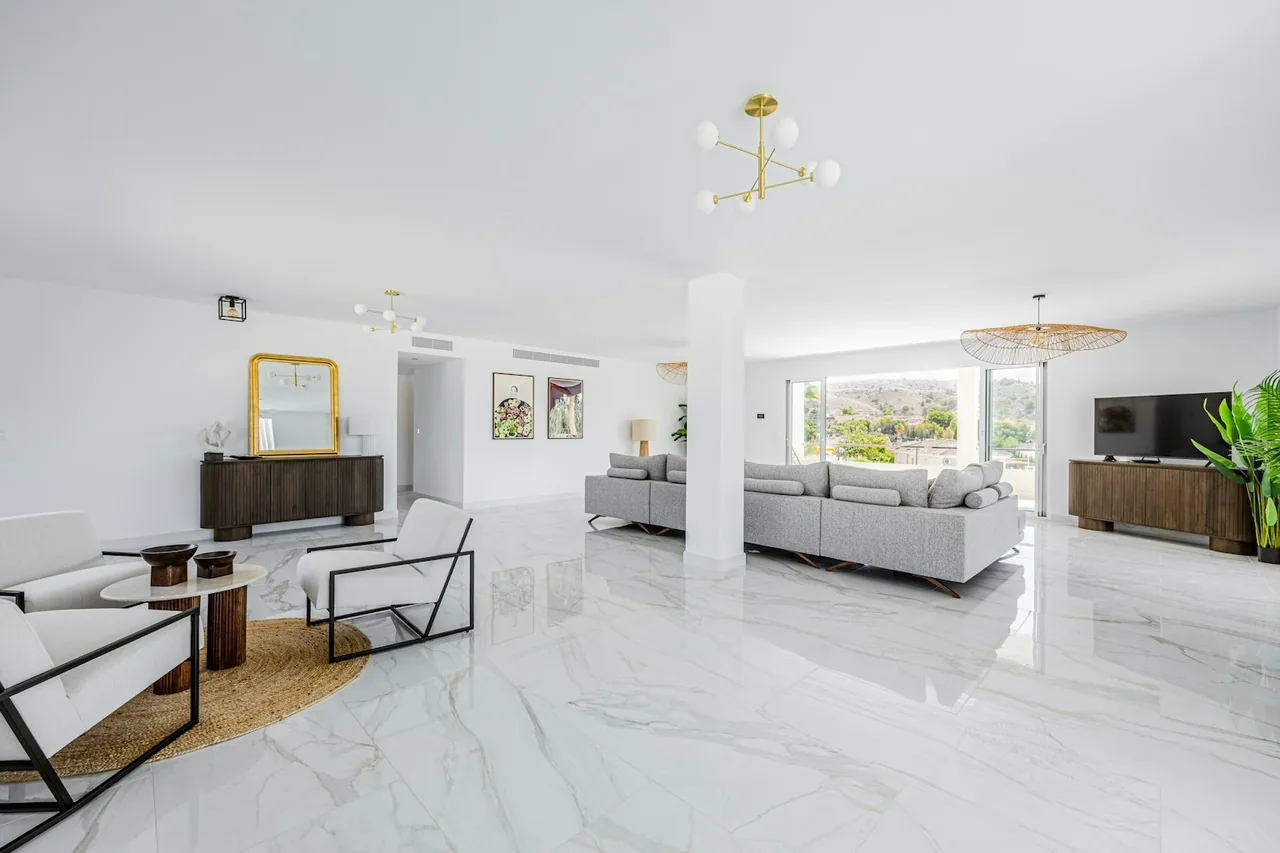
Common Pet-Friendly Flooring Mistakes, Consequences, and Prevention
Most pet-floor failures are the same handful of shortcuts, each with a predictable consequence and a known prevention. Naming them is how you spot a corner being cut before it is buried under your floor.
| Mistake | What it causes | The prevention |
|---|---|---|
| Soft wood or a thin oil finish | A web of claw scratches along the dog's running line within months | Choose a hard species and a tough factory finish, or a scratch-resistant vinyl |
| A water-resistant floor for a training pet | An accident reaches the core and leaves permanent odor | Specify a waterproof rigid core with sealed seams for accident-prone rooms |
| High-gloss or polished surface | Puppies slide and an aging dog can't stand — joint strain over time | Choose a matte or textured finish reading DCOF 0.42+, add runners |
| Untreated or high-pile carpet in a pet path | Trapped odor, matting, and accidents into the pad and subfloor | Solution-dyed stain-resistant carpet over a moisture-barrier pad |
| Unsealed grout on a tile pet floor | Accidents stain the joints and hold odor | Seal the grout or specify an inherently stain-resistant type |
| Standard laminate in an accident-prone room | The HDF core swells at the seam the first time an accident sits | Use a scratch-resistant vinyl, or a rated a waterproof laminate line at most |
| Ignoring the pet zones at install | Spills at the crate, bowl, and door soak an unprotected floor | Put a waterproof, sealed surface under the crate, feeding station, and pet door |
Every row is a documented way a pet floor fails early — which is why "we spec for scratch, accidents, and traction, and detail the pet zones in writing" is the most valuable sentence in a pet-home quote.
Which Flooring Is Right for Your Pets?
The right pet floor is the output of a short chain of honest answers about the animal, the room, and the accident risk you are managing right now. Walk it in order; each branch eliminates options the household rules out, and what survives is your defensible choice.
- Are you house-training a puppy or managing an incontinent older pet right now? If yes, you are choosing a fully waterproof, easy-clean surface for the main rooms — porcelain tile or waterproof vinyl — so accidents are a wipe-up, not a stain. Save soft flooring for rooms the animal can't reach.
- Do you have large dogs, multiple pets, or active indoor runs? If yes, lead with hardness and waterproofing: a high-mil (20 mil) scratch-resistant SPC vinyl, or porcelain tile where you want the truly indestructible floor. Both shrug off claws and seal out accidents.
- Does an aging or large-breed dog slip on your hard floors? If yes, prioritize traction — a matte or textured surface with a DCOF 0.42+ plus runners on the main paths. A glossy floor, however scratch-proof, is the wrong floor for a dog with footing trouble.
- Do you want softness in a bedroom or den the pet shares? If yes, solution-dyed stain-resistant carpet over a moisture-barrier pad is the realistic soft choice; modular modular carpet tile lets you replace one stained square instead of recarpeting.
- Do you truly want real wood despite pets? If so, go hard and factory-finished — a hard hickory species or white oak — keep nails trimmed, and accept that no wood is fully claw- or accident-proof; a scratch-resistant wood-look vinyl is the safer substitute.
Run honestly, this tree almost always returns a single defensible floor — and an installer who recommends the same material for every pet home regardless of the answers is the red flag.
Not sure which surface your animals actually need?
Tell us about your pets and how they use the space, and we will match a vetted installer who names the right material for the household, details the pet zones, and puts it in writing.
Traction, Footing, and the Aging Dog
Beyond scratch and accidents, a pet floor is a surface an animal has to move on safely, so how it grips matters more in a pet home than a floor's looks ever will — especially as a dog ages.
Why a Slick Floor Is a Health Issue, Not Just an Annoyance
A polished tile or a high-gloss plank leaves a dog scrambling for footing, and over time that is a genuine strain: puppies slide and can injure themselves, and aging or large-breed dogs struggle to stand and to brake, stressing hips and joints. The fix is built into the finish — a textured or matte surface reading DCOF 0.42+ gives the traction a dog needs to walk and run normally. This is why a pet floor's finish is a health decision, and why the grippiest of two otherwise equal waterproof options is the right pick for a home with an older animal.
Runners, Rugs, and the Main Paths
Even a well-chosen floor benefits from runners on the routes a dog travels most — the hallway, the path to the door, the stairs — where washable, non-slip runners add footing and take the brunt of the claw wear. Keeping nails trimmed does as much as any product: short claws scratch far less and grip better, extending the life of any pet floor. The floor's traction spec sets the baseline; runners and trimmed nails close the rest of the gap for the animal that lives on it.
Want a floor that fits your animals, not the showroom?
We match you with a vetted installer who sizes the scratch rating, waterproofing, and traction to your dogs and cats — and details the crate, bowl, and pet-door zones in writing.
What Actually Drives the Cost of a Pet-Friendly Floor
A pet-floor quote is not a flat per-square-foot rate; the headline number a low bid leads with hides the items below, ranked by how much they move the total for a home with animals.
- Material grade and scratch spec. The product and its wear layer, AC class, or species hardness set the baseline — a 20 mil vinyl, an AC5 laminate, or a hard hardwood price differently, and speccing up the scratch resistance for big dogs is money well spent.
- Waterproof core and seam sealing. A genuinely waterproof product with sealed click joints costs more than a water-resistant floor — and it is exactly what stops an accident from becoming a permanent stain.
- Moisture-barrier pad and underlayment. Under carpet, a pet-specific moisture-barrier pad is a small line item that keeps accidents off the subfloor; under a resilient floor, a moisture-control layer over a slab does the same.
- Substrate prep and flatness. Grinding and self-leveling to tolerance so a waterproof floor bonds flat and pet traffic finds no hollow spot is real material and labor a flat substrate avoids.
- Slip-rated finish and grout sealing. A textured or matte, slip-rated tile and a sealed or stain-resistant grout are the line items that deliver traction and keep the joints from staining.
- Old-floor removal and disposal. Tear-out is labor and haul-away is a fee — and removal often exposes accident-soaked subfloor or an out-of-tolerance substrate that changes scope mid-job, which is why it belongs in the written quote up front.
- Modular carpet tile vs. broadloom. Carpet tile in pet zones costs more upfront than broadloom but lets you replace one ruined square instead of the room — a real long-run saving in a pet home.
- Transitions and runners. Thresholds at every doorway and planned runner paths for an aging dog add up across the connected space.
Because these drivers swing so widely, the only honest number comes from an on-site assessment. Compare what moves the price across the category in our cost guides, and size your own space first with the material comparison tool so you can read a quote critically.
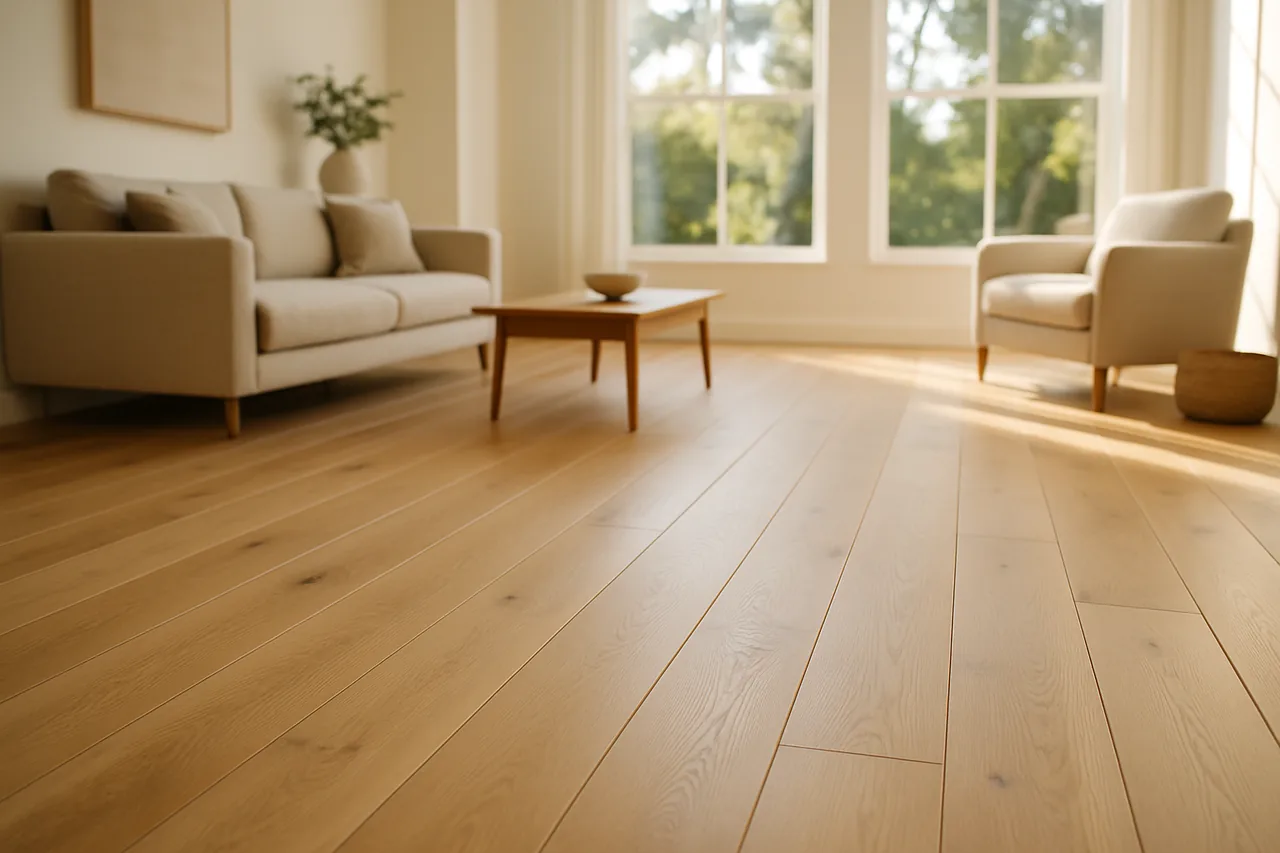
Keeping a Pet Floor Looking New
A floor chosen for animals is easy to keep, and the care that protects it is mostly habit — each targeting a failure mode the household creates.
Keep nails trimmed, because short claws scratch far less and grip better — this single habit extends the life of any pet floor, especially wood. Wipe accidents promptly: on a waterproof vinyl or tile floor a quick wipe is the whole story, while on carpet, blot (do not rub) and treat the spot before it sets. Sweep or vacuum hair and grit regularly, since grit underfoot is an abrasive that dulls a finish over time, and place mats at the doors and under water bowls to catch the wet-paw and splash zones. For the surfaces themselves, clean vinyl and tile with a pH-neutral cleaner, reseal tile grout periodically so accidents cannot stain the joints, and on carpet run a deep extraction cleaning on a sensible schedule to lift embedded dander and any residual odor. The advantage of the recommended pet floors is recoverability: a scratched waterproof vinyl plank can be swapped, a cracked tile replaced one piece at a time, a stained carpet tile lifted and renewed — all without redoing the room. When a pet floor is damaged rather than dirty, see flooring repair; when a hard-species wood floor is simply scratched and dull from years of claws, refinishing can renew the finish, and when accidents have reached the subfloor, address the deck before relaying — a systemic problem points to full replacement rather than a patch.
Talk through your project — free.
A free consultation and a written, itemized quote from a vetted installer. No pressure, no obligation.
Pet-Friendly Flooring Glossary
The terms below recur in every pet-floor quote, spec sheet, and warranty — each defined as its working meaning in a home with animals, so you can read a scope and judge whether it is complete.
- Claw abrasion
- The concentrated point-scratching of dog nails and a cat's scrabble, falling hardest on running paths and doorways — the wear a pet floor's scratch rating is chosen to resist.
- Wear-layer mil
- The thickness of luxury vinyl's clear top layer in mils — the layer claws meet, and the spec that predicts scratch survival. 12 mil for most homes, 20 mil for large dogs.
- AC rating
- Laminate's Abrasion Class (AC1–AC5) grading how the wear surface resists traffic and claw abrasion. A pet home wants AC4–AC5, and a dry room or a waterproof-rated core.
- Janka hardness
- The pounds-force needed to dent a wood species — the rating that predicts how hardwood survives claws. A pet home leans to hard species; red oak sits near 1290 lbf, hickory near 1820 lbf.
- SPC core
- Stone-plastic composite — a dense, rigid, mineral-based vinyl core that is dimensionally stable and fully waterproof, so an accident wipes up instead of soaking in.
- WPC core
- Wood-plastic composite — a rigid vinyl core with a slightly softer, warmer feel than SPC, also waterproof and pet-suitable.
- Waterproof vs. water-resistant
- Waterproof means the core will not swell when an accident sits on it; water-resistant only survives a quickly wiped spill. A training or aging pet needs waterproof.
- DCOF
- Dynamic coefficient of friction — the wet-slip rating per ANSI A137.1. A pet floor should read 0.42 or higher so a dog can grip rather than slide.
- PEI rating
- The Porcelain Enamel Institute abrasion class (I–V) grading how a tile survives traffic and claws. A busy pet floor wants at least PEI III–IV.
- Solution-dyed fiber
- Carpet fiber colored all the way through the strand, so it resists bleaching and releases a spill rather than locking it in — the pet-correct carpet construction.
- Moisture-barrier pad
- A carpet pad that blocks an accident from passing into the subfloor and leaving permanent odor — the single most valuable upgrade in a carpeted pet room.
- Water absorption
- The percentage of water a tile takes on by ASTM C373. Porcelain absorbs under 0.5% (impervious to an accident); ceramic more.
Standards, Warranty Conditions, and What a Pet Floor Must Meet
A manufacturer's warranty is a contract with conditions, and in a pet home some denials trace to how a "scratch-resistant" or "waterproof" claim was actually installed and maintained.
Warranty Conditions That Matter in a Pet Home
The conditions are specific: substrate moisture below a stated limit, the material acclimated, only approved underlayments used, the expansion gap and seams detailed, and — for a waterproof claim — the joints sealed as specified. A "pet warranty" on scratch or stain resistance typically has its own terms (prompt cleanup of accidents, an approved cleaner, trimmed nails), so read what it actually covers. An installer who leaves a seam unsealed on a waterproof floor, or lays a water-resistant product where accidents are guaranteed, has weakened your coverage before you notice. Ask in writing that the install follow the manufacturer's published instructions.
The Standards Bodies Behind a Pet Floor
Standards govern the rest. The TCNA and ANSI set tile installation and the A137.1 DCOF slip standard; the NWFA governs wood acclimation and the flatness tolerance; ASTM C373 defines the tile water-absorption test. A floor built to these holds its warranty and its footing. When a hard-species wood floor is scratched from years of claws rather than damaged, the better path may be refinishing over a fresh install — and structural questions about a subfloor that took accidents belong with the subfloor team first.
A Real Pet-Friendly Flooring Decision
One representative home shows how the animal drives the spec: scratch, accidents, and traction all had to be answered at once, and the dogs — not the look — made the call.
How to Vet an Installer for a Pet Floor
Most pet-floor disappointments trace to a material or finish that was wrong for the animals, so the installer's judgment matters more than the brand on the box. These questions separate a crew that builds a pet floor to last from one that lays product fast.
- They spec scratch resistance for your animals
- Ask what wear-layer mil, AC class, or species hardness they recommend and why. A real answer sizes the scratch rating to your dogs — 20 mil or a hard species for large or multiple pets — not a one-size line.
- They match the water rating to the accident risk
- Ask whether they recommend waterproof or water-resistant for a training or aging pet. A credible answer names a waterproof SPC/WPC core with sealed seams, or porcelain's absorption figure — not "it'll be fine."
- They choose a slip-rated finish for footing
- Ask what DCOF or finish they will use for a dog's traction. A busy or senior-dog home wants a matte or textured surface at 0.42+ — an installer who ignores footing is missing a pet floor's health role.
- They detail the seams and the pet zones
- Ask how they seal the joints and what goes under the crate, bowl, and pet door. The answer should describe sealed click joints or sealed grout and a waterproof surface where spills concentrate.
- They handle removal, the barrier pad, and transitions
- Ask whether removal and disposal, a moisture-barrier pad under carpet, and clean transitions and runners are included — the edges and the pad are where rushed pet work shows.
- They put the scope and workmanship warranty in writing
- Ask for the full scope, the grout-seal schedule, and a labor warranty in writing before work starts. A crew willing to name a workmanship guarantee — and return if a seam lifts or a floor scratches abnormally — is accountable for the install, not just the product.
Why Route Your Pet-Friendly Floor Through Pro Work Home Surface
Pro Work Home Surface is not a contractor and does not install your floor — we are a national authority on home surfaces that matches homeowners with vetted local installers and holds them to a published bar.
- Hard, waterproof, and matte for animals
- For a pet home we steer to a surface rated for claw abrasion and accidents — a high-mil scratch-resistant vinyl, a high-PEI porcelain, or solution-dyed stain-resistant carpet — with a matte or textured finish (DCOF 0.42+) so the animal has traction.
- Seal the seams, because that is where accidents stop
- Sealed click joints on vinyl, sealed grout on tile, and a moisture-barrier pad under carpet are specified, so an accident wipes up instead of reaching the subfloor and leaving permanent odor.
- Match the spec to the animal, not the showroom
- Wear-layer mil, AC class, species hardness, slip resistance, and stain treatment are chosen for the size, age, and number of pets — never a soft wood or untreated carpet picked on looks alone.
- National coverage, local crews
- We match you with installers in your area nationwide, so the standard is consistent even though the crew is local — whether your project is a single room or a whole pet-shared home.
Flooring is one of eight categories we cover across home surfaces. If your pet floor flows into a kitchen, a living room, or a bedroom, or overlaps the demands of a kid-friendly floor, the same standards carry across the rooms — compare what moves the price in our cost guides, dig into the how-and-why in our installation guides, size the job with our cost calculator, and start from the flooring category hub or the full range of home surfaces.
Brands & Material Authority
Quality and construction drive long-term performance more than the label. These are widely respected names in this category:
- Shaw
- Mohawk
- COREtec
- Armstrong
- Pergo
- Mannington
- Bruce
- Karndean