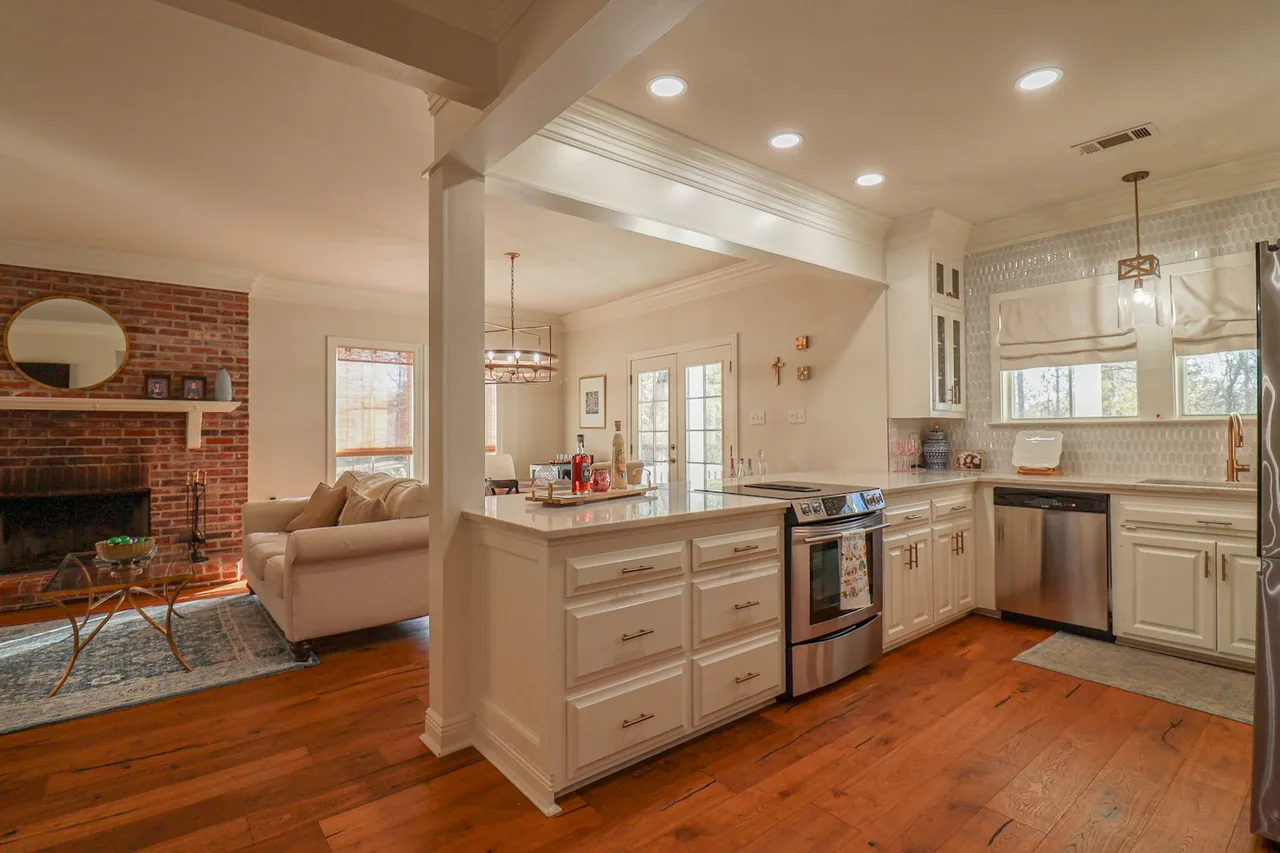
The best kitchen flooring shrugs off a spill that sits unnoticed under the dishwasher for a day, and that single requirement — water at the seams, not on the surface — decides the room. It is why waterproof luxury vinyl plank and porcelain tile lead a kitchen floor, engineered hardwood earns a conditional place, and solid hardwood comes with a warning. Match a surface whose joints stay sealed to the room's real threats — the slow, repeated wetting from drips and appliance leaks, the concentrated traffic, the dropped cast-iron pan — and the kitchen stops destroying floors. Get a free consultation and a written, itemized scope from a vetted installer that names the material's water rating, its wear-layer mil, and how the sink and dishwasher perimeters will be sealed before a single box is ordered.
A Kitchen Floor Fails at the Seam, Not the Surface
The plank or tile everyone admires matters least to whether a kitchen floor lasts. What separates a floor still tight in ten years from one that lifts in two is whether the material keeps water out at the joint — because a kitchen guarantees water will reach that joint.
Four Demands Stack on a Kitchen Floor at Once
A kitchen asks more of a floor than any other interior room, and it asks all of it simultaneously. The demands stack, and a floor that answers only one of them disappoints fast:
- Water at the joints — not the mop-up kind, but the dishwasher gasket that weeps, the supply line that sweats, the ice maker draining a quarter-cup behind the fridge over weeks, all working downward at the seams.
- Concentrated, abrasive traffic — more footsteps per square foot than any room, pivoting at the sink and range, dragging in grit that grinds the finish.
- Impact and point load — a dropped cast-iron skillet, a stand mixer, a refrigerator's weight riding on four small feet.
- Staining and chemistry — grease, wine, turmeric, coffee, and the cleaners used to fight them, working on the surface daily.
No single material is perfect at all four, but the room rewards a fixed priority: water tolerance first, because it is the failure that ruins a floor rather than merely wearing it, then traffic durability, then stain resistance, then comfort underfoot.
Read the Room in Priority Order, Not Sample-First
Most people shop a kitchen floor backward — color first, water rating last — and land a beautiful floor in the wrong room. Read the kitchen in its real order of failure and the shortlist gets short quickly. The look you love has to fit inside the water rating, the wear layer, and the slip spec the room demands, not the other way around. Everything below builds that order into a decision you can hand an installer.
The Kitchen Floor Deciders: Four Specs Before Any Sample Wins
A kitchen floor is bought on numbers, not just looks, and four published specs predict how a sample will actually live in this room. Each has a documented failure attached to ignoring it, and a floor that fails any one is the wrong floor no matter how it photographs. Call it the Kitchen Floor Fit Test: pass all six checks and the room stops eating floors; miss one and you are buying a future tear-out.
- 1. Waterproof vs. water-resistant
- The single deciding distinction. Waterproof means the core itself will not swell in standing water — an SPC or WPC rigid vinyl core with a written waterproof warranty. Water-resistant is a weaker claim: it survives a wiped-up spill, not a day-long unseen leak. A kitchen needs waterproof at the joints, because the damaging water is the drip you never see.
- 2. Water absorption (for tile)
- Porcelain absorbs under 0.5% water by the ASTM C373 test, which makes the tile itself effectively impervious — so on a tile floor your water defense shifts entirely to the grout, which must be sealed or an inherently stain-resistant type. Ceramic absorbs more (0.5% to 3%+), a half-step down for a hard-working kitchen.
- 3. Wear-layer mil (for vinyl)
- The thickness of luxury vinyl's clear top layer, measured in mil (thousandths of an inch), predicts how long the printed pattern survives dragged grit. A kitchen's traffic wants 12 mil to 20 mil, not the 6 mil that suits a quiet bedroom — the thicker the layer, the longer the floor resists dulling.
- 4. Slip resistance (DCOF)
- A kitchen floor gets wet and you work on it, so slip matters more here than anywhere but a bath. Tile traction is graded by DCOF — DCOF, dynamic coefficient of friction — and a floor likely to get wet should read 0.42 or higher per ANSI A137.1, steering you to a textured or matte finish over a high-polish one.
- 5. Abrasion rating (PEI, for tile)
- Tile hardness is rated on the PEI scale (Porcelain Enamel Institute), and a busy kitchen floor wants at least PEI III to IV so the glaze survives years of foot traffic and grit rather than wearing a dull path at the sink.
- 6. Scratch and dent resistance
- Point loads and pet claws test the surface daily. A thick vinyl wear layer resists scratching; porcelain is nearly scratch-proof but chips under a dropped pan; wood dents by species hardness on the Janka scale. Match the surface's give to how forgiving you need the room to be.
Three of these six — the waterproof rating, the wear layer, and the slip spec — are exactly the corners a low bid rounds off, because a thicker wear layer and a slip-rated tile cost more per square foot. That is why the fit test is non-negotiable: every check is on the spec sheet, and every one predicts a specific way the room can win or lose.
Want the water rating and slip spec confirmed before you buy?
We match you with a vetted installer who names the material's waterproof rating, wear-layer mil, and DCOF in a written scope — before you commit to a color or a price.
Kitchen Flooring Specifications That Decide the Room
The specs that gate a kitchen floor are published, testable, and specific to the material going down — from the waterproof rating that separates a survivor from a casualty, through the tile numbers, to the vinyl wear layer that predicts longevity under grit.
The Waterproof Rating Is the Kitchen's Controlling Spec
Water at the seam is the failure that ruins a kitchen floor, so the water rating governs everything else. How it is expressed depends on whether the surface is resilient or tile.
Resilient Floors: Waterproof Core vs. Water-Resistant Surface
For vinyl, the spec to demand is an explicitly waterproof rigid core — SPC or WPC — carrying a written waterproof warranty, not a marketing "water-resistant." The distinction is physical, not semantic, and it decides whether a slow leak is a wipe or a tear-out.
Why a Waterproof Core Survives the Slow Leak
A rigid SPC core is mineral-and-plastic — it has no fiberboard to drink water, so a leak that reaches the seam finds a plank that will not swell. The remaining risk is not the plank but the assembly: water running under a floating floor through an unsealed perimeter and sitting long enough to lift it. That is why the sink and dishwasher edges get a sealant bead even on a waterproof floor.
The Perimeter Seal at the Sink and Dishwasher
The two highest-risk spots in any kitchen are the sink base and the dishwasher, because both leak downward at the exact places a floating floor meets a cabinet. A vetted install maintains the required 1/4" to 3/8" expansion gap but caps it with appropriate trim and beads sealant at those two locations so a future leak cannot channel beneath the floor. It is a five-minute detail that prevents the single most common kitchen-floor failure.
Tile: Water Absorption and the Grout Weak Point
Porcelain's under 0.5% water absorption (ASTM C373) makes the tile impervious, so the floor never needs sealing — only the grout does. In a kitchen, unsealed grout is where a spill stains and where a movement crack can open, so the water defense on a tile floor is a sealed grout (or an inherently stain-resistant type) plus a rigid substrate that will not flex and crack the joint.
The Vinyl Wear Layer Predicts Kitchen Longevity
On a resilient kitchen floor, the wear layer in mil is the spec that predicts how many years the pattern survives. A 6 mil layer suits light residential use; a kitchen's dragged grit and concentrated traffic want 12 mil to 20 mil. The thicker the clear layer, the longer the floor resists the dulling and micro-scratching a kitchen dishes out — which is why the wear layer, not the picture printed under it, is what you are really buying.
The Specs That Matter in a Kitchen, and What to Look For
Before the material-by-material verdict, it helps to see each kitchen-deciding spec on its own — what it measures, why it matters in this room specifically, and the number or feature to demand on a spec sheet.
| Spec | Why it matters in a kitchen | What to look for |
|---|---|---|
| Waterproof vs. water-resistant | The kitchen's damaging water is the unseen slow leak at a seam, not the wiped-up spill | An SPC/WPC waterproof core with a written waterproof warranty |
| Water absorption (tile) | An impervious tile shifts the water defense entirely to the grout | Porcelain at <0.5% (ASTM C373); seal or specify stain-resistant grout |
| Wear-layer mil (vinyl) | Concentrated traffic and dragged grit dull a thin layer within a year | 12–20 mil for a busy kitchen, not the 6 mil of a bedroom |
| Slip resistance (DCOF) | The floor gets splashed at the sink and you stand and work on it wet | DCOF 0.42+ (ANSI A137.1) — a textured or matte finish |
| Abrasion rating (PEI, tile) | A dull worn path at the sink is the tile version of failure | PEI III–IV for a kitchen floor's traffic |
| Substrate rigidity (tile) | A flexing deck cracks grout and lets water reach the subfloor | An uncoupling membrane over a subfloor at L/360 or stiffer |
Kitchen Material Fit, Rated Spec-by-Spec
The table below is the room's ranking made explicit: each candidate material against the four kitchen deciders and a verdict for this space. These are recognized figures — the printed spec for your product always governs, and where it is stricter, the stricter number wins.
| Material | Water behavior | Wear / abrasion spec | Comfort & slip | Verdict for a kitchen |
|---|---|---|---|---|
| Rigid-core LVP (SPC/WPC) | Waterproof core — will not swell | Wear layer 12–20 mil for traffic | Warm, soft, forgiving; textured for slip | Best all-round — the modern default |
| Porcelain tile | Impervious, <0.5% absorption | PEI III–IV; nearly scratch-proof | Hard, cold; matte for DCOF 0.42+ | Most durable & water-immune; least comfortable |
| Engineered hardwood | Water-resistant, not waterproof | Janka by species; refinishable 1–3× | Warm, real wood; wipe spills promptly | Conditional — for open-plan flow, with care |
| Sheet vinyl | Water-resistant, fewest seams | Thinner wear layer; lowest cost | Soft, warm; less premium look | Budget winner — fewest paths for water |
| Solid hardwood | Cups & gaps in the wet/dry cycle | Janka 1010–1820 lbf; refinishable | Warmest look; poor water tolerance | Cautioned near the sink — engineered instead |
| Standard laminate | HDF core swells permanently | AC3–AC5 abrasion; not for standing water | Warm underfoot; reads as wood | Avoid — waterproof laminate only, at most |
The pattern across the top tier is consistent: the kitchen rewards a waterproof or near-waterproof core and penalizes anything that drinks water at a seam. Pick the look you love inside that constraint, never outside it — and to weigh the two frontrunners, see our tile vs. luxury vinyl plank guide, then size the room with the flooring cost calculator.
The Best Kitchen Flooring, Ranked — and Why
The ranking follows the room's priority order: water tolerance, then durability, then comfort. Every option below is matched to how the kitchen actually lives.
Rigid-Core Luxury Vinyl Plank: The Modern Default
A rigid-core LVP with an SPC or WPC core is 100% waterproof — the core itself will not swell — and it is warmer and softer underfoot than tile, quieter, and forgiving of a dropped glass. It clicks together as a floating floor over most flat subfloors, installs fast, and convincingly mimics wood. For a busy kitchen, choose a thick wear layer (12 mil and up) so traffic and grit do not dull it; the trade is that a heavy point load can dent a softer product, so wear layer and core quality matter. Start at vinyl flooring.
Porcelain Tile: Maximum Durability and Water Immunity
Porcelain is the most durable, most water-resistant kitchen floor you can buy and the one a stand mixer or a dropped pan will not faze. It absorbs less than 0.5% water, is effectively impervious, and never needs the floor itself sealed — only the grout. It is the choice when longevity and water immunity outrank everything, and wood-look porcelain delivers the plank appearance without wood's moisture problem. The honest trade-offs are real: tile is hard and cold underfoot, fatiguing to stand on at the sink, and unforgiving — a dropped wine glass shatters, a dropped plate may chip the tile. See tile flooring.
Engineered Hardwood: Real Wood, Eyes Open
engineered flooring bonds a real-wood wear layer over a dimensionally stable cross-ply core, so it resists the cupping and gapping that destroy solid wood in this room — but it is water-resistant, not waterproof, and demands that spills be wiped promptly. It belongs in an open-plan kitchen that flows into a living room where you want one continuous wood floor and will accept the maintenance. Explore hardwood flooring.
Sheet Vinyl: The Underrated Budget Answer
Installed in wide rolls, sheet vinyl has the fewest seams of any resilient floor — which means the fewest places for water to enter. It is soft, warm, fully water-resistant, and the lowest-cost option, the trade being a less premium look and visible seams in large rooms. The pattern across this top tier holds: every winner keeps water out at the joint, and the room penalizes anything that does not.
What to Avoid on a Kitchen Floor
Some materials are simply the wrong tool for this room, and the reasons are specific, not snobbery. Standard (non-waterproof) laminate is the most common kitchen mistake — its HDF core swells permanently the first time water reaches an unsealed seam, and a kitchen guarantees it eventually will; if you love the laminate look and price, the only defensible version is a a waterproof laminate line, and even then you wipe spills promptly. Solid hardwood is a slow-motion mistake here: the kitchen's wet-then-dry cycle cups it in summer and gaps it in winter, so if you want wood, choose engineered. Carpet is a non-starter — it traps grease, food, and bacteria and cannot be cleaned to a sanitary state in a food-prep room. Soft, porous natural stone like marble etches from acids (lemon juice, wine, vinegar) and stains from oil unless meticulously sealed. The rule that covers all of these: if it drinks water or etches from a kitchen spill, it does not belong on a kitchen floor.
How a Kitchen Floor Is Installed — the Room-Specific Sequence
A kitchen install has complications no empty bedroom has, and they decide whether the floor lasts as much as the material does. The six steps below are the full arc, each aimed at the room's water sources and fixed obstacles.
Assess the Substrate and Plan Around Appliances
The installer measures the room, checks the substrate for flatness and deflection, and locates every water source and fixed obstacle — the sink base, the dishwasher pocket, the refrigerator footprint, the range. Finished floor height is planned here so the dishwasher can still slide in and out over the new floor for service, a detail settled before anything is ordered.
Test Moisture and Correct Flatness
Concrete is read by ASTM F2170 against the flooring maker's cap; the surface is checked with a straightedge to the 3/16" over 10 ft tolerance. High spots are ground, low spots self-leveled — a floating vinyl floor that bridges a low spot feels hollow exactly where you stand at the sink.
Build the Rigid, Waterproofed Base for Tile
For a tile kitchen, an uncoupling or backer membrane goes over a subfloor stiff enough to stop deflection, because tile cracks over a deck that flexes. This is the step that keeps grout joints intact and water out — invisible in the finished floor and the first thing a low bid skips.
Acclimate the Material and Set the Layout
Wood and many resilient products acclimate in the conditioned space to the home's humidity, then the installer plans board direction and starting line so the room reads square and any open-plan run into the next room stays continuous, with a consistent 1/4"–3/8" expansion gap marked at the perimeter.
Seal the Sink and Dishwasher Perimeters
The floor goes in by its method — clicked as a floating vinyl, thinset-set as tile, or glued — and at the two highest-risk spots the perimeter gets a sealant bead so a future dishwasher or supply-line leak cannot run under the floating floor and lift it. Tile grout is sealed or specified as a stain-resistant type.
Finish Transitions, Reset Appliances, and Walk It
Thresholds and reducers bridge to adjoining rooms and conceal the expansion gap, appliances are reset level over the finished floor, and the installer walks the kitchen with you to review care, the grout-seal schedule, and any cure time before heavy use.
Skip or rush any one of these six and the failure it was meant to prevent shows up later at a kitchen seam — which is why a vetted installer treats the sequence as fixed, not optional.
Common Kitchen Flooring Mistakes, Consequences, and Prevention
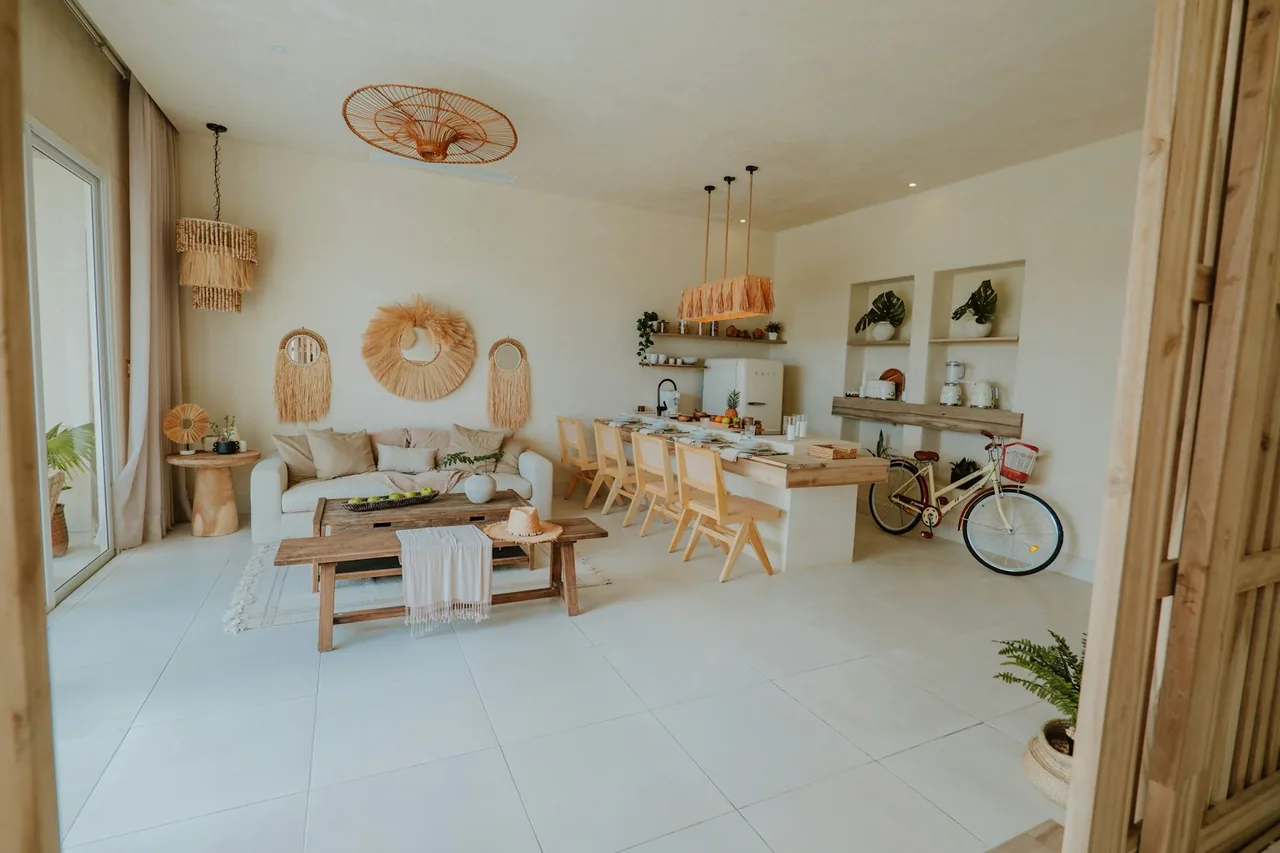
Most kitchen-floor failures are the same handful of shortcuts, each with a predictable consequence and a known prevention. Naming them is how you spot a corner being cut before it is buried under your floor.
| Mistake | What it causes | The prevention |
|---|---|---|
| Standard laminate in the kitchen | HDF core swells and lifts permanently at the first seam a leak reaches | Choose a waterproof rigid-core vinyl, or at most a rated sealed waterproof laminate |
| No sealant at the sink/dishwasher edge | A slow leak runs under the floating floor and lifts it — the classic failure | Bead sealant at those two perimeters and trim the expansion gap |
| Solid hardwood near the sink | Cups in summer, gaps in winter from the wet/dry cycle | Use engineered hardwood, or a waterproof wood-look vinyl or porcelain |
| Thin wear layer for the traffic | Vinyl dulls and scratches in a year under dragged grit | Spec 12–20 mil wear layer for a kitchen's concentrated traffic |
| High-polish tile that gets wet | Dangerously slick floor at the sink and range | Choose a textured or matte tile reading DCOF 0.42+ |
| Tile over a flexing subfloor | Cracked grout joints and broken tiles; water reaches the deck | Add an uncoupling membrane over a stiffened, deflection-free subfloor |
| Unsealed grout | Stains from grease and wine; a water path at the joint | Seal the grout or specify an inherently stain-resistant type |
Every row is a documented way a kitchen floor fails early — which is why "we detail the wet-area seams and install to the manufacturer's spec, in writing" is the most valuable sentence in a kitchen quote.
Which Flooring Is Right for Your Kitchen?
The right kitchen floor is the output of a short chain of honest answers about how your kitchen lives and what you will tolerate. Walk it in order; each branch eliminates options the room rules out, and what survives is your defensible choice.
- Do you want to never think about a slow leak again? If yes, you are choosing a waterproof surface — rigid-core vinyl or porcelain tile — and solid hardwood and standard laminate are already out. If you will commit to wiping spills promptly and want real wood, engineered hardwood re-enters as a conditional option.
- How long do you stand at the sink and range? If you cook for hours and the rest of the home is hard flooring, vinyl's give and warmth beat tile's hardness underfoot. If durability and water immunity outrank comfort, tile wins — and an anti-fatigue mat at the sink closes much of the comfort gap.
- Does the kitchen flow into another room? An open-plan kitchen opening to a living room reads best with one continuous floor — favoring a wood-look vinyl or engineered wood that runs unbroken across both, rather than a tile-to-wood transition mid-space.
- How forgiving must it be for kids, pets, and dropped dishes? For dropped plates and pet claws, vinyl's softer, scratch-resistant surface forgives more than tile (hard on dropped items) or wood (scratches). A pet-friendly kitchen leans to a thick-wear-layer vinyl.
- What does the budget read, honestly? Sheet vinyl is the lowest entry cost, rigid-core vinyl the value sweet spot, porcelain tile higher with the longest life, engineered wood the premium. Compare lifetime cost, not sticker, in the vinyl and tile cost guides.
Run honestly, this tree almost always returns a single defensible floor — and an installer who recommends the same material for every kitchen regardless of the answers is the red flag.
Not sure which surface your kitchen actually needs?
Tell us how your kitchen lives and we will match a vetted installer who names the right material for the room, details the wet-area seams, and puts it in writing.
Comfort, Slip, and Standing Underfoot in a Working Kitchen
Beyond water, a kitchen is a room you stand and work in, so how the floor feels and grips matters more than in a room you pass through. Two comfort factors decide daily livability.
Warmth and Give at the Sink and Range
The cook stands longest at the sink and the range, and a hard, cold floor there is fatiguing. Vinyl and sheet vinyl have give and read warmer than tile; porcelain is hard and thermally cold unless paired with radiant heat, though an anti-fatigue mat at the two standing zones closes most of the gap. This is why comfort is the tiebreaker between two waterproof options, not the deciding spec — the room's water rating comes first, comfort second.
Slip Safety on a Floor That Gets Wet
A kitchen floor gets splashed at the sink and the dishwasher, so traction under wet feet is a real safety spec. Tile reading DCOF 0.42+ (ANSI A137.1) with a textured or matte finish keeps its grip wet; on resilient floors, a textured rather than glossy surface does the same. A high-polish tile that looks stunning dry becomes a hazard the moment the room does what kitchens do.
What Actually Drives the Cost of a Kitchen Floor
A kitchen quote is not a flat per-square-foot rate; the headline number a low bid leads with hides the items below, ranked by how much they move the total in this specific room.
- Material grade and wear layer. The product and its wear layer set the baseline — a 20 mil vinyl, a PEI IV porcelain, or engineered wood all price differently, and speccing up the wear layer for a kitchen's traffic is money well spent.
- Substrate prep and flatness. The biggest swing on most kitchens — grinding and self-leveling to tolerance so a floating floor does not feel hollow at the sink, real material and labor a flat substrate avoids.
- Tile base build. A tile kitchen adds an uncoupling or backer membrane and subfloor stiffening to stop deflection and keep grout intact — a line item a resilient floor skips entirely.
- Appliance moves and reconnects. Pulling and resetting the range, dishwasher, and refrigerator — and planning finished height so the dishwasher still services — adds labor an empty room does not.
- Old-floor removal and disposal. Tear-out is labor and haul-away is a fee, and removal often exposes water damage or an out-of-tolerance substrate that changes scope mid-job — which is why it belongs in the written quote up front.
- Wet-area sealing and grout treatment. The sink/dishwasher perimeter seal and a sealed or stain-resistant grout are small line items the lowest bid tends to omit — and the exact ones that prevent the room's classic failure.
- Layout complexity around cabinets. Cutting around a kitchen's island, toe-kicks, and appliance pockets adds skilled hours beyond a straight-lay run, more so for a diagonal or herringbone pattern.
- Transitions and trim. Thresholds and reducers at every doorway and the change into an adjoining room add up across the connected main floor.
Because these drivers swing so widely, the only honest number comes from an on-site assessment. Compare what moves the price across the category in our cost guides, and size your own kitchen first with the material comparison tool so you can read a quote critically.
Keeping a Kitchen Floor Looking New
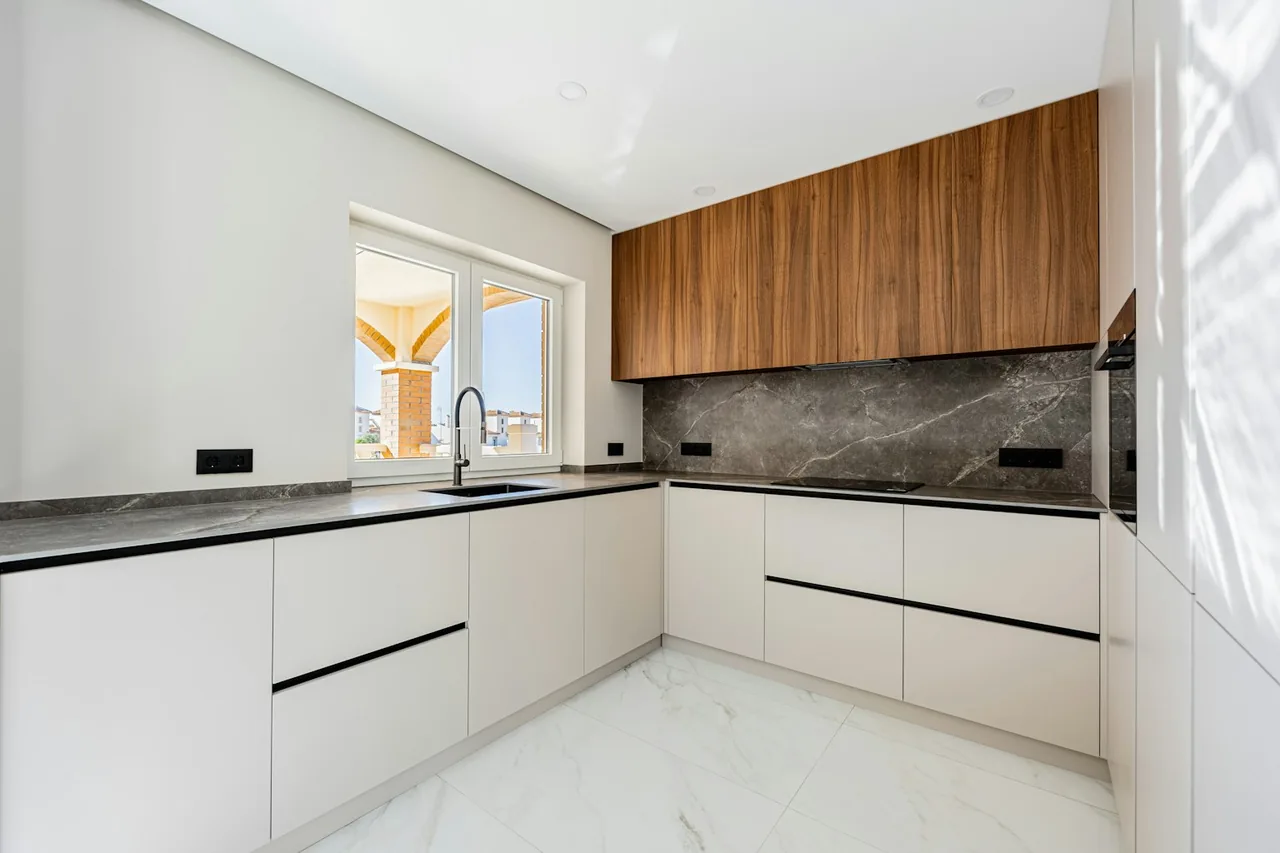
A kitchen floor earns its keep through daily life, and care here is less about deep cleaning than about two habits: getting grit off and getting spills up — both target the failure modes the room creates.
Grit is the enemy of every kitchen floor's finish — tracked-in sand acts like sandpaper underfoot, dulling vinyl's wear layer and scratching tile glaze over time. A walk-off mat at the entry and regular sweeping or vacuuming do more for a kitchen floor's lifespan than any product. Spills are the other half: wiping a spill promptly is good practice on any floor, non-negotiable on a water-resistant-but-not-waterproof floor like engineered wood, and even on waterproof vinyl and tile it keeps grout and seams from staining. Use the cleaner the manufacturer specifies — harsh or oil-based cleaners can haze a vinyl wear layer, and acidic cleaners etch stone. When a kitchen floor is damaged rather than dirty — a cracked tile, a gouged plank, a water-lifted seam — see flooring repair; when it is simply tired and dull, professional floor cleaning and grout resealing often restore it without replacement.
Talk through your project — free.
A free consultation and a written, itemized quote from a vetted installer. No pressure, no obligation.
Kitchen Flooring Glossary
The terms below recur in every kitchen-floor quote, spec sheet, and warranty — each defined as its working meaning on an actual kitchen job, so you can read a scope and judge whether it is complete.
- Waterproof vs. water-resistant
- Waterproof means the core will not swell in standing water (a rigid SPC/WPC vinyl); water-resistant survives a wiped-up spill but not a day-long leak. A kitchen needs waterproof at the joints.
- Wear-layer mil
- The thickness of luxury vinyl's clear top layer in mils — the spec that predicts how long the pattern survives grit. 12–20 mil for a kitchen.
- SPC core
- Stone-plastic composite — a dense, rigid, mineral-based vinyl core that is dimensionally stable and fully waterproof, the workhorse of a modern kitchen floor.
- WPC core
- Wood-plastic composite — a rigid vinyl core with a slightly softer, warmer feel than SPC, also waterproof and kitchen-suitable.
- Water absorption
- The percentage of water a tile takes on by ASTM C373. Porcelain absorbs under 0.5% (impervious); ceramic more. It predicts how the tile handles a wet room.
- DCOF
- Dynamic coefficient of friction — the wet-slip rating of a tile per ANSI A137.1. A kitchen floor that gets wet should read 0.42 or higher.
- PEI rating
- The Porcelain Enamel Institute abrasion class (I–V) grading how a tile's surface survives traffic. A busy kitchen floor wants PEI III–IV.
- Janka hardness
- The pounds-force needed to dent a wood species — the rating that predicts how hardwood survives dropped pans and pet claws in a kitchen.
- Uncoupling membrane
- A layer set between tile and subfloor that absorbs minor movement so the deck's flex does not crack the grout — essential under a kitchen tile floor.
- Expansion gap
- The 1/4" to 3/8" space left around a floating floor's perimeter so it can move with humidity without peaking; in a kitchen it is capped with trim and sealed at wet-area edges.
- Perimeter seal
- A bead of sealant at the sink and dishwasher edges that stops a future leak from running under a floating kitchen floor — the detail that prevents the room's classic failure.
- HDF core
- High-density fiberboard — the water-wicking core of standard laminate that swells permanently when a kitchen leak reaches an unsealed seam, and the reason standard laminate fails here.
Standards, Warranty Conditions, and What a Kitchen Floor Must Meet
A manufacturer's warranty is a contract with conditions, and in a kitchen most denials are not about the product — they are about how it was installed at the water-prone seams.
Warranty Conditions That Hinge on the Kitchen Install
The conditions are specific and testable: substrate moisture below a stated limit, the material acclimated, only approved underlayments and adhesives used, the expansion gap and wet-area seals detailed, and — for tile — a rigid substrate and sealed grout. An installer who skips the moisture test or the perimeter seal has weakened your coverage before you notice. Ask in writing that the install follow the manufacturer's published instructions, because that document is what a kitchen warranty claim is judged against.
The Standards Bodies Behind a Kitchen Floor
Standards govern the rest. The TCNA and ANSI set tile installation, movement joints, and the A137.1 DCOF slip standard; the NWFA governs wood acclimation and the flatness tolerance; ASTM C373 defines the tile water-absorption test and F2170 the slab-moisture test. A kitchen floor built to these holds its warranty and its shape. When wear rather than damage is the issue, the better path may be refinishing engineered wood or a full replacement over a fresh install — and structural questions about the deck belong with the subfloor team first.
A Real Kitchen Flooring Decision
One representative kitchen shows why the seam decides everything: water risk and comfort pulled in different directions, and the water rating won.
How to Vet an Installer for a Kitchen Floor
Most kitchen-floor failures are install failures at the seams, so the installer matters more than the brand on the box. These questions separate a crew that builds a kitchen floor to last from one that lays product fast.
- They match the water rating to the room
- Ask what water rating they recommend for a kitchen and why. A real answer distinguishes waterproof from water-resistant and names an SPC/WPC core or porcelain's absorption figure — not a vague "it'll be fine."
- They detail the sink and dishwasher perimeters
- Ask specifically how they will seal the two highest-risk edges. A credible answer describes a sealant bead at the perimeter under trim, because that is the detail that prevents the classic kitchen failure.
- They spec the wear layer and slip for the traffic
- Ask what wear-layer mil and DCOF they will use. A busy kitchen wants 12–20 mil and a slip-rated tile at 0.42+ — an installer who cannot cite those numbers is guessing at the room's demands.
- They build a rigid, waterproofed base for tile
- For a tile kitchen, ask how they stop deflection and keep grout intact. The answer should name an uncoupling membrane and a stiffened subfloor, not tile straight onto a bouncy deck.
- They handle appliances, removal, and transitions cleanly
- Ask whether pulling and resetting appliances, removal and disposal, and finished-height planning at the dishwasher are included — the edges and the appliance pockets are where rushed kitchen work shows.
- They put the scope and workmanship warranty in writing
- Ask for the full scope, the grout-seal schedule, and a labor warranty in writing before work starts. A crew willing to name a workmanship guarantee — and return if a seam lifts — is accountable for the install, not just the product.
Why Route Your Kitchen Floor Through Pro Work Home Surface
Pro Work Home Surface is not a contractor and does not lay your floor — we are a national authority on home surfaces that matches homeowners with vetted local installers and holds them to a published bar.
- Water defense designed in, not assumed
- The material's water rating is matched to the room and the high-risk seams at the sink and dishwasher are detailed to keep water out — a waterproof core or sealed grout, with the perimeter protected where leaks happen.
- The right spec for a kitchen's traffic and slip risk
- Vinyl wear layer of 12 mil or more for the traffic, tile at PEI III to IV for the wear, and a slip-rated surface reading DCOF 0.42+ where the floor gets wet — chosen for the room, not the lowest price.
- A substrate that won't betray the floor
- The subfloor is tested and brought flat, and made rigid where tile demands it, so the finished kitchen floor does not flex, crack, or feel hollow where you stand the most.
- National coverage, local crews
- We match you with installers in your area nationwide, so the standard is consistent even though the crew is local — whether your project is a single kitchen or a whole connected main floor.
Flooring is one of eight categories we cover across home surfaces. If your kitchen project also touches a living-room floor next door, a laundry room with the same waterproof demand, or the bathroom down the hall, the same standards apply — compare what moves the price in our cost guides, weigh the options in our best flooring for kitchens guide, size the job with our cost calculator, and start from the flooring category hub or the full range of home surfaces.
Brands & Material Authority
Quality and construction drive long-term performance more than the label. These are widely respected names in this category:
- Shaw
- Mohawk
- COREtec
- Armstrong
- Pergo
- Mannington
- Bruce
- Karndean