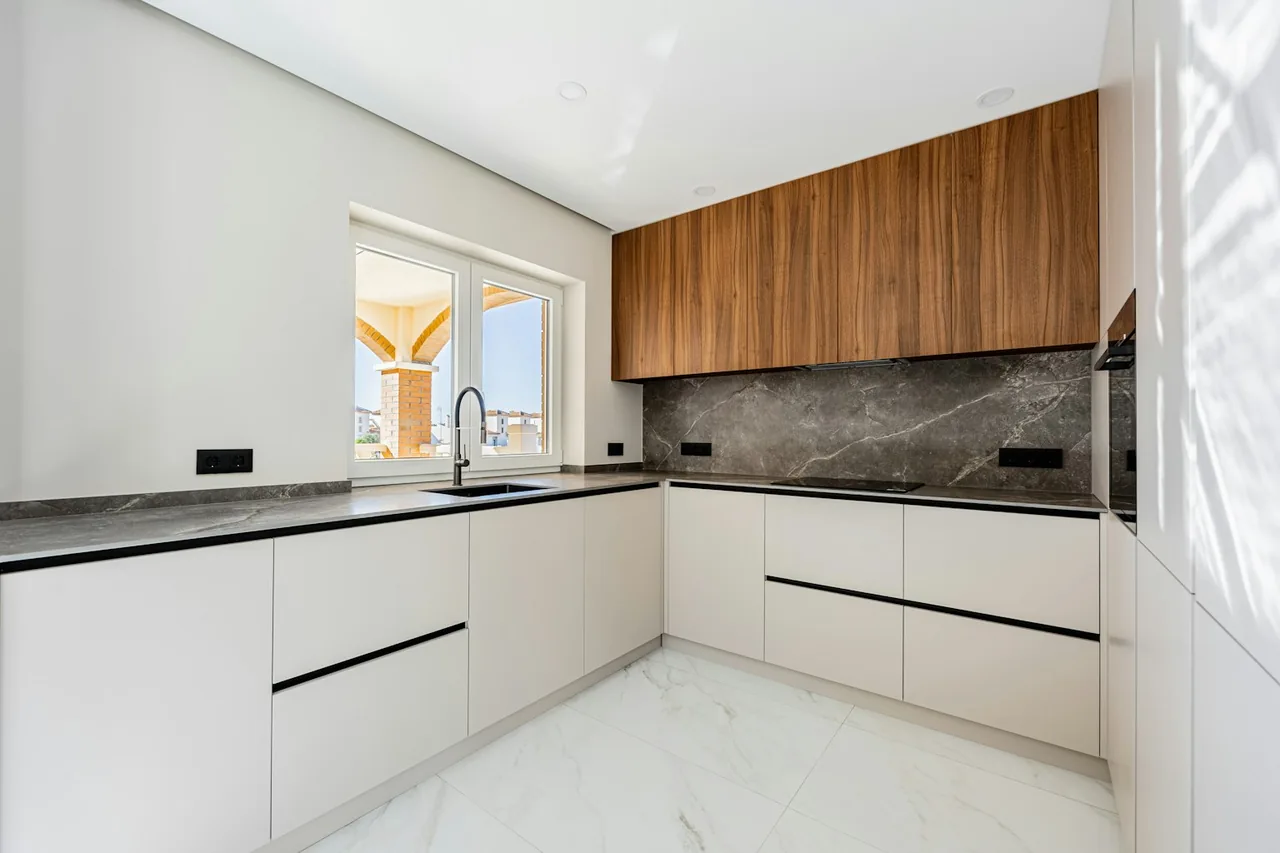
Porcelain floor tile is the densest, least porous tile made — fired hotter and pressed harder than any of its sibling tiles until it absorbs almost no water, which is the one number that separates it from every alternative on this list. Its defining spec is water absorption under 0.5% by ASTM C373; that alone makes it frost-proof, wet-room-safe, and outdoor-rated where ceramic, marble, and travertine are not. Choose porcelain over its siblings wherever water is constant, traffic is heavy, a floor must survive a freeze, or maintenance must be near-zero — and accept that its density costs you at the saw and in setting labor. Get a free consultation and a written, itemized scope from a vetted installer before you buy, because the absorption number, the setting mortar, and the slip rating are decided there, not in the showroom.
Porcelain Is Defined by One Spec Its Siblings Cannot Match: Absorption Under 0.5%
Every tile on the flooring shelf is fired clay or cut stone, but only porcelain is vitrified to the point that water essentially cannot enter it — and that single property, not the finish, is why it wins the hardest rooms outright.
The Vitrified Clay Body That Sets Porcelain Apart
Porcelain and ceramic both start as clay, but porcelain is made from a finer, more refined body — typically feldspar and high-purity kaolin — pressed harder and fired above roughly 2,200°F. That hotter firing vitrifies the clay: the particles partially fuse into a glass-like mass with almost no open pore structure. The result is denser, heavier, harder, and far less absorbent than the standard ceramic it is constantly cross-shopped against — and every downstream advantage traces back to that vitrification.
Why Low Absorption Is the Whole Point
Because water cannot soak into a body absorbing under 0.5%, porcelain does not swell, does not harbor moisture behind the glaze, and does not crack when frozen water expands inside it — the exact failure that destroys absorptive tile outdoors. This is the frost-proofing, the wet-room rating, and the outdoor capability all at once. It is also why the word "porcelain" on a box means nothing without the ASTM C373 number on the data sheet: absorption is the definition, not the marketing term.
Through-Body vs. Glazed Porcelain
Porcelain comes two ways, and the difference decides how a chip reads. Through-body porcelain (sometimes called full-body) carries its color and pattern all the way through the tile, so a chip on a through-body floor shows the same color underneath instead of a pale clay scar — the reason it dominates high-impact commercial and entry floors. Glazed porcelain, the more common type, carries its design in a hard fired surface layer and offers a far wider visual range, from marble veining to concrete to wood grain, at the cost of a thin decorative layer that a hard impact can chip to a lighter body.
The One Real Trade: Porcelain Is Hard to Cut
The density that makes porcelain durable underfoot is a genuine cost at install. It is meaningfully harder to cut than ceramic and requires a wet saw with a quality diamond blade; clean cuts on large-format or polished tile are slow and demand a skilled hand. That difficulty is a feature in the floor and a line item in the quote — one reason porcelain labor runs higher than ceramic, and one more argument against a low bid that promises porcelain at a ceramic price.
Porcelain vs. Its Sibling Tiles — the Absorption Number Decides
Within the tile family, porcelain is the durability and water benchmark every sibling is measured against, and the deciding spec across the whole set is water absorption by ASTM C373 — the number that predicts freeze survival, wet-room fitness, and how much babying the floor will need.
The Porcelain-vs-Siblings Matrix
The matrix below rates porcelain against the other six tiles on the deciding spec each is judged by, so the split reads at a glance. These are representative figures; the printed data sheet for your specific tile always governs.
| Tile | Deciding spec (ASTM C373 absorption) | Wet / freeze rating | Hardness & sealing | Best-fit rooms |
|---|---|---|---|---|
| Porcelain (this page) | Under 0.5% — vitrified | Frost-proof, fully wet-rated | Very hard; never sealed | Wet rooms, heavy traffic, outdoors |
| Ceramic | 0.5%–3%+ | Interior only, not freeze-safe | Softer glaze; no sealing | Dry, moderate interior floors, walls |
| Marble | Porous stone (varies) | Etches with acid; dry rooms | Mohs 3, soft; seal often | Dry, low-acid, low-traffic luxury |
| Travertine | Porous limestone, high | Etches; fill voids; dry-moderate | Soft ~Mohs 3; seal | Rustic dry-to-moderate floors |
| Slate | Low-moderate (varies) | Good; not acid-sensitive | Hard, cleft; light seal | Entries, mudrooms, natural grip |
| Mosaic | By material (often porcelain) | Grout joints add wet grip | Depends on material; seal grout | Shower pans, curves, accents |
| Wood-look | Under 0.5% — it is porcelain | Frost-proof, fully waterproof | Very hard; never sealed | Wood look in wet rooms, whole home |
The pattern is unmistakable: porcelain and its wood-look plank cousin are the only tiles here rated for a freeze and a soaking with zero sealing, which is why they anchor the wet and heavy-traffic end of the family. Compare them spec-for-spec with the material comparison tool before you settle on one.
Porcelain vs. Ceramic: the Cleanest Split
Against ceramic floor tile, the divide is clean and worth stating plainly: ceramic absorbs more water (commonly 0.5% to 3% or higher), is softer, cuts easily and cheaply, and is genuinely fine for dry, low-to-moderate-traffic interior floors. Porcelain costs more in tile and labor but is the only one of the two rated for wet rooms, freeze-prone spaces, and the heaviest traffic. If a floor will get soaked or will freeze, porcelain is not an upgrade — it is the requirement.
Porcelain vs. Natural Stone and the Look-Alikes
Against the natural stones — marble, travertine, and slate — porcelain wins decisively on maintenance. Marble at Mohs 3 etches from acids and needs sealing; travertine is porous limestone that must be sealed; even slate, the toughest stone, benefits from sealing. Porcelain needs none of it: the body is impervious and the glaze does not stain. Where porcelain cannot fully compete is authenticity at touching distance — and that is exactly where its own imitations have closed the gap. Wood-look porcelain delivers a hardwood appearance with full waterproofing, and glazed porcelain that mimics marble or concrete delivers a stone look without the porosity and sealing. Compare the full lineup on the tile flooring hub.
Want the porcelain spec matched to your room before you buy?
We match you with a vetted installer who confirms the ASTM C373 absorption, the PEI rating, and the slip rating for your space — and puts it in a written scope, before you commit to a tile or a price.
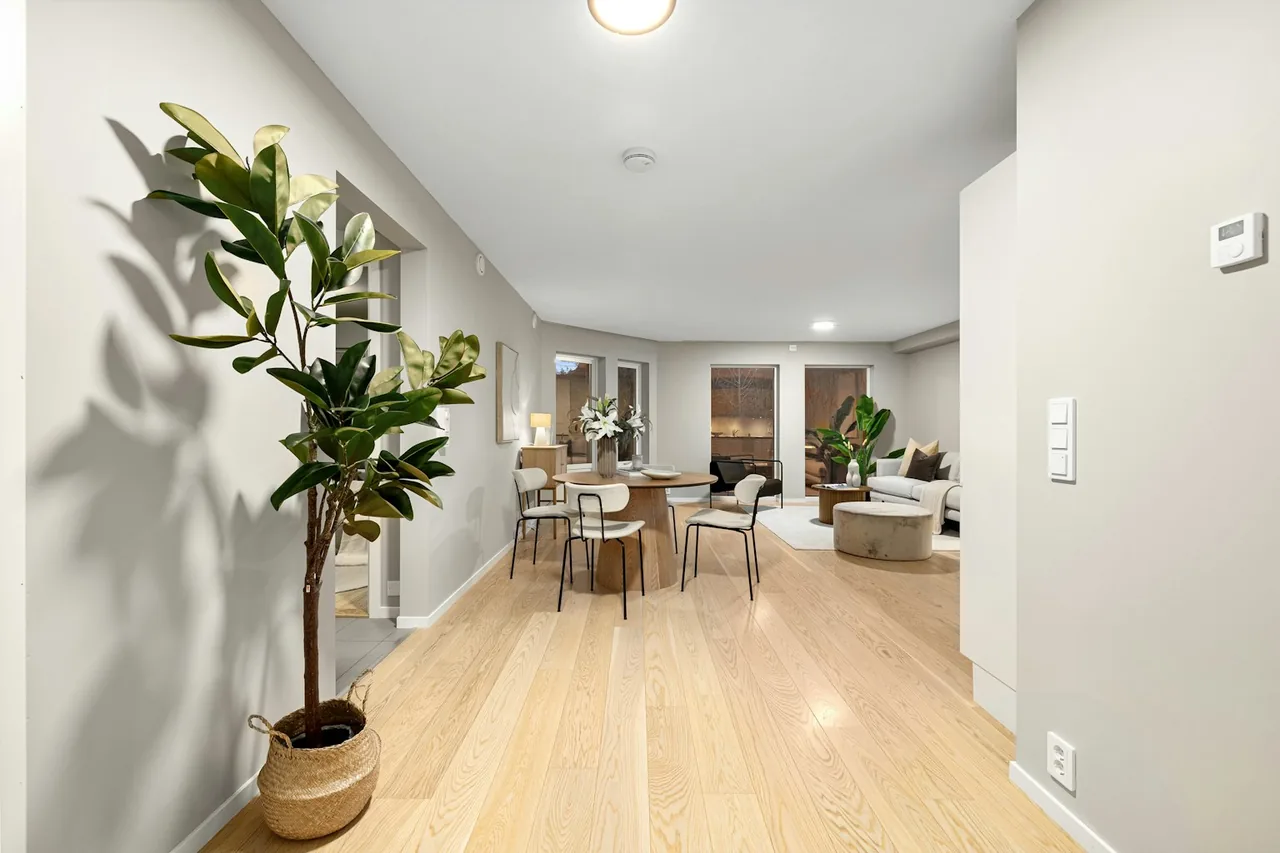
The Specs That Define Porcelain — Absorption, PEI, DCOF, and Format
Four numbers tell you whether a specific porcelain belongs on your floor and in your room, and reading them is the difference between a tile that lasts a generation and a polished slab that becomes a slip hazard in a bath. Buying on the picture alone, ignoring the ratings, is how the wrong porcelain lands in the wrong room.
Water Absorption by ASTM C373 — the Defining Number
Measured by ASTM C373, absorption below 0.5% is the line that defines porcelain and earns it frost resistance, freeze-thaw stability, and wet-room and outdoor ratings. This is the single spec that separates true porcelain from absorptive ceramic — confirm it on the data sheet, because "porcelain" as a word is not tightly regulated everywhere, and some tiles sold as porcelain sit above the line.
PEI IV to V — Rated for the Heaviest Floor Traffic
The PEI abrasion scale runs I to V; most porcelain floor tile is rated PEI IV for residential heavy traffic and PEI V for commercial. That headroom is why porcelain shrugs off entries, kitchens, and pet traffic that would wear a glaze-light ceramic thin.
Why Through-Body Sidesteps the Glaze Question
PEI rates a glaze's wear, so it matters most on glazed porcelain. Through-body porcelain effectively sidesteps the concern, since there is no thin decorative glaze to wear through — the wear surface is the same material top to bottom. In a commercial-style entry or a floor where impacts are likely, that full-depth color is worth the premium over a glazed tile whose chip would show a lighter body.
DCOF ≥ 0.42 — Slip Safety for Any Wet Floor
The DCOF (dynamic coefficient of friction) per ANSI A137.1 rates wet slip resistance, and the benchmark for interior floors that get wet is DCOF ≥ 0.42. Polished porcelain is beautiful and frequently falls below it — reserve polished for dry rooms, and specify a matte, textured, or structured finish for baths, entries, and pool surrounds. A wet bathroom floor is exactly where this number cannot be skipped.
Format and Thickness — the Structural Spec
Porcelain is sold from mosaics to large-format slabs over 24 in. and in thin profiles. Large format reads seamless but demands a dead-flat substrate and a medium-bed mortar to avoid lippage, the uneven edges you feel and trip on; thin porcelain is light and fast but unforgiving of substrate deflection. Format is a structural decision, not just a look. Above all four specs sits the install standard: TCNA (Tile Council of North America) and ANSI define the substrate stiffness, mortar, coverage, and movement joints that keep even a perfect porcelain from cracking — the tile spec keeps the surface right for the room, and the TCNA setting keeps it from failing.
The Porcelain Spec Table
The table below collects porcelain's own ratings, what each measures, and the threshold that matters, so the spec sheet reads at a glance. These are representative figures; the printed data sheet for your specific tile always governs.
| Spec | What it measures | Recognized standard | Porcelain figure / threshold |
|---|---|---|---|
| Water absorption | Porosity of the fired body | ASTM C373 | Under 0.5% — vitrified, frost-proof |
| PEI rating | Glaze abrasion / traffic | PEI I–V scale | PEI IV residential, V commercial |
| DCOF | Wet slip resistance | ANSI A137.1 | ≥ 0.42 for wet floors (matte/textured) |
| Body type | Through-body vs. glazed | Manufacturer spec | Through-body hides chips; glazed = range |
| Format / setting | Substrate rigidity for the size | TCNA / ANSI deflection | L/360, L/720 for large-format |
The pattern the table makes plain: absorption and DCOF keep porcelain right for the room, while the PEI and the TCNA setting keep it from wearing or cracking — all four have to be read together.
Not sure which porcelain spec your room needs?
Tell us about your space and we will match a vetted installer who reads the absorption, PEI, and slip rating for the room, names the right format, and puts it in writing — before you buy.
How Porcelain Tile Is Installed
Porcelain's low absorption — the very property that makes it durable — also makes it harder to bond and harder to cut, so the setting is where a porcelain floor is won or lost. The six steps below are the full arc, with the mortar choice and the two failure-preventers, movement joints and waterproofing, called out where they fall.
Substrate and Deflection Assessment
The installer confirms a substrate stiff enough not to deflect, because a floor that bounces cracks rigid porcelain. Most floors want at least an L/360 deflection limit, and large-format porcelain often wants L/720. A bouncy joist system is reinforced first under subfloor prep — a stiffer tile is never the fix for a flexing structure.
Backer Board or Uncoupling Membrane
Over a wood subfloor, a layer of cement backer board or an uncoupling membrane isolates the tile from substrate movement — never porcelain straight onto a flexing subfloor. Over concrete it means a flat, sound, clean slab. Large-format porcelain magnifies every high spot, so flatness correction here is real work, not a formality.
Waterproofing the Wet Areas
In showers and wet areas, a waterproofing membrane goes behind and beneath the porcelain so water never reaches the substrate. Porcelain is impervious, but grout joints are not a waterproof barrier on their own — the membrane is, and skipping it is how a beautiful shower rots its substrate from inside.
Setting in the Right Mortar With Full Coverage
Because the body absorbs almost no water, porcelain is set in a polymer-modified thin-set or, for large-format and through-body tile, an LHT (large-and-heavy-tile) medium-bed mortar that resists slumping. The installer back-butters and verifies coverage — roughly 80% in dry areas and 95% in wet — because a low-absorption tile on voids sounds hollow and pops free.
Movement Joints at Perimeter and Field
Soft, flexible movement joints go at the perimeter and across large tile fields, per TCNA detail, so the rigid porcelain field can expand and contract without cracking. Cracks that march in a straight line across a floor are the signature of this step being skipped.
Grout, Seal, and Walkthrough
Joints are packed with grout at the correct width, cement grout is sealed where specified, and the installer walks the floor with you to confirm coverage, lippage, and a slip-rated surface in any wet area. Transitions and any stair work finish the edges.
Skip or rush the substrate, the movement joints, or the mortar coverage and the failure each prevents — a cracked field, a popping tile, a rotted shower — shows up within a year. That is why a vetted installer treats the setting standards as fixed; the broader sequence lives under flooring installation.
Talk through your project — free.
A free consultation and a written, itemized quote from a vetted installer. No pressure, no obligation.
Is Porcelain Right for Your Space?
Whether porcelain is the right tile — and which porcelain — is the output of a short chain of facts about the room's water, its traffic, and the substrate's rigidity. Walk the decision in order; each branch narrows the finish and the format.
- Does the room get wet, freeze, or go outdoors? If yes, porcelain under 0.5% absorption is the right family, and a wet floor also needs a DCOF ≥ 0.42 slip-rated surface. If the room is bone-dry and low-traffic, cheaper ceramic or a softer stone may do the same job for less.
- How hard does the room live? A busy floor wants PEI IV; a commercial-style entry wants PEI V or a through-body tile so chips do not show. A light-use dry room does not need porcelain's headroom.
- Polished or textured? Any surface that gets wet needs a matte, textured, or structured finish at DCOF ≥ 0.42. Keep glossy polished porcelain for dry rooms where its slip risk is not in play.
- Large-format or standard? Large-format reads seamless but demands a dead-flat, L/720 substrate and medium-bed mortar; if the floor cannot meet that, a standard format or added grout joints is the forgiving call.
- Glazed or through-body? If chips are likely — an entry, a mudroom, a commercial-style space — through-body hides them full-depth. For maximum visual range in a lower-impact room, glazed is the pick. Confirm the survivors under the flooring hub.
Run honestly, this tree returns a defensible porcelain spec or a clear signal that a cheaper tile fits — and an installer who quotes the same polished large-format tile for a shower pan and a dry hall is the red flag.
Where Porcelain Wins — and the Few Places It Doesn't
Porcelain is the most broadly capable floor tile made, which is precisely why naming its limits matters as much as its strengths.
Where Porcelain Owns the Room
It is the default in every wet and high-traffic room: a bathroom floor, a laundry-room floor, a mudroom, and a hard-working kitchen floor all play to porcelain's impervious body and high PEI. Because absorption is under 0.5%, it is one of the few interior floors that can run continuously out to a covered patio or survive a freeze, and it belongs squarely in the conversation for waterproof flooring alongside rigid-core vinyl. In a wet room where you want a hard, permanent surface rather than a resilient one, porcelain is the answer.
Where Comfort and Substrate Push Back
Where porcelain works least well is comfort. It is cold and hard underfoot and loud — a poor fit for a bedroom or a long-occupancy living room unless paired with radiant heat and rugs, where the cold actually becomes an asset because porcelain transmits floor heat efficiently. A dropped glass shatters on it. And like all tile, it is unforgiving of a substrate that moves: over a bouncy wood floor without proper stiffening, even porcelain cracks. The tile is rarely the problem — the deck under it is, which is why a cracked porcelain floor sends you to flooring repair and the substrate, not to a harder tile.
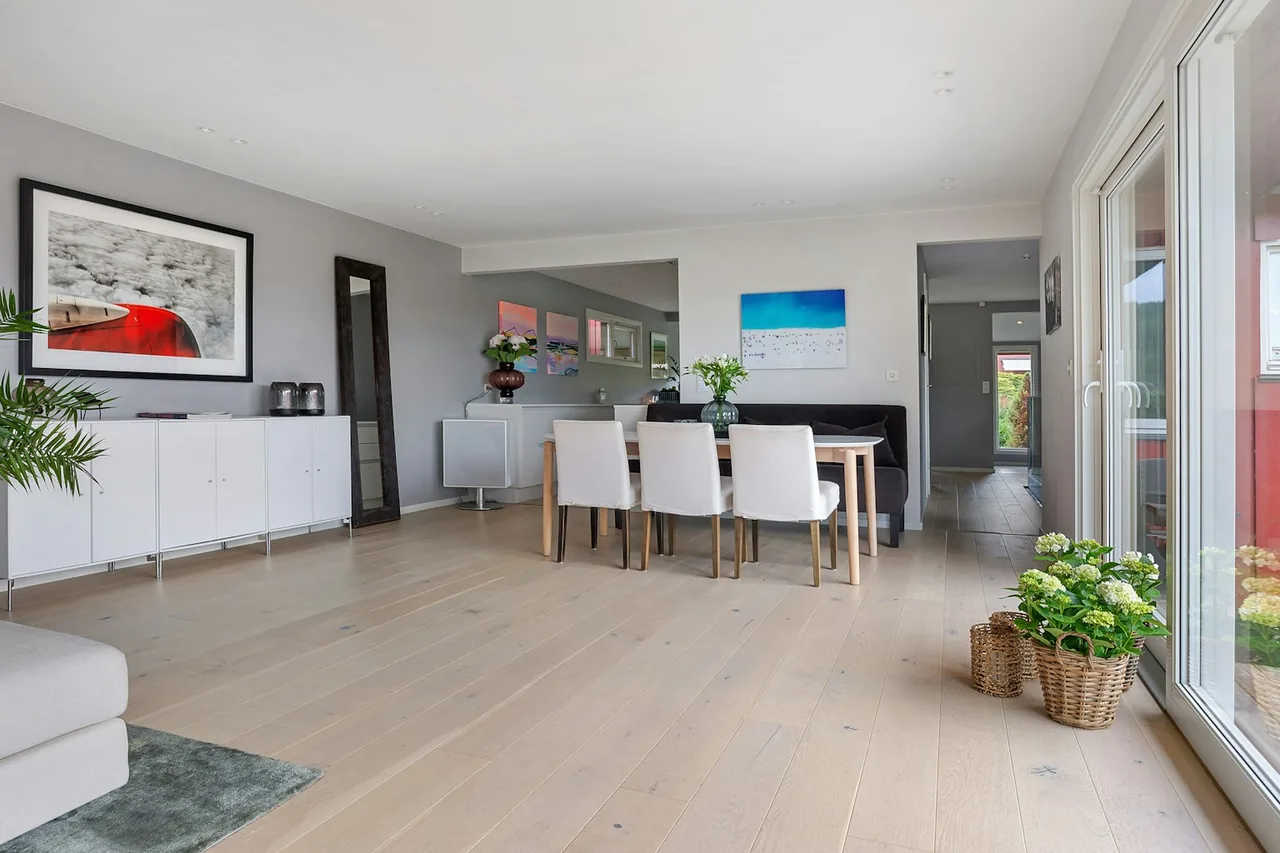
Common Porcelain Mistakes, Consequences, and Prevention
Most porcelain failures are the same handful of shortcuts, each with a predictable consequence and a known prevention. Naming them is how you spot a corner being cut before it is buried under your floor.
| Mistake | What it causes | The prevention |
|---|---|---|
| Trusting the word "porcelain," not the data sheet | An above-0.5% tile fails a freeze or a wet room it was sold for | Confirm < 0.5% absorption by ASTM C373 in writing |
| Polished porcelain on a wet floor | A serious slip hazard in a bath, shower, or entry | Specify a matte/textured finish meeting DCOF ≥ 0.42 |
| Standard thin-set under large-format | Slumping, voids, and lippage on big tiles | Use an LHT medium-bed mortar and check flatness first |
| Inadequate mortar coverage | Hollow, loose porcelain that pops free over time | Back-butter and hit 80% dry / 95% wet coverage |
| Porcelain over a bouncy subfloor | Cracked tiles and cracked grout as the floor flexes | Reinforce to L/360 (L/720 large-format) plus backer/membrane |
| No movement joints | Straight-line cracks across the field as the floor expands | Soft joints at the perimeter and across large fields per TCNA |
| No waterproofing membrane in a shower | Water reaches and rots the substrate behind sound-looking tile | Install a membrane behind and beneath wet-area porcelain |
Every row is a documented cause of a cracked, loose, or hazardous floor — which is why "we confirm the absorption, set to TCNA and ANSI, and put it in writing" is the most valuable sentence in a porcelain quote.
What Actually Drives the Cost of a Porcelain Floor
A porcelain quote is not a flat per-square-foot rate; the headline number a low bid leads with hides the items below, ranked by how much they move the total — and with porcelain, the density and format drive labor the tile price alone never shows.
The Cost Drivers That Move the Total Most
- Substrate prep and reinforcement. The biggest swing on most jobs. Reinforcing a bouncy structure to the deflection limit, then adding backer board or an uncoupling membrane, is real labor and material a sound, rigid substrate avoids — and it is what keeps rigid porcelain from cracking.
- Cutting difficulty and format. Porcelain's hardness means slower, diamond-blade cuts, and large-format tile adds medium-bed mortar, flatter prep, and the skill to avoid lippage — real hours a small, soft tile does not cost.
- Waterproofing in wet areas. A shower or wet floor needs a waterproofing membrane behind and beneath the tile — a non-optional line item the lowest bid tends to omit.
- Layout complexity and patterns. Diagonal, herringbone, and large-format grids add cutting, waste, and skilled hours beyond a straight-lay floor.
- Setting labor and movement joints. Full-coverage setting, back-buttering, and detailing soft movement joints to TCNA spec are skilled hours a fast, thin-bed job skips at the floor's expense.
- Old-floor removal and disposal. Tearing out old tile is heavy, slow labor, haul-away is a fee, and removal often exposes substrate problems that change scope mid-job.
- Through-body vs. glazed and finish. Through-body and specialty finishes carry a premium over standard glazed — worth it where chips would show, an added cost where they would not.
- Transitions and stairs. Thresholds, Schluter-style edge trim, and tiled stairs with bullnose profiles are exacting work priced separately from field tile.
Because these drivers swing so widely, the only honest number comes from an on-site assessment. Compare what moves the price in our tile flooring cost guide and across the cost guides, and size your own room with the tile calculator so you can read a quote critically.
Get an itemized porcelain scope, not a headline rate.
A vetted installer prices the substrate, waterproofing, mortar, tile, and transitions as separate lines — so you see the whole job, free and with no obligation.
How to Choose and Buy Porcelain for Your Space
The right porcelain is the match of absorption, finish, format, and rating to the room — settled before color, because the room's demands are the constraints and the look is the variable. Call this the Porcelain Fit Test: run all six and the tile fits the room; miss one and you are buying a future problem.
- Confirm absorption under 0.5% on the data sheet
- Do not rely on the word "porcelain" alone — read the ASTM C373 number. Absorption under 0.5% is what earns the frost resistance and wet-room rating you are paying for; some tiles labeled porcelain sit above it.
- Match the finish to the room's water
- Specify a matte, textured, or structured finish meeting DCOF ≥ 0.42 for baths, entries, and any wet floor; keep glossy polished porcelain for dry rooms where its slip risk is not in play.
- Buy the PEI rating for the traffic
- A busy home floor wants PEI IV; a commercial-style entry wants PEI V. The abrasion rating, not the showroom finish, predicts how the glaze holds up where people walk.
- Pick the format for the substrate, not just the look
- Large-format porcelain reads seamless but needs a dead-flat substrate and medium-bed mortar; smaller formats and mosaics add grout joints and grip. The flatter your floor, the larger you can go.
- Choose through-body where chips would show
- In high-traffic entries and commercial-style spaces, through-body porcelain hides chips and wear because the color runs full-depth — worth the premium where impacts are likely.
- Buy from one dye lot and order overage
- Shade and caliber vary between production runs, so order all the tile — plus roughly 10% for cuts, waste, and future repairs — from a single lot. A matching spare turns a cracked tile into a clean swap instead of a mismatched patch.
Settle absorption, finish, PEI, and format first and the look becomes a free choice instead of a gamble — which is exactly the order a credible installer walks with you.
Caring for Porcelain — the Easiest Tile to Live With
Porcelain is as close to maintenance-free as a hard floor gets. The body never needs sealing, the glaze does not stain or fade under normal use, and day-to-day care is sweeping or vacuuming for grit and damp-mopping with a pH-neutral cleaner.
The maintenance that does exist lives in the grout, not the tile. Porous cement grout absorbs dirt and can stain, and a tired-looking porcelain floor is almost always a grout problem rather than a tile problem — periodic grout sealing, or specifying an epoxy or pre-sealed grout up front, keeps the lines bright. Skip harsh acidic cleaners, which can dull a glaze and attack cement grout over time, and use felt pads under furniture to protect against the rare deep scratch on a polished finish. Through-body porcelain hides chips and wear better than glazed because the color runs full-depth. When grout has failed or a tile has cracked from substrate movement, the repair reaches below the surface; see floor restoration for failed grout and flooring repair for a cracked tile.
Porcelain Tile Glossary
The terms below recur in every porcelain quote, spec sheet, and warranty — each defined as its working meaning on an actual job, so you can read a scope and judge whether it is complete.
- Water absorption
- The percentage of water a tile takes on, measured by ASTM C373 — porcelain absorbs under 0.5%, the vitrified line that makes it frost-proof and wet-room rated.
- Vitrification
- The high-temperature firing that partially fuses porcelain's clay particles into a glass-like, near-poreless body — the process behind its density and low absorption.
- Through-body porcelain
- Porcelain whose color and pattern run all the way through, so a chip shows the same color underneath instead of a pale scar — favored for high-impact and commercial floors.
- Glazed porcelain
- Porcelain carrying its design in a hard fired surface layer, offering the widest visual range but a thin decorative layer a hard impact can chip to a lighter body.
- PEI rating
- The Porcelain Enamel Institute scale (I–V) grading a glazed tile's surface resistance to abrasion — porcelain floor tile is commonly PEI IV to V.
- DCOF
- Dynamic coefficient of friction — the wet slip-resistance rating per ANSI A137.1. Interior wet floors want ≥ 0.42; polished porcelain often falls below it.
- LHT mortar
- Large-and-heavy-tile medium-bed mortar that resists slumping and holds large-format porcelain flat — the correct setting bed where standard thin-set would sag.
- Lippage
- The uneven height between adjacent tile edges you feel and trip on — controlled by flatter prep, medium-bed mortar, and leveling clips, especially on large-format porcelain.
- Rectified edge
- An edge precision-ground square after firing so tiles butt into tight, uniform grout lines — common on large-format porcelain for a near-seamless field.
- Movement joint
- A soft, flexible joint at the perimeter and across large fields, per TCNA detail, that absorbs expansion so the rigid porcelain does not crack in a straight line.
- Deflection (L/360, L/720)
- The allowable flex of the floor structure under load — span in inches divided by 360, or 720 for large-format and stone. Porcelain cracks over a structure that flexes more.
- TCNA
- The Tile Council of North America, whose handbook (with ANSI) defines the substrate, mortar, coverage, waterproofing, and movement joints a lasting porcelain floor requires.
Standards, Warranty Conditions, and When a Permit Applies
A porcelain warranty is a contract with conditions, and most failures are not about the tile — they are about the substrate and setting it was installed over.
Warranty Conditions That Hinge on the Install
The conditions are specific and testable: a deflection-rated substrate; the correct thin-set or LHT mortar for the format; full mortar coverage; movement joints at the perimeter and across large fields; a waterproofing membrane in wet areas; and the right grout and sealing. A porcelain maker's warranty covers the tile, not an installer's skipped membrane or thin-bed shortcut — which is why the setting standard, in writing, is what protects the floor. Ask that the install follow the TCNA handbook and ANSI standards explicitly.
The Standards Bodies That Set the Bar
For porcelain, the TCNA and ANSI govern substrate, mortar, coverage, waterproofing, and movement joints, and ASTM defines the tests behind the specs — C373 for water absorption and the methods behind PEI and DCOF. A floor built to these holds its warranty and its shape.
When a Porcelain Permit Applies
Replacing a floor like-for-like usually does not require a permit, but repairing or reinforcing structural subflooring or floor joists to carry porcelain, or work tied to a larger renovation, often does — and the heavy dead load of porcelain and mortar can matter on a marginal structure. A reputable installer tells you when a permit applies rather than working around it, and structural questions about the deck belong with the subfloor team first. When an old tile floor is failing rather than dated, the path may be full replacement.
A Real Porcelain Decision
One representative scenario shows how absorption and finish override a tile choice: the freeze rating and the slip number, not the look, drove every call below.
How to Vet a Porcelain Installer
Porcelain failures are almost always install failures, so the installer matters far more than the tile on the sample board. These questions separate a crew that builds a floor to TCNA standards from one that thin-sets porcelain over whatever is there.
- They read the absorption spec before quoting
- Ask what the tile's ASTM C373 absorption is and why it fits your room. A real answer names < 0.5% and the freeze or wet condition it clears — not "it's porcelain, it's fine."
- They assess deflection and reinforce before setting
- Ask how they confirm the substrate is rigid enough. A credible answer names a deflection limit — L/360, or L/720 for large-format — and a plan to stiffen a bouncy floor, not "we'll tile right over it."
- They match the mortar to the format
- For large-format or through-body porcelain, ask which mortar they use. The right answer is an LHT medium-bed mortar and a flatness check to avoid lippage — standard thin-set under a big tile is a red flag.
- They waterproof wet areas behind the tile
- For a shower or wet floor, ask how they waterproof. A credible answer describes a membrane behind and beneath the tile — not "the porcelain and grout keep the water out," which grout does not.
- They check coverage and detail movement joints
- Ask how they confirm full coverage and where they put movement joints. Back-buttering, a coverage check, and soft joints at the perimeter and across large fields are the marks of a crew that prevents hollow tiles and field cracks.
- They put the scope and labor warranty in writing
- Ask for the full scope — substrate, waterproofing, mortar, grout — the timeline, and the workmanship warranty before work starts. A crew willing to name a labor guarantee, and to return if a tile cracks or pops, is accountable for the setting, not just the tile.
Two honest answers — the absorption number and how they waterproof a shower — tell you more about a porcelain crew than any sample board; the rest of the list confirms it.
Why Route Your Porcelain Project Through Pro Work Home Surface
Pro Work Home Surface is not a contractor and does not lay your floor — we are a national authority on home surfaces that matches homeowners with vetted local installers and holds them to a published bar.
- A free consultation and an itemized written scope
- Every connection starts with a no-obligation consult and a written quote that lines out substrate, waterproofing, mortar, tile, and transitions separately — so you read the whole job, not a headline rate.
- Verified porcelain, matched to the room
- Absorption confirmed under 0.5% by ASTM C373, a PEI IV to V rating for the traffic, and a DCOF ≥ 0.42 finish for any wet floor — the right porcelain for the room, with the data sheet to prove it.
- Set for the format, per TCNA and ANSI
- A deflection-rated, flat substrate with backer board or an uncoupling membrane, the correct thin-set or LHT medium-bed mortar for the tile size, full coverage checked behind every tile, and movement joints at the perimeter and large fields — so the floor does not crack, pop, or rot.
- National coverage, local crews
- We match you with installers in your area nationwide, so the standard is consistent even though the crew is local — whether your project is a single bath or a whole floor.
Porcelain is one tile among several we cover across home surfaces. If your project also touches restoring stained grout, fixing a cracked tile, or a full tear-out and replacement, the same standards apply — settle the closest cross-shop in our tile vs. LVP guide, weigh the numbers in our tile flooring cost guide, dig into the how-and-why in our surface guides, and start from the tile hub, the flooring category hub, or the full range of home surfaces.
Brands & Material Authority
Quality and construction drive long-term performance more than the label. These are widely respected names in this category:
- Shaw
- Mohawk
- COREtec
- Armstrong
- Pergo
- Mannington
- Bruce
- Karndean