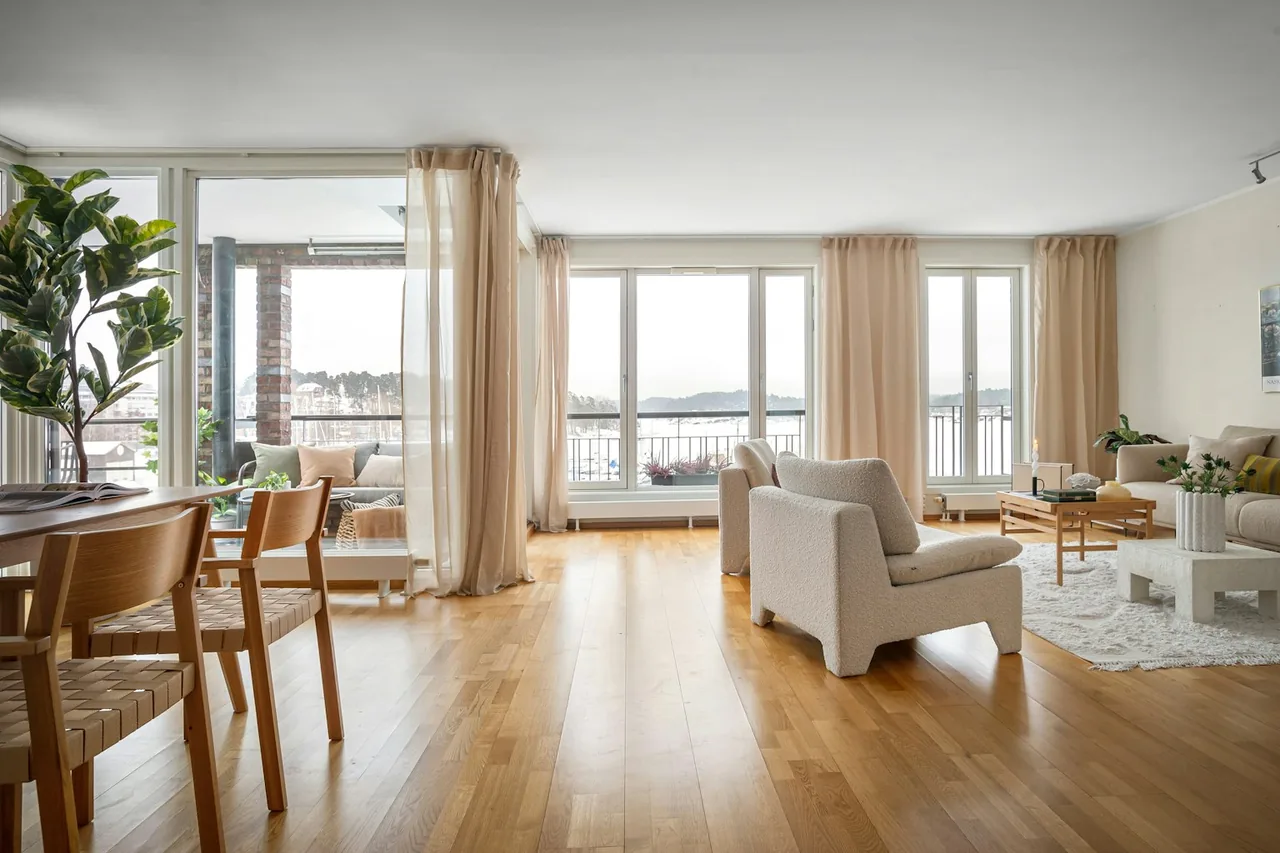
Maple flooring is a pale, fine-grained domestic hardwood — hard (sugar) maple measures 1450 lbf on the Janka hardness scale, harder than either oak — prized for a clean, contemporary look. What sets it apart from its sibling species is a single contradiction: maple is harder than the benchmark oak, yet it is the species you have the least freedom to color, because its dense, tight, closed grain blotches under dark stain. Choose maple when you want a light, modern floor with above-oak hardness and you love the wood's own pale tone — not when you need a deep custom stain. Get a free consultation and a written, itemized scope from a vetted installer before a single board is ordered — the no-dark-stain reality and the construction your subfloor demands are decided in that document, not in the showroom.
Maple's Defining Contradiction: Hard as a Rock, Won't Take Stain
Maple occupies a specific and slightly contradictory place among hardwoods: it is harder than the American benchmark oak, yet it is the species you have the least freedom to color. Both facts come from the same source — its dense, tight, closed-grain structure.
Why the Same Density Does Both
That density is what pushes hard (sugar) maple to 1450 lbf, above red oak's 1290 and white oak's 1360, giving it genuine dent resistance for busy rooms. And that same density is exactly why stain behaves badly on it — the two are not separate traits but one property expressed twice.
How Closed Grain Rejects Stain
Where oak's open, ring-porous grain drinks stain evenly and deeply, maple's closed grain resists penetration and accepts it unevenly — pigment pools in some areas and skates off others, producing a blotchy, mottled result that no amount of care fully eliminates without specialized conditioning. This is not a defect; it is the physics of a fine, dense wood.
The Honest Consequence: Buy the Color It Already Is
Maple is a wood you choose for its natural color, not one you choose and then color. Within hardwood flooring, that makes maple a deliberate aesthetic pick rather than a flexible blank canvas — a floor you buy for the pale, creamy tone it delivers straight from the mill.
What the Pale Surface Reads Like
Visually, maple reads pale, smooth, and quiet. Its grain is subtle — fine, gently flowing, with far less of the bold figure that defines oak or the dramatic variation of hickory. The look is creamy, light, and contemporary, the kind of floor that recedes and brightens a room rather than announcing itself.
Maple vs. Oak, Hickory, and Walnut — the Pale, Hard, Stain-Resistant One
Maple's siblings sharpen exactly what it is and isn't. Compared across the mainstream species, maple is the pale, hard, stain-resistant one — strong on a specific look, weak on color flexibility. The comparison is by the spec each species is rated on, not by the showroom finish.
The Species Comparison Matrix
The matrix below is the decision a homeowner is making across the mainstream hardwoods — the Janka number, the grain and stain behavior, and the one thing each does best. Janka figures are widely published industry values; the printed specs for your product always govern.
| Species | Janka hardness | Grain & stain behavior | What it does best | Grade page |
|---|---|---|---|---|
| Hard maple | 1450 lbf | Tight, closed — blotches under dark stain; pale | Clean, light, contemporary — clear-finished | Maple |
| Red oak | 1290 lbf | Open, ring-porous — takes any stain evenly | Custom color, matching legacy floors | Oak |
| White oak | 1360 lbf | Open grain, closed tyloses — even stain, water edge | Cool modern tones, damp-prone rooms | Oak |
| Hickory | 1820 lbf | Varied density — dramatic figure, rustic | Maximum hardness, high-contrast character | a hard hickory species |
| American walnut | 1010 lbf | Fine — needs no stain; naturally dark | Rich dark color in gentle rooms | Walnut |
The pattern the matrix makes plain: maple beats both oaks on hardness but loses to them on stain flexibility; it shares the hard end with hickory but is its aesthetic opposite (calm and pale versus dramatic and rustic); and against soft, dark walnut it is the durable light alternative. Maple is the species you choose for a pale, smooth, durable, contemporary floor in its own color. Compare it spec-for-spec against other floors with the material comparison tool.
Maple Comes in Solid and Engineered
It comes in both solid and engineered construction, so its species character is independent of the construction your subfloor requires. A wood subfloor in a dry room opens up solid; a slab or basement means engineered maple — the pale look rides on top of that decision, never under it.
Want maple's hardness confirmed for your room before you buy?
We match you with a vetted installer who tests the subfloor, confirms whether maple's pale, no-dark-stain reality fits your plan, and puts it in a written scope — before you commit to a board or a price.
Maple by the Numbers — Janka, Grain Density, and Stain Behavior
Maple's specs are unusual in that one of the most important — its stain behavior — isn't a number at all, but a direct consequence of the numbers that are.
Janka Places Maple Above Both Oaks
Janka hardness for hard (sugar) maple is 1450 lbf — the force to embed an 11.28 mm steel ball halfway into the wood — placing it above both oaks and below only hickory flooring among common domestic floor species. That is real, usable dent resistance: maple stands up to heels, dropped objects, and general traffic better than the benchmark oak.
Hard Maple vs. Soft Maple — Name the Species
Note the species precisely: hard (sugar) maple is the flooring wood at 1450 lbf; soft maple species are considerably less hard and are not the same product. When a quote says "maple," confirm it is hard/sugar maple, because the softer maples do not carry the hardness that is maple's whole durability case.
The Maple Spec Table
The table collects the figures that govern a maple buy, so the durability and stain trade-offs read together.
| Spec | Value | What it governs | Why it matters for maple |
|---|---|---|---|
| Janka (hard/sugar) | 1450 lbf | Dent resistance | Harder than oak — real traffic resistance |
| Grain structure | Closed, diffuse-porous | Look + stain uptake | Smooth, pale surface; rejects even staining |
| Stain uptake | Poor (blotches) | Color freedom | Best clear- or natural-finished |
| Natural color | Pale, creamy | The look you buy | Brightens contemporary rooms |
| Dent visibility | Higher on pale surface | Wear appearance | Hardness works to keep the smooth surface clean |
| Best finish | Clear / natural | Finish strategy | Removes the blotch risk entirely |
Stain Uptake Is the Spec That Decides the Finish
Stain uptake is the spec that matters most in practice, and it is poor by design. The dense closed grain resists even pigment penetration, so dark and bold stains blotch — pooling unevenly across the board. A clear or natural finish, or at most a very light tint, is what lets maple look its best; a hardwood specialist can use a conditioner or a pre-stain sealer to improve uniformity, but the safe, predictable, beautiful result is maple finished close to its natural pale color. The takeaway: shop maple for the color it already is, and budget any darkening attempt as a specialist job with managed expectations, not a routine stain.
Where Maple Works Best — and Where Its Look or Limits Argue Against It
Maple's best rooms are dry, lived-in spaces where its hardness and pale, calm look are both assets — and its weak spots are about aesthetics and stain, plus hardwood's universal moisture limit.
Maple's Best Rooms Are Light and Modern
It shines in a living-room floor, a bedroom floor, dining rooms, halls, and open contemporary main floors — anywhere a light, smooth, modern surface brightens the space and the above-oak hardness handles real traffic. Maple is a natural fit for clean, minimalist, Scandinavian, and modern interiors where the pale tone is the whole point. Its hardness also makes it a reasonable choice for moderately busy family rooms, though for the most punishing pet-and-kid spans hickory's extra hardness pulls ahead.
The Two Situations Maple Argues Against Itself
Maple argues against itself in two situations. First, any room where you want a dark or boldly stained wood floor — maple will blotch, and a stain-friendly species like oak is the correct tool. Second, very high-contrast or rustic design schemes, where maple's uniform calm reads as bland and hickory's drama or oak's figure would serve better. And maple obeys hardwood's absolute limit like every species: it does not belong in rooms with routine standing water or below-grade moisture. A bathroom floor, a laundry-room floor, and a basement floor are wrong for solid maple; engineered maple over a moisture-control system buys some tolerance, but a waterproof material is the honest answer where water is routine. One more caution: maple's pale surface can make dents and dark scuffs more visible than a busy-grained floor hides them, so its hardness is doing real work to keep the smooth surface clean.
How Maple Is Installed and Finished
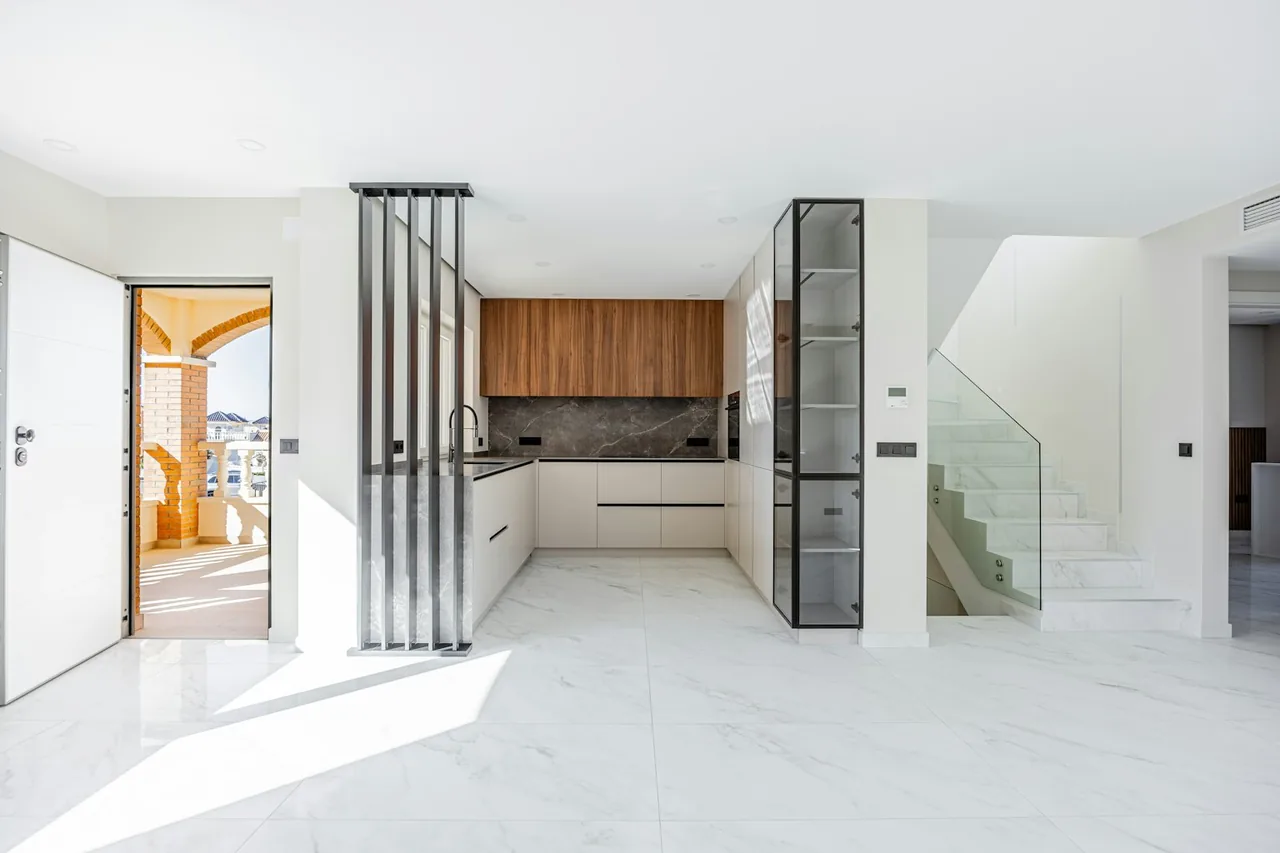
Maple installs by the same construction-and-subfloor logic as any hardwood, but its finishing demands more thought than any other mainstream species, because the stain limitation is non-negotiable. The six steps run from assessment to walkthrough, and step five is where maple is unique.
On-Site Subfloor Assessment
The installer identifies the substrate — nailable wood subfloor or concrete slab — checks for deflection and squeaks, and confirms it against the manufacturer's requirements. This decides the method: a slab points to engineered maple, glued or floated; a sound wood subfloor opens solid maple.
Moisture Testing Against the Maker's Limit
Concrete is read by an in-situ relative-humidity test to ASTM F2170, probes sealed at 40% of slab depth; wood subfloors are metered to sit within 2% to 4% of the maple's own moisture content. A reading above the limit stops the install — maple's hardness does nothing to protect it from slab vapor.
Subfloor Preparation and Acclimation
High spots are ground down and low spots filled to the NWFA flatness tolerance of 3/16 in. over 10 ft, and the maple acclimates in the conditioned space until its moisture content reaches equilibrium with the home — commonly several days for solid, per the manufacturer. The detail work here lives under subfloor prep.
Careful Fastening of a Dense Wood
The installer sets a continuous 1/4 in. to 3/8 in. perimeter expansion gap, then installs by the method the substrate allows — nail-down through the tongue every 6 to 8 inches for solid maple, or glue-down or float for engineered. Maple's density makes it slightly less forgiving to nail and machine than softer species, one more reason an experienced installer matters.
Finish: Clear or Natural, Not Dark Stain
This is where maple is unique. Because the dense grain blotches under stain, the safe and beautiful path is a clear or natural finish that showcases the pale tone. If any darkening is wanted, it is specialist work — a conditioner or pre-stain sealer applied by someone who knows maple, with realistic expectations about uniformity. This is why the prefinished-vs-unfinished calculus tilts toward prefinished for maple: a factory finish over the natural color removes the stain gamble entirely.
Trim, Transitions, and Walkthrough
Stair-nosing, T-moldings, reducers, thresholds, and baseboard finish the edges, conceal the expansion gap, and bridge to adjoining rooms and any staircase. The site is cleaned and the installer walks the floor with you to confirm the pale surface reads as intended and to explain any cure time before heavy use.
When a maple floor's clear finish eventually wears, it sands and recoats cleanly under floor refinishing — and because most maple is clear-finished, a screen-and-recoat refresh is especially straightforward. The full method comparison across all materials lives under flooring installation.
Talk through your project — free.
A free consultation and a written, itemized quote from a vetted installer. No pressure, no obligation.
Is Maple Right for Your Space?
Whether maple belongs in a room is a short chain of facts about the color you want, the traffic, the subfloor, and the room's moisture. Walk it in order; each branch either confirms maple or points to a stain-friendly species.
- Do you want a dark or boldly stained wood floor? If yes, maple is the wrong species — its closed grain blotches, and oak's open grain takes any stain evenly. If you want a light, pale, natural-toned floor, maple is on the table; continue.
- Does the room's style reward calm or drama? Maple's uniform, quiet surface suits clean, minimalist, Scandinavian, and modern rooms. A high-contrast, rustic scheme wants the hickory species's drama or oak's figure instead — match the wood's character to the room.
- How hard does the room live? Maple's 1450 lbf handles busy living and dining rooms and keeps its pale surface clean. For the hardest pet-and-kid spans, hickory at 1820 lbf still leads — but for most homes, maple's above-oak hardness is ample.
- Is the subfloor wood over joists, or a slab? A sound wood subfloor in a dry room opens up solid wood maple; a slab on grade or a basement means engineered flooring maple — the species look rides on top of the construction the substrate dictates.
- Confirm the finish route last. Only once color, style, traffic, and subfloor are settled does prefinished-versus-unfinished enter — and for maple that call tilts toward prefinished, since the custom color unfinished unlocks is the thing maple mostly can't have.
Run honestly, this tree returns either a defensible maple spec or a clear signal to choose a stain-friendly species — and an installer who promises a rich dark stain on maple is the red flag.
Common Maple Mistakes, Consequences, and Prevention
Most maple disappointments are the same handful of shortcuts, each with a predictable consequence and a known prevention. Naming them is how you spot a corner being cut before it is buried under your floor.
| Mistake | What it causes | The prevention |
|---|---|---|
| Applying a dark stain to maple | Blotchy, mottled color no conditioner fully evens out | Finish clear or natural — choose oak if you need dark custom color |
| Buying "maple" without confirming hard/sugar | A softer maple that dents where hard maple wouldn't | Confirm hard (sugar) maple at 1450 lbf on the spec sheet |
| Maple in a rustic, high-contrast room | A floor that reads bland against the intended drama | Use dense hickory or figured oak where character is the goal |
| Solid maple over a slab or below grade | Cupping as slab vapor reaches the wood | Use engineered maple, glued or floated, with the slab tested first |
| Skimping on grit control | Fine scratches and dark scuffs visible on the pale surface | Entry mats and felt furniture pads — maple shows wear more than busy grain |
| No perimeter expansion gap | Crowning and buckling as the maple grows with no room to move | Leave a continuous 1/4 in.–3/8 in. gap at every wall and obstruction |
| Wet-mopping the finished floor | A dulled, whitened finish and swollen board edges over time | Clean dry or barely damp with a hardwood cleaner on a microfiber pad |
Every row is either a documented warranty-denial trigger or a money-wasting mismatch — which is why "we finish maple clear and match hardness to your room, in writing" is the most valuable sentence in a maple quote.
What Actually Drives the Cost of a Maple Floor
A maple quote is not a flat per-square-foot rate; the headline number a low bid leads with hides the items below, ranked by how much they move the total.
The Cost Drivers That Move the Total Most
- Grade and board width. A cleaner, more uniform maple grade and wider planks both cost more than a standard-grade strip — and maple's calm surface makes grade consistency especially visible.
- Solid vs. engineered and the install method. Construction changes both material and labor — a nail-down solid maple floor, a glue-down engineered over slab, and a floated engineered floor are three different labor lines.
- Subfloor prep and leveling. The biggest swing on most jobs. Grinding high spots, self-leveling low spots to flatness, and reinforcing a bouncy structure is real material and labor a sound, flat substrate avoids.
- Finish route. Prefinished maple installs in a day; unfinished adds sanding and cure time — and any specialist conditioning to attempt a tint adds labor and risk on top.
- Moisture mitigation over a slab. A slab that reads too wet needs a mitigation system or a moisture-control underlayment to the maker's spec — a real line item the lowest bid tends to omit.
- Old-floor removal and disposal. Tear-out is labor and haul-away is a fee, and removal often exposes subfloor problems that change scope mid-job.
- Stairs and transitions. Treads, risers, and stair-nosing are slow, exacting work priced separately; a run onto stairs raises the total across a whole home.
Because these drivers swing so widely, the only honest number comes from an on-site assessment. Compare what moves the price in our hardwood flooring cost guide and across the cost guides, and size your own room with the hardwood calculator so you can read a quote critically.
Get an itemized scope, not a headline rate.
A vetted installer prices the maple grade, prep, finish, removal, and transitions as separate lines — so you see the whole maple-floor job, free and with no obligation.
How to Choose Maple for Your Space
Maple is the right buy when you want a pale, smooth, hard, contemporary floor in its natural color — decide on the look and the no-dark-stain reality first, then the construction.
- Choose maple for its natural pale color, not for staining
- Maple's dense closed grain blotches under dark stain, so love the light, creamy tone it already has. If you need a deep or custom color, oak's stain-friendly grain is the correct species instead.
- Use maple where above-oak hardness helps a light floor
- At 1450 lbf maple is harder than both oaks, real dent resistance that keeps its pale surface clean in busy living and dining rooms — though hickory still leads for the hardest-living pet spans.
- Confirm hard (sugar) maple, not a soft maple
- The flooring wood is hard/sugar maple at 1450 lbf; softer maple species dent far more easily. Check the spec sheet names the right species before you buy on the maple name alone.
- Lean prefinished to skip the stain gamble
- Since custom color is the thing maple resists, prefinished maple in its natural tone removes the blotch risk entirely and installs in a day — often the more sensible route for maple specifically.
- Plan grit control for the pale surface
- Fine scratches and dark scuffs stand out on maple's light, even surface where oak's texture would hide them — so entry mats and felt furniture pads earn their keep from day one.
- Let the subfloor pick construction
- Maple comes a solid-wood floor and an engineered-wood floor. Wood subfloor in a dry room opens up solid; a slab or basement means engineered maple — the species look rides on top of that decision, never under it.
Settle the color reality and the subfloor first and the finish and grade become a free choice instead of a gamble.
Want maple's pale beauty without a blotchy stain?
We match you with a vetted installer who tells you the truth about maple and dark stain, finishes it to suit the grain, and matches construction to your subfloor — in a written scope, free and with no obligation.
Maple Flooring Glossary
The terms below recur in every maple quote, spec sheet, and warranty — each defined as its working meaning on an actual job, so you can read a scope and judge whether it is complete.
- Hard (sugar) maple
- The flooring maple at a Janka of 1450 lbf — harder than either oak, pale, and fine-grained. Distinct from softer maple species that dent far more easily.
- Closed grain
- A dense, diffuse-porous structure with pores distributed finely rather than in open rings — the source of maple's smooth surface and its resistance to even staining.
- Diffuse-porous
- A wood in which pores are spread evenly through the growth ring rather than concentrated in it — maple's structure, the opposite of oak's ring-porous grain.
- Blotching
- Uneven stain uptake in which pigment pools in some areas and skates off others — the mottled result maple produces under dark stain, which conditioners only partly reduce.
- Pre-stain conditioner
- A sealer applied before stain to even out penetration on a dense wood — the specialist step required if maple is to be darkened at all, with managed expectations.
- Janka hardness
- The pounds-force to embed an 11.28 mm steel ball halfway into the wood — hard maple 1450 lbf, above both oaks and below only hickory among common species.
- Clear finish
- A topcoat with no added color that showcases maple's natural pale tone — the safe, predictable finish route that removes the blotch risk entirely.
- Acclimation
- Letting maple boards sit in the conditioned space until their moisture content reaches equilibrium with the home, so the floor stops moving after it is down.
- Expansion gap
- The deliberate 1/4 in. to 3/8 in. space left around the perimeter so a solid or floating maple floor can expand with humidity without buckling; hidden under trim.
- Screen-and-recoat
- Lightly abrading the finish and adding a fresh topcoat without sanding to bare wood — especially straightforward on clear-finished maple.
- ASTM F2170
- The in-situ relative-humidity test that reads concrete-slab moisture from probes sealed at 40% of slab depth — the way to confirm a slab is dry enough for maple.
- NWFA
- The National Wood Flooring Association, which sets the recognized practice for wood subfloor moisture, acclimation, flatness (3/16 in. over 10 ft), and installation that a maple floor's warranty is judged against.
Standards, Warranty Conditions, and When a Permit Applies
A manufacturer's warranty is a contract with conditions, and most denials on a maple floor are not about the product — they are about how it was installed and finished.
Warranty Conditions That Hinge on the Install
The conditions are specific and testable: substrate moisture below a stated limit; the maple acclimated for a stated period; only approved underlayments and adhesives used; the expansion gap and fastener schedule honored; the flatness tolerance met. An installer who forces a dark stain that blotches, or skips the moisture test, has created a problem the warranty will not cover. Ask in writing that the install follow the manufacturer's published instructions — that document is what a claim is judged against.
The Standards Body That Sets the Bar
For maple the NWFA governs subfloor moisture, acclimation, flatness, and installation practice, and ASTM F2170 defines the concrete moisture test. A floor built to these holds its warranty and its shape; a floor built around them holds neither.
When a Maple Flooring Permit Is Required
Permits enter when the work goes beyond the finished surface. Replacing a floor like-for-like usually does not require one, but reinforcing structural subflooring or floor joists, or work tied to a larger renovation, often does. A reputable installer tells you when a permit applies rather than working around it — and structural questions belong with the subfloor team first. When wear, not damage, is the issue, clear-finished maple makes refinishing the clean path over a fresh install.
A Real Maple Decision
One representative scenario shows maple's defining trade — pale natural beauty against stain limitation — when the homeowner's color wish ran into maple's grain.
How to Vet a Maple Flooring Installer
Most maple disappointments are finish-and-install failures, so the installer matters more than the brand on the box. These questions separate a crew that builds maple floors to last from one that simply lays product fast.
- They tell you the truth about maple and dark stain
- Ask how they'd stain maple a rich dark color. An honest installer says maple blotches and steers you to a clear finish or to oak — a shop that promises a flawless dark maple stain is overselling.
- They confirm hard/sugar maple on the spec sheet
- Ask which maple species they're quoting. A real answer names hard (sugar) maple at 1450 lbf, not a softer maple that dents more easily.
- They test moisture before they quote a final price
- An installer who commits without testing the substrate is guessing. Ask which test they run on concrete and what limit the maple requires — a real answer names ASTM F2170 and a percentage.
- They match construction to your subfloor
- The right installer explains why solid or engineered maple fits your substrate, and why the other doesn't. A shop that puts solid maple over every slab is a red flag — it will cup.
- They acclimate the maple and install to spec, in writing
- Acclimation period, fastener schedule, approved adhesive, and expansion gap protect your warranty — a professional puts that commitment in the quote, not a verbal promise.
- They put the scope and labor warranty in writing
- Ask for the full scope, the timeline, and the workmanship warranty before work starts. A crew willing to name a labor guarantee — and to return if a seam lifts or a board squeaks — is accountable for the install, not just the product the maker covers.
Two honest answers — the truth about maple's stain limit and a named moisture test — tell you more about a maple crew than any showroom; the rest of the list confirms it.
Why Route Your Maple Flooring Project Through Pro Work Home Surface
Pro Work Home Surface is not a contractor and does not lay your floor — we are a national authority on home surfaces that matches homeowners with vetted local installers and holds them to a published bar.
- Honest guidance on maple's stain limitation, up front
- Maple's closed grain blotches under dark stain, so a clear or natural finish is recommended — and if you need custom color, oak is proposed instead. Any darkening is flagged as specialist work with realistic expectations before you commit.
- Construction matched to the subfloor, then tested and acclimated
- Solid over a sound wood subfloor; engineered over slab or below grade. The wood is acclimated on site and the subfloor moisture-tested and leveled to the NWFA 3/16 in. over 10 ft tolerance before a single board goes down.
- Finished to suit the species, in writing
- Where maple is site-finished, a clear or natural system is used unless a specialist conditioning approach is agreed, and the finish follows the manufacturer's instructions — so the floor looks as intended and the work meets the conditions your warranty depends on.
- National coverage, local crews
- We match you with installers in your area nationwide, so the standard is consistent even though the crew is local — whether your project is a single room or a whole home.
Maple is one species within hardwood. If your project also involves refinishing an existing maple floor, restoring a damaged section, or a full tear-out and replacement, the same standards apply — settle the construction question in engineered vs. solid hardwood, weigh the cost in our hardwood flooring cost guide, dig into the how-and-why in our learning center, and start from the hardwood hub to compare maple against oak, hickory, and walnut, or zoom out to the flooring hub and the full range of home surfaces.
Brands & Material Authority
Quality and construction drive long-term performance more than the label. These are widely respected names in this category:
- Shaw
- Mohawk
- COREtec
- Armstrong
- Pergo
- Mannington
- Bruce
- Karndean