3D wall panels are dimensional decorative panels — molded in PVC, MDF, gypsum, or fluted wood — that mount over a wall to add sculpted relief, texture, or acoustic control without the weight or labor of masonry or solid millwork. Two things decide which panel is right, and the render is neither: the material, because a PVC panel, an acoustic felt panel, and a gypsum relief panel behave completely differently in moisture, sound, and durability; and the adhesion-and-seam work, because these panels live or die on a clean, flat substrate and joints that resolve into a continuous surface. Most install over existing drywall with adhesive or fasteners, and some PVC types are moisture-tolerant enough for spaces where wood and MDF can't go. Get a free consultation and a written, itemized scope from a vetted installer before you order — that document, which names the material for your room, is where the right panel is decided.
3D Wall Panels Are a Material Decision First, a Pattern Second
The sculpted pattern everyone falls for in the render matters less than the material behind it. What separates a panel wall that performs and lasts from one that swells, stays loud, or peels at the seams is the material chosen for the room and the install care given to the bond and the joints.
The Materials That Define the Category
3D panels are a broad, modern category united by one idea — a relief surface applied to a flat wall — but the material splits it into very different products, which is why a credible installer asks the material before the pattern:
- PVC panels are lightweight, washable, and moisture-tolerant — often the choice for damp-adjacent or high-traffic spots.
- MDF panels, including the popular fluted and slatted designs, give crisp, paintable relief at a moderate price but share MDF's zero moisture tolerance.
- Gypsum (plaster) panels offer sculptural, paintable, fire-friendly relief with real heft and a seamless plastered look once finished.
- Fluted and dimensional wood panels bring warmth and grain to the 3D format.
- Acoustic panels — felt or felt-backed slat — are the functional branch, engineered to absorb sound rather than just decorate.
Because the materials barely overlap in moisture tolerance, sound, or durability, the material is the real decision — the pattern and depth come second.
Each Material Steers the Panel to a Different Room
A sculpted PVC or gypsum panel turns a single accent wall into the centerpiece of a space; a fluted MDF or wood panel gives a living-room feature wall a tactile, modern texture; an acoustic panel quiets a media room, office, or a bedroom that echoes. Because the panels read as a finished, dimensional surface rather than a flat wall, they do a lot of design work fast — but only if the material matches the room's moisture, durability, and acoustic needs.
The Render Is the Trap — the Material Is the Truth
The single most common 3D-panel mistake is buying the picture instead of the material: a beautiful MDF render specified for a bathroom, or a decorative slat bought to quiet a room it can't. The panel that looks perfect on screen is only right if its material suits where it's going. Reading the material first, not the render, is what separates a wall that performs from one that disappoints.
Where 3D Wall Panels Fail — Wrong Material, Weak Adhesion, Visible Seams
Three failure modes recur, and every one is a choice about material, prep, or install — not the panel concept.
Material Mismatch — the Wrong Panel for the Room
MDF and gypsum panels put in a bathroom or a splash zone swell, soften, or crumble, because neither tolerates standing moisture — that's PVC or tile territory. A decorative slat panel bought hoping it will quiet a room often does nothing, because only true acoustic panels with an absorptive backing actually reduce sound. And a cheap, thin PVC panel under raking light can read flimsy and plastic where a heavier gypsum or wood panel would read substantial. None of these are defects; they're the wrong material for the job.
Adhesion and Substrate Failure
These panels usually go up with construction adhesive, sometimes with fasteners, and they depend on a clean, flat, sound wall — adhesive over dusty, glossy, or out-of-plane drywall lets panels lift, bow, or pop at the corners over time, and heavier panels need mechanical fastening into framing, not glue alone. There's a material-specific trap most people miss: PVC panels expand and contract with temperature more than MDF or gypsum, so a PVC panel glued solid wall-to-wall in a sunny room or near a heat source can buckle or open a seam as it moves — the install has to allow for that movement, the same way a vinyl floor does.
Visible Seams That Break the Illusion
Where panels meet, a visible, uncaulked, or misaligned joint breaks the illusion of a continuous sculpted surface. Many systems are designed to hide or interlock seams, but a rushed install leaves them obvious. The seam strategy — interlocking, or well-placed and caulked — is what makes the wall read as one surface instead of a grid of tiles, and it's planned before the first panel goes up.
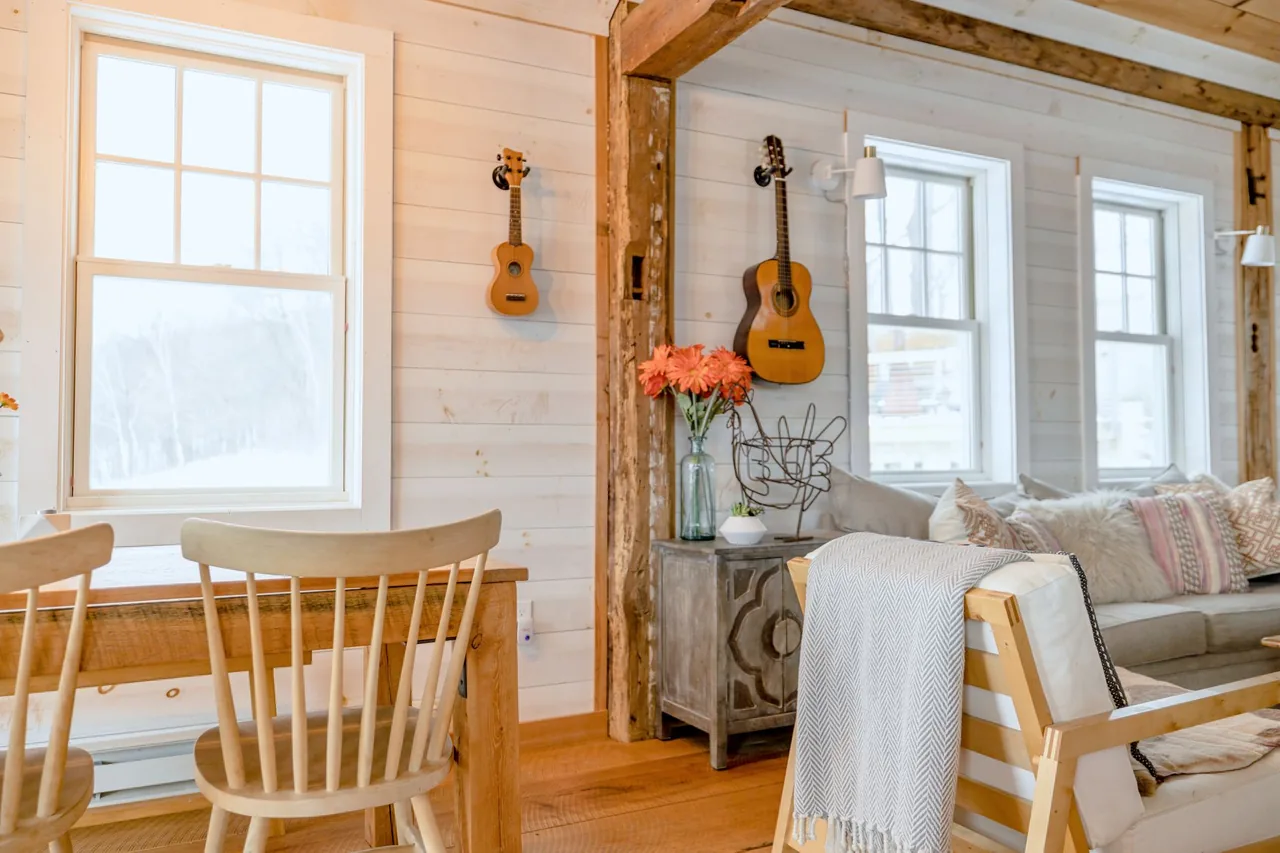
3D Wall Panels vs. the Other Wall Finishes
3D panels compete with several finishes, and the choice turns on weight, authenticity, moisture, and how fast you need it done. The matrix below rates each on the specs that decide the call.
| Finish | Look | Relative weight | Moisture tolerance | Acoustic option? | Best use |
|---|---|---|---|---|---|
| 3D wall panels | Sculpted relief, fluted, geometric | Light (PVC) to substantial (gypsum) | PVC yes; MDF/gypsum dry | Yes — felt-backed (NRC) | Modern texture, sound, moisture (PVC) |
| Wood wall panels | Real grain & warmth | Light to moderate | Dry; engineered for damp | Yes — acoustic slat | Authentic wood, warmth, acoustics |
| Stone veneer | 3D masonry mass | Heaviest of these | Exterior-rated | No | Rugged, authentic stone depth |
| Wall tile | Flat, sealed | Light | Yes — over waterproofing | No | Wet walls, backsplashes |
| Wainscoting | Traditional framed millwork | Light | MDF dry; PVC for damp | No | Lower-wall protection, formal look |
The honest read: choose real wood panels for authentic grain, veneer for true stone mass, and tile for a waterproofed wet wall — and choose 3D panels for sculpted geometry, the moisture tolerance only PVC brings, or budget and speed. There's overlap: fluted wood lives in both panel categories. To weigh 3D panels against the alternatives for a specific wall, the guides lay out the trade-offs.
Not sure which panel material your room can take?
Tell us the room — damp, echoey, or a dry feature — and we'll match a vetted installer who picks the material for it and puts the choice in a written scope before you order.
The Specs and Standards That Matter for 3D Wall Panels
The numbers that count vary by material, but a few specs predict whether a panel performs and looks the part — from material and moisture tolerance through the acoustic number to fire performance and panel depth.
Material and Moisture Tolerance
The defining spec — PVC tolerates moisture and washes clean; MDF and gypsum do not tolerate standing water; wood needs a dry room. Match the material to where the panel will live, because a moisture mismatch is the category's most common and most expensive failure.
Acoustic Rating — the NRC
For panels sold for sound, the real metric is the Noise Reduction Coefficient, and the gap between a sound claim and sound performance lives here.
What the NRC Number Tells You
The NRC measures how much sound the assembly actually absorbs on a 0 to 1 scale, where a panel rated 0.70 absorbs about 70% of the sound that strikes it — a real acoustic panel publishes a figure; a decorative slat on a hard board does not. The absorption comes from the panel's porous backing, not its sculpted face.
Why a Decorative Panel Won't Quiet a Room
A sculpted PVC or MDF panel with no absorptive layer reflects sound nearly as much as a bare wall, no matter how textured it looks. Only a felt or felt-backed assembly engineered for absorption changes how a room sounds.
The Number to Demand Before You Buy "Acoustic"
If quieting the room is the goal, ask for the published NRC of the specific panel and backing — a panel sold as "acoustic" without a number on its data sheet is decorative. The figure is the only proof the panel does the job.
Fire Performance Where Code Applies
A panel's flame-spread classification — the ASTM E84 rating — can matter for stairwells and where code applies; gypsum panels tend to perform well, some plastics less so. Confirm it where it's relevant, particularly on an egress path, rather than discovering it at inspection.
Panel Depth and Substance
Heavier gypsum and thicker wood panels read substantial under raking light; thin PVC can look flimsy. Depth and weight track with how convincing the relief looks, so the panel depth is matched to how close people will stand and how much the wall is meant to be a focal point.
Types and What to Buy
Matching the panel type to the job — decorative, acoustic, moisture-proof, or warm — is the whole decision, because the materials barely overlap. 3D panels are bought by material rather than a sub-page per type.
The Four Materials, Compared
The table below lays out the common panel materials, their moisture tolerance, and where each belongs — the comparison that keeps MDF out of a bathroom and a decorative panel out of an acoustic job.
| Material | Moisture tolerance | Acoustics | Substance under light | Best for |
|---|---|---|---|---|
| PVC panels | High — washable | None unless backed | Can read thin if cheap | Damp-adjacent & high-traffic walls |
| MDF fluted / slat | None — dry only | None unless backed | Crisp, paintable relief | Dry modern feature walls |
| Gypsum (plaster) | None — dry only | None unless backed | Substantial, seamless | Architectural, fire-friendly relief |
| Acoustic felt / felt-backed | Dry (felt) | High — published NRC | Reads intentional | Quieting media rooms & offices |
The brand matters less than choosing the material for the room's moisture, demanding a published NRC if sound is the goal, and picking enough panel depth to read substantial. Cost factors — material, panel depth, acoustic backing, square footage, and how seams resolve — are worth comparing in the cost guides, and the material comparison tool lines the finishes up spec-for-spec.
Want the material matched to your room and the seams resolved?
We match you with a vetted installer who picks PVC, gypsum, wood, or acoustic for the job, preps the substrate, and plans the seams — in a written, itemized scope.
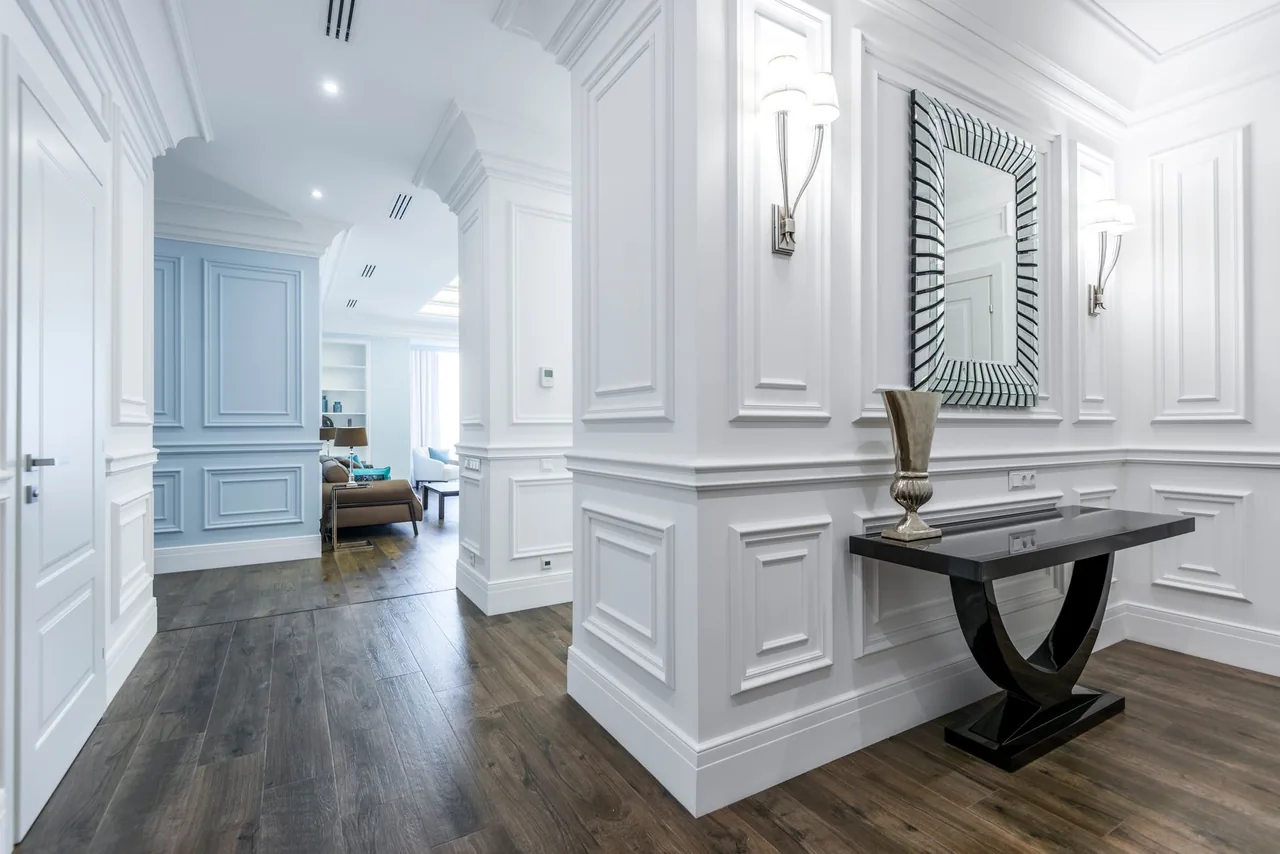
How 3D Wall Panels Are Installed
3D panels are among the faster wall finishes to install, but the prep and the seams decide the result. The six steps below are the full arc from substrate prep to a finished, continuous surface, each preventing a specific failure.
Prep the Substrate Clean, Flat, and Sound
The wall must be clean, flat, and sound — adhesive grips dust and gloss poorly, and an out-of-plane wall telegraphs through the panels. High spots and glossy paint are addressed first so the bond actually holds.
Plan the Layout and Seam Strategy
The layout is planned so the relief pattern is centered and seams either interlock or fall where they're least visible. A centered pattern and a deliberate seam plan are what make the wall read as one sculpted surface, not a grid of tiles.
Locate Framing for Heavier Panels
Most panels mount with a panel-rated construction adhesive, but heavier gypsum and wood panels get mechanical fasteners into studs or added blocking rather than relying on glue alone. The attachment is matched to the panel's weight.
Set the First Panel True, Allowing for Movement
The first panel is set level or plumb — acoustic panels especially, since any tilt shows across their lines — and PVC panels are installed with an allowance for thermal movement so they don't buckle or open a seam near heat or sun.
Cut Clean Around Outlets and Edges
Panels are cut around outlets and switches cleanly, with edges finished by trim or the system's own edge profile. Clean cuts and finished edges are where a sculpted wall reads professional rather than improvised.
Resolve the Seams and Finish
For seamed designs, joints are caulked and, for paintable panels, filled and painted so the wall reads continuous; acoustic panels are fastened to hold their absorptive backing flat. The seam resolution is the step that delivers the dimensional illusion.
Two professional non-negotiables: prepping the substrate so the adhesive actually bonds, and resolving the seams so the dimensional effect reads continuous. Heavier panels need fastening into framing — when blocking has to be added behind the drywall first, the work overlaps with general wall installation, and the fill-and-paint stage on paintable panels ties into wall finishing.
Common 3D Wall Panel Mistakes, Consequences, and Prevention
Most panel disappointments are the same handful of shortcuts, each with a predictable consequence and a known prevention. Naming them is how you spot a corner being cut before it's on your wall.
| Mistake | What it causes | The prevention |
|---|---|---|
| MDF or gypsum in a wet room | Swelling, softening, crumbling | Use moisture-tolerant PVC or tile in damp zones |
| Decorative panel bought for sound | Room still echoes — no absorption | Demand a published NRC and a felt-backed panel |
| Adhesive over dust or gloss | Panels lift, bow, and pop at corners | Clean and flatten the substrate so the bond holds |
| Heavy panel on glue alone | Gypsum or wood panel pulls away over time | Fasten heavier panels into studs or blocking |
| PVC glued solid wall-to-wall | Buckling or open seams as it expands | Allow for thermal movement near heat and sun |
| Seams left obvious | Wall reads as a grid of tiles | Plan interlocking or caulked, well-placed seams |
| Thin PVC as a focal wall | Flimsy, plastic look under raking light | Choose gypsum or thicker depth where it's the centerpiece |
Every row is a problem you can see coming in the quote — which is why "we match the material to the room, prep the substrate, and resolve the seams, in writing" is the most valuable sentence an installer can offer.
The 3D Panel Fit Test: Six Questions Before You Buy
Before a panel is ordered, run the wall through the same six-question fit test a careful installer uses. Each question has a measurable or material answer, and a wall that fails one points to a different material, a different depth, or a different finish entirely.
- 1. How much moisture does the room see?
- Damp or high-traffic walls want washable, moisture-tolerant PVC; dry rooms can take MDF, gypsum, or wood. A bathroom render in MDF is a swelling failure waiting to happen — match material to moisture first.
- 2. Is sound the goal?
- Only true acoustic panels with an absorptive backing reduce noise. A decorative slat panel won't quiet a room. Confirm a published NRC before buying anything sold as "acoustic."
- 3. How substantial must the relief look?
- Heavier gypsum and thicker wood panels read substantial under raking light; thin PVC can look flimsy where the wall is a focal point. Match panel depth to how close people will stand.
- 4. Will the substrate hold the bond?
- A flat, clean, sound wall is what lets adhesive grip. If the wall is dusty, glossy, or out of plane, it's prepped first — or the panels lift and pop at the corners.
- 5. Does the panel need framing?
- Heavier gypsum and wood panels need fastening into studs or blocking, not glue alone. Confirm where the framing falls before choosing a heavy panel for a wall that can't take fasteners.
- 6. How do the seams resolve?
- Confirm the panels interlock or that the seams are planned and caulked, so the wall reads as one surface. A material with no seam strategy reads as obvious tiles.
Run honestly, the fit test usually returns a single defensible material, depth, and seam plan for one specific wall — and a shop that quotes the same panel for a bathroom and a dry feature wall is the red flag.
Are 3D Wall Panels Right for Your Wall?
The decision isn't a preference — it's the output of a short chain of facts about moisture, sound, and substance. Walk it in order; each branch eliminates the materials the wall can't carry, and what survives is the right call.
- Is the wall damp or high-traffic? A bathroom, splash zone, or heavily cleaned wall rules out MDF and gypsum and points to moisture-tolerant PVC — or, for a wet shower, to tile instead. A dry room opens every material.
- Is sound the goal? If quieting the room matters, the answer is a felt-backed acoustic panel with a published NRC — not a decorative panel. If acoustics don't matter, any material competes on look.
- How much does it need to read substantial? A close-viewed focal wall wants gypsum or thicker wood depth; a secondary wall can take thinner, cheaper PVC.
- Can the wall hold a heavy panel? Heavier gypsum and wood panels need framing to fasten into. If the wall can't take fasteners and can't get blocking, lean to a lighter panel.
- Is there a seam strategy? Confirm the panels interlock or that seams are planned and caulked. If neither, change the product before ordering, not after.
Run end to end, this tree almost always returns one defensible material for one specific wall — and the answer is rarely "the panel the render used regardless of the room."
What Actually Drives the Cost of a 3D Panel Wall
A 3D-panel quote is not a flat per-square-foot rate; the headline number hides the items below, ranked by how much they move the total.
- Material. PVC, MDF, gypsum, wood, and acoustic felt sit at very different price points — the material is the first and biggest lever, and the room's moisture often forces the more expensive one.
- Acoustic backing. A real absorptive layer behind a panel is material and cost a decorative panel skips — and the reason its NRC is real.
- Panel depth and substance. Heavier gypsum and thicker wood panels cost more than thin PVC, and depth tracks with how convincing the relief looks.
- Substrate prep. Walls that have to be cleaned, de-glossed, or flattened so the adhesive bonds are real labor a ready wall avoids.
- Blocking for heavy panels. Adding blocking so gypsum or wood panels can fasten into framing is labor a light, glue-up PVC wall skips.
- Seam resolution and finish. Caulking, filling, and painting paintable panels so the wall reads continuous is exacting work beyond simply sticking panels up.
- Wall area and complexity. A full feature wall, outlets, and corners add material and cutting beyond a small accent.
Because these drivers swing widely, the only honest number comes from seeing the wall. Compare what moves the price across the category in our cost guides so you can read a quote critically.
Buying for sound? Get a panel with a real NRC, not a claim.
We match you with a vetted installer who specs a felt-backed acoustic panel by its published number, preps the substrate, and resolves the seams — in a written, itemized scope.
Caring for a 3D Wall Panel
Care depends entirely on the material, and the relief that makes these panels interesting also collects dust. Dust all 3D panels regularly — the deeper the relief, the more dust the ledges hold — with a soft brush or a vacuum brush attachment. PVC panels are the easiest: wipe them with a damp cloth and mild cleaner, which is exactly why they suit kitchens, baths, and high-traffic walls. Painted MDF and gypsum panels take a barely damp wipe but must never be soaked, since trapped water swells MDF and can soften plaster. Acoustic felt panels are vacuumed gently rather than wiped wet. Keep MDF and gypsum panels out of standing-moisture zones entirely. If a panel is gouged, a seam opens, or a panel lifts at a corner, it can be re-adhered, patched, or replaced — see wall repair.
Talk through your project — free.
A free consultation and a written, itemized quote from a vetted installer. No pressure, no obligation.
3D Wall Panel Glossary
The terms below recur in every quote, product listing, and data sheet — each defined as its working meaning on an actual job, so you can read a scope and judge whether it is complete.
- Material
- The fundamental panel substance — PVC, MDF, gypsum, wood, or acoustic felt. It decides moisture tolerance, sound, and durability more than the pattern does, which is why it's the first decision.
- PVC panel
- A lightweight, washable, moisture-tolerant plastic panel — the choice for damp-adjacent and high-traffic walls, but one that expands with temperature and needs movement allowance near heat.
- MDF panel
- A paintable fiberboard panel, popular in fluted and slat designs, giving crisp relief at moderate cost — but with zero moisture tolerance, so it's dry-rooms only.
- Gypsum (plaster) panel
- A sculptural, paintable panel with real heft and a seamless plastered look once finished — the most architectural and the heaviest, and dry-rooms only.
- Fluted panel
- A panel with parallel vertical grooves (flutes) for a tactile, linear relief — available in MDF, PVC, and wood, and one of the most popular modern looks.
- NRC (Noise Reduction Coefficient)
- How much sound a panel absorbs on a 0–1 scale. A real acoustic panel publishes one; a decorative panel does not. The number is the proof it quiets a room.
- Acoustic panel
- A felt or felt-backed panel engineered to absorb sound rather than just decorate. The porous backing, not the sculpted face, does the acoustic work.
- Flame-spread
- A combustibility rating (ASTM E84) that can govern wall finishes on stairwells and where code applies. Gypsum tends to perform well; confirm it for egress paths.
- Thermal movement
- The expansion and contraction of a panel with temperature — significant for PVC, which can buckle or open a seam if glued solid wall-to-wall near heat or sun.
- Studs
- The vertical framing behind the drywall. Heavier gypsum and wood panels fasten into studs (or added blocking) rather than relying on adhesive alone.
- Blocking
- Short framing added between studs so a heavy panel has solid wood to fasten into where a stud doesn't fall — the fix for panels that would otherwise pull away.
- Seam resolution
- The strategy — interlocking joints or well-placed, caulked seams — that makes the panels read as one continuous sculpted surface instead of an obvious grid of tiles.
Standards, Acoustic Honesty, and When 3D Panels Are the Wrong Call
3D panels aren't governed by a single product warranty the way a manufactured floor is — their performance is a function of the material, the bond, and the seams, which is exactly why the standards below are about practice and honest specs, not a brand promise.
The Conditions That Decide a Panel Wall's Life
The conditions are specific and checkable: the material matched to the room's moisture; a clean, flat, sound substrate so the adhesive bonds; heavier panels fastened into framing; PVC installed with movement allowance; a published NRC behind any acoustic claim; and seams resolved into a continuous surface. A wall built to those performs and reads as one surface; one that mismatches the material, glues over dust, or leaves seams obvious swells, lifts, or looks like tiles. Ask in writing that the work follow those practices — that is what a good 3D-panel wall is judged against. Where fire performance applies, confirm the ASTM E84 class for the location.
When 3D Panels Are the Wrong Material
The clearest standard is knowing where they don't fit. A wet shower wall is tile territory — even moisture-tolerant PVC isn't a waterproofed wet-wall system; an authentic-wood look is a real wood panel job; and a rugged stone look is stone veneer. A reputable installer redirects those rather than forcing a panel onto them — and where the surrounding walls need taping, mudding, or texture, that is wall finishing and texturing, handled alongside the panels.
A Real 3D Wall Panel Decision
One representative scenario shows why material drives everything: the homeowner's first pick and the room's real demands pointed at two different panels.
How to Vet a 3D Panel Installer
3D panels live on material choice and install care, so the installer decides the result far more than the brand of panel. These six questions separate an installer who builds a wall that performs from one who simply glues panels up fast.
- They pick the material by the room, not the render
- Ask how they'd handle your room's moisture and use. A real answer names a material and why — PVC for damp, gypsum for a dry focal wall — not "this render looks great here."
- They can name the NRC if you want sound
- Ask what NRC the panel and backing publish. A credible answer is a number and a felt-backed assembly — "it's acoustic" with no figure means decorative.
- They prep the substrate before bonding
- Ask how they prepare the wall. Cleaning, de-glossing, and flattening so the adhesive grips is the right answer; gluing over dust or gloss lets panels lift and pop.
- They fasten heavy panels into framing
- Ask how they hang gypsum or wood panels. Mechanical fasteners into studs or blocking is the answer; glue alone lets heavy panels pull away over time.
- They allow for PVC movement and plan the seams
- Ask how they handle PVC near heat and how seams resolve. Movement allowance and an interlocking or caulked seam plan are deliberate steps a careful installer names.
- They put the material, NRC, and a workmanship guarantee in writing
- Ask for the material, the NRC where relevant, and a labor warranty in writing before work starts. A crew willing to return if a panel lifts or a seam opens is accountable for the install.
Why Route Your 3D Panel Project Through Pro Work Home Surface
Pro Work Home Surface is not a contractor and does not install your panels — we are a national authority on home surfaces that matches homeowners with vetted local installers and holds them to a published bar.
- A free consultation and an itemized written scope
- Every connection starts with a no-obligation consult and a written quote that lines out the material, acoustic backing, substrate prep, and finish separately — so you read the whole job, not a headline rate.
- Material matched to the room
- Moisture-tolerant PVC goes where there's damp or heavy cleaning, dry-only MDF and gypsum stay in dry rooms, and anything sold as acoustic carries a real NRC — so the panel performs where it's installed instead of swelling or staying silent.
- Bond to a prepared substrate
- Panels go up over a clean, flat, sound wall with the right adhesive, and heavier gypsum and wood panels are fastened into framing — never adhesive alone over dust or gloss that lets them lift and pop.
- Seams resolved for a continuous look
- The layout is planned so the relief is centered and joints interlock or fall where they're least visible, then caulked and finished — so the wall reads as one sculpted surface, not a grid of obvious tiles.
3D wall panels are one finish within eight categories we cover across home surfaces. If your project also touches wall finishing or texturing on the surrounding walls, the same standards apply — compare what moves the price in our cost guides, weigh 3D panels against the other wall finishes in our guides, line the finishes up with our material comparison tool, explore related vertical surfaces like ceilings, and start from the walls hub or the full range of home surfaces.
Brands & Material Authority
Quality and construction drive long-term performance more than the label. These are widely respected names in this category:
- James Hardie
- Metrie
- USG
- Sherwin-Williams
- Armstrong
- DPI