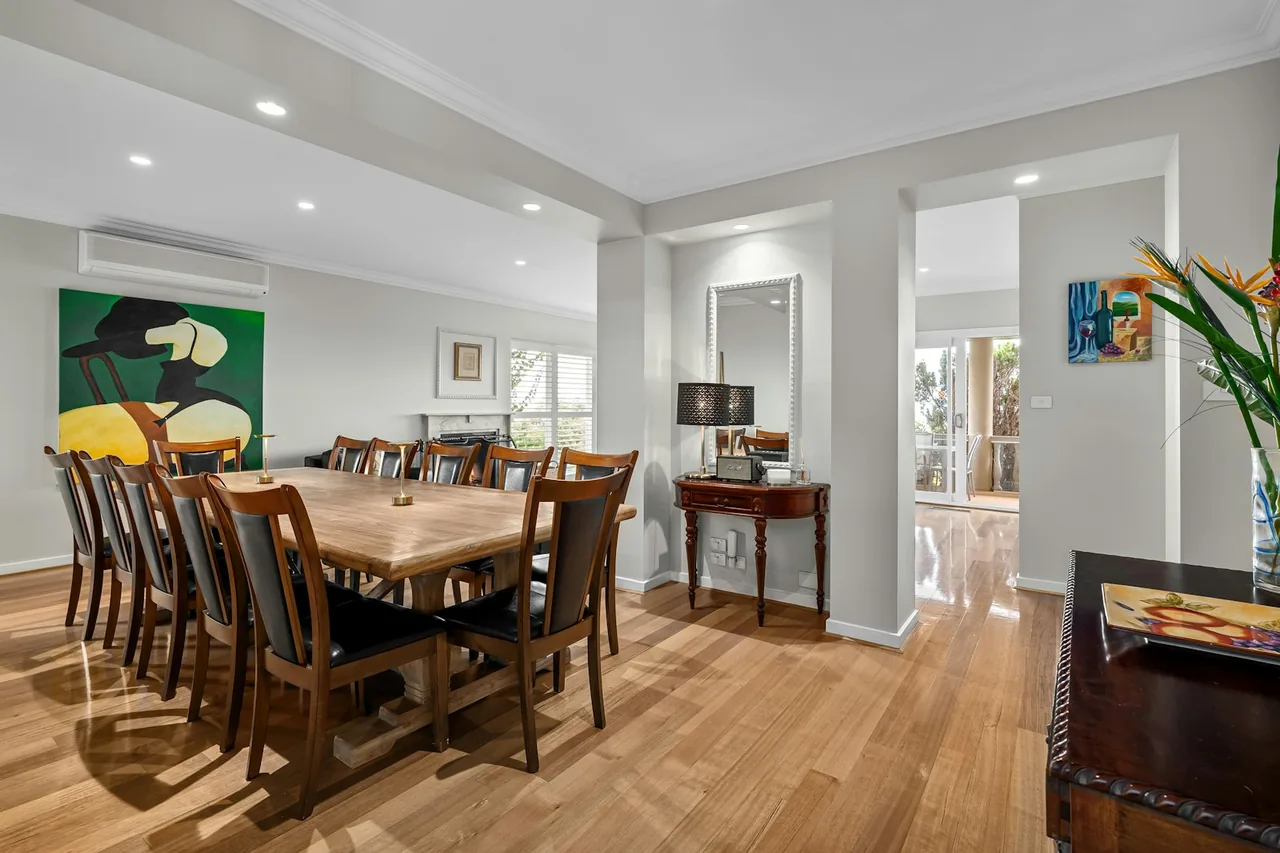
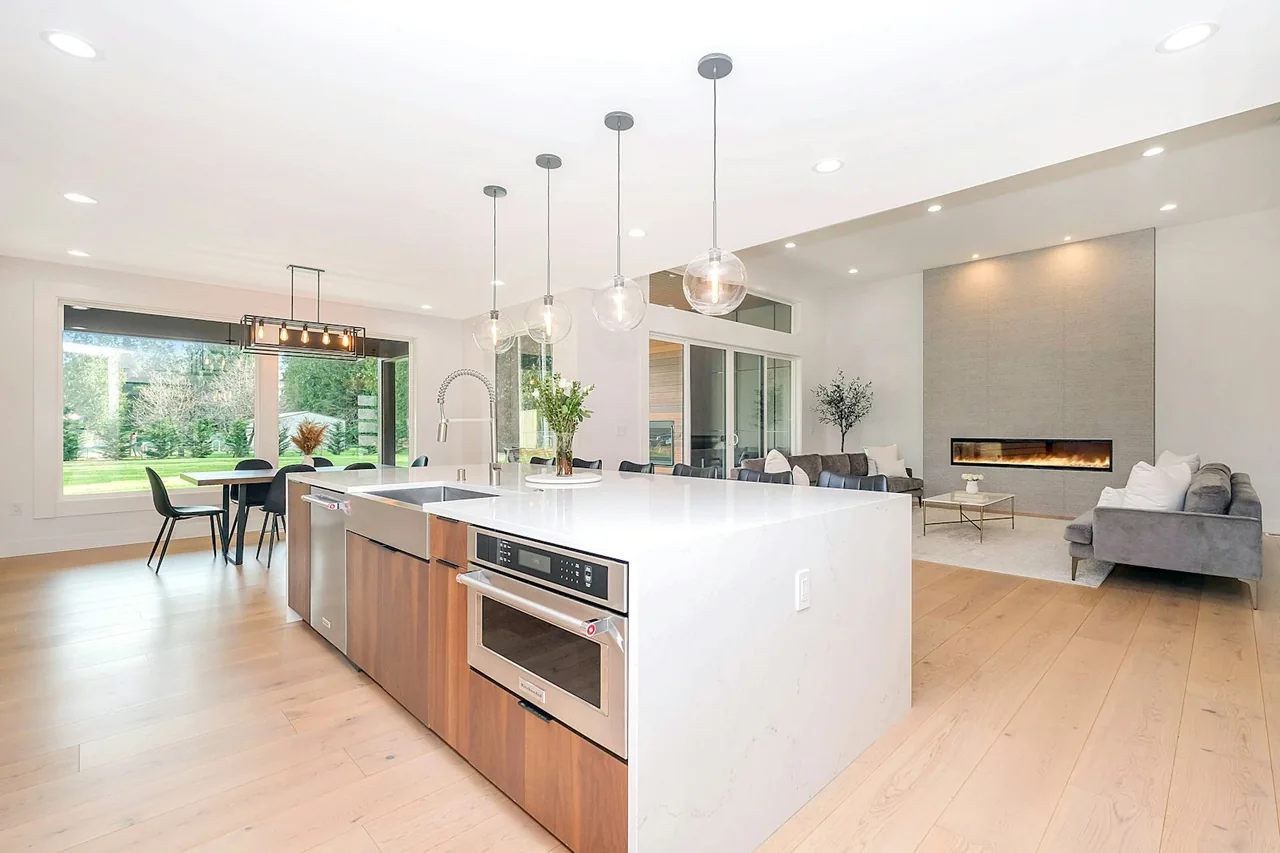
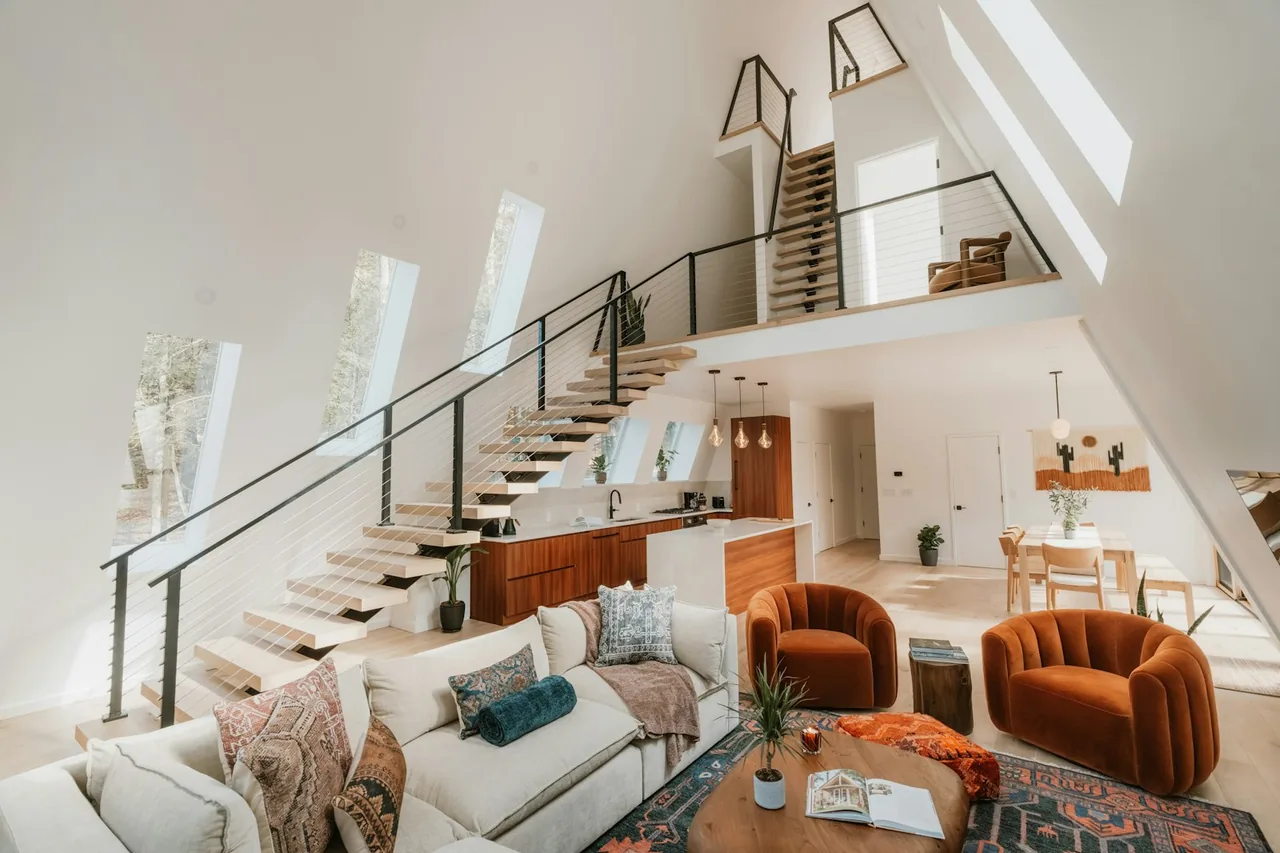
Open layouts look best with one continuous floor tying the zones together, with rugs, lighting, and surface accents — not flooring changes — defining each area. Breaking the floor with transitions chops an open plan into smaller-feeling pieces.
A single flooring material across kitchen, dining, and living makes an open plan feel larger and intentional. Breaking it with thresholds and material changes does the opposite — it visually rebuilds the walls you took down.
Choose a Floor That Does Every Job
In an open plan, the floor spans cooking, dining, and lounging.
Because one floor covers spill-prone and high-traffic zones at once, it must be waterproof-capable and durable. Waterproof LVP and porcelain that mimics wood are the usual winners; solid hardwood works where the kitchen zone is carefully managed.
Define Zones Without Changing the Floor
You can mark areas without breaking continuity.
Use rugs, ceiling treatments, and island or counter materials to signal each zone — let the floor run continuous underneath. The eye reads the rug and the ceiling as the room divider, not a flooring seam.
Mind the Sightlines
Plank direction quietly shapes how big a room feels.
Run plank direction along the longest sightline or toward the main light source for the most spacious effect. In an open plan, that usually means orienting the floor toward the largest window wall.
Frequently Asked Questions
Should open-concept homes use one continuous floor?
+
Yes — one continuous floor across connected zones makes an open plan feel larger and more intentional. Flooring breaks visually rebuild the walls the open plan removed.
What flooring works best for open-concept layouts?
+
A floor that handles every zone at once — waterproof-capable and durable. Waterproof LVP and wood-look porcelain are the most common winners; manage the kitchen zone carefully if you choose solid hardwood.
How do I define rooms without changing the floor?
+
Use rugs, ceiling treatments, lighting, and island or counter materials to mark zones, and let the floor run continuous underneath.
Ready to move from reading to deciding? These are the surfaces and materials this article touches — each compared by spec, with a free consultation and vetted installer matching, nationwide.
Tell us your surface, room, and goal. Pro Work Home Surface recommends the right material and matches you with a vetted local installer and a written quote — free, nationwide.