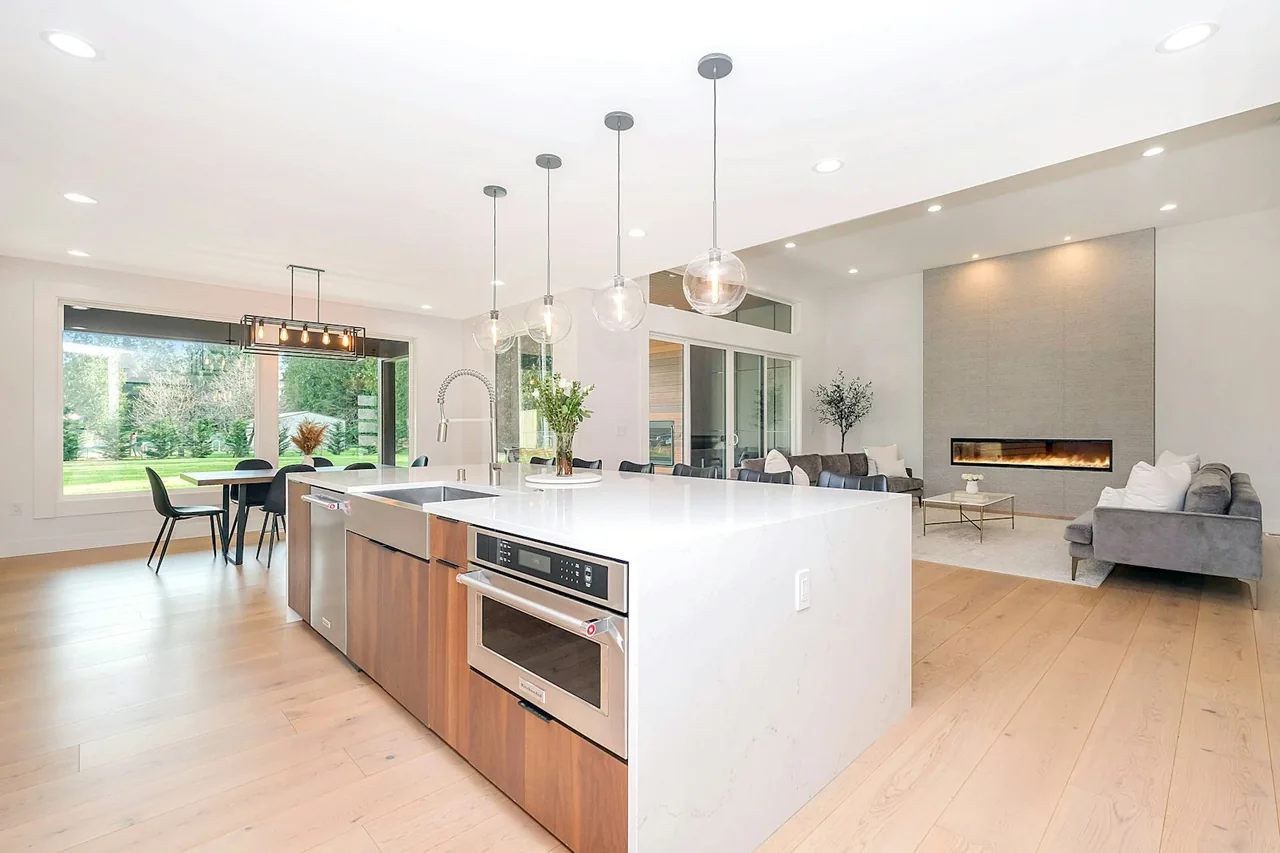
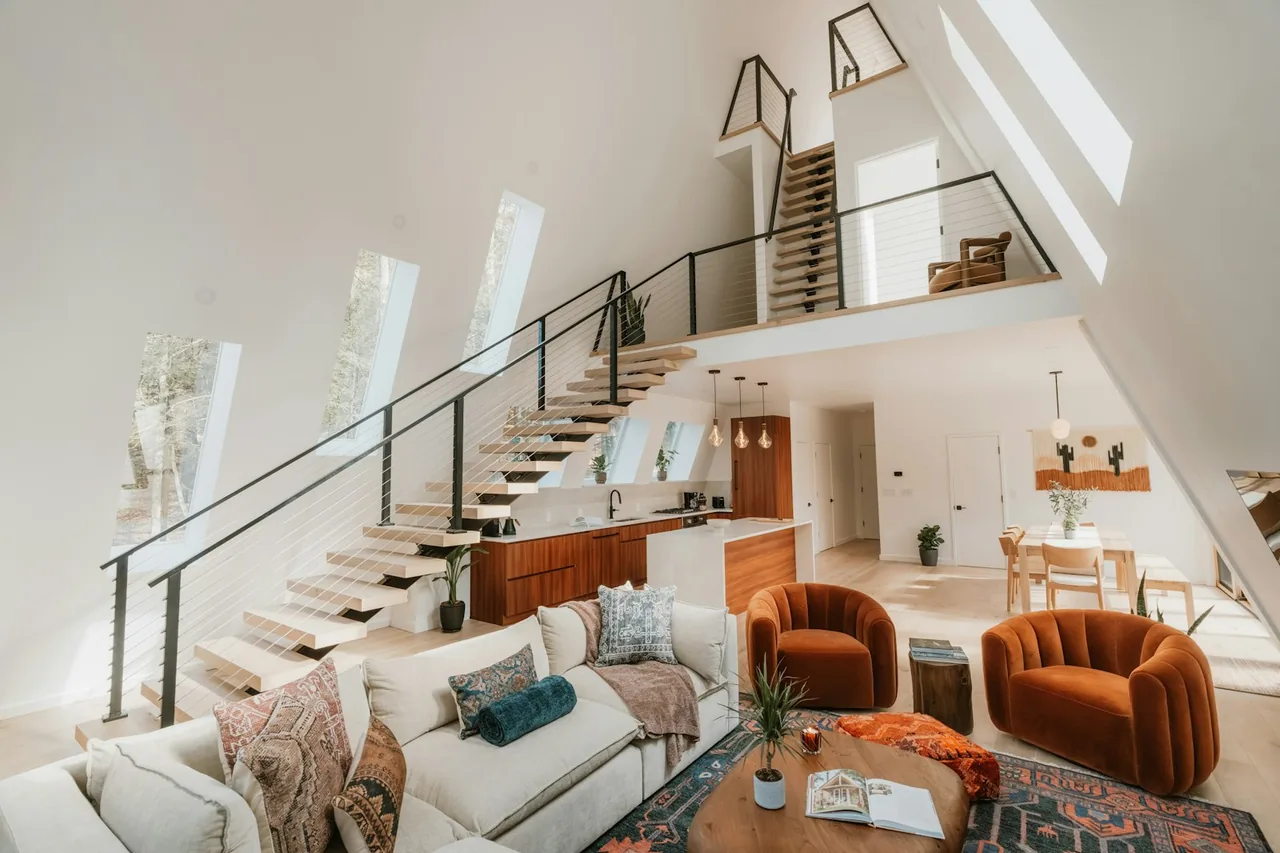
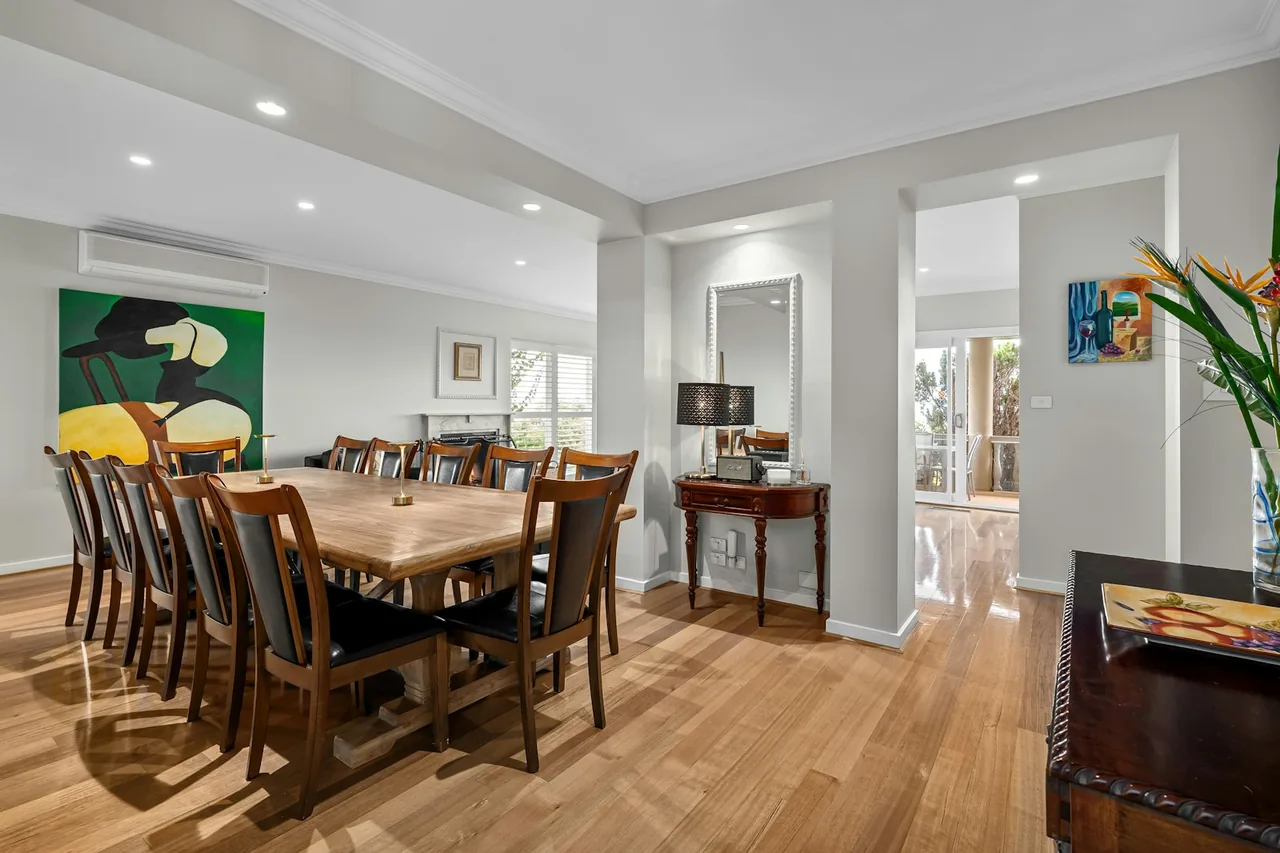
Cohesive homes repeat a few materials instead of choosing a new one per room. Carry one floor through open areas, echo a counter material across the kitchen and baths, and let cabinets and walls tie the palette together. The rule of thumb: about three primary surface materials plus accents.
Run the same flooring through connected living and kitchen areas for flow, then let the counter and backsplash carry the accent. One floor, one counter family, repeated, reads custom — a different floor in each zone chops the space up.
Bathrooms
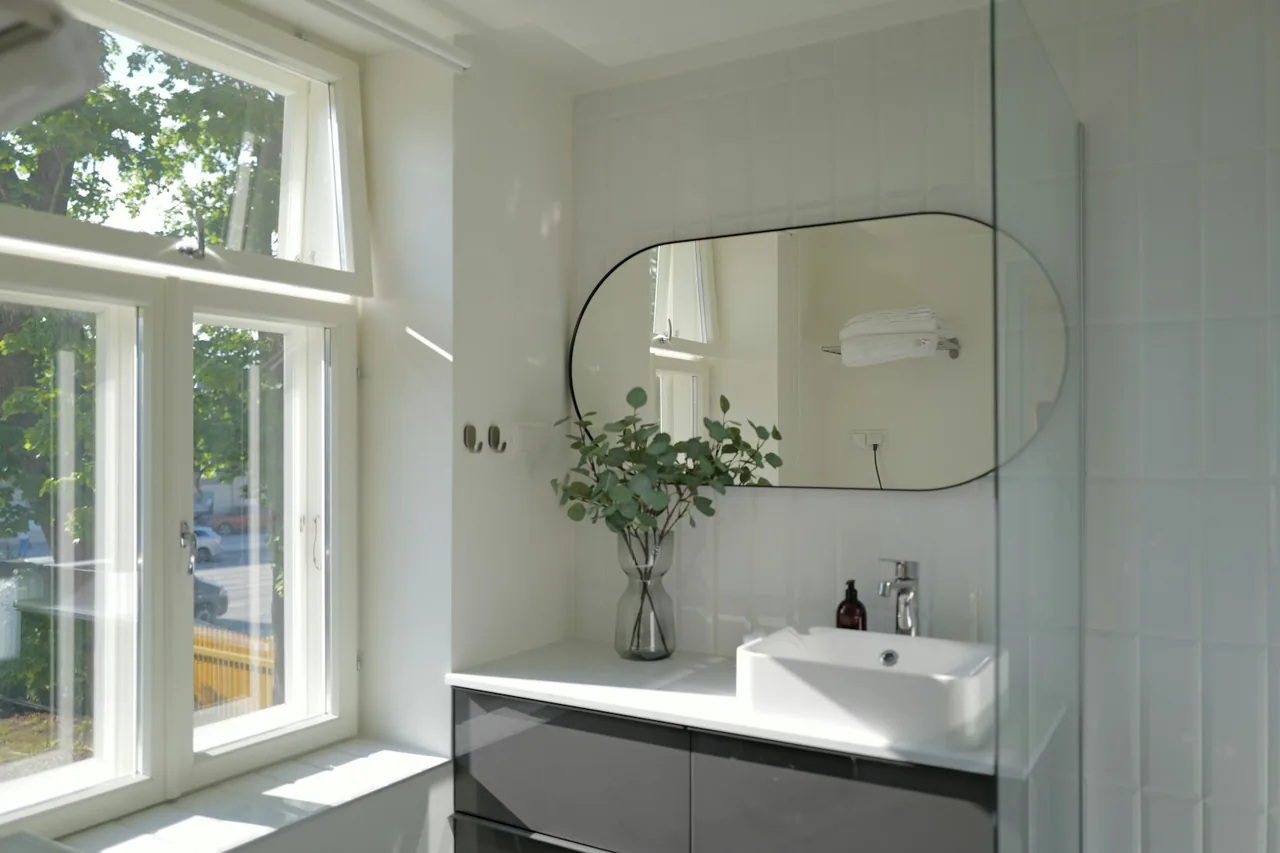
Baths are where continuity and performance meet.
Echo the kitchen counter material (or a close relative) in the primary bath to tie the home together, and use waterproof floors — porcelain or LVP — everywhere water lands. A consistent material story across kitchen and baths is what makes a whole-home refresh feel intentional.
Bedrooms and Stairs
Quieter rooms and transitions tie the plan together.
Warm, quieter surfaces suit bedrooms; match stair treads to the main floor so the transition between levels disappears. See how to pair materials across all eight surfaces on the surface index.
The Rule of Three
Cohesion comes from restraint.
Limit a cohesive home to roughly three primary surface materials plus accents. More than that and the rooms stop relating to each other. Pick the floor, the counter, and the cabinet tone first; let everything else reference those three.
Frequently Asked Questions
Should I use the same flooring throughout the house?
+
In connected, open areas yes — one continuous floor makes the space feel larger and more intentional. Bedrooms and wet rooms can differ where performance demands it, but the fewer transitions the better.
Do my countertops and bathroom vanity need to match?
+
They don't need to be identical, but echoing the kitchen counter material (or a close cousin) in the primary bath creates continuity that reads as designed rather than assembled.
How many surface materials should a home use?
+
About three primary materials plus accents. Pick the floor, counter, and cabinet tone first and let the rest reference those three.
Ready to move from reading to deciding? These are the surfaces and materials this article touches — each compared by spec, with a free consultation and vetted installer matching, nationwide.
Tell us your surface, room, and goal. Pro Work Home Surface recommends the right material and matches you with a vetted local installer and a written quote — free, nationwide.