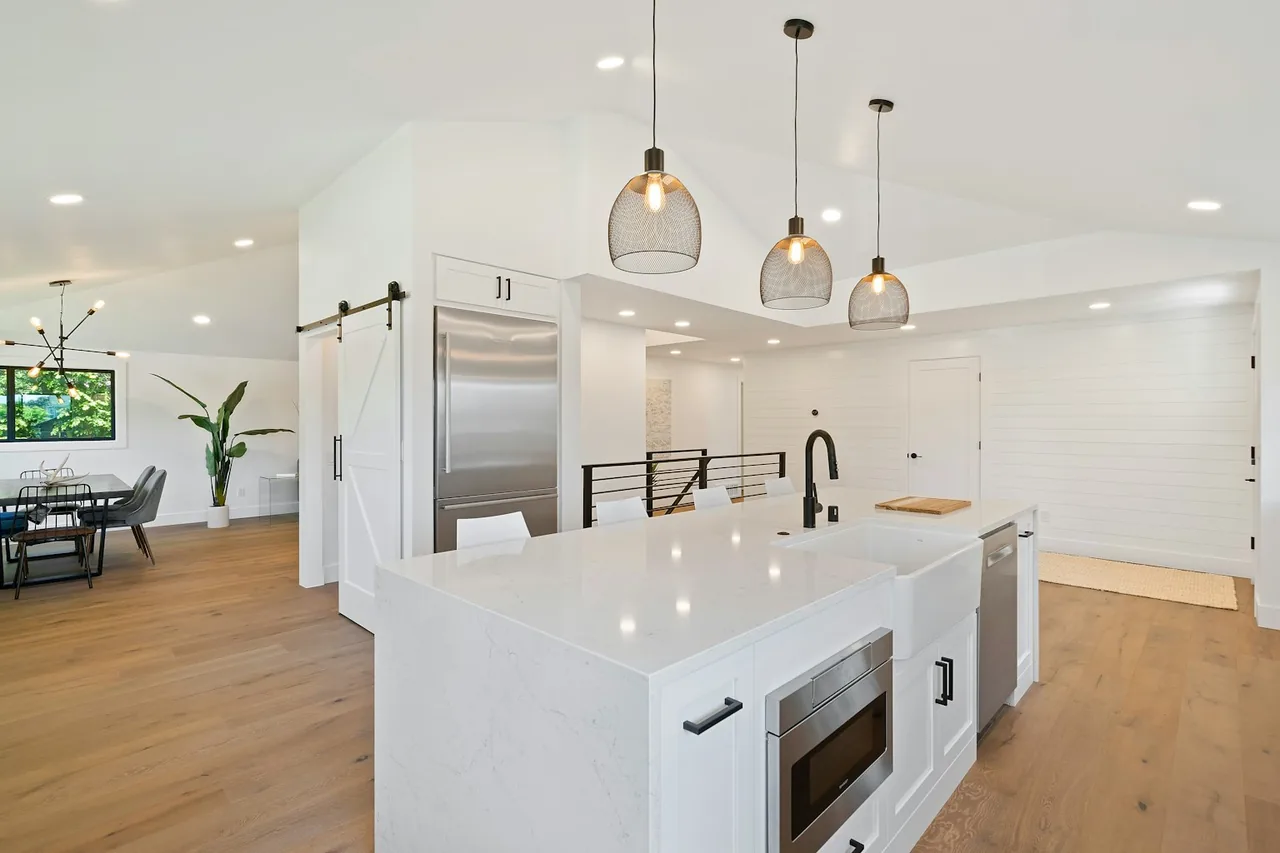
Caesarstone is a countertop-surface brand founded in Israel in 1987 and widely documented as a pioneer of the engineered quartz category — one of the original makers to bring resin-bound quartz slabs to the surfacing market. This is an independent, brand-neutral overview: what Caesarstone makes, what engineered quartz can and cannot do, and how to choose the right line — because the honest way to buy any quartz brand is to fix the material behavior and spec for your kitchen first, then match a design and grade to it. Every quartz slab from every maker shares the same core physics — non-porous, no sealing required, roughly Mohs 7 hardness, and a resin binder that is heat-sensitive above a point — so the brand decides the look, palette, and warranty, not whether quartz suits your room. Pro Work Home Surface does not sell Caesarstone and is not affiliated with it; we help you read the spec and match a vetted fabricator. Confirm current designs, warranties, and details with the manufacturer before you buy.
Who Is Caesarstone?
Caesarstone is a surfacing company founded in Israel in 1987, and its most-cited, widely-documented distinction is being an early pioneer of the engineered-quartz countertop category — among the first to commercialize the resin-bound quartz slab that now defines the segment. That "we helped create the category" heritage is the brand's defining anchor, the way family-ownership anchors another maker. What Caesarstone sells is a focused product: engineered quartz, a slab of roughly 90-plus-percent ground natural quartz bound with polymer resins and pigments, cast into a hard, non-porous surface. It is a quartz specialist with a broad, consistent design palette rather than a full-line stone importer.
What Caesarstone Is Best Known For
Caesarstone is best known as one of the original engineered quartz countertop brands, offering a broad palette of consistent, non-porous designs across marble-look, stone-look, and solid colors. Because engineered quartz is a manufactured slab rather than a quarried one, the maker controls the appearance directly — which is why Caesarstone and its peers can offer repeatable veining and color where natural stone varies block to block. The trade-off is identical for every quartz brand: the resin that makes the slab non-porous and consistent is also what makes it sensitive to sustained heat and, in some formulations, to prolonged UV.
The Category-Pioneer Heritage
The pioneer framing is real and a legitimate factor for buyers who value a long track record in the material and a maker that has iterated on quartz for decades. It is not a spec. Being early to the category does not make a specific slab harder, more heat-tolerant, or better-warranted than a rival's — those are per-product facts. Treat the heritage as a tie-breaker between comparable quartz options and a signal of experience, never as a reason to skip reading how the material behaves and how the individual line is specified.
Caesarstone at a Glance
The verified anchors buyers want, in one place. These are widely-documented facts; design-, price-, and warranty-specifics always come from the current manufacturer source.
| Attribute | Caesarstone |
|---|---|
| Category | Engineered quartz surfaces (countertop slabs) |
| Founded | Israel, 1987 |
| Documented distinction | Pioneer of the engineered-quartz category |
| Known for | Broad palette of consistent, non-porous quartz designs |
| Product focus | Quartz specialist — marble-look, stone-look, and solid designs |
| How to verify | Manufacturer site and authorized dealers/fabricators for current designs, specs, and warranty |
Every row above is a stable, documented fact rather than a claim to take on faith — and none of them, on its own, tells you whether a Caesarstone slab suits your kitchen. That answer lives in how engineered quartz behaves and in the specific slab's spec, covered next.
What Caesarstone Makes — Engineered Quartz, and How It Behaves
Caesarstone makes one material in many designs, so the "product line" that matters is less a catalog than the physics of engineered quartz plus the slab choices you make — design, thickness, finish, and edge. The table below sets the material's real behavior against what it means for a kitchen, with the on-site page that explains each spec.
The Engineered-Quartz Behavior Map
This is the material the brand pioneered, read as a spec — the same behavior applies to every quartz maker, Caesarstone included.
| Property | Engineered quartz behavior | What it means for your kitchen | On-site reference |
|---|---|---|---|
| Porosity | Non-porous — resin fills the voids | No sealing needed; strong stain resistance vs. porous stone | Quartz countertops |
| Hardness | Roughly Mohs 7 (quartz mineral) | Very scratch-resistant; still use a board for knife work | Kitchen countertops |
| Heat tolerance | Resin binder is heat-sensitive above a point | Always use trivets; a hot pan can scorch or mark the surface | Quartz vs granite |
| UV exposure | Some formulations can discolor under prolonged UV | Best kept indoors unless the line is rated for outdoor use | Outdoor kitchens |
| Consistency | Manufactured — controlled veining and color | Predictable look slab to slab, unlike quarried stone | Marble vs quartz |
| Fabrication | Cut and polished from a slab; seams planned | Cutting generates silica dust — a fabricator safety issue | Countertop fabrication |
The pattern is that quartz's strengths and its two real limits come from the same source: the resin that makes it non-porous and consistent is also what makes it heat- and sometimes UV-sensitive. That is true of every brand, so comparing Caesarstone to a rival is about design palette, thickness, finish, and warranty — not about whether quartz will stain (it resists) or need sealing (it does not).
Designs, Thicknesses, and Finishes — the Choices That Vary
Where a Caesarstone slab differs from another Caesarstone slab — or from a competitor's — is in the variables you actually select. Design (marble-look, stone-look, solid, or patterned), slab thickness, and surface finish (polished, honed, or textured) all change the look and feel without changing the underlying physics. Thickness in particular drives the edge and overhang detail; confirm the available thicknesses for the specific design, because not every color is offered in every format. Compare finish and edge options across the category on the quartz material page.
The Two Real Limits — Heat and UV
Engineered quartz has exactly two behaviors that catch buyers out, and both trace to the resin. Sustained or high heat — a pan straight off the burner — can scorch, mark, or in the worst case cause a thermal-shock mark, which is why trivets are non-negotiable on any quartz brand, pioneer or not. Prolonged UV can, in some formulations, shift the color over time, which is why quartz is generally an indoor material unless a specific line is rated otherwise. Neither is a defect; they are the documented trade-offs of a resin-bound slab, and they apply to Caesarstone exactly as they apply to every competitor.
Why Category Experience Doesn't Cancel the Resin Limits
It is tempting to assume a category pioneer has somehow engineered past quartz's heat and UV limits, but the limits are inherent to the resin binder that defines engineered quartz as a class — not a gap any single brand has closed. Decades of experience show up in palette consistency, manufacturing quality, and support, not in a slab that can take a hot pan. So treat Caesarstone's track record as a reason to trust the product's consistency, and still treat heat and UV as hard constraints on any quartz you buy.
Planning a Trivet Zone Into the Kitchen Layout
The most reliable prevention is to design the trivet habit into the kitchen layout rather than rely on memory. Position a permanent trivet or a heat-tolerant landing surface immediately beside the cooktop, so hot cookware never has to travel across bare quartz. On a busy island that doubles as a serving surface, name a heat zone up front. This discipline is identical across quartz brands — Caesarstone's pioneer status makes the surface no more heatproof than a competitor's, so the layout, not the badge, protects the slab.
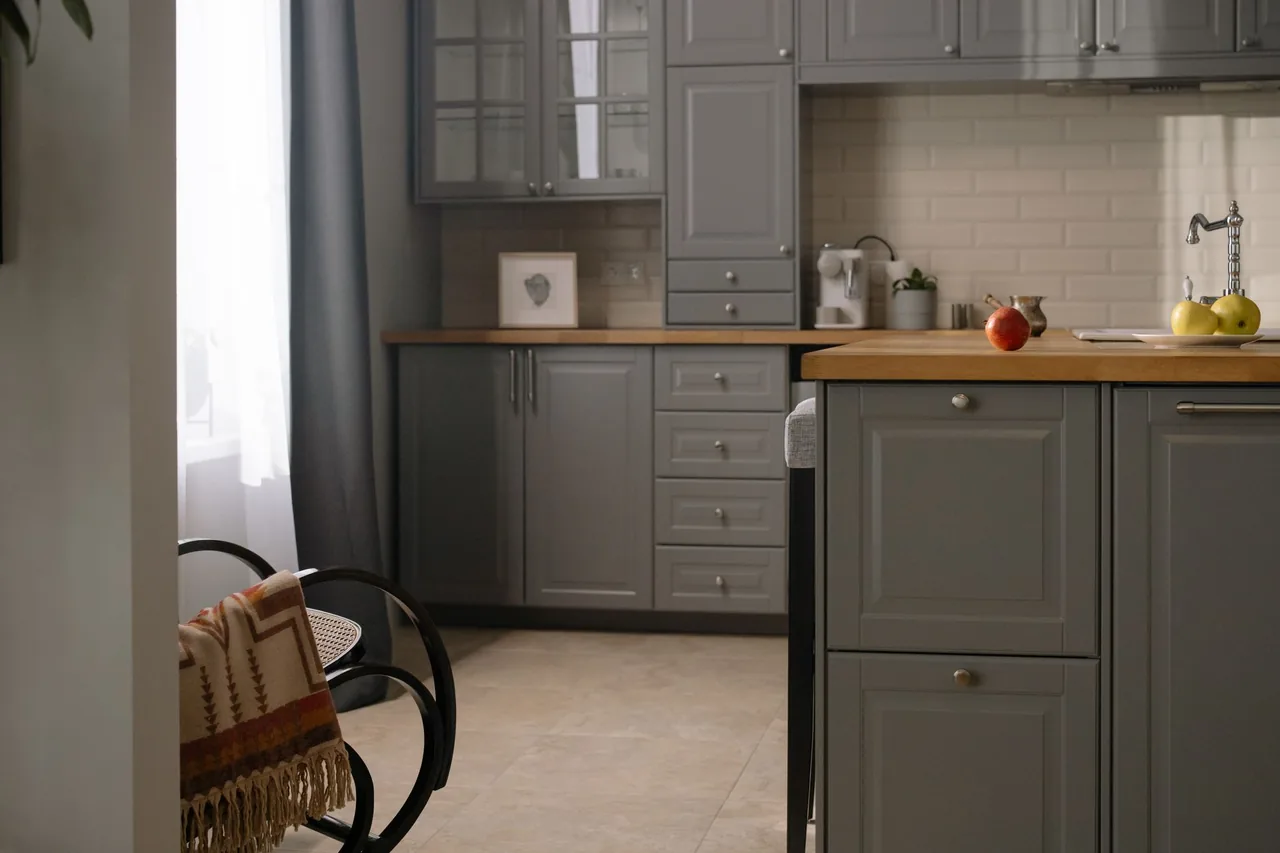
Where Caesarstone Fits — and Where It Doesn't
A quartz specialist like Caesarstone fits almost any indoor countertop, but "fits" is decided by the material's behavior against the room's demands, not by the brand's history. The strongest fit follows quartz's genuine strengths; the honest limits point to where a different material may serve better.
Rooms Where a Caesarstone Quartz Slab Is a Natural Fit
Indoor, hard-working surfaces are quartz's home ground. A kitchen countertop benefits from a non-porous, no-seal surface that shrugs off wine, oil, and citrus better than porous stone. A bathroom vanity stays low-maintenance for years. A kitchen island can showcase a marble-look design without marble's staining and etching risk. In each case, quartz's non-porous surface and Mohs-7 hardness are doing the work — and Caesarstone's broad, consistent palette and long track record are tie-breakers among slabs that already meet the spec.
Where a Different Material May Serve Better
Brand-independence means naming the limits. If the surface will take direct high heat routinely, or lives in full sun in an outdoor kitchen, the heat- and UV-sensitivity of resin-bound quartz points toward granite or another heat-tolerant natural stone unless a quartz line is specifically rated for it. If the priority is a genuinely heatproof, ultra-thin, UV-stable surface, porcelain is worth comparing. And if authentic quarried-marble character is the goal and you accept its maintenance, engineered quartz is a look-alike, not a substitute. Line the options up spec-for-spec with the material comparison tool.
How to Buy the Right Caesarstone Line — The SLAB-SMART Framework
Whatever quartz brand you choose, the material's behavior and the specific slab's spec decide the outcome; the pioneer badge does not. This six-step framework — call it Slab-Smart — moves you from "I love this design" to a defensible purchase, and it works identically for Caesarstone or any reputable quartz maker.
- 1. Confirm quartz is the right material first
- Verify the surface won't face routine direct high heat or full-sun UV before you shortlist a design. If it will, revisit granite or porcelain — the material behavior, not brand history, gates the whole decision.
- 2. Pick the design, then verify the format
- Choose the look from Caesarstone's palette — marble-look, stone-look, solid, patterned — then confirm the slab is offered in the thickness, finish, and size your layout needs. Not every design comes in every format, so confirm before you commit to a rendering.
- 3. Match thickness and edge to the layout
- Slab thickness drives the edge profile and overhang; confirm the available thicknesses for your chosen design and how the fabricator will detail the edge. Thicker slabs and mitered edges change both the look and the price.
- 4. Confirm the current warranty in writing
- Quartz warranties differ by brand and change over time, and most cover the residential surface under normal use. Confirm the exact terms — and the exclusions, which typically include heat damage and outdoor use — with the manufacturer or an authorized dealer before buying.
- 5. Plan the seams and template before cutting
- Where seams fall, how the pattern is matched across them, and how the slab is templated all affect the finished look. A quartz slab is fabricated from a slab, so seam placement is a design decision made before the saw runs, not after.
- 6. Compare on spec against alternatives, then decide
- Put the Caesarstone slab beside a competing quartz maker and a natural-stone option on the numbers — see the lifespan data and the quartz-vs-granite comparison. If Caesarstone wins on the design and warranty you want and you value the track record, buy with confidence; if a rival clearly wins the spec, let it decide.
Six Checks to Vet Any Caesarstone Quote Before You Sign
Once you have a slab and a fabricator, these six checks separate a durable install from a future complaint. Run every one before a deposit changes hands.
- The exact design, thickness, and finish are named
- "Caesarstone quartz" is not a spec. The quote should name the specific design, the slab thickness, and the finish — so you are buying a documented slab, not a brand impression.
- The seam plan and pattern match are shown
- Ask where the seams fall and how the veining is matched across them. A credible fabricator walks you through the layout on the actual slab before cutting, not after.
- The edge profile is specified and priced
- Eased, bullnose, mitered, or waterfall — the edge changes the look and the cost. Confirm the profile is named on the quote and whether a mitered or thick edge is a separate line.
- Cutouts, backsplash, and overhang support are itemized
- Sink and cooktop cutouts, any backsplash, and support for an island overhang are real scope. A quote that folds them into a single per-foot rate is hiding work.
- The current warranty terms are attached, not assumed
- Ask for the specific warranty document and read the exclusions — heat and outdoor use are common ones. Confirm it with the manufacturer if anything is ambiguous, since terms change.
- Silica-dust safety is part of the fabricator's practice
- Cutting engineered quartz generates respirable crystalline silica dust, a documented fabrication hazard. A professional fabricator uses wet-cutting and dust controls; asking about it is a fair sign they run a safe, compliant shop.
Together the framework and the checks turn "I love this design" into a spec-defensible decision — which is the only kind that survives years of daily use in a working kitchen.
Considering a Caesarstone quartz countertop?
Tell us your kitchen and layout and we will match you with a vetted fabricator who reviews the slab, plans the seams, and puts the scope in writing — free, no pressure, and brand-independent.
Caesarstone vs. the Alternatives — a Spec-First Comparison
The useful comparison is not "which quartz brand is best" — it is "which surface behavior my kitchen needs, and which maker offers the design and warranty to match." Because all engineered quartz shares the same core physics, the brand comparison is about origin, palette, and coverage, while the material comparison is about behavior.
How Caesarstone Sits Among the Major Quartz Brands
Each brand below is documented for what it is known for; the underlying quartz behavior is the same across all of them.
| Brand | Origin | Best known for | Compare on | On-site overview |
|---|---|---|---|---|
| Caesarstone | Founded in Israel (1987) | Pioneer of the engineered-quartz category | Design palette, thickness, finish, warranty | This page |
| Cambria | Family-owned · Le Sueur, MN (USA) | American-made marble-look and stone-look quartz | Same quartz behavior; design + origin | Cambria overview |
| Silestone | By Cosentino (Spain) | Broad color range; lower-silica HybriQ lines | Silica content, color range, warranty | Silestone overview |
| Granite (material) | Quarried natural stone | Heat tolerance; unique natural character | Sealing need, heat, porosity | Quartz vs granite |
| Porcelain (material) | Manufactured sintered slab | Heat resistance, UV stability, thin profile | Heat, UV, thickness, edge chipping | Porcelain countertops |
Read across, not down: between the three quartz brands, the material behaves identically, so the honest comparison is origin, design palette, and warranty. The material rows — granite and porcelain — are where the behavior genuinely differs, which is the comparison that decides high-heat or outdoor rooms.
The Specs That Actually Decide a Quartz Purchase
Across every quartz brand, the same facts predict the outcome. The material is non-porous and needs no sealing, so stain resistance is a given; it is roughly Mohs 7, so scratch resistance is strong; and its resin is heat- and sometimes UV-sensitive, so trivets and indoor use are the rule. What varies brand to brand is the design palette, the available thicknesses and finishes, the edge options, and the warranty's terms and exclusions. Get the material behavior right for the room and the brand becomes a choice of look and coverage — not a gamble on performance.
Common Mistakes When Buying Quartz by Brand — and How to Avoid Them
Most quartz regrets come from a handful of predictable errors, each with a clear consequence and a known fix. Naming them is how you buy the behavior and the slab instead of the logo.
| Mistake | What it causes | The prevention |
|---|---|---|
| Setting a hot pan directly on the slab | Scorch marks or a thermal-shock mark the warranty won't cover | Always use trivets; the resin binder is heat-sensitive on every quartz brand |
| Using quartz outdoors or in full sun | Possible color shift and a voided warranty on non-rated lines | Keep quartz indoors unless the specific line is rated for outdoor use |
| Assuming quartz needs sealing | Wasted product and effort on a non-porous surface | Skip sealer — engineered quartz is non-porous and never needs it |
| Buying the pioneer badge, not the design and format | A design that isn't offered in the thickness or finish you need | Confirm the exact design is available in your thickness and finish first |
| Ignoring seam placement until install day | A visible seam through the focal point of the kitchen | Plan seams and pattern match on the actual slab before cutting |
| Skipping the warranty exclusions | A denied claim on heat or outdoor damage you assumed was covered | Read the exclusions and confirm current terms with the manufacturer |
| Hiring a fabricator without dust controls | A serious respirable-silica hazard in an unsafe shop | Confirm wet-cutting and dust control; it signals a safe, compliant fabricator |
Every row reduces to the same discipline: the material's behavior and the specific slab are the purchase, and the brand is context around them. Hold that line and Caesarstone's category-pioneer track record becomes a genuine plus rather than a distraction from the spec.
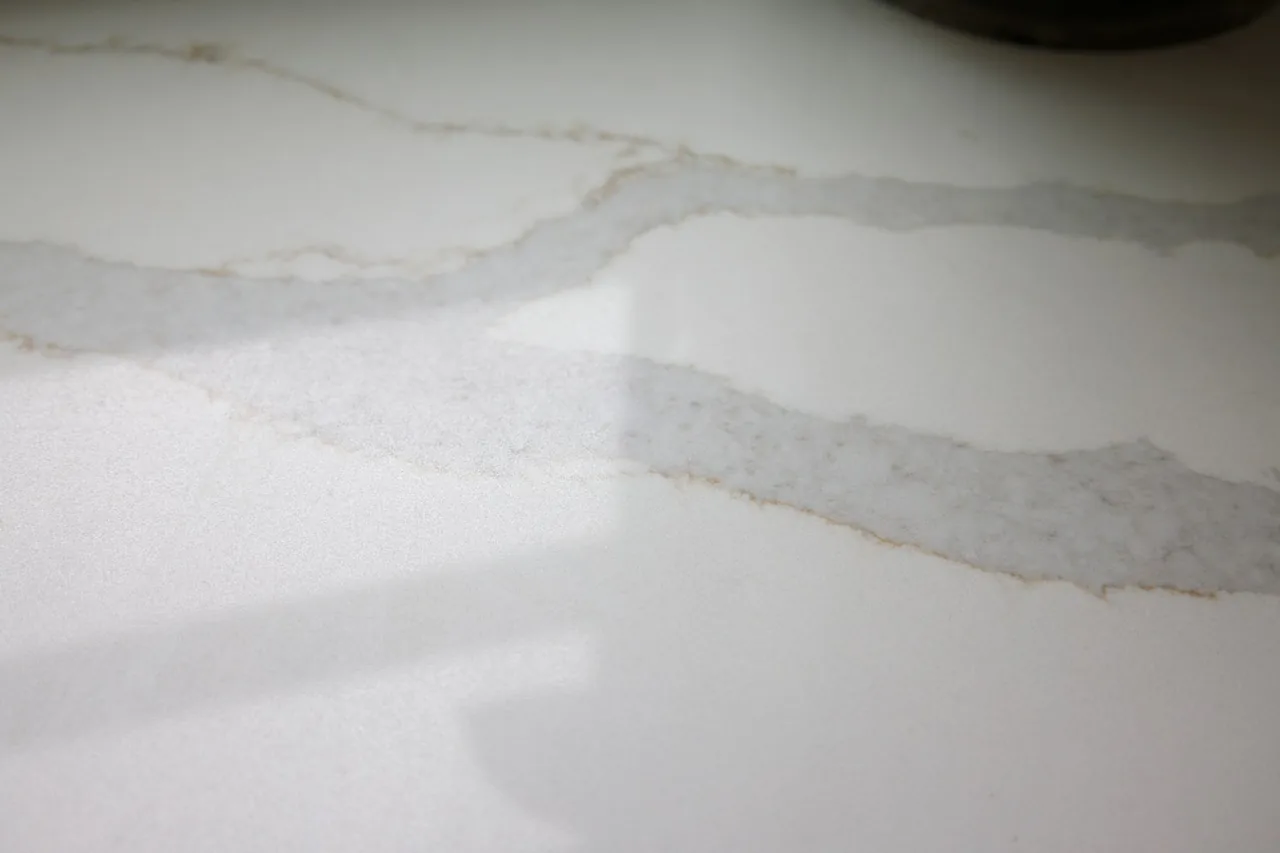
Is Caesarstone Right for Your Project? A Decision Tree
Whether a Caesarstone slab fits is the output of a short chain of facts about your surface's demands, your layout, and your priorities — not a matter of brand affinity. Walk it in order; each branch narrows the honest answer.
- Test the heat and UV demand first. Will the surface routinely take direct high heat, or live in full sun? If yes, resin-bound quartz is the wrong material — look at granite or porcelain before any brand. If no, quartz is on the table and Caesarstone is a candidate.
- Confirm the maintenance priority. If a non-porous, no-seal, low-maintenance surface is the goal, quartz's core behavior fits — and every quartz brand delivers it. That points you to comparing palette, warranty, and track record rather than performance.
- Pick the design, then verify the format. Choose the look from the palette, then confirm the slab is offered in the thickness, finish, and size your layout needs. If the Caesarstone design you want comes in your format, it stays in the running; if not, compare the closest match across brands.
- Read the warranty and its exclusions. Confirm the current terms and what they exclude — heat and outdoor use are common — with the manufacturer or an authorized dealer. Coverage you understand is coverage you can rely on.
- Compare it against alternatives on that same basis. Put the Caesarstone slab beside a competing quartz brand and a natural-stone option using the lifespan data and marble-vs-quartz. If Caesarstone wins on design and coverage and you value the heritage, buy it; if a rival clearly wins, let the spec decide.
Run honestly, this tree usually returns a defensible short answer — and if it lands on indoor engineered quartz, Caesarstone becomes a confident choice of design and track record rather than a guess about performance.
Get a spec-matched recommendation
Tell us your surface, room, and goals — free, independent guidance and a vetted installer, nationwide.
Caesarstone and Engineered-Quartz Glossary
The terms below recur in quartz catalogs, spec sheets, and fabrication quotes — each defined as its working meaning when you are actually comparing slabs, so you can read a spec and judge it against any competitor.
- Engineered quartz
- A manufactured slab of roughly 90-plus-percent ground natural quartz bound with polymer resins and pigments, cast into a hard, non-porous surface. The category Caesarstone helped pioneer; distinct from quarried natural quartzite.
- Category pioneer
- An early commercializer of a product type. Caesarstone's documented distinction in engineered quartz — a signal of experience, not a per-slab performance spec.
- Non-porous
- A surface the resin has sealed at the microscopic level, so liquids cannot soak in. Why quartz resists stains and needs no sealer — the opposite of porous natural stone.
- Resin binder
- The polymer that holds the ground quartz together and fills the voids. The source of quartz's non-porous consistency — and of its heat- and sometimes UV-sensitivity.
- Mohs hardness
- A 1–10 scratch-hardness scale; quartz mineral sits near 7, making engineered quartz highly scratch-resistant — though a cutting board is still wise for knife work.
- Heat sensitivity
- The tendency of the resin binder to scorch or mark under sustained or direct high heat. Why trivets are required on every quartz brand, indoors and out.
- UV stability
- How well a slab resists color change under prolonged ultraviolet light. Variable by formulation — the reason most quartz is an indoor material unless a line is rated otherwise.
- Design palette
- The range of colors and patterns a maker offers. Caesarstone's is broad and consistent; the palette is a real brand differentiator where material behavior is not.
- Slab thickness
- The measured depth of the slab, which drives the edge profile and overhang detail. Not every design is offered in every thickness, so it is a spec to confirm.
- Edge profile
- The shaped finish of the countertop edge — eased, bullnose, mitered, or waterfall. Changes both the look and the cost, and is priced during fabrication.
- Seam
- The joint where two slab pieces meet on a run too long for one slab. Its placement and pattern match are design decisions made before cutting, not after.
- RCS
- Respirable crystalline silica — the fine dust released when engineered quartz is cut. A documented fabrication hazard managed with wet methods, ventilation, and protective equipment.
A Real Brand-Selection Decision
One representative scenario shows why the material's behavior, not the badge, drove the call — and why an independent overview keeps the room in charge of the decision.
A Note on Accuracy
This is an independent overview compiled from widely-documented information about Caesarstone — its founding in Israel in 1987 and its documented role as a pioneer of the engineered-quartz category. It names no awards, prices, or performance claims that are not the buyer's to verify. Specific designs, thicknesses, finishes, warranty terms, and availability change over time and differ by region and fabricator. Confirm current details with the manufacturer or an authorized dealer before purchase. The engineered-quartz behaviors described here — non-porous, no-seal, roughly Mohs 7, heat- and sometimes UV-sensitive resin — are documented characteristics of the material category and apply to all quartz brands, not to Caesarstone alone. Pro Work Home Surface is a national home-surface authority, not a Caesarstone affiliate or reseller; our guidance is brand-independent by design.
Explore Caesarstone Materials and Compare on Spec
Caesarstone makes engineered quartz in a broad palette, and the right choice starts with the material behavior and spec for your surface. Dig into the material the brand makes — quartz countertops — then compare quartz against the alternatives spec-for-spec.
- Understand the material Caesarstone makes
- Read how engineered quartz behaves on the quartz material page, and see how it is fabricated from a slab.
- Compare quartz to the real alternatives
- Weigh it against granite and marble, or line materials up with the material comparison tool.
- Cross-check the quartz-brand landscape
- See how the majors sit side by side across the independent brand overviews — including Cambria and Silestone.
- Read the numbers and price the job
- Use the material lifespan data and the quartz countertop cost guide, then start from the countertops hub or the full range of home surfaces.
Whatever brand you choose, the material's behavior comes first and the logo second — and a vetted fabricator who reads that spec is what turns a beautiful slab into a countertop that lasts.