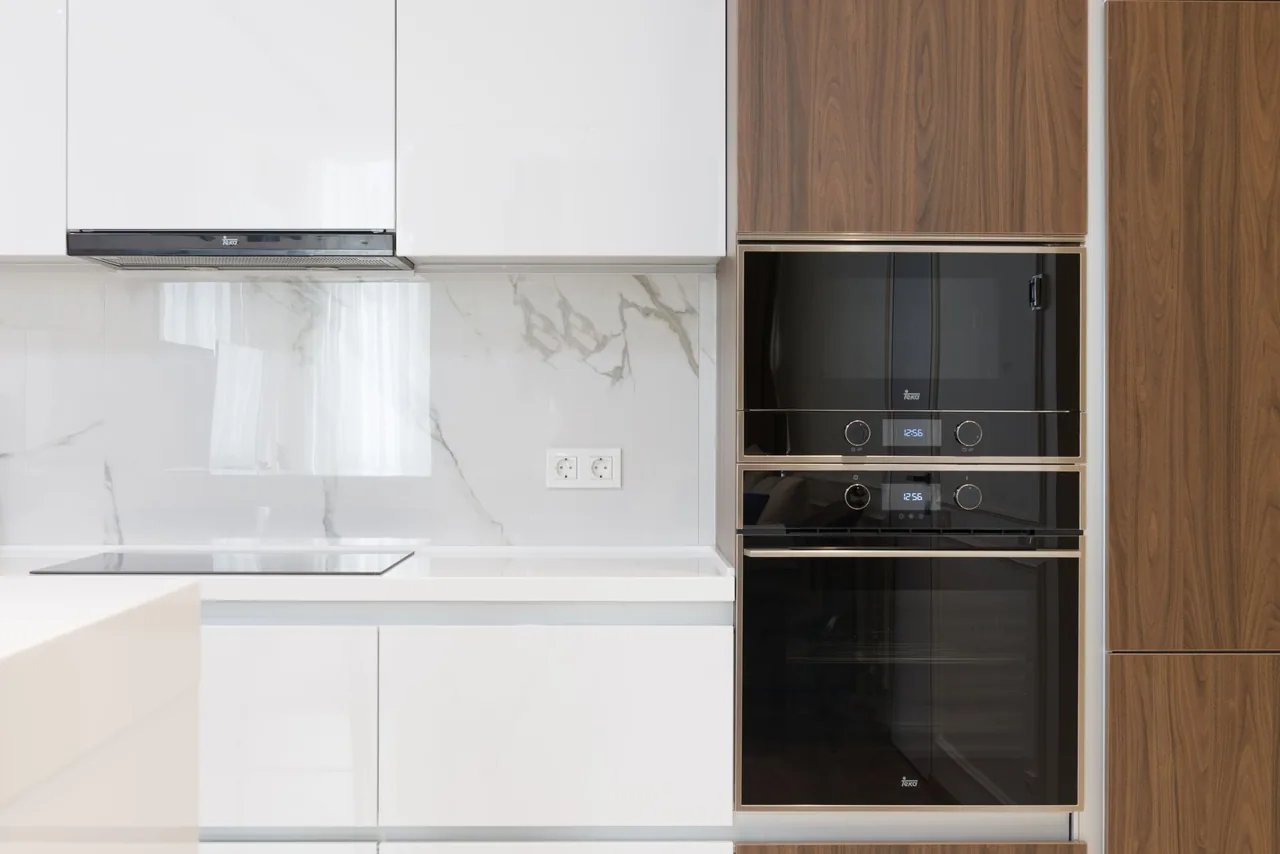
Flat-panel cabinets — also called slab doors — are the simplest door there is: a single uninterrupted plane with no frame, no recess, and no molding. Two facts decide whether slab is right for your space and almost nothing else does: whether the room genuinely wants a modern, frameless look, and whether the core under that flat face will stay flat. A slab commits the kitchen to contemporary and is the easiest cabinet to clean — one wipe, no ledge — but it is also the most honest door, showing every flaw and every millimeter of movement in the material beneath it. Choose a stable core and a sheen that hides marks and a slab looks architectural for decades; choose a solid plank that cups, or a high-gloss face that shows every fingerprint, and the same door reads off inside a season. Get a free consultation and a written, itemized scope from a vetted installer that names the slab's core, edge treatment, and finish separately — that document is where a lasting slab kitchen is decided.
Flat-Panel Is a Door Profile First, a Material Second
The flat face everyone sees matters least to how long the door lasts. What separates a slab kitchen still crisp in fifteen years from one that bows or smudges within one is the core and finish chosen behind the plane — decisions a showroom door hides.
One Uninterrupted Plane Is the Whole Signature
A flat-panel door is one flat front, usually with square edges, sometimes finished with a thin edgeband or an integrated finger-pull. That radical simplicity is the entire point. It is the foundation of contemporary, European, and minimalist kitchens, and it is the natural partner to a handleless frameless design where push-to-open or channel pulls keep the face completely unbroken. Because the door is just a face and a core, the profile can be built in solid wood, veneer over a stable core, painted MDF, laminate, or thermofoil — and that material choice is what actually decides performance.
The Core Decides Whether the Plane Stays Flat
The profile dictates the look; the core dictates whether it survives, because a large flat door punishes the wrong material:
- A solid-wood slab can cup or bow across its width as humidity changes, and on a one-piece plane even a slight warp shows at the edge where the door meets its neighbor.
- An MDF slab near a sink wicks water at an unsealed or chipped edge and swells into an irreversible bulge.
- A thermofoil slab beside a wall oven lifts its film at the heated edge, the one failure that defines that material.
None of those are profile defects — they are core-and-finish mismatches, the most common reason a slab kitchen disappoints the homeowner who chose it on looks alone.
The Slab Fit Test: Six Checks Before You Order the Doors
Before a flat-panel kitchen is ordered, a competent installer runs the design through the same six-check gate. Each check has a documented failure it prevents, and a spec that fails any one is not ready to build. Call it the Slab Fit Test: pass all six and the flat plane has a foundation to stay flat; fail one and you are buying a future repair.
- 1. The room actually wants a modern look
- Slab commits you to contemporary — there is no transitional version of a flat plane. A slab looks wrong in a traditional or farmhouse kitchen the same way a busy door looks fussy in a modern one. Confirm the room reads modern before the door is chosen, or a Shaker door will read right where a slab reads cold.
- 2. Core chosen for stability, not just finish
- A large flat door is the riskiest place for movement. For paint, a stable MDF core lays dead flat; for wood grain, a veneer over a stable core resists cupping where a solid plank does not. A true solid-wood slab carries the highest warp risk, so the core is matched to the finish before anything else.
- 3. Edge treatment named and sealed
- A slab's edges are exposed, so how they are finished matters. A seamless wrapped thermofoil edge, a glued edgeband, or a solid lip each looks and wears differently — and on an MDF slab the edge is the most water-vulnerable spot, so its sealing is a real quality marker, not a detail.
- 4. Finish sheen matched to wiping tolerance
- A high-gloss slab is dramatic and a fingerprint, smudge, and scratch magnet; a matte finish hides marks; a textured laminate hides them best and adds grip. The sheen is chosen for how much daily wiping the household will actually do — gloss for a low-traffic statement, matte or textured for a working kitchen.
- 5. Box construction — plywood vs. particleboard
- The door gets the eye; the box carries the load. A plywood box holds screws, resists moisture, and stays square far better than particleboard. The slab door reads architectural only if the case behind it stays true, so plywood is specified where moisture and screw-holding matter.
- 6. Frameless reveal and hardware
- Slab doors are almost always frameless (full-access) with full overlay, which produces the tight, continuous reveal a modern kitchen wants. Concealed hinges seat in a 35 mm cup, and six-way-adjustable soft-close hinges are what keep the long slab-to-slab gaps even — the detail that makes a flat-panel kitchen read laser-precise.
Three of these six — core stability, edge sealing, and sheen choice — are the corners cut on cheap slab quotes, because the right answers cost material a low bid skips, yet every one is specifiable in writing. That is why the fit test is non-negotiable.
Want the core and finish decided before you buy the doors?
We match you with a vetted installer who names the slab's core, edge, and sheen separately and puts it in a written scope — before you commit to a flat-panel kitchen on a showroom door alone.
Flat-Panel Cabinet Specifications & Construction Standards
Because a slab is just a flat surface and a core, its quality numbers are about the core material, the edge, and the finish — there is no door-profile rating to lean on. From the controlling core choice, through the edge and sheen, to the hardware that holds the reveal, these are the specs worth confirming.
The Core Material
The defining spec of a slab is what it is built from, because a flat plane shows movement plainly. How the core is chosen sets whether the door stays flat for its life.
Stable Cores vs. Solid Planks
A stable engineered core — MDF for paint, or a real-wood veneer over a stable substrate for grain — lays flat and stays flat because it does not respond to humidity the way a solid plank does. A true solid-wood slab shows real grain and can be refinished, but it is the most likely of all slabs to cup or bow across its width, which is why most quality slab doors are not solid wood.
Why MDF Is the Workhorse Painted Slab
For a painted slab, MDF is the default for one reason: it is dead flat, grain-free, and dimensionally stable, so a sprayed finish lays down dead smooth with no grain telegraphing through and no seasonal movement. It is heavier than wood and water-sensitive at unsealed edges, but on a large flat painted door those trade-offs are worth the flatness a solid plank cannot guarantee.
The Edge Is the Water-Vulnerable Spot
On an MDF slab the exposed edge is the weak point: the faces take finish well, but a raw or chipped edge is porous, and if water reaches it the fiber wicks, swells, and bulges irreversibly. The prevention is a fully sealed edge — a primed-and-painted edge, a wrapped thermofoil edge, or a glued edgeband — which is exactly why edge sealing is a real durability spec on a slab and not a cosmetic afterthought.
Finish, Sheen, and Honesty
A slab's finish is the whole look, and the sheen is a maintenance decision. High-gloss shows every fingerprint and scratch and cannot be spot-repaired the way a matte or wood face sometimes can; matte hides marks; textured laminate hides them best and adds grip. The sheen is matched to how much the household will wipe — which is why a busy family kitchen rarely lands on gloss.
Frameless Construction and the Reveal
Slab kitchens are almost always frameless, which gives the tight, continuous full-overlay reveal a modern look wants but leaves no face frame to hide a misaligned box. The boxes are joined edge-to-edge with care, and the reveal is held even with adjustable hinges, because long flat faces make any uneven gap glaring — far more than a busy door would.
Slab Spec Snapshot — What to Confirm in Writing
The table below collects the construction figures a competent installer states for a flat-panel kitchen. These are representative figures — the maker's specification for your product always governs.
| Spec | What it controls | Typical value or choice | Why it matters |
|---|---|---|---|
| Core material | Whether the flat plane stays flat | MDF (paint), veneer-over-core (grain) | A stable core resists the cupping a solid plank risks |
| Edge treatment | Water resistance, look | Wrapped, glued edgeband, or solid lip | The exposed edge is an MDF slab's first failure point |
| Finish sheen | How visible marks are | Gloss / satin / matte / textured | Gloss shows every fingerprint; matte and textured hide them |
| Box material | Screw-holding, moisture, squareness | Plywood over particleboard | A true box keeps the architectural slab reveal aligned |
| Construction | Reveal style, interior space | Frameless full-overlay | Produces the tight, continuous modern reveal |
| Hinge cup | Hardware fit, adjustability | 35 mm bore, six-way soft-close | Adjustable hinges keep long slab-to-slab gaps even |
| Pull detail | Whether the face stays unbroken | Integrated channel / finger-pull / push-to-open | Aligned at install so a handleless face opens cleanly |
The lesson is that a slab's longevity is bought in the core and the finish, not in the profile — a showroom door tells you the look and nothing about whether it will stay flat or stay clean. Size the project with the cabinet cost calculator first, then read each quote against this snapshot.
Flat-Panel vs. the Other Cabinet Looks and Materials
Choosing a slab is choosing minimalism and cleanability over warmth and tradition — and then choosing the material that lets a flat plane stay flat. The clearest way to place it is against its neighbors: first the other profile, then the materials it can be built from.
The Flat-Panel Comparison Matrix
The matrix below is the decision behind the door — look, cleanability, finish behavior, repairability, and what drives cost, side by side.
| Option | What it is | Look | Cleanability | Finish behavior | Repairable? | Main cost driver |
|---|---|---|---|---|---|---|
| Flat-panel (slab) | One flat door, no frame | Modern, frameless | Easiest — no ledge | Shows core flaws plainly | Rarely | Core + finish quality |
| Shaker | Five-piece recessed-panel door | Transitional, furniture-like | Inner ledge collects dust | Depends on panel material | Yes, if solid wood | Frame + panel material, box |
| Solid wood slab | One-piece lumber plane | Real grain, stainable | Easy — flat face | Highest warp/cup risk | Yes — sand & refinish | Species + drying quality |
| MDF slab (painted) | Stable fiberboard core, sprayed | Flawless flat color | Easy — wipe clean | Dead flat; smoothest paint | Repaint only | Board grade + paint system |
| Thermofoil slab | Vinyl film over MDF core | Seamless, wrapped | Easiest — non-porous | Delaminates near heat | No — replace | Film grade + heat planning |
Flat-Panel vs. Shaker: The Profile Decision
Against a Shaker door, slab is the opposite philosophy: where Shaker adds a frame and a recess for definition and a furniture feel, slab strips all of it away for a sleek, architectural face that wipes clean in one pass with no ledge to catch grease. Shaker flexes from farmhouse to modern; slab is committed to contemporary. If you value the easiest possible cleaning and a current look, slab wins; if you want warmth or a traditional room, Shaker does.
Flat-Panel Across Materials: The Same Door, Different Lifespans
The bigger decision on a slab is the core, because a flat plane punishes the wrong choice. A solid-wood slab shows real grain and can be refinished, but it is the most likely to cup or bow — the riskiest slab build. An MDF slab is the workhorse painted slab: dead flat, no grain, no movement, the smoothest surface for a sprayed or lacquered finish, though heavier and water-sensitive at unsealed edges. A thermofoil slab — vinyl film heat-pressed over an MDF core — is the seamless, ultra-cleanable, budget-friendly slab that gives a flawless matte or gloss face with no visible joints, but the film delaminates with heat and must be kept away from ovens and toasters. For wood-look slabs, a textured laminate or thermofoil over MDF gives the appearance without the movement of real lumber. The material, far more than the profile, decides the lifespan.
Is Flat-Panel Right for Your Space?
Slab is the right call when you want a modern, low-maintenance face — but the core and finish decide whether it stays flat and looks good for years. Walk the chain in order; each branch points to the right slab rather than just the slab look.
- Confirm the room wants a modern look. Slab commits you to contemporary, with no transitional version. If the home leans traditional or farmhouse, a Shaker door will read right where a slab reads cold — settle this before anything else.
- Pick the core for stability, then the finish. A large flat door punishes warp: choose a stable MDF core for paint, or a veneer over a stable core for wood grain, rather than a solid plank that can cup. The core decides whether the plane stays flat.
- Match the sheen to your tolerance for wiping. High-gloss is dramatic and shows every fingerprint and scratch; matte and textured finishes hide marks and are far more forgiving in a busy kitchen. Be honest about how much you will clean.
- Account for heat and moisture in the layout. Keep a thermofoil slab away from ovens and toasters or shield it, and seal MDF edges and specify a plywood box near sinks and dishwashers. The room's heat and water narrow the material before looks do.
- Specify frameless boxes and soft-close hardware for the surviving build. The tight, continuous reveals that make a slab kitchen look architectural depend on frameless construction and adjustable soft-close hinges. Spec them up front — they are what keep the flat faces aligned.
Run honestly, this tree almost always returns a single defensible build — a specific core, edge, and finish for your room — and an installer who quotes "slab" without naming those three is the red flag.
Not sure which slab build your room needs?
Tell us about your space and we will match a vetted installer who names the right core, edge, and sheen for your look and your moisture — and explains why the others don't fit, in writing.
Why Slab Doors Warp, Smudge, and Lift — and How the Build Stops It
The slab's honesty is also its weakness: with nothing to break up the surface, every imperfection has nowhere to hide — each failure paired below with its mechanism, cause, and named prevention.
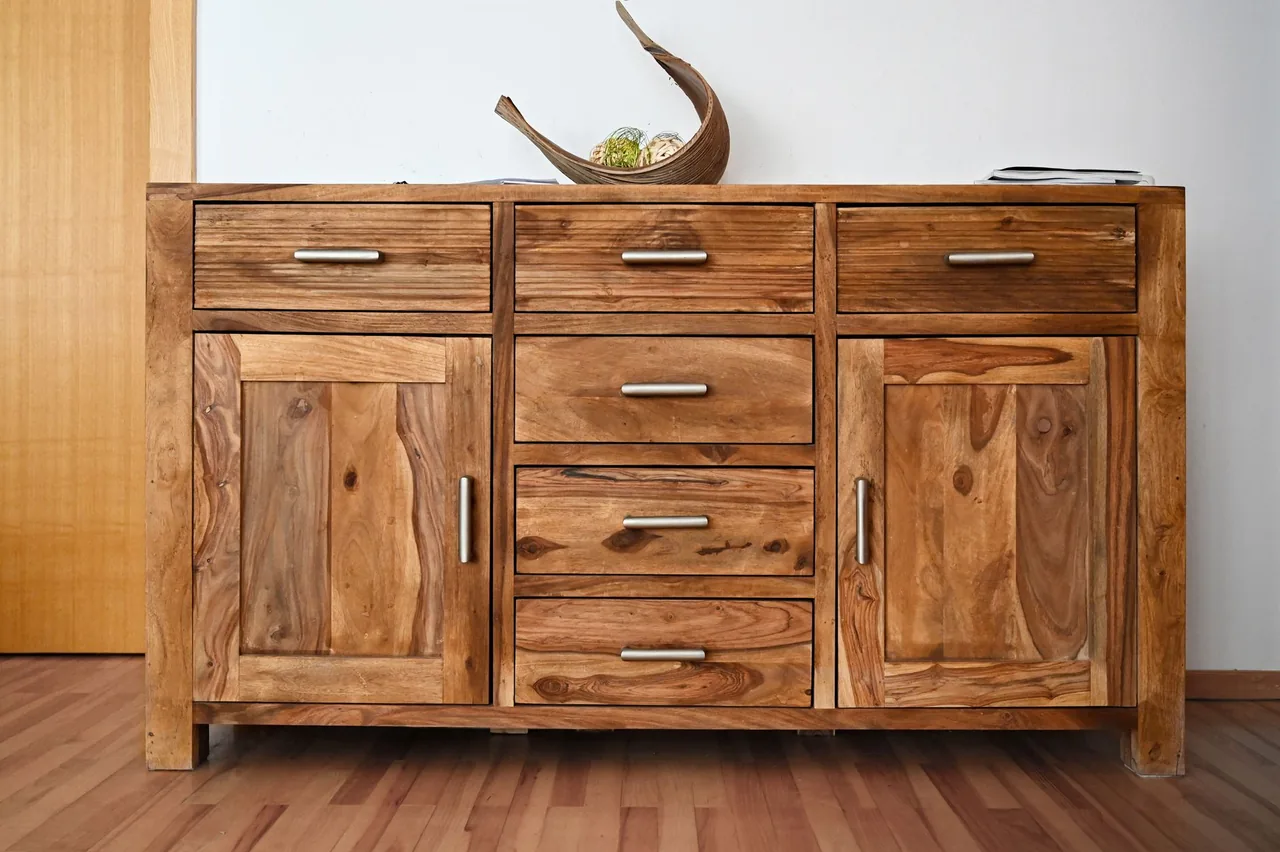
Cupping and Bowing: A Solid Plank on a Large Flat Door
The most visible slab failure is a door that cups or bows across its width, so it no longer sits flush against its neighbor. The mechanism is movement: a solid-wood plane responds to humidity, and on a large one-piece door even a slight warp shows at the edge. It is not a defect — it is wood on a flat door. The prevention is a stable core: a veneer over a stable substrate for grain, or MDF for paint, which is exactly why most quality slabs are not solid wood.
Fingerprints and Scratches: A High-Gloss Face
A high-gloss slab is stunning and a smudge magnet: the same flat sheen that makes it dramatic makes every fingerprint, water spot, and scratch visible, and a deep scratch on a gloss face cannot be spot-repaired. The cause is choosing sheen for drama over the room's reality. The prevention is matching the finish to the household — a textured matte hides marks far better and reads completely differently, which is the right call for a working kitchen.
Edge Swelling: Water at an Unsealed MDF Edge
On an MDF slab the exposed edge is the failure point: if water reaches an unsealed or chipped edge near a sink or dishwasher, the fiber wicks, swells, and bulges permanently, and paint cannot hide it. The cause is a raw edge meeting moisture. The prevention is a fully sealed edge and prompt spill cleanup, plus moisture-resistant board on the wet runs — the edge is where a slab kitchen quietly fails first.
Film Lift: Heat on a Thermofoil Slab
On a thermofoil slab, sustained heat from a wall oven, range, or built-in toaster oven softens the adhesive and lifts the vinyl film at the heated edge. The cause is a door placed beside or above a heat source. The prevention is layout: keep thermofoil off the runs near heat, shield the oven sides, or specify painted MDF for the cabinets flanking the range — the layout decision is part of the material decision.
Common Flat-Panel Cabinet Mistakes, Consequences, and Prevention
Most disappointing slab kitchens come from the same handful of shortcuts, each with a predictable consequence and a known prevention. Naming them is how you spot a corner being cut before it is buried in your kitchen.
| Mistake | What it causes | The prevention |
|---|---|---|
| Solid-wood slab on a large door | Cupping and bowing visible at the door edge | Use a veneer over a stable core, or MDF for paint |
| High-gloss in a busy kitchen | Constant fingerprints and unrepairable scratches | Choose a matte or textured sheen that hides marks |
| Unsealed MDF edge near water | Permanent edge swelling and bulging the paint can't hide | Fully seal edges and use moisture-resistant board on wet runs |
| Thermofoil slab beside an oven | Film lifts and yellows at the heated edge in a couple of years | Shield the heat or use painted MDF on oven-adjacent cabinets |
| Particleboard box, frameless | Sagging, racked cases that throw the long reveals off | Specify a plywood box, especially on wet runs |
| Reveals left untuned | Crooked-looking gaps glaring across long flat faces | Dial in six-way soft-close hinges to an even, continuous reveal |
| Slab forced into a traditional room | A cold, mismatched look the homeowner regrets | Confirm the room reads modern, or choose Shaker |
Every row is a documented source of a slab kitchen aging badly — which is why "stable core, sealed edge, matte sheen, plywood box, in writing" is the most valuable sentence in a flat-panel quote.
Choosing the Slab Build for the Room — Finishes and Tiers
Slab is sold across every tier, and because the door is so simple, the price and performance differences come almost entirely from the finish and core rather than the shape. Knowing which you are buying prevents paying gloss-lacquer money for a laminate face, or vice versa, and the right tier is matched to the room.
What Each Tier Actually Buys
Each tier holds the same flat geometry but a different core stability, finish depth, and edge quality, so the tier is chosen for the look and the room's demands.
- Laminate and thermofoil slabs are the value tier: a flat MDF or particleboard core wrapped or pressed with a colored, wood-look, or solid film. They deliver the seamless slab look affordably and clean beautifully — the trade is heat sensitivity on thermofoil and that a deep gouge exposes the core.
- Painted and lacquered MDF slabs are the mid-to-premium painted path: a stable MDF core sprayed to a smooth matte, satin, or gloss finish, giving the flattest, most uniform color a slab can hold.
- Veneered and solid-wood slabs are the natural-material tier: a real-wood veneer over a stable core — the smart way to get grain without the warp of a solid plank — or a true solid-wood slab for those who want to refinish it later and accept the movement risk.
- High-gloss acrylic and glass slabs sit at the top for sheen and depth, with the highest sensitivity to scratches and fingerprints.
The door looks similar across tiers from a distance; what you pay for is the finish's depth, the core's stability, and how the edges are sealed. See our kitchen cabinet cost guide and the broader cost guides for how those choices move the total.
How a Flat-Panel Door Is Built and Installed
A slab kitchen is made in two arcs — the door is built, then the run is hung — and each step exists to protect a specific outcome. The six steps below run from selecting the core to aligning the last reveal, and the architectural look a slab is paid for is earned at the end.
Select and Cut the Stable Core
The slab starts as a flat panel of the chosen core — stable MDF for paint, veneer-over-core for grain, or a board cut for laminate or thermofoil. The core is selected for flatness because a large one-piece door shows any movement, which is why a solid plank is the riskiest start and a stable core the safe one.
Treat and Seal the Exposed Edges
The slab's edges are wrapped, edgebanded, or sealed, because on an MDF core the raw edge is the water-vulnerable spot that swells if it ever wicks moisture. A seamless wrapped or fully primed edge is what keeps water out at sinks and dishwashers — a real durability step, not a cosmetic one.
Apply the Finish and Bore the Hinge Cups
The face is finished to the chosen sheen — sprayed paint or lacquer on MDF, a pressed film on thermofoil, a clear coat on veneer — and the 35 mm hinge cups are bored. The sheen decision lives here: a matte or textured finish hides marks a high-gloss face would show under every kitchen light.
Join the Frameless Boxes Edge-to-Edge
Because slab kitchens are usually frameless, the boxes are hung off a dead-level line, shimmed plumb, screwed into studs, and joined edge-to-edge with great care — there is no face frame to hide a misalignment, so the cases must align precisely for the flat faces to read true.
Hang Doors and Dial In the Continuous Reveal
The doors go on last, and slab is least forgiving here: long, continuous flat faces and tight full-overlay reveals make any uneven gap glaring, so the six-way soft-close hinges are tuned until every slab-to-slab reveal is laser-even — far more demanding than on a busy door.
Align the Handleless Pulls or Push-Open
On a handleless design the integrated channel pulls or push-to-open mechanisms are aligned at this stage so the unbroken face actually opens cleanly. Because so many slab kitchens are frameless and modern, a patient, precise install is not optional — it is the whole look.
Skip or rush any one of these six and the failure it prevents shows up later — a swollen edge, a smudged face, or a crooked gap. If your boxes are sound and you only want to switch to a slab look, a reface can fit new slab doors and matching panels over existing cases instead of a full installation.
Talk through your project — free.
A free consultation and a written, itemized quote from a vetted installer. No pressure, no obligation.
What Actually Drives the Cost of a Flat-Panel Kitchen
A slab quote is not a flat per-door rate; the headline number a low bid leads with hides the items below, ranked by how much they move the total.
The Cost Drivers That Move the Total Most
- Core and finish tier. The baseline: a laminate or thermofoil wrap, a sprayed MDF, a veneer over a core, or a high-gloss acrylic each carry very different material and labor. On a slab the finish and core — not the profile — set most of the cost.
- Box construction. A plywood box costs more than particleboard but is what keeps a frameless run's long reveals aligned; specifying it whole-kitchen versus only wet runs is a real line item.
- Finish depth and sheen. A deep, hand-rubbed lacquer or a high-gloss acrylic costs far more than a basic matte laminate, and the finish is the whole look on a slab — so the sheen choice swings the price hard.
- Edge treatment. A seamless wrapped or solid-lip edge costs more than a basic glued edgeband, and on an MDF slab the edge is also the durability spot, so it is worth the upgrade where water reaches.
- Handleless hardware. Integrated channel pulls, finger-pull profiles, and push-to-open mechanisms cost more than surface knobs and pulls but are what keep the unbroken modern face — a defining slab expense.
- Frameless construction and precision install. Frameless boxes and the patient hinge-tuning a flat face demands add labor a busy door would forgive; the architectural look is bought partly in install hours.
- Old-cabinet removal and disposal. Tear-out is labor and haul-away is a fee, and removal can expose wall or plumbing problems that change scope — which is why it belongs in the written quote up front.
- Refacing as the alternative. Where boxes are sound, new slab doors and matching panels over existing cases cost less than full replacement; compare it in our cabinet refacing cost guide before committing to a tear-out.
Because these drivers swing so widely, the only honest number comes from an on-site assessment. Compare what moves the price across the category in our cost guides, and size your own kitchen first with the cabinet cost calculator so you can read a quote critically.
Get an itemized scope, not a headline rate.
A vetted installer prices the doors, boxes, finish, edges, and hardware as separate lines — so you see the whole slab job, free and with no obligation.
Flat-Panel Cabinet Glossary
The terms below recur in every slab quote, spec sheet, and showroom conversation — each defined as its working meaning on an actual kitchen, so you can read a scope and judge whether it is complete.
- Slab door
- A single flat door with no frame, recess, or molding — the flat-panel profile. The simplest cabinet face and the foundation of modern, frameless kitchens.
- Core
- The material under a slab's finish — MDF, a veneer substrate, particleboard, or solid wood. The core, not the finish, decides whether the flat plane stays flat.
- Edgeband
- A thin strip applied to a slab's exposed edge to finish and seal it. On an MDF slab a sealed edge is what keeps water from swelling the porous core.
- High-gloss
- A high-sheen finish that reflects like glass — dramatic and deep, but a fingerprint, smudge, and scratch magnet that cannot be spot-repaired.
- Matte / textured finish
- A low-sheen or textured surface that hides fingerprints and scratches far better than gloss and, in textured laminate, adds grip — the forgiving choice for a busy kitchen.
- Veneer
- A thin real-wood face bonded to a stable core. On a slab it delivers genuine grain with far less warp risk than a solid-wood plank.
- Frameless (full-access) cabinet
- A box with no face frame, giving slightly more interior space and the tight, continuous reveal a slab kitchen wants. The default construction under slab doors.
- Full overlay
- A door that covers nearly the entire box edge, leaving a minimal reveal — the look that lets long slab faces read as one continuous plane.
- Reveal
- The visible gap around and between doors. On long flat slab faces an uneven reveal is glaring, so it is tuned even with adjustable hinges.
- Handleless / push-to-open
- A hardware approach — integrated channel pulls, finger-pull profiles, or push-latches — that keeps a slab face completely unbroken for the cleanest modern look.
- MDF
- Medium-density fiberboard — a dense, grain-free, dimensionally stable panel that is the workhorse core for a painted slab because it lays and stays dead flat.
- Plywood box
- A cabinet case built of plywood rather than particleboard — it holds screws, resists moisture, and stays square, keeping a frameless slab run's reveals aligned.
Standards, Warranty Conditions, and When a Permit Applies
A cabinet warranty is a contract with conditions, and most claims on a slab turn on the core, the edge, and the finish rather than the shape of the door.
Warranty Conditions That Hinge on the Build
The conditions are specific: the core as specified, sealed edges on any MDF near water, the stated finish system, and installation to the maker's instructions. A shop that substitutes a particleboard core for the plywood quoted, or leaves an edge unsealed at a sink, has changed the product you are owed. Ask in writing that the core, edge, finish, and box match the quote — that document is what a claim is judged against, and one more reason the cheapest slab quote is rarely the cheapest kitchen.
The Standards That Set the Bar
Reputable cabinetry is built and tested to recognized standards for construction, finish durability, and hardware cycle life — the kind of certification serious makers carry. A slab built to those keeps its flat face and its finish; one built to a price often cups or smudges. Hardware, too, is rated for a published number of open-close cycles, which is why naming the hinge brand matters on a long frameless run.
When a Cabinet Permit Is Required
Permits enter when the work goes beyond hanging cabinets. Swapping doors or replacing cabinets like-for-like usually does not require one, but moving plumbing or electrical for a new layout, or work tied to a larger renovation, often does. A reputable installer tells you when a permit applies rather than working around it — and structural or plumbing changes belong with the right trade before the cabinets go in. When only the look is tired, the better path may be a repaint of paintable slabs or a reface rather than a full replacement.
A Real Flat-Panel Cabinet Decision
One representative scenario shows why the core and finish decide everything: the slab look stayed the same across every quote, but the material changed the result.
How to Vet a Flat-Panel Cabinet Installer
Most disappointing slab kitchens are spec-and-build failures, so the installer and the shop behind the quote matter more than the showroom door. These questions separate a crew that builds a slab kitchen to stay flat from one that simply sells a flat face.
- They name the core, not just the finish
- Ask what the slab is built from. A real answer distinguishes MDF, veneer-over-core, and solid wood — and warns that a solid plank carries the highest warp risk on a large door. "It's a slab" with no core named is guessing.
- They explain the edge treatment and sealing
- Ask how the exposed edges are finished and sealed. A credible installer names a wrapped, edgebanded, or sealed edge and explains that on MDF the edge is the first failure point near water.
- They match the sheen to the room honestly
- Ask which sheen they recommend for a busy kitchen. A pro steers gloss toward low-traffic statements and matte or textured toward working kitchens, because they know gloss shows every mark.
- They specify frameless boxes and tune the reveal
- Ask how they keep the long slab-to-slab gaps even. A credible answer names frameless plywood boxes and six-way soft-close hinges tuned to a continuous reveal — the architectural look is in the alignment.
- They plan heat and handleless hardware
- Ask how they handle thermofoil near the oven and how a handleless face opens cleanly. A real answer shields heat or switches to painted MDF there, and aligns channel pulls or push-latches at install.
- They put the spec and a workmanship warranty in writing
- Ask for the core, edge, finish, box, hardware, timeline, and labor warranty in writing before work starts. A crew willing to name a workmanship guarantee — and to return if a door cups or a reveal drifts — is accountable for the build, not just the doors the maker covers.
Why Route Your Flat-Panel Project Through Pro Work Home Surface
Pro Work Home Surface is not a cabinet shop and does not build or hang your cabinets — we are a national authority on home surfaces that matches homeowners with vetted local installers and holds them to a published bar.
- A free consultation and an itemized written scope
- Every connection starts with a no-obligation consult and a written quote that names the slab's core, edge, finish, box, and hardware separately — so "slab" is a defined spec, not a showroom door and a guess.
- A real vetting standard, applied before we connect you
- Installers are screened on what decides a slab kitchen's life: whether they choose a stable core, seal the edges, match the sheen to the room, and tune the long reveals with adjustable hardware.
- Core and finish matched to the room, every time
- The core and sheen are chosen for the look and the room — MDF for paint, veneer for grain, matte or textured where marks would show, moisture-aware materials and a plywood box on wet runs — before any door is ordered.
- National coverage, local crews
- We match you with installers in your area nationwide, so the standard is consistent even though the crew is local — whether your project is a single vanity or a whole kitchen.
Cabinets are one of eight categories we cover across home surfaces. If your project also touches new countertops, a door-and-panel reface, a repaint, a refinish, or a simple repair, the same standards apply — compare what moves the price in our cost guides, dig into the how-and-why in our learning center, read up on the major makers in our brand overviews, and start from the cabinets category hub or the full range of home surfaces.
Brands & Material Authority
Quality and construction drive long-term performance more than the label. These are widely respected names in this category:
- KraftMaid
- Merillat
- Diamond
- Wellborn
- American Woodmark
- Thomasville