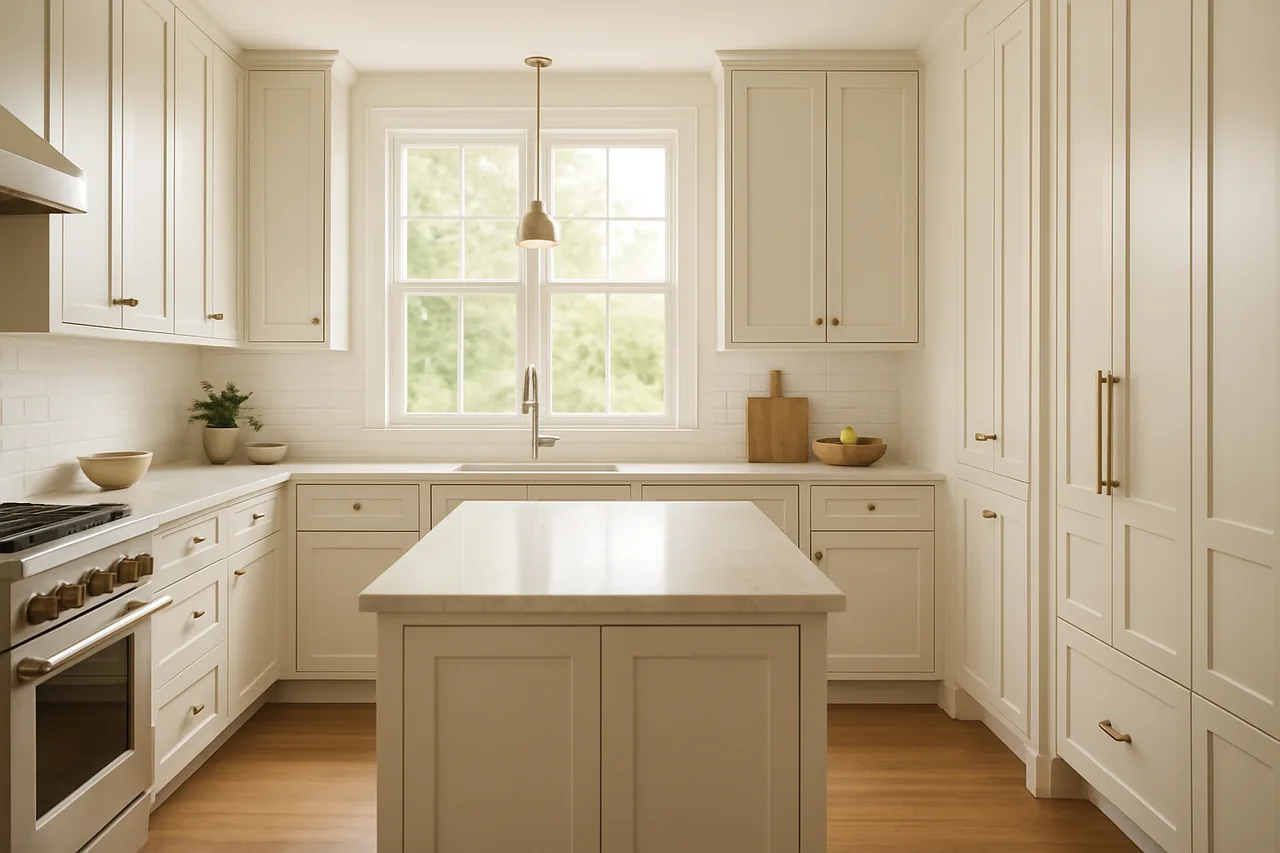
Cabinet refacing keeps your existing cabinet boxes and replaces only what you see — new doors and drawer fronts, plus a matching veneer or laminate skin over the exposed box faces and end panels. Because the carcasses stay, refacing lands well below full replacement, and its cost is driven by a short list of levers: the door style and material you choose, the skin material (real-wood veneer, rigid thermofoil, or laminate), the number of doors, drawers, and end panels to cover, and any hardware and accessory upgrades. What refacing cannot do is change your layout or fix a failing box — those are replacement jobs. Rather than invent an average that would be wrong for your kitchen, this guide names every lever, shows where refacing beats replacement and where it doesn't, and hands you a cabinet cost calculator to estimate from the quote you were actually given. Get a free, itemized quote from a vetted refacing installer first — that document, not a national average, is where your real cost lives.
Why Cabinet Refacing Cost Starts With What Stays, Not What's Replaced
Refacing is defined by the boxes it keeps. The carcass — the cabinet body screwed to your wall — remains in place, and only the visible surfaces change: new doors, new drawer fronts, and a skin bonded over the face frames and end panels so the old and new blend seamlessly. That single fact is why refacing costs a fraction of replacement: you are buying faces and a skin, not new boxes, demolition, or a re-plumb. Understanding that the cost is faces-and-skin, not a whole kitchen, is what lets you read a refacing quote critically and know when it is the right call.
The Door and Skin Choices Set the Baseline
Two choices drive most of a refacing price. The first is the door style and material — a simple slab or a five-piece Shaker, in wood, MDF, or thermofoil — because the new doors and drawer fronts are the largest single line. The second is the skin material that covers the boxes: real-wood veneer to match a stained door, rigid thermofoil or MDF for a painted look, or plastic laminate for the budget end. The door and skin together set the look and most of the cost; count and hardware fill in the rest.
What Separates Veneer From Laminate Refacing
The skin choice is a cost and durability step, not just a color. Real-wood veneer matches a natural stained door grain-for-grain and can be stained on site, the premium path. Rigid thermofoil and laminate skins are seamless, easy to clean, and lower cost, ideal under a painted or solid-color scheme. Laminate is the budget skin; veneer is the premium; thermofoil sits between. None of them touch the box behind — so a laminate reface and a veneer reface are the same structural job at different finish tiers, which is exactly the kind of choice that holds or grows a budget without changing what lasts.
The Cost Factors That Move a Cabinet Refacing Total
Below are the levers a refacing installer prices, each paired with the direction and rough weight it pushes your total. Read it as a map of where the money goes, not a rate card — the actual dollars come from your local quote and the calculator.
| Cost factor | How it moves your total |
|---|---|
| Door style & material | The largest lever — new doors and drawer fronts; a five-piece Shaker in wood costs more than a slab in thermofoil |
| Skin material | Real-wood veneer is premium; rigid thermofoil mid; plastic laminate budget — for the same boxes |
| Door, drawer & panel count | More openings and exposed end panels means more faces and more skin — a bigger kitchen refaces for more |
| Hardware & hinges | New pulls, knobs, and soft-close hinges — quantity times unit price across the kitchen |
| Drawer box upgrades | Refacing covers fronts, but upgrading to new soft-close or dovetail drawer boxes adds cost per drawer |
| Accessories & extras | New pull-outs, a matching panel on an island, crown molding, or under-cabinet trim add lines |
| Labor & kitchen complexity | Measuring, veneering, and hanging to a clean fit, priced by your region and the kitchen's difficulty |
| Box condition & minor repair | Sound boxes reface cleanly; a loose hinge plate or a soft spot needs repair first, an added line |
The lever homeowners underweight is the door-and-drawer count — refacing is priced largely per opening, so a kitchen with many small drawers and glass-front uppers costs more to reface than the wall area suggests. Ask for the quote by count; an installer who lists doors, drawers, panels, skin, and hardware separately is quoting the whole job. Size your own kitchen against these factors with the cabinet cost calculator.
Cabinet Refacing Cost Tiers — Relative Positioning, Not Dollars
Most of what you pay comes down to which finish tier you choose, so picture the three tiers as positioning before any number arrives. These are ordinal — entry below mid below premium — and describe what you get and give up, not a price. Use them to set expectations, then the calculator for a real figure with your local quote.
| Tier | What you get | The trade-off |
|---|---|---|
| Entry (laminate) | Slab or simple doors, a plastic laminate skin over the boxes, new hinges, and standard hardware | The fewest looks and no on-site stain matching; the lowest-cost way to refresh sound boxes |
| Mid (thermofoil / painted) | Shaker or raised-panel doors in MDF or thermofoil, a rigid painted-look skin, soft-close hinges, and upgraded pulls | The balance most kitchens land on — a fresh painted look on the boxes you already own |
| Premium (wood veneer) | Solid-wood or wood-veneer doors, a real-wood veneer skin stained to match, dovetail drawer boxes, and full hardware | Highest reface cost; a true natural-wood result — still below full replacement |
The honest read is that even the premium reface tier sits below new cabinets, because every tier keeps your boxes. You climb the tiers for the finish and door material, not for structure, which is exactly why a spec-led recommendation starts with the look you want and the condition of your boxes, not with a showroom's featured door.
What's Included in a Refacing Quote — and What's Usually Separate
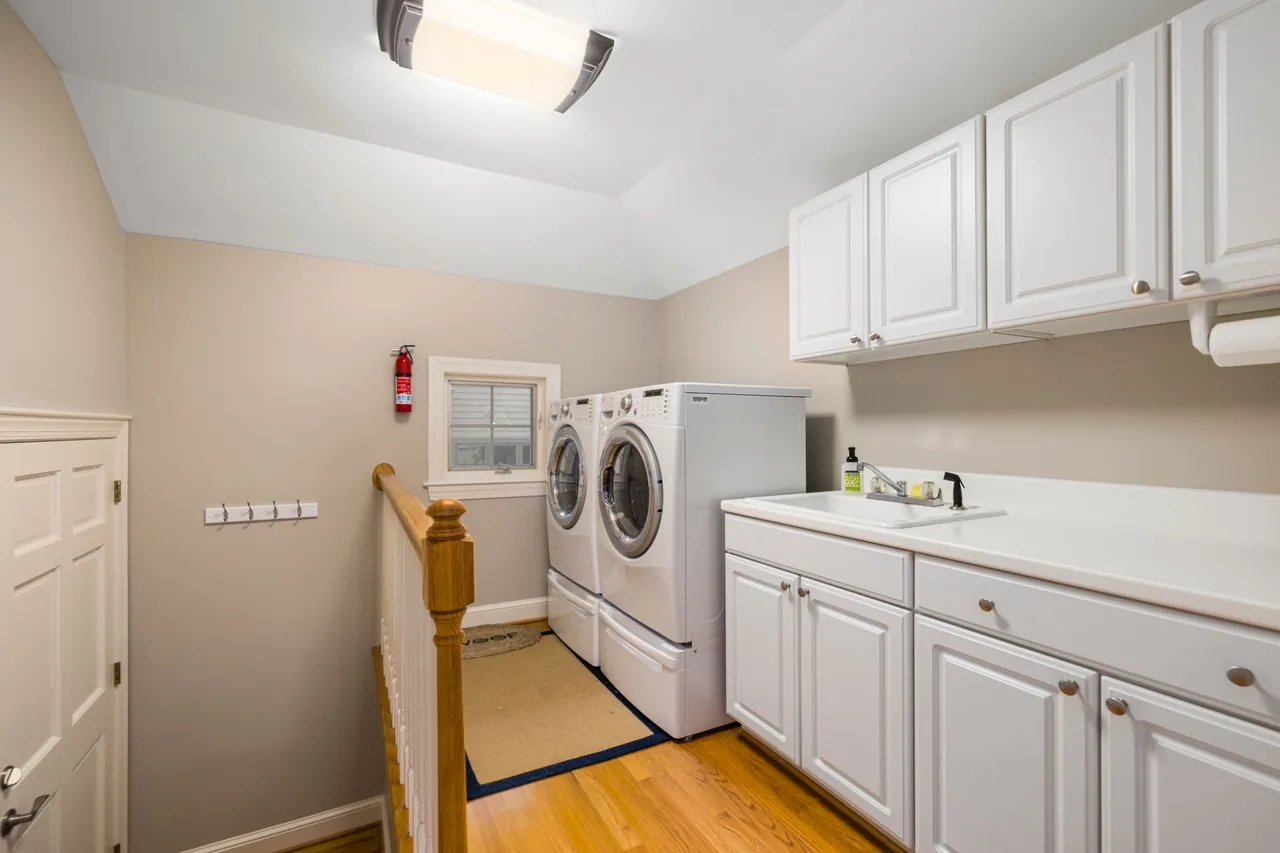
The most common way a refacing quote misleads is by leaving the buyer to assume it covers things it doesn't — drawer boxes, accessories, or a countertop. Knowing what refacing includes and what is separate is how you compare bids and avoid a surprise.
| Line item | Typically included in refacing | Often separate or not included |
|---|---|---|
| Doors & drawer fronts | New doors and drawer fronts in your chosen style and material | An upgrade in door material; glass inserts; specialty fronts |
| Box skin (veneer/laminate) | Matching skin over face frames and exposed end panels | An upgrade from laminate to real-wood veneer; extra exposed panels |
| Hinges | New hinges to hang the new doors | Soft-close upgrade; concealed European hinges on a face-frame box |
| Pulls & knobs | Sometimes a basic hardware package | Designer or upgraded hardware; higher count |
| Drawer boxes | Refacing covers the fronts — the existing drawer boxes stay | New soft-close or dovetail drawer boxes, if you want them |
| Accessories | Not in a base reface | Pull-outs, lazy Susans, crown molding, under-cabinet trim, island panels |
| Countertops & layout | Not part of refacing — the boxes and layout are unchanged | New countertop; any layout change (that's replacement territory) |
When you compare two refacing quotes, confirm whether each includes the skin over end panels, soft-close hinges, and any drawer-box upgrade — the lower headline number is frequently the one covering doors and fronts only. A refacing quote that itemizes doors, skin, hinges, hardware, and accessories is worth more than a cheaper one that hides them.
Where Homeowners Overpay on Refacing — Mistakes and Fixes
Most refacing overspend is choosing the wrong path for the kitchen, or over-specifying a job whose point was to save. Each row pairs the mistake with what it costs and the fix that keeps refacing the value move it should be.
| Mistake | What it costs you | The fix |
|---|---|---|
| Refacing when you want a new layout | Paying to reface, then still needing replacement to move anything | If the layout must change, price replacement — refacing keeps the boxes where they are |
| Refacing failing or water-damaged boxes | New faces on a carcass that won't hold them, then a redo | Have the boxes assessed first; a soft or sagging box needs replacement, not a skin |
| Choosing veneer when paint was the goal | Premium real-wood skin cost for a painted look laminate delivers | Match the skin to the finish — a painted scheme wants a rigid painted skin, not veneer |
| Overlooking that painting may be enough | Full reface cost when a quality paint job would have satisfied | If the doors are sound and only the color is tired, price painting first |
| Adding accessories that erode the savings | Enough pull-outs and drawer boxes to approach replacement cost | If you want a full storage overhaul, compare the reface-plus-extras total to new cabinets |
| Designer hardware on every opening | Unit price times a high door-and-drawer count | Choose mid-priced pulls, or a focal upgrade only |
| Skipping the free consultation | Committing to reface before anyone checks the boxes' condition | Get a free assessment and itemized quote before you decide reface vs. replace |
The pattern across every row is the same: refacing wins when the boxes are sound and the layout stays, and loses when it is asked to do a replacement's job. Keep it in its lane and it is the best-value move in the category.
The Cabinet Refacing Budgeting Framework
Before you commit, confirm refacing is the right path, then set the budget from your door-and-drawer count and finish. This six-part Refacing Budgeting Framework is the order a spec-led installer would walk you through — settle each and the quote becomes predictable.
- 1. Confirm the boxes are sound first
- Refacing only pays if the carcasses are solid and square. Have them checked — a soft, sagging, or water-damaged box needs replacement, and refacing it wastes money. This gate comes before any pricing.
- 2. Confirm the layout stays
- Refacing keeps every box where it is. If you want to move the sink, add an island, or change the footprint, you are in replacement territory — decide this before you price a reface.
- 3. Count the doors, drawers, and panels
- Refacing is priced largely per opening, so count doors, drawer fronts, and exposed end panels — not wall area. That count is the base every other number builds on. The cabinet cost calculator turns it into an estimate.
- 4. Match the skin to the finish
- Choose real-wood veneer for a stained look, or a rigid thermofoil/laminate skin for a painted or solid-color look. Matching the skin to your finish avoids paying for veneer under paint.
- 5. Decide drawer boxes and accessories deliberately
- Refacing covers fronts; new soft-close drawer boxes and pull-outs are extras. Add only what you will use, and watch the running total — a pile of extras can approach replacement cost.
- 6. Compare the reface total to replacement
- Once your reface quote plus any extras is set, compare it to a replacement quote for the same look. Refacing should land clearly below; if it doesn't, replacement may be the better value.
How to Lower a Cabinet Refacing Cost Without Cutting Quality
Because refacing already keeps the expensive part — the boxes — nearly every honest saving is a finish or scope choice, not a durability downgrade. These six moves keep refacing the value move it should be.
- Choose the skin that matches your finish
- A painted scheme wants a rigid painted skin, not premium veneer. Matching skin to finish is the largest single saving that costs you nothing in looks.
- Keep the existing drawer boxes if they work
- Reface the fronts and keep sound drawer boxes rather than replacing them. Upgrade only the drawers that stick or sag, not the whole kitchen.
- Add accessories only where you use them
- Put a pull-out where you reach daily and skip the rest. Accessories are per-unit and add up fast — targeting them protects the savings.
- Consider painting instead if the doors are sound
- If only the color is tired and the doors are in good shape, a quality paint job may satisfy for even less than a reface. Price it as an option.
- Choose mid-priced hardware
- Pulls and knobs are quantity times unit price across the kitchen; a mid-priced choice, or a focal splurge, holds the line.
- Get more than one itemized quote — on the same scope
- Competing, line-itemized quotes from vetted installers keep pricing honest, but only compare when each includes the same skin, hinges, and any drawer-box upgrade. Compare on scope, not the headline.
Want to know if refacing beats replacing for your kitchen?
We match you with a vetted installer who checks your boxes, itemizes doors, skin, hinges, and hardware, and tells you honestly when replacement is the better value — free and with no obligation.
Reface, Paint, or Replace — Which Fits Your Kitchen?
The right path is the output of a few honest questions about your boxes, your layout, and the look you want — not a default to whichever sounds cheapest. Walk the decision in order; each answer points to reface, paint, or replace.
- Are the boxes sound and square? If a carcass is soft, sagging, water-damaged, or failing at the joints, no skin will save it — you need replacement. If the boxes are solid, refacing and painting are both on the table. This is the gate before anything else.
- Does the layout need to change? If you want to move the sink, add an island, or change the footprint, refacing can't do it — the boxes stay put — so price replacement. If the layout works as-is, continue.
- Is it only the color that's tired? If the doors are in good shape and you just want a fresh color, a quality paint job may satisfy for the least cost. If the doors themselves are dated, damaged, or the wrong style, refacing gives you new doors too.
- What finish do you want? For a stained natural-wood look, choose wood-veneer refacing. For a painted or solid-color look, a rigid thermofoil or laminate skin delivers it for less. Let the finish pick the skin, so you don't pay for veneer under paint.
- How much storage overhaul do you want? If you want a few new soft-close drawers and a pull-out, add them to the reface. If you want a full storage redesign, tally the reface-plus-extras total against a replacement quote — at some point new cabinets become the better value.
Run honestly, this tree usually returns a clear answer: reface for sound boxes and a new look without a layout change, paint for a sound and simply tired kitchen, replace for a failing box or a new footprint. An installer who recommends the same path for every kitchen, regardless of the answers, is the red flag. Compare door styles and skins against cabinets and the options on the material comparison tool.
How Refacing Cost Compares to Replacement and Painting
Refacing only makes sense relative to its two neighbors — painting below it and replacement above — so the real budget question is which of the three fits your kitchen.
Refacing vs. Full Replacement
Refacing keeps the boxes; replacement tears them out and starts over. That makes refacing meaningfully cheaper and faster, with far less disruption — no demolition, no re-plumb, days rather than weeks. But replacement is the only path if a box is failing or the layout must change, and it lets you upgrade the carcass material and interior storage completely. The honest comparison is condition-and-layout: sound boxes and a working layout favor refacing; a failing box or a new footprint favors replacement. The kitchen cabinet cost guide breaks down replacement on its own terms.
Refacing vs. Painting
Below refacing sits painting — the lowest-cost refresh, which keeps your existing doors and simply recolors them. Painting wins when the doors are sound and only the color is tired; it cannot change a dated door style or fix damaged fronts. Refacing costs more because it gives you new doors and drawer fronts, not just a new color. If your doors are in good shape, price painting first; if they are dated or damaged, refacing is the step up. Map the full range of cabinet spend on the surface cost index.
Cost Over Time: What Refacing's Result Buys
Refacing's honest value is the transformation it delivers for the cost — and how long that result lasts on the boxes underneath.
Why Refacing Lasts as Long as the Boxes Do
A quality reface lasts as long as the carcasses it covers, because the doors, skin, and hinges are all new — only the sound box is reused. That is why the box-condition gate matters so much: on solid boxes, a reface is a long-lived result at a fraction of replacement; on a failing box, it is money spent on a foundation that will not last. Choosing refacing for the right kitchen is one of the highest returns in the whole category, precisely because it keeps the durable part and renews the visible one.
The Finish and Hinges That Age Well
Two smaller choices carry outsized long-term value in a reface: a durable door material and skin that resist chipping and wear, and quality soft-close hinges that do not loosen or slam. Both cost a little more and save the tired look and callbacks that cheap versions bring.
How the Skin Choice Shapes the Long-Term Value
The skin you pick is a durability bet as much as a look: a real-wood veneer can be refinished if it wears, while a thermofoil or laminate skin is wipe-clean but cannot be sanded and re-stained. Matching the skin to how hard the kitchen lives — and to whether you may want to refresh it again — protects the value of the reface.
Why Heat Exposure Belongs in the Decision
A thermofoil skin near an oven or a range side can peel over years of heat, turning a cheap reface into an early redo. Placing the more heat-tolerant skin or door material by heat sources is a small choice that avoids a future cost. Compare cabinet door and skin materials spec-for-spec, and their expected life, on the material lifespan comparison, and map cabinet spend on the surface cost index.
Get a spec-matched recommendation
Tell us your surface, room, and goals — free, independent guidance and a vetted installer, nationwide.
Cabinet Refacing Cost Glossary
These terms decide what a refacing quote actually says. Each is defined as its working meaning on a real refacing job, so you can read a scope and judge whether it is complete and fairly priced.
- Refacing
- Replacing cabinet doors and drawer fronts and covering the exposed box faces with a matching skin, while keeping the existing carcasses. A faces-and-skin job, not a new kitchen.
- Carcass (box)
- The cabinet body that stays in place during a reface. Its soundness is the gate: a solid box refaces well, a soft or damaged one needs replacement instead.
- Veneer
- A thin real-wood skin bonded over the box faces and end panels to match a stained wood door, and stainable on site. The premium refacing skin.
- Rigid thermofoil (RTF)
- A door and skin surface of vinyl heat-sealed over MDF, giving a seamless painted look. A mid-tier skin, easy to clean, lower cost than veneer.
- Laminate skin
- A plastic laminate applied over the box faces — the budget refacing skin, durable and wipeable, best under a solid-color scheme rather than a stained-wood match.
- Drawer front vs. drawer box
- The front is the face you see and refacing replaces; the box is the container behind it, which refacing keeps unless you pay to upgrade it. A common source of quote confusion.
- End panel
- The exposed side of a cabinet run or island that must be skinned to match the new doors. More exposed panels means more skin and cost.
- Soft-close hinge
- A hinge with a damper that stops slamming, commonly added during a reface. A per-door upgrade that improves feel and longevity.
- Door style
- The face design of the new doors — a flat slab or a five-piece Shaker. Drives the largest line in a reface; more pieces and a painted finish cost more.
- Painting
- Recoloring the existing doors and boxes without new doors or a skin. The lower-cost neighbor below refacing, right when the doors are sound and only the color is tired.
- Replacement
- Removing the old boxes and installing new cabinets. The higher-cost neighbor above refacing, required for a failing box or a layout change.
- Box-condition assessment
- The installer's check of whether your carcasses are sound enough to reface. The first step of an honest refacing quote, and the gate that decides reface vs. replace.
A Real Cabinet Refacing Cost Decision
One representative scenario shows how the path — reface vs. replace — and the skin choice set the total, and where a spec-led installer found the value.
How to Vet a Refacing Installer on Price and Scope
Because refacing's whole value rests on the boxes being sound and the scope being honest, the installer and the itemized quote matter as much as the door you pick. These questions separate a shop that quotes the right job from one that reface-sells every kitchen.
- They assess the boxes before recommending refacing
- An honest installer checks whether your carcasses are sound and square first, and tells you when replacement is the better call. A shop that reface-sells without looking at the boxes is a red flag.
- They itemize doors, skin, hinges, hardware, and drawer boxes
- Ask for the quote broken into lines, and confirm whether the drawer boxes and end-panel skin are included. A shop that lists each is quoting the real job — and lets you compare bids fairly.
- They match the skin to your finish
- A good installer steers a painted look to a rigid skin and a stained look to veneer, so you don't pay for veneer under paint. Vague answers about the skin usually mean an upsell.
- They tell you when painting or replacement fits better
- An honest shop says when a sound, simply-tired kitchen wants painting instead, or when a failing box or layout change wants replacement. One that only sells refacing is not advising you.
- They quote accessories and drawer upgrades honestly
- Ask which extras — pull-outs, new drawer boxes, crown molding — are in the price and which are added. Naming them up front keeps the reface a value move instead of a creeping total.
- They stand behind the work in writing
- Ask for the scope, the timeline, and a workmanship guarantee in writing before work starts. A shop willing to name a warranty on the doors, skin, and install is accountable for the reface, not just the components.
The through-line is honesty about scope: an installer who assesses the boxes, itemizes, and will point you to painting or replacement when those fit better is quoting a reface that will match its price and its promise. For the full range of surface projects and how each is priced, compare our cost guides, dig into the material trade-offs in our learning center, size the job with our calculators, and start from the cabinets hub or the full range of home surfaces.