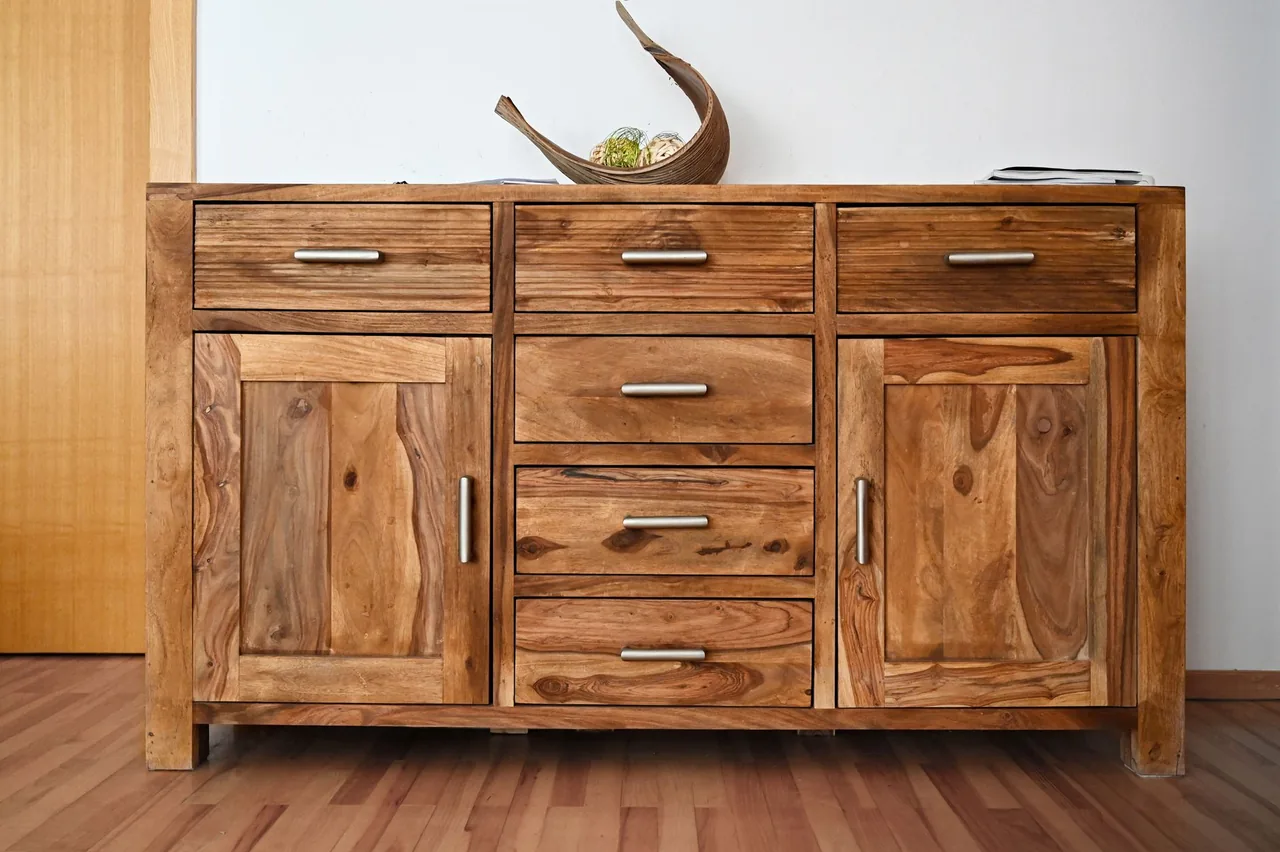
Solid wood cabinets are built with doors, drawer fronts, and face frames cut from real lumber — typically a hardwood like maple, oak, cherry, or hickory — rather than an engineered board. Two facts decide whether solid wood is right for your space and almost nothing else does: how the species rates for hardness on the Janka scale, and whether you can hold a reasonably stable indoor climate, because real wood is hygroscopic — it takes on and gives off moisture with the air, swelling and shrinking for its entire life. That single fact drives both its greatest strength, that it can be sanded and refinished again and again, and its greatest demand, that it must be allowed to move. Get a free consultation and a written, itemized scope from a vetted installer that names the species, whether each part is true solid lumber or veneer over a core, and the box construction separately — that document is where a lasting solid-wood kitchen is decided.
Solid Wood Is a Material Decision Driven by Hardness and Movement
The grain everyone admires matters less to how the cabinet performs than two numbers behind it: the species hardness that predicts dent resistance, and the moisture content the lumber was dried to. A solid-wood kitchen still tight in twenty years and one that cracks in three differ on those, not on the showroom finish.
Where Real Solid Wood Genuinely Wins
Solid wood is the traditional benchmark cabinet material, and its advantages show over decades rather than on day one. The first and most important is renewability: because a solid-wood door is real lumber all the way through, it can be sanded back and refinished or repainted multiple times — a deep scratch sands out, a dated stain becomes a fresh color, worn edges come back. No engineered or film-wrapped door offers this; when an MDF or thermofoil face wears out it is replaced, while a solid-wood face is restored. The second is character and repairability — real grain and depth a printed surface only imitates, and dents that can often be steamed or filled and blended. The third is strength at the structure: solid-wood face frames and rails hold hinge and mounting screws exceptionally well and resist racking, which is why a solid-wood frame is so often paired with a stable engineered panel in the best painted doors.
The Species and the Climate Decide the Outcome
The material wins anywhere you want a cabinet you can keep, refresh, and hand down — but only if the species and the climate are matched to the room:
- A soft species like American walnut at 1010 lbf Janka is beautiful but dents sooner in a busy kitchen than hard maple at 1450 lbf.
- An all-solid painted door reveals a thin unfinished line at the panel edge when the panel contracts in a dry winter.
- A solid-wood sink-base front exposed to repeated splashes and steam can swell, check, or lift its finish if the wood is not kept sealed.
None of those are material defects — they are species-and-climate mismatches, the most common reason a solid-wood kitchen disappoints the homeowner who chose it on grain alone.
The Solid-Wood Fit Test: Six Checks Before You Order
Before a solid-wood kitchen is ordered, a competent installer runs the plan through the same six-check gate. Each check has a documented failure it prevents, and a spec that fails any one is not ready to build. Call it the Solid-Wood Fit Test: pass all six and the wood has a foundation to last; fail one and you are buying a future crack.
- 1. Species matched to the room's traffic
- The wood sets durability, grain, and finish behavior. A busy kitchen with kids and pets wants a harder species — maple at 1450 lbf, oak (red 1290, white 1360 lbf), or hickory at 1820 lbf — that resists dents; a softer wood like walnut at 1010 lbf is gorgeous but marks more easily. Pick the species for how hard the room lives, not only for color.
- 2. Finish chosen — stained or painted
- Solid wood is the only material that delivers a stained, refinishable face, so if you want visible grain or stain, this is its home. For a painted finish, lean to a hybrid or veneer panel, because an all-solid painted panel can open a line when it moves. The finish decides whether all-solid is even the right form.
- 3. Solid lumber vs. veneer over a core, named
- A true solid-wood door is lumber throughout; a veneer door is a real-wood face bonded to a stable engineered core. Veneer gives genuine grain with far less movement on large flat doors — an honest, often smarter choice — but only solid lumber can be deeply re-sanded. The two are named separately, door by door.
- 4. Lumber drying and joinery
- Properly kiln-dried wood — typically brought to an EMC around 6% to 8% for interior use — and tight, well-glued joints (mortise-and-tenon or doweled frames) are what keep a solid-wood door from cracking and racking. Under-dried wood is what cups and splits, so the drying and the joinery are real specs.
- 5. Box construction — plywood vs. particleboard
- "Solid wood" usually describes the doors and face frames, not the box; many cabinets pair solid-wood fronts with a plywood or particleboard case. Confirm the box: plywood holds screws and resists moisture far better, and dovetailed drawer boxes outlast stapled ones.
- 6. Acclimation and hardware
- Solid-wood cabinetry should acclimate in the conditioned home before final fitting, so it is not fastened while swollen or shrunken from transport. Six-way-adjustable soft-close hinges and full-extension slides are the durable standard and let the installer dial in even reveals on a material that moves.
Three of these six — species choice, drying quality, and acclimation — are the corners cut on cheap solid-wood quotes, because the right answers cost time and grade a low bid skips, yet every one is specifiable. That is why the fit test is non-negotiable.
Want the species and construction decided before you order?
We match you with a vetted installer who names the species, the solid-versus-veneer build, and the box separately and puts it in a written scope — before you commit to a solid-wood kitchen on grain alone.
Solid-Wood Cabinet Specifications & Standards
With real wood, quality lives in the species, how the lumber is dried and joined, and the box behind the door — from the controlling hardness rating, through the drying and joinery, to the construction that carries the load.
Species Hardness on the Janka Scale
The defining spec of a solid-wood cabinet is the species, and the number that predicts how it survives a busy room is its Janka hardness. Matching the rating to the traffic is what keeps a kitchen from denting.
What Janka Measures and Why It Matters
The Janka hardness test measures the pounds-force (lbf) needed to embed a steel ball halfway into the wood — the dent- and wear-resistance rating that predicts how a species holds up to daily knocks. A higher number resists dents better; a lower one dents sooner but is no less beautiful. It is the single most useful number for matching a species to how hard the room lives.
Hardness by Common Cabinet Species
The common cabinet woods spread across a wide range: American black walnut sits near 1010 lbf and cherry near 950 lbf — soft, rich, and prone to showing wear sooner; red oak at 1290 and white oak at 1360 lbf are hard with strong open grain; hard (sugar) maple at 1450 lbf is hard and fine-grained; and hickory at 1820 lbf is among the hardest domestic species. Kids, pets, and high-use runs point to the harder end.
Hardness vs. Finish Behavior
Hardness is not the whole story — how a species takes finish matters too. Maple is dense and fine-grained, so it paints and clear-finishes evenly but can blotch under dark stains; oak's open grain takes stain richly; cherry darkens and mellows with sun over time; walnut is naturally dark and needs no stain. The species is chosen for both the number and the finish it is destined for.
Drying, Moisture Content, and Joinery
Even the right species fails if the lumber was rushed. Properly kiln-dried wood brought to an interior EMC around 6% to 8% has stopped moving enough to build with; under-dried wood keeps shrinking and is what cups and splits. Tight joinery — mortise-and-tenon or doweled frames, dovetailed drawer boxes — is what resists racking over decades. None of this shows in the showroom, which is exactly why it is the spec to ask about.
Solid Lumber vs. Veneer Over a Core
The honest middle path on large doors is veneer: a real-wood face on a stable engineered core delivers authentic grain with far less movement than a solid plank, which is the right call for wide flat fronts where solid lumber would risk cupping. Only true solid lumber can be deeply re-sanded, so the choice is real grain-with-stability versus real grain-with-renewability — named door by door, not assumed.
Solid-Wood Spec Snapshot — What to Confirm in Writing
The table below collects the figures a competent installer states for a solid-wood kitchen. These are representative figures — the maker's specification for your product always governs, and grain and color vary naturally between boards.
| Spec | What it controls | Typical value or choice | Why it matters |
|---|---|---|---|
| Species hardness (Janka) | Dent and wear resistance | Walnut 1010 · oak 1290–1360 · maple 1450 · hickory 1820 lbf | Harder species resist dents in a busy kitchen |
| Finish destiny | Stain vs. paint behavior | Stain-grade (clean grain) / paint-grade (smooth, stable) | Stained needs solid wood; painted often wants a hybrid |
| Build type | Movement vs. refinishability | True solid lumber / veneer over a stable core | Veneer resists cupping; solid lumber can be re-sanded |
| Moisture content | Crack and cup resistance | Kiln-dried to ~6%–8% EMC | Under-dried wood cups and splits after install |
| Joinery | Resistance to racking | Mortise-and-tenon / doweled frames, dovetail drawers | Tight joints outlast stapled butt joints |
| Box material | Screw-holding, moisture | Plywood over particleboard | "Solid wood" describes the doors, not always the box |
| Hardware | Even reveals on a moving material | Six-way soft-close hinges, full-extension slides | Adjustability dials in gaps as the wood settles |
The lesson is that a solid-wood cabinet's longevity is bought in the species, the drying, and the joinery — a showroom door tells you the grain and nothing about how it will age. Size the project with the cabinet cost calculator first, then read each quote against this snapshot.
Solid Wood vs. the Engineered and Film Alternatives
Choosing solid wood is choosing renewability and natural character, and accepting movement and cost in return. The clearest way to place it is against the alternatives, because the trade is the heart of the cabinet-material decision.
The Solid-Wood Comparison Matrix
The matrix below is the material decision — what each is, how it behaves with paint and moisture, whether it can be refinished, and what drives cost, side by side.
| Material | What it is | Grain & stain | Movement | Water at edge | Refinishable? | Main cost driver |
|---|---|---|---|---|---|---|
| Solid wood | Real lumber throughout | Real grain, stainable | Moves with humidity | Swells if unsealed | Yes — sand many times | Species + drying + joinery |
| MDF | Compressed wood fiber | No grain, paint only | Dead stable | Swells permanently | Repaint only | Board grade + paint system |
| Thermofoil | Vinyl film over MDF | Printed look, no stain | Stable core | Sealed unless film breached | No — replace | Film grade + heat planning |
| Veneer over core | Real-wood face on a stable core | Real grain, stainable face | Far less than solid | Edge needs sealing | Surface refinish only | Veneer grade + core |
Solid Wood vs. MDF: Stain-or-Refinish vs. Flawless Paint
Against MDF, the trade is stark. MDF is dimensionally stable — it does not move, so it never reveals a paint line and never cups — and it gives the smoothest painted surface because it has no grain to telegraph. But MDF cannot be stained, is heavier, cannot be deeply refinished, and is far more vulnerable to water at its cut edges. The honest rule: if you want a flawless, lasting painted finish, MDF or a hybrid often wins; if you want stained wood, the ability to refinish, or natural grain, solid wood is the only real answer.
Solid Wood vs. Thermofoil, and the Hybrid Truth
Against thermofoil, solid wood is the opposite end of the spectrum: thermofoil is a seamless, easy-clean, affordable vinyl film over MDF that can delaminate near heat and can never be refinished, while solid wood is heat-tolerant, repairable, and renewable but costs and weighs far more. Remember too that Shaker and flat-panel are door profiles each buildable in solid wood — the material and the style are separate choices. And many of the best cabinets are not purely one thing: a solid-wood frame for screw-holding strength with a stable engineered panel is a deliberate, high-quality hybrid, not a compromise.
Is Solid Wood Right for Your Space?
Solid wood rewards the right conditions and the right expectations. Walk the chain in order; each branch points to the right form of real wood — or away from it — rather than just to grain.
- Decide stained or painted — it picks the form. If you want visible grain, a stained look, or the option to refinish the same doors in a decade, solid wood is the only material that delivers it. If you want a flawless painted face, lean to a hybrid or veneer panel, because all-solid painted doors can open a line. The finish is the first fork.
- Match the species hardness to the room's traffic. A busy kitchen wants maple (1450), oak (1290–1360), or hickory (1820 lbf) for dent resistance; a softer wood like walnut (1010 lbf) is beautiful but marks more easily. Pick the species for how the room lives, not only for color.
- Confirm a reasonably stable indoor climate. Solid wood asks for a home that does not swing wildly in humidity. If the space sees extreme moisture or is left unconditioned for long stretches, account for it — or lean on a more stable material in the wettest spots.
- Choose solid lumber or veneer, door by door. Use true solid lumber where you may re-sand; use a veneer over a stable core on large flat fronts where a solid plank would risk cupping. The two are not interchangeable, so they are specified deliberately.
- Specify the box and hardware for the surviving build. Whatever species and form remain, specify a plywood box where moisture and screws matter, dovetail drawers, and six-way soft-close hinges. The case carries the cabinet for its life, and "solid wood" does not guarantee a solid-wood box.
Run honestly, this tree almost always returns a single defensible build — a specific species, form, and box for your room — and an installer who quotes "solid wood" without naming those three is the red flag.
Not sure which species and build your room needs?
Tell us about your space and we will match a vetted installer who names the right species, the solid-or-veneer form, and the box for your finish and your climate — and explains why the others don't fit, in writing.
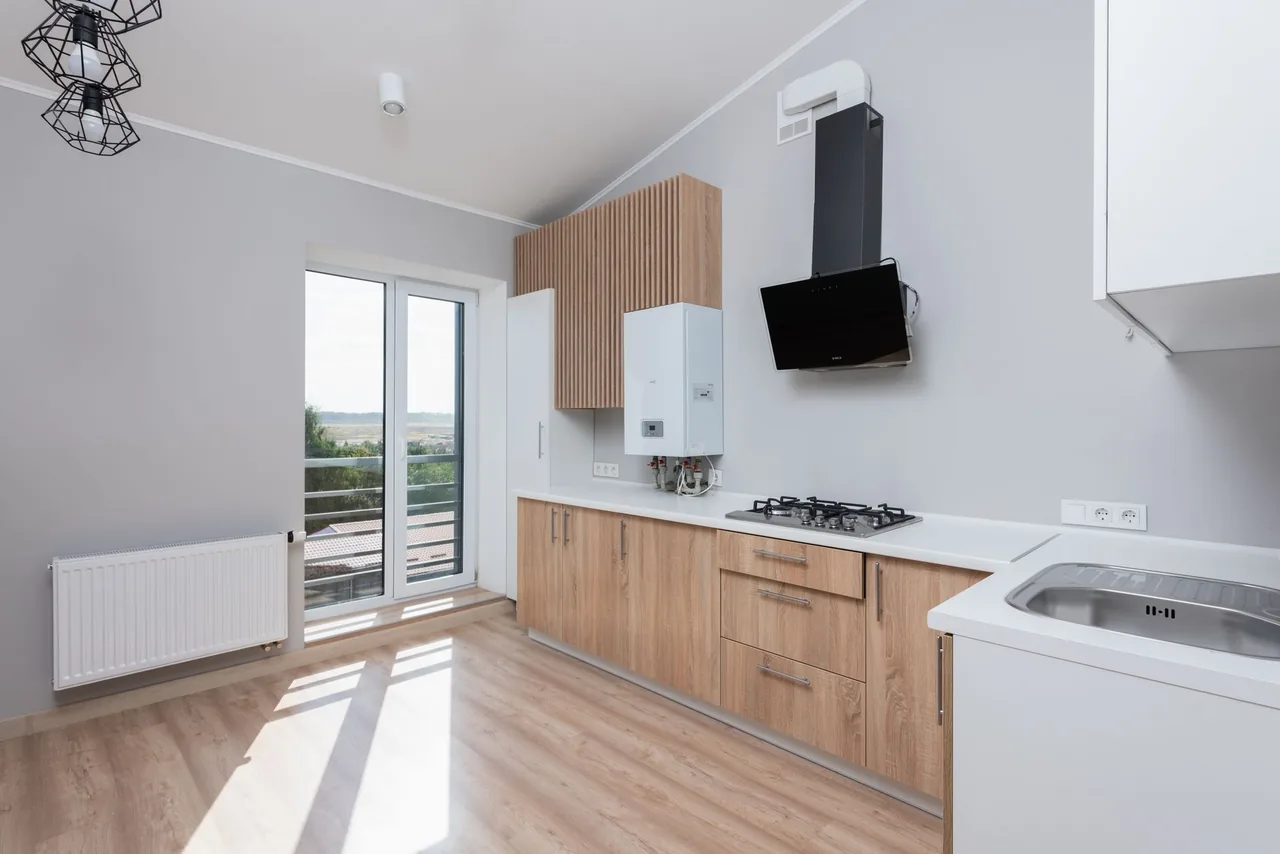
Why Solid Wood Cracks, Cups, and Opens a Line — and How the Build Stops It
Every limitation of solid wood traces to the same source: it is a hygroscopic material that swells in humid seasons and shrinks in dry ones for as long as it exists — each failure paired below with its mechanism, cause, and named prevention.
The Paint Line: A Moving Panel Under Paint
The most visible failure is a thin unfinished line at a painted panel's edge. The mechanism is movement: a five-piece Shaker panel is left floating so it can move without splitting the frame, but as it contracts it exposes wood the spray never reached. It is not a defect — it is wood obeying physics. The prevention is a stable MDF or hybrid panel that does not move, which is precisely why painted cabinetry so often uses one.
Warping and Cupping: Wood in an Unstable Climate
A door installed in a home with wild humidity swings, or near a constant moisture source, can cup or bow — especially a large flat solid-wood slab. The cause is an unstable climate acting on a material that responds to it. The prevention is a reasonably conditioned home, a veneer-over-core build on the largest doors, and acclimation before fitting so the wood is not installed mid-swing.
Joint Cracking and Racking: Under-Dried Wood or Weak Joinery
Hairline cracks at a painted frame joint, or a door that racks out of square, trace to lumber that was not dried enough or joinery that was not tight. The cause is wood still moving against forced or stapled joints. The prevention is properly kiln-dried wood at an interior EMC of about 6%–8% and mortise-and-tenon or doweled frames that hold square.
Moisture Damage: An Unsealed Wood Edge at Water
A solid-wood sink-base front exposed to repeated splashes and steam can swell, check, or lift its finish. The cause is water reaching wood the finish no longer protects. The prevention is keeping the wood sealed — refreshing the finish per the maker's guidance — and wiping spills promptly, because standing water is the enemy of any wood at joints and edges.
Common Solid-Wood Cabinet Mistakes, Consequences, and Prevention
Most disappointing solid-wood kitchens come from the same handful of shortcuts, each with a predictable consequence and a known prevention. Naming them is how you spot a corner being cut before it is buried in your kitchen.
| Mistake | What it causes | The prevention |
|---|---|---|
| Soft species in a high-use kitchen | Dents and wear marks far sooner than expected | Match Janka to traffic — maple, oak, or hickory for busy rooms |
| All-solid painted panel | A thin unfinished paint line opens at the panel edge | Use a stable MDF or hybrid panel for painted doors |
| Under-dried lumber | Cupping, splitting, and racked, out-of-square doors | Insist on kiln-dried wood at ~6%–8% EMC |
| No acclimation before fitting | Doors that stick or gap as the wood settles after install | Let the cabinetry reach equilibrium in the home first |
| Solid plank on a wide flat door | Visible cupping across the large one-piece face | Use a veneer over a stable core on large doors |
| Unsealed wood at the sink | Swollen, checked, finish-lifted sink-base fronts | Keep the finish sealed and wipe spills promptly |
| Assuming a solid-wood box | A weak particleboard case under solid-wood doors | Specify a plywood box and dovetail drawers separately |
Every row is a documented source of a solid-wood kitchen aging badly — which is why "hard species, kiln-dried, plywood box, acclimated, in writing" is the most valuable sentence in a solid-wood quote.
Choosing the Solid-Wood Build for the Room — Species and Construction Tiers
Solid-wood cabinetry spans a wide range, and the price and performance gap comes from the species, the cut, the joinery, and whether it is truly solid or a smart veneer hybrid. Knowing the tier prevents both overpaying and disappointment, and the right tier is matched to the room.
What Each Tier Actually Buys
Each tier holds the same promise of real wood but a different grade, form, and joinery, so the tier is chosen for the finish and the room.
- Paint-grade solid wood — typically maple or poplar — is chosen when the wood will be painted, so grain figure matters less than a smooth, stable, knot-free surface that holds paint. It is the value tier for real-wood doors, and where a stable MDF panel is often substituted for the center to stop a paint line.
- Stain-grade hardwoods — select maple, oak, cherry, hickory, walnut — are graded for grain consistency and color, because every flaw shows under a clear or stained finish; the cleaner the grain match across a run, the higher the tier.
- Veneer-over-engineered doors and panels use a real-wood face on a stable core, delivering authentic grain with far less movement on large doors — the right call for flat-panel and wide doors where solid lumber would risk cupping.
- Full custom solid wood sits at the top: your exact species, cut, stain, and door profile, built to the room's dimensions by a shop, with the joinery and drying quality to match.
The look can be similar across tiers, but the species, the grade, and the joinery decide how it ages. See our kitchen cabinet cost guide and the broader cost guides for how those choices move the total, and custom cabinets for built-to-size work.
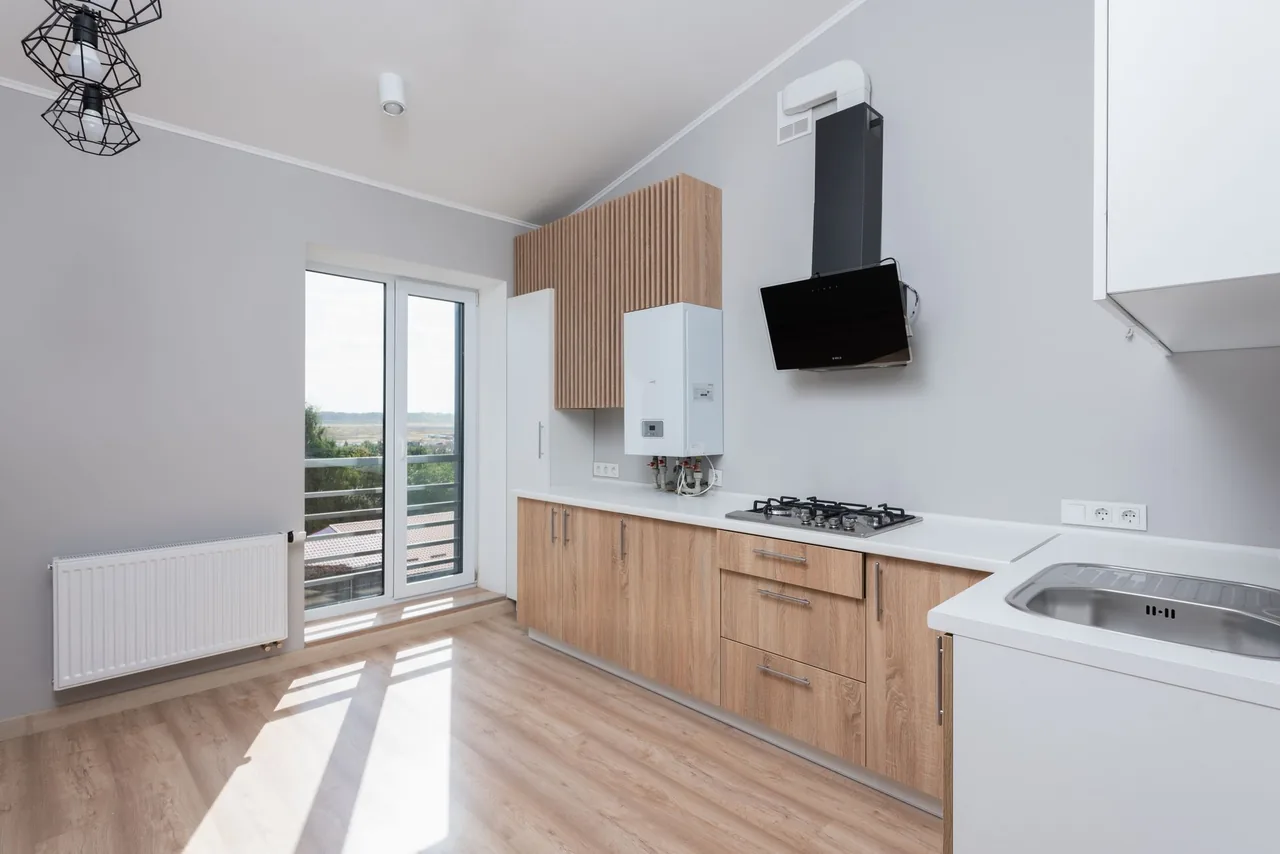
How Solid-Wood Cabinets Are Built and Installed
A solid-wood kitchen is made in two arcs — the lumber is milled and joined into doors, then the run is hung — and each step exists to protect a specific outcome. The six steps below run from drying the lumber to dialing the reveals, and a solid-wood kitchen that stays tight is earned at both ends.
Dry the Lumber and Select the Species
Boards are kiln-dried to an interior EMC of about 6%–8% and the species is chosen for the room's traffic by its Janka rating. Under-dried wood is what later cups and splits, so this is where a lasting solid-wood door actually begins — long before the grain is visible.
Mill and Joint the Frames and Panels
The rails, stiles, and panels are milled square and joined with mortise-and-tenon or doweled joints; drawer boxes are dovetailed. On a five-piece door the panel is sized to float about 1/16" per side so it can move, because a panel pinned tight is a panel that cracks the frame.
Sand, Stain or Prime, and Finish
The wood is sanded smooth and finished — stained and clear-coated to show grain, or primed and painted on a hybrid where a stable panel prevents a paint line. The finish also seals the wood against moisture, which is why a fully finished edge matters at the sink.
Acclimate, Then Hang and Level the Boxes
The cabinetry acclimates in the conditioned home to reach equilibrium with its real humidity, then boxes are hung off a level line, shimmed plumb, and screwed into studs — where solid wood's screw-holding strength bites firmly. Fitting wood while still swollen or shrunken from transport is what makes doors stick or gap a season later.
Leave the Wood Free to Move
The installer leaves floating panels free and avoids over-tightening anything that fights seasonal expansion, because a solid-wood door pinched so it cannot move is a door that cracks or warps. On stained runs, grain and color are matched across adjacent doors so the kitchen reads as one.
Hang Doors and Dial In the Reveals
The doors go on last and the six-way soft-close hinges are tuned for even reveals — adjustability that matters on a material that settles, so the gaps stay even as the wood finds equilibrium in its first seasons.
Skip or rush any one of these six and the failure it prevents shows up later — a cracked joint, a cupped door, or a stuck drawer. If your boxes are already sound and you want new solid-wood doors, a reface can fit them over existing cases instead of a full installation.
Talk through your project — free.
A free consultation and a written, itemized quote from a vetted installer. No pressure, no obligation.
What Actually Drives the Cost of a Solid-Wood Kitchen
A solid-wood quote is not a flat per-door rate; the headline number a low bid leads with hides the items below, ranked by how much they move the total.
The Cost Drivers That Move the Total Most
- Species and grade. The baseline: a paint-grade maple, a stain-grade walnut, or a figured hardwood carry very different lumber costs, and the cleaner the grain match across a run, the higher the grade and price.
- Solid lumber vs. veneer. True solid lumber on every door costs more than a smart veneer-over-core on the large flat fronts; the build mix swings the total and the longevity together.
- Joinery and drying quality. Mortise-and-tenon frames, dovetail drawers, and properly kiln-dried wood cost more than stapled joints and rushed lumber — and are what keep the kitchen from cracking, so they are worth the line.
- Box construction. A plywood box with dovetail drawers costs more than particleboard but is the case that carries the cabinet for its life; specifying it whole-kitchen versus wet runs is a real item.
- Finish system. A furniture-grade stain or a sprayed, cured painted finish on a hybrid costs more than a thin coat, and a quality finish is what seals the wood and keeps it lasting.
- Hardware and interior fittings. Six-way soft-close hinges, full-extension slides, and the organizers and pull-outs you will use add up, and are cheaper specified now than retrofitted later.
- Old-cabinet removal and disposal. Tear-out is labor and haul-away is a fee, and removal can expose wall or plumbing problems that change scope — which is why it belongs in the written quote up front.
- Refacing or refinishing as the alternative. Where boxes are sound, new solid-wood doors over existing cases, or a refinish of the doors you have, cost less than full replacement; compare it in our cabinet refacing cost guide.
Because these drivers swing so widely, the only honest number comes from an on-site assessment. Compare what moves the price across the category in our cost guides, and size your own kitchen first with the cabinet cost calculator so you can read a quote critically.
Get an itemized scope, not a headline rate.
A vetted installer prices the species, the doors, the box, the joinery, and removal as separate lines — so you see the whole solid-wood job, free and with no obligation.
Solid-Wood Cabinet Glossary
The terms below recur in every solid-wood quote, spec sheet, and showroom conversation — each defined as its working meaning on an actual kitchen, so you can read a scope and judge whether it is complete.
- Janka hardness
- The pounds-force needed to embed a steel ball halfway into a wood species — the dent-resistance rating that predicts how a hardwood survives a busy kitchen. Hickory 1820 lbf, walnut 1010 lbf.
- Hygroscopic
- The property of wood to absorb and release moisture with the surrounding air, swelling in humid seasons and shrinking in dry ones — the source of every movement-related cabinet failure.
- EMC
- Equilibrium moisture content — the moisture level wood reaches in balance with its environment. Cabinet lumber is kiln-dried to an interior EMC of roughly 6%–8% so it has stopped moving enough to build.
- Stain-grade
- Lumber graded for clean, consistent grain and color because every flaw shows under a clear or stained finish — the higher, costlier tier for natural-wood doors.
- Paint-grade
- Lumber (often maple or poplar) chosen for a smooth, stable, knot-free surface to hold paint, where grain figure matters less because it will be covered.
- Veneer
- A thin real-wood face bonded to a stable engineered core — genuine grain with far less movement than a solid plank, ideal for large flat doors, though only the surface can be refinished.
- Mortise-and-tenon
- A strong frame joint where a tongue (tenon) fits a slot (mortise) — used in quality solid-wood doors to resist racking over decades.
- Dovetail drawer
- A drawer box joined with interlocking wedge-shaped pins — the durable, premium drawer joint that outlasts stapled butt joints under daily use.
- Floating panel
- A center panel left loose in its groove — about 1/16" clearance per side — so solid wood can expand and contract without splitting the frame.
- Acclimation
- Letting cabinetry sit in the conditioned home until its moisture content reaches equilibrium with the real humidity, so it stops moving after it is installed.
- Hybrid door
- A deliberate pairing of a solid-wood frame (for screw strength) with a stable MDF panel (for a flawless paint finish) — a quality choice, not a compromise.
- Plywood box
- A cabinet case built of plywood rather than particleboard — it holds screws and resists moisture far better. "Solid wood" usually describes the doors, so the box is a separate spec.
Standards, Warranty Conditions, and When a Permit Applies
A cabinet warranty is a contract with conditions, and most claims on real wood turn on how it was dried, built, and kept rather than on the species itself.
Warranty Conditions That Hinge on the Build
The conditions are specific: the species and form as specified, properly dried lumber, a sealed finish maintained, and installation that lets the wood move. A shop that ships under-dried lumber, substitutes a softer species, or fits cabinetry before it acclimates has set up the failure a warranty then disputes. Ask in writing that the species, the solid-or-veneer build, the box, and the finish match the quote — that document is what a claim is judged against, and one more reason the cheapest solid-wood quote is rarely the cheapest kitchen.
The Standards That Set the Bar
Reputable cabinetry is built and tested to recognized standards for construction, finish durability, and hardware cycle life — the kind of certification serious makers carry. A solid-wood kitchen built to those holds its square and its finish; one built to a price often cracks. Hardware, too, is rated for a published number of open-close cycles, which is why naming the hinge and slide brand matters.
When a Cabinet Permit Is Required
Permits enter when the work goes beyond hanging cabinets. Swapping doors or replacing cabinets like-for-like usually does not require one, but moving plumbing or electrical for a new layout, or work tied to a larger renovation, often does. A reputable installer tells you when a permit applies rather than working around it — and structural or plumbing changes belong with the right trade before the cabinets go in. When only the finish is tired, the better path may be refinishing or a repaint — the very advantage real wood holds — rather than a full replacement.
A Real Solid-Wood Cabinet Decision
One representative scenario shows how species and movement drive the call: the homeowner wanted real wood, and the species and construction did the deciding.
How to Vet a Solid-Wood Cabinet Installer
Most disappointing solid-wood kitchens are spec-and-build failures, so the installer and the shop behind the quote matter more than the species on the door. These questions separate a crew that builds real wood to last from one that simply sells grain.
- They match species to the room by Janka
- Ask which species they recommend and why. A real answer ties a harder species — maple, oak, hickory — to a busy kitchen and names dent resistance, rather than choosing on color alone.
- They name solid lumber vs. veneer, part by part
- Ask whether each door is true solid wood or veneer over a core, and why. A credible installer uses veneer on large flat doors to stop cupping and solid where you may re-sand — and says which is which.
- They speak to drying and joinery
- Ask how the lumber is dried and how the frames and drawers are joined. A pro names a kiln-dried EMC around 6%–8% and mortise-and-tenon or dovetail joints — a sign they understand what cracks wood.
- They acclimate and fit the wood to move
- Ask whether the cabinetry acclimates before fitting and how they leave panels free. A credible answer explains acclimation and not over-tightening a moving panel, because pinched wood cracks.
- They specify the box, not just the doors
- Ask what the case and drawers are, separately from "solid wood." A real installer specifies a plywood box and dovetail drawers where it matters rather than letting "solid wood" imply a solid-wood case.
- They put the spec and a workmanship warranty in writing
- Ask for the species, form, box, finish, hardware, timeline, and labor warranty in writing before work starts. A crew willing to name a workmanship guarantee — and to return if a joint cracks or a door cups — is accountable for the build, not just the wood the maker covers.
Why Route Your Solid-Wood Project Through Pro Work Home Surface
Pro Work Home Surface is not a cabinet shop and does not build or hang your cabinets — we are a national authority on home surfaces that matches homeowners with vetted local installers and holds them to a published bar.
- A free consultation and an itemized written scope
- Every connection starts with a no-obligation consult and a written quote that names the species, the solid-or-veneer build, the box, and the finish separately — so "solid wood" is a defined spec, not a vague claim.
- A real vetting standard, applied before we connect you
- Installers are screened on what decides a solid-wood kitchen's life: whether they match species to traffic by Janka, dry and join the wood properly, acclimate it, and specify a plywood box where moisture matters.
- Built to be refinished, not discarded
- Hardware and joinery are specified so the cabinets can be sanded, re-stained, or repainted years later — honoring the one advantage real wood holds over every engineered alternative.
- National coverage, local crews
- We match you with installers in your area nationwide, so the standard is consistent even though the crew is local — whether your project is a single vanity or a whole kitchen.
Cabinets are one of eight categories we cover across home surfaces. If your project also touches new countertops, a door reface, a repaint, a refinish, or a simple repair, the same standards apply — compare what moves the price in our cost guides, dig into the how-and-why in our learning center, read up on the major makers in our brand overviews, and start from the cabinets category hub or the full range of home surfaces.
Brands & Material Authority
Quality and construction drive long-term performance more than the label. These are widely respected names in this category:
- KraftMaid
- Merillat
- Diamond
- Wellborn
- American Woodmark
- Thomasville