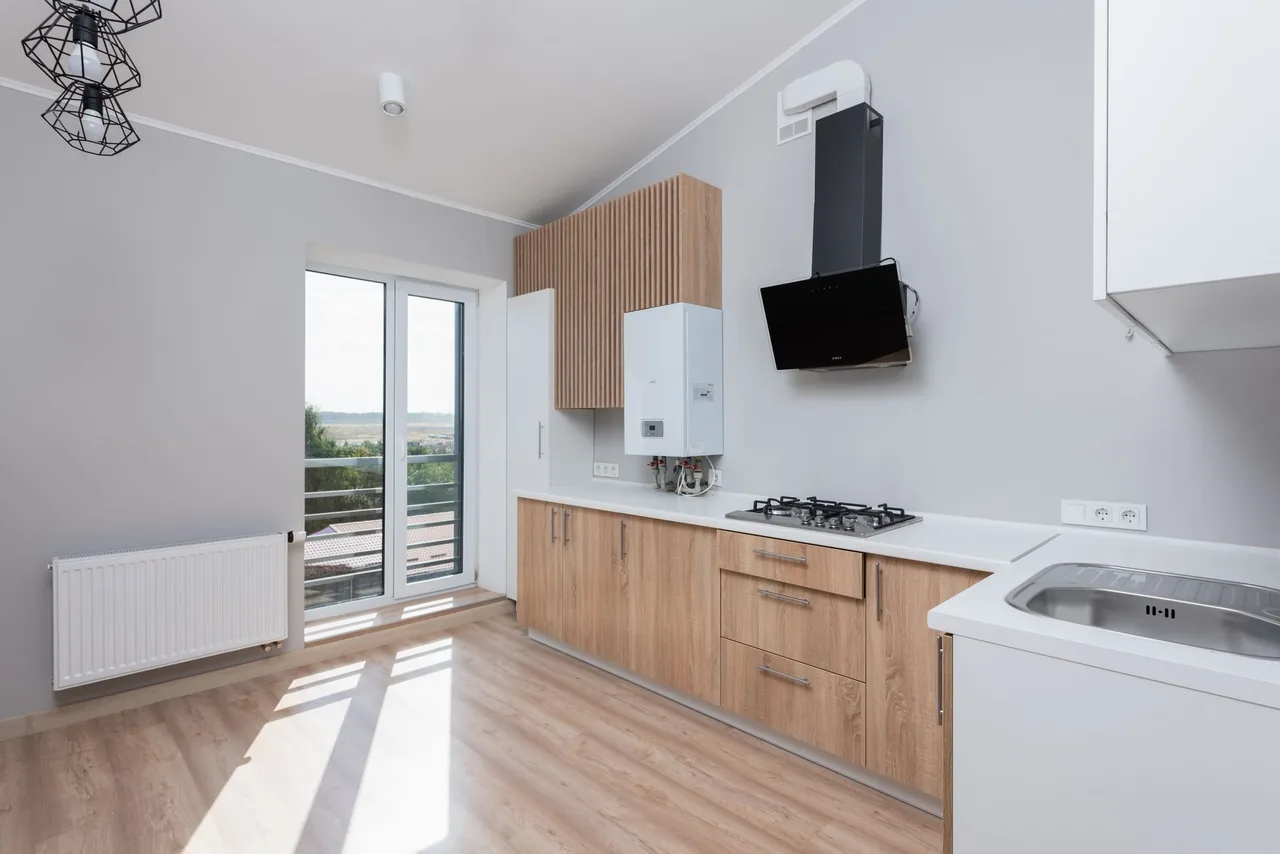
Thermofoil cabinets are made by vacuum-pressing a thin vinyl film — technically a rigid thermofoil, or RTF — over a shaped MDF core under heat, so the color wraps the door's faces and edges in one continuous, seamless skin. Two facts decide whether thermofoil is right for your space and almost nothing else does: how much sustained heat reaches the doors, because the same heat that bonded the film will lift it in service; and the grade of the film and core behind it. Within those limits thermofoil is the most seamless, easiest-to-clean, and most affordable smooth or white door you can buy — which is why where it goes in the kitchen matters as much as the door itself. Get a free consultation and a written, itemized scope from a vetted installer that names the film grade, the core, and the heat plan separately — that document is where a lasting thermofoil kitchen is decided.
Thermofoil Is a Film-Over-MDF Material Defined by Heat
The flawless wrapped face everyone wants is bought by the film, and limited by the same bond. A thermofoil kitchen still seamless in ten years and one peeling beside the oven in two differ on the heat plan and the film grade, not on the color.
Where Thermofoil Genuinely Wins
Thermofoil is built for a specific set of strengths, and within them it is hard to beat. The first is its seamless, wrapped surface: because the film is vacuum-pressed over the routed MDF and bonded around the edges, a thermofoil door has no visible joints, no seams, and no exposed edge — the color and texture flow over the whole face in one piece, with none of the brush marks, sheen variation, or chipped edges a painted door can develop. The second is cleanability, the reason it is so popular in busy kitchens and baths: the sealed vinyl surface is non-porous and smooth, so grease, grime, and fingerprints wipe off with a damp cloth and nothing soaks in — no pores, grain, or recesses to trap dirt, even on a Shaker profile pressed into the film. The third is value and consistency: because thermofoil is a film over a uniform MDF core, it delivers a flawless, factory-uniform finish at a noticeably lower cost than painted wood, with perfect color match across every door and no defects to work around.
Heat Sets the One Hard Limit
Where you want a clean, low-maintenance, affordable white or smooth kitchen — and can keep it away from heat — thermofoil wins on exactly those terms. The limits all trace to the film and its bond:
- Sustained heat from a wall oven, the side of a range, or a built-in toaster oven softens the adhesive and lifts, peels, bubbles, or yellows the film at the nearest edge.
- The film cannot be refinished — when it delaminates or dates, the door is replaced, because paint will not reliably stick to vinyl and there is no wood underneath to sand.
- A cut or gouge through the vinyl exposes the MDF core and lets water reach it at a breach near a sink.
None of those are manufacturing defects — they are the predictable behavior of a film bonded by heat, the most common reason a thermofoil kitchen disappoints the homeowner who placed it beside an oven.
The Thermofoil Fit Test: Six Checks Before You Order
Before a thermofoil kitchen is ordered, a competent installer runs the plan through the same six-check gate. Each check has a documented failure it prevents, and a spec that fails any one is not ready to build. Call it the Thermofoil Fit Test: pass all six and the seamless face has a foundation to last; fail one and you are buying a peeling, yellowed oven-side door.
- 1. Heat sources mapped first
- Thermofoil's one failure is heat delamination, so the layout is checked before the doors. Wall ovens, ranges, and built-in toaster ovens beside the cabinets mean either a heat shield and thermofoil kept off those runs — or a heat-tolerant material like painted MDF or solid wood there. The layout decision is part of the material decision.
- 2. Film grade and thickness
- The film is the whole finish, so its quality is the finish's quality. A thicker, higher-grade RTF vinyl — measured in mils — resists scuffing, yellowing, and heat better and wraps tight edges and recessed corners more cleanly than a thin film. The film grade is named, not assumed.
- 3. Single-sided vs. two-sided wrap
- A door can be wrapped on the show face only, with a laminate or melamine back, or wrapped on both sides. A two-sided wrap seals the door more completely and resists warping from one-sided stress, and is the better choice for a quality, longer-lasting door.
- 4. Core — standard vs. moisture-resistant MDF
- The film seals the core, but the core still matters if the film is ever breached. Moisture-resistant MDF under the vinyl is the safer choice for baths and sink runs, so that if water ever reaches the substrate at a cut or worn seam, it does not swell as fast.
- 5. Edge bond quality
- Edges and recessed corners are where delamination starts, so a clean, fully bonded wrap with no thin or lifted spots out of the factory is a key durability marker. Ask about the manufacturer's bond warranty — a strong one signals a film and adhesive that hold.
- 6. Box construction and hardware
- Thermofoil describes the doors; the box is a separate choice, and plywood beats particleboard for screws and moisture. Six-way-adjustable soft-close hinges keep the seamless doors aligned and let reveals be dialed in — easy here, because every door is identically flat.
Three of these six — the heat plan, the film grade, and the two-sided wrap — are the corners cut on cheap thermofoil quotes, because the right answers cost film and planning a low bid skips, yet every one is specifiable in writing. That is why the fit test is non-negotiable.
Want the heat plan settled before you order?
We match you with a vetted installer who maps the heat sources, names the film grade and core, and puts the layout plan in a written scope — before a single thermofoil door goes beside an oven.
Thermofoil Cabinet Specifications & Standards
With thermofoil, quality lives in the film, the bond, the core, and how heat is handled — from the controlling heat plan, through the film grade and wrap, to the core and the box behind it.
The Film and the Bond
The defining spec of a thermofoil door is the vinyl film, because it is the entire finish and the entire weakness at once. How it is graded and bonded sets how long the seamless face survives.
What Rigid Thermofoil Is
Rigid thermofoil (RTF) is a PVC vinyl film that is heated, drawn down over a routed MDF blank in a vacuum press, and bonded with an adhesive activated by that heat. The same process that wraps the door seamlessly is the bond that later heat in service can undo — which is why the film and adhesive grade are the first thing to ask about.
Film Thickness and Grade
The film is measured in mils, and a thicker, higher-grade vinyl resists scuffing, yellowing, and heat better and wraps tight edges and recessed corners more cleanly than a thin film. Because the film is the whole finish, its thickness and grade are the single most useful quality number on a thermofoil door — a cheap thin film is a cheap finish.
One-Sided vs. Two-Sided Wrap
A door wrapped on the show face only, with a laminate or melamine back, is the economy build; a two-sided wrap seals both faces and resists the warping that one-sided stress can cause. For a quality, longer-lasting door — especially larger doors — the two-sided wrap is the better spec, and it is worth confirming which you are getting.
Heat Management as a Specification
The most important "spec" on a thermofoil kitchen is not on the door at all — it is the layout. A heat shield or heat-deflecting strip beside wall ovens and ranges, and avoiding thermofoil directly above or beside sustained heat, is what prevents the one failure that defines the material. Treat heat planning as a line item, because it is the difference between a flawless kitchen and a peeling one.
The Core and the Box
The film seals the MDF core, but the core grade still matters at a breach — moisture-resistant board is the safer choice for baths and sink runs. And the box is a separate decision from the doors: plywood holds screws and resists moisture better than particleboard, so the case behind the seamless face is specified on its own merits.
Thermofoil Spec Snapshot — What to Confirm in Writing
The table below collects the figures a competent installer states for a thermofoil kitchen. These are representative figures — the maker's specification for your product always governs.
| Spec | What it controls | Typical value or choice | Why it matters |
|---|---|---|---|
| Heat plan | Delamination risk | Heat shield + thermofoil off oven runs | Heat is the one failure that defines the material |
| Film grade (mil) | Scuff, yellow, heat resistance | Thicker, higher-grade RTF vinyl | The film is the whole finish — its grade is the quality |
| Wrap | Sealing and warp resistance | Two-sided over single-sided | A two-sided wrap seals fully and resists warping |
| Core | Swell resistance if film breached | Moisture-resistant MDF on wet runs | The core matters if the vinyl is ever cut or worn |
| Edge bond | Where delamination starts | Clean, fully bonded wrap; bond warranty | Edges and recessed corners lift first |
| Box material | Screw-holding, moisture | Plywood over particleboard | The box is a separate spec from the doors |
| Hardware | Even reveals on flat doors | Six-way soft-close hinges | Identically flat doors make reveals easy to tune |
The lesson is that a thermofoil door's longevity is bought in the film grade and the heat plan, not in the color — a showroom door tells you the look and nothing about whether it will survive an oven. Size the project with the cabinet cost calculator first, then read each quote against this snapshot.
Thermofoil vs. the Other Cabinet Materials
Choosing thermofoil is choosing a seamless, cleanable, affordable face and accepting that it cannot take heat and cannot be refinished. The clearest way to place it is against the alternatives, because the trade is the heart of the decision.
The Thermofoil Comparison Matrix
The matrix below is the material decision — what each is, how it handles heat and refinishing, whether it can be repainted, and what drives cost, side by side.
| Material | What it is | Surface | Heat tolerance | Refinishable? | Cleanability | Main cost driver |
|---|---|---|---|---|---|---|
| Thermofoil | Vinyl film over MDF | Seamless, wrapped | Low — delaminates | No — replace | Easiest — non-porous | Film grade + heat planning |
| Painted MDF | Sprayed MDF face | Smooth, can chip | Tolerates heat | Repaint | Easy — wipe clean | Board grade + paint system |
| Solid wood | Real lumber | Real grain | Heat-tolerant | Yes — sand many times | Standard | Species + drying + joinery |
| Laminate (wood-look) | Printed laminate over board | Textured or smooth | Moderate | No — replace | Easy — wipe clean | Laminate grade + core |
Thermofoil vs. Painted MDF: The Same Core, Two Finishes
Against painted MDF, the two are close cousins — both built on an MDF core — and the choice is finish versus finish. Thermofoil is seamless, perfectly color-matched, and lower-cost, with no chips or brush marks; painted MDF can be repainted, tolerates heat, and offers unlimited color, but its paint can chip and its quality depends on the spray job. If you want the cleanest seamless white at the best price and can keep it from heat, thermofoil wins; if you want heat tolerance and the option to repaint, painted MDF does.
Thermofoil vs. Solid Wood and the Wood-Look Question
Against solid wood, thermofoil is the opposite philosophy: solid wood is heat-tolerant, repairable, and refinishable for decades but costs and weighs far more and moves with humidity; thermofoil is affordable, stable, and ultra-clean but disposable when it fails. Remember too that Shaker and flat-panel are profiles the film can be pressed into — material and style are separate choices, and thermofoil delivers a seamless version of either. For a wood look without the cost or movement of real lumber, a wood-grain thermofoil or laminate gives the appearance, though without wood's repairability. The honest framing: thermofoil is a value-and-cleanliness play with one hard rule — keep it away from heat.
Is Thermofoil Right for Your Space?
Thermofoil is a strong, sensible value choice in the right spot — and the wrong choice next to an oven. Walk the chain in order; each branch points to where thermofoil fits, or away from it, rather than just to the look.
- Map the heat sources before anything else. If wall ovens, ranges, or built-in toaster ovens sit beside the cabinets, plan heat shields and keep thermofoil off those runs — or choose a heat-tolerant material like painted MDF or solid wood there. Heat is the first and hardest fork.
- Confirm the look is seamless white or matte. Where thermofoil shines is a flawless, joint-free, wipe-clean face at a low price — especially in white and soft matte tones. If that look and that budget are the goal, and heat is managed, thermofoil is hard to beat.
- Accept that it cannot be refinished. A thermofoil door is replaced, not refinished, when it fails or dates — paint will not stick to vinyl and there is no wood to sand. If you want a face you can repaint or re-stain over the years, choose paint-grade MDF or solid wood instead.
- Specify a moisture-resistant core for wet rooms. The film seals the core, but for a bathroom, sink base, or laundry room, a moisture-resistant MDF core is the safer bet in case the vinyl is ever breached and water reaches the substrate.
- Buy a quality film on a good box for the surviving build. A thicker, better film resists scuffing and yellowing and wraps edges more cleanly, and a plywood box holds screws and resists moisture better than particleboard. The film is the finish and the box carries the cabinet — don't skimp on either.
Run honestly, this tree almost always returns a single defensible build — the right film, core, and heat plan for your room — and an installer who quotes "thermofoil" without naming those three is the red flag.
Not sure where thermofoil fits in your kitchen?
Tell us about your space and we will match a vetted installer who maps the heat, names the right film and core, and explains where thermofoil belongs and where it doesn't — in writing.
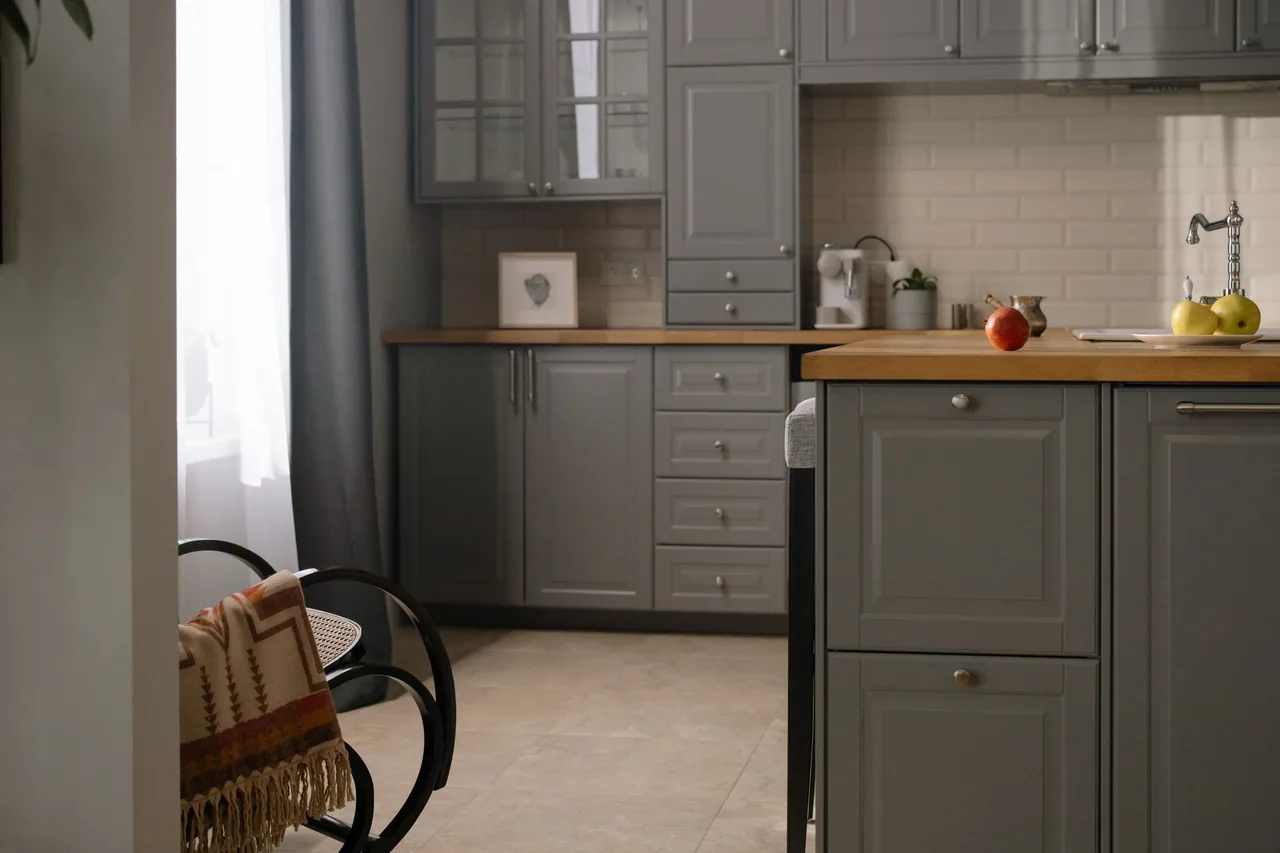
Why Thermofoil Delaminates, Yellows, and Swells — and How the Build Stops It
Every limitation of thermofoil traces to the same place: it is a plastic film bonded to a core by heat, and the bond that heat created can be undone by heat in service — each failure paired below with its mechanism, cause, and named prevention.
Heat Delamination: The Defining Failure
The signature failure is film that lifts, peels, bubbles, or yellows at the edge nearest a heat source. The mechanism is the bond reversing: sustained heat from a wall oven, the side of a range, a built-in toaster oven, or even a coffee maker venting steam upward softens the adhesive and the vinyl, and over time the film releases. The cause is a door placed beside or above sustained heat. The prevention is layout: keep thermofoil off the runs near heat, fit a heat shield beside ovens, or specify painted MDF there — the single most important fact about the material.
No Refinishing: A Film, Not a Paintable Surface
Thermofoil cannot be refinished — it is a film, not a paintable surface, so when it delaminates, peels, or the color dates, the door is replaced. The cause is the nature of vinyl: paint will not reliably stick to it, and there is no wood underneath to sand. The prevention is expectation-setting and a reface path — swapping doors over sound boxes — rather than attempting a refinish the material cannot take.
Irreparable Cuts and Gouges
A peeling film can rarely be re-adhered invisibly, and a cut or gouge through the vinyl exposes the MDF core and cannot be blended the way a scratch in wood can. The cause is impact or a careless tool on a thin film. The prevention is protecting the surface from cuts and, where damage occurs, replacing the door — because a breach is both unsightly and a path for water.
Edge Swelling at a Breached Core
As long as the film is intact it seals the core, but if the vinyl is cut, peeled, or fails at a seam near a sink, water can reach the MDF and swell it — the shared MDF weakness. The cause is moisture reaching the substrate through a breach. The prevention is a moisture-resistant core on wet runs and keeping the film intact, so the substrate stays protected even if the surface is ever nicked.
Common Thermofoil Cabinet Mistakes, Consequences, and Prevention
Most disappointing thermofoil kitchens come from the same handful of shortcuts, each with a predictable consequence and a known prevention. Naming them is how you spot a corner being cut before it is buried in your kitchen.
| Mistake | What it causes | The prevention |
|---|---|---|
| Thermofoil beside a wall oven | Film lifts, peels, and yellows at the heated edge | Shield the heat or use painted MDF on oven-adjacent runs |
| Portable heat under the doors | Toaster or kettle steam delaminates the film above it | Keep counter heat sources clear of thermofoil faces |
| Thin, low-grade film | Early scuffing, yellowing, and lifting at corners | Specify a thicker, higher-grade RTF vinyl |
| Single-sided wrap on large doors | Warping from one-sided stress over time | Choose a two-sided wrap for quality and big doors |
| Standard core in a wet room | Fast swelling if the film is ever breached near water | Use a moisture-resistant MDF core on baths and sink runs |
| Cutting or drilling the film roughly | A ragged breach that lifts and lets water in | Drill cleanly for hardware; protect the surface from gouges |
| Expecting to repaint it later | A failed refinish — paint won't stick to vinyl | Plan to replace or reface, not refinish |
Every row is a documented source of a thermofoil kitchen aging badly — which is why "heat shielded, thick film, two-sided wrap, MR core on wet runs, in writing" is the most valuable sentence in a thermofoil quote.
Choosing the Thermofoil Build for the Room — Films, Finishes, and Forms
Thermofoil looks uniform, but the price and durability differences come from the film grade, the core, and how heat is accounted for in the design. Knowing what you are buying prevents the classic heat-failure disappointment, and the right form is matched to the room.
What Each Form Actually Buys
Each form holds the same seamless promise but a different film, texture, and heat tolerance, so the form is chosen for the look and the layout.
- Standard solid-color thermofoil — especially white and off-white — is the heart of the category: the seamless, easy-clean, affordable look that makes thermofoil popular, ideal anywhere away from heat.
- Matte and textured thermofoil adds finishes that hide fingerprints and add a soft, modern feel, broadening the look beyond glossy white.
- Wood-grain thermofoil presses a printed wood texture into the film for a wood appearance at low cost and zero movement — convincing from a normal distance, though without real wood's grain depth or refinishability.
- Higher-grade and heat-resistant films, and designs with built-in heat shielding, sit at the top for durability near appliances, and are worth specifying in a kitchen with a wall oven.
Across all of these, the door can look similar; what you pay for is film quality, the core grade, and whether the design protects against heat. And because thermofoil shares a core with painted MDF, comparing the two on finish, heat tolerance, and price is the natural next step. See our kitchen cabinet cost guide and the broader cost guides for how the choices compare.
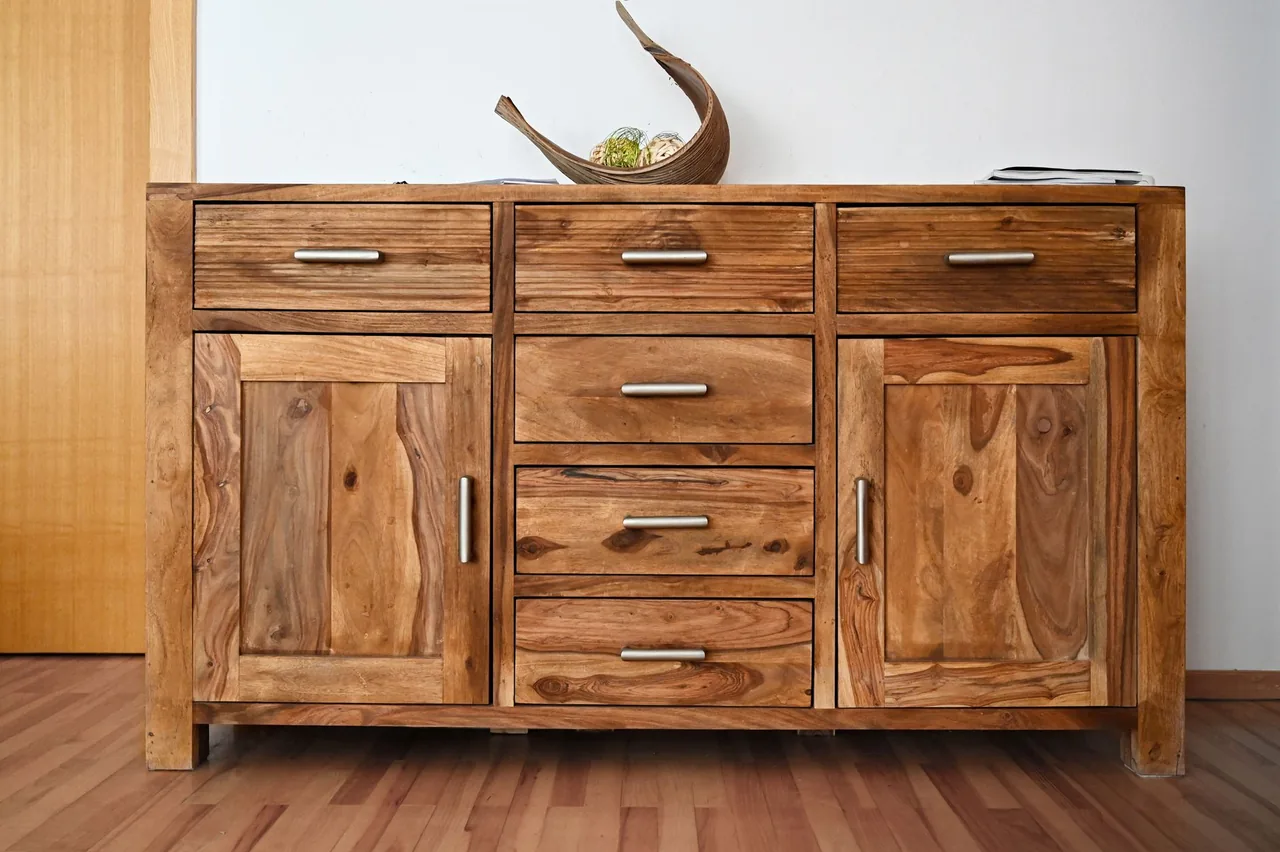
How Thermofoil Cabinets Are Made and Installed
A thermofoil kitchen is made in two arcs — the door is routed and wrapped, then the run is hung — and each step exists to protect a specific outcome. The six steps below run from machining the MDF blank to dialing the reveals, and a thermofoil kitchen that stays seamless is earned at the wrap and the heat plan.
Machine and Route the MDF Blank
The door starts as an MDF blank machined to the chosen profile — a slab or a routed Shaker face — using MDF's grain-free density to take crisp detail. On wet runs the blank is moisture-resistant board, so the core is protected if the film is ever breached.
Vacuum-Press the Vinyl Film
A rigid thermofoil (RTF) vinyl film is heated, drawn down over the blank in a vacuum press, and bonded with a heat-activated adhesive, wrapping the faces and edges in one seamless skin. A thicker, higher-grade film and a clean edge bond here are what decide how long the wrap holds.
Wrap Both Sides and Trim
For a quality door the film is applied as a two-sided wrap — both faces sealed — to resist the warping one-sided stress can cause, then trimmed clean. The seamless, perfectly color-matched face with no exposed edge is the result thermofoil is chosen for.
Plan the Heat and Hang the Boxes
Boxes are hung off a level line, shimmed plumb, and screwed into studs — and the install decision unique to thermofoil happens here: keeping doors away from the direct, sustained heat of wall ovens and ranges, and fitting a heat shield or deflecting strip on the cabinet sides flanking an oven, the single detail that prevents delamination.
Drill Cleanly and Protect the Film
Because the doors are a sealed film with no exposed edge, there is nothing to seal on site the way raw MDF needs — but any hardware hole must be drilled cleanly, since a ragged hole breaches the film. Around sinks and dishwashers, intact film seals the core, so the priority is simply not damaging the vinyl.
Hang Doors and Dial In the Reveals
The doors go on last and the six-way soft-close hinges are tuned so the seamless, uniform faces sit with even reveals — easy here, since every door is identically flat and stable, with no movement to fight.
Skip or rush any one of these six and the failure it prevents shows up later — a peeling edge, a warped door, or a breached seam. If your boxes are sound, a reface can fit new thermofoil doors over existing cases instead of a full installation.
Talk through your project — free.
A free consultation and a written, itemized quote from a vetted installer. No pressure, no obligation.
What Actually Drives the Cost of a Thermofoil Kitchen
A thermofoil quote is not a flat per-door rate; the headline number a low bid leads with hides the items below, ranked by how much they move the total.
The Cost Drivers That Move the Total Most
- Film grade and thickness. The baseline: a thicker, higher-grade RTF vinyl that resists scuffing, yellowing, and heat costs more than a thin film — and on thermofoil the film is the whole finish, so it swings quality and price together.
- Two-sided vs. single-sided wrap. A two-sided wrap costs more than a show-face-only door but seals it fully and resists warping, so it is the durability upgrade worth budgeting for, especially on large doors.
- Heat planning. Heat shields and a layout that keeps thermofoil off the oven runs — or a switch to painted MDF there — is a real line item, and the one that prevents the failure that defines the material.
- Core grade. Moisture-resistant MDF on the wet runs costs a little more than standard board and protects the core if the film is ever breached near water.
- Box construction. A plywood box costs more than particleboard but holds screws and resists moisture — the case behind the seamless face deserves its own spec.
- Finish and texture. Matte, textured, and wood-grain films and heat-resistant grades cost more than a basic solid-color gloss, broadening the look at a price.
- Old-cabinet removal and disposal. Tear-out is labor and haul-away is a fee, and removal can expose wall or plumbing problems that change scope — which is why it belongs in the written quote up front.
- Refacing as the alternative. Where boxes are sound, new thermofoil doors over existing cases cost less than full replacement; compare it in our cabinet refacing cost guide before committing to a tear-out.
Because these drivers swing so widely, the only honest number comes from an on-site assessment. Compare what moves the price across the category in our cost guides, and size your own kitchen first with the cabinet cost calculator so you can read a quote critically.
Get an itemized scope, not a headline rate.
A vetted installer prices the film grade, the wrap, the heat plan, the core, and removal as separate lines — so you see the whole thermofoil job, free and with no obligation.
Thermofoil Cabinet Glossary
The terms below recur in every thermofoil quote, spec sheet, and showroom conversation — each defined as its working meaning on an actual kitchen, so you can read a scope and judge whether it is complete.
- Thermofoil / RTF
- A rigid thermofoil door: a PVC vinyl film vacuum-pressed and heat-bonded over a routed MDF core, wrapping the faces and edges in one seamless skin.
- Vinyl film
- The thin PVC layer that is the entire finish of a thermofoil door — its grade and thickness, measured in mils, decide how the door resists scuffing, yellowing, and heat.
- Delamination
- The film lifting, peeling, bubbling, or yellowing as the heat-formed bond reverses under sustained heat — thermofoil's defining failure, and the one a heat plan prevents.
- Heat shield
- A heat-deflecting strip or barrier fitted on cabinet sides flanking a wall oven or range, added to protect thermofoil from the heat that would delaminate it.
- Two-sided wrap
- A door wrapped in film on both faces rather than show-face-only — it seals the door fully and resists the warping one-sided stress can cause.
- Vacuum press
- The machine that heats the vinyl film and draws it down tight over the MDF blank under vacuum, bonding it seamlessly to the faces and edges.
- Moisture-resistant MDF
- An MDF core made with a water-resistant resin, used under thermofoil on wet runs so the substrate resists swelling if the film is ever breached.
- Bond warranty
- The manufacturer's guarantee against the film delaminating from the core — a strong one signals a quality film and adhesive that hold.
- Edge bond
- The seal of the film around the door's edges and recessed corners — the spot where delamination starts, so a clean, fully bonded edge is a key durability marker.
- Plywood box
- A cabinet case built of plywood rather than particleboard — it holds screws and resists moisture far better. The box is a separate spec from the thermofoil doors.
- Wood-grain thermofoil
- A film printed with a wood texture, giving a wood look at low cost and zero movement — convincing from a normal distance, but without real wood's depth or refinishability.
- Six-way adjustable hinge
- A concealed hinge that adjusts in three planes, letting the installer keep the seamless thermofoil doors at even reveals. Soft-close versions ease the door shut.
Standards, Warranty Conditions, and When a Permit Applies
A cabinet warranty is a contract with conditions, and most claims on thermofoil turn on heat exposure and the film bond rather than the color.
Warranty Conditions That Hinge on the Build
The conditions are specific: the doors kept clear of sustained heat, the stated film grade and wrap, a moisture-resistant core where required, and installation that shields the oven runs. A maker's bond warranty typically excludes delamination caused by a heat source placed too close — which is precisely why heat planning is part of the build, not an afterthought. Ask in writing that the film grade, wrap, core, and heat plan match the quote — that document is what a claim is judged against, and one more reason the cheapest thermofoil quote is rarely the cheapest kitchen.
The Standards That Set the Bar
Reputable cabinetry is built and tested to recognized standards for construction, finish durability, and hardware cycle life — and thermofoil makers publish a bond warranty against delamination. A thermofoil kitchen built to those, and planned around heat, keeps its seamless face; one placed beside an oven on a thin film does not. Hardware, too, is rated for a published number of open-close cycles, which is why naming the hinge brand matters.
When a Cabinet Permit Is Required
Permits enter when the work goes beyond hanging cabinets. Swapping doors or replacing cabinets like-for-like usually does not require one, but moving plumbing or electrical for a new layout, or work tied to a larger renovation, often does. A reputable installer tells you when a permit applies rather than working around it — and structural or plumbing changes belong with the right trade before the cabinets go in. When a thermofoil face fails or dates, the path is replacement or a reface rather than a refinish the material cannot take.
A Real Thermofoil Cabinet Decision
One representative scenario shows how heat drives the call: thermofoil was the smart, affordable choice almost everywhere — and one run had to change.
How to Vet a Thermofoil Cabinet Installer
Most disappointing thermofoil kitchens are spec-and-layout failures, so the installer behind the quote matters more than the showroom door. These questions separate a crew that builds thermofoil to last from one that simply sells a wrapped face.
- They map the heat before they quote
- Ask how they handle thermofoil near the oven and range. A real answer maps the heat sources and either shields them or switches those runs to painted MDF — not thermofoil everywhere regardless of layout.
- They name the film grade and wrap
- Ask about the film thickness and whether the door is two-sided wrapped. A credible installer names a thicker, higher-grade RTF vinyl and a two-sided wrap for quality and large doors.
- They specify the core for wet rooms
- Ask what core is under the film at sinks and baths. A pro specifies moisture-resistant MDF there, so a future breach near water doesn't swell the substrate.
- They speak to the bond warranty
- Ask about the manufacturer's bond warranty and what voids it. A credible answer explains that heat too close to the doors typically voids it — a sign they understand the failure and the layout that prevents it.
- They are honest about refinishing
- Ask what happens when a thermofoil door wears or dates. A straight answer says it's replaced or refaced, not refinished, because paint won't stick to vinyl — rather than overselling its lifespan.
- They put the spec and a workmanship warranty in writing
- Ask for the film grade, wrap, core, heat plan, box, hardware, timeline, and labor warranty in writing before work starts. A crew willing to name a workmanship guarantee — and to return if a door delaminates where it shouldn't — is accountable for the build, not just the film the maker covers.
Why Route Your Thermofoil Project Through Pro Work Home Surface
Pro Work Home Surface is not a cabinet shop and does not build or hang your cabinets — we are a national authority on home surfaces that matches homeowners with vetted local installers and holds them to a published bar.
- A free consultation and an itemized written scope
- Every connection starts with a no-obligation consult and a written quote that names the film grade, the wrap, the core, and the heat plan separately — so "thermofoil" is a defined spec, not a guess.
- A real vetting standard, applied before we connect you
- Installers are screened on what decides a thermofoil kitchen's life: whether they map heat and shield the oven runs, specify a thick two-sided film, use a moisture-resistant core on wet runs, and are honest about refinishing.
- Heat designed out before it starts
- Thermofoil is kept clear of sustained heat, with shields or a heat-tolerant material specified beside wall ovens and ranges — so the one failure that defines the material, delamination, is planned against rather than discovered later.
- National coverage, local crews
- We match you with installers in your area nationwide, so the standard is consistent even though the crew is local — whether your project is a single vanity or a whole kitchen.
Cabinets are one of eight categories we cover across home surfaces. If your project also touches new countertops, a door reface, a repaint of paintable doors, a refinish of wood, or a simple repair, the same standards apply — compare what moves the price in our cost guides, dig into the how-and-why in our learning center, read up on the major makers in our brand overviews, and start from the cabinets category hub or the full range of home surfaces.
Brands & Material Authority
Quality and construction drive long-term performance more than the label. These are widely respected names in this category:
- KraftMaid
- Merillat
- Diamond
- Wellborn
- American Woodmark
- Thomasville