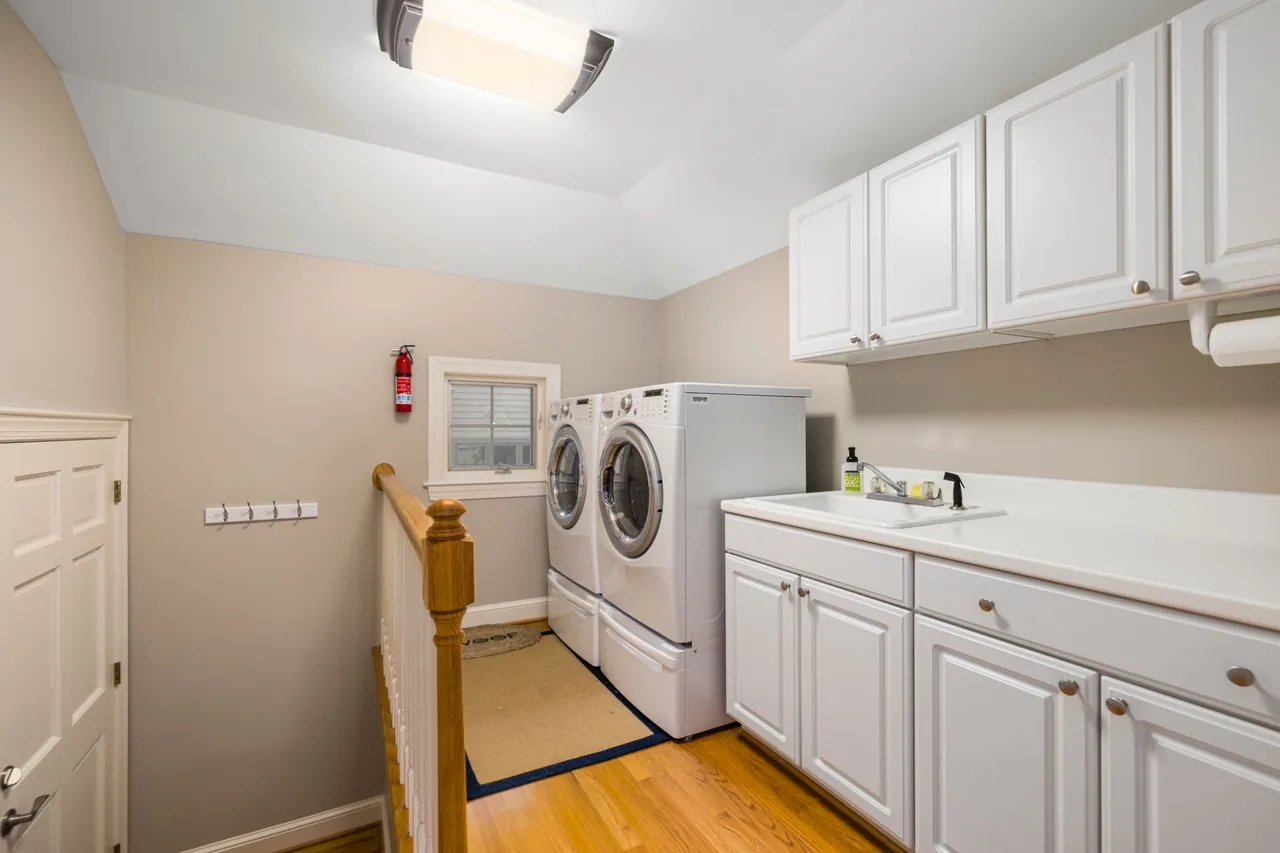
Laundry room cabinets have to be two things at once — a moisture-tolerant survivor and a hardworking utility store — which is why the decision that matters is a durable, wipeable cabinet box built around the appliances, not the prettiest door. One constraint decides everything: the combination nothing else in the house faces at once — humidity, the risk of a washer flood, appliance heat, and the load of heavy detergent and supplies. Specify a plywood box, a sealed chemical-tolerant finish, a tall utility cabinet for the mop and vacuum, and load-rated shelves, and the room earns its keep; build it from raw particleboard with unsupported shelves and the first overflow swells the run while the broom leans in a corner. Get a free consultation and a written, itemized scope from a vetted installer that names the box material, the finish durability, and the storage configuration before a single cabinet is ordered.
A Laundry Cabinet Fails Where Water, Chemicals, and Load Meet
The laundry room is the most under-planned room in the house and one of the most demanding on its cabinetry — and the demands that decide the outcome have nothing to do with style. What separates a laundry room still working in ten years from one that swelled after the first hose failure is whether the box and the finish were built for the work the room actually does.
Four Demands Stack on a Laundry Cabinet at Once
A laundry room combines pressures that usually live in separate rooms, and it applies them together. The demands stack, and a cabinet that answers only one of them disappoints:
- Humidity plus a flood risk — steam and moisture whenever the dryer vents and the washer runs, on top of the standing-water risk of a supply hose or drain that can fail and put water across the floor and into the toe-kicks before anyone notices.
- Chemical spills — bleach, detergent, and fabric softener drip and splash exactly here, attacking a porous or delicate finish a bedroom cabinet never faces.
- Heavy, concentrated load — stacked detergent jugs, bulk supplies, and cleaning gear are dense, and shelves that hold dishes fine will bow under a laundry room's weight.
- Appliance heat and clearance — the dryer and its vent throw heat, and front-loaders on pedestals, top-loader lids, and vent runs all eat the clearance a layout has to plan around.
No single build is perfect against all four, but the room rewards a fixed priority: a moisture-tolerant box first, because a swollen or flood-ruined carcass is the failure that destroys a laundry room, then a wipeable chemical-tolerant finish, then useful, load-rated storage, then the layout that fits the machines. A kitchen cabinet deals with heat and load; a bathroom vanity deals with humidity; the laundry cabinet deals with all of it and a flood risk besides — which is why it needs to be chosen for the work, not the look.
Read the Laundry Room in Priority Order, Not Door-First
Most people plan a laundry room backward — matching doors first, box material and storage last — and land a tidy-looking room where the broom has no home and the first overflow swells the run. Read the room in its real order of failure and the decision clarifies. The look matters less here than in any other room; what matters is a moisture-tolerant box, a wipeable face, and storage that actually fits the broom, the supplies, and the machines.
The Laundry Cabinet Deciders: Six Specs Before Any Door Wins
A laundry cabinet is bought on durability and function, not just looks, and six named specs predict how it will actually live in this room. Each has a documented failure attached to ignoring it, and a cabinet that fails any one is the wrong cabinet no matter how it photographs. Call it the Laundry Cabinet Fit Test: pass all six and the room earns its keep; miss one and you are buying a swollen run or a broom in the corner.
- 1. Box material for the flood risk
- The single deciding distinction. Given a washer's potential to flood the floor, a plywood carcass resists the water that swells particleboard, holds its screws, and stays square — and often survives a single flood event where particleboard disintegrates. At minimum, specify plywood for any cabinet directly above or beside the machines. This is where the budget belongs first.
- 2. Finish durability and cleanability
- This room sees bleach, detergent, and fabric softener that a delicate face will not survive. Confirm a sealed, wipe-clean, chemical-tolerant finish — a seamless thermofoil wrap, a durable laminate, or a quality painted system with sealed edges. The finish is doing protective work here, not just looking good.
- 3. Tall utility cabinet
- Specify a floor-to-near-ceiling utility cabinet sized to stand a broom, mop, and vacuum upright — the single most useful unit in a laundry room and the one most often left out. It solves the leaning-in-the-corner problem nothing else does, and it must be planned early because retrofitting one later means giving up other storage.
- 4. Shelf support and load rating
- Laundry shelves carry heavy detergent jugs and bulk supplies. Ask about shelf thickness and support — load-rated, adjustable, well-supported shelves resist the sagging that unsupported particleboard shows under dense weight. Short spans or added supports matter more here than in a room storing lighter goods.
- 5. Clearances around the appliances
- The cabinets fit the appliances, not the reverse. Confirm the wall-cabinet height clears a front-loader on a pedestal yet stays reachable, that the layout respects a top-loader's lid swing, and that the dryer vent and utility connections are planned rather than improvised. A cabinet you cannot reach or open every day is a daily failure.
- 6. Heat clearance and hardware
- The dryer and its vent throw heat, so keep a thermofoil or laminate face a safe distance from the vent — sustained heat lifts the film at the edges. Soft-close hardware keeps the doors tidy and even; where the room allows, a durable counter spanning the machines protects the cabinets below from vibration and splash.
Three of these six — the moisture-tolerant box, the chemical-tolerant finish, and the tall utility cabinet — are exactly the corners a low bid rounds off, because each costs real material and planning a cheap quote skips. That is why the fit test is non-negotiable: every check is disclosable in writing, and every one predicts a specific way the laundry room can fail or work.
Want the box, finish, and storage plan confirmed before you buy?
We match you with a vetted installer who names the carcass material, the chemical-tolerant finish, and the utility-and-appliance layout in a written scope — before you commit to a door or a price.
Laundry Cabinet Specifications That Decide the Room
The specs that gate a laundry cabinet are disclosable, checkable, and specific to the room — from the box material that survives a flood, through the chemical-tolerant finish, to the storage and clearances that make the room function.
The Box Material Is the Laundry Room's Controlling Spec
Water — chronic humidity plus a one-time flood — is the failure that ruins a laundry room, so the box material governs everything else. How it matters depends on where the water reaches.
The Cabinets Beside and Above the Machines
The cabinets directly adjacent to the washer take the brunt of a flood, and the ones over the machines take the dryer's rising humidity. This is where a plywood box earns its cost first and where particleboard dies first.
Why Plywood Survives a Hose Failure
A plywood carcass is cross-laminated veneers whose alternating grain does not wick water at a cut edge the way pressed fiber does, so when a supply hose lets go and water crosses the floor, a plywood box near the machines resists the wetting and often survives the single event. A particleboard box in the same spot wicks the water at its edges, swells, and the bottom panel or toe-kick disintegrates. The laundry's flood risk is real and specific, which is why the box choice matters even more here than in a bath.
Braided Hoses, a Drip Tray, and a Watched Toe-Kick
Because the flood is the room's signature disaster, the prevention is worth more than any finish upgrade: braided-steel supply hoses that resist bursting, a drip tray under the machines that catches a slow leak, and a habit of checking the toe-kicks and cabinet bottoms near the machines for early swelling — the first warning of a slow leak. A vetted install leaves those connections accessible so a failure is caught early rather than discovered swollen.
The Finish That Shrugs Off Chemicals
Away from the flood risk, the daily attack is chemical. Bleach splashes, detergent drips, and softener spills mark a delicate or porous face, so the finish has to be genuinely wipeable and chemical-tolerant — a seamless thermofoil wrap with no joints to enter, a durable laminate, or a quality painted system with sealed edges. Wiped promptly, those spills shed off a sealed face; left on a porous one, they etch and stain.
The Specs That Matter in a Laundry Room, and What to Look For
Before the material-by-material verdict, it helps to see each laundry-deciding spec on its own — what it decides, why it matters in this room specifically, and the feature to demand in a written scope.
| Spec | Why it matters in a laundry room | What to look for |
|---|---|---|
| Box material | A washer flood and chronic humidity attack the carcass first | Plywood at least near the machines; sealed, banded edges |
| Finish durability | Bleach, detergent, and softener mark a delicate face | A sealed, wipe-clean thermofoil, laminate, or painted system |
| Tall utility cabinet | The broom, mop, and vacuum need a home or they lean in a corner | A floor-to-near-ceiling utility cabinet, planned early |
| Shelf support | Dense detergent jugs and supplies bow an unsupported shelf | Load-rated, adjustable, well-supported shelves |
| Appliance clearance | Unreachable uppers and a blocked lid are daily failures | Height cleared for pedestals; the top-loader lid swing respected |
| Heat clearance | The dryer vent's heat lifts a film face at the edges | Thermofoil/laminate kept a safe distance from the vent |
Laundry Cabinet Fit, Rated Spec-by-Spec
The table below is the room's ranking made explicit: each candidate build against the laundry room's deciding specs and a verdict for this hardworking, splash-prone space.
| Build / material | Moisture & flood behavior | Chemical & finish behavior | Best role in a laundry room | Verdict for a laundry room |
|---|---|---|---|---|
| Plywood box (any door) | Resists humidity; survives a single flood | Substrate for any wipeable door | The carcass near the machines | Foundation — spec it first for the flood risk |
| Thermofoil door | Seamless film sheds splash; no joints to enter | Wipes clean of bleach and detergent | Faces away from the dryer vent | Best spill-shedding face; keep clear of vent heat |
| Laminate door | Durable, wipeable surface tolerates humidity | Chemical-tolerant; the utility workhorse | Hardworking utility runs | Best value for a working laundry; confirm edges |
| Painted MDF door | Damaged by standing water — door over a good box | Wipes down well; smooth, tidy finish | A tidy, finished-room look | Good for a display laundry; keep standing water off |
| Shaker door | Stable painted panel tolerates humidity | Recessed ledge needs the occasional wipe | A mudroom or on-display laundry | Timeless if the room is seen; build on plywood |
| Custom / flat-panel build | Built to fit tight, awkward rooms | Slab wipes fastest in a compact space | Small, awkward, appliance-packed rooms | Best fit — configures storage around the machines |
The look matters less here than in any other room — what matters is a moisture-tolerant box, a wipeable face, and storage that fits the broom, the supplies, and the machines. To weigh the two most laundry-friendly faces, compare a seamless thermofoil wrap against a durable painted MDF door, then size the project with the cabinet cost calculator.
The Best Laundry Room Cabinets, Ranked — and Why
The ranking follows the room's priority order: box first, then the wipeable face, then the storage that makes the room work. Every option below is matched to how a laundry room actually lives.
Plywood Box With a Wipe-Clean Finish: The Utility Foundation
The carcass should tolerate moisture and the finish should shrug off chemical spills. A plywood box resists the flood and humidity risk that destroys particleboard, and a sealed, wipeable face — whether a durable painted surface, a laminate, or a thermofoil wrap — handles the bleach and detergent this room dishes out. Function first; this is the foundation, and the look sits on top of it.
The Tall Utility Cabinet: The Storage That Makes the Room Work
A floor-to-near-ceiling utility cabinet that stands a broom, mop, and vacuum upright is the single most useful unit in a laundry room and the one most often left out. Specify it early, because it solves the leaning-in-the-corner problem nothing else does — and retrofitting one after the rest of the room is placed usually means sacrificing storage you already committed. It is worth more to the room than any door upgrade.
Thermofoil and Laminate Doors: Seamless, Chemical-Shedding Workhorses
A thermofoil door — a vinyl film vacuum-sealed over MDF — gives a continuous, easy-wipe face with no joints for water or detergent to enter, well matched to a room full of spills, provided it is kept clear of the dryer's heat and the edges stay intact. A durable laminate door is the value workhorse: chemical-tolerant, wipeable, and priced for a working utility room. Both are the practical, spill-shedding faces the laundry rewards over a delicate one.
Painted, Shaker, Custom, and Flat-Panel: For Display or a Tight Room
Where the laundry is on display or part of a mudroom, a painted MDF or Shaker face keeps it looking like a finished room rather than a utility closet — build either on a plywood box and keep standing water off the MDF. And because laundry rooms are often small and awkward, with the machines, a sink, and a window competing for one wall, a custom build configures the storage around them, and a flat-panel slab gives the easiest wipe-down in a compact space.
What to Avoid on a Laundry Room Cabinet
This room punishes a few specific shortcuts. These are the ones to refuse. A raw particleboard box given the room's flood risk is the worst — a washer failure that would merely stain a plywood box can destroy a particleboard one; if budget is tight, at least specify a fully encapsulated box and plywood for any cabinet near the machines. A delicate or porous door finish that bleach and detergent will mark is the wrong face for this room — it is not the place for an unsealed or easily-etched surface. Thermofoil or laminate immediately beside the dryer or its vent risks the film lifting from the heat over time. Wall cabinets hung so high they are unreachable over front-loaders on pedestals become a daily step-stool chore. A layout that ignores a top-loader's lid swing leaves the cabinet above unable to open. And omitting the tall utility cabinet and assuming the broom will find a home is the mistake people regret most. The rule that covers all of these: build for the flood and the chemicals first, and plan the storage around the machines.
How Laundry Room Cabinets Are Installed — the Room-Specific Sequence
A laundry install is an exercise in fitting cabinets around appliances and utilities in a usually tight space — and the clearances decide whether the finished room actually functions. The six steps below are the full arc, each aimed at the room's moisture, machines, and storage.
Plan the Layout Around the Actual Machines
The installer plans cabinet heights and openings around the specific appliances — a front-loader's pedestal height, a top-loader's lid swing, the dryer vent, and the water, drain, and electrical connections — so the finished room is reachable, openable, and serviceable. This judgment is settled in the plan, not improvised at install.
Hang the Wall Cabinets to Clear and Reach
Wall cabinets are hung off a level line, shimmed plumb, and screwed into studs through the hanging rail — at a height set deliberately above the machines so they clear the appliances yet stay reachable. Around a top-loader, the cabinet above is positioned so the lid can swing fully open; around stacked or front-load machines, the run is planned for access to the controls and doors.
Set the Tall Utility Cabinet Plumb and Secured
The floor-to-near-ceiling utility cabinet is set plumb and secured to carry the weight of what leans and stacks inside it, with the broom, mop, and vacuum in mind. It is anchored solidly because a tall loaded cabinet exerts forces a light attachment cannot hold.
Keep the Utilities Serviceable
The dryer vent, the water supply, the drain, and any electrical are accommodated and left serviceable, so a thoughtful installer keeps the connections accessible rather than boxing them in where a future leak could hide against raw material. Braided-steel hoses and a drip tray go in here.
Level and Support Any Fold Counter
A counter spanning the machines is leveled and supported independently so it does not transmit washer vibration into the cabinets, with the machines fitting beneath it and service clearance preserved. Over a top-loader, the counter is omitted because the lid needs to open upward.
Hang Doors, Tune Reveals, and Walk It
Doors and drawers go on, the soft-close hinges are dialed so reveals are even, and the installer walks the room with you to review the ventilation habit, the hose-and-drip-tray check, and how the layout is meant to be used — the utility cabinet, the supply storage, and the fold counter.
Skip or rush any one of these six — especially the appliance clearances and the utility cabinet — and the failure it was meant to prevent shows up as a blocked lid, an unreachable shelf, or a broom with no home, which is why a vetted installer treats the sequence as fixed.
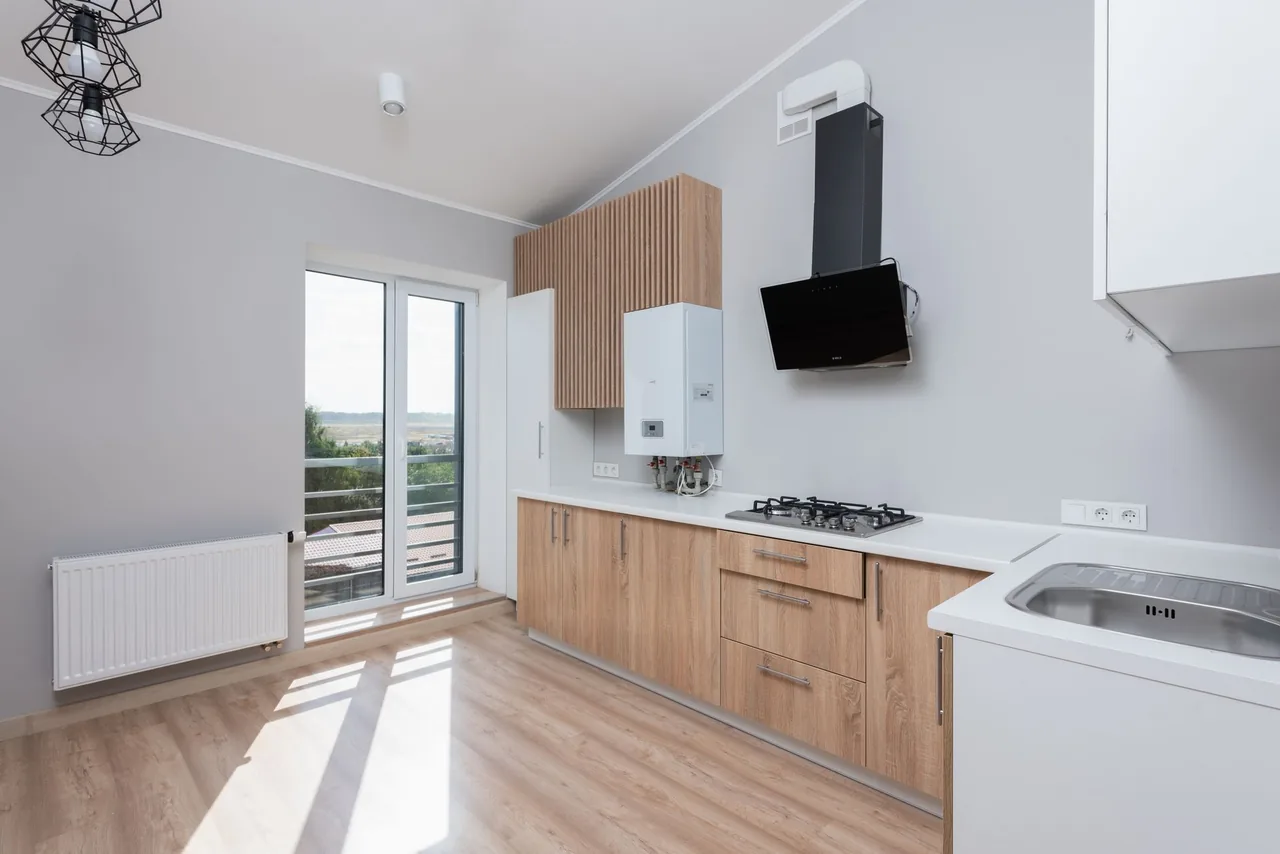
Common Laundry Room Cabinet Mistakes, Consequences, and Prevention
Most laundry-cabinet failures are the same handful of shortcuts, each with a predictable consequence and a known prevention. Naming them is how you spot a corner being cut before it is buried in a working room.
| Mistake | What it causes | The prevention |
|---|---|---|
| Raw particleboard near the machines | A washer flood swells and disintegrates the run at the base | Specify a plywood box near the machines with banded edges |
| Delicate or porous door finish | Bleach, detergent, and softener mark and degrade the face | Use a sealed, wipe-clean thermofoil, laminate, or painted system |
| No tall utility cabinet | The broom, mop, and vacuum lean in a corner with no home | Plan a floor-to-ceiling utility cabinet early in the layout |
| Unsupported shelves | Dense detergent jugs and supplies bow and sag the shelves | Spec load-rated, well-supported, adjustable shelves |
| Wall cabinets hung too high | Uppers over pedestal machines need a step stool every day | Set the height to clear the machines yet stay reachable |
| Layout ignores the lid swing | The cabinet above a top-loader cannot open with the lid | Position the wall cabinet to clear the lid swing fully |
| Thermofoil against the dryer vent | Vent heat lifts the film at the door's edges over time | Keep the film face a safe distance from the vent's heat |
Every row is a documented way a laundry room fails or frustrates daily — which is why "we spec a moisture-tolerant box, a chemical-tolerant finish, and storage fitted to your machines, in writing" is the most valuable sentence in a laundry cabinet quote.
Which Cabinets Are Right for Your Laundry Room?
The right laundry cabinet is the output of a short chain of honest answers about how your laundry room works and what it stores. Walk it in order; each branch eliminates options the room rules out, and what survives is your defensible build.
- How real is the flood risk near the machines? Every washer carries one, so a plywood box — at least beside and above the machines — is the foundation. If the room is prone to humidity or the machines are older, that box choice matters even more; fund it before a nicer door.
- How much chemical spill does the room see? A heavy-use laundry with bleach and detergent in daily rotation needs a seamless thermofoil or durable laminate face that wipes clean. A lighter-use room widens the field, but still rewards a sealed finish over a porous one.
- What has to be stored? Inventory the broom, mop, vacuum, and bulk supplies before choosing cabinets. A tall utility cabinet and load-rated shelves are non-negotiable if you own long-handled tools and stack heavy jugs — the storage decides whether the room functions.
- What do the machines demand? Front-loaders on pedestals, a top-loader's lid swing, and the dryer vent all set clearances. Plan the cabinet heights and openings around the actual appliances; where stock units fight the room, a custom build fits the storage around them.
- Is the room on display or purely utility? A mudroom-adjacent or visible laundry rewards a tidy Shaker or painted face for a finished look; a hidden utility room can prioritize a pure wipe-clean laminate. Either way, build on a plywood box.
Run honestly, this tree almost always returns a single defensible build — and an installer who recommends the same layout for every laundry room regardless of the machines and the storage is the red flag.
Not sure which build your laundry room actually needs?
Tell us your machines and what you store, and we will match a vetted installer who names the right box, finish, and storage plan for the room, in writing.
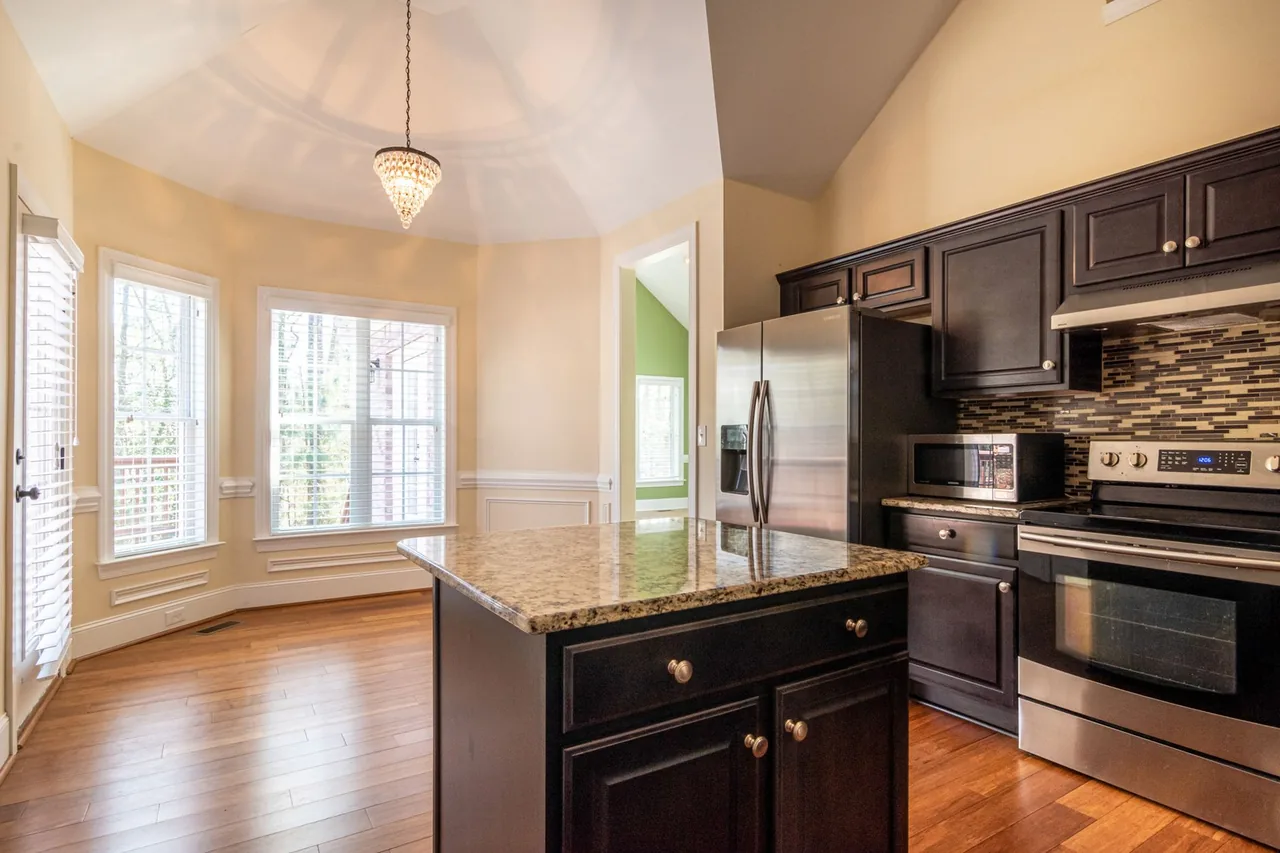
Keeping a Laundry Room's Cabinets Working
Laundry cabinets live with chemicals, lint, humidity, and a standing flood risk, so their longevity is about keeping spills wiped, the room ventilated, and the water connections watched. The upkeep is simple, but this room's hazards are real and concentrate at the machines.
Wipe up detergent, bleach, and softener spills promptly before they mark the finish, and clean the faces with a soft, damp cloth and a mild solution rather than abrasive pads. Keep the room ventilated and the dryer vent clear — humidity and lint both accumulate here, and a clogged vent drives extra moisture into the room and degrades everything in it. Watch the washer's supply hoses and connections like nowhere else: a burst hose is the laundry room's signature disaster, so inspect them periodically and keep the braided-steel hoses and drip tray in place, because the flood you prevent is the cabinet run you save. Check the toe-kicks and cabinet bottoms near the machines for any early swelling, the first warning of a slow leak. Keep heavy supplies on well-supported, load-rated shelves to prevent sagging. When the finish finally tires, a well-built laundry room with sound plywood boxes rarely needs replacing: a refinishing or repaint renews the doors over the same cases, and a lifted edge or a corroded hinge is a cabinet repair, not a tear-out.
Talk through your project — free.
A free consultation and a written, itemized quote from a vetted installer. No pressure, no obligation.
Laundry Room Cabinet Glossary
The terms below recur in every laundry-cabinet quote, spec sheet, and warranty — each defined as its working meaning on an actual laundry job, so you can read a scope and judge whether it is complete.
- Cabinet box (carcass)
- The sides, bottom, back, and shelves that carry the load and hold the cabinet on the wall — the part a flood and humidity attack first, distinct from the door.
- Plywood vs. particleboard
- Plywood is cross-laminated veneers that resist water and often survive a flood; particleboard is pressed chips that swell and disintegrate when wet. A laundry needs plywood near the machines.
- Utility cabinet
- A floor-to-near-ceiling cabinet sized to stand a broom, mop, and vacuum upright — the most useful and most-omitted unit in a laundry room.
- Laminate door
- A durable, wipeable plastic-laminate surface over a substrate — the chemical-tolerant value workhorse for a working laundry, provided the edges are banded.
- Thermofoil
- A vinyl film vacuum-sealed over an MDF door, giving a seamless, spill-shedding face with no joints for water or detergent to enter — kept clear of the dryer's heat.
- Encapsulated box
- A particleboard box fully coated and edge-banded so no raw fiber is exposed — the minimum acceptable particleboard build near a laundry's moisture.
- Toe-kick
- The recessed base beneath a floor cabinet — the low, floor-adjacent edge a washer flood soaks first, which swells if the material is not moisture-tolerant.
- Load-rated shelf
- A shelf whose thickness, material, and support are matched to a stated weight — what keeps dense detergent jugs and supplies from bowing it over time.
- Lid swing
- The upward arc a top-loading washer's lid travels when opened — the clearance a wall cabinet above the machine must respect or it cannot open.
- Fold counter
- A durable surface spanning side-by-side front-load machines that creates a folding station and protects the cabinets below — leveled and supported to isolate washer vibration.
- Braided-steel hose
- A flexible washer supply hose sheathed in braided stainless steel that resists the bursting a rubber hose is prone to — the cheapest insurance against a flood.
- Soft-close hinge
- A hinge with a built-in damper that pulls the door shut quietly and slowly, keeping a busy laundry's doors tidy and even and protecting the finish.
Standards, Warranty Conditions, and What Laundry Cabinets Must Meet
A cabinet manufacturer's warranty is a contract with conditions, and in a laundry room most denials are not about the door — they are about the box, the finish, and the room's moisture and heat.
Warranty Conditions That Hinge on the Laundry Install
The conditions are specific and disclosable: a box material rated for the environment, the finish kept within its moisture and chemical limits, cabinets anchored into structure, and film faces kept within their heat clearance from the dryer vent. An installer who sets raw particleboard near the machines or a thermofoil door against the vent has weakened your coverage before you notice. Ask in writing that the box material, the finish, and the installation follow the manufacturer's published instructions, because that document is what a laundry warranty claim is judged against.
The Certifications Behind a Quality Laundry Cabinet
Independent certification governs the rest. The KCMA ANSI/KCMA A161.1 standard tests cabinets for structural load, door and drawer cycling, and finish resistance to heat, moisture, and common household substances — exactly the stresses a laundry applies. Formaldehyde emissions from composite panels are limited under CARB Phase 2 and the federal TSCA Title VI rule. A laundry room built to these holds its warranty and its shape. When wear rather than water damage is the issue, the better path may be refinishing or a repaint over the same sound boxes.
A Real Laundry Room Cabinet Decision
One representative laundry room shows why function and the box decide everything: the door was an afterthought and the build made the room work.
How to Vet an Installer for a Laundry Room
Most laundry-cabinet failures are box, finish, and layout failures, so the installer matters more than the door on the box. These questions separate a crew that builds a laundry room to work from one that hangs matching cabinets fast.
- They spec the box for the flood risk
- Ask what the carcass is made of near the machines. A real answer specifies plywood for the flood and humidity risk beside and above the washer — not a vague "they're standard boxes" that hides raw particleboard.
- They choose a finish that survives chemicals
- Ask what finish handles bleach and detergent. A credible answer names a seamless thermofoil wrap, a durable laminate, or a sealed painted system — the wipe-clean faces this room needs, not a delicate one.
- They plan the storage, including the utility cabinet
- Ask whether the layout includes a tall utility cabinet and load-rated shelves. The answer should treat the broom, vacuum, and heavy supplies as requirements, not afterthoughts — the storage is what makes the room function.
- They fit the layout to your actual machines
- Ask how they set cabinet heights around a front-loader on a pedestal and a top-loader's lid. A real answer plans reachable uppers and a cleared lid swing around your specific appliances rather than a standard height.
- They keep the utilities and hoses serviceable
- Ask how they handle the dryer vent, the supply hoses, and the drain. The answer should keep the connections accessible and recommend braided-steel hoses and a drip tray — the details that catch a flood early.
- They put the scope and workmanship warranty in writing
- Ask for the full scope — box, finish, storage, clearances — plus a labor warranty in writing before work starts. A crew willing to name a workmanship guarantee and return if a shelf sags or a hinge corrodes is accountable for the install, not just the product.
Why Route Your Laundry Room Cabinets Through Pro Work Home Surface
Pro Work Home Surface is not a cabinet shop and does not build or hang your laundry room — we are a national authority on home surfaces that matches homeowners with vetted local installers and holds them to a published bar.
- Moisture-tolerant box for the flood risk
- Plywood versus particleboard is disclosed in writing, with a moisture-tolerant box specified near the machines, because a washer failure attacks the carcass first and the laundry's flood risk is real.
- Wipe-clean finish and useful storage
- The door finish is sealed and chemical-tolerant for a room of bleach and detergent, and the layout includes a tall utility cabinet and load-rated shelves so the broom, vacuum, and heavy supplies all have a home.
- Fitted to the actual appliances
- Cabinet heights and openings are planned around the specific machines — front-loader pedestals, top-loader lid swing, dryer vent — so the finished room is reachable, openable, and serviceable.
- National coverage, local crews
- We match you with installers in your area nationwide, so the standard is consistent even though the crew is local — whether your project is a laundry closet or a full mudroom-laundry.
Cabinets are one of eight categories we cover across home surfaces. Whether the laundry room is its own project or part of a remodel that also touches the kitchen, a bathroom, or a garage, the same standards apply — add a durable work surface from our countertops, see what drives the total in our cost guides, weigh the buying decisions in our learning center, size the job with the cabinet cost calculator, and start from the cabinets hub or the full range of home surfaces.
Brands & Material Authority
Quality and construction drive long-term performance more than the label. These are widely respected names in this category:
- KraftMaid
- Merillat
- Diamond
- Wellborn
- American Woodmark
- Thomasville