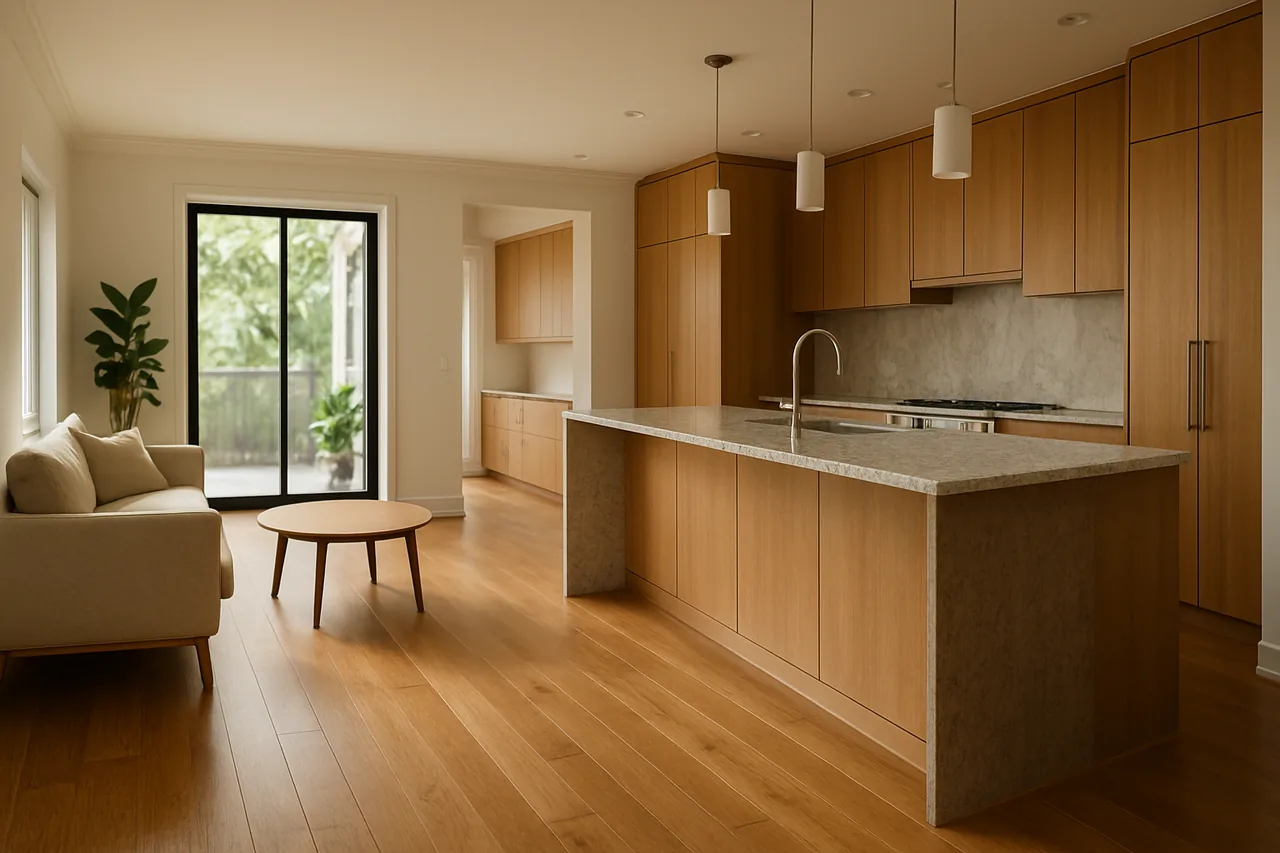
The 2026 home-surface story is a single word — warmth — expressed as a return to natural materials, tactile finishes, and choices that look organic while performing like engineered products. Across floors, counters, cabinets, and walls, the movement is away from cool gray and high gloss and toward warm-toned wide-plank wood, matte and honed surfaces, large-format and textured tile, and engineered stone that reads like the real thing, with quartzite rising as the natural-stone statement. This is a qualitative read of where design is heading, not a forecast built on invented adoption numbers — no percentages are claimed here, because the honest signal is directional, not statistical. The through-line beneath every trend is the same: homeowners want the look of nature and the maintenance of a modern material, and the surfaces winning in 2026 deliver both. Get a free consultation from a vetted installer to translate any of these directions into the right material for your room, your traffic, and your budget — because a trend only pays off when it fits the space it lands in.
The Through-Line of 2026: Warm, Natural, and Low-Maintenance
Trends are easy to list and hard to explain. What makes 2026 coherent is that nearly every surface direction serves one underlying want: a home that feels warm and natural without asking for the upkeep that natural materials traditionally demanded. Read that want first and the individual trends stop looking like a grab-bag and start looking like one idea expressed six ways.
Why the Pendulum Swung Back to Warmth
The cool-gray, high-contrast, glossy palette that dominated the prior decade has run its course, and the reaction is warmth: honeyed and mid-brown woods, greige and warm-white neutrals, earthy stone tones, and finishes that absorb light instead of bouncing it. The shift is less a rejection of minimalism than a softening of it — the same clean lines, rendered in materials that feel inviting rather than clinical. A white oak floor in a natural or lightly warmed tone captures the moment better than any single statistic could.
Performance Is the Unspoken Requirement
The quieter half of every 2026 trend is performance. Homeowners reach for the natural look but refuse to trade away the durability and low maintenance they have grown used to — which is why the winning surfaces are so often engineered to mimic nature rather than nature itself. Waterproof rigid-core vinyl that reads as wood, quartz that reads as marble, and porcelain that reads as wood all exist because the market wants the aesthetic of the organic and the resilience of the manufactured at once. Every trend below is really a negotiation between those two demands.
The Six Home-Surface Trends Defining 2026
The year's movement resolves into six readable directions, each a specific expression of the warm-natural-durable through-line. The cards below read each trend — what it is, why it is rising, and where it fits — as a design signal, not a promise about how many homes will adopt it.
Warm Wide-Plank Wood
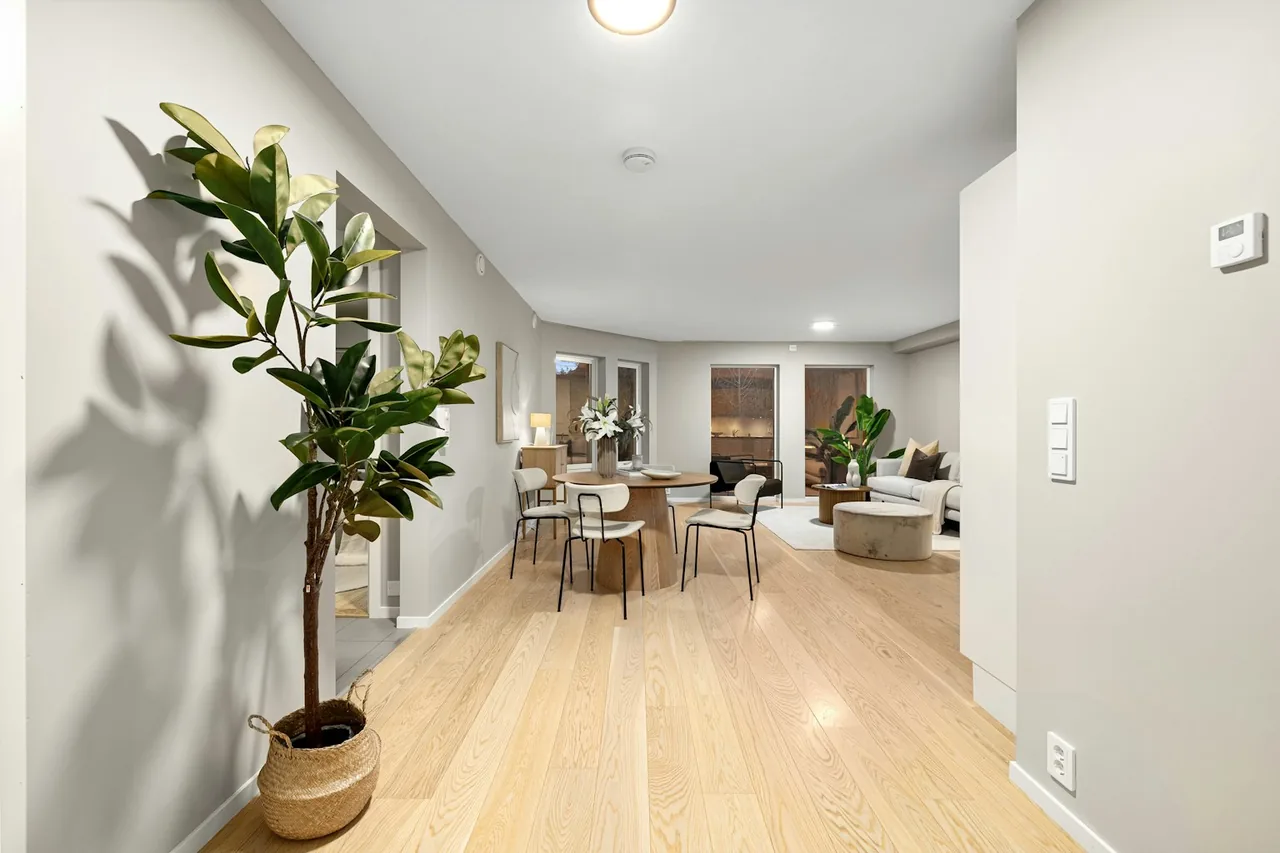
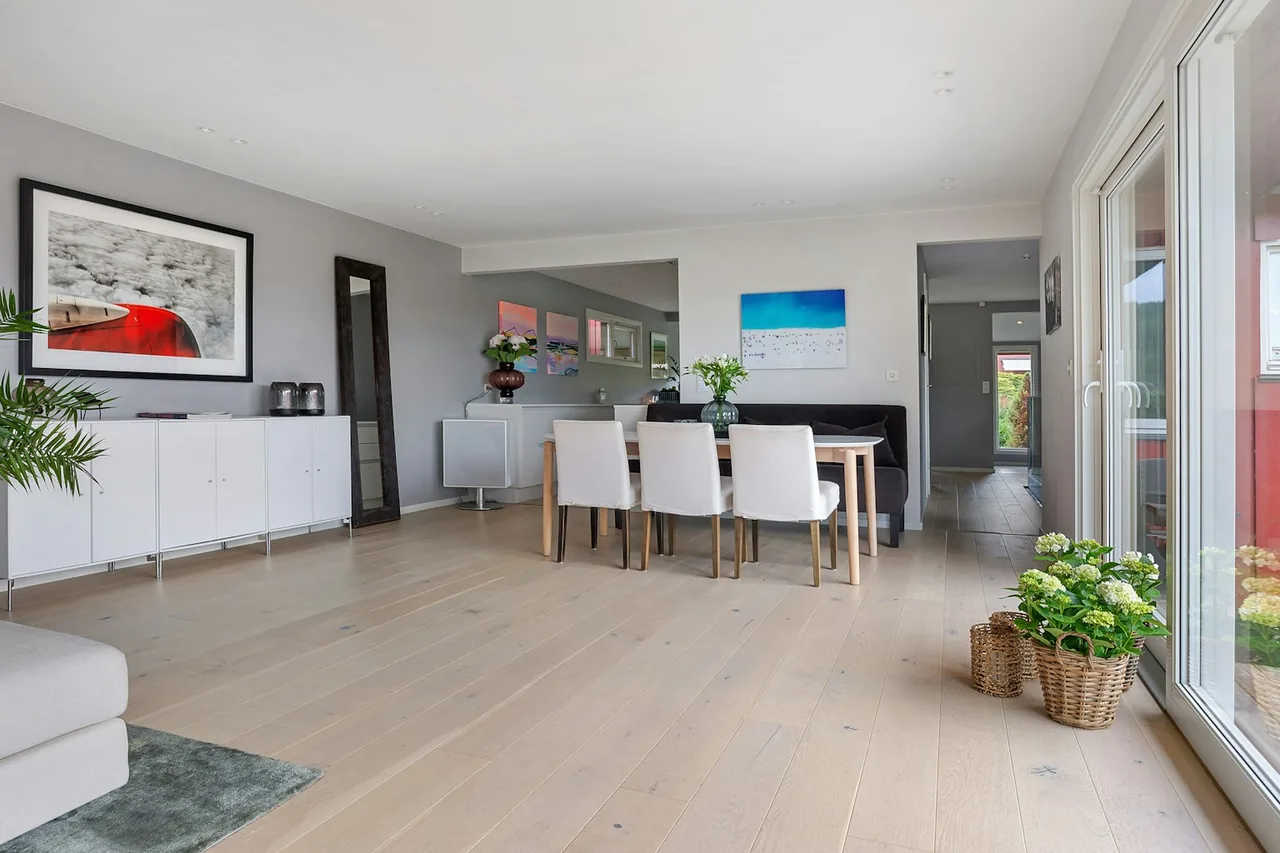
The defining floor of 2026 is a warm-toned, wide hardwood plank — often white oak in a natural or gently warmed finish, in widths that let the grain read as a continuous field rather than a busy pattern. Wide planks make a room feel larger and calmer; the warm tone answers the pendulum swing away from gray. Where real wood does not suit the room's moisture, a wide-plank wood-look porcelain or luxury vinyl plank carries the same look into wet spaces.
Matte and Honed Finishes
Gloss is receding across every surface. Floors, counters, and tile are moving to matte and honed finishes that absorb light, hide fingerprints and micro-scratches, and read as more natural and tactile than a mirror polish. A honed marble or matte quartz counter, a matte-finish wood floor, a honed stone tile — all trade shine for a softer, more forgiving surface, which is as much a performance choice as an aesthetic one.
Large-Format and Textured Tile
Tile is going big and tactile: large-format porcelain that minimizes grout lines for a cleaner, more expansive surface, alongside textured and dimensional tile that adds depth on floors and walls. Fewer grout lines mean a calmer visual field and less to clean; texture answers the appetite for the tactile. The look spans a large-format porcelain floor and a dimensional wall tile in the same home.
Natural-Look Engineered Quartz
Quartz keeps winning counters by getting better at looking like natural stone — 2026's engineered slabs render soft, realistic marble-style veining and warm, organic movement rather than the uniform speckle of a decade ago. Homeowners get the veined look of marble with quartz's non-porous, no-sealing, stain-resistant performance. The trend is the convergence of the natural aesthetic and the engineered surface in a single slab.
Quartzite and Natural Stone Rising
For those who want the real thing, quartzite is the natural-stone statement of 2026 — harder than granite, with the flowing, marble-like movement the warm palette favors, and more durable than the marble it resembles. Natural stone broadly is re-emerging as the premium counterpoint to engineered surfaces, chosen precisely because it is one-of-a-kind. Quartzite leads because it satisfies the look without marble's fragility.
Warm, Tactile Cabinets and Walls
Vertical surfaces are warming too. Cabinets are moving toward warm-stained wood and shaker or clean flat-panel doors in earthy, greige, and natural-wood tones, away from stark white. Walls are gaining texture and warmth through wood slat panels, shiplap, and stone veneer feature walls. The room is being warmed from every plane at once — floor, counter, cabinet, and wall reading as one warm, natural whole.
Read together, the six are one idea: nature's look, a manufactured product's resilience, and a warmer, quieter palette than the decade that preceded it. The homes that feel current in 2026 rarely chase a single trend — they let the through-line coordinate the surfaces so the whole space reads intentional.
The 2026 Direction, Surface by Surface
Each surface expresses the warm-natural-durable idea in its own vocabulary. The table maps the year's direction across the home, the material that carries it, and the through-line each one serves — a qualitative read, with no adoption figures implied.
| Surface | 2026 direction | Leading material | Through-line served |
|---|---|---|---|
| Flooring | Warm-toned wide planks, matte finish | White oak, rigid-core LVP | Warmth + wood look with modern durability |
| Countertops | Realistic veining, honed/matte surfaces | Natural-look quartz, quartzite | Natural aesthetic + engineered performance |
| Cabinets | Warm-stained wood, earthy neutrals | Shaker and flat-panel in warm tones | Warmth replacing stark white |
| Walls | Texture and dimensional feature walls | Wood slat, stone veneer | Tactile, natural warmth on the vertical plane |
| Tile | Large-format, fewer grout lines, texture | Large-format porcelain | Calmer field + low maintenance |
| Ceilings | Warmth overhead, wood and beams | Wood plank, coffered | The fifth surface joining the warm palette |
The pattern down the column is unmistakable: no surface is exempt from the warm-natural-durable pull, and the most current homes coordinate the direction across planes rather than treating any one surface in isolation. The table is a map of one idea moving through a whole house.
Want to bring a 2026 direction into your home?
We match you with a vetted installer who translates the trend into the right material for your room, traffic, and budget — with a written, itemized scope before anything is ordered.
The Specs Behind the Look — Why These Materials Deliver Both
A trend earns its staying power when the material behind it performs, and the reason 2026's surfaces satisfy the natural-look-and-modern-durability demand is that each carries a published spec that backs the promise. The look is the headline; the spec is why it lasts.
What Makes Wood-Look Surfaces Perform
The wood aesthetic reaches wet and high-traffic rooms only because engineered surfaces carry the look on a durable body.
Porcelain Wood-Look and Water Absorption
Wood-look porcelain puts a high-definition wood print on a porcelain body that absorbs less than 0.5% water by ASTM C373 — effectively waterproof and rated for baths, kitchens, and even outdoors. It delivers the warm wide-plank look in rooms real wood cannot enter, which is exactly why the trend can extend house-wide.
Luxury Vinyl Wear Layer and Rigid Core
Rigid-core luxury vinyl plank carries the wood look on a 100% waterproof SPC or WPC core, with durability set by its wear layer in mils — 12 mil for lighter residential use, 20 mil and up for heavy traffic and pets. That combination is the whole reason wide-plank warmth can land in a basement or a busy entry without a compromise.
Why Matte Finishes Hide Wear
The move to matte and honed is a performance choice as much as an aesthetic one. A low-sheen surface scatters light rather than reflecting it, so it disguises the fine scratches, water spots, and fingerprints a high-gloss finish showcases. On a floor, a counter, or a tile, matte simply looks better longer between deep cleanings — the trend and the practicality reinforce each other.
What Makes Natural-Look Quartz and Quartzite Perform
The counter trends rest on hardness and porosity. Quartz is roughly 90% ground quartz in resin, non-porous so it never needs sealing and resists stains and bacteria, at about 7 on the Mohs scale — the reason it can wear the veined marble look without marble's upkeep. Quartzite is natural stone also near Mohs 7, harder than granite and far more scratch-resistant than the marble (Mohs 3) it resembles, though as natural stone it does need periodic sealing. The specs are why these two, specifically, carry the natural-stone aesthetic into daily kitchen use.
The Specs That Back the 2026 Look
The table pairs each trend material with the published spec that lets it perform — documented figures, with the product's own data always governing.
| Trend material | Delivers the look of | Backing spec | Performance it buys |
|---|---|---|---|
| Wood-look porcelain | Warm wide-plank wood | <0.5% absorption (ASTM C373) | Waterproof, scratch-resistant, wet-room rated |
| Rigid-core LVP | Warm wide-plank wood | Wear layer 12–20 mil; waterproof core | Below-grade and high-traffic durability |
| White oak | The real warm-wood original | Janka ~1360 lbf (white oak) | Hard, refinishable, decades of life |
| Natural-look quartz | Marble veining | Non-porous, Mohs ~7 | No sealing, stain- and scratch-resistant |
| Quartzite | Marble, as real stone | Mohs ~7, harder than granite | One-of-a-kind slab, high scratch resistance |
| Large-format porcelain | Clean, expansive tile field | PEI IV–V; low absorption | Heavy-traffic and wet-area durability |
Every row is a look justified by a number — which is why these particular materials, and not merely the most fashionable ones, are the trends with staying power. A look without a backing spec is a fad; a look with one is a direction worth building around.
Which 2026 Trend Fits Your Space?
A trend only pays off in the right room, and the right one is the output of a short chain about the space, its conditions, and your appetite for upkeep. Walk it in order — each branch points the warm-natural-durable idea at the material that fits, not just the material that is fashionable.
- What surface are you changing? Floor, counter, cabinet, or wall — each has its own 2026 vocabulary, so start by naming the plane. This decides which trend applies before conditions narrow it further.
- What are the room's moisture and traffic? A dry, moderate room can take real wood or natural stone; a wet or high-traffic space points to the engineered version of the same look — wood-look porcelain, rigid-core LVP, or quartz. Conditions decide real-vs-engineered.
- How much maintenance will you accept? If the answer is little, the non-porous, no-seal options win — quartz over marble, porcelain over natural stone. If you will maintain it for the one-of-a-kind payoff, quartzite or real wood earns its keep.
- Warm the whole room or make one statement? A coordinated warm palette across floor, cabinet, and wall reads intentional; a single stone-veneer or wood-slat feature wall delivers the trend in one gesture. Decide the scope before you commit the budget.
- Which tier fits the budget? Every trend spans an entry-to-premium range — engineered options generally sit below their natural counterparts, and the premium buys authenticity, not necessarily performance. Size your room and read the tiers before you shop.
- Does the trend still fit in five years? The warm-natural direction is a broad, durable movement rather than a micro-fad, but the safest long-term choices lean on the timeless core — warm wood, honed stone, clean lines — over the most novel expression. Favor the through-line over the gimmick.
Run honestly, the tree lands the current look on a material your specific room can actually carry — and it steers you toward the timeless core of the trend rather than the version most likely to date.
Not sure which direction suits your room?
Tell us about your space and we will match a vetted installer who fits the 2026 look to your moisture, traffic, and budget — and explains the trade-offs in writing.
What's Fading — the Looks 2026 Leaves Behind
A trend forward is also a trend away, and reading what is receding is as useful as chasing what is rising — it keeps a renovation from landing on a look already on its way out. Three directions are fading as the warm-natural palette takes over.
Cool Gray and Stark White
The cool-gray floor and the all-white kitchen that defined the last decade are softening into warmer neutrals — greige, warm white, honeyed wood, and earthy stone. Stark white cabinets are giving way to warm-stained wood and muted, earthy tones; the gray wood floor is yielding to natural and warmed finishes. None of this vanishes overnight, but a brand-new install in cool gray now reads as of the prior moment rather than the current one.
High-Gloss Everything
Mirror-polished floors, counters, and tile are receding in favor of matte and honed surfaces that feel more natural and wear more gracefully. The high-gloss look showcased every scratch and fingerprint; the matte movement hides them, which is why the shift is sticking rather than swinging back. A high-gloss quartz or lacquered cabinet now feels dated next to its honed and matte counterparts.
Busy Patterns and Tiny Tile Fields
Narrow-plank floors, small-format tile with grout lines everywhere, and heavily patterned surfaces are giving way to the calmer, more expansive fields of wide planks and large-format tile. The appetite is for a quiet, continuous surface that makes a room feel larger, not a busy one that chops it up. Where texture returns, it comes as tactile depth on a calm field — a dimensional wall tile — rather than as visual busyness underfoot.
Common Trend Mistakes, Consequences, and Prevention
Most trend regrets are the same handful of missteps — chasing the look without the fit — each with a predictable consequence and a known prevention. Naming them is how you get the current aesthetic without the renovation you undo in three years.
| Mistake | What it causes | The prevention |
|---|---|---|
| Choosing the look, ignoring the room | Real wood or stone fails in a wet or high-traffic space | Match the spec to moisture and traffic first, then the look |
| Chasing a micro-trend, not the through-line | The novel choice dates fast; the room reads of one year | Anchor on the timeless core — warm wood, honed stone, clean lines |
| Buying natural stone without the upkeep in mind | Etching and staining on an unsealed, unmaintained surface | Accept the sealing and care, or choose non-porous quartz |
| Over-coordinating into a flat, one-note room | Every surface the same tone reads monotonous | Vary texture and depth within the warm palette, not just color |
| Assuming engineered equals inferior | Passing on the durable option that fits the room | Judge by spec — often the engineered surface outperforms |
| Trend-matching an installer can't execute | A large-format or wide-plank look installed poorly | Vet for the flatness, layout, and handling the material needs |
| Skipping the tier/budget reality | A premium natural look strains a mid-tier budget | Read the ordinal tiers and size the room before shopping |
Every row traces back to letting the look outrun the fit — which is why "match the material to the room, then apply the trend" is the rule that turns a fashionable choice into a lasting one.
What the 2026 Trends Cost — Honestly
Trend materials span the full price range, and the only honest way to talk cost without inventing numbers is in ordinal tiers and the factors that move them. What a specific project costs comes from a real quote and your own room — not a figure printed here.
Relative Cost Tiers, Not Prices
Across the 2026 palette, the engineered options generally sit at the entry-to-mid tiers and the natural counterparts at the mid-to-premium tiers: laminate and standard vinyl at entry, quality rigid-core LVP and wood-look porcelain around mid, real hardwood and quartz at mid-to-premium, and quartzite and premium natural stone at the top. The premium buys authenticity and, for stone, a one-of-a-kind slab — not necessarily better daily performance. These are relative positions, not dollar figures.
The Factors That Move Any Trend Quote
Within every tier, the same levers swing the number: material grade and thickness, the substrate prep the look demands (large-format tile and wide planks need a flatter substrate), removal and disposal of the old surface, layout complexity, and the labor a precise install of a big-format or wide material takes. A trend that needs more prep or more careful handling costs more to execute even at the same material tier — which is why the itemized scope, not the headline rate, tells you the real story.
Size It With the Real Number
Because the drivers swing so widely, the honest figure comes from an on-site quote against your room. Compare what moves the price across the category in our cost guides, read the material-specific ranges in the hardwood cost guide and quartz cost guide, and size your own space first with the flooring cost calculator or countertop cost calculator so you can read a quote critically. The calculators use the price you enter — they never invent one.
2026 Surface-Trend Glossary
The terms below recur across the year's design conversation, each defined as its working meaning for a real material choice, so you can read a trend piece and judge whether a look will actually perform in your room.
- Warm neutral (greige)
- The 2026 palette's base — a warm gray-beige, honeyed wood, and warm white that replaced the prior decade's cool gray and stark white. The color signature of the warmth trend.
- Wide-plank
- Flooring boards wider than the traditional strip, letting the grain read as a continuous, calming field and making a room feel larger. The defining floor format of 2026.
- Matte finish
- A low-sheen surface that scatters light instead of reflecting it, hiding scratches, spots, and fingerprints. The finish 2026 favors over high gloss on floors, counters, and tile.
- Honed finish
- A stone or tile surface ground smooth but not polished to a shine — a soft, matte-stone look that also hides etching better than a polished surface. Central to the counter and tile trend.
- Large-format tile
- Tile in oversized panels that minimize grout lines for a cleaner, more expansive field and less to clean. The tile direction of 2026.
- Wood-look
- A porcelain or vinyl surface printed to look like wood, delivering the warm-plank aesthetic on a waterproof, durable body in rooms real wood cannot enter.
- Engineered stone
- A manufactured surface — most often quartz — that renders a natural-stone look on a non-porous, low-maintenance body. The convergence of natural aesthetic and modern performance.
- Quartzite
- A natural metamorphic stone near Mohs 7, harder than granite with marble-like movement — 2026's natural-stone statement for those who want the real thing.
- Mohs hardness
- A 1–10 scratch-resistance scale for minerals and stone. Quartz and quartzite sit near 7; marble near 3 — the number that explains why the harder stones carry the veined look into daily use.
- Janka hardness
- The dent-resistance rating for wood in pounds-force; white oak sits near 1360 lbf. Why oak is the durable choice behind the warm-wood trend.
- Wear layer
- The clear top layer of luxury vinyl, measured in mil — 12–20 mil for heavy use — the spec that lets a wood-look vinyl carry the trend into busy rooms.
- Feature wall
- A single wall finished in a statement material — stone veneer, wood slat, or shiplap — the 2026 way to bring warmth and texture to the vertical plane in one gesture.
Get a spec-matched recommendation
Tell us your surface, room, and goals — free, independent guidance and a vetted installer, nationwide.
A Real 2026 Trend Decision
One representative scenario shows why the room, not the trend list, drives the choice: the same warm-wide-plank goal took three different materials across one open floor.
How to Vet an Installer for a Trend-Driven Project
Landing a 2026 look well is a fit-and-execution job, not a catalog order, so the installer's judgment matters as much as the material. These questions separate a crew that translates a trend into the right lasting choice from one that just installs whatever is fashionable.
- They fit the trend to the room, not the room to the trend
- An installer who recommends a material before asking about moisture and traffic is selling a look, not solving a room. A pro matches the spec to the space first, then delivers the aesthetic within it.
- They know the real-vs-engineered trade-off
- Ask when they would use real wood or stone versus the engineered version of the same look. A credible answer names the room's conditions and your maintenance appetite, not just the price.
- They can execute the format the trend demands
- Large-format tile and wide planks need a flatter substrate and careful handling. Ask how they hit the flatness tolerance and manage layout for a big or wide material — the execution is where a trend look succeeds or fails.
- They coordinate surfaces without over-matching
- A warm palette across planes should read intentional, not monotonous. A good installer or designer helps vary texture and depth within the theme rather than flattening the whole room to one tone.
- They are honest about what will date
- Ask which parts of your plan lean on the timeless core and which are the of-the-moment gamble. A pro steers the permanent, expensive surfaces toward the durable direction and saves the novelty for what is easy to change.
- They put the scope, materials, and tiers in writing
- Ask for the full scope, the specific materials, and the cost lines — prep, removal, and material separate — in writing before work starts. A crew that documents the plan and stands behind the install is accountable for the result, not just the trend they promised.
Why Route Your 2026 Surface Project Through Pro Work Home Surface
Pro Work Home Surface is not a contractor and does not install your surfaces — we are a national authority on home surfaces that matches homeowners with vetted local installers and holds them to a published bar.
- A free consultation and a trend-into-fit scope
- Every connection starts with a no-obligation consult and a written scope that translates the 2026 look you want into the right material for your room, traffic, and budget — so the trend lands on a surface that lasts.
- A real vetting standard, applied before we connect you
- Installers are screened on what decides a trend-driven project: whether they fit the material to the room, know the real-versus-engineered trade-off, and can execute the flatness and layout a wide-plank or large-format look demands.
- Brand-neutral guidance across every surface
- We cover floors, counters, cabinets, walls, and ceilings, so we recommend the right material and spec for your room first — then a suitable product line from any reputable maker, with no house brand to push.
- National coverage, local crews
- We match you with installers in your area nationwide, so the standard is consistent even though the crew is local — whether you are warming a single room or coordinating a whole-home refresh.
These trends touch every surface we cover. Whether your 2026 project is a warm floor, a honed countertop, warm-stained cabinets, a textured feature wall, or a wood ceiling, the same standards apply — choose the material in our flooring buyer's guide, compare the counter options in our quartz-vs-granite guide and marble-vs-quartz guide, read what moves the price in our cost guides, size the job with our material comparison tool, and start from the full range of home surfaces.