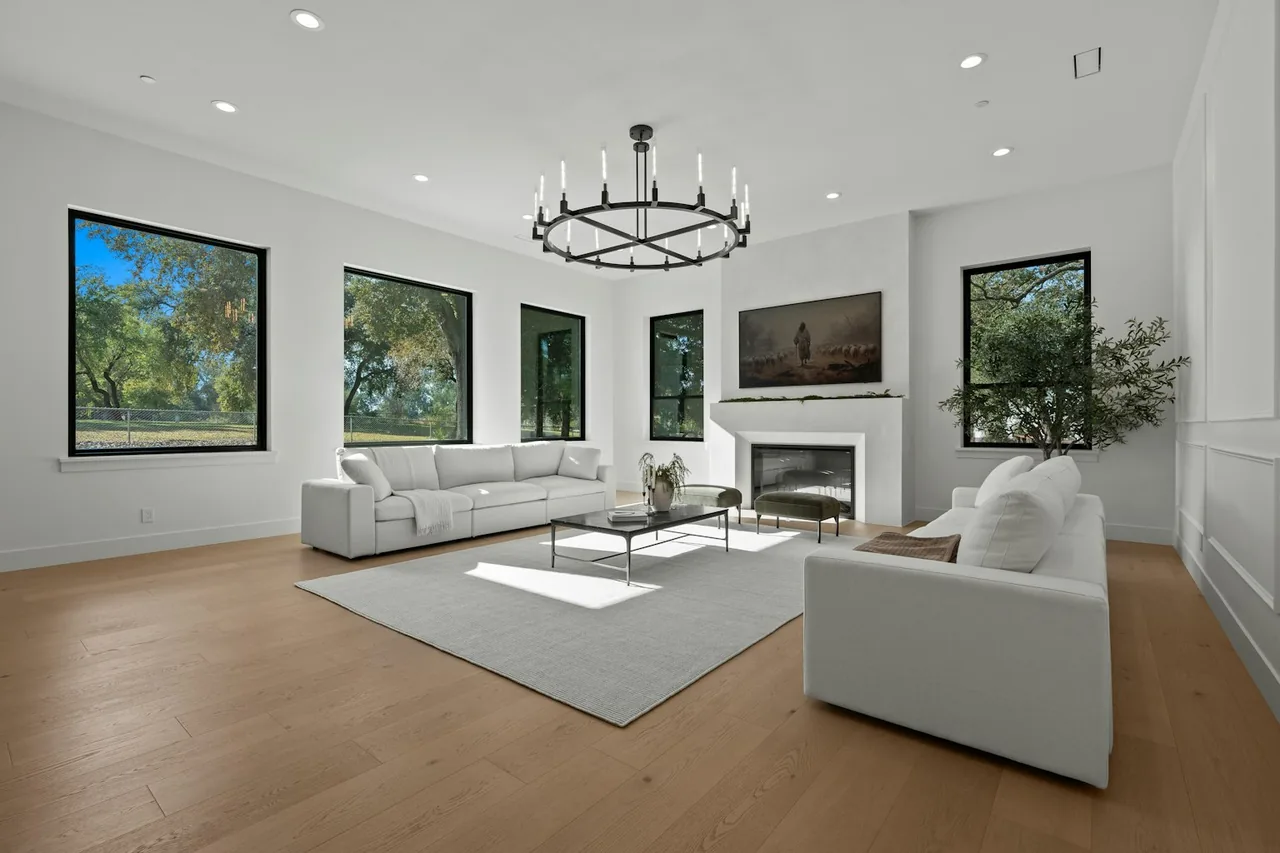
Wood-look tile is porcelain manufactured in plank format and printed to look like hardwood — the one honest way to put a wood appearance in a wet room. It is true porcelain underneath, which is its whole point: water absorption under 0.5% by ASTM C373, fully waterproof, scratch- and fade-resistant, and never needing refinishing. Its defining feature versus its sibling tiles is the plank shape and the rectified edge — precision-ground for tight grout lines that read close to real wood seams. Choose wood-look tile over real hardwood wherever water, scratches, or pets rule out wood, and over luxury vinyl plank where you want a genuinely hard surface rather than a resilient one. Get a free consultation and a written, itemized scope from a vetted installer before you buy, because the plank layout, the grout color, and the substrate are decided there, not in the showroom.
Wood-Look Tile Is Porcelain in Plank Form — Waterproof With a Wood Face
Among the tiles, wood-look is the shape-shifter: it has porcelain's body and a hardwood's face, and that combination is exactly why it exists — to take a wood look where real wood cannot survive.
A Porcelain Plank, Printed as Wood
Wood-look tile is dense, vitrified porcelain floor tile pressed into long, narrow planks — commonly 6 to 8 in. wide and 24 to 48 in. long — with a high-resolution wood-grain image fired into the surface under a hard glaze. Underneath the picture it is ordinary porcelain, so it carries every porcelain property: an absorption under 0.5%, high hardness, and full waterproofing. The wood is only skin-deep in the sense that the grain is printed, but the durability is all the way through.
The Rectified Edge and Tight Grout Lines
What makes a wood-look floor read like wood rather than tile is the rectified edge: after firing, the plank edges are mechanically ground perfectly square and uniform, so the tiles can be set with very thin grout lines that mimic the seams between wood boards. A non-rectified plank forces wider grout lines that break the wood illusion; a rectified plank, set with a matched grout color, comes remarkably close to a real board floor from standing height.
Waterproof, Scratch-Proof, and No Refinishing — Ever
The payoff for accepting a printed grain is a floor that does what wood cannot. It is fully waterproof, so it belongs in baths, laundries, and kitchens where real wood fails; it is porcelain-hard, so pet claws and grit do not scratch it the way they mar a wood finish; the printed grain does not fade or wear through under normal use; and it never needs sanding or refinishing, the recurring cost and disruption real hardwood carries. What you give up is the ability to refinish and change color later — with tile, the look is permanent.
Cold, Hard, and Grout-Lined — the Honest Trade
The trade is equally real. Like all tile, wood-look is cold and hard underfoot and loud — it will never have the warmth or give of real wood or the softness of luxury vinyl. And however tight the grout lines, they exist: a wood-look floor has grout, and real wood does not. Those two facts — the hard, cold feel and the visible grout lines — are the honest limits behind the waterproofing, and naming them is part of buying it well.
Wood-Look vs. Its Sibling Tiles — and the Wood and Vinyl It Imitates
Within the tile family, wood-look is porcelain wearing a wood face, so against its tile siblings the deciding difference is format — the plank shape and rectified edge that no other tile has. But its real competition is the hardwood and luxury vinyl it stands in for, and that is where the decision is actually made.
The Wood-Look-vs-Siblings Matrix
The matrix below rates wood-look against the other six tiles on the deciding spec each is judged by, so the format difference reads at a glance. These are representative figures; the specific tile's data sheet always governs.
| Tile | Deciding spec (format / body) | Wet / freeze rating | Look & feel | Best-fit rooms |
|---|---|---|---|---|
| Wood-look (this page) | Porcelain plank; rectified edge | Frost-proof, fully waterproof | Wood look; cold, hard, grout lines | Wood look in wet rooms, whole home |
| a porcelain floor (standard) | Square/large format; under 0.5% | Frost-proof, fully waterproof | Tile, stone, concrete looks | Wet rooms, heavy traffic, outdoors |
| Ceramic | Softer glaze; 3%–7% | Interior only, not freeze-safe | Tile look; softer body | Dry, moderate interior floors |
| Marble | Soft stone; etches | Dry rooms; acid-sensitive | Veined stone; luxury | Formal, dry, low-traffic luxury |
| Travertine | Porous stone; etches | Dry-to-moderate; porous | Rustic pitted stone | Rustic dry-to-moderate floors |
| Slate | Hard stone; cleft texture | Good; not acid-sensitive | Cleft natural stone | Entries, mudrooms, wet-ish floors |
| Mosaic | Small pieces; many joints | By material; joints grip | Tiny-tile field; grippy | Shower pans, curves, accents |
The pattern is clear: wood-look shares standard porcelain's waterproof, frost-proof body, but its plank format and rectified edge are what let it read as wood where a square porcelain reads as tile. Compare them spec-for-spec with the material comparison tool before you settle on one.
Wood-Look Tile vs. Real Hardwood
The comparison that decides most projects is against real hardwood. Wood-look tile wins outright on water and durability: it is fully waterproof where hardwood must stay out of wet rooms, it does not scratch or dent the way a wood finish does, and it never needs refinishing. Hardwood wins on authenticity, warmth, comfort underfoot, and the ability to be sanded and refinished — and, for many buyers, on resale appeal. The honest rule: choose wood-look tile where water, pets, or a no-maintenance priority rule, and real wood where warmth, comfort, and authenticity lead in a dry room. Our wood-versus-resilient comparison frames the broader trade.
Wood-Look Tile vs. Luxury Vinyl Plank and Plain Porcelain
Against luxury vinyl plank, both are waterproof wood look-alikes, but they are opposites underfoot: wood-look tile is a genuinely hard, permanent, heat-tolerant surface, while LVP is warm, soft, quiet, and far faster to install, floating over the substrate instead of being set in mortar. Choose tile for maximum hardness and a true tile floor; choose LVP for comfort, speed, and budget — our tile vs. LVP guide works it through. Against plain porcelain tile flooring, the only difference is the print and the plank shape: wood-look is porcelain that chose a wood face and a board format, so it carries every porcelain strength with a different look. Compare the whole lineup on the tile flooring hub.
Torn between wood-look tile, real wood, and LVP?
We match you with a vetted installer who weighs the room's water, comfort, and budget and recommends the honest pick — tile, hardwood, or vinyl — in a written scope, before you commit.
The Specs That Define Wood-Look Tile — Porcelain Ratings Plus Plank Realities
Four things tell you whether a wood-look tile belongs on your floor and reads convincingly, and they split into the porcelain body's ratings and the plank-specific realities. Buying on the printed grain alone, ignoring the format's setting demands, is how a wood-look floor ends up with wide grout lines and lippage that break the illusion.
Porcelain Body: Absorption, PEI, and DCOF
Under the wood print, the ratings are pure porcelain. Absorption under 0.5% by ASTM C373 makes it waterproof and frost-proof; a PEI rating of IV to V takes heavy traffic and pet claws; and for any wet area the surface should meet the DCOF ≥ 0.42 slip benchmark per ANSI A137.1 — most wood-look tile has a textured, matte face that clears it, an advantage over a polished stone or wood.
Rectified Edge and Grout-Line Width
The rectified edge is the spec that decides how much the floor reads as wood. Rectified planks set with tight grout lines and a matched grout color come close to real board seams; non-rectified planks force wider joints that read as tile. Confirm the tile is rectified and plan a grout color close to the plank tone — the grout line is the single biggest tell between a convincing wood-look floor and an obvious one.
Plank Warpage and Length
Long porcelain planks carry a subtle challenge: a slight bow or warpage along the length, inherent to firing a long, narrow tile. The longer the plank, the more any bow shows as lippage — a raised edge between adjacent planks — if they are laid end-aligned like a brick wall. This is why the offset pattern is limited and the substrate must be dead flat, and it is a plank-format reality a square tile does not have.
The Wood-Look Spec Table
The table below collects wood-look tile's ratings and plank realities, what each governs, and the threshold that matters, so the spec sheet reads at a glance. These are representative figures; the printed data sheet for your specific tile always governs.
| Spec | What it governs | Recognized standard | Wood-look figure / note |
|---|---|---|---|
| Water absorption | Waterproofing, freeze | ASTM C373 | Under 0.5% — it is porcelain |
| PEI rating | Traffic and scratch wear | PEI I–V scale | PEI IV–V for floors and pets |
| DCOF | Wet slip resistance | ANSI A137.1 | Textured face clears ≥ 0.42 |
| Rectified edge | Grout-line width, realism | Rectified vs. not | Rectified = tight, wood-like seams |
| Plank warpage / offset | Lippage risk on long planks | Manufacturer offset limit | Limit offset; flat substrate |
The pattern the table makes plain: the porcelain body gives wood-look its waterproof toughness, and the plank realities — rectified edge, grout color, and a limited offset on a flat floor — decide whether it convinces as wood. Above the tile spec sits the setting standard: TCNA (Tile Council of North America) and ANSI define the substrate, mortar, coverage, and movement joints.
Want the wood-look layout and grout matched to your room before you buy?
Tell us about your space and we will match a vetted installer who confirms the rectified edge, plans the plank offset and grout color, and puts it in writing — before you commit.
How Wood-Look Tile Is Installed
Wood-look tile is set like any porcelain, but the long plank format makes layout and flatness the whole challenge — the difference between a floor that reads as wood and one that reads as tile with lippage. The six steps below are the full arc, with the plank-specific calls — limited offset and a dead-flat bed — called out where they fall.
Substrate and Deflection Assessment
The installer confirms a substrate stiff enough not to deflect — at least an L/360 deflection limit — because a floor that bounces cracks rigid porcelain planks. A bouncy joist system is reinforced first under subfloor prep. As with all tile, the deck under it matters more than the plank.
Dead-Flat Substrate and Backer/Membrane
Long planks are unforgiving of any dip, so the substrate is brought dead flat, and over wood a cement backer board or uncoupling membrane isolates the tile from movement. Flatness is even more critical here than for square tile, because a high spot turns into visible lippage along a long plank edge.
Waterproofing the Wet Areas
Where the wood-look floor runs into a shower or wet zone, a waterproofing membrane goes behind and beneath the tile so water never reaches the substrate. The porcelain is impervious, but the grout joints are not a barrier on their own — the membrane is.
Planning the Plank Offset
Because long porcelain planks bow slightly, they are not laid end-aligned like a full brick offset; the installer follows the maker's offset limit — often a one-third stagger rather than a half — so any plank bow does not stack into lippage. This layout planning is unique to the plank format and is where a skilled installer earns the job.
Setting in Mortar With Full Coverage and Tight Joints
Planks are set in a polymer-modified or medium-bed mortar, back-buttered for full coverage, and spaced with the tight grout line a rectified edge allows, using leveling clips to fight lippage. The grout color is matched to the plank tone so the seams read as wood, not tile.
Movement Joints, Grout, and Walkthrough
Soft movement joints go at the perimeter and across large fields per TCNA detail, the joints are grouted and sealed where specified, and the installer walks the floor with you to confirm flatness, lippage, and the wood-like read. Transitions and any stair work finish the edges.
Skip the flat substrate, the correct offset, or the leveling and the failure each prevents — lippage along the planks, a broken wood illusion, a cracked tile — shows up immediately on a long-plank floor. That is why a vetted installer treats layout and flatness as the heart of the job; the broader sequence lives under flooring installation.
Talk through your project — free.
A free consultation and a written, itemized quote from a vetted installer. No pressure, no obligation.
Is Wood-Look Tile Right for Your Space?
Whether wood-look tile is the right call — over real wood, LVP, or plain porcelain — is the output of a short chain of facts about the room's water, the comfort you want, and how much the wood illusion matters. Walk the decision in order; each branch narrows the choice.
- Does the room get wet or see pets? If yes — a bathroom, laundry, mudroom, or a home with big dogs — wood-look tile is the standout: a wood appearance that is fully waterproof and scratch-proof where real wood fails.
- Do you want a hard surface or a soft one? Wood-look tile is genuinely hard, cold, and permanent; if comfort and warmth underfoot matter more, rigid-core luxury vinyl gives a waterproof wood look with give and quiet, and real hardwood gives authentic warmth in a dry room.
- How convincing must the wood look be? A rectified plank set with tight, color-matched grout lines reads close to wood; if you cannot accept any grout lines at all, real wood or LVP is the honest answer.
- Is the substrate dead flat? Long planks demand a very flat, rigid bed to avoid lippage. A wavy or bouncy floor must be corrected first, because plank porcelain is unforgiving of both.
- Do you want to change the color later? Tile is permanent — it cannot be refinished to a new tone like wood. If future refinishing matters, real hardwood is the pick. Confirm the survivors under the flooring hub.
Run honestly, this tree returns either a defensible wood-look-tile floor or a clear signal that real wood or LVP fits better — and an installer who lays long planks in a full brick offset over a wavy floor is the red flag.
Where Wood-Look Tile Wins — and Where Real Wood or LVP Beats It
Wood-look tile is the answer to one specific problem — a wood look in a wet or hard-use room — which is why naming where it wins and where it loses is the whole decision.
Where Wood-Look Tile Wins
Wood-look tile owns the rooms where real wood cannot go but a wood look is wanted: a bathroom floor, a laundry-room floor, a mudroom, a kitchen floor, a pet-friendly floor that shrugs off claws, and any whole-home run where you want one continuous wood look from a dry living room into a wet bath with no material change. Because it is porcelain, it can even run out to a covered patio or survive a freeze — something no real wood or vinyl can claim. It is also a strong waterproof flooring option where you want a hard surface rather than a resilient one.
Where Real Wood or LVP Beats It
Where wood-look tile loses is comfort and authenticity. In a bedroom or a long-occupancy living room, its cold, hard feel is a real drawback, and LVP or real wood is warmer and softer underfoot. If you want the genuine article — the warmth, the give, the ability to refinish and change color — real hardwood is the pick in a dry room. And no wood-look tile fully hides its grout lines, so a buyer who cannot accept any seams should choose wood or LVP. When a wood-look floor cracks from substrate movement, the repair reaches into the deck; see flooring repair.
Common Wood-Look Tile Mistakes, Consequences, and Prevention
Most wood-look disappointments are the same handful of shortcuts — usually around layout, flatness, or grout — each with a predictable consequence and a known prevention. Naming them is how you avoid a lippage-ridden floor that reads as tile instead of wood.
| Mistake | What it causes | The prevention |
|---|---|---|
| Full brick offset on long planks | Lippage where plank bow stacks at the mid-point | Follow the maker's offset limit — often a one-third stagger |
| Substrate not dead flat | Lippage along long plank edges you feel and see | Bring the substrate dead flat and use leveling clips |
| Wide or mismatched grout lines | The floor reads as tile, not wood | Use a rectified plank, tight joints, and matched grout color |
| Non-rectified plank for a wood look | Forced wide joints that break the illusion | Confirm the tile is rectified before buying |
| Wood-look tile over a bouncy subfloor | Cracked planks and grout as the floor flexes | Reinforce to L/360 plus backer board or membrane |
| Expecting warmth or give underfoot | Disappointment with a cold, hard floor | Choose LVP or real wood if comfort leads; add radiant heat |
| No movement joints | Straight-line cracks across the field as it expands | Soft joints at the perimeter and large fields per TCNA |
Every row is a documented cause of a lippage-ridden or unconvincing floor — which is why "we lay it to the maker's offset on a dead-flat bed with matched grout, in writing" is the most valuable sentence in a wood-look quote.
What Actually Drives the Cost of a Wood-Look Tile Floor
A wood-look quote is not a flat per-square-foot rate; the headline number a low bid leads with hides the items below, ranked by how much they move the total — and with wood-look, the flat-substrate prep and the plank-layout labor are most of the job.
The Cost Drivers That Move the Total Most
- Substrate flattening and reinforcement. The biggest swing on most jobs. Long planks demand a dead-flat, rigid bed, so grinding and self-leveling to that tolerance, plus reinforcing a bouncy structure and adding backer or membrane, is real labor a flat, sound deck avoids.
- Plank-layout labor and leveling. Setting long planks to a limited offset, back-buttering for full coverage, and using leveling clips to fight lippage is slow, skilled work beyond setting a square tile.
- Waterproofing in wet areas. A bath or wet zone needs a waterproofing membrane behind and beneath the tile — a non-optional line item the lowest bid tends to omit.
- The tile itself. Rectified, longer, higher-resolution wood-look planks cost more than a basic non-rectified tile — and the rectified plank is what makes the floor convince.
- Layout patterns. Herringbone and chevron wood-look layouts add substantial cutting, waste, and skilled hours over a straight offset run.
- Old-floor removal and disposal. Tear-out is labor, haul-away is a fee, and removal often exposes substrate problems that change scope mid-job.
- Transitions and stairs. Thresholds, bullnose or stair-nosing profiles, and any tiled stairs are exacting work priced separately from field tile.
Because these drivers swing so widely, the only honest number comes from an on-site assessment. Compare what moves the price in our tile flooring cost guide and across the cost guides, and size your own room with the tile calculator so you can read a quote critically.
Get an itemized wood-look scope, not a headline rate.
A vetted installer prices the flat-substrate prep, the plank layout, the waterproofing, and the tile as separate lines — so you see the whole job, free and with no obligation.
How to Choose and Buy Wood-Look Tile for Your Space
The right wood-look tile is the match of the porcelain rating, the rectified plank, and the layout to the room — settled before the grain pattern wins you over, because the format's realism depends on the setting and the look is the variable. Call this the Wood-Look Fit Test: run all six and the floor convinces and lasts; miss one and you get lippage or an obvious-tile read.
- Confirm it is rectified for tight grout lines
- The rectified edge is what lets the plank set with thin, wood-like seams. A non-rectified plank forces wide joints that read as tile — confirm rectified before buying.
- Buy the porcelain rating for the room
- Read the porcelain body: absorption under 0.5% for waterproofing, PEI IV–V for traffic and pets, and a textured face at DCOF ≥ 0.42 for any wet floor.
- Plan the grout color to match the plank
- A grout color close to the plank tone makes the seams disappear into the wood look; a contrasting grout announces every joint. The grout color is half the illusion.
- Insist on a dead-flat substrate and limited offset
- Long planks lippage over any dip and any bow if end-aligned; a flat bed and the maker's offset limit (often one-third) are what keep the floor smooth and convincing.
- Set comfort expectations honestly
- Wood-look tile is cold and hard. If comfort leads, choose LVP or real wood, or pair the tile with radiant heat where the cold becomes an asset.
- Order overage from one dye lot
- Buy roughly 10% more than the room — more for herringbone — from a single lot, so shade and caliber match and future repairs blend.
Settle the rectified edge, the rating, and the layout first and the grain pattern becomes a free choice instead of a gamble — which is exactly the order a credible installer walks with you.
Caring for Wood-Look Tile — Porcelain-Easy, With No Wood Worries at All
Wood-look tile is as low-maintenance as any porcelain, and it is free of every wood worry — no refinishing, no water fear, no scratch anxiety.
Day-to-day care is sweeping or vacuuming for grit and damp-mopping with a pH-neutral cleaner; unlike real wood, you can wet-mop it freely and it will never water-stain, cup, or need resealing, and unlike a wood finish the printed grain does not scratch off or fade under normal use. The only maintenance, as with all porcelain, lives in the grout: keep the lines clean and, if the grout is cement, sealed, or specify an epoxy grout up front to skip that. Because it never needs sanding or refinishing, a wood-look floor has none of the recurring cost and disruption real hardwood carries — the trade for a printed grain instead of a real one. When a plank has cracked from substrate movement, the repair reaches into the deck; see flooring repair and weigh the numbers in our tile flooring cost guide.
Wood-Look Tile Glossary
The terms below recur in every wood-look quote, spec sheet, and layout discussion — each defined as its working meaning on an actual job, so you can read a scope and judge whether it is complete.
- Wood-look tile
- Porcelain manufactured in plank format and printed with a wood-grain image — a waterproof, scratch-proof floor that reads as wood.
- Plank
- The long, narrow tile format (commonly 6–8 in. by 24–48 in.) that gives wood-look tile its board-like proportions.
- Rectified
- An edge mechanically ground square and uniform after firing, allowing the tight grout lines that make a wood-look floor read like real boards.
- Warpage
- The slight bow inherent to firing a long, narrow porcelain plank — the reason the plank offset is limited to avoid lippage.
- Lippage
- The raised height between adjacent plank edges you feel and see — controlled by a flat substrate, leveling clips, and a limited offset.
- Offset
- How far each plank row is staggered from the last; wood-look tile uses a limited (often one-third) stagger, not a full brick offset, to hide plank bow.
- Water absorption
- The percentage of water the tile takes on, measured by ASTM C373 — under 0.5%, since wood-look tile is porcelain.
- PEI rating
- The abrasion scale (I–V); wood-look floor tile is commonly PEI IV–V, easily taking traffic and pet claws.
- DCOF
- Dynamic coefficient of friction — the wet slip-resistance rating per ANSI A137.1. Most wood-look tile's textured face clears 0.42.
- Leveling clips
- Small install tools that hold adjacent planks at the same height while the mortar cures, fighting lippage on long tiles.
- Movement joint
- A soft, flexible joint at the perimeter and across large fields, per TCNA detail, that absorbs expansion so the rigid porcelain does not crack.
- TCNA
- The Tile Council of North America, whose handbook (with ANSI) defines the substrate, mortar, coverage, and movement joints a lasting wood-look floor requires.
Standards, Warranty Conditions, and When a Permit Applies
A wood-look tile warranty is a porcelain warranty with conditions, and most failures are not about the tile — they are about the flatness and setting the planks were installed over.
Warranty Conditions That Hinge on the Install
The conditions are specific and testable: a deflection-rated substrate; a dead-flat bed for the long planks; the maker's offset limit followed; full mortar coverage; movement joints at the perimeter and across large fields; a waterproofing membrane in wet areas; and the right grout and sealing. A tile maker's warranty covers the porcelain, not an installer's full-offset lippage or a wavy substrate — which is why the setting standard, in writing, is what protects the floor. Ask that the install follow the TCNA handbook and the tile maker's offset instructions explicitly.
The Standards Bodies That Set the Bar
For wood-look tile, the TCNA and ANSI govern substrate, mortar, coverage, waterproofing, and movement joints, and ASTM defines the tests behind the porcelain specs — C373 for absorption and the methods behind PEI and DCOF. A floor built to these holds its warranty and its shape.
When a Wood-Look Permit Applies
Replacing a floor like-for-like usually does not require a permit, but repairing or reinforcing structural subflooring or joists to carry tile, or work tied to a larger renovation, often does — and the porcelain dead load can matter on a marginal structure. A reputable installer tells you when a permit applies rather than working around it, and structural questions belong with the subfloor team first. When an old wood-look floor is failing rather than dated, the path may be full replacement.
A Real Wood-Look Tile Decision
One representative scenario shows how water and continuity drive a wood-look call: the waterproofing and the whole-home run, not the grain pattern, drove every decision below.
How to Vet a Wood-Look Tile Installer
Wood-look tile lives or dies on layout and flatness, so the installer's plank-setting skill is the real test. These questions separate a crew that makes porcelain read as wood from one that lays long planks like square tile and gets lippage.
- They follow the maker's plank offset
- Ask how they stagger the planks. A real answer names the maker's offset limit — often a one-third stagger, not a full brick offset — to hide plank bow and avoid lippage.
- They bring the substrate dead flat
- Ask how flat the floor must be. A credible installer explains that long planks lippage over any dip and describes grinding and self-leveling to a tight tolerance, plus leveling clips.
- They confirm the tile is rectified and match grout
- Ask about grout lines. A knowledgeable installer confirms a rectified plank, sets tight joints, and matches the grout color to the plank so the floor reads as wood.
- They assess deflection and reinforce
- Ask how they confirm rigidity. A real answer names an L/360 deflection limit and a plan to stiffen a bouncy floor plus backer or membrane — not "we'll tile right over it."
- They waterproof wet areas behind the tile
- For a bath run, ask how they waterproof. A credible answer describes a membrane behind and beneath the tile — not "the porcelain keeps the water out," which the grout joints do not.
- They put the scope and labor warranty in writing
- Ask for the full scope — substrate flattening, layout, waterproofing, grout — the timeline, and the workmanship warranty before work starts. A crew willing to name a labor guarantee on lippage is accountable for the setting.
Two honest answers — the plank offset they use and how flat they bring the substrate — tell you more about a wood-look crew than any sample board; the rest of the list confirms it.
Why Route Your Wood-Look Tile Project Through Pro Work Home Surface
Pro Work Home Surface is not a contractor and does not lay your floor — we are a national authority on home surfaces that matches homeowners with vetted local installers and holds them to a published bar.
- A free consultation and an itemized written scope
- Every connection starts with a no-obligation consult and a written quote that lines out substrate flattening, layout, waterproofing, and tile separately — so you read the whole job, not a headline rate.
- The honest pick among tile, wood, and LVP
- Installers are screened to weigh the room's water, comfort, and budget and recommend wood-look tile where its waterproof hardness wins, real hardwood where warmth and authenticity lead, and LVP where comfort and speed matter — not one answer for every room.
- Laid flat and to the right offset, per TCNA and ANSI
- A deflection-rated, dead-flat substrate with backer or membrane, the maker's plank offset followed, leveling clips against lippage, full coverage, movement joints, and grout matched to the plank — so the floor reads as wood and does not crack.
- National coverage, local crews
- We match you with installers in your area nationwide, so the standard is consistent even though the crew is local — whether your project is a single bath or a whole home in one continuous wood look.
Wood-look is one tile among several we cover across home surfaces. If your project also touches restoring stained grout, fixing a cracked plank, or a full tear-out and replacement, the same standards apply — settle the closest cross-shop in our tile vs. LVP guide, weigh the numbers in our tile flooring cost guide, dig into the how-and-why in our surface guides, and start from the tile hub, the flooring category hub, or the full range of home surfaces.
Brands & Material Authority
Quality and construction drive long-term performance more than the label. These are widely respected names in this category:
- Shaw
- Mohawk
- COREtec
- Armstrong
- Pergo
- Mannington
- Bruce
- Karndean