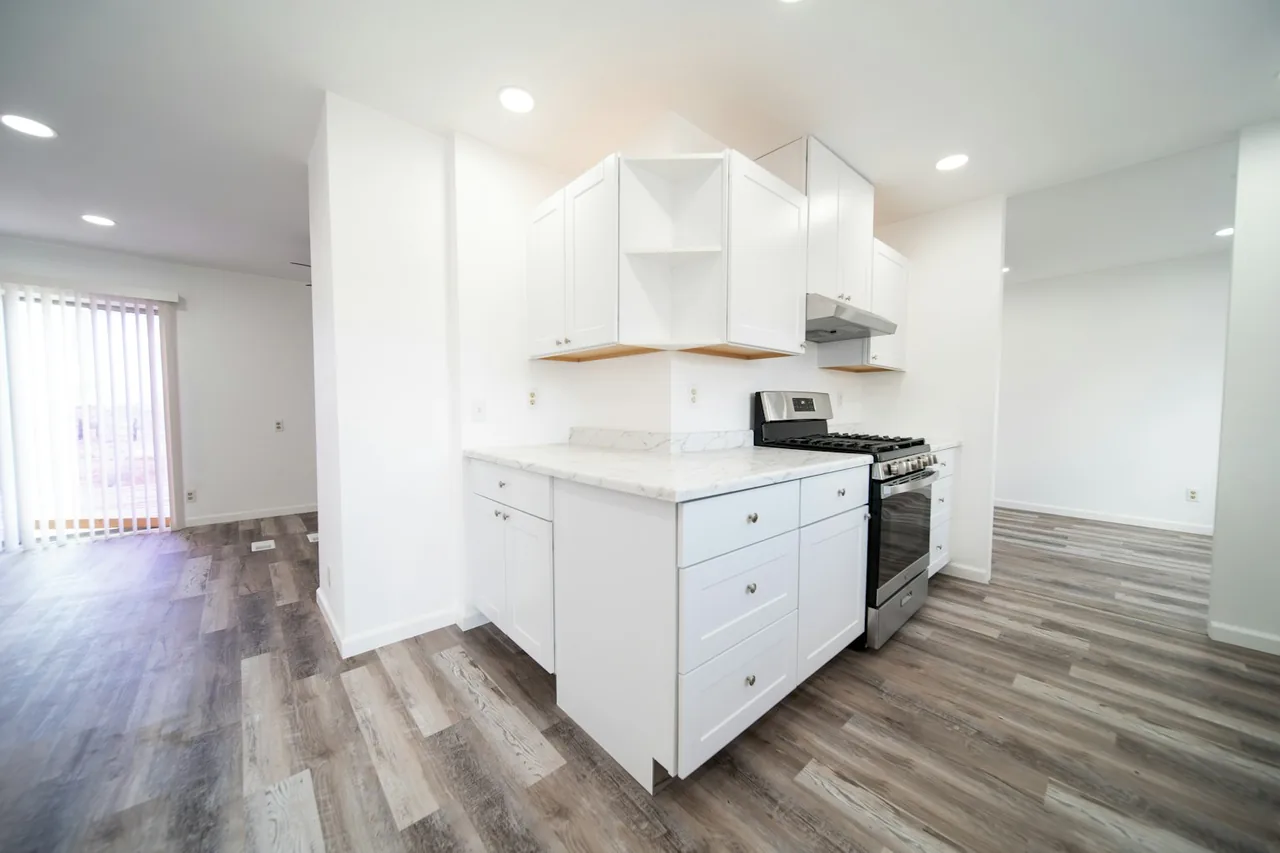
Butcher block is a butcher block countertop built from strips of hardwood glued together into a solid slab, and it is the one countertop in the house designed to be repaired for life rather than replaced. Two facts decide whether wood is right for you and almost nothing else does: the grain orientation you choose — edge, end, or face — and the finish you put on top, because together they set whether this is a true cutting surface or a wood-look counter you protect. Wood is soft, hygroscopic, and lives with its kitchen; a scratch, a dent, even a small burn sands out, but standing water at an unsealed seam ruins it. Get a free consultation and a written, itemized scope from a vetted fabricator before a slab is ordered — the finish-and-placement decisions in that document are where a lasting wood counter is made.
Butcher Block Is a Grain Decision First, a Wood-Species Decision Second
The species everyone asks about — maple, walnut, oak — matters less to how the counter behaves than how the boards are oriented when they are glued up. Grain construction is the first fork because it sets durability, knife-friendliness, price, and how the surface scratches, all before the species is even chosen.
The Three Grain Constructions and What Each One Does
A butcher block is defined by which face of the wood you live on, and there are three constructions, each a different trade between toughness and drama:
- Edge grain glues long boards on their narrow side, showing continuous lengthwise lines — the most common, most affordable, and most dimensionally stable construction.
- End grain stands short blocks on end so you see the cut ends of the fibers — the classic checkerboard chopping-block face, the most expensive, and the kindest to a knife because the blade parts the fibers instead of cutting across them.
- Face grain shows the widest flat face of the board for a furniture-like plank look — the most dramatic grain figure and the most prone to surface scratching.
The construction is not a styling detail bolted on at the end; it is the structural decision that determines whether the counter is a working board, a value top, or a showpiece plank, so a credible fabricator settles it before quoting species or price.
Where Wood Genuinely Wins Over Every Mineral Surface
Wood is the outlier in a countertop world otherwise made of hard mineral materials, and it wins everywhere warmth, repairability, and tactile comfort matter more than indestructibility. It is the only countertop you can actually cut on (on an end-grain block), it is forgiving on dropped glassware, it never feels cold, and it pairs with nearly every kitchen style from farmhouse to modern. It is a natural fit for a kitchen countertop run, a dedicated baking or prep zone, or a warm contrast top on a kitchen island set against harder stone perimeter counters — a mixed-material kitchen is one of the most popular places wood shows up. Unlike stone, a damaged block is never a tear-out; it is an afternoon with a sander.
Where Wood Is the Wrong Material
Wood is the wrong call where moisture is constant and care is unwelcome. A block flanking an undermount sink in a household that will not wipe up standing water, an outdoor counter exposed to weather swings, or a buyer who wants a flawless, set-and-forget surface are all mismatches. The honest test is not whether wood is beautiful — it is whether you accept a living surface that records its use and asks for a hand in return.
Where Butcher Block Fails — Moisture, Scratches, Heat, and Movement
Every weakness of wood is the direct flip side of a strength, and all of them trace back to one fact: it is an organic, hygroscopic material that moves with moisture and is soft enough to mark. Naming the mechanism is how you decide whether the trade is worth it.
Water Damage: The Failure That Actually Ends Wood Counters
The most serious failure is water damage at the sink and dishwasher. Standing water that sits in a seam or soaks into an unsealed spot raises the grain, drives black mold staining, and over time leads to swelling, splitting, and joint separation as the wood expands and contracts. A block beside an undermount sink without a meticulous, maintained finish is the single most common way these counters fail early. The exposed end grain at a sink cutout is the most vulnerable square inch on the whole counter, which is why the cutout finish — not the field finish — decides longevity at the wettest zone.
Scratching, Denting, and Heat: Real but Reversible
The second limit is scratching and denting: wood is soft, so knives on a face or edge grain, dropped cans, and dragged appliances leave marks. The difference from stone is that none of these are permanent — they sand out. The third is heat: a pan straight off the burner scorches and leaves a dark mark, and prolonged heat cracks the finish, so trivets are mandatory. Unlike a stain in marble, a scorch in wood can be sanded away, but it is still damage you would rather prevent than repair.
Seasonal Movement: The Reason Fastening Matters More Than Glue
Finally, wood moves seasonally — it shrinks in dry winter air and swells in humid summers across its width, not its length. This is not a defect to be eliminated; it is a property to be allowed for. A counter fastened rigidly across the grain has nowhere to go when it swells and splits itself at the weakest joint, which is why the fastening method — covered below — is as consequential as the wood itself.
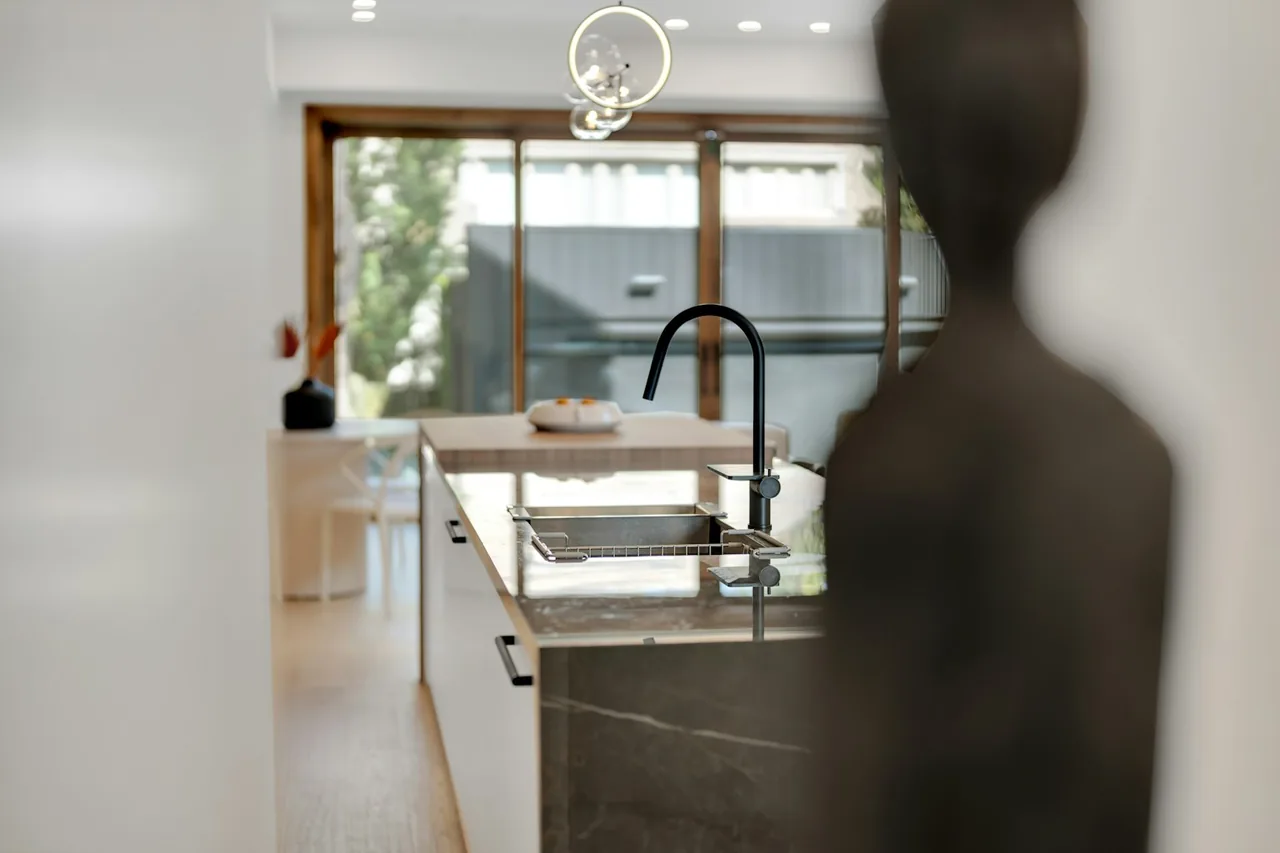
Butcher Block vs. Stone, Quartz, and the Other Countertops
Wood is the philosophical opposite of every other major surface, which are all hard mineral materials, so the comparison is really about a different theory of ownership: do you want a surface that resists damage or one that absorbs and recovers from it?
The Material Comparison Matrix
The matrix below lines butcher block up against the alternatives on the specs that actually separate them — porosity, the maintenance it demands, heat tolerance, and the one trait that defines wood: repairability.
| Material | Porosity | Hardness / rating | Heat tolerance | Maintenance | Repairable at home? |
|---|---|---|---|---|---|
| Butcher block | Porous (sealed/oiled) | Soft — Janka 1010–1450 lbf by species | Low — scorches, needs trivets | High — oil or maintained film | Yes — sands and re-oils |
| Quartz | Non-porous | Hard — near Mohs 7 | Moderate — resin can scorch | Very low — no sealing | No — pro repair only |
| Granite | Porous — needs sealing | Hard — near Mohs 6–7 | High | Low — periodic sealing | No — pro repair only |
| Marble | Porous — etches from acid | Soft for stone — near Mohs 3 | High | High — seal and patina | Partial — pro hone/polish |
| Soapstone | Non-porous | Soft — near Mohs 2.5 | Heat-proof | Low — optional oiling | Yes — sands out (stone) |
| Laminate | Non-porous face | Wear-rated face, weak core | Low — permanent scorch | Very low | No — replace only |
Read across the table and wood is the one material whose softness is paired with full home repairability — every mark a knife or pan leaves on it is reversible, which is the exact trade quartz and granite cannot offer.
The Closest Cousins and the Cheapest Imitator
Against quartz, butcher block is the opposite material: quartz is non-porous and needs no sealing, while wood needs ongoing oiling and marks easily — but quartz damage is permanent and wood damage sands out. Marble is the closest in spirit — both are soft, both patina, both reward an owner who accepts a living surface — but marble etches from acids where wood swells from water. Soapstone is the interesting middle ground: also soft, also deepened with mineral oil, and also sandable, but it is stone, non-porous, and heat-proof. The cheapest comparison is laminate, which mimics a wood look at a fraction of the cost but cannot be sanded or re-oiled when it fails. To weigh wood against the full lineup spec for spec, see the countertops hub and the material comparison tool.
The Specs That Matter — Janka Hardness, Species, and Thickness
Wood is not graded by the stone scales; the single number that predicts how a butcher block lives is Janka hardness, the same lbf (pounds-force) measurement used for hardwood floors, which rates a species' resistance to denting and wear. Buying on color alone and ignoring Janka is how a soft species ends up dented in a hard-working kitchen.
Janka Hardness by Species
Each species sits at a known point on the Janka scale, and the number — not the showroom color — predicts how the surface survives a busy room.
The Species Spec Table
The table collects the species that show up in residential blocks with the spec that rates each and the practical read on where it belongs.
| Species | Janka hardness | Grain & color | Best use |
|---|---|---|---|
| Hard maple | ~1450 lbf | Tight, pale, uniform | True chopping surfaces, busy kitchens |
| Red oak | ~1290 lbf | Open, pronounced pores | Value tops; pores need thorough sealing |
| Birch | ~1260 lbf | Fine, light, even | Budget-friendly prep tops |
| Cherry | ~950 lbf | Warm, reddens with age | Show tops you protect, not cut on |
| Walnut | ~1010 lbf | Rich, dark, dramatic | Color-driven choice; dents more easily |
Hard maple is the traditional benchmark for a reason — tight-grained, durable, and the default for a surface you actually cut on; a softer species like walnut is a color choice that accepts more denting, and that is a fine trade as long as it is made on purpose.
Reading the Janka Number for a Chopping Zone
For a surface you will cut on daily, the Janka number is a floor, not a target — a species at or above hard maple's 1450 lbf resists the denting that a knife block, a dropped cleaver, and a busy prep routine inflict. Below roughly 1000 lbf, a species like walnut or cherry will record everyday impacts as dents that, while sandable, return faster than most owners expect on a true working block.
Why Open-Pore Species Need Extra Sealing
Open-pore species such as red oak carry visible pores across the grain, and those pores are tiny reservoirs that trap water and food if left unsealed. An open-grain block is perfectly viable, but its finish has to fill and seal those pores thoroughly — an extra coat or two of a penetrating oil or a film that bridges the grain — or the surface stains and harbors moisture exactly where it is hardest to wipe clean.
Thickness and Why It Buys You Decades
Beyond species, thickness drives both stability and lifespan. Heavier blocks — commonly 1.5" to over 3" — are more dimensionally stable, resist warping, and give you more material to sand over the counter's life. The thickness is not just a look; it is the reserve of wood that lets a block be renewed again and again, which is part of why a butcher block can last for decades.
Grain Construction as a Durability Spec
Grain construction is itself a spec, not only a style: end grain is the toughest working surface and the priciest, edge grain is the stable value choice, and face grain is the most decorative and the most scratch-prone. The right construction is the one matched to the job the surface will do, which is why it belongs in the spec conversation alongside species and thickness rather than being treated as a finish.
Finishes and What to Buy — Food-Safe Oil vs. Film Finish
The finish is the most consequential choice after the wood itself, because it decides whether your counter is a working cutting surface or a wood-look display top. There are two families, and in practice they are mutually exclusive.
Penetrating Food-Safe Oils
Penetrating oils — typically food-grade mineral oil, often combined with beeswax in a board cream, or a curing oil — soak into the wood rather than forming a film. You can cut directly on this surface and it is genuinely food-safe, but it offers little water resistance on its own, so it must be reapplied regularly and right away at the sink. This is the finish for a true chopping block, and the upkeep is the price of being able to put a knife to the counter.
Film-Forming Finishes
Film-forming finishes — a hard top coat such as a waterproof polyurethane or a hardwax oil — build a protective layer on the surface. They give far better water and stain resistance, which makes them the better choice around a sink, but you should not cut directly on them because knife marks slice through the film and let water in underneath. This is the finish for a counter you treat as a counter, not a board, and the no-cutting rule is the price of the water protection.
Running Both Philosophies in One Kitchen
The decision is really about how each surface will be used, and many homeowners run both finishes in one kitchen — an oiled island they chop on and a film-finished perimeter beside the sink they protect. Whatever you pick, the seams, the underside, and especially the cutouts around a sink need the same protection as the visible top; an unsealed underside absorbs and releases moisture at a different rate than the finished face, which is a leading cause of cupping.
How Butcher Block Is Fabricated and Installed
Wood installs nothing like stone, and every reality comes back to one principle: the slab must be free to expand and contract across its width with the seasons, or it will tear itself apart. The six steps below are the full arc from on-site assessment to the final walkthrough, and an installer who fastens a wood top like a stone top produces a split counter within a year.
On-Site Templating and Species Confirmation
The fabricator measures the runs, locates the sink and cooktop cutouts, and confirms the species, grain construction, and thickness against how each zone will be used. The cut-vs-protect decision is settled here — it sets the finish and the sink type — before any slab is ordered.
Slab Glue-Up and Cutting to Size
Strips are glued into the slab in the chosen grain orientation, then the block is cut to the templated dimensions. Edges are profiled — a simple eased or roundover edge is typical and the easiest to maintain — and the surface is sanded flat through progressive grits before any finish goes on.
Sink and Cooktop Cutouts
Cutouts are made for the sink and cooktop, and the exposed end grain at the sink is treated as the most vulnerable spot on the counter. A drop-in sink, whose rim covers and protects the cut edge, is often steered toward in water-heavy kitchens; an undermount sink is possible but demands a flawlessly sealed, re-sealed cutout edge.
Sealing Every Surface — Top, Edges, and Underside
The top, all edges, and the entire underside are finished to the same standard — oil for a cutting surface or a film for a protected one. The underside is non-negotiable: an unsealed bottom absorbs moisture at a different rate than the top and cups the slab, so it gets the same coats as the face.
Fastening for Seasonal Movement
The block is fixed to the cabinets with methods that allow movement across the grain — elongated screw slots or figure-eight fasteners — never glued solid and never rigidly pinned across the width. A counter screwed tight has nowhere to go when it swells and splits at the weakest joint; the fastening is what lets the wood move without failing.
Final Cure, Care Handoff, and Walkthrough
The finish is left to cure per its instructions, the site is cleaned, and the installer walks the counter with you to set the oiling rhythm, the cutting rule for the chosen finish, and the immediate-cleanup habit at the sink. The care handoff is part of the install because wood's longevity depends on what happens after the crew leaves.
Skip or rush any one of these six steps — most often the underside seal or the movement-allowing fastening — and the failure it was meant to prevent shows up within a year, which is why a vetted fabricator treats the sequence as fixed. For how templating, cutouts, and seam placement work across materials, see countertop fabrication and countertop installation.
Talk through your project — free.
A free consultation and a written, itemized quote from a vetted installer. No pressure, no obligation.
Common Butcher Block Mistakes, Consequences, and Prevention
Most wood-counter failures are the same handful of shortcuts, each with a predictable consequence and a known prevention. Naming them is how you spot a corner being cut before it is buried under your counter — or before you make the mistake yourself in the first months of ownership.
| Mistake | What it causes | The prevention |
|---|---|---|
| Sealing only the visible top | The unsealed underside absorbs moisture at a different rate and cups the slab | Finish the underside, all edges, and cutouts to the same standard as the top |
| Fastening rigidly across the grain | The slab has nowhere to expand and splits at the weakest joint within a year | Use elongated slots or figure-eight clips that let the wood move across its width |
| Cutting on a film finish | Knife marks slice through the film and let water reach the wood underneath | Cut only on an oiled surface; keep a board on any film-finished counter |
| Undermount sink with a poorly sealed cutout | The exposed end grain wicks water, swells, blackens, and joints separate | Meticulously seal and re-seal the cutout, or use a rim-covering drop-in sink |
| Letting water pool at the sink | Raised grain, black mold staining, and eventual swelling and splitting | Wipe up standing water immediately and re-oil the wet zone more often |
| Setting hot pans on the surface | A permanent-looking scorch and a cracked finish over time | Use trivets always; sand out any scorch that does occur and re-oil |
| Skipping the oiling rhythm | Dry, lighter, thirsty wood that cracks and loses its water resistance | Oil weekly the first month, then monthly, then as the wood looks dry |
Every row is a preventable failure, and the first two — sealing and fastening — are install decisions you cannot fix later, which is why "we seal every surface and fasten for movement, in writing" is the most valuable sentence in a wood-counter quote.
Is Butcher Block Right for Your Space?
Whether wood fits is not a matter of taste — it is the output of a short chain of facts about how you cook, where the counter sits, and how much care you will actually do. Walk the decision in order; each branch removes a mismatch, and what survives is the honest answer.
- Will you cut directly on it? If yes, you want an end-grain block with a food-safe oil finish and you accept frequent oiling. If no, a film finish and a no-cutting rule are on the table, which opens up edge or face grain and the wettest placements.
- How wet is the placement? A dry island or prep run is the easiest home for wood. A run flanking an undermount sink or dishwasher is the highest-risk spot — either move wood off that zone or commit to a film finish, a drop-in sink, and immediate water cleanup.
- How hard does the kitchen live? A busy family kitchen or true chopping zone points to hard maple near 1450 lbf Janka; a softer species like walnut is a color choice only if you accept more denting and you are oiling, not cutting.
- How much upkeep do you genuinely want? Oiling on a rhythm is non-negotiable for an oil finish; a film finish trades that for a no-cutting rule. If neither cadence appeals, a non-porous engineered material fits you better than wood.
- Do you want it to last generations? Go thicker — a heavier slab is more stable and gives you more material to sand over the decades. If maximum lifespan matters, the thickness is part of the answer, not just the look.
Run honestly, this tree usually returns a clear verdict: wood on the dry, cut-on zones and a harder material where it stays wet — and a homeowner who wants wood everywhere including the sink is the one to slow down.
Not sure where wood fits and where it doesn't in your kitchen?
Tell us about your space and we will match a vetted fabricator who recommends the grain, species, and finish for each zone — and puts the cut-vs-protect plan in writing.
What Actually Drives the Cost of a Butcher Block Counter
A wood-counter quote is not a flat per-square-foot rate; with butcher block the price is driven by the wood and the work, not the area alone, and the items below are ranked by how much they move the total.
- Species and Janka grade. The wood itself sets the baseline — a tight, hard species costs more than a softer one, and exotics rate higher still. The species choice is the largest single lever on material cost.
- Grain construction. End grain is the priciest by a wide margin because of the labor to stand and glue hundreds of short blocks; edge grain is the value construction; face grain sits between. The construction can move the price more than the species does.
- Thickness. A heavier slab is more wood and more weight to fabricate and handle, and it raises the total — though it is also what buys decades of sandable life, so it is rarely the place to economize.
- Finish system. A simple oil finish is modest; a built-up film finish or a hardwax-oil system is more labor and material, and the choice tracks with the cut-vs-protect decision rather than being a separate upsell.
- Cutout complexity and sink type. Sink and cooktop cutouts add labor, and an undermount sink in wood demands extra sealing work at the most vulnerable edge — a drop-in is simpler and cheaper to protect.
- Edge profile. A simple eased edge is standard; more elaborate profiles add shaping time. Wood edges are far cheaper to profile than the same shape carved in stone.
- Removal and disposal. Tearing out an old counter and hauling it away is labor and a fee, and it can expose cabinet or support issues that change scope, which is why it belongs in the written quote up front.
Because these drivers swing widely, the only honest number comes from an on-site assessment that prices the species, construction, finish, and cutouts as separate lines. Compare what moves the price across the category in our cost guides and weigh wood against other materials with the countertop cost calculator before you read a quote.
Get an itemized wood-counter scope, not a headline rate.
A vetted fabricator prices the species, grain construction, finish, and cutouts as separate lines — so you see the whole job, free and with no obligation.
The Butcher Block Fit Test: Six Calls That Decide If You'll Love It
The right block is the one matched to how the surface will actually be used and how much upkeep you genuinely want. Run your project through the Butcher Block Fit Test — six calls, each a documented source of regret when skipped — and a wood counter that fits emerges; miss one and you are buying a future frustration.
- 1. Decide cutting surface vs. counter first — it sets the finish
- If you want to chop directly on it, choose an end-grain block with a food-safe oil finish and accept frequent oiling. If you want a wood-look counter you protect, choose a film finish and a no-cutting rule. This single decision drives the finish, the sink type, and the placement, so make it before anything else.
- 2. Match the species' Janka to how hard the kitchen lives
- A busy family kitchen or true chopping zone wants hard maple near 1450 lbf; choose softer walnut near 1010 lbf for its color only if you accept that it dents more easily and you are oiling, not cutting. The number, not the showroom finish, predicts how it survives.
- 3. Keep wood away from the wettest zones — or commit to the upkeep
- Wood beside a sink or dishwasher is the highest-risk placement. Either run a harder material there and put wood on an island or dry prep run, or commit fully to a film finish, a protective drop-in sink, and immediate water cleanup. Half-measures at the sink are where wood fails early.
- 4. Choose grain construction for the look-and-durability you want
- End grain for the toughest, most knife-friendly working surface; edge grain for the stable, classic, best-value top; face grain for the most dramatic plank look if scratch resistance is a lower priority. The construction is a durability spec, not just a style.
- 5. Go thicker if you want it to last generations
- A heavier slab is more dimensionally stable and gives you more material to sand over the decades. The thickness is part of the longevity, not just the look — and the place not to economize if you want the counter to be renewable for a lifetime.
- 6. Confirm movement-allowing fastening before fabrication
- Ask how the slab will be fastened to the cabinets. The right answer is elongated slots or figure-eight clips that let wood move across its width — never glued solid or rigidly pinned. A counter that cannot move splits itself, so this is a spec to confirm, not assume.
Score your project against all six and the choice is rarely ambiguous — wood is right for the homeowner who answers them deliberately and wrong for the one who skips them.
Butcher Block Glossary
The terms below recur in every wood-counter quote, finish label, and care guide — each defined as its working meaning on an actual job, so you can read a scope and judge whether it is complete.
- Butcher block
- A countertop built from strips of hardwood glued into a solid slab, named for the chopping surface it was first used for, and uniquely designed to be sanded and re-oiled rather than replaced.
- Edge grain
- A construction that glues long boards on their narrow side, showing continuous lengthwise lines — the most common, most stable, and best-value butcher-block face.
- End grain
- A construction that stands short blocks on end so you see the cut fiber ends — the checkerboard chopping-block surface, the priciest, and the kindest to a knife because the blade parts the fibers.
- Face grain
- A construction that shows the wide flat face of the board for a furniture-like plank look — the most dramatic figure and the most scratch-prone surface.
- Janka hardness
- The pounds-force (lbf) needed to embed a steel ball halfway into a wood species — the dent-resistance rating that predicts how a butcher block survives a busy kitchen; hard maple sits near 1450 lbf.
- Hygroscopic
- The property of wood to absorb and release moisture from the surrounding air, causing it to swell in humid seasons and shrink in dry ones — the reason fastening must allow movement.
- Mineral oil (food-grade)
- A penetrating, food-safe finish that soaks into the wood rather than forming a film, leaving a surface you can cut on but one that needs regular reapplication.
- Board cream
- A blend of food-grade mineral oil and beeswax wiped onto an oiled block to add a thin layer of surface water resistance on top of the penetrating oil.
- Film finish
- A hard, surface-forming coat — such as a waterproof polyurethane or hardwax oil — that builds water and stain resistance but cannot be cut on without slicing through the film.
- Cupping
- A concave warp across a board's width caused by one face absorbing more moisture than the other — most often an unsealed underside drying or wetting at a different rate than the top.
- Figure-eight fastener
- A metal clip shaped like a figure eight that screws to the cabinet and the underside of the slab, pivoting to let the wood expand and contract across its width without splitting.
- Undermount vs. drop-in sink
- An undermount sink mounts below the counter and leaves the cut wood edge exposed and vulnerable; a drop-in sink's rim sits on top and covers that edge, which is why drop-in is often steered toward in wood.
Standards, Care Commitments, and When a Wood Counter Lasts
Wood has no manufacturer warranty in the way a manufactured slab does — its longevity is a function of how it was sealed, fastened, and cared for, so the standards live in the workmanship and the care plan rather than a printed certificate.
The Workmanship Standards That Decide Longevity
The conditions are specific and testable: every surface sealed including the underside and cutouts, the slab fastened with movement-allowing hardware, the finish matched to the cut-vs-protect decision, and the sink type chosen to protect the most vulnerable edge. A fabricator who seals only the visible top, pins the slab rigidly, or defaults the finish has built in a failure before you notice. Ask in writing that the underside and cutouts be finished to the same standard as the top and that the fastening allow movement — that document is what separates a counter that lasts decades from one that splits or cups in a year.
The Care Commitment You Make in Return
The other half of longevity is yours. An oil-finished block wants oil on a rhythm — commonly weekly for the first month, then monthly, then a few times a year as the wood looks dry and thirsty — and immediate cleanup of standing water, especially at the sink. A film-finished counter wants the no-cutting rule honored and the film maintained where it wears. The repair story is wood's superpower: light scratches buff out with oil; deeper marks, dents, knife scoring, and even small burns sand out through progressive grits and a re-oil; a black water stain can sometimes be lightened with a mild oxalic-acid wood bleach. This renewability is why a butcher block can last for decades — and when damage goes beyond a home sanding, see countertop repair and countertop restoration.
A Real Butcher Block Decision
One representative scenario shows why the finish-and-placement choice, not the wood color, drives a wood counter — use decided every call below.
How to Vet a Butcher Block Fabricator
Wood failures are almost always sealing or fastening failures, so the fabricator matters more than the species on the invoice. These questions separate a shop that builds wood counters to last from one that simply glues up a slab and sets it.
- They seal every surface, not just the top
- Ask whether the underside, all edges, and the sink and cooktop cutouts are finished to the same standard as the visible face. A real answer treats the underside and cutout end grain as the leading causes of cupping and water failure — not an afterthought.
- They fasten for movement, every time
- Ask how the slab is fixed to the cabinets. A credible answer names elongated slots or figure-eight clips that let wood expand and contract across its width — never glued solid or rigidly pinned across the grain.
- They match finish and species to how you'll use it
- The right fabricator recommends a food-safe oil for surfaces you cut on, a film for surfaces you protect, and a species whose Janka hardness fits the traffic — chosen with you before fabrication rather than defaulted to one house option.
- They steer the sink choice to protect the cut edge
- Ask how they handle the sink. A professional explains why a drop-in protects the vulnerable cutout edge in a wet kitchen, and what extra sealing an undermount demands if you insist on it — rather than treating either as equivalent.
- They handle removal, edges, and the care handoff cleanly
- Ask whether removal and disposal are included, how the edges are profiled and sealed, and what they will teach you about oiling and cutting rules at the walkthrough. The edges and the handoff are where rushed wood work shows.
- They put the scope and care plan in writing and stand behind the work
- Ask for the full scope, the finish system, the fastening method, and the labor warranty in writing before work starts. A shop willing to name a workmanship guarantee — and to return if a seam splits or the slab cups — is accountable for the build, not just the wood.
Why Route Your Butcher Block Project Through Pro Work Home Surface
Pro Work Home Surface is not a contractor and does not fabricate your counter — we are a national authority on home surfaces that matches homeowners with vetted local fabricators and installers and holds them to a published bar.
- A free consultation and an itemized written scope
- Every connection starts with a no-obligation consult and a written quote that lines out the species, grain construction, finish system, and cutouts separately — so you read the whole job, not a headline rate.
- Seal every surface, not just the top
- The underside, all edges, and especially the sink and cooktop cutouts are finished to the same standard as the visible top, because unsealed end grain and an unfinished underside are the leading causes of cupping and water failure.
- Fasten for movement, every time
- The slab is fixed to the cabinets with methods that let wood expand and contract across its width — elongated slots or figure-eight clips — never glued solid or rigidly pinned across the grain, so the counter cannot split itself as the seasons change.
- Match finish and species to how you'll use it
- A food-safe oil finish for surfaces you cut on, a film finish for surfaces you protect, and a species whose Janka hardness fits the kitchen's traffic — chosen with you before fabrication, not defaulted.
Countertops are one of eight categories we cover across home surfaces. If your project pairs wood with stone or also touches fixing localized damage or a full restoration, the same standards apply — compare the alternatives across the countertops hub, weigh what moves the price in our cost guides, dig into the wood-vs-stone trade-offs in our guides, and size the job with the spec-comparison tools. Planning new cabinets underneath at the same time? See cabinets, or start from the full range of home surfaces.
Brands & Material Authority
Quality and construction drive long-term performance more than the label. These are widely respected names in this category:
- Cambria
- Caesarstone
- Silestone
- MSI
- Cosentino
- Corian
- Wilsonart