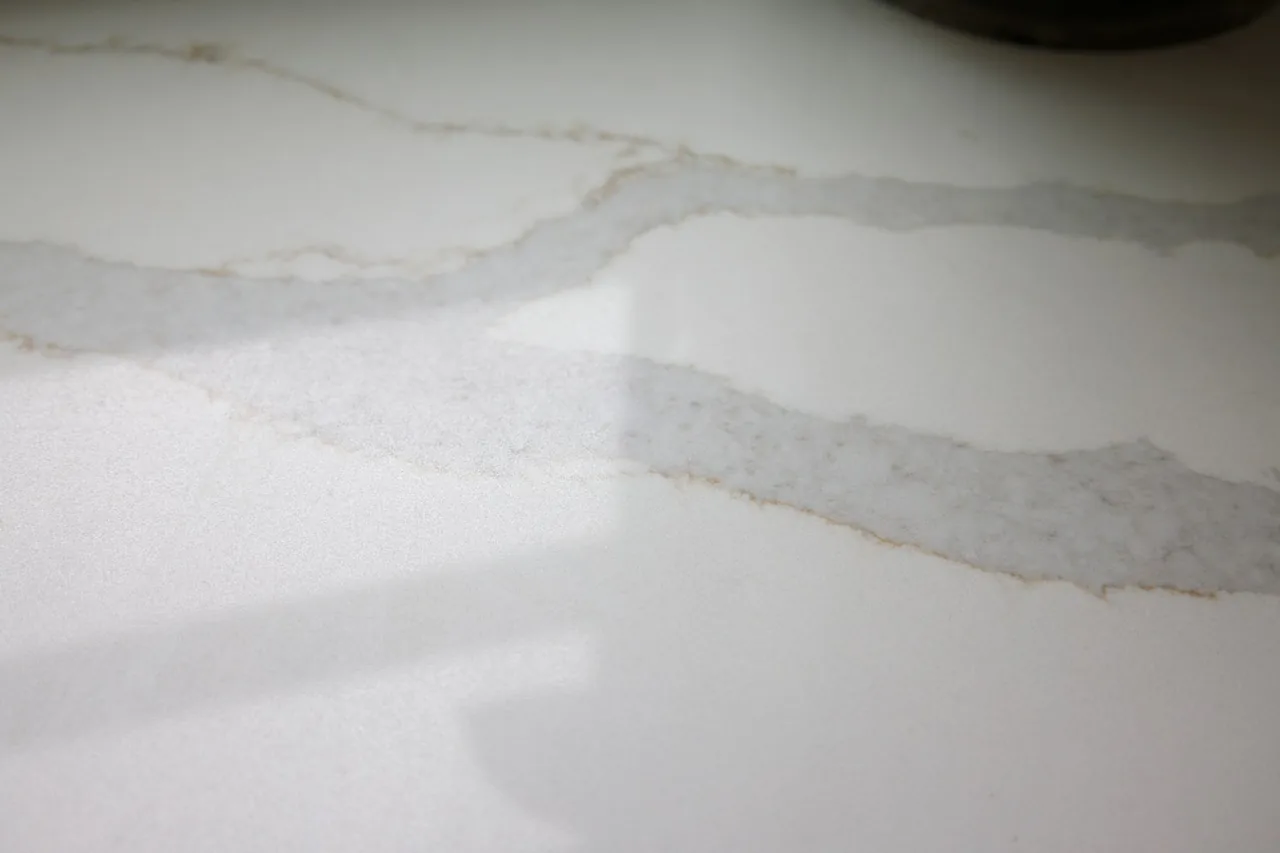
Countertop repair is the targeted craft of diagnosing why a stone or solid-surface top chipped, cracked, or separated, then restoring strength and appearance without replacing the slab. Two facts decide whether a repair holds and almost nothing else does: whether the real cause was found before the fix, and whether the repair restores structure rather than just hiding the mark. Fill a crack that runs from an unsupported sink cutout without addressing the missing support and it reopens in a season; diagnose the stress fracture, add the rod or bracket the cutout always needed, and color-match the fill, and the top serves for years. Get a free consultation and a written, itemized scope from a vetted repair specialist before any epoxy is mixed — the diagnosis is where a lasting repair is decided.
Countertop Repair Is a Diagnosis Job First, a Filling Job Second
The chip or crack everyone points at matters least to whether the repair lasts. What separates a top that stays sound after a fix from one that reopens in months is the cause behind the damage — read, understood, and corrected before a drop of resin goes in.
The Cause Decides Whether a Repair Holds
The failure mode dictates what is possible; the fill only decides what it looks like inside that constraint, so a credible specialist diagnoses before quoting:
- A crack bridging a sink cutout with no rod or bracket beneath is structural — fill it and skip the support and the stress that opened it simply opens it again.
- A chip at a sink rim or an edge corner is cosmetic and local — a clean color-matched fill restores it without touching the slab body.
- A seam that has lipped or separated is a base-and-bond problem — re-bonding without re-leveling the cabinets under it lets the same waviness push it apart.
None of those fixes are interchangeable — matching the repair to the cause is what separates a permanent fix from a cosmetic one that fails twice.
The Order of Operations Never Changes Across Materials
Diagnose, then repair. That sequence holds across quartz, granite, marble, quartzite, porcelain, and solid surface. The diagnostic work is always the same: locate the damage and trace it to its origin, classify it as cosmetic or structural, confirm the support and base underneath, decide repair against replacement, and select a method and filler the material accepts. The fix happens inside those facts, not before them — and the material matters, because quartz and porcelain cannot be field-polished back to a factory finish the way natural stone can.
The Countertop Repair Readiness Gate: Six Checks Before Any Fix
Before a top is repaired, a competent specialist runs every damaged surface through the same six-check gate. Each check has a recognized basis, each is a documented cause of a failed repair when skipped, and a top that fails any one is not ready for a cosmetic fill. Call it the Repair Readiness Gate: pass all six and the repair has a foundation to last; fail one and you are paying to do it twice.
- 1. Damage origin and path
- The crack or chip is traced to where it started — a cutout corner, an edge impact, a seam, or a span over a gap. A crack that radiates from a sink corner is a stress fracture with a structural cause; one isolated at an edge is impact damage. The origin, not the visible length, tells you whether a fill alone will hold.
- 2. Cosmetic vs. structural classification
- The damage is sorted into cosmetic — a surface chip, a shallow scratch, a small edge flake — or structural — a crack through the slab body, a fracture across a cutout, a separated seam. Cosmetic damage is filled and finished; structural damage demands the support beneath it be corrected first or the repair is decoration over a moving part.
- 3. Support and base under the damage
- The cabinets, subtop, and any cutout reinforcement under the failure are checked. A crack at a cutout usually means an undermount sink was hung without a rail or rod; a rocking top means the base is out of level. The support that should have been there at install is added now — before the fill — or the fix carries the same load that broke the slab.
- 4. Material identification and filler match
- The slab is identified — natural stone, engineered quartz, porcelain, or solid surface — because the repair method and filler follow the material. Natural stone takes color-matched two-part epoxy and can be re-polished; quartz resin can be filled but never field-polished to factory gloss; porcelain needs specialized color-fill; solid surface can be sanded and seamed nearly invisibly. A filler made for the wrong material reads as a patch forever.
- 5. Moisture, contamination, and cure conditions
- The damaged zone must be dry, clean, and free of old sealer, grease, or caulk so the epoxy bonds to bare material, and the cure happens at the temperature the resin specifies. Filling a damp crack under a sink, or over a film of old sealer, gives a bond that releases — the repair equivalent of gluing to a dirty surface.
- 6. Repair-vs-replace verdict
- Before the fix, the specialist confirms repair is the right call at all. A hairline chip, a single contained crack over good support, or a lipped seam is repairable; a slab cracked clean through in multiple places, shattered at a cutout, or failing because the whole base is wrong points to restoration of the section or replacement. Matching the verdict to the damage is what makes the other five checks count.
Three of these six — origin, support, and the repair-vs-replace verdict — are the corners cut on a cheap fill, because they cost diagnostic time and sometimes hidden steel a quick patch skips, yet every one is verifiable on site. That is why the gate is non-negotiable.
Want the cause found before the crack is filled?
We match you with a vetted repair specialist who traces the damage to its origin, checks the support underneath, and puts the diagnosis in a written scope — before any epoxy is mixed.
Countertop Repair Specifications & Standards
The numbers and recognized practices that gate a repair are specific to the damage and the material — from how a crack is classified, through the filler and bond specs, to the support thresholds that decide whether a structural fix holds.
Damage Classification and Repairability
Repairability is the spec that decides whether a fill is even appropriate, because a cosmetic mark and a structural fracture demand different work. How it is classified depends on whether the damage reaches the slab body or stays at the surface.
Cosmetic Damage Thresholds
Surface damage that does not compromise the slab is filled and refinished, and the threshold is about depth and location, not just size.
Chips, Flakes, and Shallow Scratches
A chip at an edge or sink rim, a shallow scratch, or a small surface flake is cosmetic when it stays in the top few millimeters and does not reach a load-bearing zone. It is cleaned to bare material, filled with color-matched resin, and leveled flush; on natural stone it is then re-honed and polished into the surrounding finish, while on quartz the fill is leveled but the factory sheen around it cannot be field-restored — the reason a quartz chip is best kept small and matched precisely.
Etch and Dull Marks vs. True Damage
A dull, lightened ring on marble or calcite-bearing stone is usually an etch — acid eating the polish — not a chip or stain, and it is corrected by re-polishing, not filling. A stain is absorbed discoloration in porous stone, drawn out with a poultice rather than ground away. Distinguishing etch from stain from physical damage is the first call a specialist makes, because each has a different fix — covered in depth under countertop polishing and restoration.
Structural Damage Thresholds
A crack through the slab body, a fracture across a cutout, or a break at an overhang is structural. It is repaired only after the support that should carry that zone is added — a rod, a bracket, a subtop — because the fill restores appearance and a modest amount of tensile bond, but it is the support that carries the load.
Filler and Bond Specifications
The filler is matched to the material and the damage, and the bond depends on a clean, dry, bare surface.
Repair Filler Types and Bond Strength
The recognized fillers are color-matched two-part epoxy for stone cracks and chips, flowing or knife-grade per the gap; CA (cyanoacrylate) glue dosed with stone dust for tiny chips; polyester resin on some granites; and manufacturer-specific fill for porcelain and solid surface. A structural epoxy bond restores meaningful tensile strength across a clean crack, but no field epoxy matches the slab's original integrity — which is why a structural crack is supported, not just glued. The fill is tinted to the stone and tooled flush, then cured at the resin's specified temperature before use.
Cutout and Overhang Support Limits
Even a perfect fill fails over missing support. The same limits that govern a new install govern a repair: 3 cm stone cantilevers up to about 10" unsupported and 2 cm roughly 6", and an undermount sink is carried from below by a rail, brackets, or epoxy-set rods — never on adhesive alone. A crack that opened at a cutout or an overhang means a support threshold was missed at install; the repair restores it, often with let-in flat bar or a rod set into a kerf along the crack to span the fracture and carry the load the slab no longer can.
Seam Re-Bond Tolerance
A separated or lipped seam is re-bonded to the same standard a new seam meets: held to roughly 1/16", color-matched with two-part epoxy, and set over solid support — a cabinet partition, never a span. NSI practice keeps seams off cutouts and gaps; a seam that lipped almost always sits over an unlevel base, so re-leveling the cabinets under it is part of the re-bond, not optional. Re-glue alone, over a base that still waves, and the same lippage returns.
Repair Method, Basis, and When It Holds, by Damage
The table below collects the recognized repair approaches a competent specialist verifies. These are representative — the slab's material, the damage path, and the support beneath always govern, and where a fill alone cannot carry the load, support is added.
| Damage | Typical cause | Recognized repair | What makes it hold |
|---|---|---|---|
| Edge or rim chip | Impact, dropped pan, install nick | Color-matched epoxy or CA + stone dust, leveled | Clean bare surface; precise color match |
| Crack across a cutout | Stress fracture from missing sink support | Rod or flat bar let in + epoxy fill | Added support carries the load, not the fill |
| Crack at an overhang | Cantilever past the unsupported limit | Let-in steel or subtop + bonded fill | Reinforcement to the span; off-cantilever seam |
| Separated / lipped stone seam | Unlevel base, weak original epoxy | Re-level base, re-bond with tinted epoxy | Level support under the seam, flush dry-fit |
| Surface scratch (natural stone) | Abrasion, drag of a heavy object | Re-hone and polish into the finish | Grit progression; not a fill at all |
| Chip on quartz | Impact at edge or sink corner | Color-matched resin fill, leveled flush | Match precision — no field re-polish of the sheen |
| Crack through porcelain | Point impact on a thin sintered slab | Manufacturer color-fill; section if severe | Continuous subtop; specialist handling |
The lesson is that the repair follows the cause, not the symptom — a crack at a cutout and a chip at an edge look like the same job and are not, because one needs support added and one needs only a fill. Size and price the alternative first with the countertop cost calculator, and compare what a replacement slab costs in our cost guides so the repair-vs-replace call is made on numbers.
Countertop Repair Methods Compared
How a top is repaired is dictated by the damage and the material, because each method suits a failure it fixes and one it cannot. There are several recognized approaches, and the right one is set by whether the damage is cosmetic or structural — never by which is fastest.
The Repair Method Comparison Matrix
The matrix below is the decision the specialist is making — damage type, what the method restores, the support it needs, and where each belongs, side by side.
| Method | Best for | Restores | Support need | Materials | Main risk if rushed |
|---|---|---|---|---|---|
| Color-matched epoxy fill | Chips, contained cracks | Appearance + some bond | None if cosmetic | Granite, marble, quartz | Visible patch from poor match |
| Rod / flat-bar reinforcement | Cutout and overhang cracks | Structural load path | It is the support | Stone over cutouts, spans | Crack reopens under load |
| Seam re-bond + re-level | Separated, lipped seams | Joint + level plane | Re-level base first | All slab stone | Lippage returns over wavy base |
| Re-hone & polish | Scratches, etch, dull marks | Finish, not material | None | Natural stone only | Halo or uneven sheen |
| Poultice draw-out | Absorbed stains in porous stone | Color, removes stain | None | Marble, granite | Stain remains if mismatched |
| Section / partial replace | Shattered or multi-crack slab | The damaged piece | Full re-set of support | Any — severe damage | Mismatched replacement piece |
Cosmetic Fills: Chips, Scratches, and Stains
Most repairs are cosmetic: a chip is cleaned to bare material and filled with color-matched epoxy or, for tiny flakes, cyanoacrylate dosed with stone dust, then leveled flush and — on natural stone — honed and polished into the surrounding finish. A scratch on stone is re-honed rather than filled, and an absorbed stain is drawn out with a poultice, not ground away. The whole craft of a cosmetic fill is the color match and the flush level; a patch that reads as a patch is a match done in a hurry.
Structural Repairs: Cracks, Rods, and Re-Seaming
A structural crack is a different job. The crack is stabilized, a kerf is cut along it where the slab allows, and a steel rod or flat bar is epoxied in to span the fracture and carry the load — the same let-in reinforcement a correct install would have used at a cutout or overhang. Where the crack follows a seam, the pieces are re-leveled and re-bonded with tinted epoxy over solid support. The fill closes the line; the steel is what stops it reopening, which is why a structural repair that skips the rod is a cosmetic repair wearing a structural price.
Quartz, Porcelain, and Solid-Surface Repairs
Engineered materials each have their own rules. Quartz chips are filled with color-matched resin and leveled, but the factory sheen cannot be field-polished back, so the match must be precise and the fill kept small. Porcelain is a thin sintered slab that demands manufacturer-specific color-fill and specialist handling, and a crack through it often means sectioning rather than filling, because its thinness leaves little to bond. Solid surface is the forgiving exception — it sands and seams nearly invisibly, so chips, scratches, and even burns refinish out. Knowing which material is on the cabinets is the first thing a specialist confirms, because the wrong technique on quartz or porcelain leaves a mark that cannot be undone.
Should You Repair or Replace Your Countertop?
The repair-vs-replace call is not a guess — it is the output of a short chain of facts about the damage, its cause, and the slab. Walk the decision in order; each branch eliminates an option the damage rules out, and what survives is the right call.
- Classify the damage as cosmetic or structural. A surface chip, a shallow scratch, an etch ring, or an absorbed stain is cosmetic and almost always repairable in place. A crack through the slab body, a fracture across a cutout, or a shattered corner is structural and needs the next questions answered before anything is filled.
- For structural damage, find the cause and check the support. Did the crack open at a cutout with no rod, or an overhang past its limit? If the cause is missing support that can be added — a rod, a bracket, a subtop — the crack is repairable with reinforcement. If the slab cracked clean through with good support already beneath it, the slab itself is compromised.
- Count the damage and weigh the slab's condition. One contained crack over correctable support repairs well; multiple cracks, a shattered cutout, or a slab that is also stained, etched, and worn across its face points toward restoration of the whole top or replacement of the piece.
- Check material and finish matchability. Solid surface and natural stone repair nearly invisibly; a quartz chip can be filled but the sheen will not field-restore, and a discontinued color may not match a replacement piece at all. If a partial replacement cannot be matched to the run, a repair — even a slightly visible one — may be the better outcome.
- Weigh the repair against the replacement cost and the cause. If the base is fundamentally wrong — cabinets unlevel, no support anywhere — a fill is throwing good money after bad, and a proper re-set or replacement is cheaper over time. Price both with the cost calculator and the cost guides, then decide on numbers, not panic.
Run honestly, this tree usually returns a clear verdict — and a specialist who quotes a fill on a multi-crack slab without checking the support, or pushes a full replacement for a single chip, is the red flag.
Not sure whether to repair or replace?
Tell us what failed and we will match a vetted specialist who classifies the damage, checks the support and the matchability, and gives you both numbers in writing — so you decide on facts.
Why Countertops Chip, Crack, and Separate — and How the Repair Stops It
The most common countertop failures trace back to a stress, an impact, or a base problem, and each has a repair matched to its mechanism — paired below with its cause and the named fix that actually holds.
Cracking at Cutouts: A Stress-Concentration Failure
Cracks almost always start at a sink or cooktop cutout, because the narrow band of stone there carries load with little material to spread it. The cause is a cutout corner left sharp instead of radiused, an undermount sink hung without support, or a top set on an unlevel base that concentrates stress at the opening. The repair that holds is not a fill — it is a rod or flat bar let in to span the fracture and carry the load, with the fill closing the line afterward; skip the steel and the same stress reopens it.
Edge and Corner Chips: An Impact Failure
A chip at an edge, a corner, or a sink rim is impact damage — a dropped pan, a hard knock, or a nick from the original install. It is cosmetic and local, with no load behind it, so the repair is a clean color-matched fill leveled flush and, on natural stone, polished in. The only way this repair fails is a poor color match or a fill left proud of the surface, which is why the craft is in the matching and the leveling, not the gluing.
Overhang Breaks: A Cantilever Failure
An island or eating bar that cracks at the cabinet line failed as a lever — the overhang ran past the unsupported limit with nothing to carry it. The repair points straight back to the cause: the cantilever was treated as decoration instead of structure. A lasting fix reads the overhang against the material limit, lets in steel or a subtop to carry the span, and only then bonds the crack — the reinforcement the install should have included from the start.
Seam Separation and Lippage: A Base-and-Bond Problem
The fourth failure — a seam that opens, lips, or shows a widening dark line — is a base, alignment, and epoxy problem, caught at the Readiness Gate. The slabs are re-leveled over solid support, dry-fit to flush, and re-bonded with color-matched two-part epoxy. Re-gluing over a base that still waves only resets the clock; the durable repair corrects the level first. If a slab has cracked clean through in several places, the path shifts from repair to a section restoration or replacement rather than a cosmetic fill.
Common Countertop Repair Mistakes, Consequences, and Prevention
Most failed repairs are the same handful of shortcuts, each with a predictable consequence and a known prevention. Naming them is how you spot a fill being done wrong before it reopens on your top.
| Mistake | What it causes | The prevention |
|---|---|---|
| Filling a structural crack with no support added | Crack reopens within a season under the same load | Let in a rod or flat bar to carry the span, then fill |
| Re-bonding a seam over an unlevel base | The same lippage and separation return | Re-level the cabinets under the seam before re-gluing |
| Poor color match on the fill | An obvious patch reads worse than the original chip | Tint the epoxy to the slab's veining and tool it flush |
| Field-polishing a quartz fill | A permanent dull halo around the repair | Level the resin precisely; never grind quartz sheen |
| Bonding to a damp or sealed surface | The epoxy releases and the repair lifts | Clean to bare, dry stone; cure at the resin's temperature |
| Grinding out an etch as if it were a stain | A scooped low spot where polishing was the fix | Re-hone and polish etch; poultice a true stain |
| Patching a multi-crack slab instead of replacing | Money spent on a top that keeps failing | Run the repair-vs-replace tree on the real cause |
Every row is a documented callback trigger — which is why "we diagnose the cause and repair the structure, in writing" is the most valuable sentence in a repair quote.
Matching the Repair to the Material — and the Spec That Governs It
The right repair for a top is dictated by what the slab is made of, because hardness, porosity, and finish decide whether a fill, a polish, or a section replacement is even possible — which is why a technique that works on granite can ruin quartz.
Repairability by Material
Each material repairs on its own terms — the property that matters is whether the finish can be field-restored after the fill, so match the method to the slab.
- Granite is natural stone, Mohs ~6 to 7 and porous; chips fill with color-matched epoxy and scratches re-hone, and because the finish is field-polishable, a good repair disappears. Absorbed stains draw out with a poultice; etch is uncommon on granite but possible on its calcite-bearing varieties.
- Quartz is engineered, non-porous, and never stains, so its failures are chips, cracks, and heat scorch at the resin binder. Chips fill with matched resin, but the factory sheen cannot be field-polished back — the single most important repair fact about quartz — so fills are kept small and matched precisely, and field-polishing is off the table.
- Marble and quartzite diverge sharply: marble is soft (Mohs ~3), porous, and etches with acid, so much of its "damage" is etch corrected by polishing and stains drawn by poultice; quartzite is harder than granite (Mohs ~7), resisting scratches but still chipping at edges, where epoxy fill and re-hone restore it.
- Porcelain is a dense, thin sintered slab — non-porous and stain-proof but brittle at a point impact; cracks need manufacturer color-fill and specialist handling, and a through-crack usually means sectioning rather than filling, because its thinness leaves little to bond.
- Solid surface, butcher block, and soapstone are the forgiving end: solid surface sands and seams invisibly, wood sands and re-oils, and soapstone (Mohs ~2.5) lets scratches sand out by hand. These materials repair more easily than any stone — the tradeoff for their softness.
Matching the Repair to the Room
Room context shapes the repair too. A kitchen countertop takes the most abuse — heat, impact, and acid — so its repairs run from scorch and chips to cutout cracks; a bathroom vanity sees water and cosmetics, where etch and stain dominate; an outdoor kitchen adds freeze-thaw and UV, which can reopen a fill not rated for exposure; a kitchen island lives or dies on overhang support, so its repairs are usually structural. Match the repair to how the surface actually lives, then compare materials spec-for-spec in the material comparison tool.

What Actually Drives the Cost of a Countertop Repair
A repair quote is not a flat per-job rate; the headline number a quick fill leads with hides the items below, ranked by how much they move the total.
The Cost Drivers That Move the Total Most
- Cosmetic vs. structural. The biggest swing. A surface chip is a fill and a polish; a structural crack needs the slab stabilized, a kerf cut, and a rod or bar let in — far more skilled labor than the fill itself.
- Support and reinforcement. Adding the rod, flat bar, bracket, or subtop a cutout or overhang always needed is real material and skilled time a cosmetic fill avoids — and the line item a quick patch quietly omits.
- Material and color matching. Tinting epoxy to a veined natural stone, or matching resin to a discontinued quartz color, takes time and skill; a precise match on a busy pattern costs more than a fill on a solid color.
- Access and disassembly. A crack under a mounted sink, behind a backsplash, or at an overhang may require disconnecting plumbing or removing fixtures to reach — labor an open, accessible chip does not.
- Re-leveling for a seam. A lipped seam means shimming or re-setting the cabinets beneath before re-bonding — a base correction priced well beyond the epoxy work it enables.
- Finish restoration. On natural stone, honing and polishing the repair into the surrounding surface — and sometimes the whole top so the sheen reads even — adds time, covered under polishing.
- Section vs. full replacement. When repair is ruled out, a matched section or a full slab swap is its own scope — fabrication, removal, and re-set — which is why the repair-vs-replace verdict belongs in the quote.
- Diagnosis and dry-out time. A damp crack under a sink needs drying before bonding, and a proper diagnosis takes a site visit — modest costs that protect the far larger one of a repair that fails.
Because these drivers swing so widely, the only honest number comes from an on-site diagnosis. Compare what a repair costs against a replacement in our cost guides, and size the replacement alternative with the cost estimator so you can read a repair quote critically.
Get a diagnosis and an itemized scope, not a guess.
A vetted specialist prices the diagnosis, the support, the fill, and the finish as separate lines — and tells you when replacement is the cheaper call, free and with no obligation.
The Countertop Repair Process, Step by Step
A professional repair runs the same disciplined sequence every time, and each step exists to make the fix permanent rather than cosmetic. The six steps below are the full arc from on-site diagnosis to final finish.
On-Site Diagnosis and Cause-Tracing
The specialist inspects the damage, traces the crack or chip to its origin, identifies the material, and checks the support and base underneath. Whether the failure is cosmetic or structural — and whether repair beats replacement — is decided here against the Readiness Gate, not over the phone.
Repair-vs-Replace Verdict and Scope
The findings drive a written verdict: a fill, a structural reinforcement, a seam re-bond, or a section replacement. The scope lines out the support to be added, the filler matched to the material, the finish work, and any plumbing access — so you see the whole job before it starts.
Surface Prep and Support Reinforcement
The damaged zone is cleaned to bare, dry material, with old sealer and caulk removed so the bond grips. Where the damage is structural, the support is added now — a kerf cut and a rod or flat bar let in at a cutout or overhang, or the cabinets re-leveled under a seam — before any fill.
Color Matching and Filler Preparation
Two-part epoxy is tinted to the slab — matched to the veining and base color of the stone or the resin of a quartz top — and the correct grade chosen for the gap, flowing for a hairline or knife-grade for a chip. The match is tested against the surface before it goes in.
Fill, Bond, and Cure
The filler is worked into the crack or chip slightly proud, and the slabs of a seam are dry-fit flush and bonded with color-matched epoxy over support. The repair cures undisturbed at the resin's specified temperature — rushing the cure is how a fresh fill releases.
Level, Finish, and Walkthrough
The cured fill is leveled flush and, on natural stone, honed and polished into the surrounding finish so the repair disappears; on quartz it is leveled without grinding the sheen. The site is cleaned and the specialist walks the top with you to confirm the result, review care, and explain any cure time before heavy use.
Skip or rush any one of these six steps and the failure it was meant to prevent shows up again — which is why a vetted specialist treats the sequence as fixed, not optional.
Talk through your project — free.
A free consultation and a written, itemized quote from a vetted installer. No pressure, no obligation.
Countertop Repair Glossary
The terms below recur in every repair quote and diagnosis — each defined as its working meaning on an actual repair, so you can read a scope and judge whether it is complete.
- Stress fracture
- A crack that opens because load concentrates at a weak point — almost always a sink or cooktop cutout — rather than from a single impact. The tell is a crack radiating from a corner; the fix adds support, not just fill.
- Etch
- A dull, lightened mark where acid has eaten the polish off calcite-bearing stone like marble — corrected by re-polishing, not filling, because no material is missing, only the shine.
- Stain
- Absorbed discoloration in porous stone, where a liquid soaked below the surface. Drawn out with a poultice that pulls it back up — distinct from an etch, which sits on the surface.
- Poultice
- An absorbent paste applied over a stain to pull the absorbed liquid back out of porous stone as it dries — the recognized fix for a stain, useless on an etch or a chip.
- Color-matched epoxy
- Two-part resin tinted to the slab's color and veining, used to fill chips and bond cracks and seams, then tooled flush. The match is the craft; a mismatch reads as a patch.
- Rodding / let-in steel
- A steel rod or flat bar set into a kerf along a crack — or at a cutout or overhang — to span the fracture and carry the load the slab no longer can. The structural half of a structural repair.
- Re-seaming
- Re-bonding two slabs at a separated or lipped joint, re-leveled over solid support and joined with color-matched epoxy to roughly 1/16" — the seam done again, correctly.
- Lippage
- A height step between two pieces at a seam or against a wall, felt with a hand, caused by an unlevel base — the sign a seam re-bond must re-level first.
- Cyanoacrylate (CA)
- A fast-setting adhesive, dosed with stone dust, used for very small chips and flakes where a full epoxy fill would be overkill.
- Cosmetic vs. structural
- The first classification of any damage — cosmetic stays at the surface and needs only a fill or polish; structural reaches the slab body and needs support corrected before the fill.
- Cantilever limit
- The unsupported overhang stone carries on its own — about 10" at 3 cm; a crack past it means the limit was exceeded and support must be added in the repair.
- NSI
- The Natural Stone Institute, successor to the MIA, whose standards govern stone fabrication, seam, and repair practice.
Standards, Warranty Conditions, and When a Repair Won't Hold
A repair is only as good as the diagnosis behind it, and most repairs that fail were doomed before the epoxy — by a cause left uncorrected or a verdict that should have been replacement.
Why a Repair Voids or Holds
A durable repair restores the structure, not just the look: the support that should carry a cutout or overhang is added, the base under a seam is re-leveled, and the filler is matched to the material and cured to spec. A repair that fills a structural crack without the rod, re-glues a seam over a wavy base, or field-polishes a quartz fill has built in its own failure. Ask in writing that the repair correct the cause and name the support added — that document is what separates a fix that holds from one that reopens, and one more reason the cheapest fill is rarely the cheapest repair.
The Standards Bodies That Set the Bar
Standards bodies govern the practice. The NSI (formerly MIA) governs stone fabrication, seam, and repair; quartz and porcelain makers publish their own repair and handling specs, including the hard limit that engineered sheen is not field-restorable; ANSI A108 governs tile-set tops. A repair done to these holds, and one that ignores them is a patch on borrowed time.
When Repair Becomes Replacement or Restoration
Repair has limits. A slab cracked clean through in multiple places, shattered at a cutout, or failing because the entire base is wrong is past a fill — the honest call is a section replacement or, where the whole surface is also worn, etched, and dull, a full countertop restoration that revives the top end to end. And because countertops sit on cabinets, a top failing from an unlevel or unanchored base means the cabinet work is corrected first, or any repair inherits the same fault.
A Real Countertop Repair Decision
One representative scenario shows why diagnosis decides everything: the cause behind the crack, not the crack itself, drove every call below.
How to Vet a Countertop Repair Specialist
Most failed repairs are diagnosis failures, so the specialist matters more than the speed of the fill. These questions separate a crew that repairs the cause from one that simply hides the mark.
- They diagnose the cause before they quote a fill
- A specialist who quotes a price without tracing the crack to its origin is guessing. Ask whether they classify the damage as cosmetic or structural and how they confirm it — a real answer talks about the crack's path and the support underneath, not just the visible line.
- They add support to a structural crack, not just epoxy
- Ask how they keep a cutout or overhang crack from reopening. A credible answer names a rod, flat bar, or bracket let in to carry the load — not "we'll fill it and it'll be fine."
- They re-level the base before re-bonding a seam
- The right specialist corrects the unlevel cabinets under a lipped seam before re-gluing. A shop that re-bonds over a wavy base is a shop whose seams separate twice.
- They match the method to the material
- Ask what they do differently on quartz versus granite. A professional knows quartz sheen cannot be field-polished and that porcelain needs manufacturer fill — a one-technique-for-everything answer is a red flag.
- They tell you honestly when replacement is the better call
- Ask whether the damage is worth repairing. A specialist willing to say a multi-crack slab should be replaced — and to price both — is one you can trust on the single chip too.
- They put the diagnosis, scope, and warranty in writing and stand behind the work
- Ask for the cause, the repair method, the support added, and the labor warranty in writing before work starts. A crew willing to name a workmanship guarantee — and to return if the repair reopens — is accountable for the fix, not just the visit.
Why Route Your Countertop Repair Through Pro Work Home Surface
Pro Work Home Surface is not a fabricator and does not repair your top — we are a national authority on home surfaces that matches homeowners with vetted local specialists and holds them to a published bar.
- A free consultation and an itemized written scope
- Every connection starts with a no-obligation diagnosis and a written quote that lines out the cause, the support, the fill, and the finish separately — so you read the whole job, not a headline rate.
- A real vetting standard, applied before we connect you
- Specialists are screened on what decides a repair's life: whether they diagnose the cause, add support to structural cracks, match the method to the material, and tell you honestly when replacement beats a fill.
- Diagnose the cause, repair the structure, every time
- The damage is traced to its origin and classified before anything is filled — a stress fracture at a cutout gets the rod it needs, a lipped seam gets the base re-leveled, and a quartz chip is matched precisely without grinding the sheen.
- National coverage, local crews
- We match you with specialists in your area nationwide, so the standard is consistent even though the crew is local — whether it is a single chip or a structural crack across a cutout.
Repair is one of several countertop services we cover across home surfaces. If your project also touches restoring an aging top end to end, renewing a dull or etched finish, sealing a porous stone, setting a new top, or fabricating a replacement slab, the same standards apply — and because countertops sit on cabinets, coordinate the base with cabinet work too. Compare what moves the price in our cost guides, dig into the how-and-why in our buying guides, size the job with our spec-comparison tools, and start from the countertops category hub or the full range of home surfaces.
Brands & Material Authority
Quality and construction drive long-term performance more than the label. These are widely respected names in this category:
- Cambria
- Caesarstone
- Silestone
- MSI
- Cosentino
- Corian
- Wilsonart