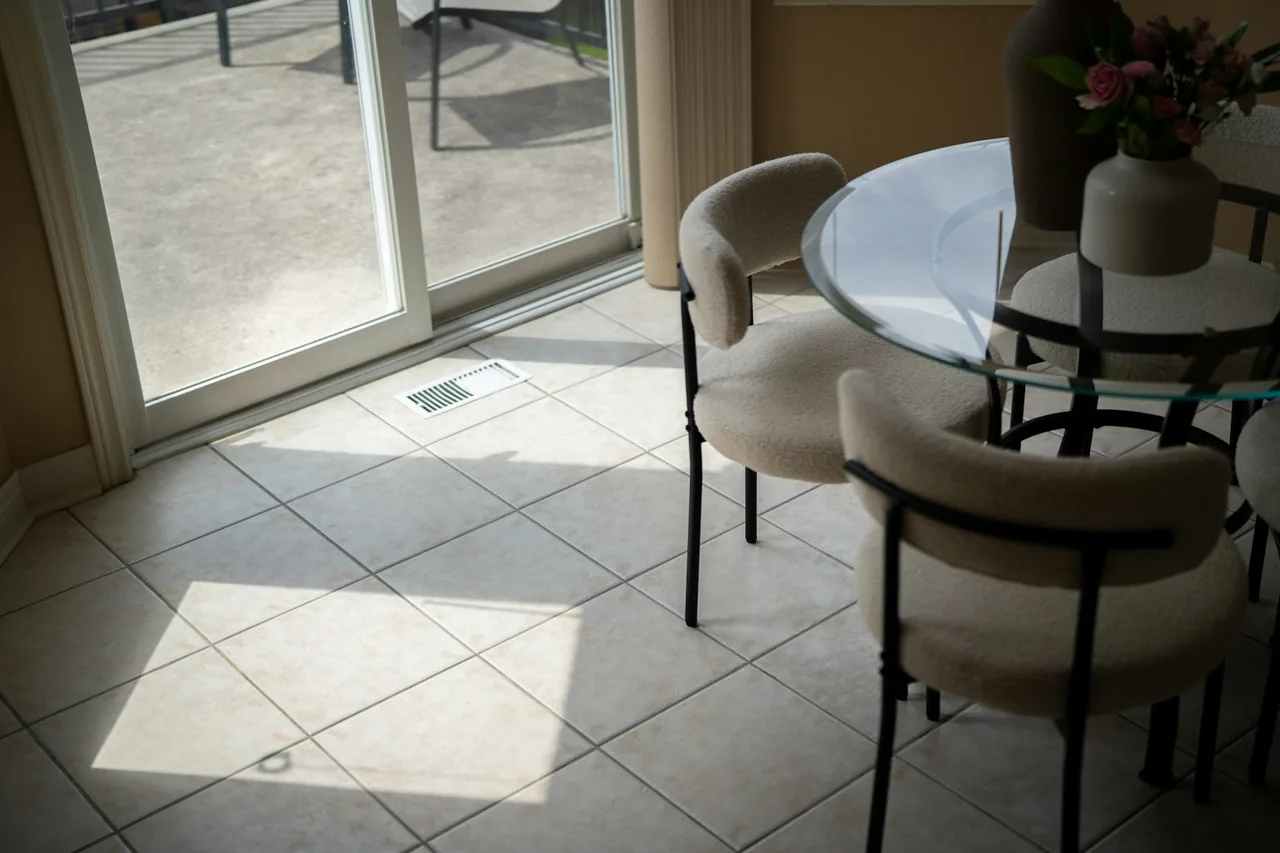
The best bathroom flooring treats standing water as normal, not exceptional — which is why porcelain tile and waterproof vinyl rule the room and wood, in every form, stays out. The one constraint that decides a bathroom floor is liquid water plus constant humidity: a surface that gets directly wet, dries slowly, and lives in a damp room day after day. Add slip safety on top — a wet bathroom floor is one of the most common fall sites in a home — and the shortlist narrows to materials that are fully waterproof and slip-rated to DCOF 0.42+. Get those two right and the look is the easy part. Start with a free consultation and a written, itemized scope from a vetted installer that names the material's water rating, the substrate waterproofing membrane, and how the fixtures will be sealed before any tile is ordered.
A Bathroom Floor Is a Waterproof System, Not a Surface
A bathroom asks more of a floor's water tolerance than any other room, and it asks it constantly rather than occasionally. The tile or plank you see is only the top of an assembly that has to keep water out of the structure below — and when a bathroom floor fails, it usually fails beneath a surface that still looks fine.
Three Demands Define a Bathroom Floor
The room stacks three requirements that no above-grade dry room imposes, and a floor that misses any one fails here:
- Direct standing water. Unlike a kitchen, where the threat is mostly slow leaks, a bathroom floor gets splashed, dripped on from a shower, and puddled after a bath — water sits on the surface and runs to the seams routinely, not by accident.
- Persistent humidity. Even when the floor is dry, the room is damp: shower steam raises the moisture in the air and the assembly daily, attacking materials from below and at the edges in ways a quick wipe never sees.
- Slip safety. A wet bathroom floor is a leading fall site, so the surface has to keep traction when it is exactly as wet as the room makes it — a non-negotiable, not a nicety.
These stack into a clear priority: waterproof first, slip-resistant second, everything else after. A bathroom is the one room where comfort and looks genuinely take a back seat to performance, because the failures here are both expensive (water reaching the subfloor and the room below) and dangerous (a fall on a slick floor).
The Surface and the Waterproofing Under It Are Two Different Things
The most important idea in a bathroom floor is that a waterproof finish over a non-waterproofed substrate is a floor waiting to fail at the first cracked grout line or split seam. Water does not damage a good tile or a waterproof plank — it gets past them, at the seams and edges, and attacks the wood deck underneath. The materials that win here stay impervious on top and are installed over a properly sealed, sloped-to-drain (in wet areas) assembly beneath, so that even when water reaches a joint, it has nowhere structural to go. The surface you choose matters; the waterproofing under it matters just as much.
The Bathroom Floor Deciders: What Separates a Survivor From a Rot Risk
A bathroom floor lives or dies by a short list of specs that map directly to the room's two failure modes — water and falls — plus the assembly that protects the structure. Each has a documented consequence when ignored, and a floor that fails any one is the wrong floor no matter how it photographs. Call it the Bathroom Floor Fit Test: pass all six checks and the room stays dry and safe; miss one and you are risking a rotted deck or a fall.
- 1. True waterproof, not water-resistant
- The bar in a bathroom is genuinely waterproof — a rigid SPC/WPC vinyl core with a written warranty, or an impervious tile. "Water-resistant" survives a wiped spill, not the direct, repeated wetting a bathroom guarantees. This is the single spec that disqualifies wood and standard laminate outright.
- 2. Water absorption (for tile)
- Porcelain absorbs under 0.5% water by the ASTM C373 test, making the tile effectively impervious — so the water defense shifts to the grout and the substrate. Ceramic absorbs more (0.5% to 3%+), a half-step down for a heavy-use or curbless-shower bath.
- 3. Slip resistance (DCOF)
- The room where slip matters most. Tile traction is graded by DCOF — DCOF, dynamic coefficient of friction — and a wet-area floor should read 0.42 or higher per ANSI A137.1, which steers you to a textured, matte, or honed finish over a high-polish one that turns dangerously slick wet.
- 4. The substrate waterproofing membrane
- In wet areas the assembly under the tile needs a waterproofing membrane and, on shower floors, a slope to the drain — so water passing through grout finds a sealed, drained path rather than a wood deck to rot. This is the invisible layer that decides whether a bathroom floor lasts decades or quietly fails.
- 5. Fixture and perimeter sealing
- The toilet flange, the tub-to-floor joint, and the vanity base are the exact paths water uses to wick under a floor. Setting the floor before the toilet, sealing the flange, and caulking the tub joint keep water out of the structure — details a low bid skips because they are invisible when finished.
- 6. Substrate rigidity for tile
- Tile cracks over a deck that flexes, so a bathroom tile floor needs an uncoupling membrane or backer board over a subfloor stiff enough to stop deflection — non-negotiable for a floor that must stay watertight at the grout.
Three of these six — the waterproofing membrane, the fixture sealing, and the slip rating — are exactly what a cheap bathroom quote leaves out, because they cost labor and material that a surface-only bid skips. That is why the fit test is non-negotiable: every check is verifiable, and every one stands between the finished floor and a rotted deck or a fall.
Want the waterproofing done right, not just the tile?
We match you with a vetted installer who specifies the membrane, seals the fixtures, and names the DCOF slip rating in a written scope — before any tile is ordered.
Bathroom Flooring Specifications That Decide the Room
The specs that gate a bathroom floor are published, testable, and specific to a wet room — from the waterproof rating that disqualifies whole materials, through the tile absorption and slip numbers, to the membrane and fixture details that keep water out of the structure.
The Waterproof Standard for a Wet Room
Water at and through the surface is the failure that ruins a bathroom floor and the room below it, so the water standard governs everything. How it is expressed depends on whether the surface is tile or resilient.
Tile: Water Absorption and Where the Real Defense Lives
Porcelain's under 0.5% water absorption (ASTM C373) makes the tile impervious, so the floor itself never needs sealing. That shifts the entire water defense to two places: the grout, which must be sealed or an inherently stain- and water-resistant type, and the substrate, which needs a waterproofing membrane beneath the tile.
Why the Membrane Matters More Than the Tile
Because grout is the tile floor's weak point and will eventually craze or crack somewhere, the assembly must assume water gets through it. A waterproofing membrane — a sheet or liquid layer bonded over the substrate before the tile — gives that water a sealed, drained path instead of a wood deck to rot. It is why a bathroom tile floor with a membrane lasts decades while an identical tile over a bare deck can rot the structure while looking perfect on top.
Shower Floors: Slope, Mosaic, and the Drain
On a shower floor or curbless wet-room floor, the assembly adds a slope to the drain and typically a mosaic tile, whose many small pieces mean many grout joints — raising slip resistance exactly where the floor is most often wet and letting the surface follow the slope. Mosaic is the standard for shower pans even when larger tile covers the rest of the bathroom.
Resilient Floors: A Waterproof Core With a Written Warranty
For vinyl, the spec to demand is an explicitly waterproof rigid core — SPC or WPC — with a written waterproof warranty, the same standard that suits a wet room. "Water-resistant" is a weaker claim and not enough for a floor that gets directly and repeatedly wet. The install still has to detail the perimeter so water cannot run under the floating floor at the edges.
Slip Resistance Is Non-Negotiable in a Bathroom
A bathroom is the room where DCOF matters most, because the floor gets directly wet and a fall here is a real hazard. A wet-area floor should read DCOF 0.42 or higher per ANSI A137.1, which steers you toward a textured, matte, or honed finish over a high-polish one that turns slick when wet. On shower floors, smaller tile with more grout joints adds traction beyond the DCOF of any single tile; on resilient floors, choose a textured rather than glossy surface for wet grip. A floor that fails the slip test is the wrong floor for the room no matter how it looks dry on a sample.
The Specs That Matter in a Bathroom, and What to Look For
Each bathroom-deciding spec, on its own — what it measures, why it matters in a wet room, and the number or feature to demand on a spec sheet.
| Spec | Why it matters in a bathroom | What to look for |
|---|---|---|
| True waterproof rating | The floor gets directly and repeatedly wet, not just splashed occasionally | An SPC/WPC core with a written waterproof warranty, or impervious tile |
| Water absorption (tile) | An impervious tile moves the water defense to grout and substrate | Porcelain at <0.5% (ASTM C373); ceramic for lighter use |
| Slip resistance (DCOF) | A wet bathroom floor is a leading fall site | DCOF 0.42+ (ANSI A137.1); textured, matte, or honed |
| Waterproofing membrane | Grout will eventually crack; water must have a sealed, drained path | A sheet or liquid membrane under the tile, sloped in wet areas |
| Fixture & perimeter seal | The flange, tub joint, and vanity base are how water wicks under | Sealed flange, caulked tub-to-floor joint, floor set before the toilet |
| Substrate rigidity (tile) | A flexing deck cracks grout and breaks the waterproof plane | Uncoupling membrane over a subfloor at L/360 or stiffer |
Bathroom Material Fit, Rated Spec-by-Spec
The table below is the room's ranking made explicit: each candidate against the bathroom's deciding specs and a verdict for a wet room. These are recognized figures — the printed spec for your product always governs, and where it is stricter, the stricter number wins.
| Material | Water behavior | Slip & safety | Comfort | Verdict for a bathroom |
|---|---|---|---|---|
| Porcelain tile | Impervious, <0.5% absorption | Matte/textured to DCOF 0.42+ | Hard, cold (radiant fixes it) | Gold standard — the pro's first pick |
| Ceramic tile | Water-resistant, absorbs more | Slip-rated finishes available | Hard, cold; lower cost | Value version — good for most family baths |
| Waterproof vinyl (SPC/WPC) | Waterproof core — will not swell | Textured surface for wet grip | Warm, soft, quiet | Practical winner — warmth without tile's cold |
| Sheet vinyl | Water-resistant, fewest seams | Textured for traction | Soft, warm; budget pick | Underrated — often a single seamless piece |
| Mosaic tile | Impervious (porcelain/glass) | Extra joints raise traction | Hard; for shower floors | The shower-pan standard, sloped to drain |
| Solid / engineered wood | Cups, warps, rots in the room | Slick when wet | Warm look | Avoid — wood-look porcelain instead |
The pattern is unmistakable: every winner is waterproof and every winner is available slip-rated. Choose the look inside that constraint, weigh the two frontrunners in our tile vs. luxury vinyl plank guide, and size the room with the flooring cost calculator.
The Best Bathroom Flooring, Ranked — and Why
A bathroom has a clear top tier, and every option in it is genuinely waterproof and available in slip-rated finishes. The ranking follows the room's priorities: waterproof first, slip second, comfort after.
Porcelain Tile: The Gold-Standard Bathroom Floor
Porcelain absorbs less than 0.5% water, so the tile itself is effectively impervious; paired with a sealed grout and a waterproofed substrate, it is the most durable, most water-immune floor the room can have, and it can last the life of the bathroom. It comes in slip-rated textured and matte finishes for wet-floor safety, and in wood-look planks for those who want warmth without wood's vulnerability. The trade-offs are real — hard and cold underfoot, though radiant heat fixes the cold — but for performance it has no peer. See tile flooring.
Ceramic Tile: The Value Version of the Same Idea
Ceramic is glazed clay tile — easier to cut and lower in cost than porcelain, fully suitable for a bathroom floor in low-to-moderate traffic, and water-resistant when properly installed and grouted. It absorbs more water than porcelain, so it is a half-step down in a heavy-use or curbless-shower scenario, but for most family and guest baths it is a sound, economical choice.
Waterproof Vinyl: Warmth and Comfort Without the Cold
A rigid-core waterproof vinyl — SPC or WPC plank or LVT — has a core that will not swell, is genuinely warmer and softer than tile underfoot, quieter, and forgiving of a dropped item. It belongs in a bathroom where comfort and budget matter and you want a waterproof floor without the cold of tile, with the install detailed so water cannot run under the floating floor at the perimeter. Start at vinyl flooring.
Sheet Vinyl and Mosaic: The Fewest-Seams and Shower-Floor Answers
Installed in wide rolls, sheet vinyl has the fewest seams of any resilient floor — often a single seamless piece in a small bath — which means the fewest places for water to reach the subfloor; it is soft, warm, fully water-resistant, and the lowest-cost option. Mosaic tile earns its place on shower floors and curbless wet-room floors, where its many small pieces mean many grout joints that raise slip resistance exactly where the floor is wettest and must slope to a drain. Every winner here keeps water off the structure and traction under wet feet.
What to Avoid on a Bathroom Floor
Some floors are simply disqualified from a bathroom, and the reasons are about water, not taste. Solid hardwood is the clearest no — a bathroom's standing water and constant humidity will cup, warp, and ultimately rot a solid wood floor, and no finish makes it right. Even engineered hardwood, which survives a kitchen with care, is a poor bathroom bet: it tolerates a kitchen's drips but not a bathroom's direct, repeated wetting and humidity. If you want the wood look in a bath, the only sound route is wood-look porcelain tile or a waterproof wood-look vinyl. Standard laminate is equally disqualified — its HDF core swells and delaminates from water it cannot avoid here, and even waterproof laminate is marginal compared with vinyl or tile. Carpet has no place on a bathroom floor: it holds the room's moisture, breeds mold and odor, and cannot be sanitized. Soft, porous natural stone like marble or unsealed travertine can work in a powder room with diligent sealing but is high-maintenance in a wet bath, where it stains, etches, and demands constant resealing. The rule: if water or humidity damages it, it does not belong on a bathroom floor.
How a Bathroom Floor Is Installed — the Waterproof Sequence
A bathroom install is where the difference between a surface and a waterproof system shows, and the details around fixtures and drains decide whether the floor protects the structure beneath it. The six steps below are the full arc, each aimed at keeping water out of the deck.
Assess the Room and Locate Every Water Path
The installer measures the space, checks the substrate for deflection, and maps the water paths — the shower or tub, the toilet flange, the vanity base, and where the floor must slope to a drain in a wet area. Scope, membrane type, and slip rating are decided here before any tile is ordered.
Stiffen the Substrate to Stop Deflection
Because tile cracks over a flexing deck and a cracked tile breaks the waterproof plane, the subfloor is reinforced to at least L/360 (stiffer under large-format tile) and an uncoupling membrane or backer board goes down — the rigid base the whole waterproof system depends on.
Apply the Waterproofing Membrane
A sheet or liquid waterproofing membrane is bonded over the substrate, and on a shower floor it is sloped to the drain, so any water that later passes through grout finds a sealed, drained path instead of a wood deck. This is the invisible step that separates a floor lasting decades from one that quietly rots.
Set the Floor and Detail the Drain
Tile is set in thinset over the membrane, with a mosaic on shower pans to follow the slope and add traction; a waterproof vinyl floats over a flat substrate. The drain is integrated into the membrane so the waterproof plane is continuous through the wettest part of the room.
Seal the Grout, Flange, Tub, and Perimeter
Grout is sealed or specified as a stain- and water-resistant type, the toilet flange is sealed, the tub-to-floor joint is caulked, and the perimeter is detailed so water cannot wick under the floor at the fixtures — closing the exact paths that let water reach the room below.
Set Fixtures and Walk the Room
The floor is set before the toilet so the flange seals correctly onto it, the vanity and tub are finished at the floor, and the installer walks the bathroom with you to review the grout-seal schedule, ventilation, and any cure time before the shower is used.
Skip or rush any one of these six — especially the membrane and the fixture seals — and water finds the deck it was meant to protect, which is why a vetted installer treats the sequence as fixed, not optional.
Common Bathroom Flooring Mistakes, Consequences, and Prevention
Most bathroom-floor failures are the same handful of shortcuts, each with a predictable consequence and a known prevention. Naming them is how you spot a corner being cut before it is sealed under your floor.
| Mistake | What it causes | The prevention |
|---|---|---|
| Tile over no waterproofing membrane | Water through cracked grout rots the deck while the tile looks fine | Bond a sheet or liquid membrane over the substrate, sloped in wet areas |
| Any wood floor in a full bath | Cups, warps, and rots in the standing water and humidity | Use porcelain, waterproof vinyl, or wood-look planks |
| High-polish tile on a wet floor | A dangerously slick surface and a real fall risk | Choose a matte, honed, or textured tile at DCOF 0.42+ |
| Toilet flange or tub joint unsealed | Water wicks under the floor at the fixtures and rots the subfloor | Seal the flange, caulk the tub-to-floor joint, set the floor before the toilet |
| Tile over a flexing subfloor | Cracked grout and tiles break the waterproof plane | Stiffen to L/360+ and add an uncoupling membrane |
| Standard laminate or carpet | Swells and delaminates, or holds moisture and breeds mold | Use only waterproof, non-absorbing, sanitizable materials |
| No exhaust ventilation | Perpetual humidity feeds mold at grout, edges, and the assembly | Run an exhaust fan during and after showers to dry the room |
Every row is a documented way a bathroom floor fails — usually out of sight, in the deck below — which is why "we build a waterproof assembly and seal the fixtures, in writing" is the most valuable sentence in a bathroom quote.
Which Flooring Is Right for Your Bathroom?
The right bathroom floor is the output of a short chain of honest answers about how wet the room gets and who uses it. Walk it in order; each branch eliminates options the room rules out, and what survives is your defensible choice.
- How wet does the room actually get? A full bath with a shower and tub demands true waterproof tile or rigid-core vinyl and a waterproofed substrate. A powder room with only a sink is more forgiving and opens more options — but porcelain or vinyl is still the safe default.
- Who uses it, and what is their fall risk? A bath used by children or older adults should prioritize slip resistance hard — a textured, matte, or honed surface reading DCOF 0.42+, and smaller-format or mosaic tile on any shower floor for extra traction.
- Comfort or ultimate durability? If a cold, hard floor under bare feet bothers you, a waterproof vinyl is warmer and softer, or pair porcelain tile with radiant in-floor heat. If maximum longevity and water immunity lead, tile wins outright.
- Do you want the wood look? Real wood is out in a bathroom. To get the appearance safely, choose wood-look porcelain or a waterproof wood-look vinyl plank — the warmth and grain without the rot risk the room imposes on actual wood.
- What does the budget read across the whole assembly? Sheet vinyl is the lowest entry cost, rigid-core vinyl the value pick, ceramic economical, porcelain the premium — but budget the waterproofing and substrate work too, since that protects the structure. The tile and vinyl cost guides break down the factors.
Run honestly, this tree almost always returns a single defensible floor and a clear assembly — and an installer who quotes tile without ever mentioning a membrane is the red flag.
Building or renovating a full bath?
Tell us about the room and we will match a vetted installer who specs the waterproof assembly, the slip rating, and the fixture seals — free, and in writing.
What Actually Drives the Cost of a Bathroom Floor
A bathroom quote is not a flat per-square-foot rate; the headline number a low bid leads with hides the items below, ranked by how much they move the total in a wet room.
- The waterproofing assembly. The membrane, the slope-to-drain on a shower floor, and the substrate stiffening are the line items that protect the structure — and the first ones a surface-only bid omits.
- Material grade and slip rating. Porcelain versus ceramic versus rigid-core vinyl, and a slip-rated finish for a wet floor, set the material baseline.
- Substrate prep and rigidity. Grinding and self-leveling for a floating vinyl, or stiffening the deck to L/360+ and adding an uncoupling membrane for tile, is real labor a sound substrate avoids.
- Fixture removal and reset. Pulling and resetting the toilet, and sometimes the vanity, plus sealing the flange onto the new floor, adds labor an empty room does not.
- Shower-pan and mosaic detail. A sloped shower pan set in mosaic is slow, exacting work priced well above a flat field floor.
- Layout and cuts around fixtures. Cutting tile around the toilet flange, the vanity, and the tub, and detailing a small room's many edges, adds skilled hours.
- Old-floor removal and disposal. Tear-out is labor and haul-away a fee — and removal often exposes water damage in the deck that changes scope, which is why it belongs in the written quote up front.
- Transitions and threshold. The threshold at the bathroom door, the transition to the hall floor, and the tub or shower edge detail finish the room and add up.
Because these drivers swing so widely, the only honest number comes from an on-site assessment with the assembly itemized. Compare what moves the price across the category in our cost guides, and size your own bathroom first with the material comparison tool so you can read a quote critically.
Caring for a Bathroom Floor — and Keeping Grout Sealed
A bathroom floor's longevity comes down to keeping its water defenses intact, and on a tile floor that means one habit above all: maintaining the grout. The tile is impervious; the grout is the floor's weak point.
Grout is porous unless sealed, and unsealed or worn grout is exactly where bathroom water gets through to the substrate — so periodically sealing the grout (or choosing an inherently stain- and water-resistant grout at install) is the single most important bathroom-floor maintenance there is. Clean grout lines regularly to keep mildew from taking hold in the room's humidity, and re-seal on the manufacturer's schedule. On a vinyl or sheet floor, maintenance is simpler — the surface is the water barrier and there is little or no grout — but keep the perimeter caulk and the seams intact, since those are the resilient floor's equivalent weak points. Ventilation is the quiet half of bathroom-floor care: a room that dries between uses via an exhaust fan punishes every material far less than one that stays damp, and it is the cheapest mold prevention available. When a bathroom floor is damaged rather than dirty — a cracked tile, a failed grout line, a lifted seam, or signs of water in the subfloor — see flooring repair promptly, because here a small breach becomes a structural problem; when grout and stone are simply dull or stained, professional cleaning and resealing often restore them.
Talk through your project — free.
A free consultation and a written, itemized quote from a vetted installer. No pressure, no obligation.
Bathroom Flooring Glossary
The terms below recur in every bathroom-floor quote, spec sheet, and warranty — each defined as its working meaning on an actual wet-room job, so you can read a scope and judge whether it is complete.
- Waterproof vs. water-resistant
- Waterproof means the core will not swell in standing water (a rigid SPC/WPC vinyl) or the tile is impervious; water-resistant survives a wiped spill. A bathroom needs true waterproof, because the floor gets directly wet.
- Waterproofing membrane
- A sheet or liquid layer bonded over the substrate before the tile that gives water passing through grout a sealed, drained path instead of a wood deck to rot — the layer that decides whether a tile bath lasts.
- Water absorption
- The percentage of water a tile takes on by ASTM C373. Porcelain absorbs under 0.5% (impervious); ceramic more. It predicts how the tile handles direct, repeated wetting.
- DCOF
- Dynamic coefficient of friction — the wet-slip rating of a tile per ANSI A137.1. A bathroom floor should read 0.42 or higher, the room where this spec matters most.
- Uncoupling membrane
- A layer set between tile and subfloor that absorbs the deck's minor movement so flex does not crack the grout and break the waterproof plane — essential under a bathroom tile floor.
- Deflection (L/360)
- The allowable flex of the floor structure under load — span in inches divided by 360. A bathroom tile floor needs at least this, stiffer under large-format tile, or the grout cracks.
- Slope-to-drain
- The built pitch of a shower or curbless wet-room floor that carries water to the drain within the waterproofed assembly, so standing water never sits on the pan.
- Toilet flange seal
- The sealed connection where the toilet meets the floor over the waste pipe; the floor is set before the toilet so the flange seals onto it, closing a common water path under the floor.
- SPC core
- Stone-plastic composite — a dense, rigid, mineral-based vinyl core that is dimensionally stable and fully waterproof, the workhorse of a comfortable waterproof bathroom floor.
- Mosaic tile
- Small tiles (under 2 in.) mesh-mounted on sheets whose many grout joints raise slip resistance and follow a shower floor's slope — the shower-pan standard.
- Honed finish
- A matte, non-reflective surface ground smooth but not polished; it keeps more wet traction than a high-polish finish and hides etching on stone, a common bathroom-floor choice.
- HDF core
- High-density fiberboard — the water-wicking core of standard laminate that swells and delaminates in a bathroom's humidity and standing water, and the reason laminate is disqualified here.
Standards, Warranty Conditions, and What a Bathroom Floor Must Meet
A manufacturer's warranty is a contract with conditions, and in a bathroom most denials trace not to the product but to a missing waterproofing layer or an unsealed fixture.
Warranty and Assembly Conditions That Hinge on the Install
The conditions are specific and testable: a waterproofing membrane in wet areas, substrate moisture and rigidity within limits, only approved underlayments and setting materials, sealed grout, and sealed fixture penetrations. A floor installed without the membrane, or with the flange left unsealed, has failed the assembly before the room is even used. Ask in writing that the install follow the manufacturer's and the membrane maker's published instructions — that document is what a bathroom claim, and the room below, depend on.
The Standards Bodies Behind a Bathroom Floor
Standards govern the rest. The TCNA and ANSI set tile installation, movement joints, waterproofing (including the A118.10 membrane standard), and the A137.1 DCOF slip standard; ASTM C373 defines the tile water-absorption test. A bathroom floor built to these holds its warranty and keeps water off the structure. When wear rather than water damage is the issue, the path may be refinishing or a full replacement — and structural questions about a deck that has already taken on water belong with the subfloor team and the floor water damage guide first.
A Real Bathroom Flooring Decision
One representative bathroom shows why the hidden water path, not the surface, is the real decision — the fix was the waterproofing under the tile, not the tile.
How to Vet an Installer for a Bathroom Floor
Most bathroom-floor failures are assembly failures below the surface, so the installer matters more than the tile on the box. These questions separate a crew that builds a waterproof system from one that simply sets tile.
- They specify a waterproofing membrane
- Ask what goes under the tile in a wet area. A credible answer names a sheet or liquid membrane and, on a shower, a slope to the drain — not "the tile is waterproof," which misses the whole point.
- They stiffen the substrate for tile
- Ask how they stop the deck from flexing and cracking the grout. The answer should name reinforcing to L/360+ and an uncoupling membrane, because a cracked tile breaks the waterproof plane.
- They seal the fixtures and the perimeter
- Ask how they seal the toilet flange, the tub joint, and the vanity base. Setting the floor before the toilet and caulking the tub-to-floor joint are the details that keep water out of the structure.
- They spec the slip rating for a wet floor
- Ask what DCOF they will use and why. A wet bathroom floor wants 0.42+ and a matte, honed, or textured finish — and mosaic on the shower pan — an installer who cannot cite the number is guessing at a safety spec.
- They handle grout sealing and fixture reset cleanly
- Ask whether grout sealing (or a stain-resistant grout), fixture removal and reset, and old-floor removal and disposal are included. The fixtures and the small room's edges are where rushed bathroom work shows.
- They put the assembly and workmanship warranty in writing
- Ask for the full scope, the membrane and grout-seal spec, and a labor warranty in writing before work starts. A crew willing to name a workmanship guarantee — and return if water shows below — is accountable for the assembly, not just the tile.
Why Route Your Bathroom Floor Through Pro Work Home Surface
Pro Work Home Surface is not a contractor and does not lay your floor — we are a national authority on home surfaces that matches homeowners with vetted local installers and holds them to a published bar.
- A waterproof system, not just a waterproof surface
- The finished floor is genuinely waterproof and, in wet areas, installed over a sealed, sloped-to-drain substrate — porcelain's under 0.5% absorption or a rigid waterproof vinyl core, with the membrane and fixture joints detailed so water cannot reach the subfloor.
- Slip safety matched to a wet floor
- A textured, matte, or honed surface reading DCOF 0.42+ where the floor gets wet, and smaller-format or mosaic tile on shower floors for added traction — chosen for the people who use the room, not the lowest price.
- A substrate that stays watertight under load
- The subfloor is made flat and rigid enough to stop deflection so tile and grout do not crack, and the perimeter and fixture penetrations are sealed so the floor protects the structure beneath it for its full life.
- National coverage, local crews
- We match you with installers in your area nationwide, so the standard is consistent even though the crew is local — whether your project is a powder room or a full curbless wet room.
Flooring is one of eight categories we cover across home surfaces. If your bathroom project also touches a kitchen floor or a laundry room with the same waterproof demands, or the basement below, the same standards apply — compare what moves the price in our cost guides, dig into the how-and-why in our guides, size the job with our cost calculator, and start from the flooring category hub or the full range of home surfaces.
Brands & Material Authority
Quality and construction drive long-term performance more than the label. These are widely respected names in this category:
- Shaw
- Mohawk
- COREtec
- Armstrong
- Pergo
- Mannington
- Bruce
- Karndean