
Recycled glass countertops set crushed post-consumer or post-industrial glass into a binder, producing a bold, terrazzo-like surface flecked with color no quarried stone can imitate. One fact decides everything about a recycled glass countertop and almost nothing else does: the binder, because there are two fundamentally different products sharing the name. Glass in a resin matrix is non-porous and never needs sealing; glass in a cement matrix is porous, heat-tolerant, and must be sealed and maintained. Both are eco-minded surfaces that can contain a high share of recycled content. Get a free consultation and a written, itemized scope from a vetted fabricator before you buy — the binder choice, the documented recycled content, and the support plan in that document are where a recycled glass counter that behaves as expected is made.
Recycled Glass Is a Binder Decision First, a Color Decision Second
Buyers fall for the glass — the chunks of cobalt, amber, and emerald catching the light — but the variable that actually decides how the counter lives is the binder holding that glass together. Resin or cement is the first fork, and it must be settled before color, because the two products behave like entirely different materials.
The Two Binders and How Each Behaves
A recycled glass counter is a composite: glass aggregate suspended in a binder that holds it together and forms the slab. The binder is the whole story:
- A resin-bound product behaves much like engineered quartz — the glass is set in a polymer resin, giving a non-porous, low-maintenance, often glossier surface that never needs sealing.
- A cement-bound product behaves like concrete or terrazzo — the glass is set in a cementitious matrix, giving a more matte, organic, porous surface that needs sealing and tolerates heat better.
The glass aggregate itself — its color and size — sets the look, but the binder sets the behavior, which is why the first question to a fabricator is never "what color" but "resin or cement."
Where Recycled Glass Genuinely Wins
Recycled glass wins on the look and the story. Nothing else delivers the same luminous, terrazzo-like, jewel-flecked appearance, with light catching the embedded glass in a way solid stone can't. It is also the clear choice for an eco-conscious homeowner: a recycled glass top can divert a meaningful amount of glass from landfill and is one of the few genuinely recycled-content countertops. It suits a statement kitchen countertop, a colorful island, a distinctive bathroom vanity, or any space where a one-of-a-kind, sustainable surface is the goal. It is the countertop for someone who wants visual drama and environmental credentials in one slab — and who picks the binder to match how they'll use it.
Where Recycled Glass Is the Wrong Material
Recycled glass is the wrong call for a buyer who wants a quiet, uniform look, who buys without knowing the binder, or who can't accept either resin's heat sensitivity or cement's sealing upkeep. If you want a subtle, consistent surface, a solid material fits better. The honest test is not whether the glass is beautiful — it is whether you'll choose the binder deliberately and accept the behavior that comes with it.
Where Recycled Glass Fails — and Why the Binder Decides
The limits of recycled glass depend almost entirely on which binder you chose, which is exactly why understanding the two types up front prevents the most common disappointments. Each failure mode traces to the matrix, not the glass.
Resin-Bound Weaknesses Mirror Quartz
For resin-bound surfaces, the weaknesses mirror engineered quartz: the resin can scorch or be damaged by high heat, so trivets are required; the resin can be susceptible to certain harsh chemicals and strong solvents; and prolonged direct UV can affect some resins, a consideration for very sunny or outdoor spots. None of these involve sealing, because the resin surface is non-porous — the trade for that low maintenance is heat sensitivity.
Cement-Bound Weaknesses Mirror Concrete
For cement-bound surfaces, the weaknesses mirror concrete: the matrix is porous and must be sealed, or it will stain from oil, wine, and acids; it can develop fine hairline cracks from curing and settling, treated as character; and acids can etch an under-sealed cement surface. The trade for cement's better heat tolerance is the sealing and acid-avoidance upkeep that resin doesn't need — the mirror image of the resin compromise.
What Both Types Share
Some realities apply to both. Visible glass aggregate means seams and the surface have an inherent busy-ness that can make seams slightly more or less noticeable depending on the pattern; chips at edges and corners can occur under sharp impact and may expose glass; and both types are heavy composite slabs that need solid cabinet support. The single biggest mistake, common to both, is buying without knowing the binder — expecting a non-porous, no-seal surface and receiving a cement product that stains, or vice versa.
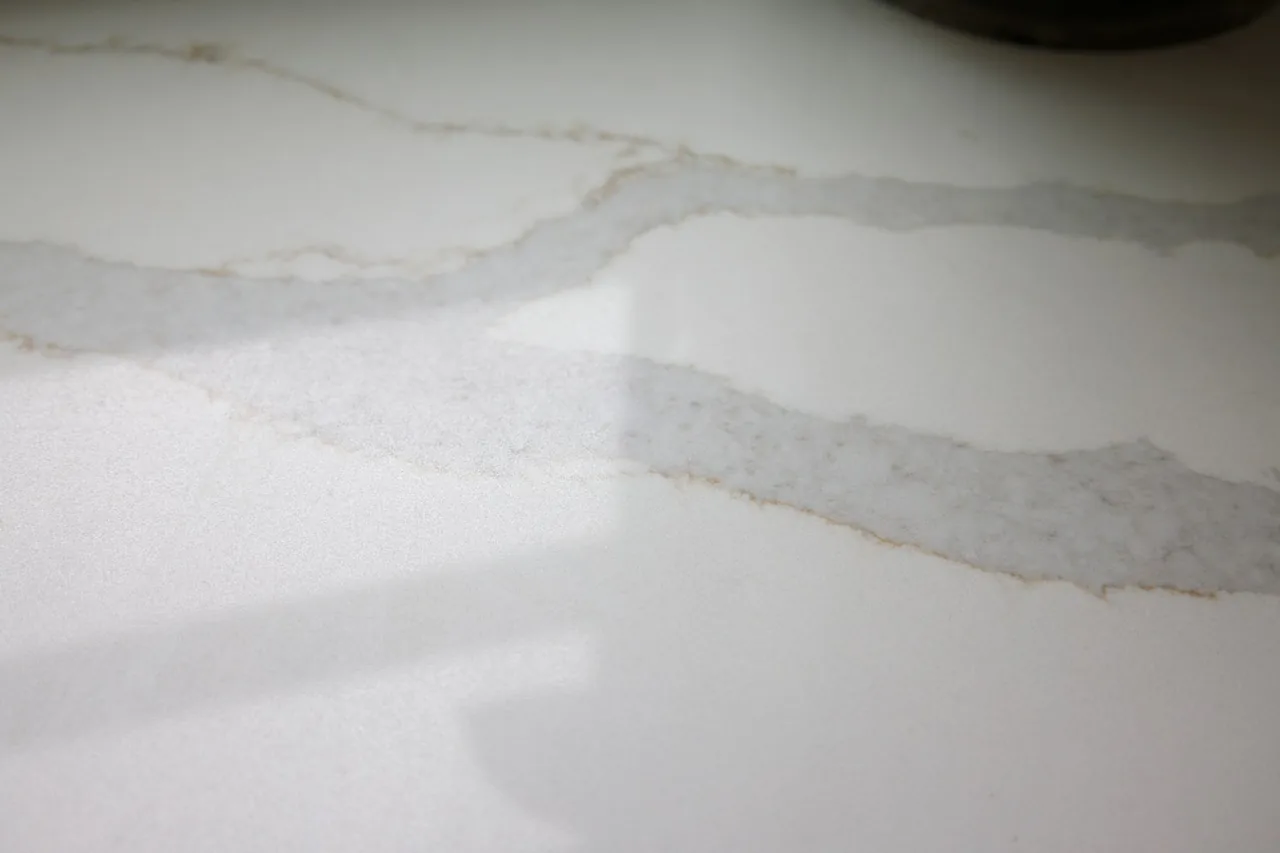
Recycled Glass vs. Quartz, Concrete, and the Other Countertops
Recycled glass is best understood through its two binders, because each one positions it against a different rival — so the comparison runs on two tracks. The honest framing is that you're choosing a quartz-like or a concrete-like surface with a unique terrazzo look and a recycled story.
The Material Comparison Matrix
The matrix below lines both recycled-glass binders up against the alternatives on the specs that separate them — porosity, heat, sealing, the recycled story, and weight.
| Material | Porosity | Heat tolerance | Sealing | Recycled content | Weight |
|---|---|---|---|---|---|
| Recycled glass (resin) | Non-porous | Low — resin scorches | Never | High, by product | Heavy |
| Recycled glass (cement) | Porous | Better — sealer limits | Required, ongoing | High, by product | Heavy |
| Quartz | Non-porous | Moderate — resin scorches | Never | Low / varies | Heavy |
| Concrete | Porous | Slab high; sealer limits | Required, ongoing | Optional aggregate | Very heavy |
| Granite | Porous | High | Periodic | None (quarried) | Heavy |
| Laminate | Non-porous face | Low — permanent scorch | Never | None typically | Light |
Read across the table and the two recycled-glass rows behave like two different materials — the resin row tracks quartz, the cement row tracks concrete — which is exactly why the binder, not the product name, is what you are actually choosing.
The Two Tracks and the Closest Rivals
A resin-bound recycled glass top compares most directly to quartz: both are non-porous engineered composites that never need sealing and resist stains, both can scorch under heat, and both are heavy — the difference is the dramatic glass aesthetic and recycled content versus quartz's more uniform, ground-stone look. A cement-bound top compares to concrete: both are porous, sealed, heat-tolerant, hairline-prone, hand-made surfaces, with recycled glass adding embedded color where concrete is monolithic. Against natural stone like granite, quartzite, and marble, recycled glass trades their quarried permanence for a manufactured, sustainable, far more colorful surface, and it shares a matte-and-characterful sensibility with soapstone only in the cement version. For a budget colorful look, laminate is the cheaper stand-in, but it can't match real embedded glass. To weigh the two binders against the full lineup, see the countertops hub and the material comparison tool.
The Specs That Matter — Binder Type, Recycled Content, and Aggregate
Recycled glass isn't rated by PEI or Janka; the specs that predict how a given slab lives are the binder, the recycled-content share, and the aggregate, and they vary widely between products. Buying on the color of the glass alone, ignoring the binder, is the defining mistake with this material.
Binder Type: The Spec That Governs Everything
The binder is the single most important spec, because it determines porosity, sealing, heat behavior, and which rival the product matches.
Resin vs. Cement Binder
Resin means non-porous, no sealing, and heat-sensitive — the low-maintenance, often glossier track that behaves like quartz. Cement means porous, needs sealing, and more heat-tolerant — the matte, terrazzo-like track that behaves like concrete. Always confirm which you're buying, because the two products look similar in a sample but live in your kitchen as opposites.
How the Binder Dictates the Entire Care Routine
Everything downstream of the purchase follows from the binder. A resin top is cleaned like quartz and never sealed; a cement top is cleaned with pH-neutral products, kept away from acids, and resealed on a schedule. The binder even decides the heat rule — strict trivets for resin, trivets-to-protect-the-sealer for cement. Choosing the binder is therefore choosing the maintenance you'll do for the life of the counter, not just the look.
The Cost of Confusing the Two
The most common and most avoidable recycled-glass failure is buying without knowing the binder: a homeowner expecting a non-porous, no-seal surface receives a cement product that stains because it was never sealed, or one expecting concrete-like heat tolerance sets a hot pan on a resin top and scorches it. Both are the same root error — treating the two binders as interchangeable — and both are eliminated by asking one question before the color conversation begins.
The Resin vs. Cement Spec Table
The table below puts the two binders side by side on the specs that actually differ, so the one decision that governs the whole counter is laid out at a glance.
| Spec | Resin-bound | Cement-bound | Behaves like |
|---|---|---|---|
| Porosity | Non-porous | Porous | Resin = quartz; cement = concrete |
| Sealing | Never | Required, ongoing | Cement needs a reseal schedule |
| Heat tolerance | Low — resin scorches | Better — sealer limits it | Cement is more forgiving |
| Finish | Often polished, glossier | Typically honed, matte | Finish follows the binder |
| Hairline cracks | Not prone | Possible, cosmetic | Cement, treated as character |
| Best sink | Undermount (non-porous edge) | Undermount with sealed edges | Resin is more forgiving |
Read down either column and you have effectively chosen your entire counter — porosity, sealing, heat rules, finish, and care all flow from this one spec, which is why it is settled before color.
Recycled Content Percentage
The share of the slab that is actually recycled glass varies by product, and for an eco-driven buyer this is the number that matters. Some products are largely recycled glass; others contain a more modest fraction, so ask for the documented recycled-content figure — and any third-party environmental certification — in writing, since this is one of the few countertops where that claim is the entire point of choosing it.
Aggregate Size and Surface Behavior
Large chunky glass reads bold and dramatic; fine, evenly distributed flecks read more like subtle terrazzo, and the aggregate also affects how seams and edges look and how the surface feels. Glass itself is hard, but real-world scratch and impact resistance depend on the binder holding it — both types can chip at edges, and the matrix governs stain and heat performance more than the glass does. The aggregate is the personality; the binder is the performance.
Types, Aggregate, and What to Buy
"What to buy" with recycled glass starts with the binder decision and then moves to the look — and because products differ so much brand to brand, the choices are more like specifications than a model number. The major decisions follow from the two-type reality.
Resin or Cement, Chosen for Use
Pick resin for a non-porous, no-seal, lower-maintenance surface that behaves like quartz; pick cement for a heat-tolerant, matte, terrazzo-like surface you're willing to seal and maintain like concrete. This is the foundational buy decision, and every other choice — finish, sink, care — follows from it, which is why it is made first and in writing.
Aggregate Scale, Color, and Base Tint
Choose large statement chunks for drama or fine flecks for subtlety, and a color palette from monochrome to vivid multicolor — the glass color and size define the entire personality of the slab. The binder can also be tinted, so the background behind the glass (clear, white, gray, dark, or colored) dramatically changes how the embedded glass reads. A dark base makes bright glass pop; a pale base reads softer and more terrazzo-like.
Finish Follows the Binder
Resin products are often polished and glossier; cement products are typically honed and matte, so the finish follows the binder and sets the sheen. If sustainability is your reason for choosing the material, the recycled-content figure and any environmental certifications are worth requesting in writing here too — this is one of the few countertops where that claim is the point of the purchase rather than a footnote.
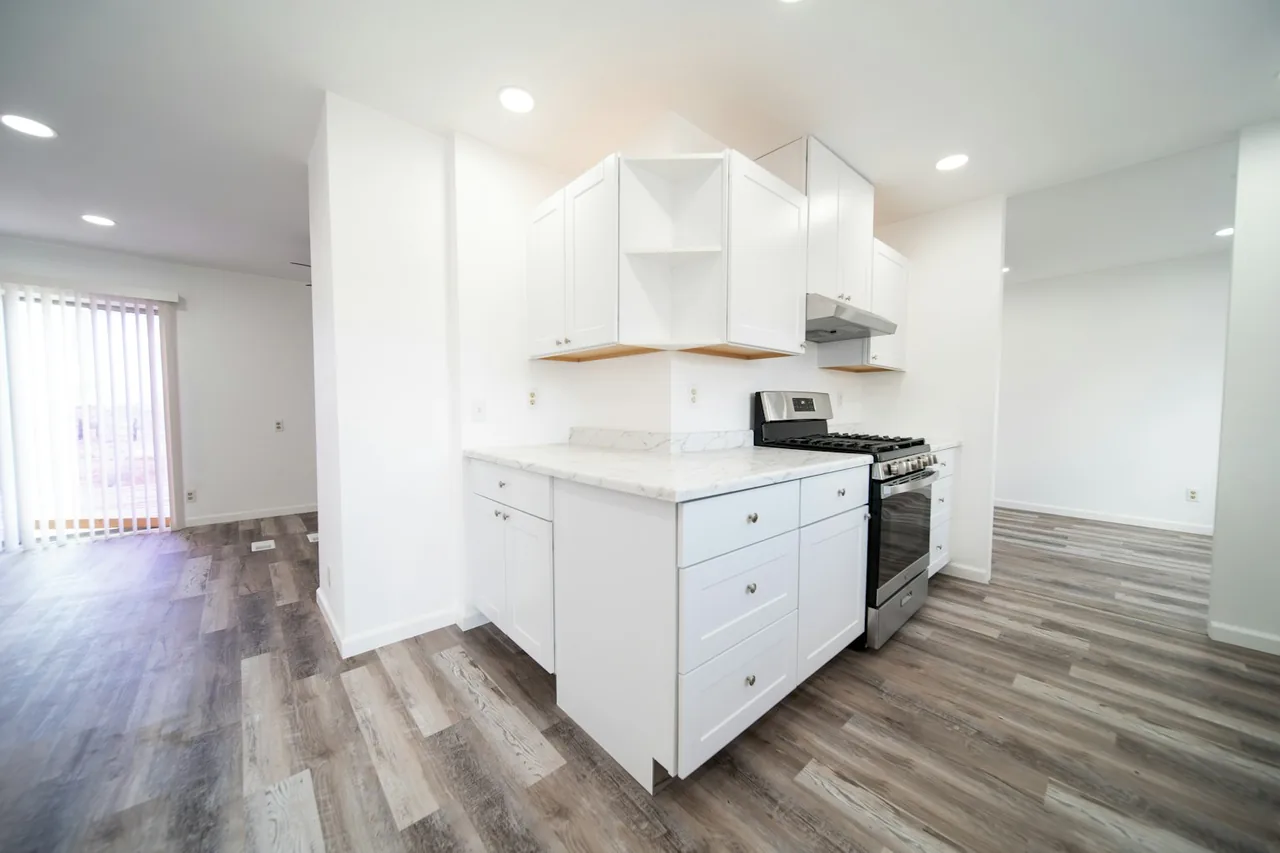
How Recycled Glass Is Fabricated and Installed
How recycled glass is fabricated and installed depends on the binder, but both share one constant — it's a heavy composite slab that demands solid support and careful handling because embedded glass can chip. The six steps below are the full arc from confirming the binder to the final walkthrough.
Confirming the Binder and the Product
Before anything else, the binder is confirmed — resin or cement — because it dictates fabrication, sealing, and care. The documented recycled-content figure and any certification are requested here too, since for most buyers the eco claim is the reason for the material and belongs in writing.
Verifying Cabinet and Structural Support
Both binders produce dense, heavy slabs, so cabinet and structural support is verified before fabrication, just as for concrete or thick stone. Confirming the weight can be carried up front is far cheaper than discovering it after a heavy slab is on site.
Templating and Seam Planning
The runs are templated and seams planned on long or L-shaped runs. The busy glass pattern can help disguise a seam, or — with large chunks — make alignment more demanding, so seam placement is chosen around the aggregate scale rather than ignored.
Cutting and Edge Profiling
Resin-bound slabs are cut and profiled with diamond tooling much like quartz; cement-bound pieces are handled like concrete or terrazzo. Edges can be eased, square, or bullnose, and a cut edge often reveals a beautiful cross-section of embedded glass — a detail to feature rather than hide.
Sealing (Cement Only) and Sink Integration
A cement-bound surface and its cut edges are sealed after fabrication; a resin-bound surface needs no sealing, and its non-porous cut edge handles an undermount sink cleanly. Cure considerations apply to truly cast cement pieces, so the timeline accounts for the binder.
Setting, Protecting the Glass, and Walkthrough
The heavy slab is set with care to guard against chipping the embedded glass at corners during handling, seams are joined and color-matched, and the installer walks the counter explaining the binder's care — strict trivets and chemical caution for resin, or sealing, acid-avoidance, and reseal schedule for cement.
Skip the support check or, worse, the binder confirmation, and the counter either overloads the cabinets or behaves nothing like the owner expected — which is why a vetted fabricator nails both before fabrication. For how templating, seam strategy, and cutouts work across materials, see countertop fabrication and countertop installation.
Talk through your project — free.
A free consultation and a written, itemized quote from a vetted installer. No pressure, no obligation.
Common Recycled Glass Mistakes, Consequences, and Prevention
Most recycled-glass disappointments are the same handful of errors, each with a predictable consequence and a known prevention. Nearly all of them trace to the same root — not knowing which binder you have — so naming them is how you avoid being surprised by your own counter.
| Mistake | What it causes | The prevention |
|---|---|---|
| Buying without knowing the binder | A surface that stains or scorches against expectations | Confirm resin or cement in writing before choosing a color |
| Leaving a cement top unsealed | Oil, wine, and acids stain the porous matrix | Seal a cement surface and its edges, and reseal on schedule |
| Setting a hot pan on a resin top | A permanent scorch in the heat-sensitive resin | Use trivets strictly on resin; cement tolerates heat better |
| Cleaning a cement top with acids or abrasives | Broken-down sealer and an etched cement surface | Use pH-neutral cleaners; wipe acidic spills up promptly |
| Skipping the support check | A heavy composite slab overloading the cabinets | Verify cabinet and structural support before fabrication |
| Assuming the eco claim without proof | A modest recycled fraction when high content was the goal | Request the documented recycled-content figure and certification |
| Mishandling the slab at the edges | Chipped corners that expose the embedded glass | Handle and set carefully; profile edges with chipping in mind |
The first row prevents most of the others, because so many recycled-glass complaints are really binder confusion in disguise — which is why "confirm resin or cement, in writing, before color" is the most valuable sentence in the whole purchase.
Is Recycled Glass Right for Your Space?
Whether recycled glass fits is not a matter of taste — it is the output of a short chain of facts about the look you want, how you cook, what your cabinets can carry, and which binder suits you. Walk the decision in order; each branch removes a mismatch, and what survives is the honest answer.
- Do you want a look and a story stone can't match? If a luminous, jewel-flecked terrazzo surface with genuine recycled content is the goal, recycled glass is nearly unique. If you want a quiet, uniform look, a solid material fits you better.
- Resin or cement — which behavior suits you? Resin is non-porous, no-seal, and heat-sensitive; cement is porous, sealed, and more heat-tolerant. This single choice sets porosity, sealing, heat rules, and maintenance, so make it before color — it is the whole decision.
- How do you cook with heat and chemicals? If you set hot pans down constantly, a cement binder tolerates heat better, though trivets still protect the sealer; resin demands strict trivet use and chemical caution. Match the binder to your real habits.
- Can your cabinets carry a heavy slab? Both binders produce dense, heavy composites. Verify cabinet and structural support before fabrication, just as you would for concrete or thick stone. If the structure can't be reinforced, reconsider.
- Is the eco claim the reason you're buying? If sustainability is the point, ask for the documented recycled-content percentage and any certification in writing, since the share varies widely by product. If you can't verify it, you may not be getting the eco surface you wanted.
Run honestly, this tree returns a clear verdict: recycled glass for the homeowner who wants a sustainable statement surface and chooses the binder around how they live — and a pause for anyone who wants a quiet look or skips the binder decision.
Not sure whether resin or cement recycled glass fits your kitchen?
Tell us about your space and we will match a vetted fabricator who confirms the binder, documents the recycled content, verifies support, and puts the whole plan in writing before fabrication.
What Actually Drives the Cost of a Recycled Glass Counter
A recycled-glass quote is not a flat per-square-foot rate; the price is driven by the product and the work, not the area alone, and the items below are ranked by how much they move the total.
- Binder and product line. The specific resin- or cement-bound product sets the baseline, and premium lines with high recycled content and dramatic aggregate cost more than basic ones — the product itself is the largest lever on material cost.
- Recycled content and certification. Higher documented recycled content and third-party environmental certification can carry a premium, and for an eco-driven buyer that premium is the point rather than an extra.
- Aggregate scale and color. Large statement chunks and vivid multicolor mixes are often more expensive than fine, monochrome flecks, and the aggregate choice moves both the look and the price.
- Thickness and weight handling. A thicker slab is more material and more weight to fabricate, handle, and set, and reinforcing cabinets to carry a dense composite is a real line item.
- Sealing (cement only). A cement-bound top needs sealing of the surface and edges after fabrication and on an ongoing schedule — a cost a resin product avoids entirely.
- Edge profile and cutout complexity. Edges, sink and cooktop cutouts, and the careful handling of embedded glass add labor, and a cut edge revealing glass is a feature worth doing well.
- Removal and disposal. Tearing out an old counter and hauling it away is labor and a fee, and removal can expose support issues — which is why it belongs in the written quote up front.
Because these drivers swing widely, the only honest number comes from an on-site assessment that prices the product, aggregate, sealing, and handling as separate lines. Compare what moves the price across the category in our cost guides and weigh recycled glass against other materials with the countertop cost calculator before you read a quote.
Get an itemized recycled glass scope, not a headline rate.
A vetted fabricator prices the product, recycled content, aggregate, sealing, and handling as separate lines — so you see the whole job, free and with no obligation.
The Recycled Glass Fit Test: Six Calls That Decide If You'll Love It
Recycled glass is the right choice for a specific aesthetic and value set. Run your project through the Recycled Glass Fit Test — six calls, each a documented source of regret when skipped — and a recycled glass counter that fits emerges; miss one and you may get a surface that behaves differently than you expected.
- 1. Choose the binder before the color — it dictates everything
- Resin for a non-porous, no-seal, quartz-like surface that scorches under heat; cement for a porous, sealed, heat-tolerant, terrazzo-like surface. This single decision sets porosity, sealing, heat rules, and maintenance, so make it first — color is the last choice, not the first.
- 2. Pick it for a look and a story stone can't match
- Recycled glass delivers a luminous, jewel-flecked, terrazzo-like appearance and genuine recycled content. If you want a one-of-a-kind, sustainable statement surface, it's nearly unique; if you want a quiet, uniform look, a solid material fits better.
- 3. Verify the recycled-content figure if sustainability is the reason
- Recycled share varies widely by product, so ask for the documented percentage and any environmental certification in writing. This is one of the few countertops where the eco claim is the point, so confirm it rather than assuming it.
- 4. Confirm cabinet support for a heavy composite slab
- Both binders produce dense, heavy slabs. Verify cabinet and structural support before fabrication, just as you would for concrete or thick stone, so the weight is planned rather than discovered after the slab arrives.
- 5. Match the heat and chemical rules to how you cook
- If you set hot pans down constantly, a cement binder tolerates heat better, though trivets still protect the sealer; resin needs strict trivet use and caution with strong chemicals. Factor in your real habits with heat, acids, and solvents when picking the type.
- 6. Plan edges and the sink around the binder
- A resin top's non-porous edge handles an undermount sink cleanly; a cement top needs its cut edges sealed. Both can chip at corners, so confirm the edge profile and sink plan around the binder rather than assuming a one-size approach.
Score your project against all six and the choice is rarely ambiguous — recycled glass is right for the homeowner who chooses the binder deliberately and wrong for the one who buys on glass color alone.
Recycled Glass Countertop Glossary
The terms below recur in every recycled-glass quote, spec sheet, and care guide — each defined as its working meaning on an actual job, so you can read a scope and judge whether it is complete.
- Recycled glass countertop
- A composite surface of crushed post-consumer or post-industrial glass set in a binder, producing a luminous, terrazzo-like, jewel-flecked top with genuine recycled content.
- Binder
- The matrix that holds the glass aggregate together and forms the slab — either resin or cement — and the single spec that decides porosity, sealing, heat behavior, and care.
- Resin-bound
- Recycled glass set in a polymer resin, producing a non-porous, no-seal, often glossier surface that behaves like engineered quartz but can scorch under heat.
- Cement-bound
- Recycled glass set in a cementitious matrix, producing a porous, matte, terrazzo-like surface that behaves like concrete — more heat-tolerant but needing sealing.
- Glass aggregate
- The crushed glass embedded in the binder, ranging from large dramatic chunks to fine even flecks, sourced from bottles, windows, and industrial glass.
- Terrazzo
- The classic look of aggregate suspended in a matrix and ground smooth; recycled glass produces a vivid, colorful version of this speckled, flecked appearance.
- Recycled content percentage
- The documented share of the slab that is actually recycled glass, which varies widely by product and is the number that matters most to an eco-driven buyer.
- Non-porous
- A surface liquids cannot penetrate, so it never stains and needs no sealing — the property of a resin-bound recycled-glass top, like quartz.
- Sealing (cement)
- The applied protection a porous cement-bound surface needs to resist stains and acids, renewed on a schedule — the upkeep a resin product avoids.
- Hairline crack
- A fine, non-structural crack that a cement-bound top can develop from curing and settling, usually cosmetic and stable, treated as character.
- Base tint
- The color the binder is tinted — clear, white, gray, dark, or colored — which sits behind the glass and dramatically changes how the embedded aggregate reads.
- Embedded-glass cross-section
- The cut profile of a recycled-glass slab at an edge, revealing the suspended glass in section — often featured as a decorative detail rather than hidden.
Standards, Care Commitments, and When Recycled Glass Lasts
Recycled-glass products carry manufacturer specs, but the counter's longevity is a function of the right binder choice, verified support, correct sealing where it applies, and honest eco documentation — so the standards live in the selection and the workmanship as much as in any printed certificate.
The Workmanship Standards That Decide Longevity
The conditions are specific and testable: the binder named and matched to how you live, cabinet and structural support verified for a heavy composite, a cement surface and its edges properly sealed, the slab handled to avoid chipping the embedded glass, and the recycled-content figure documented in writing. A fabricator who leaves the binder vague, skips the support check, or under-seals a cement top has built in a behavior surprise or a structural problem. Ask in writing for the binder, the recycled content, the support verification, and the sealing plan — that document is what separates a recycled-glass counter that behaves as expected from one that stains, scorches, or overloads the cabinets.
The Care Commitment You Make in Return
The other half of longevity is yours, and it splits cleanly along the binder line — getting it wrong is how an owner either over-worries a maintenance-free top or neglects one that needs sealing. For a resin-bound top, care mirrors quartz: mild soap and water, no sealing ever, strict trivet use because the resin scorches, and avoidance of harsh solvents. For a cement-bound top, care mirrors concrete: pH-neutral cleaners, prompt cleanup of acidic and oily spills, and periodic resealing on a schedule, watching for the surface darkening where water sits as the signal it's due. Repair follows the binder too — minor chips in either type can often be filled with color-matched epoxy or resin, and cement hairlines are usually cosmetic — while deeper damage, a cracked seam, or a failing cement sealer is a pro job; see countertop sealing for a cement top, and countertop repair and countertop restoration for chips and surface damage. A resin top, like quartz, never appears on a sealing schedule.
A Real Recycled Glass Decision
One representative scenario shows why the binder decides a recycled-glass project — use and values, not the glass color, drove every call below.
How to Vet a Recycled Glass Fabricator
Recycled-glass outcomes are decided by the binder, verified support, correct sealing, and honest eco documentation, so the fabricator matters more than the showroom sample. These questions separate a shop that understands the two-type reality from one that sells glass on color alone.
- They name the binder and its care up front
- Ask whether the product is resin-bound or cement-bound and what care each needs. A credible fabricator names it clearly and explains the porosity, sealing, and heat rules — rather than treating the two as interchangeable, the most common recycled-glass mistake.
- They document the recycled content honestly
- Ask for the recycled-content percentage and any environmental certification in writing. A trustworthy shop provides the documented figure rather than implying a high share, because the eco claim is often the whole reason for the material.
- They verify support for a heavy composite
- Ask whether they confirm the cabinets and floor can carry the weight. A professional checks capacity before fabrication and reinforces where needed, since both binders produce dense, heavy slabs.
- They seal a cement top correctly and explain the schedule
- If the product is cement-bound, ask how the surface and edges are sealed and what the reseal schedule is. A real answer treats sealing as ongoing maintenance, not a one-time step — and confirms a resin top needs none.
- They handle the slab to protect the embedded glass
- Ask how they transport, set, and profile the slab. A careful answer guards against chipping the glass at corners and features the cut-edge cross-section rather than hiding it.
- They put the scope and binder in writing and stand behind the work
- Ask for the full scope — binder, recycled content, support, sealing, edges, and timeline — plus the workmanship warranty in writing before work starts. A shop willing to name a guarantee and return for a chipped edge is accountable for the build, not just the look.
Why Route Your Recycled Glass Project Through Pro Work Home Surface
Pro Work Home Surface is not a contractor and does not fabricate your counter — we are a national authority on home surfaces that matches homeowners with vetted local fabricators and installers and holds them to a published bar.
- A free consultation and an itemized written scope
- Every connection starts with a no-obligation consult and a written quote that lines out the product, recycled content, aggregate, sealing, and handling separately — so you read the whole job, not a headline rate.
- Name the binder and its care up front
- You're told clearly whether your product is resin-bound (non-porous, no sealing, heat-sensitive) or cement-bound (porous, sealed, heat-tolerant), because that single fact dictates porosity, heat rules, and the entire maintenance routine — and confusing the two is the most common recycled glass mistake.
- Document recycled content honestly
- When sustainability is your reason for choosing the material, the actual recycled-content percentage and any environmental certification are provided in writing rather than implied, so the eco claim that drove the decision is verified.
- Support the weight and protect the glass
- Cabinet and structural support for a heavy composite slab is confirmed before fabrication, cement surfaces and cut edges are properly sealed, and the slab is handled to avoid chipping the embedded glass at edges and corners during transport and setting.
Countertops are one of eight categories we cover across home surfaces. If your project also touches ongoing sealing on a cement top, fixing a chip, or a full restoration, the same standards apply — compare resin against cement, and recycled glass against the other materials, on the countertops hub, weigh what moves the price in our cost guides, read the eco-surface trade-offs in our guides, and line them up with the spec-comparison tools. Planning the cabinets that carry the weight too? See cabinets, or start from the full range of home surfaces.
Brands & Material Authority
Quality and construction drive long-term performance more than the label. These are widely respected names in this category:
- Cambria
- Caesarstone
- Silestone
- MSI
- Cosentino
- Corian
- Wilsonart