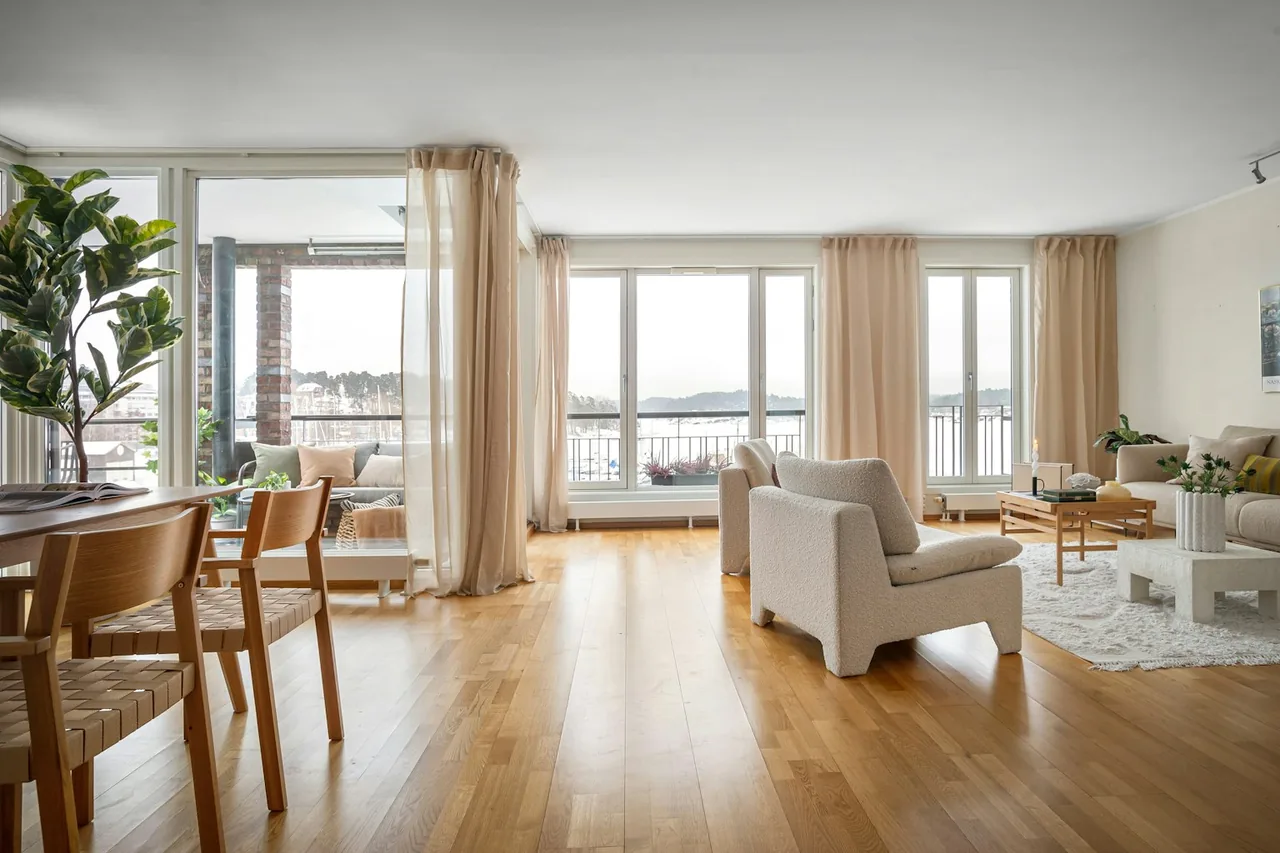
Hickory flooring is the hardest common domestic hardwood floor — a Janka hardness of 1820 lbf, roughly 40% harder than red oak and well above maple — paired with the most dramatic grain and color variation of any mainstream species. Those two traits are what set it apart from its siblings: choose hickory when the room lives hard (large dogs, kids, busy entries) and when you want a bold, high-contrast, rustic floor with character. It is the toughest wood here by a clear margin and the least uniform-looking, which makes racking — deliberately blending the varied boards across the room — the install step that decides whether the floor reads intentional or botched. Get a free consultation and a written, itemized scope from a vetted installer before a single board is ordered — the hardness match and the construction your subfloor demands are decided in that document, not in the showroom.
Hickory Is Two Extremes at Once: Maximum Hardness, Maximum Character
Hickory is the species you reach for when durability is the priority, and it earns that role on the number alone. But it comes bundled with a second, equally defining trait, and the two travel together through every decision.
The Hardness That Outclasses the Field
At 1820 lbf on the Janka scale, hickory is dramatically harder than the American benchmark — red oak sits at 1290, white oak 1360, and even dense hard maple only reaches 1450. That gap is meaningful underfoot: hickory shrugs off the dents, dimples, and scratches that mark softer species, which is exactly why it is the default recommendation for the hardest-living rooms in a home.
What a 40% Margin Over Oak Means in Practice
The practical margin over oak — roughly 40% harder than red oak — is what translates into superior resistance to denting from dropped objects, furniture, heels, and especially the concentrated point loads of dog claws. If a number predicts how a floor survives abuse, hickory's is the best in the common field. Some exotic species and strand-woven bamboo rate higher still; among domestic hardwood floors, hickory leads.
The Grain That Announces Itself
Its second defining trait is visual, and it is unmistakable: hickory has the boldest, most variegated grain and color of any common floor wood. Within a single hickory floor — sometimes within a single board — you will see pale, near-white sapwood transition to rich, reddish-brown heartwood, crossed by strong, irregular grain figure.
Why the Look Is a Commitment, Not a Backdrop
The effect is lively, rustic, and full of character, the antithesis of maple's calm uniformity. This is a floor that announces itself. People who love hickory love precisely that drama; people who want a quiet, even floor find it busy. There is rarely a middle reaction — which is why the look is a strong aesthetic commitment rather than a neutral backdrop.
Planning Around the Variation From the Start
Because the drama is a commitment, it is also a planning input: boards must be blended across the room so the pale-to-dark range reads as intentional, and the finish is usually kept natural so the variation stays the feature. Both are decisions made before the first board goes down, not corrections after.
Where the Two Traits Point Together
Those two traits shape every decision about hickory: the hardness makes it the right tool for abuse; the dramatic variation makes it a statement. Within hardwood flooring, hickory is the choice for buyers who want both maximum toughness and a floor with personality — and who do not want a uniform look.
Hickory vs. Oak, Maple, and Walnut — the Toughest, Boldest Option
Set against its sibling species, hickory's position is clear on both axes that matter — it is the hardest, and the most visually dramatic. The comparison is by the spec each species is rated on, not by the showroom finish.
The Species Comparison Matrix
The matrix below is the decision a homeowner is making across the mainstream hardwoods — the Janka number, the grain and character, and the one thing each does best. Janka figures are widely published industry values; the printed specs for your product always govern.
| Species | Janka hardness | Grain & character | What it does best | Grade page |
|---|---|---|---|---|
| Hickory | 1820 lbf | Dramatic heartwood-to-sapwood variation; rustic | Maximum hardness + bold character | Hickory |
| Hard maple | 1450 lbf | Tight, uniform, pale — calm | Clean, light, contemporary | Maple |
| White oak | 1360 lbf | Open grain, even; neutral tone | Modern tones, even staining, water edge | Oak |
| Red oak | 1290 lbf | Open, ring-porous; warm, predictable | Custom color, matching legacy floors | Oak |
| American walnut | 1010 lbf | Fine, uniformly dark; refined | Rich dark color in gentle rooms | Walnut |
The pattern the matrix makes plain: hickory tops the hardness column outright and anchors the "dramatic" end of the character column, where walnut sits at the opposite pole — softest and most refined. Against uniform maple it is the harder, wilder alternative; against the oaks it trades their even staining for more dent resistance and bolder figure. When a room needs to take real abuse and you want a floor with bold personality, nothing else in the mainstream lineup does both. Compare it spec-for-spec against other floors with the material comparison tool.
Hickory Comes in Solid and Engineered
It comes in both solid and engineered construction, so its species character is independent of the construction your subfloor dictates. A wood subfloor in a dry room opens up solid; a slab or basement means engineered hickory — the toughness and the dramatic look ride on top of that decision.
Want hickory's hardness matched to your household before you buy?
We match you with a vetted installer who assesses the real abuse your room delivers, confirms hickory earns its place, and puts the racking-and-blending plan in a written scope — before you commit to a board or a price.
Hickory by the Numbers — Janka, Hardness Margin, and Grain Variation
Hickory's specs explain both why it is the toughness pick and why it behaves a little differently to work and finish than a uniform species.
Janka Leads the Common Field
Janka hardness is the headline: 1820 lbf — the force to embed an 11.28 mm steel ball halfway into the wood — among the hardest domestic species milled for flooring and clearly above every other wood in the mainstream lineup. If a number predicts how a floor survives abuse, hickory's is the best in the common field, and that is its entire reason to exist.
The Flip Side of Extreme Hardness
Hardness has a flip side worth naming: very hard, dense wood is more demanding to cut, nail, and sand than softer species, which is one reason an experienced installer matters for hickory. The same density that resists dents resists tools, so clean fastening and on-site cuts genuinely benefit from a crew that has worked the wood before.
The Hickory Spec Table
The table collects the figures and qualitative traits that govern a hickory buy, so the durability and look trade-offs read together.
| Spec | Value | What it governs | Why it matters for hickory |
|---|---|---|---|
| Janka | 1820 lbf | Dent resistance | Hardest common species — the abuse pick |
| Hardness margin over oak | ~40% | Relative toughness | Clear dent-resistance edge for pets and kids |
| Color variation | High (heartwood/sapwood) | The look | Requires racking to blend across the room |
| Grain figure | Strong, irregular | Character | Rustic; hides wear well; less uniform staining |
| Workability | Demanding (dense) | Install difficulty | Needs an experienced crew to cut and nail cleanly |
| Preferred finish | Natural / light tones | Finish strategy | Lets the dramatic variation be the feature |
Grain Variation Is the Spec You Plan Around
Grain and color variation is the other defining spec, though it is qualitative rather than numerical: hickory's pronounced heartwood-to-sapwood contrast and strong, irregular figure mean boards vary widely. That has a real planning consequence — you should expect and embrace board-to-board variation, and a good installer racks and blends boards across the room so the variation reads as intentional rather than clustered. The varied density across the grain also makes stain absorb less uniformly than on oak, which is part of why hickory is often left in or near its natural tones, where the variation is the feature.
Where Hickory Works Best — Built for the Rooms That Destroy Softer Floors
Hickory's best rooms are the demanding ones, and its limits are about look and hardwood's universal moisture rule — not durability, where it has no peer in the common lineup.
The Hard-Living Rooms Hickory Was Made For
It is the standout choice for high-traffic, hard-living spaces: busy living-room floors, open main floors, hallways, entries, and any home with large or active dogs, multiple kids, or heavy daily use. Where a softer species would show dents and claw marks within a season, hickory holds up — this is its entire reason to exist. It is also the natural fit for rustic, farmhouse, lodge, and character-forward design schemes where the dramatic grain is exactly the look. A bedroom floor can absolutely be hickory too, if you want the character there; the hardness is simply over-spec for a low-traffic room, never a drawback.
The One Room Hickory Argues Against — Plus the Moisture Rule
Hickory argues against itself in one situation: when you want a calm, uniform, quiet floor. Its dramatic variation is a strong commitment, and in a minimalist or contemporary scheme that wants an even surface, maple or a uniform oak serves better — hickory's busyness would fight the design. And hickory obeys hardwood's absolute limit like every species, hardness notwithstanding: it does not belong in rooms with routine standing water or below-grade moisture. A bathroom floor, a laundry-room floor, and a basement floor are wrong for solid hickory; engineered hickory over a moisture-control system buys some tolerance, but a waterproof material is the honest answer where water is routine. Being the hardest wood does nothing to change its moisture sensitivity — hickory cups from water just like any wood.
How Hickory Is Installed and Finished
Hickory installs by the same construction-and-subfloor logic as any hardwood, but its density and variation both raise the bar on installer skill — the six steps below run from assessment to walkthrough, and step five, racking, is the one hickory makes non-negotiable.
On-Site Subfloor Assessment
The installer identifies the substrate — nailable wood subfloor or concrete slab — checks for deflection and squeaks, and confirms it against the manufacturer's requirements. This decides the method: a slab points to engineered hickory, glued or floated; a sound wood subfloor opens solid hickory.
Moisture Testing Against the Maker's Limit
Concrete is read by an in-situ relative-humidity test to ASTM F2170, probes sealed at 40% of slab depth; wood subfloors are metered to sit within 2% to 4% of the hickory's own moisture content. A reading above the limit stops the install — hickory's hardness gives it no exemption from cupping over a wet slab.
Subfloor Preparation and Acclimation
High spots are ground down and low spots filled to the NWFA flatness tolerance of 3/16 in. over 10 ft, and the hickory acclimates in the conditioned space until its moisture content reaches equilibrium with the home — commonly several days for solid, per the manufacturer. The detail work here lives under subfloor prep.
Careful Fastening of a Very Hard Wood
The installer sets a continuous 1/4 in. to 3/8 in. perimeter expansion gap, then installs by the method the substrate allows — nail-down through the tongue every 6 to 8 inches for solid hickory, or glue-down or float for engineered. Hickory's exceptional hardness makes it more demanding to nail and machine cleanly, so the fastening and any on-site cuts genuinely benefit from an experienced crew.
Racking: Blending the Variation Across the Room
This is where hickory's variation becomes a craft decision. Because the grain and color vary so widely, the single most important step is racking — laying out and blending boards from multiple bundles across the whole floor so the light sapwood and dark heartwood distribute evenly, rather than pooling pale in one area and dark in another. Skip it and even a perfectly fastened hickory floor can look botched.
Finish, Trim, and Walkthrough
Hickory's varied density makes stain absorb less uniformly than oak, so it is frequently left in natural or light tones where the dramatic figure is the star. Stair-nosing, thresholds, and baseboard finish the edges and bridge to adjoining rooms and any staircase. The site is cleaned and the installer walks the floor with you to confirm the blend reads intentional and to explain any cure time before heavy use.
When the finish eventually wears — which takes longer on a floor this hard — hickory sands and recoats under floor refinishing like any solid or thick-veneer wood. The full method comparison across all materials lives under flooring installation.
Talk through your project — free.
A free consultation and a written, itemized quote from a vetted installer. No pressure, no obligation.
Is Hickory Right for Your Space?
Whether hickory belongs in a room is a short chain of facts about the traffic, the look you want, the subfloor, and the room's moisture. Walk it in order; each branch either confirms hickory or points to a calmer or softer species.
- Does the room take real abuse? Large dogs, several kids, busy entries, and heavy daily traffic are exactly what hickory's 1820 lbf is for — no common species resists denting better. If the room lives gently, hickory's hardness is over-spec (never a fault), and the look decides.
- Do you want bold character or a calm surface? Hickory's dramatic heartwood-to-sapwood variation is a strong commitment. If you want it, nothing else has that character; if you want a quiet, uniform floor, maple or a uniform oak is the better fit.
- Does your design lean rustic or contemporary? Farmhouse, lodge, and character-forward schemes are hickory's home. A minimalist or strictly contemporary room that wants an even surface will fight hickory's busyness — match the wood's drama to the room's intent.
- Is the subfloor wood over joists, or a slab? A sound wood subfloor in a dry room opens up solid wood hickory; a slab on grade or a basement means engineered flooring hickory — the toughness and look ride on top of the construction the substrate dictates.
- Confirm the crew and finish last. Only once traffic, look, style, and subfloor are settled do racking plan and finish tone enter — and for hickory the crew's skill at blending the variation matters more than for any other species.
Run honestly, this tree returns either a defensible hickory spec or a signal that a calmer species fits better — and an installer who treats hickory's variation as an afterthought is the red flag.
Common Hickory Mistakes, Consequences, and Prevention
Most hickory disappointments are the same handful of shortcuts, each with a predictable consequence and a known prevention. Naming them is how you spot a corner being cut before it is buried under your floor.
| Mistake | What it causes | The prevention |
|---|---|---|
| Skipping careful racking | Pale and dark boards cluster — the floor looks botched, not intentional | Rack and blend boards from multiple bundles across the whole room |
| Hickory in a calm, minimalist room | A busy floor that fights an even, quiet design | Use maple or uniform oak where a calm surface is the goal |
| An inexperienced crew on a dense wood | Split boards, poor fastening, rough on-site cuts | Insist on a crew that has installed hickory before |
| Forcing a uniform dark stain | Uneven, muddy color as varied density absorbs stain differently | Finish natural or light, or deepen the variation rather than mask it |
| Solid hickory over a slab or below grade | Cupping as slab vapor reaches the wood — hardness is no exemption | Use engineered hickory, glued or floated, with the slab tested first |
| No perimeter expansion gap | Crowning and buckling as the hickory grows with no room to move | Leave a continuous 1/4 in.–3/8 in. gap at every wall and obstruction |
| Wet-mopping the finished floor | A dulled, whitened finish and swollen board edges over time | Clean dry or barely damp with a hardwood cleaner on a microfiber pad |
Every row is either a documented warranty-denial trigger or a money-wasting mismatch — which is why "we rack the variation and install to spec with an experienced crew, in writing" is the most valuable sentence in a hickory quote.
What Actually Drives the Cost of a Hickory Floor
A hickory quote is not a flat per-square-foot rate; the headline number a low bid leads with hides the items below, ranked by how much they move the total.
The Cost Drivers That Move the Total Most
- Grade and the labor to rack it. Hickory's variation means grade and the skilled time to rack and blend boards both move the price — a rustic character grade racked well is real labor a straight-lay uniform floor avoids.
- Solid vs. engineered and the install method. Construction changes both material and labor — a nail-down solid hickory floor, a glue-down engineered over slab, and a floated engineered floor are three different labor lines.
- Subfloor prep and leveling. The biggest swing on most jobs. Grinding high spots, self-leveling low spots to flatness, and reinforcing a bouncy structure is real material and labor a sound, flat substrate avoids.
- Difficulty of cutting a dense wood. Hickory's hardness slows on-site cuts and fastening and wears tooling — an experienced crew prices that difficulty in rather than rushing it.
- Moisture mitigation over a slab. A slab that reads too wet needs a mitigation system or a moisture-control underlayment to the maker's spec — a real line item the lowest bid tends to omit.
- Old-floor removal and disposal. Tear-out is labor and haul-away is a fee, and removal often exposes subfloor problems that change scope mid-job.
- Stairs and transitions. Treads, risers, and stair-nosing are slow, exacting work priced separately; a run onto stairs raises the total across a whole home.
Because these drivers swing so widely, the only honest number comes from an on-site assessment. Compare what moves the price in our hardwood flooring cost guide and across the cost guides, and size your own room with the hardwood calculator so you can read a quote critically.
Get an itemized scope, not a headline rate.
A vetted installer prices the hickory grade, racking labor, prep, removal, and transitions as separate lines — so you see the whole hickory-floor job, free and with no obligation.
How to Choose Hickory for Your Space
Hickory is the right buy when durability is the priority and you want a bold, character-rich floor — decide on toughness and the high-variation look first, then the construction.
- Choose hickory when the room lives hard
- At 1820 lbf it is the hardest common domestic species — the right call for large dogs, kids, busy entries, and high-traffic open floors where softer woods would dent and scratch within a season.
- Commit to the dramatic look — or pick a calmer species
- Hickory's bold heartwood-to-sapwood variation is a strong aesthetic statement. If you want it, nothing else has that character; if you want a quiet, uniform floor, maple or a uniform oak is the better fit.
- Insist on careful racking and an experienced crew
- The dense wood is harder to work, and the variation must be blended across the room. A skilled installer racks boards from multiple bundles so the floor reads intentional — this matters more for hickory than for any other species.
- Finish natural or light to let the variation shine
- Hickory's varied density stains less uniformly, so it looks best in natural or light tones where the dramatic figure is the feature — not masked under a forced uniform dark stain.
- Don't let hardness fool you on moisture
- Being the hardest wood does nothing for water resistance — hickory cups from moisture like any wood. Keep it out of wet and below-grade rooms; use a waterproof material there.
- Let the subfloor pick construction
- Hickory comes a solid-wood floor and an engineered-wood floor. Wood subfloor in a dry room opens up solid; a slab or basement means engineered hickory — the toughness and look ride on top of that decision.
Settle the toughness need and the subfloor first and the grade and finish become a free choice instead of a gamble.
Want hickory's toughness and character done right?
We match you with a vetted installer experienced in the dense wood who racks the variation across the room and fastens it cleanly — so the floor reads intentional, in a written scope, free and with no obligation.
Hickory Flooring Glossary
The terms below recur in every hickory quote, spec sheet, and warranty — each defined as its working meaning on an actual job, so you can read a scope and judge whether it is complete.
- Hickory
- The hardest common domestic floor species at a Janka of 1820 lbf, prized for dramatic heartwood-to-sapwood color variation and rustic character — the abuse-and-drama specialist.
- Janka hardness
- The pounds-force to embed an 11.28 mm steel ball halfway into the wood — hickory's 1820 lbf leads the common lineup by a clear margin, ~40% over red oak.
- Racking
- Laying out and blending boards from multiple bundles across the whole floor before fastening, so hickory's varied light and dark boards distribute evenly rather than clustering — the step that decides whether the floor reads intentional.
- Heartwood
- The darker, reddish-brown inner wood of the hickory tree — the source, contrasted with sapwood, of the species' dramatic color range.
- Sapwood
- The pale, near-white outer wood — the light end of hickory's heartwood-to-sapwood variation that racking blends across the room.
- Grain figure
- The visible pattern of the wood's grain; hickory's is strong and irregular, giving it rustic character and helping it hide everyday wear.
- Acclimation
- Letting hickory boards sit in the conditioned space until their moisture content reaches equilibrium with the home, so the floor stops moving after it is down.
- Expansion gap
- The deliberate 1/4 in. to 3/8 in. space left around the perimeter so a solid or floating hickory floor can expand with humidity without buckling; hidden under trim.
- Cupping
- A concave board profile caused by the underside absorbing more moisture than the top — a failure hickory's hardness does nothing to prevent over an untested slab.
- Screen-and-recoat
- Lightly abrading the finish and adding a fresh topcoat without sanding to bare wood — a refresh that extends the long life of a hard hickory floor between full sandings.
- ASTM F2170
- The in-situ relative-humidity test that reads concrete-slab moisture from probes sealed at 40% of slab depth — the way to confirm a slab is dry enough for hickory.
- NWFA
- The National Wood Flooring Association, which sets the recognized practice for wood subfloor moisture, acclimation, flatness (3/16 in. over 10 ft), and installation that a hickory floor's warranty is judged against.
Standards, Warranty Conditions, and When a Permit Applies
A manufacturer's warranty is a contract with conditions, and most denials on a hickory floor are not about the product — they are about how it was installed.
Warranty Conditions That Hinge on the Install
The conditions are specific and testable: substrate moisture below a stated limit; the hickory acclimated for a stated period; only approved underlayments and adhesives used; the expansion gap and fastener schedule honored; the flatness tolerance met. An installer who nails the dense wood carelessly and splits boards, or skips the moisture test, has created a problem the warranty will not cover. Ask in writing that the install follow the manufacturer's published instructions — that document is what a claim is judged against.
The Standards Body That Sets the Bar
For hickory the NWFA governs subfloor moisture, acclimation, flatness, and installation practice, and ASTM F2170 defines the concrete moisture test. A floor built to these holds its warranty and its shape; a floor built around them holds neither — hardness does not exempt hickory from the moisture rules.
When a Hickory Flooring Permit Is Required
Permits enter when the work goes beyond the finished surface. Replacing a floor like-for-like usually does not require one, but reinforcing structural subflooring or floor joists, or work tied to a larger renovation, often does. A reputable installer tells you when a permit applies rather than working around it — and structural questions belong with the subfloor team first. When wear, not damage, is the issue on a floor this hard, refinishing is the path over a fresh install.
A Real Hickory Decision
One representative scenario shows when hickory is the right call — where the household's demands made hardness the deciding spec.
How to Vet a Hickory Flooring Installer
Most hickory disappointments are install failures, so the installer matters more than the brand on the box. These questions separate a crew that builds hickory floors to last from one that simply lays product fast.
- They have installed hickory before
- Ask directly. The dense wood is harder to cut and nail cleanly than any other mainstream species, and an inexperienced crew splits boards and leaves rough cuts — experience with hickory specifically is a fair thing to require.
- They rack and blend the variation deliberately
- Ask how they'll handle hickory's color range. A real answer describes pulling from multiple bundles and racking across the room so light and dark distribute evenly — not laying boards straight out of one box.
- They test moisture before they quote a final price
- An installer who commits without testing the substrate is guessing. Ask which test they run on concrete and what limit the hickory requires — a real answer names ASTM F2170 and a percentage, and doesn't treat hardness as a moisture pass.
- They match construction to your subfloor
- The right installer explains why solid or engineered hickory fits your substrate, and why the other doesn't. A shop that puts solid hickory over every slab is a red flag — it will cup.
- They acclimate the hickory and install to spec, in writing
- Acclimation period, fastener schedule, approved adhesive, and expansion gap protect your warranty — a professional puts that commitment in the quote, not a verbal promise.
- They put the scope and labor warranty in writing
- Ask for the full scope, the timeline, and the workmanship warranty before work starts. A crew willing to name a labor guarantee — and to return if a seam lifts or a board squeaks — is accountable for the install, not just the product the maker covers.
Two honest answers — real hickory experience and a deliberate racking plan — tell you more about a hickory crew than any showroom; the rest of the list confirms it.
Why Route Your Hickory Flooring Project Through Pro Work Home Surface
Pro Work Home Surface is not a contractor and does not lay your floor — we are a national authority on home surfaces that matches homeowners with vetted local installers and holds them to a published bar.
- Hickory recommended where its hardness earns its place
- The 1820 lbf toughness is matched to genuinely hard-living rooms, and the dramatic variation is flagged as a strong aesthetic commitment — if you want a calm, uniform floor, maple or a uniform oak is proposed instead, with the reasoning explained.
- An experienced crew that racks the variation deliberately
- Because hickory is dense to work and varies board to board, the installer is held to careful racking and blending across the room and clean fastening of the hard wood — so the floor reads intentional, not botched.
- Construction matched to the subfloor, then tested and acclimated
- Solid over a sound wood subfloor; engineered over slab or below grade. The wood is acclimated on site and the subfloor moisture-tested and leveled to the NWFA 3/16 in. over 10 ft tolerance before a single board goes down — hardness does not exempt hickory from the moisture rules.
- National coverage, local crews
- We match you with installers in your area nationwide, so the standard is consistent even though the crew is local — whether your project is a single room or a whole home.
Hickory is one species within hardwood. If your project also involves refinishing an existing hickory floor, restoring a damaged section, or a full tear-out and replacement, the same standards apply — settle the construction question in engineered vs. solid hardwood, weigh the cost in our hardwood flooring cost guide, dig into the how-and-why in our learning center, and start from the hardwood hub to compare hickory against oak, maple, and walnut, or zoom out to the flooring hub and the full range of home surfaces.
Brands & Material Authority
Quality and construction drive long-term performance more than the label. These are widely respected names in this category:
- Shaw
- Mohawk
- COREtec
- Armstrong
- Pergo
- Mannington
- Bruce
- Karndean