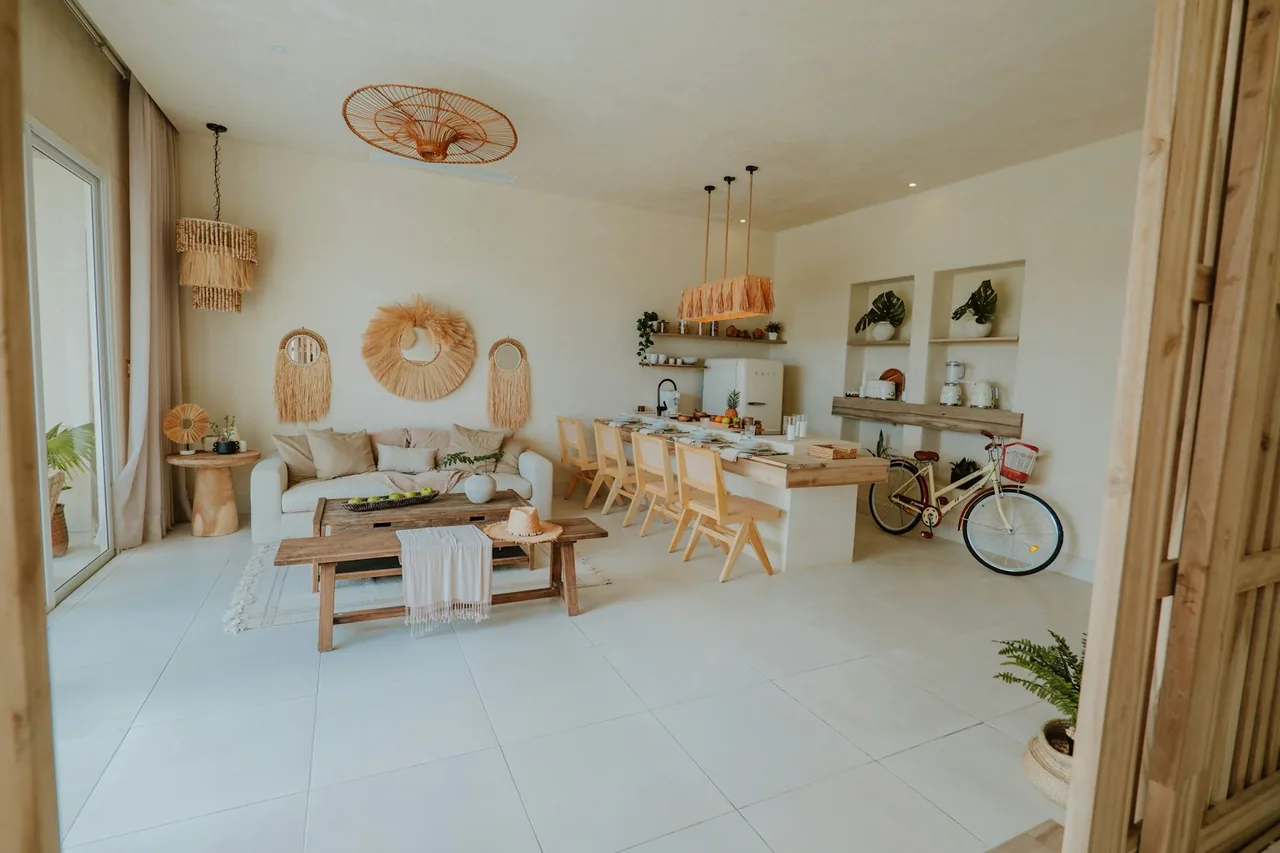
The best living-room flooring looks like the heart of the home and survives being lived in — which is why hardwood still leads, with engineered wood and luxury vinyl plank close behind. Unlike a kitchen or bath, the living room is not decided by water; it is decided by the balance of looks, comfort, and steady moderate traffic in the room guests see and the family uses most. Real wood adds warmth and resale value no other floor matches — and the number that predicts whether it stays handsome is the species' Janka hardness, matched to how hard your living room actually lives. Start with a free consultation and a written, itemized scope from a vetted installer that names the wear spec — Janka for wood, wear-layer mil for vinyl, AC rating for laminate — before a single board is ordered.
A Living-Room Floor Is Judged on Looks First, Then Made to Last
The living room is the only room where the floor is judged first on how it looks, because it is the room that sets the tone of the home — but looks alone do not survive a family. What separates a floor still handsome in ten years from one that looks tired in three is whether its wear spec was matched to the room's real traffic.
Three Demands Balance in a Living Room
The living room asks a floor to satisfy three things at once rather than maximizing any one, and the best floor answers all three:
- Appearance and warmth. This is the floor in the photos, the one that runs through the main gathering space and often flows into the entry and dining area, so it carries the design of the home more than any other surface.
- Comfort underfoot. This is where people actually live — sit on the floor, walk barefoot, gather — so warmth and a pleasant feel matter in a way they do not in a utility room.
- Durability against steady, moderate-to-heavy traffic. Not the abrasive grind of a kitchen, but the constant daily use of the busiest social room, plus furniture loads, dropped remotes, and in many homes kids and pets.
What the living room mostly does not demand is heavy water tolerance — no sink, no shower, no appliance leak — which is exactly why it opens the door to materials a kitchen or bath rules out. Solid hardwood, the floor with the best looks and the worst water tolerance, finally gets a room that plays to its strengths and forgives its weakness.
Choose for Beauty, Check With Durability — the Reverse of a Wet Room
Because water is off the table, the living room is where you can lead with beauty and comfort and use durability as the check rather than the gate — the opposite of how you would choose a bathroom floor. That does not mean the wear spec is optional; it means it moves from a disqualifier to a filter. Pick the look and feel you want, then confirm the species hardness, wear layer, or AC grade is enough for your household's real life. Everything below builds that order into a decision you can hand an installer.
The Living-Room Floor Deciders: Specs That Keep a Handsome Floor Handsome
Even in the room chosen for looks, a few published specs separate a floor that stays handsome from one that tires fast — and they map to traffic and feel rather than water. Each has a visible consequence when ignored, and a floor that fails one disappoints gradually rather than dramatically. Call it the Living-Room Floor Fit Test: pass all six checks and the room's showpiece floor also survives its daily life; miss one and it looks worn before its time.
- 1. Janka hardness (for wood)
- The Janka scale measures the pounds-force needed to dent a wood species, and it predicts how a hardwood survives a busy social room. Domestic red oak sits near 1290 lbf and white oak near 1360 lbf; harder species like hickory at 1820 lbf shrug off more, while softer walnut at 1010 lbf shows wear sooner. Match Janka to how hard the room lives.
- 2. Refinishability
- Wood's defining living-room advantage: a solid floor can be sanded and refinished 5 to 7 times, so a scratched, dated floor becomes new again rather than landfill. Engineered refinishes 1 to 3 times depending on wear-layer thickness — the spec that decides how many second chances the floor gets.
- 3. Wear-layer mil (for vinyl)
- The thickness of luxury vinyl's clear top layer, in mil, predicts how long it resists the scratching and dulling of the home's most-used room. A busy living room wants 12 mil to 20 mil, not the 6 mil that suits a quiet space.
- 4. AC abrasion rating (for laminate)
- Laminate's wear resistance is graded by its AC rating (Abrasion Class), AC1 for light residential up to AC5 for heavy commercial. A high-traffic living room wants AC4 or higher so the surface survives years of foot traffic.
- 5. Carpet fiber, face weight, and twist
- For carpet, the predictors of how long it resists matting are the fiber (nylon is the durability benchmark), the face weight in ounces per square yard, and the twist — plus a quality pad doing much of the comfort and longevity work.
- 6. Underlayment and substrate flatness
- Across hard floors, a floating floor over a poor pad or a wavy subfloor sounds hollow and feels bouncy in the big, open room where you notice it most — so the underlayment and the flatness tolerance are quiet deciders of how the floor reads.
None of these is a water spec, because the living room has no water gate — they are the durability and feel filters that keep the room's showpiece floor looking its best. Match them to your household's real traffic first, then choose the look inside what will hold up.
Want the wear spec matched to how your room really lives?
We match you with a vetted installer who names the Janka, wear-layer, or AC grade for your traffic and puts it in a written scope — before you fall for a color.
Living-Room Flooring Specifications That Decide the Room
The specs that gate a living-room floor are published and testable — but here they predict how a floor ages rather than whether it survives water. They run from the wood hardness that resists dents, through refinishability, to the vinyl and laminate wear grades.
Wood Is Rated on Hardness — and on Second Chances
For a wood living-room floor, two specs matter: how well it resists damage, and how many times it can be renewed after the damage adds up.
Janka Hardness Predicts Dent and Scratch Resistance
The Janka rating, in pounds-force (lbf), is the dent-resistance number. It is why a family room with a big dog wants a harder species: red oak near 1290 lbf or a hard hickory species near 1820 lbf takes claws and dragged furniture better than walnut near 1010 lbf, which is gorgeous but shows wear sooner.
Matching Janka to How the Room Lives
A formal, low-traffic sitting room can carry a soft, beautiful species; a high-traffic family room with kids and pets wants the harder end of the scale, or it accepts refinishing sooner. The living room is exactly where this trade plays out, because it is both the showpiece and, in many homes, the hardest-used social space.
The Species-and-Finish Interaction
Hardness is only half the story: the finish carries the abrasion. A factory prefinished aluminum-oxide finish resists scratching more than a site-applied finish, so a slightly softer species with a tough factory finish can outlast a harder species finished on site — a nuance worth naming when you compare samples for a busy room.
Refinishability Decides How Long a Wood Floor Lasts
The reason wood leads the living room is that its wear is reversible. A solid wood floor sands and refinishes 5 to 7 times, giving it a lifespan past 50 years; engineered flooring refinishes 1 to 3 times depending on wear-layer thickness. That single spec is why a scratched wood floor is restorable rather than ruined — and why "how thick is the wear layer" is the right question for engineered wood in a room that lives hard.
Vinyl and Laminate Are Rated on Abrasion Grade
For the manufactured floors, the wear grade is the longevity predictor. Luxury vinyl's wear layer in mil wants 12 mil to 20 mil for a busy living room, because the thicker layer resists the room's scratching and dulling. Laminate's AC rating wants AC4 or higher for a high-traffic social space — a high-traffic laminate handles the wear a thin, low-AC product would not. Neither can be refinished, so the wear grade is not a second chance but the whole life of the surface.
The Specs That Matter in a Living Room, and What to Look For
Each living-room-deciding spec, on its own — what it measures, why it matters in the busiest social room, and the number or feature to demand on a spec sheet.
| Spec | Why it matters in a living room | What to look for |
|---|---|---|
| Janka hardness (wood) | A soft species dents fast under pets and dragged furniture | 1290 lbf+ (oak/hickory) for a high-traffic family room |
| Refinishability | Wood's wear is reversible — the room's showpiece can be renewed | Solid: 5–7×; engineered: 1–3× (ask the wear-layer thickness) |
| Wear-layer mil (vinyl) | The busiest social room scratches and dulls a thin layer | 12–20 mil for a busy living room |
| AC rating (laminate) | Abrasion grade is laminate's whole life — it cannot refinish | AC4 or higher for high traffic |
| Carpet face weight & twist | Traffic-path matting is the living-room carpet failure | Nylon fiber, higher face weight, tight twist, quality pad |
| Underlayment & flatness | A hollow, bouncy floor is felt most in a big open room | Quality pad; substrate flat to 3/16" over 10 ft |
Living-Room Material Fit, Rated Spec-by-Spec
The table below is the room's ranking made explicit: each candidate against the living room's deciding specs and a verdict for the busiest social space. These are recognized figures — the printed spec for your product always governs, and where it is stricter, the stricter number wins.
| Material | Wear spec | Looks & resale | Comfort | Verdict for a living room |
|---|---|---|---|---|
| Solid hardwood | Janka by species; refinish 5–7× | Benchmark looks & resale | Warm look; add rugs for softness | The classic — best where there's no standing water |
| Engineered hardwood | Real-wood veneer; refinish 1–3× | Real wood, more stable | Warm; installs over concrete | Smarter real wood for open-plan or subfloor limits |
| Luxury vinyl plank | Wear layer 12–20 mil | Wood look; no resale premium | Warm, soft, quiet with a pad | Practical pick for active households |
| Plush carpet | Fiber, face weight, twist | Cozy, not a design showpiece | Softest, warmest, quietest | Comfort choice for a lounging room |
| High-traffic laminate | AC4+; cannot refinish | Wood look at lower cost | Warm underfoot; can sound hollow | Budget route to the wood look |
| Tile | PEI; nearly wear-proof | Cool, formal look | Hard, cold for lounging | Unusual unless warm climate or radiant heat |
The pattern here is choice, not constraint: with water off the table, you can lead with looks and comfort and use durability as the check. Weigh real wood against vinyl in our hardwood vs. vinyl guide and solid against engineered in our engineered vs. solid hardwood guide, then size the room with the flooring cost calculator.
The Best Living-Room Flooring, Ranked — and Why
The living room has the widest field of any room because water is not the gate — so the ranking is about how each material balances looks, comfort, and traffic durability. Every option is a legitimate choice; the right one depends on your priorities.
Solid Hardwood: The Benchmark for Looks and Resale
a solid-wood floor brings a warmth and authenticity no manufactured floor fully matches, and its defining advantage is that it can be sanded and refinished 5 to 7 times — so a scratched, dated floor becomes new again rather than landfill, giving it a lifespan past 50 years. The living room is the right room for it precisely because there is no standing water to cup it. Match the species' Janka hardness to your traffic: red oak near 1290 lbf, softer walnut near 1010 lbf. Explore hardwood flooring.
Engineered Hardwood: Real Wood With More Stability
an engineered-wood floor bonds a genuine hardwood wear layer over a dimensionally stable cross-ply core, so it handles humidity swings better than solid wood and installs in more situations — over concrete, in open-plan spaces that flow into a kitchen — while still looking like the real wood it is. It refinishes 1 to 3 times depending on wear-layer thickness. It is the choice when you want real wood but the room or subfloor argues against solid.
Luxury Vinyl Plank: The Practical Floor for Active Households
A quality rigid-core LVP with a thick wear layer is scratch- and dent-resistant, warmer and softer underfoot than tile, quiet with a good pad, and forgiving of kids, pets, and dropped objects — the living room's real life. It is the choice when durability and low maintenance lead and you accept that it is not real wood and adds no resale value the way wood does. For a busy room, a thicker wear layer (12 mil and up) keeps it sharp. See vinyl flooring.
Plush Carpet and High-Traffic Laminate: Comfort and the Budget Look
Carpet is the only floor that adds softness underfoot, warmth, and sound absorption — a quieter, cozier room — and a living room is dry and suits it where a bath never would; match the fiber and twist to the traffic and choose the pad deliberately. A good high-traffic laminate (AC4 and up) handles a busy living room at a lower cost than wood or premium vinyl, the trade being that it cannot be refinished and reads as less premium than the floors it imitates. With water off the table, the field stays wide — the right pick is the priority that matters most to your household.
What to Reconsider for a Living-Room Floor
The living room has few outright wrong answers, but several common choices are mismatches once you are honest about how the room lives. These are reconsiderations, not bans. A soft hardwood species in a high-traffic, pet-heavy room is the most frequent mismatch — a beautiful but soft floor like walnut dents and scratches fast under dog claws and dragged furniture, so if the room lives hard, choose a harder species or accept you will refinish sooner. A thin-wear-layer vinyl or a low-grade laminate is a false economy in the busiest room: it dulls and scratches quickly and reads as cheap — spend up on the wear layer here if anywhere. Carpet in a living room with serious allergy sufferers, or one that doubles as a high-spill play-and-eat zone deserves a hard look, since it holds allergens and stains where a wipeable floor does not; a stain-resistant fiber or a hard floor with washable rugs may serve better. Tile is not wrong but is unusual in most climates — hard and cold for a lounging room — unless you are in a warm region or want radiant heat under it. The honest summary: there is no water gate here, so the mismatches are about matching durability and comfort to your household's real life, not about a material being categorically wrong.
How a Living-Room Floor Is Installed — the Room-Specific Sequence
A living-room install is usually simpler than a wet room's — no waterproofing, no fixtures to seal — but it has its own realities, and most are about the room's size and how it connects to the rest of the home. The six steps below are the full arc.
Assess the Substrate and Plan the Flow
The installer measures the room, checks the substrate for flatness and squeaks, and maps how the living room connects to the entry, hallway, and dining area — because a big social room so often opens to adjoining spaces, the layout and transitions are planned here so the floor reads square and runs cleanly into the rest of the home.
Correct Flatness and Reset Loose Fasteners
High spots are ground and low spots self-leveled to the 3/16" over 10 ft tolerance, and loose subfloor fasteners are reset — because a hollow, bouncy, or squeaky floor is a daily annoyance in the large room that gets furniture rearranged and walked most.
Acclimate the Material to the Home
Wood and many resilient floors acclimate on site to the home's humidity before install, so they stop moving after they are down — critical in a big room where a floor that adjusts after the fact gaps in winter or peaks in summer across a highly visible span.
Lay the Underlayment for Sound and Feel
A quality pad or acoustic underlayment goes under a floating floor so the large, often-furnished room feels solid and quiet rather than hollow underfoot — the layer that separates a floor that reads built-in from one that clicks and echoes.
Set the Layout and Expansion Gap
The installer plans board direction and starting line so the room reads square and any open-plan run into the kitchen or entry stays continuous, sets a consistent 1/4"–3/8" perimeter expansion gap (with transition breaks in very large runs), and installs by the chosen method — nailed, glued, or floated.
Finish Transitions and Walk the Room
Thresholds, T-moldings, and reducers bridge cleanly into adjoining rooms and any staircase, conceal the expansion gap, and the installer walks the living room with you to confirm the layout reads square, review care, and explain any finish cure time before heavy use.
Skip or rush any one of these six and the result shows in the most visible room in the house — a hollow-sounding span, a squeak underfoot, a floor that fights the room — which is why a vetted installer treats the sequence as fixed, not optional.
Common Living-Room Flooring Mistakes, Consequences, and Prevention
Most living-room-floor disappointments are the same handful of mismatches, each with a predictable consequence and a known prevention. Naming them is how you spot a corner being cut before it shows in the room guests see.
| Mistake | What it causes | The prevention |
|---|---|---|
| Soft species in a hard-living room | Dents and scratches fast under pets and dragged furniture | Choose 1290 lbf+ Janka, or accept earlier refinishing |
| Thin wear layer or low-AC laminate | Dulls and scratches in the busiest room; reads cheap | Spec 12–20 mil vinyl or AC4+ laminate for the traffic |
| Floating floor over a poor pad | Hollow, echoing, bouncy feel in the big open room | Use a quality underlayment over a substrate flat to tolerance |
| No acclimation before install | Gaps in winter, peaks in summer across a visible span | Acclimate wood and resilient floors to the home first |
| No perimeter expansion gap | The most visible floor in the house tents at the seams | Leave a continuous 1/4"–3/8" gap, hidden under trim |
| No felt pads under furniture | Gouges and dents from chairs, tables, and sofa legs | Felt pads on all furniture; area rugs in the main walkways |
| Carpet in a high-allergen or high-spill room | Holds allergens and stains where life happens | Stain-resistant fiber, or a hard floor with washable rugs |
Every row is a documented way a living-room floor disappoints — gradually, by looking tired before its time — which is why "we match the wear spec to your traffic and install to move" is the sentence that protects the room's showpiece.
Which Flooring Is Right for Your Living Room?
The right living-room floor is the output of a short chain of honest answers about your top priority and how hard the room lives. Walk it in order; each branch narrows the wide field to a defensible choice.
- What is your single top priority? If authenticity and resale lead, real wood — solid or engineered. If practicality and low maintenance lead, a quality luxury vinyl plank. If comfort and quiet lead, plush carpet. Naming the one thing that matters most narrows the field fast.
- How hard does the room actually live? A formal, low-traffic sitting room can carry a softer, more beautiful wood; a family room with kids, a dog, and constant use wants a harder species, a thick-wear-layer vinyl, or a pet-friendly floor that forgives claws and spills.
- Does the room flow into others? An open-plan living room opening to a kitchen or entry reads best with one continuous floor — favoring a material that runs unbroken across both, like engineered wood or a wood-look vinyl, over a mid-space transition.
- What is your appetite for maintenance? Wood rewards care and refinishes beautifully but asks for grit control and felt pads; vinyl and laminate are wipe-and-go; carpet needs vacuuming and spill management and eventually replacement. Match the floor to the upkeep you will actually do.
- What is the long view on cost? Real wood costs more up front but lasts generations and refinishes; vinyl and laminate cost less and last years; carpet is comfortable but a recurring replacement cost. Compare lifetime value in the hardwood and vinyl cost guides.
Run honestly, this tree returns the priority that should lead — and an installer who steers every living room to the same material regardless of the answers is the red flag.
Torn between real wood, vinyl, and carpet?
Tell us your top priority and how the room lives, and we will match a vetted installer who names the right floor for it — free, and in writing.
What Actually Drives the Cost of a Living-Room Floor
A living-room quote is not a flat per-square-foot rate; the headline number a low bid leads with hides the items below, ranked by how much they move the total in a large, connected room.
- Material grade and construction. The species and its Janka, the wear-layer mil or AC grade, and solid versus engineered versus vinyl versus carpet all set the baseline — and speccing up for the room's traffic is where the budget earns out.
- Square footage and room size. The living room is often the largest single space, so the material and labor scale with it more than any other room's floor.
- Subfloor prep and flatness. Grinding and self-leveling a big span to tolerance so a floating floor does not feel hollow is real material and labor a flat substrate avoids.
- Underlayment grade. A quality acoustic pad to keep the large room from sounding hollow is a line item worth its cost — and one a low bid downgrades.
- Layout complexity and flow. Planning board direction and continuous runs into the kitchen, entry, and hallway, and any diagonal or herringbone pattern, adds skilled hours beyond a straight-lay room.
- Old-floor removal and disposal. Tear-out is labor and haul-away a fee, and removing old carpet or a glued floor can expose substrate issues that change scope — which is why it belongs in the written quote.
- Transitions across a connected floor. Thresholds and reducers at every doorway and material change add up across a living room that opens to several rooms.
- Furniture moves. Emptying and resetting a full living room of furniture adds labor an empty space does not.
Because these drivers swing so widely, the only honest number comes from an on-site assessment. Compare what moves the price across the category in our cost guides, and size your own living room first with the material comparison tool so you can read a quote critically.
Keeping a Living-Room Floor Looking Its Best
A living-room floor is the one guests see, so keeping it handsome is the whole point — and care here is about protecting the finish and managing the room's daily wear. The habits differ by material but share a theme: stop the wear before it shows.
On wood, the enemies are grit and furniture — tracked-in sand scratches a wood finish underfoot, so a walk-off mat at the entry and regular dust-mopping protect the floor more than anything; felt pads under furniture legs stop the dents from chairs and tables; and area rugs in the main walkways take the brunt of the traffic off the finish. The payoff is wood's unique advantage: when the finish wears, a solid floor can be refinished rather than replaced, and even an engineered floor can be re-coated a limited number of times. On vinyl and laminate, the same grit control applies and the surface wipes clean; the wear layer does the protecting, which is why speccing it adequately up front pays off. On carpet, the routine is vacuuming to keep traffic-path fibers from packing down, prompt spill treatment so stains release before they set, and periodic professional cleaning — and a stain-resistant fiber makes all of that easier. When a living-room floor is damaged rather than dull — a deep gouge, a water-stained board, a burned-in stain — see flooring repair; when it is simply tired, professional cleaning or refinishing often brings it back without a full replacement.
Talk through your project — free.
A free consultation and a written, itemized quote from a vetted installer. No pressure, no obligation.
Living-Room Flooring Glossary
The terms below recur in every living-room-floor quote, spec sheet, and warranty — each defined as its working meaning on an actual job, so you can read a scope and judge whether it is complete.
- Janka hardness
- The pounds-force needed to dent a wood species — the rating that predicts how a hardwood survives a busy living room. Red oak sits near 1290 lbf; walnut near 1010 lbf.
- Refinishability
- How many times a wood floor can be sanded and re-coated — solid 5–7×, engineered 1–3× by wear-layer thickness. The spec that makes wood's wear reversible.
- AC rating
- Laminate's Abrasion Class (AC1–AC5) grading how the wear surface holds up to traffic. A busy living room wants AC4 or higher, since laminate cannot be refinished.
- Wear-layer mil
- The thickness of luxury vinyl's clear top layer in mils — the spec predicting how long the pattern survives a busy room's scratching. 12–20 mil for a living room.
- Face weight
- The weight of carpet fiber per square yard, in ounces — a predictor, with fiber and twist, of how well a carpet resists the matting that shows in traffic paths.
- Twist
- How tightly carpet yarn is twisted; a higher twist resists matting and holds its look longer in a busy social room. The modern high-twist cut pile is frieze.
- Acclimation
- Letting flooring sit in the conditioned space until its moisture content reaches equilibrium with the home, so it stops moving after it is installed across a highly visible span.
- Expansion gap
- The 1/4" to 3/8" space left around a floating or solid-wood floor's perimeter so it can move with humidity without peaking in the most visible room; hidden under trim.
- Underlayment
- The pad between substrate and a floating floor — in a big living room it does double duty for feel and sound, keeping the floor from reading hollow and bouncy.
- Engineered vs. solid
- Solid is one piece of wood (refinishes many times, nailed to wood); engineered is a real-wood veneer over a stable core (more dimensionally stable, installs over concrete, refinishes fewer times).
- Prefinished
- Wood finished at the factory with a tough aluminum-oxide coating that resists scratching more than a site-applied finish — a durability edge for a hard-living room.
- Transition
- The finishing piece — threshold, T-molding, or reducer — that bridges the living-room floor to an adjoining room or stair and conceals the expansion gap where the floor meets a change.
Standards, Warranty Conditions, and What a Living-Room Floor Must Meet
A manufacturer's warranty is a contract with conditions, and even in a dry room most denials are about how the floor was installed, not the product itself.
Warranty Conditions That Hinge on the Install
The conditions are specific and testable: the product acclimated for a stated period, substrate flatness within tolerance, only approved underlayments and adhesives, the expansion gap at a minimum dimension, and the fastener schedule met. An installer who skips acclimation or the pad substitutes a cheaper coverage before you notice. Ask in writing that the install follow the manufacturer's published instructions — that document is what a living-room warranty claim is judged against, and one more reason the cheapest quote is rarely the cheapest floor.
The Standards Bodies Behind a Living-Room Floor
Standards govern the rest. The NWFA sets wood acclimation, the flatness tolerance, and the fastener schedule; the vinyl and laminate makers publish the wear-layer and AC grades and the ASTM tests behind them; carpet is judged on fiber, face weight, and twist. A living-room floor built to these holds its warranty and its look. When wear rather than damage is the issue, wood's path is refinishing before a full replacement — and squeaks or bounce trace back to the subfloor, where they are corrected first.
A Real Living-Room Flooring Decision
One representative living room shows how the room rewards choosing for looks while checking durability — beauty and a busy household had to be reconciled, and the wear spec did it.
How to Vet an Installer for a Living-Room Floor
A living-room floor is the showpiece of the home, so the installer's judgment about matching the floor to the room matters as much as the craft. These questions separate a crew that builds a floor that stays handsome from one that lays product fast.
- They match the wear spec to your traffic
- Ask what Janka, wear-layer mil, or AC grade they recommend for how your room lives. A real answer names a species hardness or a wear grade tied to your household, not "this one's popular."
- They plan the layout and flow across rooms
- Ask how they will plan board direction and transitions into the kitchen, entry, and hall. A credible answer treats the open-plan flow as a design decision, not an afterthought at the doorway.
- They spec the underlayment for sound and feel
- Ask what pad they will use and why. In a big room, a quality acoustic underlayment is the difference between a floor that feels built-in and one that echoes — an installer who downgrades it silently is cutting a corner you will hear.
- They acclimate and gap the floor to move
- Ask about acclimation time and the expansion gap. Wood and resilient floors must acclimate and get a continuous perimeter gap, or the most visible floor in the house peaks or gaps with the seasons.
- They handle removal, transitions, and furniture cleanly
- Ask whether removal and disposal, furniture moves, and transitions to adjoining rooms and stairs are included. The edges and the flow into other rooms are where rushed living-room work shows.
- They put the scope and workmanship warranty in writing
- Ask for the full scope and a labor warranty in writing before work starts. A crew willing to name a workmanship guarantee — and return if a seam lifts or a board squeaks — is accountable for the install, not just the product.
Why Route Your Living-Room Floor Through Pro Work Home Surface
Pro Work Home Surface is not a contractor and does not lay your floor — we are a national authority on home surfaces that matches homeowners with vetted local installers and holds them to a published bar.
- Durability matched to how the room lives
- The material's wear spec is matched to the room's real traffic — wood species Janka to the household, vinyl wear layer to the use, laminate at AC4+ for a busy space — so the floor that has to look its best also holds up to daily life.
- A floor that flows and feels solid
- Layout, board direction, and transitions are planned so the floor reads square and runs cleanly into adjoining rooms, and the substrate is flat with a proper underlayment so the big room does not sound hollow or feel bouncy underfoot.
- Installed to move and to last
- Wood and resilient floors are acclimated and given a continuous expansion gap so they do not peak in the most visible room, and the method — nail-down, glue-down, or floating — is chosen for your subfloor and material, not for installer convenience.
- National coverage, local crews
- We match you with installers in your area nationwide, so the standard is consistent even though the crew is local — whether your project is a single living room or a whole open-plan main floor.
Flooring is one of eight categories we cover across home surfaces. If your living-room project also touches an adjoining kitchen floor or the bedrooms down the hall, the same standards apply — compare what moves the price in our cost guides, weigh the choices in our how to choose flooring guide, size the job with our cost calculator, and start from the flooring category hub or the full range of home surfaces.
Brands & Material Authority
Quality and construction drive long-term performance more than the label. These are widely respected names in this category:
- Shaw
- Mohawk
- COREtec
- Armstrong
- Pergo
- Mannington
- Bruce
- Karndean