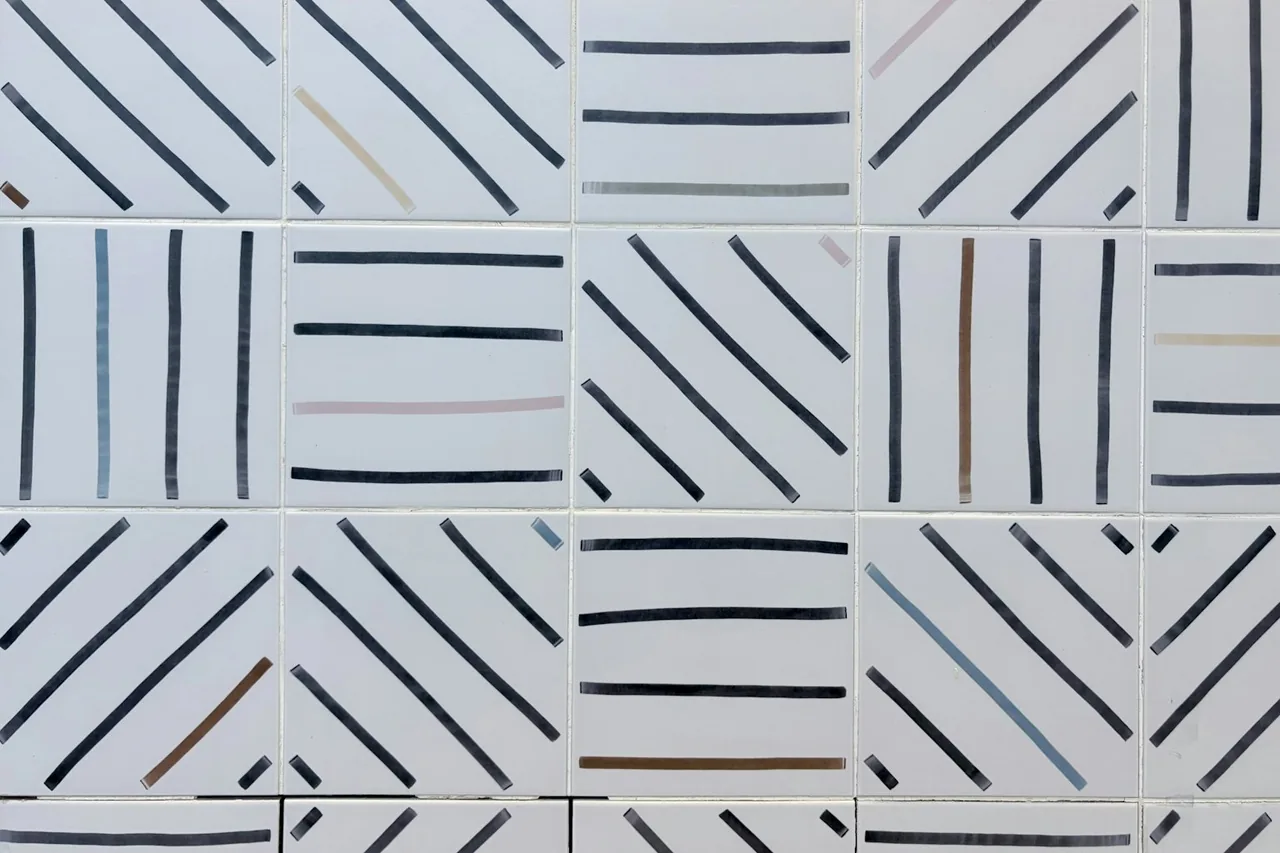
Mosaic floor tile is small-format tile — individual pieces generally under 2 in. — pre-arranged and mesh-mounted on sheets so dozens set at once. It is defined by size and mounting, not material: mosaics come in porcelain, glass, natural stone, or ceramic, so a mosaic is a format laid over one of the sibling materials, not a material of its own. Its signature is grout — far more joints per square foot than large tile — and those joints are exactly why a mosaic clears the DCOF ≥ 0.42 wet-floor benchmark and owns shower pans, where the grout adds grip a big, slick tile cannot. Choose mosaic over large-format tile for wet floors, curved and sloped pans, and accents. Get a free consultation and a written, itemized scope from a vetted installer before you buy, because the material behind the mosaic, the slip need, and the waterproofing are decided there, not in the showroom.
Mosaic Is a Format, Not a Material — Grout Joints Are Its Whole Point
Every other tile on the shelf is defined by what it is made of; a mosaic is defined by how small it is and how many grout lines it carries. That single difference is what makes it the right choice for the wettest, most curved floors in the house.
Small Pieces, Mesh-Mounted for Speed
A mosaic is any tile with pieces small enough — generally under 2 in., sometimes penny-round, hex, or 1 in. square — that installing them one by one would be impossibly slow. So they are mesh-mounted: bonded to a flexible backing sheet (usually about 12 in. square) that sets dozens of pieces in a single motion, keeping the spacing perfect. The sheet is the delivery method; the finished floor still reads as many tiny individual tiles once grouted.
Why the Grout-Joint Count Is the Defining Spec
Because the pieces are small, a mosaic has vastly more grout joints per square foot than a large tile — and grout is textured and slightly recessed, so every joint is a tiny grip edge. That density of joints is what raises a mosaic's wet slip resistance above the smooth tile it is made from, letting it clear the DCOF ≥ 0.42 benchmark for wet floors. What is a maintenance burden elsewhere — more grout to clean — becomes a safety feature on a wet pan. The joint count is the whole reason mosaics exist on floors.
The Material Behind the Mesh Still Governs
A mosaic inherits the properties of whatever it is made from. A porcelain mosaic is under 0.5% absorption and frost-proof; a glass mosaic is fully impervious and luminous; a stone mosaic (marble, travertine, slate) carries that stone's hardness, porosity, and sealing needs. So choosing a mosaic is two decisions, not one: the format (small, grippy, flexible) and the material behind it (which decides water, hardness, and care). A marble mosaic still etches; a porcelain mosaic still does not.
Why Mosaics Conform to Curves and Slopes
The mesh backing and small pieces give a mosaic a second superpower: it flexes. A sheet of tiny tiles bends over the slope of a shower pan, wraps a curved step, and follows the fall to a drain in a way a rigid large tile cannot — which is why mosaics are the default surface on sloped, curbless, and linear-drain shower floors. The format solves geometry a big tile fights.
Mosaic vs. Large-Format Tile and Its Sibling Materials
Within the tile family, a mosaic is the small-format, high-grip option, and the deciding spec against its siblings is grout-joint density — the count that drives wet slip and the ability to follow a curve. The real comparison is mosaic versus the same material in a large format, plus the mosaic's own material choice.
The Mosaic-vs-Siblings Matrix
The matrix below rates a mosaic against the other six tiles on the deciding spec each is judged by, so the trade reads at a glance. These are representative figures; the material behind the mosaic and its finish always govern.
| Tile | Deciding spec (grip / format) | Wet / slip note | Sealing & care | Best-fit rooms |
|---|---|---|---|---|
| Mosaic (this page) | Many grout joints; flexes to slopes | Joints clear ≥ 0.42 wet | Seal grout; per its material | Shower pans, curbless floors, accents |
| Porcelain (large) | Big format; few joints | Needs matte finish for wet | Never sealed | Wet rooms, heavy traffic, outdoors |
| Ceramic (large) | Big format; few joints | Matte glaze for wet | No sealing (glaze) | Dry, moderate interior floors |
| Marble | Soft; etches; often large | Polished slick; hone for grip | Seal often; etches | Formal, dry, low-traffic luxury |
| Travertine | Porous; etches; often large | Tumbled/honed grip | Seal; maintain fill | Rustic dry-to-moderate floors |
| Slate | Hard, cleft; often large | Cleft grips naturally | Light seal; no acid worry | Entries, mudrooms, wet-ish floors |
| Wood-look | Long plank; few joints | Fully waterproof | Never sealed | Wood look in wet rooms |
The pattern is clear: the mosaic's many grout joints and flexibility make it the wet-floor and curve specialist, where the large-format siblings win on fewer grout lines to clean and a bigger, calmer field. Compare them spec-for-spec with the material comparison tool before you settle on one.
Mosaic vs. Large-Format: the Real Trade
The honest comparison is not mosaic versus a different material — it is mosaic versus a large tile of the same material. The mosaic's many joints deliver wet grip and conform to slopes, but they mean far more grout to clean and seal, and a busier look. A large-format tile of the same porcelain gives a seamless, low-maintenance field but is slick when polished and cannot follow a shower slope. That is why the same bathroom often runs large porcelain on the dry floor and a mosaic on the shower pan — each format where its trade wins.
Mosaic Materials: Porcelain, Glass, and Stone
Because a mosaic is a format, its material is a separate, important choice. A porcelain mosaic is the workhorse for a wet floor: waterproof, durable, and its joints add the grip. A glass mosaic is luminous and impervious, stunning as an accent or on walls, but slicker per-piece so it leans on joint density and is more often a wall or accent than a main floor. A stone mosaic — marble, travertine, or slate — brings that stone's beauty and its care burden (a marble mosaic still etches and needs sealing). Match the material to the room's water and care tolerance, then let the mosaic format add the grip. Compare the whole lineup on the tile flooring hub.
Not sure which mosaic material and finish your wet floor needs?
We match you with a vetted installer who confirms the material behind the mosaic, the slip need, and the waterproofing for your shower or floor — and puts it in writing, before you commit to a tile or a price.
The Specs That Define Mosaic — Joints, DCOF, Material, and Mounting
Four properties tell you whether a mosaic belongs on your floor and in your room, and reading them is the difference between a grippy, watertight shower pan and a grout-nightmare that traps mildew. Buying on the pattern alone, ignoring the material and the setting, is the classic mosaic mistake.
Grout-Joint Density and DCOF
A mosaic's defining spec is the number of grout joints per square foot, and its payoff is slip. The DCOF (dynamic coefficient of friction) per ANSI A137.1 sets the DCOF ≥ 0.42 benchmark for interior wet floors, and the recessed, textured joints of a mosaic help a floor clear it where a large, smooth tile of the same material would not. The smaller the piece, the more joints, the more grip — the reason penny-round and 1 in. mosaics are shower-floor favorites.
The Underlying Material's Spec
The mosaic format does not override the material's own numbers. A porcelain mosaic still reads under 0.5% absorption and is frost-proof; a stone mosaic still carries its Mohs hardness, porosity, and sealing needs; a glass mosaic is impervious but shows scratches. So confirm the material's spec — absorption, hardness, and whether it needs sealing — exactly as you would for a large tile of that material, because a mosaic marble is no more acid-proof than a marble slab.
Mounting: Face vs. Back Mesh
How the sheet is mounted matters at install. Most mosaics are back-mounted on mesh, which stays in place; some, especially glass and certain stones, are face-mounted with a paper film on top that is peeled off after setting, so the installer sees the true face and buries no mesh under a translucent piece. Face-mounted sheets demand more skill to set flat since the installer works blind to the back, and the mounting type is worth confirming for glass and stone mosaics.
The Mosaic Spec Table
The table below collects a mosaic's own properties, what each governs, and the practical note, so the trade reads at a glance. These are representative figures; the material behind the mosaic always governs.
| Property | What it governs | Recognized measure | Mosaic figure / note |
|---|---|---|---|
| Piece size | Joint count, grip, flexibility | Under 2 in. pieces | Smaller = more joints = more grip |
| Grout-joint density | Wet slip resistance | DCOF (ANSI A137.1) | Joints help clear ≥ 0.42 wet |
| Underlying material | Water, hardness, sealing | Porcelain / glass / stone | Inherits that material's spec |
| Mounting | Setting method and flatness | Back vs. face mesh | Face-mounted needs more skill |
| Flexibility | Following slopes and curves | Mesh sheet | Conforms to shower pans, drains |
The pattern the table makes plain: a mosaic is chosen for its joints and flexibility, but it lives or dies by the material behind it and the waterproofing beneath it. Above the tile spec sits the setting standard: TCNA (Tile Council of North America) and ANSI define the substrate, mortar, coverage, and — critically for a shower pan — the waterproofing.
Planning a curbless shower or a slip-safe wet floor?
Tell us about your space and we will match a vetted installer who picks the mosaic material and size for the slip need, waterproofs the pan, and puts it in writing — before you buy.
How Mosaic Tile Is Installed
A mosaic's tiny pieces make coverage and flatness the whole challenge, and on a shower pan the waterproofing beneath it is where the job is truly won. The six steps below are the full arc, with the mosaic-specific calls — full-coverage bedding of every piece and the pan membrane — called out where they fall.
Substrate, Slope, and Waterproofing
On a shower floor the installer builds or confirms the slope to the drain and installs a waterproofing membrane so water never reaches the substrate — the step that decides whether the pan lasts. On a regular floor, a sound, flat, deflection-rated substrate (L/360, more for stone) is confirmed first under subfloor prep.
Setting the Mesh Sheets in Thin-Set
The sheets are set into a thin-set matched to the material — a white mortar under glass and light stone so it does not shadow — pressed so the mortar keys through the mesh and fully contacts the back of every tiny piece. Full coverage is doubly important on a mosaic because each small piece has little bond area to spare.
Aligning Joints Across Sheets
The installer keeps the grout lines continuous from sheet to sheet so the seams between mesh panels disappear, adjusting individual pieces that shifted on the mesh. A mosaic set carelessly telegraphs its 12 in. sheet grid — the mark of a rushed job.
Flattening and Embedding Every Piece
Because pieces can sit slightly proud or low, the installer beats the sheets in flat and checks that no piece stands above its neighbors, especially on face-mounted glass where the back is unseen. This is the fussiest part of a mosaic and where skill shows.
Grouting the Many Joints
The abundant joints are packed full with a grout suited to the material and joint width — often an epoxy or high-performance grout on a wet pan for stain and mildew resistance. This is the step that both locks the pieces and delivers the slip resistance the mosaic was chosen for.
Sealing, Cleanup, and Walkthrough
Stone mosaics and cement grout are sealed where specified, the haze is cleaned from the many joints, and the installer walks the floor with you to confirm coverage, flatness, and a slip-rated, watertight result. Transitions and any step edges finish the job.
Skip the pan waterproofing, the full coverage, or the flattening and the failure each prevents — a leaking shower, popping pieces, a lippage-ridden pan — shows up fast on the wettest floor in the house. That is why a vetted installer treats a mosaic pan as a waterproofing job first; the broader sequence lives under flooring installation.
Talk through your project — free.
A free consultation and a written, itemized quote from a vetted installer. No pressure, no obligation.
Is Mosaic Right for Your Space?
Whether a mosaic is the right format — and which material and size — is the output of a short chain of facts about the surface's slope, its water, and the look you want. Walk the decision in order; each branch narrows the format and material.
- Is it a sloped or curbless shower floor? If yes, a mosaic is almost always the answer — it flexes to the slope and its joints add the grip a wet pan demands. A large tile cannot follow the fall to the drain.
- How much wet grip does the surface need? The wetter and more slip-critical, the smaller the piece — penny-round or 1 in. mosaics maximize joints and grip. A less-wet accent floor can use a larger mosaic.
- Which material fits the water and care? A wet pan wants a porcelain or glass mosaic (no sealing); a stone mosaic brings beauty but its sealing and, for marble, etch care. Match the material to the room, then the format adds grip.
- Floor field or accent? Mosaics shine as shower pans, curbless floors, and accent bands or borders; for a large dry floor field, the many joints are a cleaning burden, so a larger tile of the same material is often the better main surface.
- Is the pan waterproofed and the substrate sound? A mosaic floor is only as good as the membrane and substrate under it. Confirm the waterproofing and rigidity first under the flooring hub.
Run honestly, this tree returns either a defensible mosaic pan or accent or a clear signal that a larger tile fits the field better — and an installer who runs a big polished tile across a shower floor with no slope solution is the red flag.
Where Mosaic Wins — Showers, Curves, and Accents
A mosaic is a specialist format, brilliant where its joints and flexibility are the point and a cleaning burden where they are not.
Where Mosaic Wins
Mosaic owns the wet, sloped, and detailed surfaces: a curbless or standard shower pan, where the slope and slip demand it; a wet bathroom floor zone that needs extra grip; an accent band, border, or rug-effect inset that frames a larger tile; and curved or stepped surfaces a rigid tile cannot wrap. On a shower floor especially, a mosaic is not a style choice but the correct engineering — the joints that grip and the sheet that follows the fall to the drain.
Where a Larger Tile Wins Instead
Where a mosaic works against you is a large, dry floor field. All those grout joints that grip a wet pan become a lot of grout to clean and seal across a big room, and the busy look can overwhelm a large space. On a dry kitchen or living-area floor, a larger tile of the same material gives a calmer, lower-maintenance surface — which is exactly why the smart move is often a large tile on the dry floor and a mosaic only on the shower pan. When mosaic grout has failed or mildewed, renewal is regrouting and resealing; see floor restoration, and a cracked pan reaches into the waterproofing, under flooring repair.

Common Mosaic Mistakes, Consequences, and Prevention
Most mosaic disappointments are the same handful of shortcuts — usually around coverage, grout, or waterproofing — each with a predictable consequence and a known prevention. Naming them is how you avoid a leaking, popping, or mildewed floor.
| Mistake | What it causes | The prevention |
|---|---|---|
| No waterproofing under a shower pan | Water reaches and rots the substrate; a leaking shower | Install a pan waterproofing membrane before the mosaic |
| Inadequate coverage under small pieces | Hollow, popping mosaic tiles with little bond area | Beat sheets in for full mortar contact on every piece |
| Visible 12 in. sheet grid | Telegraphed seams where mesh panels meet | Align grout joints continuously from sheet to sheet |
| Cement grout on a wet pan | Staining and mildew in the abundant joints | Use an epoxy or high-performance grout on wet floors |
| Ignoring the underlying material | A marble mosaic etches; a glossy piece is slick | Confirm the material's absorption, hardness, and sealing |
| Gray mortar under glass or light stone | Shadowing that shows through translucent pieces | Set glass and light stone mosaics in white thin-set |
| Mosaic across a large dry floor | Excessive grout to clean and a busy, restless look | Use a larger tile on the field; reserve mosaic for pans/accents |
Every row is a documented cause of a leaking, loose, or high-maintenance floor — which is why "we waterproof the pan, bed every piece, and grout it for the wet, in writing" is the most valuable sentence in a mosaic quote.
What Actually Drives the Cost of a Mosaic Floor
A mosaic quote is not a flat per-square-foot rate; the headline number a low bid leads with hides the items below, ranked by how much they move the total — and with mosaic, the labor to set and grout all those tiny pieces is most of the job.
The Cost Drivers That Move the Total Most
- Setting and grouting labor. The biggest swing on a mosaic. Bedding every small piece for full coverage, aligning joints across sheets, flattening, and packing the abundant joints is slow, skilled work — mosaic labor per square foot runs well above large tile.
- Shower-pan waterproofing. On a shower floor, the membrane, the slope build, and the drain detail are real, non-optional line items the lowest bid tends to omit — and the whole point of the pan.
- The mosaic material. Porcelain, glass, and stone mosaics differ widely in price, and specialty glass or hand-cut stone mosaics carry a premium over standard porcelain.
- Grout type and quantity. A mosaic uses far more grout than large tile, and an epoxy or high-performance grout for a wet pan costs more in material and labor than standard cement grout.
- Substrate prep and deflection. A sound, flat, rigid substrate (more so for stone mosaics) is real prep, and reinforcing a bouncy floor is labor a solid deck avoids.
- Sealing for stone mosaics. A stone mosaic adds sealing on install and a maintenance cadence a porcelain or glass mosaic avoids.
- Cutting and detailing around drains and curbs. Fitting a mosaic around a linear drain, a curb, or a bench adds cutting and skilled hours beyond a flat field.
Because these drivers swing so widely, the only honest number comes from an on-site assessment. Compare what moves the price in our tile flooring cost guide and across the cost guides, and size your own room with the tile calculator so you can read a quote critically.
Get an itemized mosaic scope, not a headline rate.
A vetted installer prices the waterproofing, the setting, the grout, and the material as separate lines — so you see the whole job, free and with no obligation.
How to Choose and Buy Mosaic for Your Space
The right mosaic is the match of piece size, material, and grout to the surface — settled before the pattern wins you over, because a mosaic's job is slip and slope and the look is the variable. Call this the Mosaic Fit Test: run all six and the mosaic fits the surface; miss one and you are buying a leak or a cleaning burden.
- Match piece size to the slip need
- The wetter and more slip-critical the surface, the smaller the piece — penny-round and 1 in. mosaics pack the most grout joints and grip. A less-wet accent can use a larger mosaic.
- Choose the material for the water and care
- A wet pan wants porcelain or glass (no sealing); a stone mosaic brings beauty but its sealing and, for marble, etch care. The format adds grip; the material decides water and maintenance.
- Reserve mosaic for pans, wet zones, and accents
- Mosaics excel on shower pans, curbless floors, and accent bands. For a large dry floor field, a larger tile of the same material cleans far more easily — use mosaic where its joints are an asset, not a chore.
- Specify the right grout for the wet
- On a wet pan, an epoxy or high-performance grout resists the staining and mildew that plague cement grout in a mosaic's many joints. Match the grout to the surface's water.
- Confirm the pan is waterproofed
- A mosaic shower floor is only as good as the membrane beneath it. Insist on a waterproofing membrane and a correct slope to the drain — the mosaic grips, but the membrane keeps the water out.
- Order overage and note the mounting
- Buy roughly 10% more from one lot, and confirm whether the sheets are back- or face-mounted, since face-mounted glass and stone need more setting skill and matching stock for repairs.
Settle the size, the material, and the waterproofing first and the pattern becomes a free choice instead of a gamble — which is exactly the order a credible installer walks with you.
Caring for Mosaic — All About the Grout
A mosaic's maintenance is dominated by one thing: it has more grout than any other floor, so the grout is where the care goes.
Day-to-day, sweep and damp-mop with a cleaner suited to the material — pH-neutral for stone mosaics, a mild tile cleaner for porcelain and glass. The many joints trap soap scum and, on a wet pan, mildew, so a mosaic shower floor wants regular grout cleaning and, if the grout is cement, periodic sealing; an epoxy grout largely sidesteps this and is worth specifying up front on a wet pan. If the mosaic is stone, it inherits that stone's care — a marble mosaic still needs pH-neutral cleaners and sealing, and never acids. Because the pieces are small and mesh-mounted, an individual damaged piece can be picked out and replaced, so keep a spare sheet. When grout has stained, cracked, or mildewed across a pan, renewal is regrouting and resealing; see floor restoration and weigh the numbers in our tile flooring cost guide.
Mosaic Tile Glossary
The terms below recur in every mosaic quote, spec sheet, and care instruction — each defined as its working meaning on an actual job, so you can read a scope and judge whether it is complete.
- Mosaic
- A tile format of small pieces, generally under 2 in., defined by size and mounting rather than material — porcelain, glass, ceramic, or stone.
- Mesh-mounted
- Small pieces bonded to a flexible backing sheet so dozens set at once with perfect spacing — the delivery method that makes mosaics practical.
- Grout joint
- The filled space between pieces; a mosaic has many per square foot, and their textured, recessed surface is what adds wet grip.
- DCOF
- Dynamic coefficient of friction — the wet slip-resistance rating per ANSI A137.1. Mosaic joints help clear the 0.42 wet-floor benchmark.
- Shower pan
- The sloped, waterproofed floor of a shower; a mosaic conforms to its slope and drains where a rigid large tile cannot.
- Back-mounted
- A mosaic with mesh bonded to the back of the pieces, which stays in place after setting — the most common mounting.
- Face-mounted
- A mosaic with a paper film on the face, peeled off after setting, so no mesh is buried under translucent pieces — used for glass and some stone, and harder to set flat.
- Epoxy grout
- A high-performance, stain- and mildew-resistant grout often specified for a mosaic's many joints on a wet pan.
- Waterproofing membrane
- The layer behind and beneath a mosaic shower pan that keeps water off the substrate — the tile and grout are not a waterproof barrier on their own.
- Lippage
- The uneven height between adjacent pieces you feel underfoot — controlled by beating the sheets in flat, especially on face-mounted glass.
- Mohs hardness
- The scratch-hardness of a stone mosaic's material — a marble mosaic at ~Mohs 3 is soft and etch-prone, a slate mosaic far harder.
- TCNA
- The Tile Council of North America, whose handbook (with ANSI) defines the substrate, mortar, coverage, and waterproofing a lasting mosaic pan requires.
Standards, Warranty Conditions, and When a Permit Applies
A mosaic's "warranty" is really the material's warranty plus the setting and waterproofing standard — most failures on a mosaic floor are pan and grout failures, not tile failures.
Setting Conditions That Protect the Floor
The conditions are specific and testable: a deflection-rated substrate; a waterproofing membrane and correct slope on any shower pan; full mortar coverage under the small pieces; grout suited to the joints and the wet; and sealing where the material needs it. The tile maker warrants the tile, not an installer's skipped pan membrane or under-bedded sheet — which is why the setting and waterproofing standard, in writing, is what protects the floor. Ask that the install follow the TCNA handbook, especially its shower-pan details.
The Standards Bodies That Set the Bar
For tile and mosaics, the TCNA and ANSI govern substrate, mortar, coverage, waterproofing, and movement joints, and ASTM defines the tests behind the specs of the underlying material. A pan built to these — waterproofed, sloped, fully bedded — holds water out and stays put.
When a Mosaic Permit Applies
A like-for-like shower or floor refresh usually does not require a permit, but a shower rebuild that touches plumbing, drains, or waterproofing assemblies, or work tied to a larger bathroom renovation, often does. A reputable installer tells you when a permit applies rather than working around it, and plumbing and structural questions belong with the relevant trade first. When an old mosaic pan is leaking rather than dated, the path is repair or full replacement of the pan.
A Real Mosaic Decision
One representative scenario shows how slope and slip drive a mosaic call: the grout-joint grip and the pan waterproofing, not the pattern, drove every decision below.
How to Vet a Mosaic Installer
A mosaic floor — especially a shower pan — is a waterproofing and coverage job, so the installer's wet-area skill matters far more than a sample board. These questions separate a crew that builds a watertight, grippy pan from one that sticks a sheet of mosaic over whatever is there.
- They waterproof the pan before the mosaic
- For a shower floor, ask how they waterproof. A credible answer describes a membrane and a correct slope to the drain — not "the mosaic and grout keep the water out," which they do not.
- They bed every small piece for full coverage
- Ask how they ensure the tiny pieces bond. A real answer describes beating the sheets in for full mortar contact, because small pieces have little bond area to spare.
- They align joints across the mesh sheets
- Ask how they hide the 12 in. sheet seams. A skilled installer keeps the grout lines continuous from sheet to sheet and adjusts pieces that shifted on the mesh.
- They match the grout to the wet
- Ask what grout they use on a shower pan. A credible answer names an epoxy or high-performance grout for stain and mildew resistance in the abundant joints.
- They confirm the material behind the mosaic
- Ask about the mosaic's material and its care. A knowledgeable installer flags that a marble mosaic etches and needs sealing, and a glossy glass piece is slick — matching the material to the surface.
- They put the scope and labor warranty in writing
- Ask for the full scope — waterproofing, setting, grout, sealing — the timeline, and the workmanship warranty before work starts. A crew willing to name a labor guarantee on a wet pan is accountable for the setting and the seal.
Two honest answers — how they waterproof a pan and how they bed the small pieces — tell you more about a mosaic crew than any sample board; the rest of the list confirms it.
Why Route Your Mosaic Project Through Pro Work Home Surface
Pro Work Home Surface is not a contractor and does not lay your floor — we are a national authority on home surfaces that matches homeowners with vetted local installers and holds them to a published bar.
- A free consultation and an itemized written scope
- Every connection starts with a no-obligation consult and a written quote that lines out waterproofing, setting, grout, and material separately — so you read the whole job, not a headline rate.
- The right mosaic material and size for the surface
- Installers are screened to match the piece size to the slip need and the material to the water and care — a porcelain or glass mosaic on a wet pan, a stone mosaic where its beauty is worth the sealing, and a large tile where a mosaic's joints would be a burden.
- Waterproofed and set to TCNA and ANSI
- A waterproofing membrane and correct slope on every shower pan, full mortar coverage under the small pieces, joints aligned across sheets, and an epoxy or high-performance grout for the wet — so the pan grips, drains, and never leaks.
- National coverage, local crews
- We match you with installers in your area nationwide, so the standard is consistent even though the crew is local — whether your project is a single shower pan or a whole bath.
Mosaic is one format among many we cover across home surfaces. If your project also touches restoring stained or mildewed grout, fixing a leaking pan or loose piece, or a full tear-out and replacement, the same standards apply — settle the closest cross-shop in our tile vs. LVP guide, weigh the numbers in our tile flooring cost guide, dig into the how-and-why in our surface guides, and start from the tile hub, the flooring category hub, or the full range of home surfaces.
Brands & Material Authority
Quality and construction drive long-term performance more than the label. These are widely respected names in this category:
- Shaw
- Mohawk
- COREtec
- Armstrong
- Pergo
- Mannington
- Bruce
- Karndean