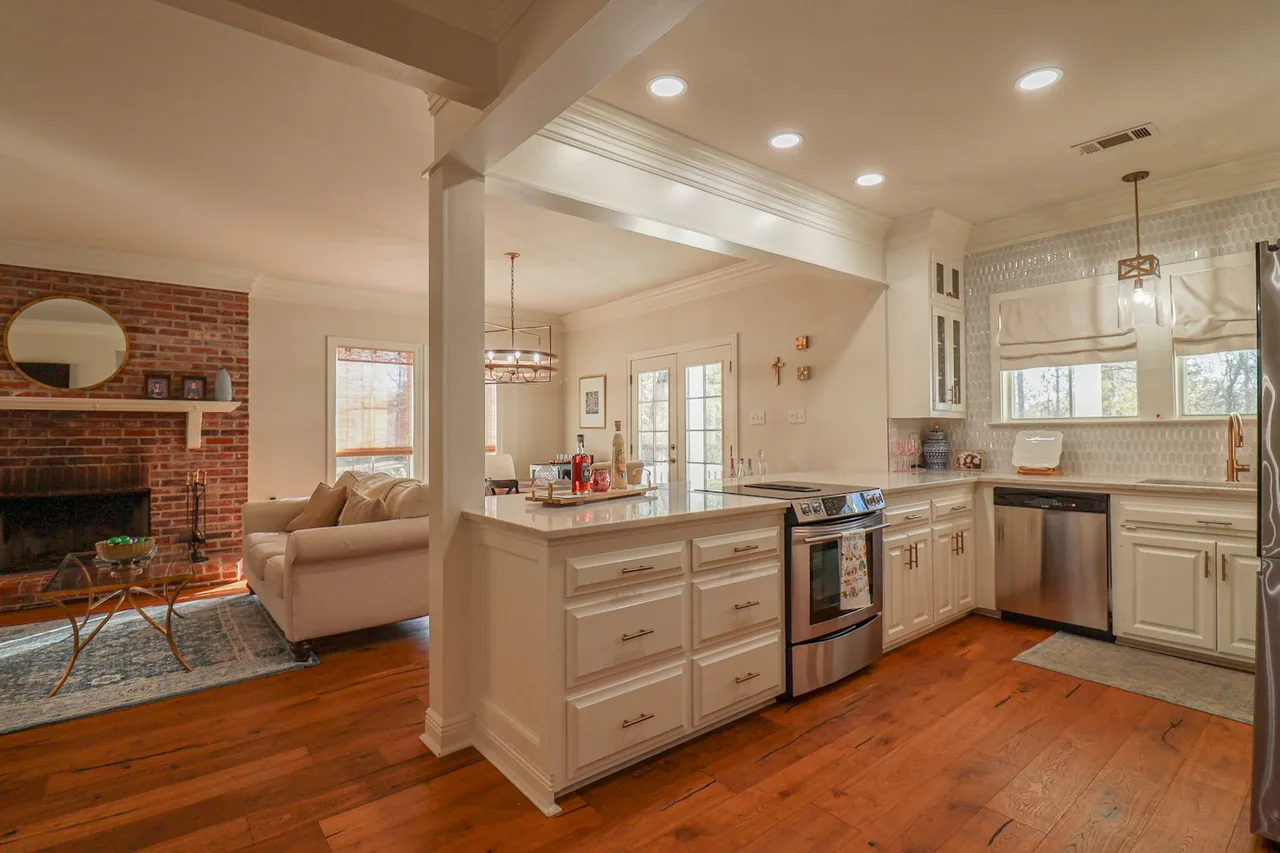
The best kitchen flooring balances three demands the busiest room in the house makes at once — it resists spills and moisture, it survives heavy traffic and dropped objects, and it stays comfortable to stand on for hours — which puts luxury vinyl plank, porcelain tile, and engineered hardwood at the top for most kitchens. A kitchen floor takes more abuse than any other: water from the sink and dishwasher, grease and dropped food, chairs scraped over it, and a family standing on it every day. No single property makes a kitchen floor; it is the combination of water resistance, durability, and underfoot comfort, weighted for how you cook and live. Get the balance right and the floor lasts a decade looking new; get it wrong and it stains, dents, or leaves your legs aching by dinner. Get a free consultation and a written scope from a vetted installer, and match the floor to your kitchen before you buy.
What a Kitchen Floor Has to Survive
The plank or tile everyone shops for matters less than whether it can take what a kitchen dishes out. A kitchen floor is judged on three demands the room makes every day, and the right pick balances all three rather than winning one and losing the others.
The Three Demands a Kitchen Makes on a Floor
Every floor that earns "kitchen-ready" is answering the same three demands, and the best pick weighs all three for how your household actually cooks:
- Water and spill resistance — whether a sink splash, a dishwasher leak, or a dropped glass of water wipes up or soaks in. A waterproof core shrugs off the kitchen's constant moisture; a moisture-sensitive floor stains and swells at the seams over time.
- Durability — whether the floor survives heavy foot traffic, scraped chairs, a dropped cast-iron pan, and years of use without denting, scratching, or wearing through. This is the wear layer on vinyl, the PEI class on tile, the hardness on wood.
- Comfort underfoot — whether standing at the counter for an hour is tolerable. Hard, cold surfaces fatigue legs and back; a floor with some give, warmth, or a cushioned underlayment makes the room livable for a cook.
Miss water resistance and the floor stains and swells; miss durability and it dents and wears; miss comfort and you feel it every meal you prepare — which is why the winning materials are the ones that balance all three, not the single toughest or the single softest.
How You Cook Changes the Weighting
"Kitchen" is not one specification. A serious home cook who stands and preps for hours weights comfort heavily; a family with young kids and constant spills weights waterproofing first; a household that entertains and wants a showpiece floor weights looks and durability. The floor that suits a light-use kitchen is not automatically the one for a heavily-used family kitchen, so a credible recommendation starts by naming how the room is used — then balances the three demands to match. The general ranking below holds, but the weighting shifts with your kitchen.
How to Choose the Best Kitchen Floor, Step by Step
Choosing a kitchen floor is an ordered process — profile how the room is used, then weigh the three demands, then match a material, then confirm comfort and the subfloor. Run the six steps below in order and a defensible pick almost always survives.
Profile How Your Kitchen Is Used
Name the reality: heavy family use with spills, serious cooking with long stands at the counter, or a lighter kitchen that mostly needs to look good. Write down the single hardest thing your kitchen does to a floor — constant water, dropped weight, or hours of standing — because that is the demand your material has to win.
Weigh Water, Durability, and Comfort
Put the three demands in priority order for your kitchen. Most family kitchens lead with waterproofing; serious-cook kitchens lead with comfort; showpiece kitchens lead with durability and looks. The ranking decides which property you refuse to compromise and which you can trade.
Match a Material to the Top Demand
Take your number-one demand to the options table below. Leading with waterproofing points to rigid-core luxury vinyl or porcelain; leading with durability-plus-looks points to porcelain or engineered flooring; leading with warmth and comfort points to vinyl or wood over a cushioned underlayment.
Solve for Comfort Underfoot
Layer comfort onto the material, because a kitchen is a standing room. A resilient vinyl feels softer than tile; a cushioned underlayment adds give under a floating floor; an anti-fatigue mat at the sink and range helps on any hard surface. On tile, in-floor radiant heat turns the coldest option warm. Comfort is a real criterion, not an afterthought.
Confirm the Subfloor and Layout
Check what the floor sits on and how it meets the rest of the home. The subfloor decides the method — a slab means glue-down or floating, a wood subfloor opens more options — and transitions to adjoining rooms, plus height under the dishwasher and cabinet toe-kicks, are planned before install. The subfloor can veto a material the demand allowed.
Get an Itemized Written Scope
Bring the shortlist to a vetted installer for an on-site assessment and a written, itemized quote — material, subfloor prep, transitions, appliance moves, and removal as separate lines. The installer confirms the subfloor and puts the manufacturer's water and wear specs in writing before anything is ordered.
Run in this order, the process converts "what floor is best for a kitchen" into one material, balanced for how you cook and matched to your subfloor — and an installer who names a product before profiling the room is guessing at the demand that matters most.
Not sure which floor your kitchen needs?
Tell us how you use the room and we will match you with a vetted installer who balances water, durability, and comfort into the right recommendation — in a written quote, free and with no obligation.
Kitchen Flooring Options, Ranked
The materials below are ranked for a typical busy family kitchen on the three demands that decide a kitchen floor: water resistance, durability, and comfort. The order shifts with how you cook — a serious-cook kitchen weights comfort higher, a showpiece kitchen weights looks — but for the balance of all three, this is the standing.
The Kitchen-Flooring Ranking Table
The table lines up each material on water resistance, durability, comfort, and maintenance, so you can see why the balanced options win and the extremes trade off.
| Rank | Material | Water resistance | Durability | Comfort underfoot | Maintenance | Best for |
|---|---|---|---|---|---|---|
| 1 | luxury vinyl planks | Waterproof (rigid core) | High — 12–20 mil wear layer | Warm, resilient, forgiving | Wipe or mop; no sealing | Most family kitchens |
| 2 | porcelain floor tile | Waterproof (<0.5% absorption) | Very high — PEI IV–V | Hard, cold (heat/mats help) | Seal grout; otherwise easy | Heavy use, showpiece, wet climates |
| 3 | an engineered-wood floor | Water-resistant — wipe spills fast | High — refinishable veneer | Warm, comfortable | Damp-mop; refinish to renew | Open-plan kitchens, warmth + wood look |
| 4 | Wood-look tile | Waterproof (porcelain body) | Very high — scratch-proof | Hard, cold like tile | Seal grout; wipe clean | Wood look with tile toughness |
| 5 | Waterproof laminate | Water-resistant to waterproof (by line) | High — AC4–AC5 | Firm, warmer than tile | Wipe fast; do not let water sit | Budget kitchens, dry-tidy cooks |
| Caution | Solid hardwood | Poor — stains and cups from spills | High but dents; refinishable | Warm and comfortable | High — seal, wipe, refinish | Look-first kitchens, diligent owners |
Why Luxury Vinyl Plank Ranks First for Most Kitchens
LVP flooring — LVP — wins for the broadest range of kitchens because it is the only mainstream floor that balances all three demands at once: the rigid SPC or WPC core is fully waterproof so spills and a dishwasher leak never soak in, a thick wear layer resists scraped chairs and dropped pans, and it is warm and resilient underfoot for a cook who stands for hours. It installs over most subfloors, cleans with a mop, and comes in convincing wood and stone looks. For a family kitchen that needs one floor to handle water, wear, and long stands, LVP is the default answer — specify a 12 mil wear layer for normal use and 20 mil for the heaviest kitchens.
Wear-Layer Mil: The Durability Number on a Kitchen Vinyl
On luxury vinyl the single spec that predicts how long a kitchen floor survives is the wear-layer mil — the thickness of the clear top coat in mils, not the plank's overall thickness. A 6 mil layer suits light use; 12 mil handles a busy family kitchen; 20 mil and up takes the heaviest traffic and the most dropped cookware. Two planks of identical total thickness can carry very different wear layers, so this is the number to confirm on the spec sheet before you buy — the kitchen is exactly the room where a thin wear layer shows scuffs first.
Where the Wear Layer Meets a Dropped Pan
A kitchen tests the wear layer differently from a bedroom, because the damage is impact as much as abrasion. A dropped cast-iron pan lands a point load a thin top coat can dent or split, while years of scraped stools abrade it — so the 20 mil heavy-kitchen recommendation is about surviving both. The wear layer resists the everyday scuffing, and the rigid core beneath resists the dent from the drop; a kitchen floor needs both, which is why a thick wear layer on a quality rigid core is the pairing to confirm, not either one alone.
Why Porcelain Tile Is the Most Bomb-Proof Kitchen Floor
a porcelain floor is the hardest, most impervious kitchen option — rated PEI IV–V for floor traffic, absorbing under 0.5% water per ASTM C373, and immune to spills, stains, and scratches. Nothing a kitchen throws at it leaves a mark, and in a warm climate it stays cool. Its two trade-offs define its fit: it is hard and cold underfoot, so a serious cook wants radiant heat or anti-fatigue mats at the sink and range, and its grout needs sealing to resist stains. For the heaviest-use kitchens, showpiece designs, and wet climates, porcelain is the floor that outlasts the kitchen — specify a matte or textured face with a DCOF ≥ 0.42 so a wet floor stays safe underfoot.
Why Engineered Hardwood Works in a Kitchen and Solid Is Riskier
Wood in a kitchen is a question of construction. solid wood is a single piece that reacts to moisture, so in a room full of spills and humidity it can stain, cup, and gap unless the owner is diligent about wiping every spill immediately — a look-first choice for a careful household. engineered-wood planks bonds a real-wood veneer over a dimensionally stable cross-ply core, so it handles a kitchen's humidity swings far better and, in an open-plan home, lets the kitchen floor flow seamlessly into the living space. It is still only water-resistant — spills get wiped promptly — but it delivers a genuine warm wood floor with real durability, and it can be refinished to renew. Engineered is the wood that belongs in most kitchens; solid belongs only where an owner will baby it.

The Specs That Matter for a Kitchen Floor
Every kitchen-flooring claim traces back to a published rating on a scale you can check. Learning the four that matter turns a showroom pitch into a verifiable decision — because "great for kitchens" means nothing next to a wear-layer mil, a PEI class, a water rating, and a DCOF reading.
Durability Ratings, by Material
Each material grades durability on its own scale, and the rating — not the finish sheen — predicts how it survives a busy kitchen. Match the number to how hard the room lives.
Wear-Layer Mil and AC Rating for Resilient Floors
Resilient kitchen floors grade wear two ways. Luxury vinyl uses the wear-layer mil — a clear top coat measured in mils, where a kitchen wants 12 to 20 mil. Laminate uses the AC rating — Abrasion Class, AC1 through AC5 — where a kitchen wants AC4 or higher so the wear surface takes traffic and scraped chairs. Both numbers, not the plank's total thickness, predict how the surface holds up, and both are on the spec sheet to confirm before buying.
PEI Class for Tile
Floor tile grades surface hardness on the PEI scale — Porcelain Enamel Institute, I through V — where a busy kitchen floor wants at least PEI IV and porcelain commonly reaches PEI V. Because porcelain outranks every other material for scratch and impact resistance and is set per TCNA and ANSI standards, it is the kitchen floor a dropped pan or a scraped stool cannot mark.
Janka Hardness for Wood
Hardwood grades dent resistance on the Janka scale in pounds-force. For a kitchen, a harder species survives dropped objects better — red oak near 1290 lbf, maple near 1450 lbf, hickory near 1820 lbf — while softer species dent more readily. The Janka number matters less than the water question for wood in a kitchen, but between two wood choices, the harder one takes kitchen abuse better.
Water Resistance: Waterproof vs. Water-Resistant
The distinction that matters most in a kitchen is between waterproof and merely water-resistant, and the words are not interchangeable. A waterproof floor — rigid-core vinyl, porcelain tile, wood-look tile — has a core or body that will not swell, so a dishwasher leak or a dropped glass of water can sit and still wipe up. A water-resistant floor, including engineered wood and standard laminate, tolerates a quick wipe but stains or swells if liquid sits or wicks into the seams. For the room with the sink, dishwasher, and refrigerator lines, waterproof is the safest baseline, which is why the waterproof flooring category is a natural starting point for a kitchen.
Traction: The DCOF Rating for a Wet Kitchen Floor
A kitchen floor gets wet, so traction matters — measured by the DCOF, the Dynamic Coefficient of Friction, where DCOF ≥ 0.42 is the recognized threshold for a floor expected to get wet under ANSI A137.1. A high-gloss tile or a slick finish becomes a slip hazard the moment a splash lands; a matte, textured, or embossed surface stays safe. On tile you can read the DCOF on the spec sheet; on vinyl and laminate you judge it by the embossing and matte finish. In a room where water hits the floor daily, traction is not optional.
The Kitchen-Spec Reference Table
The table gathers the recognized ratings a kitchen floor is judged on, with the target for a busy kitchen. These are representative documented values — the product's own spec sheet always governs.
| Property | Rating / scale | Source / standard | Target for a kitchen |
|---|---|---|---|
| Vinyl wear resistance | Wear layer (mil) | Manufacturer spec | 12–20 mil |
| Laminate abrasion | AC rating (AC1–AC5) | Manufacturer / EN 13329 | AC4–AC5 |
| Tile surface hardness | PEI class (I–V) | TCNA / ANSI | PEI IV–V |
| Wood dent resistance | Janka hardness (lbf) | Janka hardness scale | Harder species; oak 1290 lbf+ |
| Water resistance | Waterproof vs. water-resistant | Core type / manufacturer | Waterproof preferred |
| Wet-floor traction | DCOF | ANSI A137.1 | ≥ 0.42 |
The lesson is that "kitchen-ready" resolves into four checkable numbers, and a floor that balances the target on all of them earns the label — while one that leads with a look and hides a soft surface or a slick face does not. Compare any two materials side by side on these specs with the material comparison tool.
Which Kitchen Floor Is Right for Your Home?
The right kitchen floor is the output of a short chain of facts about how you cook and what the room connects to, not a preference. Walk the decision in order; each branch removes the materials that do not fit, and what survives is the defensible pick.
- How heavy is the use and how frequent are spills? A busy family kitchen with kids and constant spills points to a fully waterproof floor — LVP or porcelain tile flooring. A lighter, tidier kitchen opens water-resistant options like engineered wood back up.
- Do you stand and cook for hours? If comfort underfoot is a priority, favor resilient vinyl or engineered wood over a cushioned underlayment, and rule tile in only with radiant heat or anti-fatigue mats. If long stands are rare, tile's hardness is a non-issue.
- Is the kitchen open to living space? An open-plan kitchen that flows into a living room favors a floor that runs continuously — engineered hardwood or a wide-plank LVP — for a seamless look. A closed kitchen can be its own material without a transition problem.
- Showpiece or workhorse? If the floor is a design statement, impervious porcelain, wood-look porcelain tile, or a premium engineered wood leads. If it is a pure workhorse, LVP delivers the most durability and comfort per dollar.
- What is the subfloor, and is it over a slab? A concrete slab means glue-down or floating and a moisture test; a wood subfloor opens more methods. The substrate preparation and its moisture reading can veto a material the use allowed — confirm it before the final choice.
Run honestly, this tree usually returns one material — and if it returns two, the winner is whichever better serves the demand you ranked first for your kitchen.
Get the kitchen floor matched to how you cook.
We connect you with a vetted installer who weighs water, durability, and comfort for your kitchen, confirms the subfloor, and quotes it itemized — free, no obligation.
Common Kitchen-Flooring Mistakes, Consequences, and Prevention
Most disappointing kitchen floors come from the same handful of shortcuts, each with a predictable consequence and a known prevention. Naming them is how you avoid a floor that stains, dents, or aches within a couple of years.
| Mistake | What it causes | The prevention |
|---|---|---|
| Solid hardwood in a heavy kitchen | Stains, cupping, and gaps from constant spills and humidity | Use a below-grade-rated engineered product or a waterproof material, or accept diligent wiping |
| Standard laminate near the sink | Fiberboard core swells at the seams where water sits | Choose waterproof rigid-core vinyl or a sealed a waterproof laminate line line |
| Choosing a glossy tile | A wet floor becomes a slip hazard the moment a splash lands | Specify matte or textured tile with a DCOF ≥ 0.42 |
| Ignoring comfort underfoot | Aching legs and back from hours on a hard, cold floor | Add resilient vinyl, a cushioned underlayment, radiant heat, or anti-fatigue mats |
| Thin wear layer on vinyl | Scuffs and scratches show fast under chairs and traffic | Confirm 12–20 mil wear layer, not just total plank thickness |
| Skipping the slab moisture test | Vapor swells or debonds the floor months after install | Test the slab during subfloor prep before ordering |
| Unsealed grout on tile | Grease and spills stain the grout lines permanently | Seal grout on install and periodically after; wipe spills promptly |
Every row traces back to underestimating one of the kitchen's three demands — and the first two, wood and laminate near water, are the ones a showroom most often lets a buyer walk into.
Solving for Comfort in a Kitchen You Stand In
A kitchen is a standing room, so comfort underfoot is a genuine criterion, not a luxury — and it can be built into any material choice with the right layer beneath or atop the floor.
Resilient Materials and Cushioned Underlayment
The simplest path to a comfortable kitchen floor is a resilient material with give. Luxury vinyl and engineered construction flex slightly underfoot compared with rigid tile, and a cushioned underlayment beneath a floating floor adds a layer of give that a cook feels over a long prep. The underlayment also warms the floor and quiets it, so the same layer that adds comfort improves the room in two other ways.
Radiant Heat Under Tile
Tile's one comfort weakness — cold, hard underfoot — is solved by in-floor radiant heat, which turns the most durable, waterproof kitchen floor into a warm one. Electric radiant mats install under a porcelain surface during the tile setting, adding warmth that makes standing at the counter comfortable even on the hardest surface. It is the upgrade that lets a serious cook choose porcelain without giving up warmth.
Anti-Fatigue Mats at the Work Zones
On any hard floor, cushioned anti-fatigue mats at the sink and range — the two spots a cook stands longest — take the edge off a hard surface without changing the floor itself. They are the low-cost comfort fix that works over tile, sealed concrete, or any firm floor, and they lift out for cleaning. Comfort in a kitchen is layered: the material, the underlayment or heat beneath it, and the mats where you stand most.
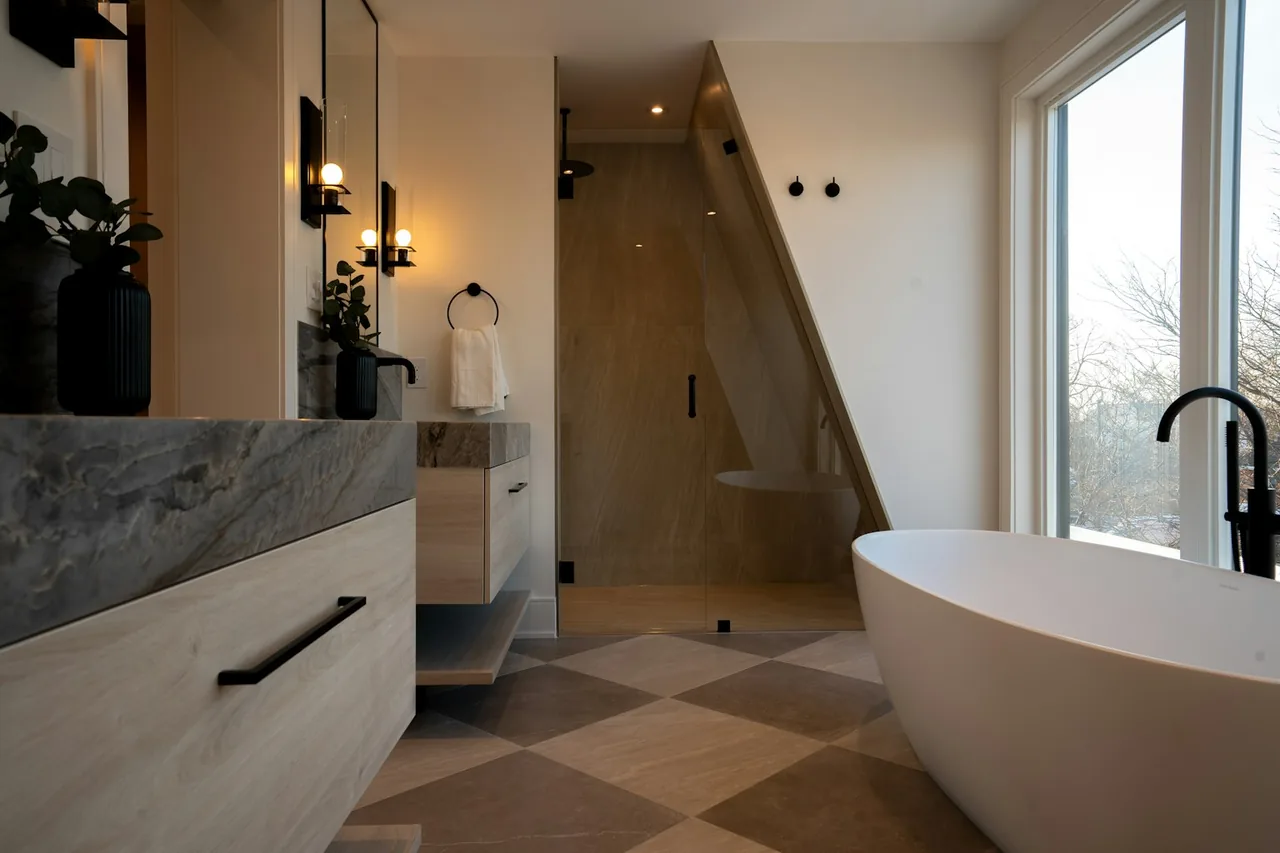
What Drives the Cost of a Kitchen Floor
A kitchen floor is priced like any floor plus a few kitchen-specific items — appliance moves, transitions, and comfort upgrades — and knowing those levers lets you read a quote critically.
The Choices That Move a Kitchen-Floor Budget
The cost drivers below are the ones a kitchen install touches most; each is a real line item, not a flat rate, which is why an on-site quote is the only honest number:
- Material and durability grade. A thicker wear layer, a PEI V porcelain, or a premium engineered product costs more than the entry grade — and in a heavy kitchen, that upgrade is the point.
- Appliance disconnect and reset. A kitchen floor means moving the range and refrigerator and disconnecting and resetting the dishwasher — real labor an empty room does not have.
- Subfloor prep and moisture control. Flatness correction and, over a slab, a moisture test and mitigation are real material and labor a sound, dry substrate avoids — and the item a low bid quietly omits.
- Comfort upgrades. Radiant heat under tile, or a premium cushioned underlayment, is a real add that turns a hard floor comfortable.
- Layout and transitions. Patterns, borders, and clean transitions to adjoining rooms at doorways and under the toe-kick add cutting, waste, and skilled hours beyond a straight-lay floor.
- Removal and disposal. Tearing out an old kitchen floor is labor plus a haul-away fee, and removal can expose subfloor problems that change scope.
Because these swing widely, the only honest figure comes from an on-site assessment. Compare what moves the price by material in our cost guides — see vinyl flooring cost, tile flooring cost, and the kitchen remodel cost guide — and size your own kitchen first with the flooring cost calculator so you can read a quote line by line.
Get a spec-matched recommendation
Tell us your surface, room, and goals — free, independent guidance and a vetted installer, nationwide.
The Kitchen-Floor Fit Framework: Six Checks Before You Buy
Before ordering any kitchen floor, run it through the same six-check framework a careful installer uses. Each check maps to a demand that decides whether the floor thrives in a kitchen, and a floor that clears all six is a floor matched to your room — not just to a showroom.
- 1. Use profile matched
- The floor is chosen against how the kitchen is actually used — heavy family use, serious cooking, or lighter use — not "kitchen" in the abstract. The single hardest demand the room makes is identified and the material answers it.
- 2. Water resistance right for the room
- The floor is waterproof where spills are frequent, or water-resistant with a promise to wipe promptly where they are rare — the difference between a wipe-up and a swollen seam near the sink and dishwasher.
- 3. Durability rating verified
- The material's own wear spec is confirmed on the sheet: 12–20 mil for vinyl, AC4–AC5 for laminate, PEI IV–V for tile, or a hard Janka species for wood — the number, not the showroom finish.
- 4. Comfort underfoot solved
- The standing reality is addressed — a resilient material, a cushioned underlayment, radiant heat under tile, or anti-fatigue mats at the work zones — so the cook is not aching by dinner.
- 5. Traction confirmed for a wet floor
- The surface stays safe when a splash lands: an embossed or matte finish, and on tile a DCOF of ≥ 0.42. Any glossy candidate is re-checked here.
- 6. Subfloor and transitions cleared
- The subfloor is confirmed (and its slab moisture tested), and transitions to adjoining rooms plus height under appliances and the toe-kick are planned — so the subfloor and layout do not veto the choice after purchase.
Clear all six and the floor is matched to the way you cook, the water the room sees, and the hours you stand in it; miss one and that is precisely the axis on which a kitchen floor tends to disappoint.
Kitchen-Flooring Glossary
The terms below recur in every kitchen-flooring spec sheet and quote — each defined as its working meaning for the busiest room in the house, so you can read a label and judge whether a floor is genuinely kitchen-ready.
- Waterproof vs. water-resistant
- Waterproof means the core will not swell, so a spill or a dishwasher leak can sit and still wipe up; water-resistant tolerates a quick wipe but swells if liquid sits — the distinction that decides a floor's fate near the sink.
- Wear-layer mil
- The thickness of luxury vinyl's clear top coat, in mils — the spec that predicts how long the surface resists scuffs and scratches in a busy kitchen. 12–20 mil for kitchen use.
- AC rating
- Laminate's Abrasion Class, AC1–AC5, grading how the wear surface holds up to traffic and scraped chairs. A kitchen wants AC4 or higher.
- PEI class
- The Porcelain Enamel Institute scale, I–V, rating floor-tile surface hardness. Kitchen floors want PEI IV–V, which porcelain commonly reaches.
- Janka hardness
- The pounds-force needed to dent a wood species — the rating that predicts how a hardwood kitchen floor survives dropped cookware. Harder species like a hard hickory species take kitchen abuse better.
- DCOF
- Dynamic Coefficient of Friction — the traction rating for a floor in motion, with ≥ 0.42 the recognized threshold for wet floors under ANSI A137.1. The spec that keeps a splashed kitchen floor from becoming a slip hazard.
- Rigid core (SPC/WPC)
- The waterproof center of a luxury vinyl plank — SPC (stone-plastic) or WPC (wood-plastic) — that gives a kitchen floor its immunity to spills and leaks.
- Engineered hardwood
- A real-wood veneer bonded over a dimensionally stable cross-ply core, which handles a kitchen's humidity swings far better than solid wood and can flow into an open-plan living space.
- Cushioned underlayment
- A resilient layer beneath a floating floor that adds give, warmth, and quiet — the layer that makes a kitchen floor more comfortable to stand on over a long prep.
- Radiant heat
- An in-floor heating system, often electric mats set under tile, that warms the coldest, hardest kitchen floor into a comfortable one for a cook who stands.
- Anti-fatigue mat
- A cushioned mat placed at the sink and range where a cook stands longest, taking the strain off a hard floor without changing the floor itself.
- TCNA
- Tile Council of North America — the body whose standards, alongside ANSI, govern how kitchen tile is set, including movement joints and the substrate a tile floor requires.
A Real Kitchen-Floor Decision
One representative scenario shows how weighing the three demands — not defaulting to the showroom favorite — drives the pick.
How to Vet an Installer for a Kitchen-Floor Project
The right material still needs the right install, and for a kitchen a few questions separate an installer who balances the room's demands from one who simply sells the plank on display. Use these to judge the crew before you commit.
- They ask how you use the kitchen before recommending
- A credible installer wants to know about spills, standing, kids, and whether the room is open-plan before naming a floor — because the balance of water, durability, and comfort follows how you cook. One who leads with a product is selling, not matching.
- They name the water and wear spec, not just the look
- Ask what makes their recommendation kitchen-ready. A real answer cites the waterproof core or water rating, the wear-layer mil, the AC class, or the PEI rating — the numbers — rather than "it's really durable."
- They raise comfort and traction unprompted
- The installer should bring up standing comfort — underlayment, radiant heat, or mats — and, on tile, the DCOF for a wet floor. These are the kitchen-specific issues a good crew anticipates.
- They test the subfloor, especially over a slab
- For a slab kitchen, ask which moisture test they run and what limit the floor requires. A kitchen floor over an untested wet slab fails no matter how good the surface is.
- They handle appliances, removal, and transitions cleanly
- Ask whether disconnecting and resetting appliances, tear-out of the old floor, disposal, and transitions to adjoining rooms are included — the kitchen-specific labor that separates a full scope from a headline rate.
- They put the scope and manufacturer's spec in writing
- Ask for the full scope, the material's kitchen-relevant specs, and any workmanship warranty in writing before work starts. A crew that names the water rating and wear layer in the quote is accountable for the floor you were promised.
Why Route Your Kitchen-Flooring Project Through Pro Work Home Surface
Pro Work Home Surface is not a contractor and does not install your floor — we are a national authority on home surfaces that matches homeowners with vetted local installers and holds them to a published bar, so a kitchen floor is balanced for how you cook, not chosen off the showroom floor.
- A free consultation and an itemized written scope
- Every connection starts with a no-obligation consult and a written quote that lines out the material, subfloor prep, appliance moves, transitions, and removal separately — so you see the whole kitchen-floor job, not a headline rate.
- A real vetting standard, applied before we connect you
- Installers are screened on whether they profile how you use the kitchen, cite the water and wear specs, raise comfort and traction, and test the subfloor — the things that decide whether a floor thrives in a kitchen.
- Balanced for water, durability, and comfort, every time
- The recommendation weighs all three of the kitchen's demands for your household and is confirmed against the manufacturer's published ratings — wear-layer mil, PEI, water rating, and DCOF ≥ 0.42 — before any product is ordered.
- National coverage, local crews
- We match you with installers in your area nationwide, so the kitchen-floor standard is consistent even though the crew is local — whether it is one kitchen or an open-plan main level.
Flooring is one of eight categories we cover across home surfaces. If your kitchen project also touches fixing a stained or dented section, renewing a wood finish, or a full tear-out and replacement, the same standards apply — compare the kitchen-ready materials across the vinyl family, the tile category, and hardwood, weigh a tile-versus-LVP or hardwood-versus-vinyl decision, size the job with our spec-comparison tools, and start from the kitchen flooring use-case or the full range of home surfaces.